
Reviewed · SHIBUYA TOURS
Tokyo: Premium Go-Kart Tour with Tower & Shibuya Crossing
Tokyo from a steering wheel changes everything. This premium guided go-kart tour takes you street-level through major neighborhoods and hits the iconic Shibuya Crossing with an adrenaline-fueled, open-air feel you just can’t get from buses or walking. Two big reasons I’d do it again: the photo service is handled for you at key moments, and the optional costumes make the whole thing feel like a live game. One practical drawback: you’ll need the right driving papers in the correct hard-copy format before you even arrive.
The tour is designed to be smooth and traffic-aware, with an English-speaking guide who keeps the group together and explains how to drive so you’re not guessing. It runs about 75 to 105 minutes depending on the slot you choose, and it’s limited to a small group of up to 8, which makes a huge difference when you’re riding through real city streets.
In This Review
- Key Things You’ll Notice on This Go-Kart Tour
- Why Tokyo Feels Different When You’re Driving
- The Core Route: Roppongi, Omotesando, Shibuya, and Tokyo Tower
- Shibuya Crossing: What It’s Like From the Street
- Tokyo Tower From an Open Go-Kart View
- Guides, Safety, and Keeping Your Group Together
- Costumes and the Photo Package That Saves Real Time
- Driving Rules in Japan: The IDP Catch That Can Trip People Up
- How Long Should You Ride: 75 vs. 105 Minutes
- Price and Value: Is $116 Worth It?
- Who This Tour Fits Best (and Who Should Skip)
- Should You Book This Go-Kart Tour?
- FAQ
- How much does the Tokyo premium go-kart tour cost?
- How long is the go-kart experience?
- Is the tour guide English-speaking?
- How big is the group?
- Are costumes and photos included?
- What do I need to drive in Japan for this tour?
- What should I bring with me?
- What happens if it rains?
- Is the tour suitable for pregnant women?
Key Things You’ll Notice on This Go-Kart Tour
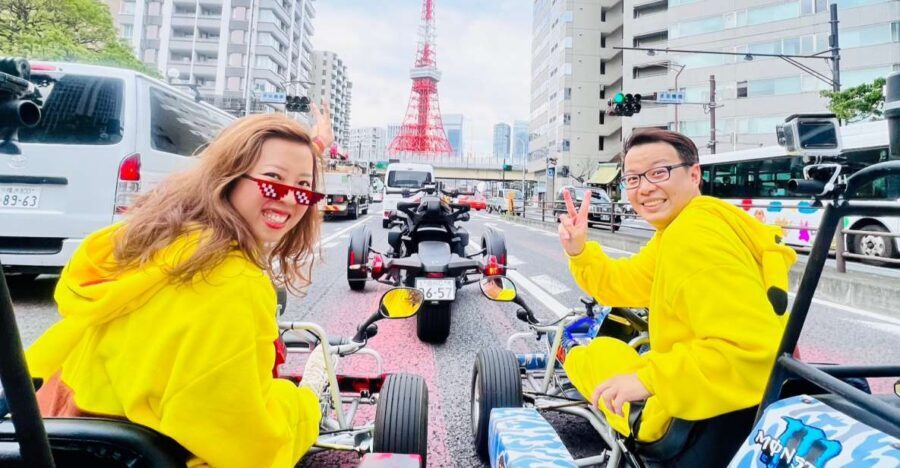
- Shibuya Crossing in a go-kart: you experience it from the street, not from a sidewalk viewpoint
- Photo help built in: your guide is trained to capture shots, and you get your images after
- Costumes included: dress up to match the playful, high-energy vibe
- Major areas in one loop: Roppongi, Omotesando, Shibuya, plus a Tokyo Tower pass
- Traffic-managed guiding: you drive with instruction and group control, not solo chaos
- Hard-copy IDP rules: Japan is strict, so paperwork matters as much as fun
More to do within sight of the Crossing
- Official Street Go-Kart in Shibuya★ 5.0 · 3,435 reviews
- Tokyo: Street Kart Experience in Shibuya★ 4.9 · 1,484 reviews
- Shibuya Meltdown Nightlife Tour: All-You-Can-Drink Bar Hopping★ 5.0 · 1,058 reviews
Why Tokyo Feels Different When You’re Driving
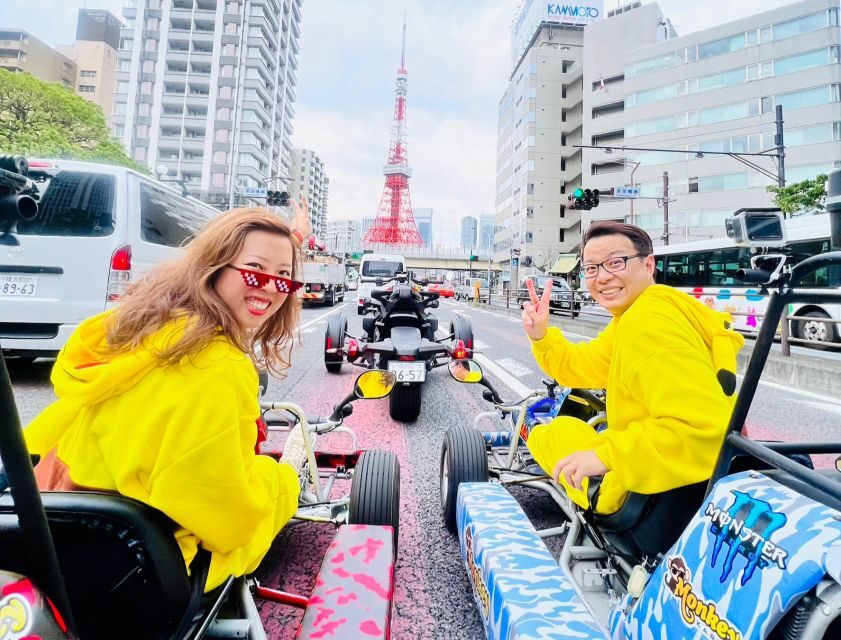
Tokyo is easy to admire at a distance. It’s harder, and way more fun, when you’re actually moving through it. That’s the thrill here: open go-karts, real road markings, and a route shaped around the places everyone recognizes.
I also like how the ride is guided, not random. A good route matters in Tokyo because distances can trick you, and intersections can be intimidating. With this tour, the guide leads the way, manages how you move as a group, and gives clear safety instructions so you can focus on driving and laughing instead of worrying.
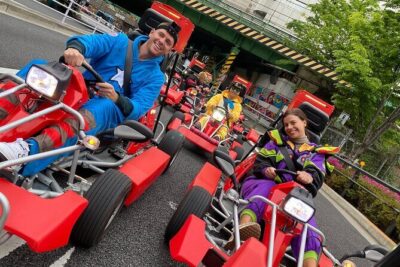
If you’re the type who enjoys experiences that feel a bit like a movie scene, you’ll probably get a kick out of how often people treat the crossing stops as photo moments. One guest even described the vibe as a real-life Mario Kart fantasy, and I get why.
The Core Route: Roppongi, Omotesando, Shibuya, and Tokyo Tower
You’ll spend your time moving through Tokyo’s major districts, with the ride paced for sightseeing instead of just cover-the-ground speed. Expect a route that includes:
- Roppongi: a lively-feeling area with lots of lights and street energy
- Omotesando: stylish streets that look great from the road while you’re rolling by
- Shibuya Crossing: the signature stop, built for that iconic Tokyo moment
- Tokyo Tower pass: you’ll catch the skyline view as you move through the city
What makes this work for your trip is the mix. Walking tours can be slow and repetitive, and lots of bus tours hide behind windows at the wrong angles. This is the middle ground: you’re close enough to feel the city, but the route is organized so you see landmarks without mapping everything yourself.
One more useful detail: the tour includes an action camera or Insta360 mount, so you can mount your own device if you want. Just note that the actual action camera isn’t included.
Shibuya Crossing: What It’s Like From the Street
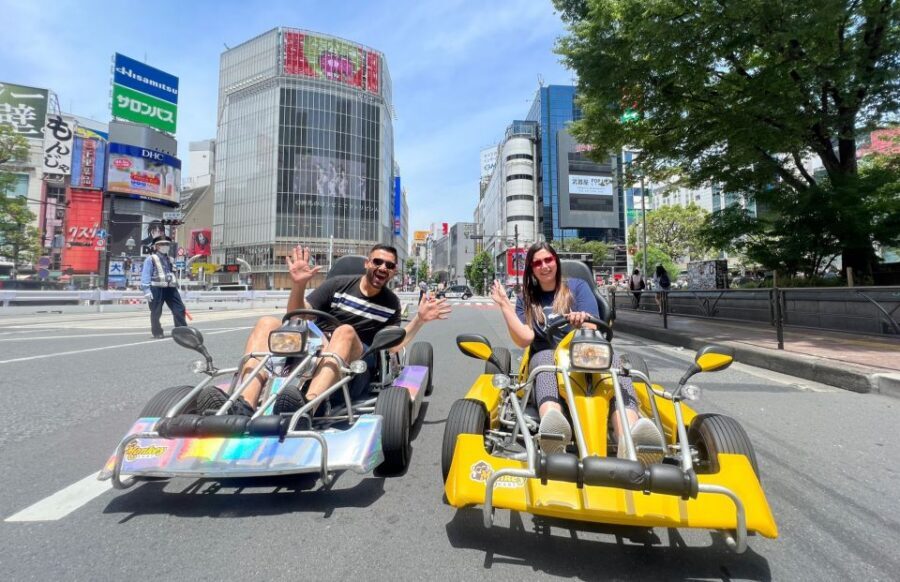
Shibuya Crossing is famous for a reason, but it can be weird when you’re stuck behind ropes or crowds. From a go-kart, it feels totally different. The key is timing and traffic flow, and that’s where the guide earns their keep.
You’ll be stopping at important points along the way, including at the crossing area, where your guide helps manage the group and keeps everyone safe. Multiple guests praised the guides for taking photos while you’re in position, and you’ll also see how intersections work when you’re close enough to notice the details: lane behavior, signals, and how the carts keep spacing.
Practical tip: if you’re a photo person, bring your best pose for when the guide signals you where to be. The tour is built around photo moments, so don’t waste them by getting distracted.
There’s also a recurring theme in the feedback: guests mention crowds waving and people reacting to the karts. It’s part of the fun, and it’s one of those Tokyo moments that feels spontaneous even though the tour is planned.
Tokyo Tower From an Open Go-Kart View
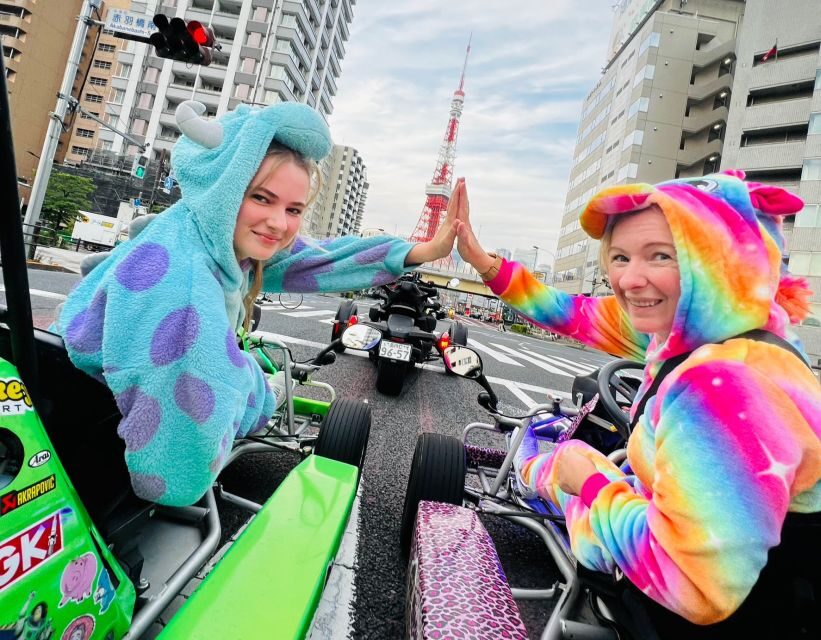
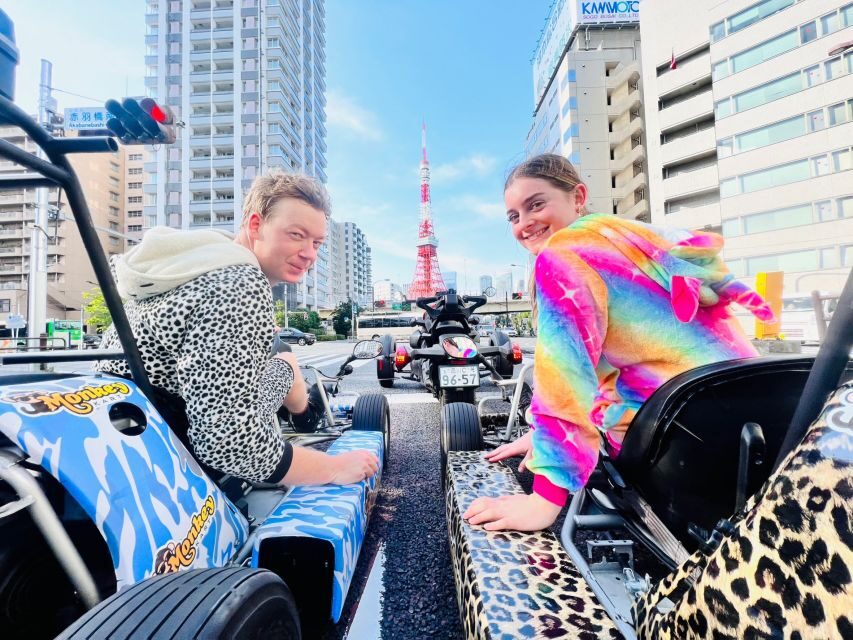
Tokyo Tower hits different when you’re driving near it. Up close, it stops being an image and becomes a real object in your frame, with the skyline stretching in the background.
On this tour, you’re not just looking at it from a distance. You’re passing through the area in an open kart, which changes your perspective. You’ll likely spot that classic view angle where Tokyo feels layered: tower in front, streets and buildings around it.
This is one of those “why this specific tour” highlights. If you wanted Tokyo Tower photos only, you could do it by train and walking. But the value here is the combo: Tokyo Tower energy plus Shibuya Crossing plus the neighborhoods in between, all under one organized guided ride.
Other ways to drive the city in costume


Guides, Safety, and Keeping Your Group Together
In a city like Tokyo, safety isn’t about slowing down—it’s about clarity. This tour’s approach is clear instructions first, then controlled riding with an English-speaking guide leading the way.
The vibe you’ll want is: you feel watched (in a good way), but you still feel free to enjoy the ride. Several guests specifically praised guides for staying attentive to their group, checking that everyone is doing okay, and giving frequent guidance at the right times.
You might ride with guides such as Gus, Ren, Shin, Lewis, Rafael, Pancho, Yumi, Andreas, or Federico, and the pattern in the feedback is consistent: they’re organized, they manage traffic flow, and they capture photos when it matters. One guest even noted that the guide used updates while stopped at lights, which sounds small but helps a lot when you’re riding as a group.
If you’re new to driving in another country, this part matters. The tour is set up for English speakers, and the safety briefing is thorough before you roll.
Costumes and the Photo Package That Saves Real Time
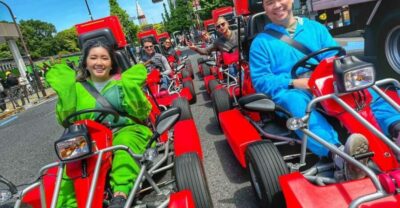
Let’s talk about value you can feel immediately. The tour includes optional cute costumes, which do two things at once:
1) They make the ride more fun
2) They give you a visual theme for photos
And photos are not left to luck. The guide is trained in photography, and they capture images at key locations so you don’t have to stop and scramble for your camera every time something iconic appears. After the tour, photos are shared conveniently via AirDrop or email, plus you get one hard-copy photo.
This package is worth paying attention to because it removes friction. Tokyo is full of great sights, but it’s easy to come home with only half-good photos because you were busy managing crowds, angles, and timing. Here, the tour handles a lot of that for you.
Small note: the tour includes the mount for an action camera or Insta360, but it doesn’t include the action camera itself. So if you want full action-camera footage, bring your own device.
Driving Rules in Japan: The IDP Catch That Can Trip People Up
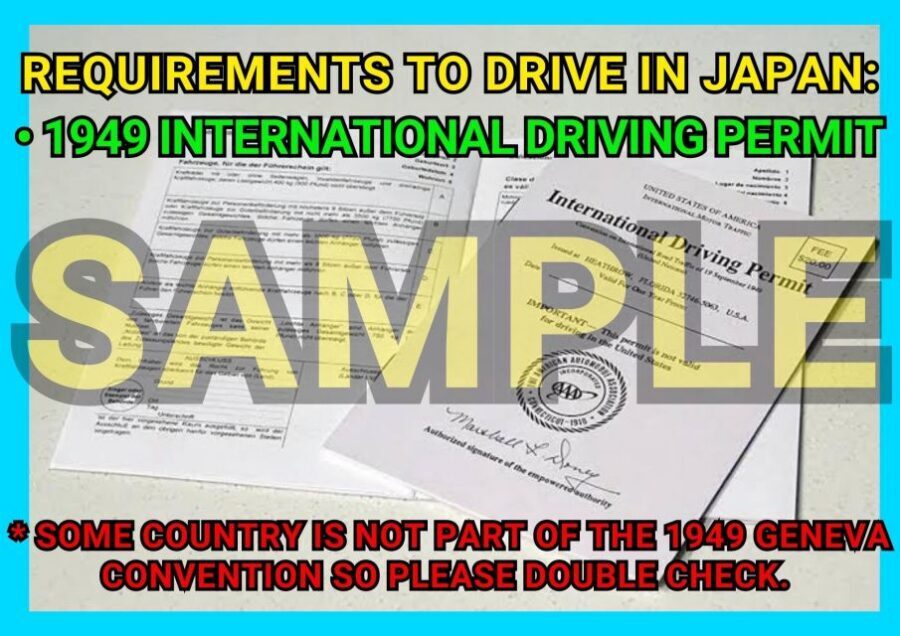
This tour is fun, but Japan’s driving rules are not casual. The tour explicitly requires drivers to have a valid driving license and an IDP that meets Japan’s requirements. Here’s the part you should take seriously:
- You need a hard-copy paper booklet of your 1949 Geneva Convention IDP, issued by the official agency in your home country.
- Online or soft copies are not valid.
- If your license is from certain countries, you may need a Japanese translation from JAF (Japan Automobile Federation).
- Permits issued under the 1968 Vienna Convention, and some other types, are not recognized.
- Permits from some countries are not allowed in Japan, so you should check your specific origin.
You’ll also need passport and your international driver’s license on the day.
This is why I call out the IDP as the main drawback. It’s not the tour’s fault. It’s just the reality: if your documents aren’t correct, you won’t be driving.
How Long Should You Ride: 75 vs. 105 Minutes
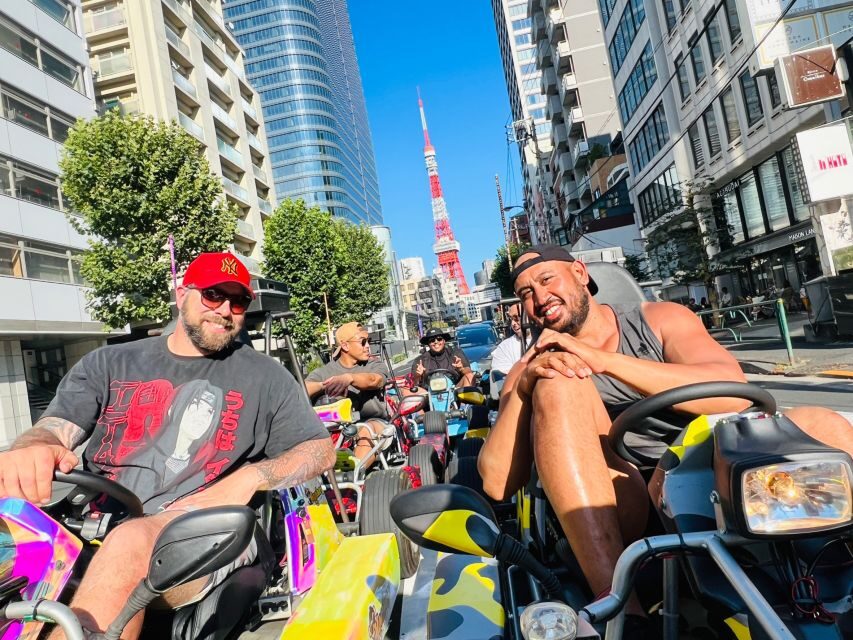
Your time on the kart is part sightseeing, part adrenaline, part pure Tokyo theater. The tour runs about 75 to 105 minutes, depending on the option you book.
If you’re short on time, the 75-minute slot gives you the essentials—Shibuya Crossing, the key neighborhood drive, and the photo stops—without turning the day into an all-consuming event. If you want more of that loop feel, go longer. The extended duration gives the route room to breathe, and it usually means more time to enjoy the pacing and take in the scenery from the road.
One other reason duration matters: your comfort level. If you’re anxious about driving in traffic, a shorter ride can feel more manageable. If you’re confident and want the “just keep going” energy, the longer option fits better.
Price and Value: Is $116 Worth It?
At about $116 per person for 75 to 105 minutes, the price isn’t “cheap.” But it can be good value when you look at what’s included and what you would otherwise spend time doing yourself.
Here’s what you’re getting baked in:
- An instructor/guide
- The go-kart (including petrol)
- Costumes
- Photos handled by a guide trained in photography
- Delivery of photos via AirDrop or email
- One hard-copy photo
- Action camera/Insta360 mount
What that means in real trip terms: you’re paying for organization, route leadership, safety management, and photo capture. That often costs money in Tokyo if you do it piecemeal (guide + photos + transport time).
Also, the small group size (up to 8) helps justify the premium. When you’re riding, smaller groups mean less chaos around intersections and more attention from the staff.
The other side of the value question is logistics. You must have the correct driving documentation, and the tour may be rescheduled due to rain. If your schedule is tight and the weather looks questionable, that’s something to keep in mind.
Who This Tour Fits Best (and Who Should Skip)
This go-kart experience is a strong match if you:
- Want to see Tokyo’s major landmarks from a street-level driving perspective
- Enjoy an adrenaline component but still want guided safety management
- Like group adventures with structure (small group up to 8)
- Care about photos and want help getting them
It’s also great for:
- Couples and friends looking for a shared highlight
- Young adults who want something different from temples and train rides
It may not be for you if:
- You don’t have the right driving documents (hard-copy IDP rules matter)
- You’re pregnant (explicitly not suitable)
- You’re not comfortable driving in traffic, even with instructions
One last honest note: several guests mention how intense it can feel at times, with speeds reported up to 50 km/h by at least one guest. You don’t need to fear it, but you should go in knowing it’s not a slow parade.
Should You Book This Go-Kart Tour?
If you want Tokyo “from the inside,” this is one of the more satisfying ways to do it. The combination of Shibuya Crossing, a Tokyo Tower pass, and neighborhood driving, plus built-in costumes and a photo plan, makes it feel like a true event rather than just transportation.
I’d book it if you’re already confident about your IDP paperwork and you want an experience with momentum. I’d hesitate if you’re trying to travel super light on planning, because Japan’s driving rules are strict and the tour can shift with weather.
If your documents are in order, this is the kind of Tokyo highlight you’ll remember long after the train photos fade.
FAQ
How much does the Tokyo premium go-kart tour cost?
It’s listed at $116 per person.
How long is the go-kart experience?
The ride duration is 75 to 105 minutes, depending on the option you book.
Is the tour guide English-speaking?
Yes. The instructor is English.
How big is the group?
It’s limited to a small group of up to 8 participants.
Are costumes and photos included?
Yes. Optional costumes are available, and photos are included. You also receive one hard copy photo, plus photo delivery after the tour via AirDrop or email.
What do I need to drive in Japan for this tour?
You must have a valid driving license and a hard-copy paper booklet 1949 Geneva Convention IDP issued through your official agency. Online copies are not valid, and other IDP types may not be recognized.
What should I bring with me?
Bring your passport and your international driver’s license.
What happens if it rains?
The tour may be rescheduled due to rain.
Is the tour suitable for pregnant women?
No, it’s not suitable for pregnant women.
More Tour Reviews in Tokyo






More Street Karting in Tokyo

Still in Shibuya? Keep Going


Fresh reviews from around Tokyo






Shibuya Tours, compared.
 ★ 5.0Official Street Go-Kart in ShibuyaFrom $763,435 reviews
 ★ 4.9Street Kart Experience in ShibuyaFrom $741,484 reviews
 ★ 5.0Shibuya Meltdown Nightlife Tour: All-You-Can-Drink Bar HoppingFrom $1061,058 reviews
 ★ 5.0Shibuya Official Street Go-Kart in Shibuya AnnexFrom $69972 reviews
 ★ 5.0Shibuya Food Tour (13 dishes and 4 Eateries)From $77770 reviews
 ★ 5.0Best of Shibuya Food TourFrom $217612 reviews
 ★ 4.8Shibuya Highlights Walking TourFrom $19601 reviews
Shibuya Kart: Premium Go-Karting Tour through Shibuya, TokyoFrom $63463 reviews
★ 4.8Shibuya Highlights Walking TourFrom $19601 reviews
Shibuya Kart: Premium Go-Karting Tour through Shibuya, TokyoFrom $63463 reviews
Browse the lists this tour appears in