
Reviewed · ASAKUSA TOURS
Asakusa: 2-hour history exploration
Asakusa can be confusing fast. This 2-hour walk gives you the map in your head, so the sights actually mean something—starting at the Sumida River and ending at Asakusa Shrine. You’ll pass Kaminarimon and Senso-ji at a human pace, with a guide to translate what you’re seeing into real history and everyday beliefs.
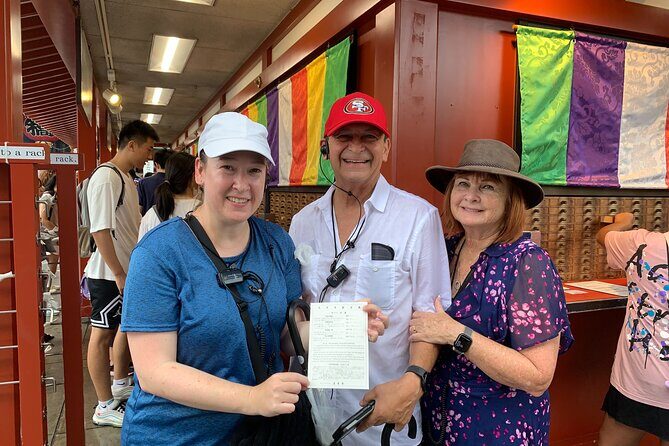
Two things I especially like: the tour is built around hearing what matters (headsets included for groups of 3+), and the stories come with practical context as you walk. Guides like Choco, Yasu, and Amy are praised for friendly, clear English and for answering questions without making you feel rushed.
One consideration: it is a “walking and learning” format, not a slow browse. Also, there’s no hotel pickup, so you’ll want to arrive on time at the meeting point.
In This Review
- Key highlights worth planning around
- Why a 2-Hour Asakusa History Walk Works
- Meeting at 9:30 and Staying Oriented Along the Way
- Stop 1: Sumida River Views, Skytree, and the Asahi Flame
- Stop 2: Asakusa Culture Tourist Information Center’s Observation Deck
- Stop 3–4: Kaminarimon Gate and Nakamise Street Snacks
- Stop 5–6: Hōzōmon Gate and Senso-ji’s Rituals
- Stop 7: Asakusa Shrine and the Shared Space of Faiths
- Price, What You Get, and When It’s Best Value
- Who This Tour Fits Best (and Who Might Prefer Solo Time)
- Should You Book This Asakusa 2-Hour History Tour?
- FAQ
- How long is the Asakusa history exploration?
- What are the main places you visit?
- Are admission tickets included for the stops?
- Are headsets provided during the tour?
- Is hotel pickup included?
- What is the cancellation policy?
Key highlights worth planning around
- Headsets for groups of 3+ so you can follow the guide through crowded streets
- A tight 2-hour route that still covers the main gates and rituals at Senso-ji
- Orientation from the Asakusa Culture Tourist Information Center observation deck
- Guided snack and souvenir timing along Nakamise Shopping Street
- Free entry stops where you’re paying mainly for interpretation, not attractions
More mornings around Senso-ji and the old town
- Tokyo: Japanese Dance Cabaret Theater Asakusa-Kaguwa Ticket★ 4.8 · 2,270 reviews
- Tokyo: Asakusa Walking Tour with Sensoji Temple Visit★ 4.8 · 1,583 reviews
- Tokyo Asakusa Rickshaw Tour★ 5.0 · 1,375 reviews
Why a 2-Hour Asakusa History Walk Works
Asakusa is one of Tokyo’s most atmospheric neighborhoods, but atmospheres can fool you. If you wander alone, it’s easy to admire the lanterns and incense without knowing why they’re there or what to notice. This tour solves that with a structured route and an English-speaking local guide who keeps the story moving.
The best part is that the tour doesn’t treat history like a lecture. You get the founding logic first, then you see the places that prove it: river, gates, shopping street, temple grounds, then a shrine that shares the same space as a Buddhist tradition. By the time you reach the bigger temple areas, you’ll already understand what you’re looking at and why locals still do the rituals.
And yes, you’ll walk. But it’s not punishing. Expect an active stroll with frequent “look here” moments, so the time doesn’t feel wasted.
Meeting at 9:30 and Staying Oriented Along the Way
The tour starts at Burger King Asakusa Azumabashi Cross at 9:30am. It’s a straightforward meeting point near public transportation, which matters in Tokyo where a “quick train hop” can still turn into a 20-minute walk if you’re not pointed the right direction.
You’ll finish at Saryō Ichimatsu (1-chōme-15-1 Kaminarimon, Taito City). The format is designed like this: you get your core Asakusa dose while the streets are still manageable, then the tour ends near where a geisha activity is held. (The tour itself is the guided walk; you’re simply dropped in that area.)
Group size is capped at 20, and headsets help keep the experience clear even when the crowd thickens. One reviewer specifically called out how helpful that headset setup was for hearing the guide over the noise—exactly what you want near Kaminarimon.
Tip: wear shoes you’d be happy walking in for a couple of hours on uneven temple-area stone and busy shopping sidewalks.
Stop 1: Sumida River Views, Skytree, and the Asahi Flame
Your tour begins where Asakusa’s story starts: the Sumida River. You’ll cross the visual boundary from modern Tokyo into the old-town atmosphere, then look across the Azumabashi bridge.
The guide points out major skyline anchors like Tokyo Skytree, plus the Asahi Breweries headquarters and its famous golden flame feature. That contrast is more than a photo moment. It helps you understand how Tokyo layering works: old neighborhoods aren’t erased by new development—they’re wrapped around it.
This is also a good mental warm-up. By the time you’re standing near the river, the guide is setting the timeline and explaining the geography. That makes later stops far easier to follow.
Stop 2: Asakusa Culture Tourist Information Center’s Observation Deck
Next comes the Asakusa Culture Tourist Information Center, a newer and very distinctive building. It’s an 8-story structure designed to look like separate wooden buildings stacked at different angles, and the architecture gives you instant Asakusa energy—part “here’s the history,” part “here’s how modern Tokyo is presenting it.”
The big practical payoff: you get a preview from the 8th-floor observation deck. From there, you can see the landmarks you’ll cover on the walk, including Kaminarimon gate, Nakamise shopping street, Hozomon gate, and Senso-ji Temple. It’s like being given the final map before the maze.
If you hate feeling lost, this stop is worth showing up for. Even if you love taking photos, having an overview first makes the rest of the route feel organized instead of random.
More paths into old Tokyo

Stop 3–4: Kaminarimon Gate and Nakamise Street Snacks
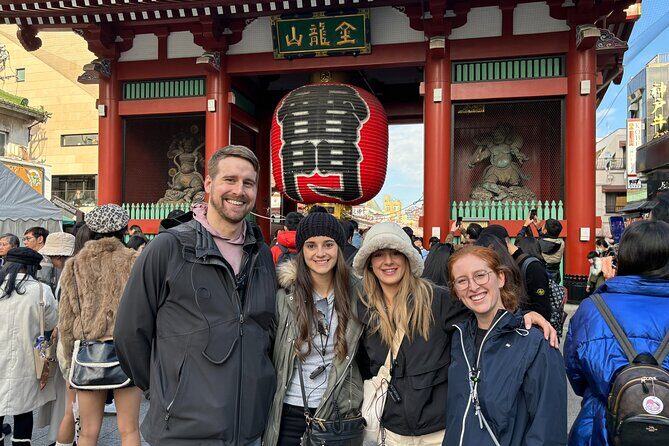
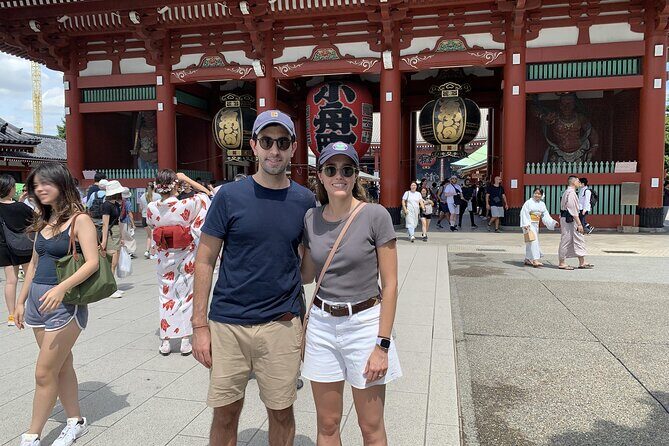
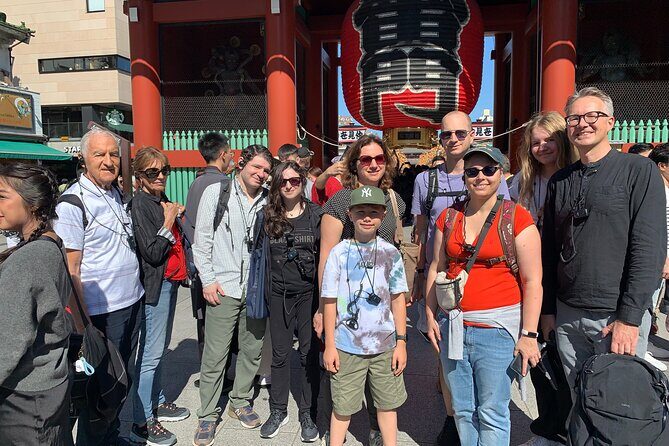
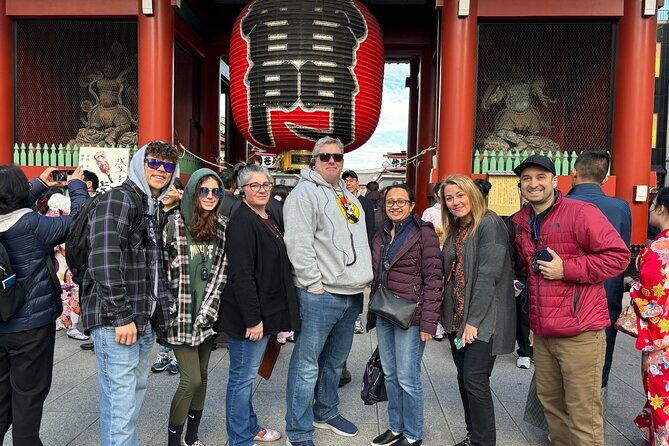
You’ll hit Kaminarimon next, the Thunder Gate. It’s the outer gate that leads you toward Sensō-ji, and it’s famous for that huge red lantern and the statues around it. The guide’s job here is to demystify what you’re seeing—so you don’t just look at a landmark, you understand the symbolism and what it signals for worshippers.
Then you step directly into Nakamise Shopping Street, roughly a 250-meter approach connecting Kaminarimon to Senso-ji’s main area. This is where you’ll see souvenir shops and food stalls packed along the walkway. The guide doesn’t just point left and right. They’ll guide you on where to buy the souvenirs you care about.
Even better: the tour includes a snack component. The guide may buy traditional snacks along Nakamise, and the choice can be based on your preferences. That makes the snack stop feel like part of the experience rather than an awkward “browse and guess” moment.
One small but smart detail: history tablets appear along the side of the street, showing how Asakusa grew around Sensō-ji. It’s the kind of “reading while you walk” that actually sticks because you’re already in the middle of the place it’s describing.
A consideration: Nakamise can be crowded. If you’re sensitive to noise and people brushing past, expect the tightest moment here. Headsets help, but your body still has to move with the flow.
Stop 5–6: Hōzōmon Gate and Senso-ji’s Rituals
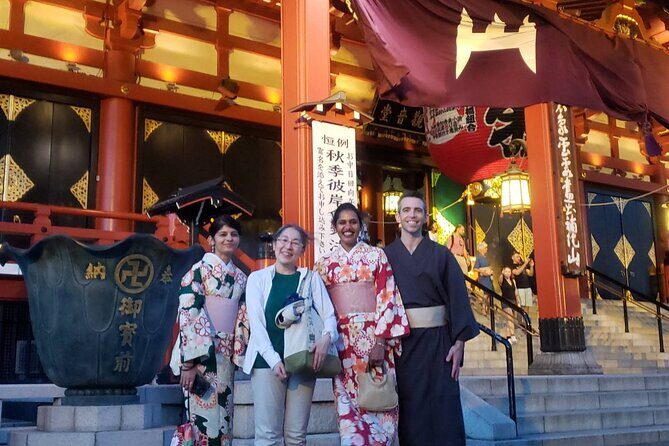
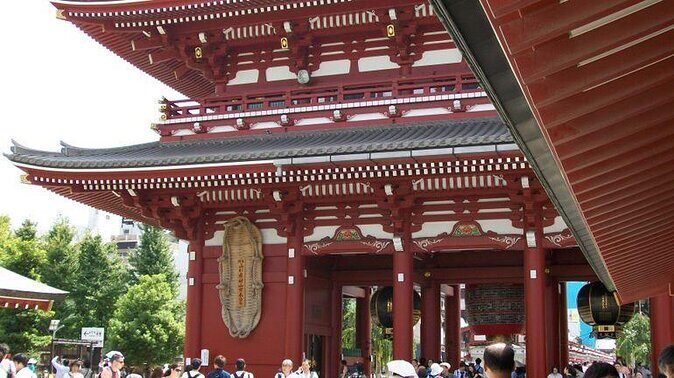
The tour then moves to Hōzōmon (Treasure-House Gate), the inner gate leading deeper into Sensō-ji. This is a two-story gate; the second story houses treasures associated with the temple. On the first story, you’ll see statues, lanterns, and large sandals stored on display.
If you’ve been to big temples elsewhere, you’ll recognize the pattern: layers of gates and ceremonial spaces. But here, the guide makes it practical by explaining what each threshold represents and what to notice as you move inward.
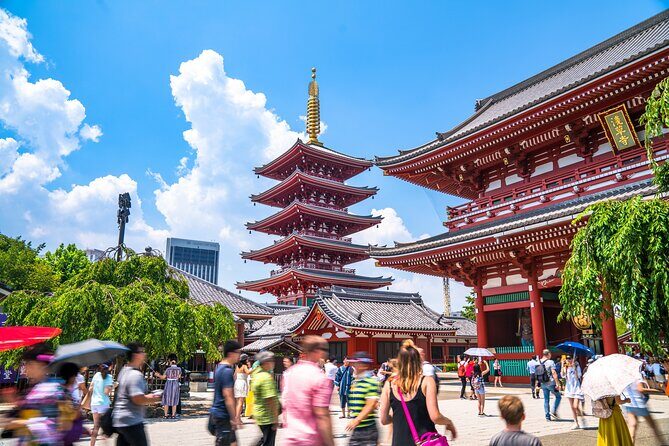
Then comes the star: Senso-ji Temple. You’ll have several key things to observe before entering the main hall. The five-storied pagoda is one of them—listed here as the second highest pagoda in Japan at 53 meters. You also learn a specific fact tied to the pagoda: it holds Buddha’s ashes on its top floor given by Sri Lankan government. That’s the kind of detail that makes the scene feel connected to the wider world, not just local tourism.
Before you go into the main hall area, the guide highlights three ritual moments:
1) Omikuji fortune paper
You can draw a paper fortune to predict your future. This is one of those activities that looks simple but carries a lot of cultural weight. You’ll feel less like you’re just doing a gimmick when you understand what the fortune is meant to do.
2) The incense burner smoke ritual
Most people pause at the huge bronze incense burner to bathe their hands and faces in the smoke. The guide explains it as a ritual meant to ward off illnesses before climbing the stairs to offer prayers.
3) Water purification fountain
You can also purify yourself before approaching further. This isn’t staged for tourists; it’s part of how worshipers prepare to enter sacred space.
A practical note: even if you’re not religious, these moments are where Asakusa turns from pretty to meaningful. The guide’s role is to help you participate respectfully—at your own comfort level—without feeling like you’re missing the rules.
Stop 7: Asakusa Shrine and the Shared Space of Faiths

After the Buddhist temple grounds, the tour shifts to Asakusa Shrine. This is where you’ll hear one of the most interesting “only in Japan” style explanations: Buddhism and Shinto coexist here on the same premises, with shared histories and worshipers.
The guide explains why the shrine isn’t just another Shinto shrine in Japan. They connect the coexistence to how faith shows up in ordinary life—less like a strict “us vs them” split, and more like a practical blend that has lasted over time.
This stop gives the tour a good balance. It keeps you from leaving Asakusa with only one lens. You get the temple side, then you get the shrine side, then you understand how people experience both in real daily culture.
Price, What You Get, and When It’s Best Value
The price is $64.55 per person for about 2 hours. That might sound high if you’re thinking only about sightseeing. But here, you’re really paying for two things: a local expert guide and a tight route that turns confusing landmarks into clear meaning.
Most of the stops listed are marked Admission Ticket Free, so you’re not financing entrance fees on top of the guide. In other words, your money goes toward interpretation and pacing—exactly where group tours can deliver value in Tokyo.
Two details make the experience feel more “worth it” than a generic walking tour:
- Headsets (for groups of 3+) mean you’re not straining your ears or guessing what you missed.
- The tour covers big recognition points—gates and the core temple area—while still including context like what you’ll see from the terrace deck earlier.
Also, this tour is commonly booked about 30 days in advance on average. If your dates are fixed, don’t wait for the last minute.
Who This Tour Fits Best (and Who Might Prefer Solo Time)
This is a strong fit if:
- You’re a first-time visitor to Asakusa and want the highlights without losing time
- You like history explained in plain English, not in a dense lecture
- You’d rather walk with someone who can point out what matters, especially around Senso-ji
- You want a small-group feel with headsets and a clear structure
It might feel less ideal if:
- You prefer total freedom to stop for as long as you want at every shop and photo angle
- You hate any guided pacing at all
- You want a very slow “sit and read” style experience (this is built for movement and multiple stops)
One more thing: one review noted that there could have been more structure to the tour. Translation: it’s easy for a guide to pack in lots of information, so come with questions ready. If something sparks your interest—incense ritual, the gates, the shrine coexistence—ask. A good guide will work with you.
Should You Book This Asakusa 2-Hour History Tour?
I’d book it if you want Asakusa to feel understandable quickly. The route is tight, the priorities are right, and the guided explanations help you notice the details you’d otherwise skate past: what the lantern gate signals, why the incense burner matters, and how the shrine fits into the bigger picture of faith in daily life.
If you hate crowds, you’ll still be walking through crowded areas—especially Nakamise and the temple entrances. But headsets and a clear flow reduce the frustration.
My final take: this is a smart buy for travelers who want value, clarity, and authentic cultural moments in a short window.
FAQ
How long is the Asakusa history exploration?
It’s approximately 2 hours.
What are the main places you visit?
You’ll see the Sumida River area, the Asakusa Culture Tourist Information Center, Kaminarimon gate, Nakamise Shopping Street, Hozomon gate, Senso-ji Temple, and Asakusa Shrine.
Are admission tickets included for the stops?
The itinerary lists admission tickets for these stops as free.
Are headsets provided during the tour?
Headsets are provided and are applicable for groups of 3 or more.
Is hotel pickup included?
No, hotel pickup is not included.
What is the cancellation policy?
You can cancel for a full refund if you cancel at least 24 hours in advance. If you cancel less than 24 hours before the start time, the amount you paid is not refunded.
The Old Tokyo, Toured Properly
More Tour Reviews in Tokyo






Around Senso-ji: More Asakusa Picks

Fresh reviews from around Tokyo






Asakusa Tours, compared.
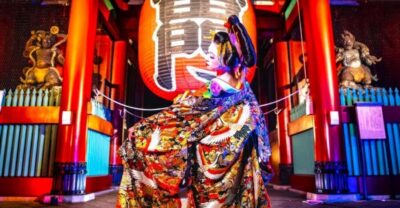 ★ 4.8Japanese Dance Cabaret Theater Asakusa-Kaguwa TicketFrom $492,270 reviews
 ★ 4.7Meiji Shrine, Asakusa, Skytree Bus Tour and CruiseFrom $1221,986 reviews
 ★ 4.8Asakusa Walking Tour with Sensoji Temple VisitFrom $221,583 reviews
 ★ 5.0Tokyo Asakusa Rickshaw TourFrom $421,375 reviews
 ★ 4.5Tokyo Panoramic 1 Day: Meiji Shrine, Asakusa, Odaiba and SKYTREE®From $851,222 reviews
 ★ 4.8Samurai Ninja Museum Asakusa: Samurai Sword Lesson & TourFrom $63306 reviews
Asakusa Sightseeing Tour by RickshawFrom $35195 reviews
Asakusa Kimono Dressing and Matcha ExperienceFrom $56173 reviews
★ 4.8Samurai Ninja Museum Asakusa: Samurai Sword Lesson & TourFrom $63306 reviews
Asakusa Sightseeing Tour by RickshawFrom $35195 reviews
Asakusa Kimono Dressing and Matcha ExperienceFrom $56173 reviews
Browse the lists this tour appears in