

Reviewed · SHIBUYA TOURS
Private Mochi Sweets Making class near Shibuya area
Two hours. Two sweets. One very kind teacher.
This private mochi sweets class in the Sangenjaya area (close to Shibuya) feels like you’ve stepped into a real Japanese kitchen. You’ll learn hands-on how to shape and cook mochi and dango with instructor Sakura guiding you at every step, then sit down to enjoy what you made with green tea or matcha.
What I like most is the way Sakura blends craft with context. You get not just instructions, but stories about mochi’s cultural meaning and traditional recipes, and her English is clear enough that beginners can keep up. One thing to think about before you book: the home has a dog, and the venue notes they don’t recommend the class for anyone with a dog allergy.
In This Review
- Key highlights worth carving out time for
- Why mochi-and-dango lessons feel different in Sangenjaya
- Finding the meeting point and handling the small logistics
- The two-hour flow: from sticky dough to fruit daifuku and dango
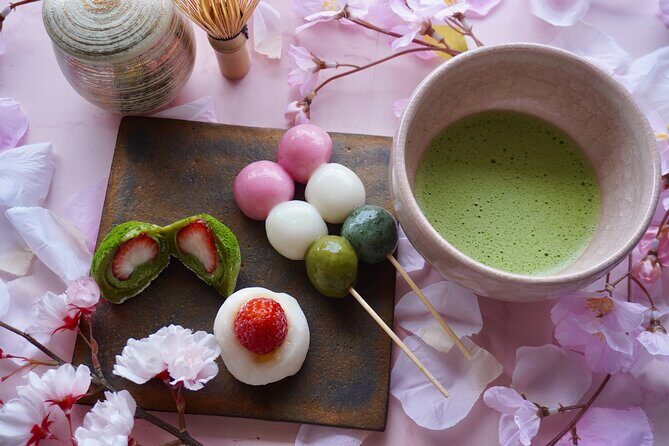
- Make mochi-style sweets (including fruit daifuku)
- Make dango (not a “noodle-shaped” afterthought)
- Cook, shape, and finish with tea
- Sakura’s teaching style: culture first, then technique
- What you’ll taste: matcha, tea, and the satisfaction of eating your own work
- Price and value: what $79.28 gets you in Tokyo time
- Who should book Sakura’s mochi class (and who should think twice)
- A smooth game plan for your day near Shibuya
- Should you book this mochi sweets class?
- FAQ
- What do I make in the class?
- Where is the class located?
- How long is the experience?
- Is matcha included?
- What if I don’t want caffeine?
- Are there any dietary notes?
- Is transportation included?
- Do I get anything to take food home?
- Is the group small?
- Is it okay if I have a service animal?
- Who will enjoy this most?
Key highlights worth carving out time for
- A small group (max 8) so you can get help while your dough is in front of you
- You make everything yourself, it’s not a sit-and-watch demo
- Tea included, with matcha available and decaf black tea if you prefer to avoid caffeine
- Cultural context from Sakura, including how these sweets fit Japanese life and tradition
- Cozy home setting near Shibuya, with an easy neighborhood walk before or after
- Take-out bag + aprons so you can bring some sweetness home (and stay comfortable while cooking)
More to do within sight of the Crossing
- Official Street Go-Kart in Shibuya★ 5.0 · 3,435 reviews
- Tokyo: Street Kart Experience in Shibuya★ 4.9 · 1,484 reviews
- Shibuya Meltdown Nightlife Tour: All-You-Can-Drink Bar Hopping★ 5.0 · 1,058 reviews
Why mochi-and-dango lessons feel different in Sangenjaya
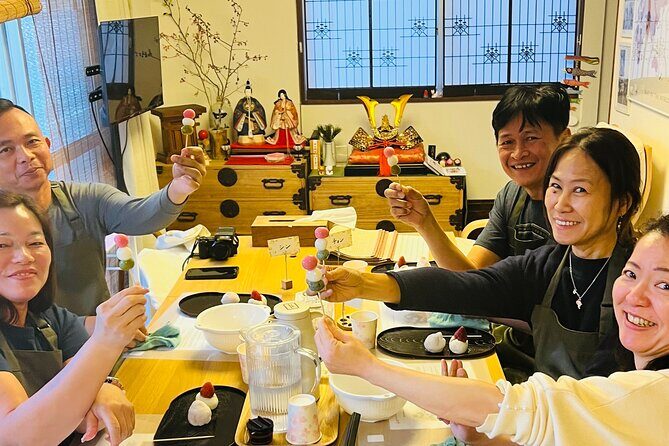
If you’re choosing a cooking class in Tokyo, you’re basically choosing between two vibes: “watch, taste, leave,” or “learn, touch, leave with skills.” This one is firmly in the second camp. The class takes place in instructor Sakura’s home in Sangenjaya, which means you’re not boxed into a studio. You’re in an everyday house setting, and that changes the pace right away.
Sangenjaya is also a smart base for this kind of experience. It’s not the tourist crush area. You get local streets, normal foot traffic, and a chance to see how Tokyo looks when you’re not only standing under famous signage. It’s close enough to Shibuya that you can pair it with your sightseeing day, but far enough that the class still feels calm.
Most of all, you’re not just learning a recipe. You’re learning how Japanese sweets are made in a household-style environment—down to the rhythm of shaping, cooking, and handling sticky dough. That’s exactly what makes this class feel personal.
Finding the meeting point and handling the small logistics
You’ll meet at 1-chōme-11-13 Sangenjaya, Setagaya City, Tokyo 154-0024. The activity ends back at the same place, so you won’t have to plan a second leg of travel.
A couple of practical notes matter here:
- The venue is on the second floor, so you’ll need stairs. If your legs aren’t great with steps, plan your day around that.
- It’s near public transportation, and the class uses a mobile ticket, which keeps things straightforward once you arrive.
- Aprons are available for rent, so you don’t need to show up dressed like you’re doing surgery.
- Bottled water isn’t included, so if you tend to get thirsty while cooking, grab a bottle before you head in.
Also, bring a little mental flexibility. A home-based class runs on a human schedule, not a conveyor belt. The reward is worth it: you’ll get that small-group attention.
The two-hour flow: from sticky dough to fruit daifuku and dango
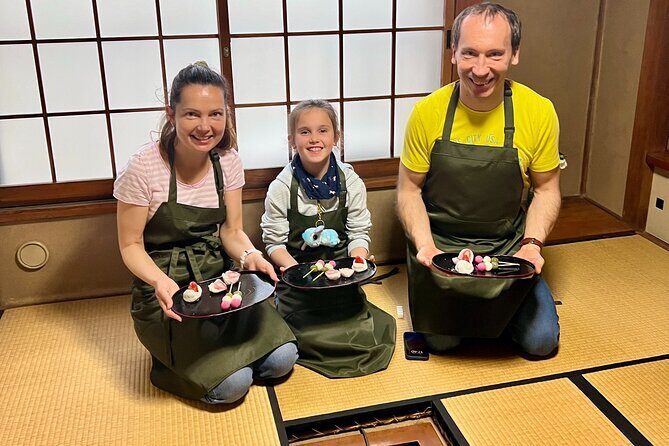
The class runs about 2 hours, and it’s designed so you don’t just taste the result—you make it. The overall structure is hands-on from the start, and that’s a big deal when you’re dealing with mochi and dango. Sticky textures don’t forgive inattention.
Here’s what you can expect you’ll actually do:
Make mochi-style sweets (including fruit daifuku)
You’ll learn traditional mochi sweets by hand, including fruit daifuku. The focus is on technique: shaping the dough, getting the filling portion right, and forming pieces that look good and hold together.
More private options with your own guide



Make dango (not a “noodle-shaped” afterthought)
You’ll also make dango. The class information specifically notes the dango contains no gluten, no alcohol, and no additives. That’s helpful if you’re trying to avoid certain ingredients.
Cook, shape, and finish with tea
After your hands-on work, you’ll sample your creations with Japanese green tea or matcha. If you don’t like caffeine, they’ll provide decaffeinated black tea, and matcha is still an option for people who do want that bold flavor.
One more thing I really appreciate about this kind of class: you don’t get rushed through. In a small group, you can take a minute to correct your technique instead of hoping your dough behaves.
Sakura’s teaching style: culture first, then technique
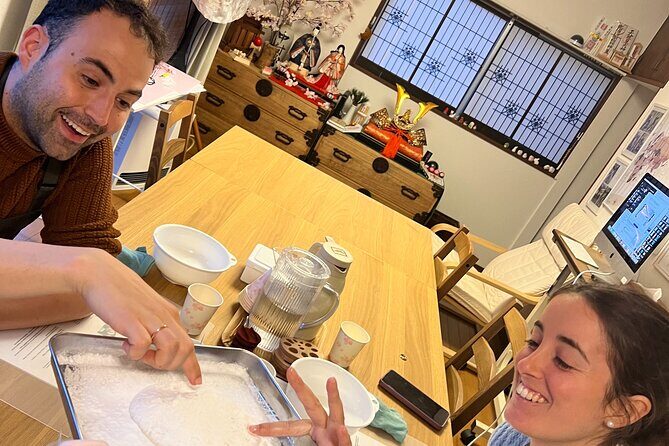
Sakura isn’t just running a class—she’s teaching in a way that matches how families learn in Japan: patient, step-by-step, and with enough explanation that you understand what you’re doing.
The class notes highlight that it’s not demonstration-style. You’ll do the steps yourself. That matters for two reasons:
- You remember the motion, not just the recipe. Mochi and dango are tactile. If you don’t form the shape with your own hands, you’ll forget the key steps fast.
- You can ask questions as you go. In a small group (max 8), you’re more likely to get real help while you’re still in the mixing-and-shaping stage.
Sakura is also described as an experienced mother and teacher who has taught more than 1,000 guests from over 35 countries in her home, and she’s been invited to Switzerland as a guest instructor. Even if you don’t care about credentials, the outcome shows up in the way people talk about the lesson: clear guidance, gentle corrections, and explanations that connect the sweets to everyday Japanese life.
A bonus that comes up in class experience is that she shares context before the cooking starts. You’ll hear about mochi’s history and cultural meaning, and you’ll learn about traditional recipes—not as trivia, but as a reason the technique matters.
What you’ll taste: matcha, tea, and the satisfaction of eating your own work
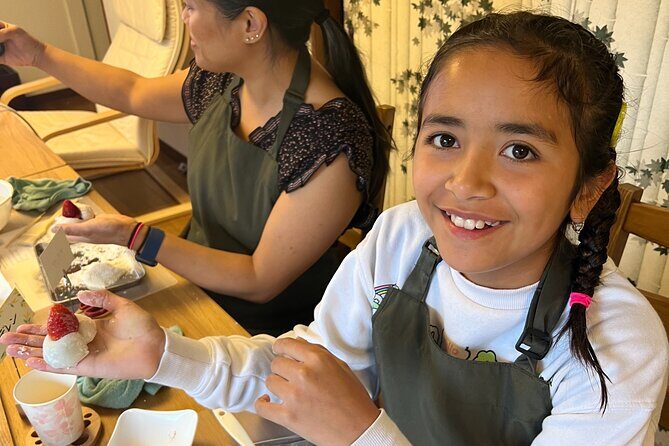
There’s a special kind of happiness in eating something you made from scratch—especially when it’s something as springy and sticky as mochi. The class includes coffee and/or tea, plus Japanese green tea or matcha served during the tasting.
If you’re a matcha person, you’re set. If you’re not, you still have tea options, and there’s a decaf choice if caffeine is a no-go for you.
Also, you’ll receive a take-out bag. So when you finish, you don’t have to treat this as “eat it all right now or lose it.” You can plan for the rest of your day near Shibuya with a sweet carried along.
A quick reality check: home-style sweets are meant to be eaten, not displayed. Don’t worry if your first pieces aren’t perfectly uniform. The point is learning the process and enjoying the result.
Price and value: what $79.28 gets you in Tokyo time
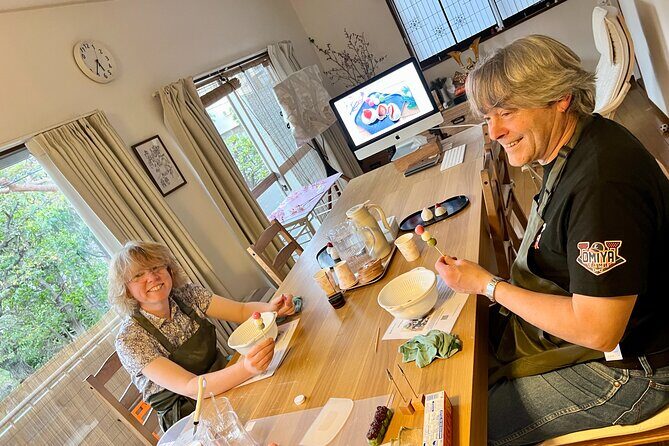
At $79.28 per person (about 2 hours), this class sits in the “premium but not crazy” zone—typical for a private home experience with an instructor.
Here’s what makes it feel like value rather than just a fun ticket:
- Small group size (max 8) means more time per person and fewer moments where you’re waiting.
- Inclusions matter: tea/matcha is included, aprons are available to rent, and you get a take-out bag.
- You actively make multiple sweets, including mochi-based fruit daifuku and gluten-free dango (as stated for the dango).
- No private transportation is included, so you’re paying mainly for the lesson and food experience—not for a bus ride.
Where the price might feel less appealing is if you only want one bite of something and you’re not interested in the hands-on part. If you want cooking craft, this is the right setup.
And if you’re comparing classes, remember this one’s main advantage isn’t just the topic. It’s the format: you learn in a real home, with a teacher who’s done this with large groups across many countries.
Who should book Sakura’s mochi class (and who should think twice)
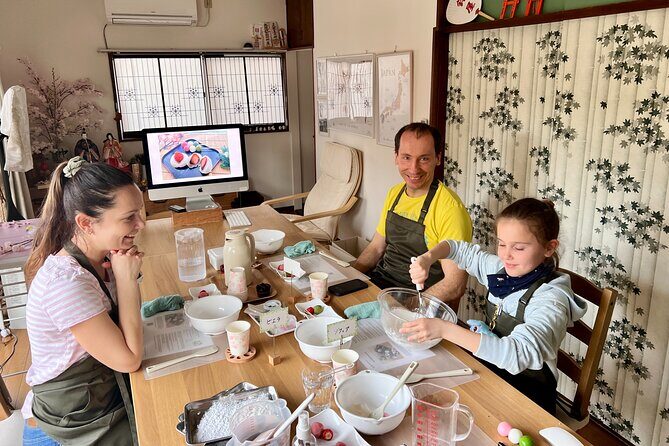
This is a great fit if you:
- Want an authentic, local-feeling experience near Shibuya without the big-tour energy
- Enjoy hands-on food classes where you leave with a skill, not only photos
- Prefer small groups and clear instruction
- Travel as a family, since the class is designed to work for kids and adults with gentle teaching
You should think twice if:
- You have a dog allergy. The class explicitly says the home has a dog and they don’t recommend people with dog allergies.
- You don’t want to do stairs, because the venue is on the second floor.
- You need a fully quiet, no-moving-around experience. This is cooking, so you’ll be active.
If you love Japanese sweets and also like learning how Japanese households approach food prep, you’ll likely feel at ease quickly.
A smooth game plan for your day near Shibuya
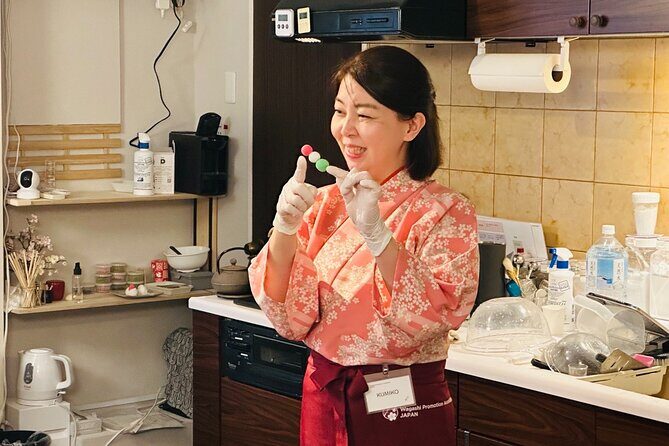
You’ll be in Sangenjaya, so treat this as a local-street stop, not a sprint across Tokyo.
Here’s how I’d plan it:
- Build in buffer time for getting to the second-floor entrance. Give yourself space so you’re not rushing while your sleeves are up.
- Eat lightly beforehand. You want room for tea and your finished sweets.
- If you’re caffeine-sensitive, decide ahead of time and mention you prefer decaf black tea. It’s part of the plan if you ask.
- Dress for comfort. You’ll rent an apron, but you’ll still be standing, kneading, and handling sticky dough.
And once you’re done, use the neighborhood time. Sangenjaya is the kind of place where walking feels pleasant, and you’ll get a different Tokyo view than you get around the biggest stations.
Should you book this mochi sweets class?
I’d book it if you want a hands-on Japanese sweets experience and you value the home-kitchen factor. The class hits a rare combination: you learn technique, you get cultural context, and you leave with sweets you made yourself—not just a souvenir taste.
I’d hesitate if you’re dealing with a dog allergy or if stairs are a deal-breaker. In those cases, the class setting becomes the limiting factor, not the lesson content.
One final practical point: this experience notes free cancellation up to 24 hours in advance, and it also depends on good weather and a minimum number of travelers to run. So if your schedule is tight, you can still keep some flexibility.
If your goal is real Japanese hospitality—served through dough, tea, and patient teaching—this is a strong pick near Shibuya.
FAQ
What do I make in the class?
You’ll learn to make mochi and dango by hand. The class includes fruit daifuku and dango.
Where is the class located?
It takes place in a home in the Sangenjaya area (Setagaya City). The meeting point address is 1-chōme-11-13 Sangenjaya, Setagaya City, Tokyo 154-0024.
How long is the experience?
The class runs about 2 hours.
Is matcha included?
Yes. Japanese green tea or matcha is served, and matcha is available.
What if I don’t want caffeine?
If you do not like caffeine, the class provides decaffeinated black tea.
Are there any dietary notes?
The class information says the dango contains no gluten, no alcohol, and no additives.
Is transportation included?
No. Private transportation is not included.
Do I get anything to take food home?
Yes. You’ll receive a take-out bag.
Is the group small?
Yes. The maximum group size is 8 travelers.
Is it okay if I have a service animal?
Yes. Service animals are allowed, but the class notes they don’t recommend the experience for people with a dog allergy because there is a dog in the home.
Who will enjoy this most?
If you’re excited to get your hands sticky and learn real Japanese sweets in a small home setting near Shibuya, book it. If you have dog allergies or can’t do stairs, choose carefully.
Just Your Group: Private Options
More Tour Reviews in Tokyo






Still in Shibuya? Keep Going





Fresh reviews from around Tokyo






Shibuya Tours, compared.
 ★ 5.0Official Street Go-Kart in ShibuyaFrom $763,435 reviews
 ★ 4.9Street Kart Experience in ShibuyaFrom $741,484 reviews
 ★ 5.0Shibuya Meltdown Nightlife Tour: All-You-Can-Drink Bar HoppingFrom $1061,058 reviews
 ★ 5.0Shibuya Official Street Go-Kart in Shibuya AnnexFrom $69972 reviews
 ★ 5.0Shibuya Food Tour (13 dishes and 4 Eateries)From $77770 reviews
 ★ 5.0Best of Shibuya Food TourFrom $217612 reviews
 ★ 4.8Shibuya Highlights Walking TourFrom $19601 reviews
 ★ 4.7Premium Go-Kart Tour with Tower & Shibuya CrossingFrom $116528 reviews
Browse the lists this tour appears in