
Reviewed · MEIJI SHRINE TOURS
Tokyo: Meiji Shrine and Shinto Culture Walking Tour
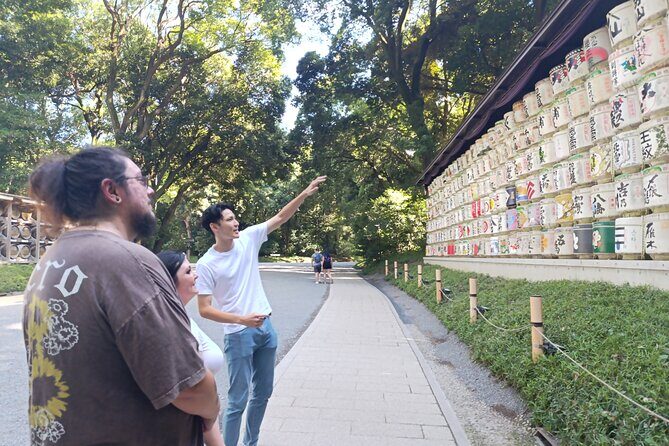
Meiji Shrine is more than a photo stop. This Meiji Jingu Shrine Shinto culture walking tour turns a familiar landmark into a guided lesson, walking you through the torii gates and into the calm forest atmosphere with real context for what people do and why they do it. Meiji Jingu feels iconic, but the added explanation of Shinto rituals is what makes it memorable.
I love the way the guide makes etiquette practical. You learn the small things you can actually do, like how to bow at the gates and what to expect during the purification step, so you don’t feel lost or awkward. I also love the setting and scale here, especially the towering wooden torii that makes the whole shrine experience feel instantly serious.
One consideration: it’s a 2-hour walking tour, so it’s not built for long solo wandering or reading every sign at your own pace. If you want slow, self-guided time for a full day, you may need extra hours before or after.
In This Review
- Quick hits before you go
- Meiji Jingu: walking into a man-made forest near Harajuku
- The torii gate that measures sacredness in 12 meters
- Shinto etiquette you can use right away: bowing and purification
- Emperor Meiji and Empress Shoken: why the shrine feels modern
- Meet the guides: how the group stays friendly and focused
- The walk itself: what you’ll notice during the 2-hour rhythm
- The best meeting point in the area: Starbucks with easy navigation
- Price and value: why $18 works when you factor in the ticket and guide
- Who should book the Meiji Jingu Shinto culture tour
- Should you book it? My take
- FAQ
- How long is the Meiji Jingu Shrine walking tour?
- How much does the tour cost?
- Is admission included?
- What is included in the tour price?
- What should I bring if I have a mobile ticket?
- Where do I meet for the tour?
- Is there a maximum group size?
- Are tips included?
- Can I cancel for a full refund?
Quick hits before you go
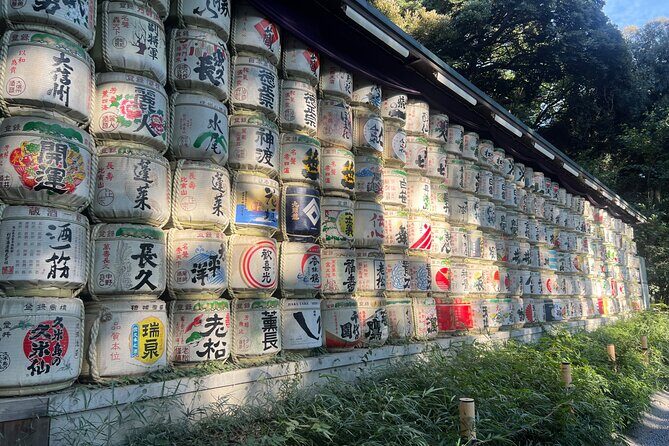
- Small group size (max 15) means you can ask questions without shouting over everyone.
- Admission is included, so you’re not hunting for ticket steps mid-walk.
- Mobile ticket keeps things simple on your phone.
- The main torii is massive: 12 meters tall and 17.1 meters wide.
- Shinto etiquette is explained so you understand bowing and purification actions.
- Guides stay helpful even in rain, keeping the experience moving when weather turns.
More forest calm at Meiji Shrine
- Tokyo: Meiji Shrine Walking Tour — Shinto & Imperial System★ 4.9 · 266 reviews
- Tokyo: Meiji Jingu Shrine and Shinto Culture Walking Tour★ 5.0 · 245 reviews
- Tokyo: Meiji Shrine and Shinto Culture Walking Tour★ 5.0 · 225 reviews
Meiji Jingu: walking into a man-made forest near Harajuku
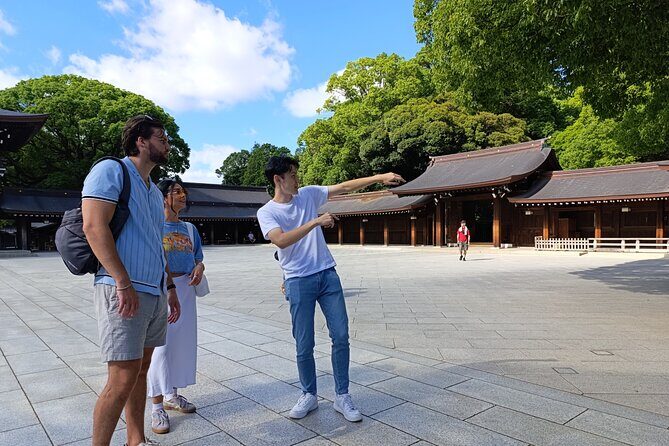
Meiji Jingu is in Tokyo, right where you’d expect to feel the city’s energy—yet the approach changes your rhythm fast. You walk along a forested path inside a massive artificial forest, listed at 70 hectares, which helps explain why locals treat this place as a true pause button.
The shrine itself is dedicated to the deified spirits of Emperor Meiji and Empress Shoken, and it was established in 1920. That matters because it puts today’s visitors in a larger story, not just a modern sightseeing stop.
The torii gate that measures sacredness in 12 meters
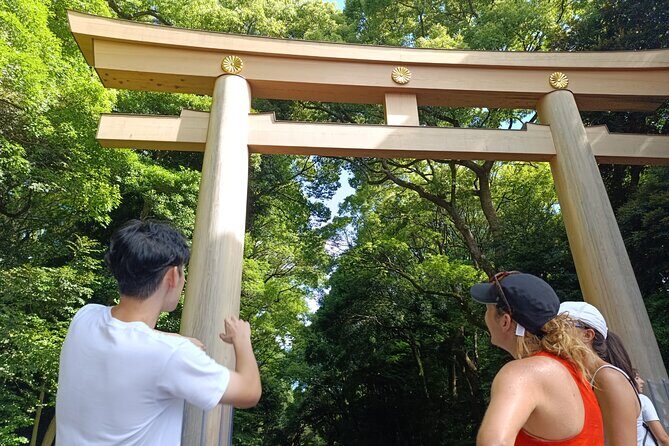
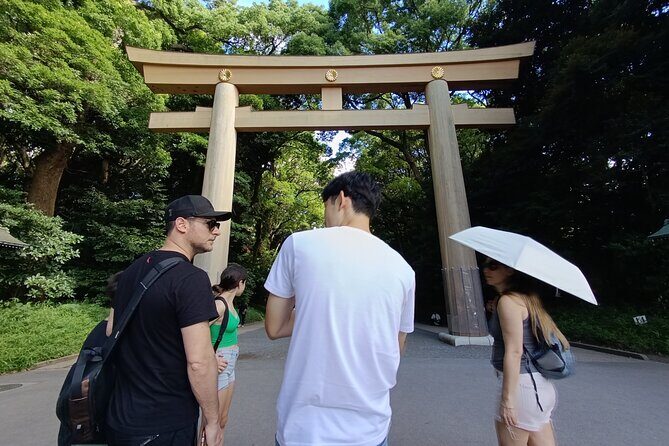
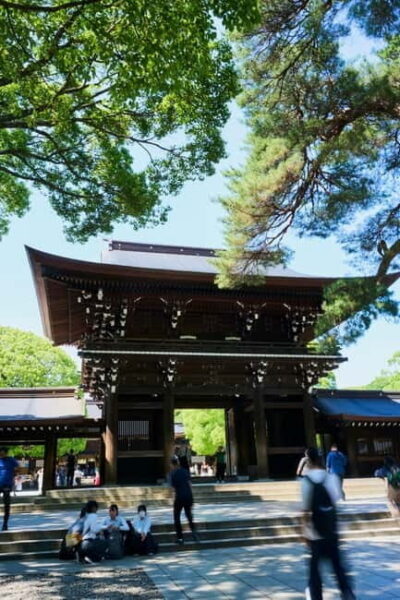
The first big moment is the main torii gate: a giant wooden myojin style torii standing 12 meters tall and 17.1 meters wide. It’s the kind of scale that makes you instinctively slow down, because you’re no longer just walking through a landmark—you’re crossing into a space people treat as sacred.
What I like about having a guide here is that you’re not guessing the meaning of the transition. You learn that the gate signals a change in space and mindset, and you get a sense of how Shinto settings encourage respectful movement instead of loud tourist behavior.
Shinto etiquette you can use right away: bowing and purification
One of the best parts of this tour is how it covers the rituals tourists often skip because they don’t know what they’re for. At Meiji Jingu, you’ll get guidance on how to behave at key moments, including bowing at the gates.
You’ll also learn about the purification ritual, including the idea of ritually cleaning before entering sacred areas. Even if you’re not Shinto, this kind of explanation helps you participate in the way the site expects, without turning it into a performance or a guessing game.
The practical value here is real: when you understand what you’re doing, the whole experience becomes calmer. Instead of watching other people and hoping you copy them right, you get the logic of the actions and can follow along with confidence.
Emperor Meiji and Empress Shoken: why the shrine feels modern
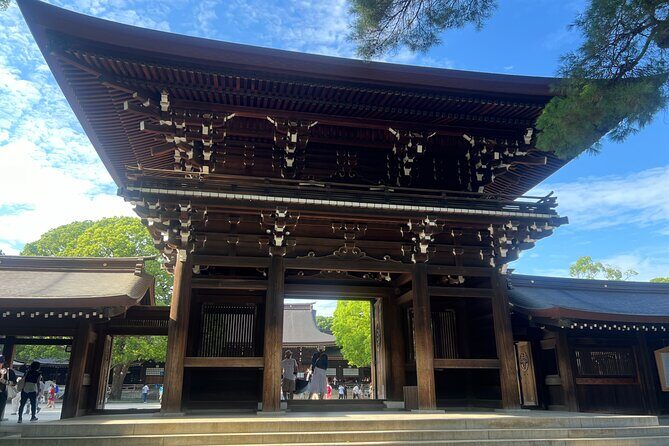
Meiji Jingu is dedicated to Emperor Meiji and Empress Shoken as deified spirits, which can sound abstract until someone connects it to the history of Japan’s transformation. A guide helps connect the symbolism you see today to the people the shrine honors.
In particular, you get context about Emperor Meiji’s achievements and the Meiji restoration era. That historical thread is useful because it helps you read the shrine as more than a collection of gates and buildings. It becomes a place that commemorates leadership, modernization, and national change through spiritual reverence.
This is also where the tour’s “Shinto culture” promise becomes more than a buzz phrase. You start to notice how Shinto sites often mix everyday visitors with deep cultural memory, and that mix is part of why Meiji Jingu feels powerful.
Tokyo at walking pace, a few more ways

Meet the guides: how the group stays friendly and focused
This tour works largely because the guide style is people-first. The experience you get depends on your guide, and the names you’ll hear in the crowd range from Yumi to Sara to Matt-san, with others like Haydn and Benjamin also taking groups.
Sara, for example, is described as friendly and interactive, which matters because it keeps you engaged instead of standing in silence while you absorb facts. Yumi is praised for being accommodating, and the way guides answer questions can change the tone from lecture to conversation quickly.
Matt-san’s guidance in rain is a good reminder that this tour is built for real conditions, not perfect weather fantasy. And Benjamin’s peace-and-kindness approach is a sign that the tour isn’t just about “information,” it’s also about setting the right mood for a shrine visit.
Haydn is also noted for leading a small group through the shrine and explaining Shinto culture in great detail, which is exactly what you want when you’re trying to understand rituals you might otherwise misread. In short: you’re not just getting facts, you’re getting a filter that helps you see what’s happening in front of you.
The walk itself: what you’ll notice during the 2-hour rhythm
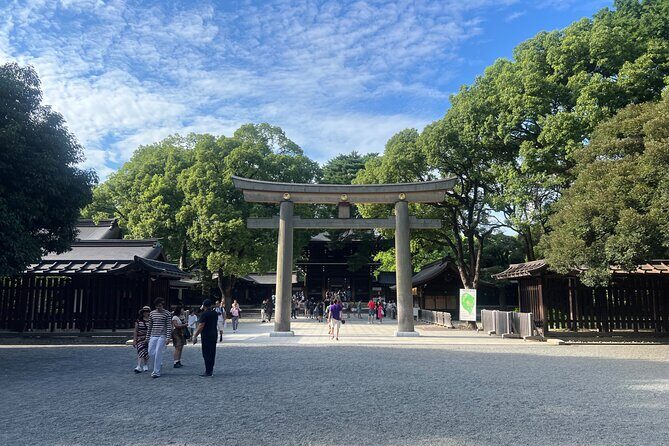
This is a walking tour of about 2 hours, with the shrine visit as the core moment (about an hour focused around the main site experience). That timing is a sweet spot for many first-timers: long enough to experience the approach and the key ritual moments, but not so long that you feel exhausted in Tokyo’s crowds.
You’ll enter through towering torii gates, then move along a forested path lined along the route. The site is also known for its dramatic grounds, and having a guide keeps you from drifting into “just taking pictures” mode.
A subtle benefit: a guide helps you pace yourself. At Meiji Jingu, the best moments aren’t always the biggest structures. They’re often the transitions—what people do at the gates, how they move before purification steps, and where you notice signs of tradition when the air feels quieter than the street outside.
The best meeting point in the area: Starbucks with easy navigation
Logistics are refreshingly simple. You meet at Starbucks Coffee – With HarajukuJapan, at 1-chōme 14-30 in Shibuya (Jingūmae), Tokyo 150-0001. The tour ends back at the same meeting point, so you’re not solving a puzzle after the walk.
The tour is also described as near public transportation, which is important in Tokyo. You can connect quickly from most major lines without having to build a whole transit plan around one obscure stop.
Because it’s a mobile ticket experience, you don’t need to dig for paper. This is useful when you’re juggling trains, snacks, and everything else Tokyo throws at your day.
If you’re prone to arriving late, build in a buffer. In a busy area like Harajuku, that extra margin keeps the start smooth.
Price and value: why $18 works when you factor in the ticket and guide
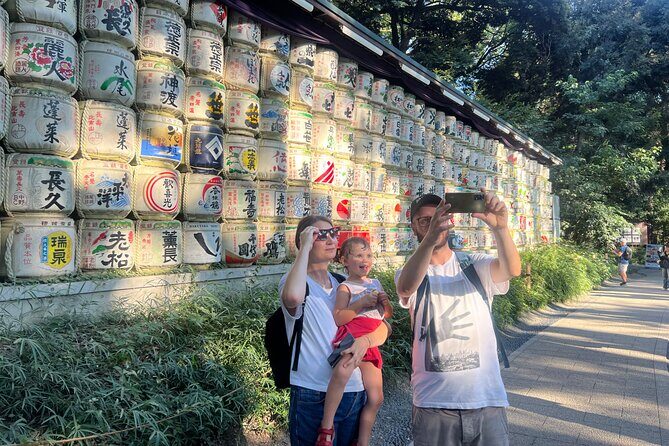
The price is $18.00 per person, and that’s the kind of number that feels too low if you only think about “a walk and some photos.” But the value calculation changes when you look at what you actually get.
You get a tour guide, historical insights tied to the district and shrine, and an admission ticket included as part of the stop. That means you’re paying for context plus entry, not just someone walking alongside you.
Also, the group size is capped at a maximum of 15 travelers. In practical terms, that usually translates to a better Q&A vibe. You’re more likely to get specific answers instead of generic ones, especially when the topic is ritual etiquette where people naturally have questions.
Tips are not included, so plan for that as a separate line item. But even with that in mind, this is strong value for an experience focused on meaning, not just sights.
Who should book the Meiji Jingu Shinto culture tour
Book this if you want Meiji Jingu to make sense to you while you’re standing inside it. If you’re the type who likes to understand what you’re doing—how bowing and purification fit into the flow of a shrine visit—this tour is made for you.
It also suits people who want a manageable group experience in Tokyo. A small-group format helps a lot when you’re navigating cultural norms in a place that has its own pace.
Families can work well with this type of guided walking. One group experience that was praised highlighted a friendly, interactive approach that tends to land well with kids and adults together.
And if you’re visiting Tokyo for the first time, you’ll likely appreciate the added practical tips about getting around. Some guides also share navigation advice alongside shrine context, which can make the rest of your day smoother.
Should you book it? My take
Yes, I’d book this if you want a respectful, guided first look at Meiji Jingu Shrine. The biggest win is that you’re not left to guess Shinto etiquette, symbolism, and ritual logic on your own.
I’d skip it only if you’re a super self-guided type who prefers long quiet wandering without a structured pace. For most people, though, $18 plus admission plus a small-group guide is a solid deal—and the shrine is exactly the kind of place where understanding makes the experience better, not just different.
FAQ
How long is the Meiji Jingu Shrine walking tour?
The tour lasts about 2 hours.
How much does the tour cost?
It costs $18.00 per person.
Is admission included?
Yes. The shrine admission ticket is included in the tour.
What is included in the tour price?
You get a tour guide and historical insights connected to the district and shrine.
What should I bring if I have a mobile ticket?
Just have your mobile ticket ready on your phone when you check in at the meeting point.
Where do I meet for the tour?
You meet at Starbucks Coffee – With HarajukuJapan, 1-chōme 14-30, Shibuya, Jingūmae, Tokyo 150-0001.
Is there a maximum group size?
Yes. The tour has a maximum of 15 travelers.
Are tips included?
No. Tips are not included.
Can I cancel for a full refund?
Yes. Free cancellation is available if you cancel at least 24 hours in advance.
More Tours in Tokyo





More Tour Reviews in Tokyo




More Time at Meiji Shrine

Fresh reviews from around Tokyo






Meiji Shrine Tours, compared.
 ★ 4.7Meiji Shrine, Asakusa, Skytree Bus Tour and CruiseFrom $1221,986 reviews
 ★ 4.5Tokyo Panoramic 1 Day: Meiji Shrine, Asakusa, Odaiba and SKYTREE®From $851,222 reviews
 ★ 4.9Meiji Shrine Walking Tour — Shinto & Imperial SystemFrom $23266 reviews
 ★ 5.0Meiji Jingu Shrine and Shinto Culture Walking TourFrom $19245 reviews
 ★ 5.0Meiji Shrine Walking Tour — Shintoism & Imperial SystemFrom $21209 reviews
 ★ 4.61 Day Bus Tour with Meiji-Jingu,Odaiba,lunch&SkytreeFrom $83156 reviews
 ★ 5.0Tokyo Morning Tour : Meiji Shrine, Asakusa and Fish MarketFrom $72102 reviews
 ★ 5.0Tokyo Early Morning Tour Asakusa Meiji Shrine (Private Opt)From $5969 reviews
Browse the lists this tour appears in