
Reviewed · MEIJI SHRINE TOURS
Tokyo: Meiji Jingu Cultural Walking Tour with Japanese Historian
Shinto at Tokyo pace is quietly eye-opening. This Meiji Jingu walk focuses less on photo stops and more on meaning, with a Japanese student historian leading in clear English. I especially like how the guide turns big ideas into simple explanations you can actually use while walking—what kami are, why this shrine was built, and why Meiji Jingu still matters to everyday Japanese life.
Two hours is also a real plus: you get a structured route through the shrine grounds without feeling rushed. One thing to consider, though: if you’re hunting for lots of scenic “must-shoot” moments only, this tour’s value is in understanding Shinto (and the rituals and sacred-space rules that come with it), not in stopping for endless pictures.
In This Review
- Key things to know before you go
- Why Meiji Jingu is the smart first shrine stop in Tokyo
- Meeting at Harajuku: start your walk without the headache
- The core experience: your Meiji Jingu walk with a student historian
- What you’ll likely notice on the route
- Shinto basics you can apply as you walk
- Rituals, architecture, and sacred-space rules explained in plain English
- The guides: energy, clarity, and real-life Japan advice
- Price and value: why $19.55 feels fair
- Who this tour suits best (and who should think twice)
- A practical way to get the most from the 2-hour format
- Should you book this Meiji Jingu cultural walking tour?
- FAQ
- How long is the Meiji Jingu Cultural Walking Tour?
- What is the price per person?
- Is admission included?
- Where do we meet for the tour?
- Is this a private tour?
- What language is the guide using?
- Do I need to bring a paper ticket?
- What will I learn during the walk?
- What is the cancellation policy?
- Is it suitable for most travelers?
Key things to know before you go
- Student historians in English explain Shinto concepts like kami, nature, and ancestors in a visitor-friendly way
- Meiji Jingu’s meaning comes through you’ll learn why it was built and whom it enshrines
- Rituals and architecture get translated into practical “what you’re seeing and why it matters”
- A calm walking pace makes it easier to ask questions and keep up without stress
- Private format for your group so the tone stays relaxed rather than chaotic
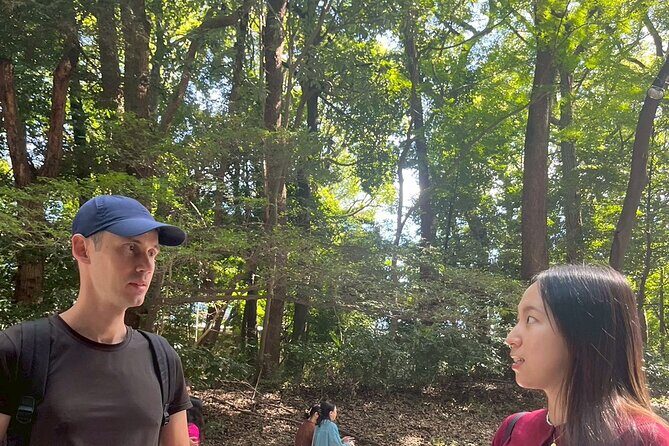
More forest calm at Meiji Shrine
- Tokyo: Meiji Shrine Walking Tour — Shinto & Imperial System★ 4.9 · 266 reviews
- Tokyo: Meiji Jingu Shrine and Shinto Culture Walking Tour★ 5.0 · 245 reviews
- Tokyo: Meiji Shrine and Shinto Culture Walking Tour★ 5.0 · 225 reviews
Why Meiji Jingu is the smart first shrine stop in Tokyo
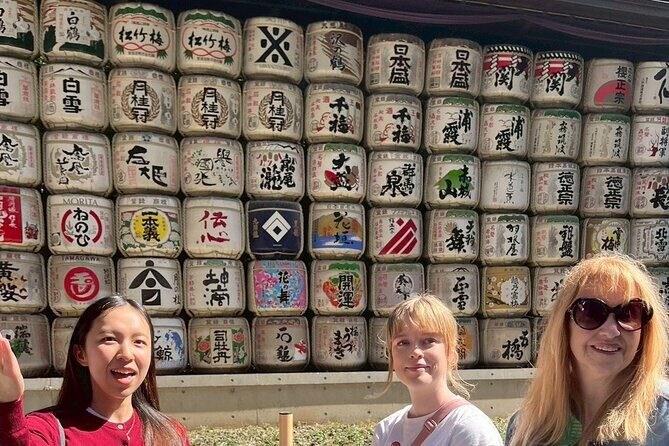
Meiji Jingu is one of those places that can feel like a time machine and a reality check at the same time. One minute you’re in Tokyo’s energy; the next, you’re walking through a large, peaceful shrine space where the rules and routines are part of the experience. That contrast is exactly why this tour works so well for first-time visitors.
This is not presented as a religious lecture. Instead, you’re guided to understand Shinto as a way of seeing the world: kami connected to nature, the presence of ancestors, and respect shown through daily behavior. When you grasp those basics, the shrine stops being a collection of impressive buildings and becomes a living system of meanings.
I also like the tour’s emphasis on why Meiji Jingu matters today. You’re not just told what happened in the past. You’re guided to connect the shrine to Japanese values you’ll notice in everyday life—how people handle sacred spaces, why certain gestures show respect, and how tradition stays relevant.
Meeting at Harajuku: start your walk without the headache
You meet at WITH HARAJUKU (1-chōme-14-30 Jingūmae, Shibuya, Tokyo). That location choice is practical for visitors because Harajuku is easy to orient around, and the tour is listed as being near public transportation.
The tour is scheduled for about 2 hours, and the main shrine exploration is about 1 hour 30 minutes. This is a good length for a cultural walk: long enough to learn the “why” behind what you’re seeing, but not so long that your attention collapses halfway through.
You’ll also use a mobile ticket, which keeps things simple on the day. And because it’s a private tour, only your group participates—so you can keep questions coming without feeling like you’re talking over a crowd.
The core experience: your Meiji Jingu walk with a student historian
The heart of this outing is a guided stroll through the shrine grounds of Meiji Jingu Shrine. You’ll be led by a Japanese student historian, and the description also notes that the shrine exploration is guided by a certified volunteer guide trained by Meiji Jingu. In practice, that combo matters: you get structured storytelling plus the kind of local cultural grounding that helps explanations stay accurate.
As you walk, you’ll learn what a shrine is for and how Shinto is expressed through physical space. This isn’t only about names and dates. It’s about recognizing what you’re looking at—like the role of the sacred grounds, the significance of major elements, and the logic behind the flow of rituals.
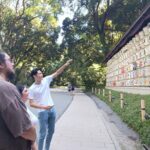
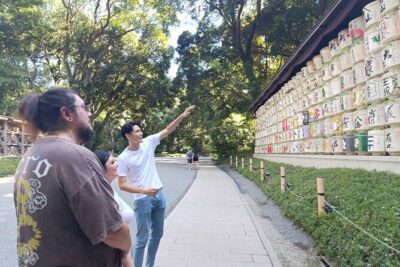
The tone stays calm, which shows up in the way the tour is paced. Several guides are described as attentive and kind, and the small-group or private setup helps a lot. You’re more likely to ask real questions instead of just nodding politely while rushing to the next landmark.
What you’ll likely notice on the route
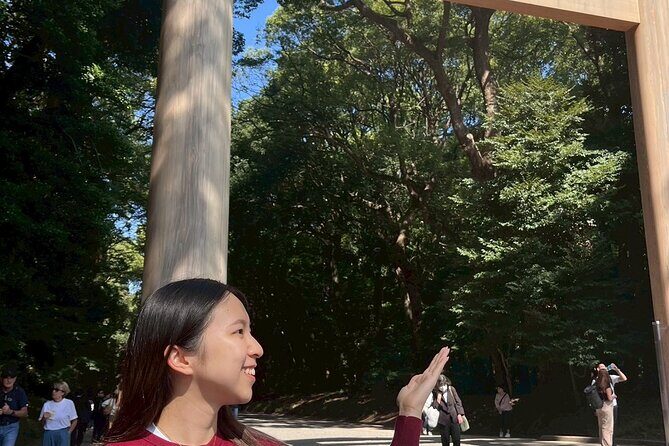
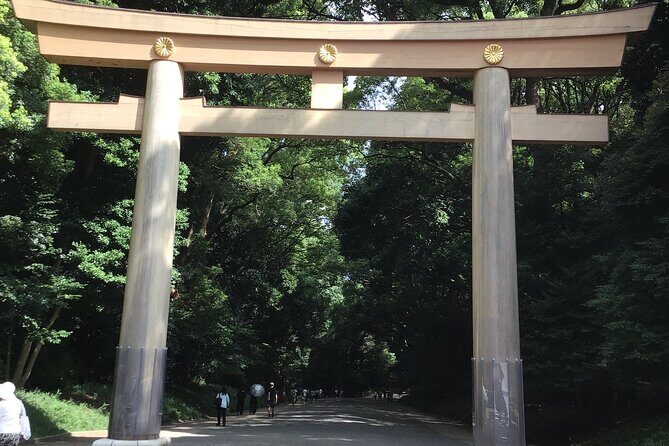
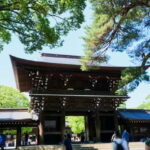
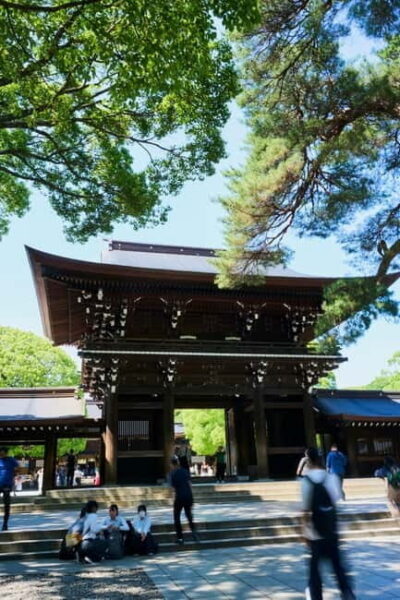
Meiji Jingu is known for its big, iconic entry moments, and the tour experience often includes time to take in key elements like the grand torii gate. You’ll also hear explanations that connect the setting to the ideas behind Shinto—especially the idea that nature and sacred presence belong together.
One review specifically called out water features and museum exhibits on site. The tour description you’re given centers on the shrine experience, so don’t expect a separate, long museum block every time. But you can reasonably expect the guide to point out notable site details that help explain the shrine’s context.
Tokyo at walking pace, a few more ways

Shinto basics you can apply as you walk
One of the best parts of this tour is how it starts with fundamentals: what kami are, and how Shinto understands them through nature and ancestral presence. That’s not trivia for the sake of trivia. It’s the framework that helps you interpret what you see.
Here’s what that means for you during the walk. When the guide explains kami, you stop thinking of the shrine as a “generic temple.” You start seeing it as a place where respect is shown to sacred presence tied to the natural world. When you understand ancestors as part of the spiritual landscape, it becomes easier to understand why ceremonies and offerings follow patterns that feel consistent rather than random.
You’ll also learn why Meiji Jingu was built and who it enshrines. The tour is specifically about Meiji Jingu’s significance, and the shrine is connected to Emperor Meiji, so the story behind the shrine has a clear, human focus—not just abstract religion.
What I like most is that the guide doesn’t treat Shinto like a sealed topic. You’re guided to see how Shinto shapes everyday values. That’s where this tour goes beyond sightseeing and helps you connect what you’re learning to what you’ll notice later in Japan.
Rituals, architecture, and sacred-space rules explained in plain English
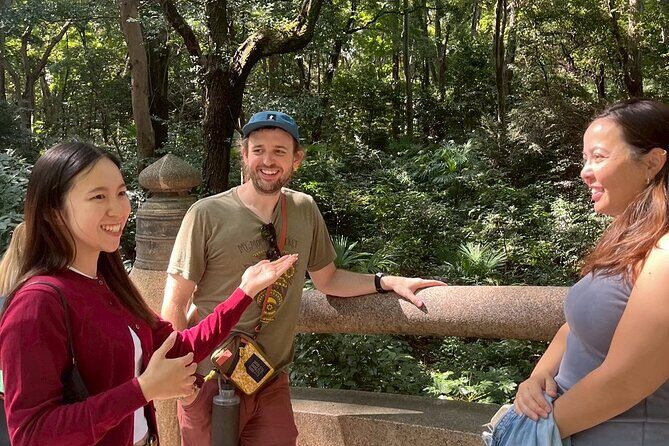
A shrine can look simple from a distance, but the details can be hard to read if you don’t know what you’re looking for. This is where the guide’s clear English really matters.
You’ll be taught the meaning behind rituals and sacred spaces—so you’re not just watching motions. You understand what the actions are meant to communicate and why certain areas feel more formal or more sacred. That matters because Meiji Jingu isn’t a theme park. People treat the space with care, and your confidence improves when you understand the logic behind what visitors are expected to do.
Architecture also gets treated as meaning, not decoration. The guide explains how the structures reflect Shinto ideas, and how the shrine’s design supports the spiritual purpose of the site. When you follow that, the place stops being just scenic and becomes readable.
If you like asking questions, this tour is built for it. The description explicitly says questions and discussion are welcome, and the private setup makes it easier to get answers that match your curiosity—whether you’re wondering about kami, ritual behavior, or why certain traditions persist.
The guides: energy, clarity, and real-life Japan advice
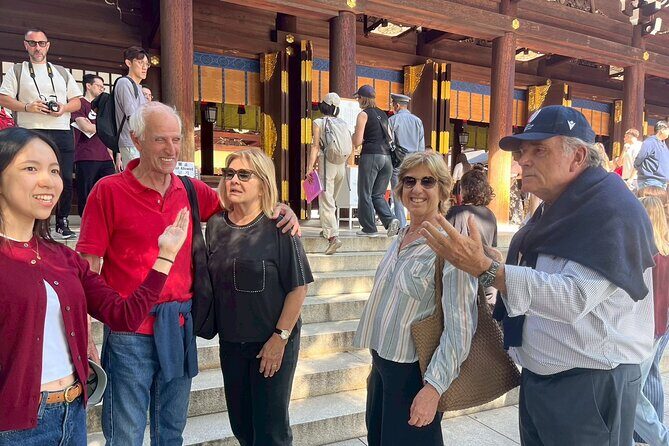
The experience is led by Japanese student historians, and the guides mentioned in past experiences include people like Noriko and Shota. What stands out is not just that they know facts, but that they explain in clear English and make it easy to follow.
One review mentioned great chemistry between the hosts, and another noted that the guide gave lots of advice for the rest of the trip in Japan. That’s a small bonus that adds value if you’re still shaping your itinerary. Even a short travel tip—what to see next, what to watch out for, how to plan your day—can make your broader Tokyo time feel smoother.
Also, the calm atmosphere matters here. A thoughtful guide plus a quiet shrine space is a great combo for keeping your attention. You’re more likely to remember what you learn, because you’re not battling noise and crowds at every turn.
Price and value: why $19.55 feels fair
At $19.55 per person for about 2 hours, the math works because the tour includes admission and is built around a guided learning focus, not a rushed checklist. For Tokyo, that matters. Many experiences add costs through separate tickets or end up feeling like a standard walk where you’re paying for someone to lead you between sights.
Here, you’re paying for interpretation: Shinto concepts, the shrine’s meaning, and the translation of rituals and sacred-space rules into visitor-friendly language. If that’s the kind of Tokyo you want—understanding culture rather than just collecting photos—this price is easy to justify.
There’s also a planning signal in the data: this is commonly booked about 42 days in advance on average. That doesn’t mean you can’t find space, but it suggests this isn’t the kind of tour people book last-minute only. If Meiji Jingu is on your short list, it’s worth reserving ahead so you can lock in a time that fits your day around Harajuku.
Who this tour suits best (and who should think twice)
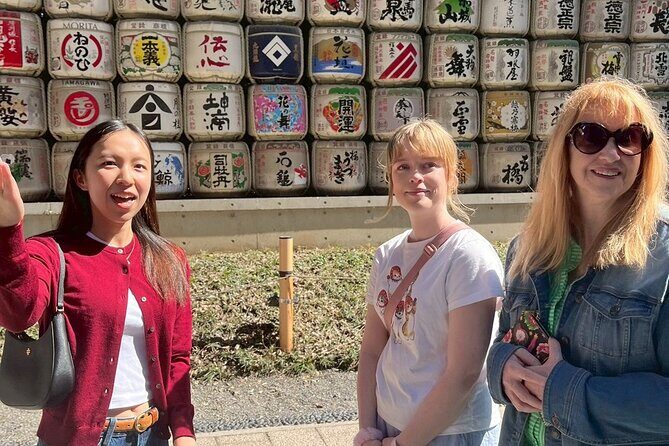
This tour is a great fit if you want a cultural “first read” on Japan’s spiritual identity. It’s especially suitable for first-time visitors, people interested in tradition and history, and anyone who prefers guided context over self-guided guessing.
You’ll likely enjoy it most if you like:
- learning what you’re looking at while you walk
- asking questions and getting straight answers
- understanding Shinto as a lived worldview, not only a historical topic
You might think twice if your travel style is strictly photo-first sightseeing. Since the tour emphasizes cultural understanding over sightseeing photo stops, the pace may feel different than what you expect from a standard “look at that, great photo, next” style group walk.
A practical way to get the most from the 2-hour format
To make the tour feel worth it, I’d treat it like a conversation. Go in with 1 or 2 questions you actually care about, such as:
- What does this ritual mean in everyday life?
- What should I notice as I walk through the grounds?
- How does Shinto connect to values I might see later in Japan?
Also, plan your timing so you’re not rushing to your next stop immediately after. The shrine experience works best when your brain has a little breathing room. Two hours can pass fast when explanations are clear, and you’ll want a few minutes afterward to revisit what clicked.
Finally, wear comfortable shoes. It’s a walking tour in shrine grounds, so you’ll appreciate anything that keeps your feet happy while you focus on the stories.
Should you book this Meiji Jingu cultural walking tour?
If you want Tokyo without the guesswork, I’d book it. The big value is that it turns Meiji Jingu into an explained place: Shinto basics, why this shrine exists, and what the rituals and space mean. With private group time and Japanese student historians leading in clear English, it’s a calm, high-signal experience.
Book it especially if you’re the type who likes learning the cultural logic behind what you see. Skip it if you mainly want a fast, photo-heavy tour with minimal talking and minimal cultural context.
Either way, Meiji Jingu is worth your time. This format just helps you understand it in the time you have.
FAQ
How long is the Meiji Jingu Cultural Walking Tour?
It runs for about 2 hours.
What is the price per person?
The price is $19.55 per person.
Is admission included?
Yes. Admission ticket is included.
Where do we meet for the tour?
The start point is WITH HARAJUKU, 1-chōme-14-30 Jingūmae, Shibuya, Tokyo 150-0001, Japan.
Is this a private tour?
Yes. It’s a private tour/activity, and only your group participates.
What language is the guide using?
The tour is described as English-guided.
Do I need to bring a paper ticket?
No. A mobile ticket is provided.
What will I learn during the walk?
You’ll learn basic ideas of Shinto (kami, nature, ancestors), why Meiji Jingu was built and whom it enshrines, how Shinto shapes everyday Japanese values, and the meaning behind rituals, architecture, and sacred spaces.
What is the cancellation policy?
Free cancellation is available. You can cancel up to 24 hours in advance of the experience for a full refund.
Is it suitable for most travelers?
The tour notes that most travelers can participate.
More Tours in Tokyo





More Tour Reviews in Tokyo




More Time at Meiji Shrine


Fresh reviews from around Tokyo






Meiji Shrine Tours, compared.
 ★ 4.7Meiji Shrine, Asakusa, Skytree Bus Tour and CruiseFrom $1221,986 reviews
 ★ 4.5Tokyo Panoramic 1 Day: Meiji Shrine, Asakusa, Odaiba and SKYTREE®From $851,222 reviews
 ★ 4.9Meiji Shrine Walking Tour — Shinto & Imperial SystemFrom $23266 reviews
 ★ 5.0Meiji Jingu Shrine and Shinto Culture Walking TourFrom $19245 reviews
 ★ 5.0Meiji Shrine and Shinto Culture Walking TourFrom $18225 reviews
 ★ 5.0Meiji Shrine Walking Tour — Shintoism & Imperial SystemFrom $21209 reviews
 ★ 4.61 Day Bus Tour with Meiji-Jingu,Odaiba,lunch&SkytreeFrom $83156 reviews
 ★ 5.0Tokyo Morning Tour : Meiji Shrine, Asakusa and Fish MarketFrom $72102 reviews
Browse the lists this tour appears in