
Cooking dinner in Tokyo can feel personal.
This small-group class brings everyday Japanese flavors into a French-friendly workshop, led by Yumiko Mizutani and her daughter Yuri, with French help throughout. You’ll make a practical menu you can repeat at home, using ingredients that are realistically findable in France.
Two things I really like: the focus on simple, everyday dishes (not just ramen or sushi), and the way the recipes are built for at-home success. You’re not only cooking; you’re learning techniques you can carry forward to your own kitchen.
One drawback to plan for: the house has cats. They’ll be kept away during the cooking session, but if you have animal allergies, you should think carefully and contact the provider before booking.
In This Review
- Key highlights at a glance
- Japanese home cooking with Yumiko Mizutani and Yuri
- The dishes you’ll cook: karaage, miso soup, teriyaki salmon, sesame vegetables, and onigiri
- How you’ll learn skills you can repeat in France
- The home setting: Japanese ceramics, plated food, and tea
- Small-group pacing and communication in French
- Getting there: Futako-Tamagawa station and the McDonald’s meeting point
- Price and value: what $89 buys you in 150 minutes
- Who this class suits best (and who should think twice)
- Vegetarian options and allergy reality check
- Tips to make the most of your cooking lesson
- Should you book this Tokyo Japanese cooking class from France?
- FAQ
- How long is the cooking class?
- What language is the class taught in?
- How many people are in the small group?
- What dishes will I learn to cook?
- Are vegetarian menus available?
- Where do I meet the instructor?
- Is this activity suitable for children?
- What if I have allergies?
- Is anything provided, or do I need to bring kitchen items?
Key highlights at a glance
- Small group (max 3 people) means you get real attention while cooking
- French instruction guided by Yumiko and supported by Yuri, with extra facilitation in French
- Everyday Japanese menu: karaage, miso soup, onigiri (plus teriyaki salmon and sesame vegetables)
- France-friendly ingredients so you can actually cook it again after your trip
- Traditional serving ware + plated meal in a warm, home-style setting
- Seasonal tea at the end, plus a welcome tea and free drink during the class
More aprons-on time in Tokyo kitchens
- Ramen & Gyoza Cooking Class in Tokyo with Local Supermarket Visit★ 5.0 · 823 reviews
- Tokyo: Easy Ramen Cooking Experience in Kabukicho, Shinjuku★ 4.6 · 321 reviews
- Ramen and Sushi Cooking Class with Sake Pairing Set in Tokyo★ 5.0 · 291 reviews
Japanese home cooking with Yumiko Mizutani and Yuri
This class is run like a home lesson, not a show. You come in as a small group and leave with a clear sense of how Japanese people eat day to day—simple, balanced, and built around good ingredients.
Yumiko is the host and culinary guide, and Yuri supports you as the bridge into French. An assistant is also present to help with communication in French, which matters a lot if your Japanese is limited. Yuri has lived in France, and that comes through in how the explanations connect to what French speakers need.
The class is capped at three participants, so you’re not shouting across a room or guessing when you’ll get feedback. If you’re a beginner, that matters. If you’re more experienced, it still matters because you can ask why a sauce behaves a certain way, how to judge doneness, and what to do if you don’t have the exact same products.
The dishes you’ll cook: karaage, miso soup, teriyaki salmon, sesame vegetables, and onigiri
The menu is built around Japanese dishes you’ll recognize, even if you usually see them in restaurants. The big star is karaage, Japanese fried chicken—crispy on the outside, juicy inside, and flavored in a way that feels both comforting and precise.
You’ll also cook:
- Miso soup with pork and vegetables, a classic everyday bowl that teaches how to build flavor without turning dinner into a complicated project
- Teriyaki salmon, which helps you practice the sweet-salty teriyaki balance
- Sesame vegetables, a side that shows how Japanese meals use small, flavorful bites to round things out
- Rice or onigiri (rice balls), so you learn a practical way to shape and serve rice-based comfort food
A smart thing here is the mix of textures. You get fried (karaage), simmered (miso soup), glazed (teriyaki salmon), and shaped (onigiri). That variety builds confidence because you’re not just repeating one cooking method.
This also explains why the experience works for French home cooks. Many of these steps translate well to home kitchens: fry in batches, control simmer times, and master a sauce with ingredients you can source locally.
How you’ll learn skills you can repeat in France
The workshop is designed around a simple promise: you should be able to cook these dishes again after you return. The ingredients are said to be easy to find in France, and the recipes are presented in a way that supports that goal.
For you, that’s the real value. A cooking class is fun, but it only stays useful if the recipe survives a trip to the grocery store. Here, the menu choices make that easier. Rice, chicken, salmon, miso, soy sauce, sesame, vegetables—these are common enough that you’re not likely to hit a dead end.
You’ll also get a recipe set and techniques, not just a list of ingredients. That’s important because Japanese cooking often depends on small decisions—how long you cook something, how you season, and how you balance salty, savory, and slightly sweet flavors.
One detail I’d pay attention to: the class is framed around everyday Japanese food, so you’re learning a baseline. Once you understand the baseline (miso soup flavor, teriyaki glaze, karaage seasoning), it becomes easier to adjust for what you can buy in your local market.
The home setting: Japanese ceramics, plated food, and tea
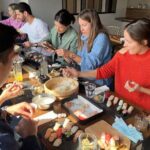
Food tastes better when it’s served with care, and this class leans into that. You’ll plate your dishes on Japanese ceramics, then sit down in a warm atmosphere to eat what you made.
That matters more than it sounds. When you see your food presented neatly and traditional way, you start to understand Japanese meal structure—how a main sits with sides, how soup complements rice, and how the meal feels complete rather than random.
You’ll also get a welcome tea, a free drink (tea), and a seasonal tea at the end chosen by the hostess. This is one of those small cultural touches that turns a cooking session into an evening.
More things to make with your own hands


Small-group pacing and communication in French
With a maximum of three people, the pacing is more relaxed. You’re not stuck waiting while everyone else catches up, and you’re not pressured to act like you’ve cooked karaage every day of your life.
French instruction is the core setup, and Yuri plus an assistant help bridge the language gap when needed. Based on what’s been shared by past participants, their communication can cover French very strongly, with additional support in other languages if necessary. If you speak English or Japanese, you may still find it helps for context, but French is the main thread.
Beginners are explicitly welcome. That’s good news if you don’t want to fear a fryer or worry that you’ll ruin the sauce. The format is built for learning step by step.
Getting there: Futako-Tamagawa station and the McDonald’s meeting point
Logistics are simple, as long as you show up prepared. Meet in front of the McDonald’s just outside the East exit of Futako-Tamagawa station (on the Den-en-toshi and Ōimachi lines).
A practical tip: arrive a few minutes early and get your orientation before you need to find the exact spot. Train hubs in Tokyo can be confusing, especially if you’re navigating exits for the first time. This class gives you a very specific landmark, which is exactly what you want.
Once you meet, you’ll get a welcome and then the workshop moves at an easy rhythm. Since the class lasts 150 minutes, you don’t want to spend your best energy wandering around the station.
Price and value: what $89 buys you in 150 minutes
At $89 per person for 150 minutes, the question is whether you’re paying for knowledge and ingredients—or just paying for a meal.
Here, you’re getting more than a plate:
- Meals included
- Recipes included
- All ingredients and utensils are provided
- Apron loan is included, and you don’t need to bring kitchen gear
- Welcome tea and a free tea drink are included
- You’re welcomed at the meeting point
That shifts the value math. You’re not shopping for special items, and you’re not cleaning up the mess after. You also get a real host-and-student interaction with personalized help in a small group.
Could it cost less if you cooked the menu on your own? Sure. But you wouldn’t get the guidance, the pacing, or the home-style cultural details like the ceramic plating and tea ritual. For me, this is the kind of class where the cost makes sense if you care about learning, not just eating.
Who this class suits best (and who should think twice)
This fits well if you want an authentic feel without complicated restaurant logistics. You’ll enjoy it if you’re the type who likes knowing what to buy, how to cook it, and how to serve it.
It also works for:
- Beginners who want clear steps and support
- Food enthusiasts who want more than trendy dishes
- People who want Japanese home cooking with French-language help
Think twice if any of these apply:
- Food allergies: the class isn’t suitable if you have food allergies
- Animal allergies: the house has cats, even though they’ll be kept away during cooking
- Children under 6 years: not suitable
Also note that smoking isn’t allowed, including indoors.
Vegetarian options and allergy reality check
Vegetarians are welcome, but the key is communication. A vegetarian menu is available if you message in advance so the menu can be adapted.
If you have allergies, the rules are stricter. The class is not suitable for people with animal allergies or food allergies. Even if cats are kept away from the cooking session, the presence of cats in the home is a real consideration.
If you fall into any borderline category—mild intolerance, specific ingredient concerns, or household allergy history—contact the provider before booking. It’s the fastest way to get a clean answer for your situation.
Tips to make the most of your cooking lesson
A cooking class like this rewards focus. Here are a few ways to get more out of the time:
1) Watch the order of steps. Fried chicken, miso soup, and teriyaki timing all depend on what you do first and how long you wait between tasks.
2) Take mental notes on flavor balance. Teriyaki and miso dishes are all about that sweet-salty and savory rhythm.
3) Ask questions in French early. If something feels unclear, speak up sooner rather than later; that’s when the assistant support is most useful.
4) Plan to recreate the menu at home. Because the ingredients are meant to be findable in France, you’ll get more value if you shop soon after returning.
Also, come as you are. Aprons, towels, and slippers are provided, so you don’t need to pack anything special beyond curiosity.
Should you book this Tokyo Japanese cooking class from France?
If you want Japanese food that feels like real daily cooking, this is a strong choice. The combination of karaage, miso soup, teriyaki salmon, sesame vegetables, and rice/onigiri gives you a balanced set of skills, not just one gimmick dish.
Book it if:
- You want a small-group class with hands-on cooking
- You prefer French instruction and clear support
- You care about being able to cook again at home with France-friendly ingredients
Skip it if:
- You have food allergies or animal allergies
- You’re not comfortable with the presence of cats in the home setting
- You want a group tour with lots of walking and sightseeing rather than a focused kitchen experience
FAQ
How long is the cooking class?
The experience lasts 150 minutes.
What language is the class taught in?
The class is taught in French.
How many people are in the small group?
The workshop is limited to a maximum of 3 participants.
What dishes will I learn to cook?
You’ll learn dishes including karaage (fried chicken), miso soup with pork and vegetables, teriyaki salmon, sesame vegetables, and rice or onigiri.
Are vegetarian menus available?
Yes, vegetarian menus are available. You should contact the provider in advance so the menu can be adapted.
Where do I meet the instructor?
Meet in front of the McDonald’s just outside the East exit of Futako-Tamagawa station (Den-en-toshi and Ōimachi lines).
Is this activity suitable for children?
It is not suitable for children under 6 years old.
What if I have allergies?
The class is not suitable for people with animal allergies or people with food allergies. Cats are in the house, but they are kept away during the cooking session.
Is anything provided, or do I need to bring kitchen items?
All ingredients and utensils are provided, and aprons are loaned. Towels and slippers are also provided. You also get welcome tea and free tea during the class, plus the recipe.
Make Something to Take Home
Learn Another Dish: Tokyo Cooking Classes
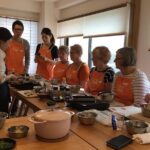
More Tour Reviews in Tokyo






Fresh reviews from around Tokyo






Cooking Classes, compared.
 ★ 5.0Ramen & Gyoza Cooking Class in Tokyo with Local Supermarket VisitFrom $122823 reviews
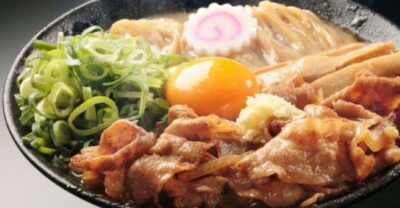 ★ 4.6Easy Ramen Cooking Experience in Kabukicho, ShinjukuFrom $29321 reviews
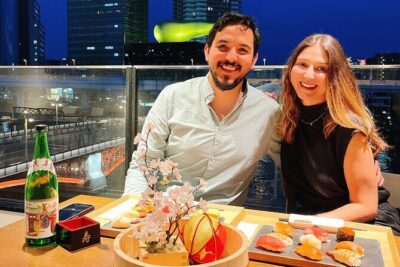 ★ 5.0Ramen and Sushi Cooking Class with Sake Pairing Set in TokyoFrom $79291 reviews
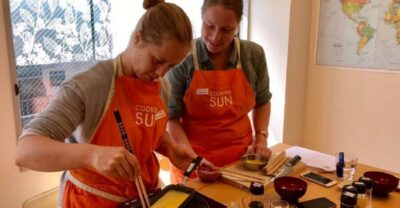 ★ 4.9Wagyu and 7 Japanese Dishes Cooking ClassFrom $67273 reviews
 ★ 5.0Tokyo Washoku 4-hour Cooking Class: From Market to TableFrom $79253 reviews
 ★ 5.0Small-Group Wagyu Beef and 7 Japanese Dishes Tokyo Cooking ClassFrom $72190 reviews
 ★ 5.0Private Home Cooking in Yanaka – Local Flavors in a Warm SettingFrom $122173 reviews
 ★ 5.0Tokyo Sushi Making Experience & Japanese Cooking ClassFrom $59150 reviews
Browse the lists this tour appears in