
Reviewed · COOKING CLASSES
Sushi Cooking Class: AKEMI’s SUSHiKiTCHEN in Tokyo
Sushi tastes different when you make it. In Akemi’s Sushikitchen in Tokyo, you learn the craft in a home kitchen with small-group, English-guided instruction. It’s the kind of class where you’re not just watching food happen, you’re doing the work and getting feedback as you go.
I especially liked the ingredient quality: the rice is specially blended and ordered from Hachidaime Gihey in Kyoto, and the fish (“neta”) comes fresh from the Toyosu and Tsukiji markets. The only real consideration is the price: at about $105 per person, it’s a lesson-first experience, so go if you want the cooking + culture, not just a quick plate of sushi.
In This Review
- Key highlights before you book
- A Tokyo home kitchen, not a restaurant line
- How the 2.5 hours plays out: from rice to your own sushi
- Start with the basics (and the why)
- Learn technique in small chunks
- Make four types of sushi, not just one
- The built-in “how to eat it” part
- Rice and neta: the ingredient choices that raise the whole class
- Rice: ordered from Hachidaime Gihey
- Fresh fish from Toyosu and Tsukiji
- Why ingredient sourcing makes this more than a cooking demo
- Technique with a trained teacher: Edomae skills in plain steps
- Sushi history, terminology, and etiquette you can actually use
- Small-group size: why five students changes everything
- Price and value: what $105.68 really buys
- Getting to the meeting point in Shibuya (and keeping it simple)
- Who should book Akemi’s SushiCooking class?
- Should you book this sushi cooking class?
- FAQ
- How long is Akemi’s sushi cooking class?
- How big is the group?
- What will I make in the class?
- Do I need sushi experience before I book?
- Is the class taught in English?
- Where do I meet for the class?
- What ingredients are used?
- Does the lesson include sushi culture and etiquette?
- Are service animals allowed?
- What is the cancellation policy?
Key highlights before you book
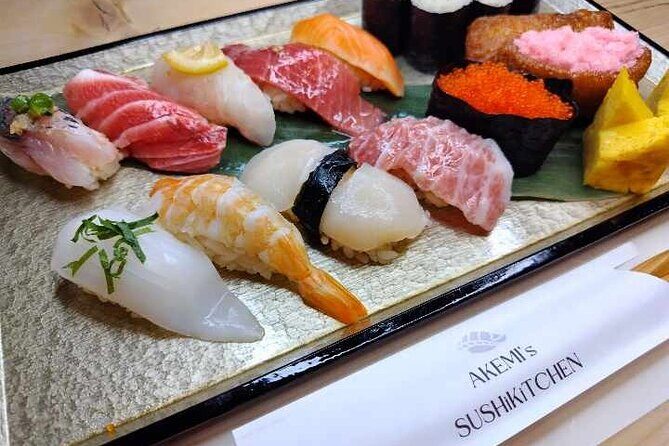
- Learn four kinds of sushi in a single 2.5-hour session, with hands-on coaching.
- Chef Akemi teaches in English from her restaurant background and training in Edomae sushi technique.
- Premium ingredients matter here: rice from Hachidaime Gihey and fresh neta from Toyosu/Tsukiji.
- Sushi etiquette and terminology are built into the lesson, not tacked on at the end.
- Up close instruction with a maximum class size of about five students, in a small group setup.
- You eat what you make, finishing with a meal from your own rolls and bites.
More aprons-on time in Tokyo kitchens
- Ramen & Gyoza Cooking Class in Tokyo with Local Supermarket Visit★ 5.0 · 823 reviews
- Tokyo: Easy Ramen Cooking Experience in Kabukicho, Shinjuku★ 4.6 · 321 reviews
- Ramen and Sushi Cooking Class with Sake Pairing Set in Tokyo★ 5.0 · 291 reviews
A Tokyo home kitchen, not a restaurant line
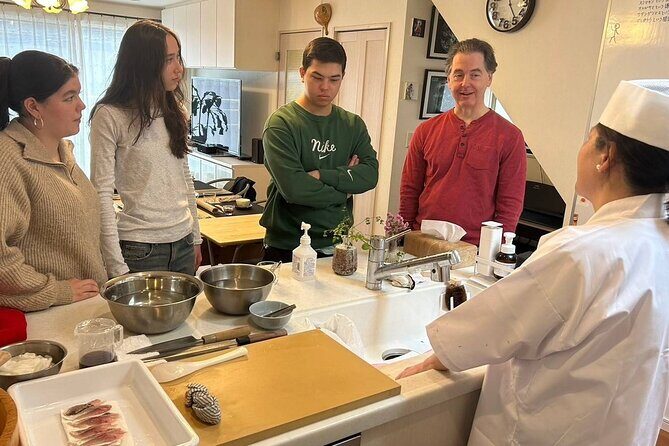
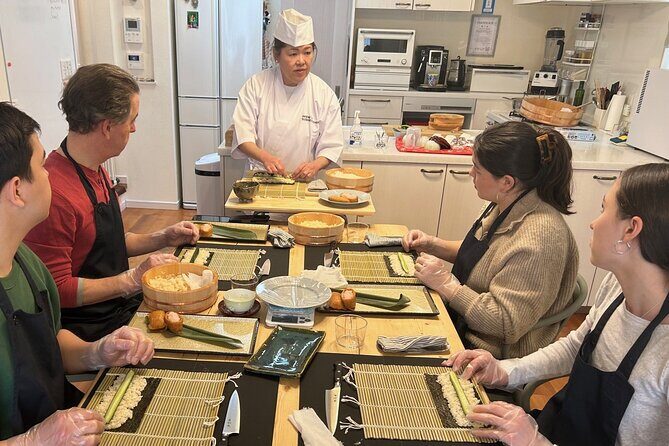
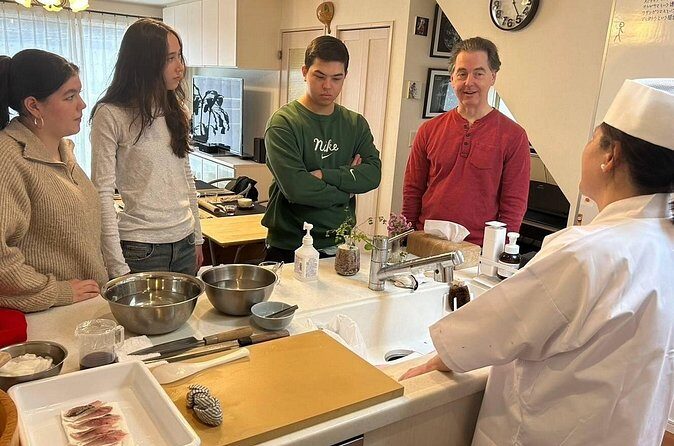
This class happens in a real Tokyo neighborhood home in a quiet residential area. That change in setting is more than a cute detail. In a home kitchen, you get time to ask questions, fix mistakes as they happen, and slow down enough to actually understand what you’re doing.
The vibe is practical and friendly. Akemi teaches with clear guidance, and her English skills make the learning feel direct instead of “watch and hope.” Also, the group size stays small, so you’re not fighting for attention or trying to learn sushi technique through a crowd.
The lesson is designed for people at different starting points. Even if you’ve never made sushi before, the class is set up so you can still walk away with a complete, satisfying meal.
How the 2.5 hours plays out: from rice to your own sushi
You’re looking at about 2 hours 30 minutes of instruction and making. There’s a clear arc: learn the pieces, practice the pieces, then combine them into four types of sushi you prepare yourself.
Start with the basics (and the why)
Early in the class, expect to get oriented to sushi as a whole: what makes it sushi, how the components work together, and what Akemi wants you to focus on. Because the class is small, she can tailor feedback quickly if your hands are new to rolling, shaping, or working with fish.
You’ll also get the cultural framing right in the flow. Instead of a lecture that drifts away while you wait for your next step, the history and terminology get connected to what you’re making.
Learn technique in small chunks
Sushi looks simple until you’re doing it. Akemi’s approach breaks the craft into manageable technique points so you’re not left guessing. That includes practical skills like handling rice and preparing components in a way that leads to good texture and shape.
Akemi also brings training from the Edomae Sushi Technique Acquisition Course at the Tokyo Sushi School. You’ll feel that in the structure of the lesson. It’s not random tips; it’s a method taught with an emphasis on consistency.
More things to make with your own hands


Make four types of sushi, not just one
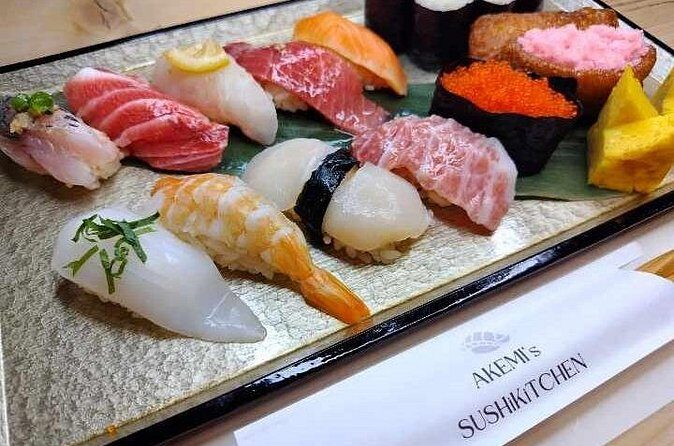
A big reason this class is worth your time is that it culminates in four types of sushi that you make yourself. That means you get more variety than a single roll-and-eat session, and you see how technique changes with each style.
At the end, you don’t just taste a sample. You sit down and enjoy a meal made from your own work, which is where the confidence kicks in. Sushi is one of those foods where your brain finally clicks after you’ve handled the ingredients yourself.
The built-in “how to eat it” part
Eating sushi in Japan can feel intimidating at first, especially if you don’t know the small etiquette cues. This class addresses that directly. You’ll learn about traditional Japanese dining etiquette and sushi terminology while you prepare your meal.
And yes, those details can actually help you order or eat more comfortably later in Tokyo, because you’ll know what people are talking about when they describe the parts of the dish.
Rice and neta: the ingredient choices that raise the whole class
If you care about value, check the ingredient list. This one is a strong point.
Rice: ordered from Hachidaime Gihey
The sushi rice is specially ordered blended rice from Hachidaime Gihey in Kyoto (est. 1787). That matters because sushi rice isn’t just “cooked rice.” It’s part texture, part seasoning profile, part handling technique. When the rice base is high quality, your work has a better chance of turning out well even if you’re new.
In a restaurant, you usually don’t see the rice story. Here, you get the ingredient context, plus guidance on how the rice should behave during sushi prep.
Fresh fish from Toyosu and Tsukiji
The fish (“neta”) is sourced directly from fish markets in Toyosu and Tsukiji. Fresh neta changes everything: flavor, aroma, and how well the fish pairs with the rice.
The practical benefit for you is confidence. When the fish is genuinely fresh, your class results won’t feel like an uphill battle. You’ll get a clearer sense of what sushi is supposed to taste like.
Why ingredient sourcing makes this more than a cooking demo
A lot of cooking classes show you a method and then move on. This class uses ingredient sourcing as part of the learning. You’re not just building an Instagram roll; you’re tasting how quality inputs shape the final bites.
That’s why the meal at the end lands. Even if you make one component slightly imperfect, the overall eating experience stays satisfying because the raw materials are strong.
Technique with a trained teacher: Edomae skills in plain steps
Akemi has 7 years of experience in the restaurant industry in Japan, and she completed that Edomae technique course at the Tokyo Sushi School. On paper, that’s credentials. In real life, it means you get feedback that’s specific and actionable.
Sushi technique is all about small adjustments:
- how you handle rice so it stays right,
- how you shape so it holds together,
- how you balance components so each bite feels clean.
With a small class, she can watch your progress closely. That’s the difference between learning sushi and learning how to avoid frustration. You’re given the exact kind of corrections that help you improve during the same session, not weeks later when you finally try again at home.
Sushi history, terminology, and etiquette you can actually use
This class isn’t only about rolling. You also get insights on Japanese food culture and the history of sushi. You’ll hear about sushi-related terminology, and you’ll learn traditional etiquette for eating sushi.
Why I think that part is valuable: sushi is a language. Even when you’re eating happily, you might not understand what you’re tasting or how to talk about it. A quick restaurant meal can give you flavor, but it rarely gives you vocabulary.
Here, you learn the terminology around sushi and the etiquette that goes with it. If you ever want to order in a way that feels confident, that knowledge is gold. You won’t need a translator for every single menu item, and you’ll understand what people mean when they talk about components.
Akemi also brings an emphasis on clarity. Even Japanese guests have reportedly told the team they learned a lot about their own food culture. That’s a good sign that the lesson stays specific and thoughtful, not generic.
Small-group size: why five students changes everything
The class is limited to a maximum of five students, and the overall activity is described as having a max of six travelers. Either way, you’re in a micro-group setting.
That size matters because sushi-making can’t be learned from a distance. You need to see, then try, then adjust. When the group stays small:
- you get personalized guidance,
- your questions get answered quickly,
- you don’t feel rushed between steps.
It also makes the home setting feel welcoming rather than chaotic. In a restaurant class with bigger groups, you can end up waiting for your turn and losing your focus. Here, the pacing is steadier, and you keep momentum.
Price and value: what $105.68 really buys
At $105.68 per person, this isn’t the cheapest way to eat in Tokyo. But it’s also not trying to be.
You’re paying for several things at once:
- a chef with restaurant experience and formal technique training,
- English instruction,
- premium ingredients (rice from Hachidaime Gihey and fresh neta from Toyosu/Tsukiji),
- instruction across four types of sushi,
- the meal you make yourself,
- culture lessons (history, terminology, etiquette).
If you’re the kind of traveler who likes “skill + food” experiences, it’s a strong value. You leave with more than full plates. You leave with technique you can repeat later and cultural context that makes future sushi meals easier to understand.
One more value clue: the class is typically booked about 49 days in advance on average. That suggests demand is steady. If you’re traveling during busy periods, booking early helps you get a time slot that fits your schedule.
Getting to the meeting point in Shibuya (and keeping it simple)
You meet at Tamanosato Sasazukaten1-chōme-56-18 Sasazuka, Shibuya, Tokyo 151-0073, Japan. The class is near public transportation, so you should be able to plan a straightforward route without too much stress.
Because it’s in a residential area, I’d treat the morning like a small mission: arrive a few minutes early, find the exact location, and then settle in. Home-based experiences tend to run on tight timing, and sushi rice does not care about your train delays.
You’ll also get a mobile ticket, and you’ll receive confirmation at booking. So you’ll be able to show what you need right from your phone.
Who should book Akemi’s SushiCooking class?
This is a great fit if you:
- want a hands-on sushi experience in Tokyo instead of a sit-and-watch meal,
- like learning etiquette and food culture, not just recipes,
- care about high-quality ingredients and want to see how they affect the final bite,
- prefer small groups where you can actually get guidance.
It’s also a solid option if you’re new to sushi. The class is structured for beginners, and the goal is that you finish with a meal you made yourself.
If you only want a cheap sushi dinner, this may feel like overkill. But if you want to leave Tokyo with both knowledge and a skill you can use, it fits nicely.
Should you book this sushi cooking class?
I’d book it if you want more than a restaurant meal and you’re excited to make sushi in a calm Tokyo home kitchen. The combination of small-group teaching, premium ingredients, and the culture/eating etiquette piece makes it feel like a full experience, not a quick activity.
Pass if your main goal is lowest cost per meal or if you really don’t like hands-on cooking. This class is about doing the work, getting feedback, and eating what you build.
If you do book, lock in your time early, plan to arrive on time at the Shibuya meeting point, and go in ready to learn sushi as a craft.
FAQ
How long is Akemi’s sushi cooking class?
It runs for about 2 hours 30 minutes.
How big is the group?
Lessons are limited to a maximum of five students, and the activity lists a maximum of 6 travelers.
What will I make in the class?
You will learn to make four types of sushi, and you’ll eat a meal you make yourself.
Do I need sushi experience before I book?
No. Even if you have never tried sushi before, the class is set up so you can still enjoy what you prepare.
Is the class taught in English?
Yes. Akemi teaches in English.
Where do I meet for the class?
The meeting point is Tamanosato Sasazukaten, 1-chōme-56-18 Sasazuka, Shibuya, Tokyo 151-0073, Japan.
What ingredients are used?
The sushi rice is specially ordered from Hachidaime Gihey in Kyoto, and the fresh fish (neta) is sourced from fish markets in Toyosu and Tsukiji.
Does the lesson include sushi culture and etiquette?
Yes. You’ll learn about the history of sushi, key sushi terminology, and traditional Japanese eating etiquette.
Are service animals allowed?
Yes, service animals are allowed.
What is the cancellation policy?
Free cancellation is available. You can cancel up to 24 hours in advance for a full refund.
Make Something to Take Home
Learn Another Dish: Tokyo Cooking Classes
More Tour Reviews in Tokyo






Fresh reviews from around Tokyo






Cooking Classes, compared.
 ★ 5.0Ramen & Gyoza Cooking Class in Tokyo with Local Supermarket VisitFrom $122823 reviews
 ★ 4.6Easy Ramen Cooking Experience in Kabukicho, ShinjukuFrom $29321 reviews
 ★ 5.0Ramen and Sushi Cooking Class with Sake Pairing Set in TokyoFrom $79291 reviews
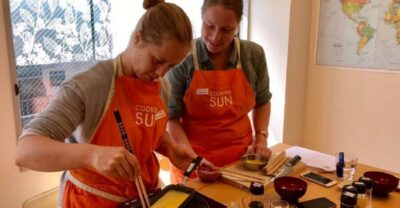 ★ 4.9Wagyu and 7 Japanese Dishes Cooking ClassFrom $67273 reviews
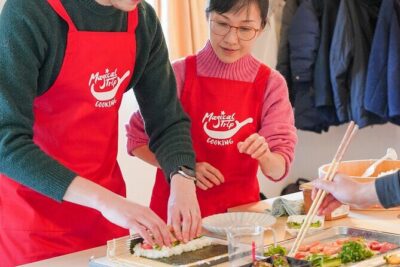 ★ 5.0Tokyo Washoku 4-hour Cooking Class: From Market to TableFrom $79253 reviews
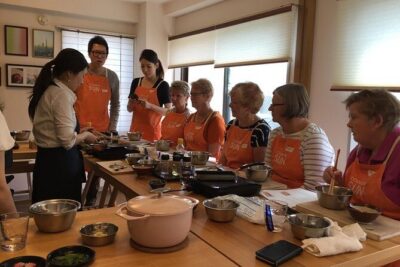 ★ 5.0Small-Group Wagyu Beef and 7 Japanese Dishes Tokyo Cooking ClassFrom $72190 reviews
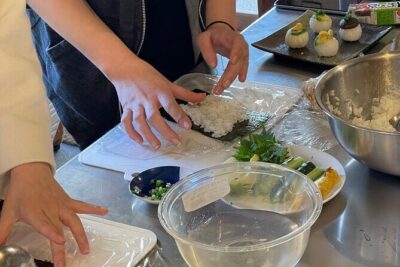 ★ 5.0Private Home Cooking in Yanaka – Local Flavors in a Warm SettingFrom $122173 reviews
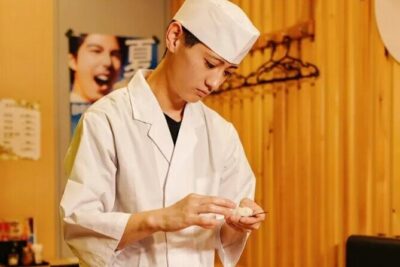 ★ 5.0Tokyo Sushi Making Experience & Japanese Cooking ClassFrom $59150 reviews
Browse the lists this tour appears in