
Reviewed · MT FUJI DAY TRIPS
Mt. Fuji & Hakone Cherry Blossom private One Day Tour
Fuji day, minus the transit math. This private tour strings together the big-feeling views—Mt. Fuji from the Subaru Line 5th Station, plus Hakone’s lakeside shrines and volcanic valley—without you juggling trains, buses, and timing. I like that you get hotel pickup/drop-off convenience and a full day organized for you, so you can focus on photos and quiet moments. One thing to consider: this setup can feel more like private transport than a deep, classroom-style history tour, so set expectations early if you want lots of guided commentary.
At $450 per group (up to 5), it’s aimed at people who value comfort and control. The route is efficient, but it’s still a long day (about 10 hours), and seasonal road rules or weather can affect what you’ll see—like winter snow and how the Fuji Subaru road operates during climbing-season dates. If you’re flexible and want the easiest path to the highlights, this format can be a great use of your time in the Tokyo area.
In This Review
- Key Points You’ll Actually Care About
- Why This Private Fuji and Hakone Day Feels Like a Shortcut
- Price and Value: What the $450 Per Group Really Buys
- Where the Day Starts: Tokyo Station and Hotel Pickup Reality
- The Fuji Subaru Line 5th Station: Your Best Shot at Mt. Fuji Views
- Oshino Hakkai: The Pond Town That Feels Like a Fuji Side-Quest
- Lake Ashinoko (Lake Ashi): Crater-Lake Views and the Togendai Area
- Moto Hakone Shrine Torii of Peace: A Quiet Stop With Big Visual Impact
- Owakudani Volcanic Valley: Sulfur Air, Hot Activity, and the Black-Egg Tradition
- Gotemba Premium Outlets: Shopping Without the Stress Spiral
- The Big Decision: Driver-Led vs Guide-Led Day
- Should You Book This Mt. Fuji & Hakone One-Day Private Tour?
- FAQ
- How many people can join this private tour?
- How long is the Mt. Fuji & Hakone tour?
- Is pickup from my hotel included?
- What is included in the tour price?
- What is not included?
- Do I need to pay for entry tickets during the day?
- Is there a mobile ticket?
- Can I cancel and get a full refund?
Key Points You’ll Actually Care About
- Private, up-to-5 group comfort: you’re not sharing the ride with strangers.
- Fuji Subaru 5th Station time matters: it’s the easiest developed 5th station to access from Tokyo, around 2,300 meters up.
- Hakone hits multiple “moods” fast: pond town (Oshino Hakkai), lake views (Lake Ashi), shrine vibes (Moto Hakone Shrine), and volcano energy (Owakudani).
- Most entrance fees are covered or free: only specific add-ons are flagged, like the Subaru line fee.
- The day can be driver-led: some pairings deliver strong guidance, others are more about getting you safely from stop to stop.
- A practical buffer stop at the end: Gotemba Premium Outlets gives you food and shopping without derailing the plan.
Other routes to the mountain, compared
- Mt Fuji & Hakone Cruise, Drum Show Bullet Train 1 Day from Tokyo★ 4.0 · 7,413 reviews
- Tokyo Mt Fuji 5th St & Hakone Cruise Bus Tour w/Bullet Train★ 4.4 · 5,024 reviews
- From Tokyo: Mount Fuji Full-Day Sightseeing Trip★ 4.5 · 4,970 reviews
Why This Private Fuji and Hakone Day Feels Like a Shortcut
This tour is built around one simple idea: you’re in Tokyo, but you don’t want to spend your precious daylight figuring out how to get to Mt. Fuji and Hakone. Instead of patching together transit and hoping you timed it right, you get a private air-conditioned vehicle plan for the full loop and return.
I especially like that the day’s “wow” stops are staggered in a way that keeps your brain from melting. You start with Mt. Fuji at the 5th Station, then move to scenery that’s more about atmosphere than sheer altitude—Oshino Hakkai’s spring ponds, Lake Ashi’s calm crater-lake views, and a shrine with that famous torii gate in the water. Then you finish with Owakudani’s volcanic zone before a low-stress end at Gotemba.
There’s also a subtle value point: you’re paying for reduced friction. You’re not just buying tickets. You’re buying time, pickup convenience, and a schedule that aims to keep you from being stuck on the wrong side of traffic.
Price and Value: What the $450 Per Group Really Buys
$450 per group (up to 5) can look steep at first. But compare what you’re getting: private transportation, all fees and taxes stated as included, and a full day that normally takes planning to coordinate. Also, the itinerary is built on several separate locations that aren’t next-door to each other.
What’s included matters:
- Private transportation in an air-conditioned vehicle
- All fees and taxes (as listed)
- A hotspot on board
- Pickup offered, with drop-off back to the meeting point
What costs extra or isn’t included (as flagged):
- Subaru Line 5th Station fee: $15 USD (listed)
- Hakone Open Air Museum fee: $15 USD only (listed, but note: it’s not named as a stop in the core outline you’re given)
- Coffee/tea, lunch, and alcoholic beverages
My practical take: the “only $15” style add-on is exactly how a day like this should be priced—because the rest of the sightseeing is either free or already handled. If you’re traveling with even two to four people, the private format can start to feel less like a luxury and more like “we’re paying to not waste a half-day.”
Where the Day Starts: Tokyo Station and Hotel Pickup Reality
The published start point is Tokyo Station (1 Chome-9 Marunouchi, Chiyoda City). At the same time, the tour summary says pickup is offered from your hotel and drop-off is included for ease.
So here’s what I’d do: when you book, confirm your exact pickup location and time window. Tokyo Station is a solid anchor point, but your actual experience depends on whether your plan is “hotel pickup” or “meet at station and depart from there.”
Either way, the tour is designed to get you out of central Tokyo smoothly and keep the schedule tight enough to reach Fuji and still have time in Hakone.
The Fuji Subaru Line 5th Station: Your Best Shot at Mt. Fuji Views
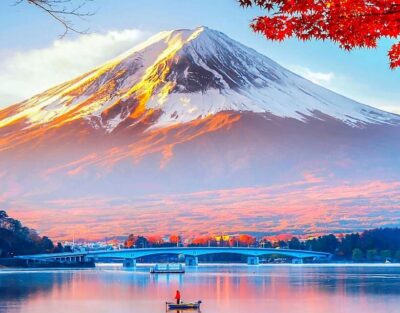
Stop 1 is Mt. Fuji Subaru Line 5th Station, one of the most popular 5th stations and the easiest to access from Tokyo compared with the other 5th stations. It’s at about 2,300 meters, and it’s a top viewing point even outside climbing season.
Two important operational notes you should know before you go:
- In winter, the road can temporarily partially close due to heavy snow.
- During the main climbing-season window (the listing mentions July 14 to September 10, 2023), the road is closed to private vehicles for much of that period.
Your day is private transport, but that doesn’t mean “weather won’t matter.” It means timing and access rules are still real. If Mt. Fuji is your main reason for booking (and it probably is), treat the first stop as your “make or break” moment.
What to do with the time there: plan for slow photo walks. Two hours sounds long, but at high viewpoints you tend to stop often—checking cloud cover, waiting for brief clearer sightlines, and repositioning for better angles.
Also, this is the spot where you’ll feel altitude. You don’t need fancy gear; just dress for cooler air and changes in conditions because the station is high and the access road can be weather-sensitive.
More Hakone loops, ropeways and lake crossings
Oshino Hakkai: The Pond Town That Feels Like a Fuji Side-Quest
Next up is Oshino Hakkai (the Eight Seas of Oshino). This area is known for a set of eight natural spring ponds fed by snowmelt from Mt. Fuji. The water filters through volcanic rock, which is why the ponds are famous for their clarity.
This stop is short—about 30 minutes—but it’s the kind of 30 minutes that works. You get:
- Traditional Japanese atmosphere
- That classic Fuji reflection look on clear days
- Thatched-roof houses and small shops
- Fresh water you can drink directly from the springs
The value here is not “spending hours.” It’s getting a sense of how Mt. Fuji connects to local life, right down to the water system. If you’re the type who likes small, calm places after big scenic payoffs, Oshino Hakkai is a good middle course.
One practical downside: 30 minutes is not long enough for wandering every side lane slowly. Treat it like a focused loop. If you want extra time, you’ll need to manage it within that window.
Lake Ashinoko (Lake Ashi): Crater-Lake Views and the Togendai Area
Stop 3 is Lake Ashinoko, a crater lake in Hakone. It’s a popular spot because it’s tied to Mt. Fuji views, plus it’s a hub for things like boat cruises, hot springs, and walking trails around the shore (the listing doesn’t lock you into one activity, but those are the main options in the area).
Your tour time here is about 2 hours. That’s enough time to:
- take in the water-and-mountain views,
- get a few photo angles, and
- wander around the Togendai area nearby.
Togendai is mentioned as a known spot in Japan near Mt. Fuji. It’s also described as the starting point for ascent to the summit via the Fujisan Gotemba Trail. Even if you’re not hiking, it helps you understand the “why” of the area: this is one of the major access points and a natural gathering place.
A balanced expectation check: you’ll get views, but visibility can swing day to day. Plan your photos, but also leave room for calm walking—Lake Ashi is at its best when you’re not treating it like a checklist.
Moto Hakone Shrine Torii of Peace: A Quiet Stop With Big Visual Impact
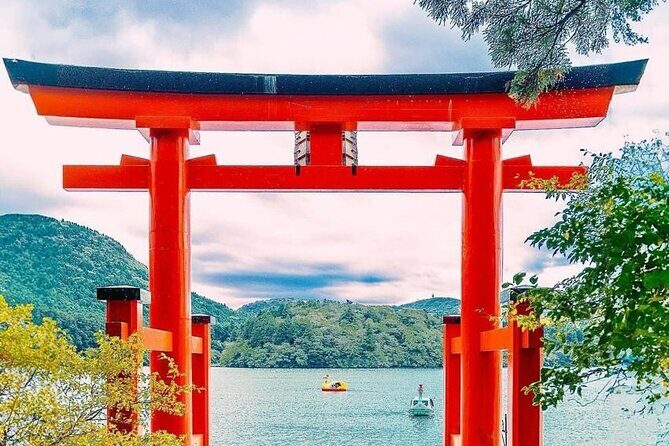
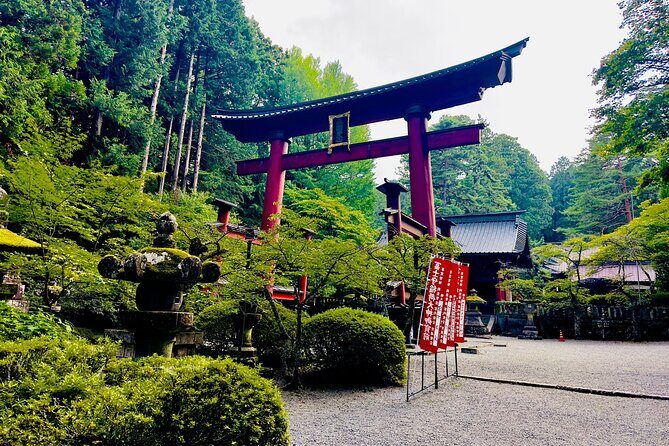
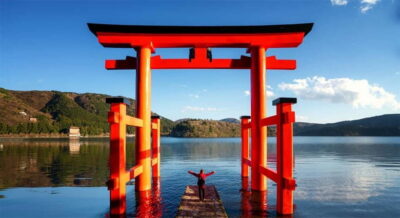
Then you head to Hakone Moto Tsumiya Shrine (Moto-Hakone Jinja). This is where the tour becomes more “still and scenic” than “move and view.”
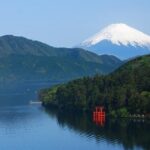
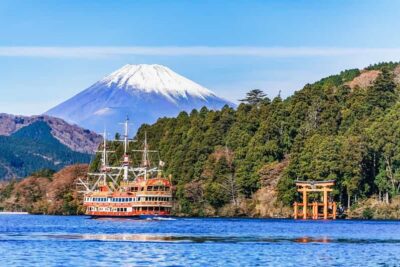
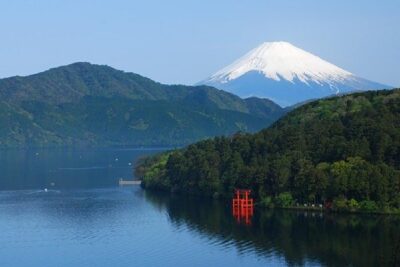
The shrine’s standout feature is the torii gate standing in the water, sometimes called the Torii of Peace. The shrine setting is described as forested, with Mount Hakone and the surrounding nature behind it. On clear days, Mt. Fuji can also appear in the backdrop.
The listing also notes the shrine is associated with good fortune—especially protection and prosperity related to travel and business—so it’s not just a photo stop.
Time here is about 30 minutes. That’s just right for:
- a slow approach,
- a couple of good viewpoints of the torii gate,
- and then moving on without feeling rushed.
If you’re traveling with kids or seniors, this kind of stop is useful because it doesn’t demand stamina. You can enjoy it without a long walk.
Owakudani Volcanic Valley: Sulfur Air, Hot Activity, and the Black-Egg Tradition
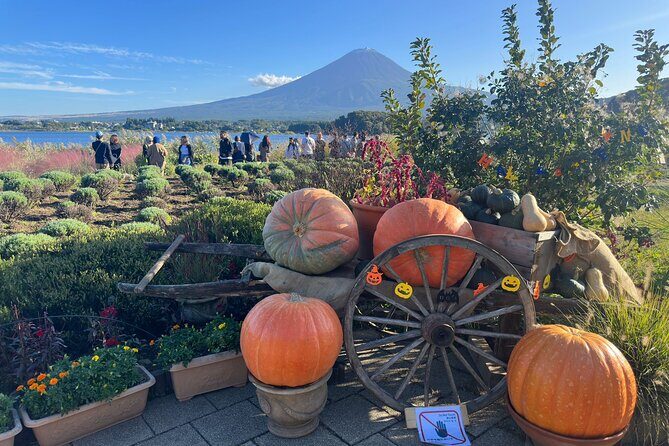
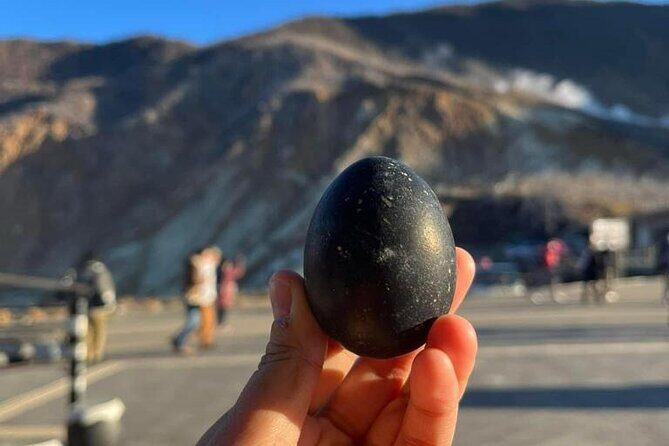
Stop 5 is Owaku-dani Valley (Owakudani). This area is around a crater formed by Hakone’s last eruption about 3,000 years ago. Today it’s still an active volcanic zone where sulfurous fumes, hot springs, and hot rivers are part of the experience.
It’s described as having good views of Mt. Fuji on clear days, but the main draw is the volcanic atmosphere. You’ll see and smell the activity. That’s not subtle, so go with your expectations set: this is science and earth-energy, not “pretty lake picnic.”
The classic food here is eggs cooked in hot spring pools, with the shells blackened by sulfur. The listing says eating one is believed to prolong life by seven years. Even if you’re skeptical, it’s fun to try because the story is part of the place.
Time is about 1 hour. That usually covers walking through the viewing areas and getting a quick taste (literally) of what the zone feels like.
Gotemba Premium Outlets: Shopping Without the Stress Spiral
Your final stop is Gotemba Premium Outlets. This is a major outlet mall at the base of Mt. Fuji, located in Gotemba City.
It’s described as Japan’s most popular outlet mall with around 300 stores and restaurants. There’s also a 50-meter-high Ferris wheel, a hotel, and a public hot spring bath.
Here’s the practical value: you need a place where most people can find something to do even if the weather shifts. If you want a coffee, a snack, a meal, or a change of pace after volcanic fumes and lake views, outlets deliver that without turning your whole day into a logistics headache.
Is it bargain heaven? The listing says prices are not ridiculously cheap, but they’re better than average regular retail in Japan. So think of it as good-for-variety shopping, not guaranteed “half-off everything.”
Time is about 2 hours, which is enough for a focused browse and a sit-down meal if you want one. Since lunch isn’t included on the tour, this stop can do double duty for food.
The Big Decision: Driver-Led vs Guide-Led Day
Here’s the honest part: the difference between a fun day and a frustrating one can come down to the person behind the wheel and how much interpretation they add.
Some experiences described the day as running smoothly with a very professional, kind person, even when the group included two young children and three elderly adults. Names like Rezi show up in that context, with the focus being on patience, helping everyone move at the right pace, and building time for photos.
On the other hand, there are also complaints about the experience feeling more like a car-and-driver service than a full tour with cultural and historical context. That same theme shows up in comments about people being rushed and wanting more knowledge-sharing.
So here’s my advice for you:
- If you want history and story, ask in advance what kind of commentary is typical on this day.
- Ask for a realistic plan for timing so you’re not expecting museum-style narration on the move.
- If you’re bringing kids or seniors, tell them your pacing needs early so the day is built around your group, not only around the schedule.
This is still private, and the driver’s role includes safe, efficient transport. Just don’t assume every booking includes deep storytelling.
Should You Book This Mt. Fuji & Hakone One-Day Private Tour?
Book it if:
- You want a private day trip from Tokyo with pickup convenience and minimal planning stress.
- Mt. Fuji views are your priority, and you’re okay starting with the 5th Station as the main viewing bet.
- You like a mix of scenery: ponds, lake, shrine, volcanic zone, and then a practical final stop.
Skip it (or clarify expectations) if:
- You’re booking specifically for a highly guided cultural lecture. This can run more like transport than a taught lesson, depending on who you’re paired with.
- You’re very sensitive to long days. Ten hours is a full day, even when everything is smooth.
My final take: the best use of this tour is when you want the highlights without the headache. If you show up with flexible expectations—especially about visibility on Mt. Fuji and how much commentary you’ll get—it’s a solid way to spend one day in the Fuji-Hakone orbit.
FAQ
How many people can join this private tour?
The tour price is for a private group up to 5 people.
How long is the Mt. Fuji & Hakone tour?
It runs about 10 hours.
Is pickup from my hotel included?
Pickup is offered for ease, and the tour starts from the Tokyo Station meeting point. The activity ends back at the meeting point.
What is included in the tour price?
The included items are all fees and taxes, an air-conditioned vehicle, a hotspot on board, and private transportation.
What is not included?
Coffee/tea, lunch, and alcoholic beverages are not included. The Subaru Line 5th Station fee is listed as $15 USD, and the Hakone Open Air Museum fee is listed as $15 USD only.
Do I need to pay for entry tickets during the day?
The 5th Station Subaru line fee is listed as an extra cost ($15). The other stops shown (Oshino Hakkai, Lake Ashinoko, Moto Hakone Shrine, Owakudani) are listed with admission ticket free.
Is there a mobile ticket?
Yes, the tour includes a mobile ticket.
Can I cancel and get a full refund?
Yes. Cancellation is free, and you can cancel up to 24 hours in advance for a full refund.
More Tour Reviews in Tokyo






Hakone, Three More Ways
The Fuji Shortlist: Other Days Out to the Mountain

Fresh reviews from around Tokyo






Mt Fuji Day Trips, compared.
 ★ 4.0Mt Fuji & Hakone Cruise, Drum Show Bullet Train 1 Day from TokyoFrom $1497,413 reviews
 ★ 4.4Tokyo Mt Fuji 5th St & Hakone Cruise Bus Tour w/Bullet TrainFrom $1545,024 reviews
 ★ 4.5From Tokyo: Mount Fuji Full-Day Sightseeing TripFrom $684,970 reviews
 ★ 4.7Mt. Fuji Tour, Hakone Ropeway, Owakudani, Lake AshiFrom $544,002 reviews
 ★ 5.0Private Tour to Mt. Fuji and Hakone (Fully Licenced Operator)From $4971,910 reviews
 ★ 4.9Mount Fuji Full-Day Private Tour from Tokyo (Customizable)From $3931,470 reviews
 ★ 4.0Mt Fuji & Hakone Cruise, Drum Show Bus 1 Day from TokyoFrom $1221,287 reviews
 ★ 4.2From Tokyo: Mt. Fuji & Hakone Tour w/ Return by Bullet TrainFrom $1171,278 reviews
Browse the lists this tour appears in