
Reviewed · TRAIN EXPERIENCES
From Tokyo 1-Day Kyoto English-guided Tour by Bullet Train
One train, three Kyoto icons. This afternoon-focused Kyoto day trip is built around the Shinkansen experience plus guided stops at Fushimi Inari Taisha, Sanjusangendo Hall, and Kiyomizu-dera. I especially like how the tour handles the hard parts for you: round-trip train connections and a licensed English-speaking guide who shepherds you between key points. One real consideration: Kyoto’s top sights are crowded, and the schedule is tight, so you may not feel like you’re soaking in the details for long at each stop.
The day starts at Tokyo’s KITTE area, then shifts smoothly to Kyoto Station for lunch and sightseeing. If the weather cooperates, the train ride can treat you to a Mt. Fuji sighting on clear days, and you can choose standard or first-class (Green Car style) seats for the return trip.
In This Review
- Key things to know before you go
- Shinkansen momentum: what the fast Tokyo-to-Kyoto ride really buys you
- Meeting at KITTE and the station relay race
- The hotel lunch stop: efficient fuel, not a local food crawl
- Fushimi Inari Taisha and the Senbon Torii: fast, iconic, and crowded
- Sanjusangendo Hall: 1,001 Kannon statues and what to expect inside
- Kiyomizu-dera hilltop views: the best payoff, plus the tight timing
- Price and value: does $452.45 make sense for a Kyoto day trip?
- Pacing, crowds, and guide handoffs: how to get the most from a tight schedule
- Who this Tokyo-to-Kyoto day trip is best for
- Should you book this Tokyo to Kyoto tour?
- FAQ
- What temples and sites does the tour include?
- How long is the Tokyo to Kyoto day trip?
- Is lunch included, and what kind of lunch is it?
- Can I choose standard or first-class train tickets?
- How do the guides handle the station transfers?
- Where do I meet in Tokyo?
- Where does the tour end in Tokyo?
- Is admission included for the temples?
- Are there any limits on luggage for the Shinkansen?
- Is this tour only for international visitors?
Key things to know before you go
- Shinkansen round-trip is the core value: you’re paying for speed, convenience, and stress-free connections.
- You get three major sights, not a deep Kyoto study: think highlights over slow wandering.
- English guidance at transfers: escorting helps you avoid Tokyo and Kyoto station confusion.
- Lunch is Western-style at a hotel: good and efficient, but it’s not Kyoto street food.
- Crowds are part of the deal: Fushimi Inari and Kiyomizu-dera can feel packed even in a guided flow.
- Optional first-class can be worth it: reviews suggest the ride feels nicer if your budget allows.
More days made easy by a guide
- Tokyo 6hr Private Tour with Government-Licensed Guide★ 5.0 · 3,902 reviews
- Tokyo: Shinjuku Local Bar and Izakaya Guided Walking Tour★ 4.9 · 1,794 reviews
- Tokyo: Private City Highlights Tour with Local Guide★ 4.8 · 1,433 reviews
Shinkansen momentum: what the fast Tokyo-to-Kyoto ride really buys you
This tour’s biggest strength is that you treat Kyoto like an afternoon mission, not a whole trip. You leave Tokyo by Shinkansen, arrive in Kyoto mid-day, tour for several hours, and then head back to Tokyo the same evening. That rhythm is perfect if you don’t have an overnight in Kyoto but still want the big-name places.
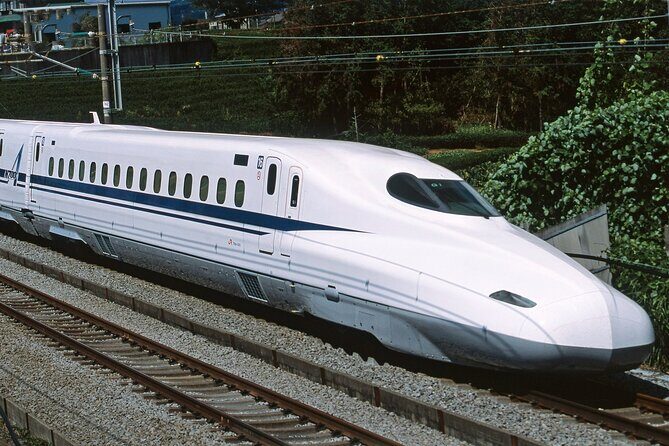
The ride itself matters. The trip is about 2 hours 20 minutes each way, which is a huge time win versus any slower option. On a clear day, you might catch sight of Mt. Fuji from the window, which turns an ordinary commute into a memorable postcard moment.
Seat comfort is part of the decision too. You can choose standard or first-class for the bullet train, and some people strongly recommend going first-class if you can. The tour also notes that seats may not be designated, so it helps to be ready to manage your seat assignment when you arrive at the platform.
Meeting at KITTE and the station relay race
Tokyo Station and Kyoto Station are busy enough on a normal day. What I like here is that the tour is designed like a relay race with handoffs, not a scavenger hunt.
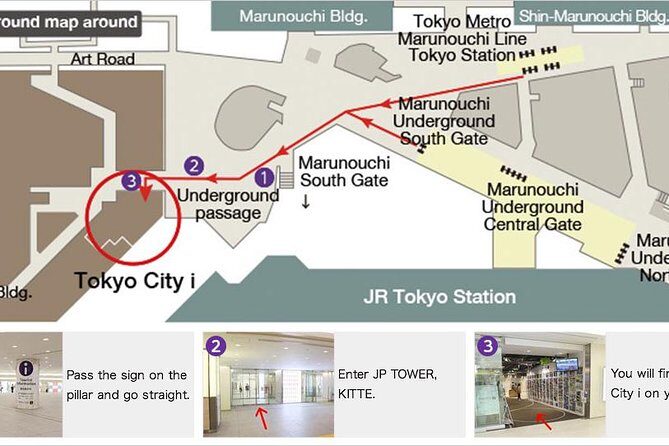
You meet at Tokyo City i in the KITTE complex (KITTE B1F area), with a start time of 9:20 am. An English-speaking tour conductor helps you get to the Shinkansen at Tokyo Station. Staff and other tour members don’t ride with you on the train, but the goal is clear: you get the ticketed train ride done, then re-connect smoothly on the other side.
In Kyoto, another English-speaking staff member is waiting at Kyoto Station to escort you to lunch. After lunch, you’re walked to the tour operator desk at Kyoto Avanti, where you meet up with the group before boarding a comfortable coach for the sightseeing.
From the reviews included in your details, one theme pops up again and again: people felt guided all the way to the right train area and helped with the meet-on-the-other-side moment. That’s especially valuable for first-timers to Japan stations, where it’s easy to lose time if you’re translating directions while also managing a packed timetable.
The hotel lunch stop: efficient fuel, not a local food crawl
Lunch is at the Miyako Hotel Kyoto Hachijo, and it’s Western-style with a semi-buffet setup. The tour includes admission for the lunch stop area, and it’s scheduled right after you arrive in Kyoto, so you’re eating before the crowds fully peak at the temples.
Two practical notes matter here. First, you get vegetarian options if you request them during booking, though the details indicate you need to request in advance and you can’t make same-day changes. Second, the lunch is designed for speed and group flow, which is exactly what you want on a day trip.
Now, the honest tradeoff: it’s not built as an authentic Kyoto food tour. One review specifically calls out that the lunch felt less authentic than expected, even while still being good. If you love finding small local spots and eating slowly, you may wish you had more time in Kyoto to do that on your own.
But if you want predictable energy for temple walking—plus less stress about finding a restaurant you can order from—this lunch works. It’s the kind of meal that keeps the day moving so you don’t fall behind your schedule.
Fushimi Inari Taisha and the Senbon Torii: fast, iconic, and crowded
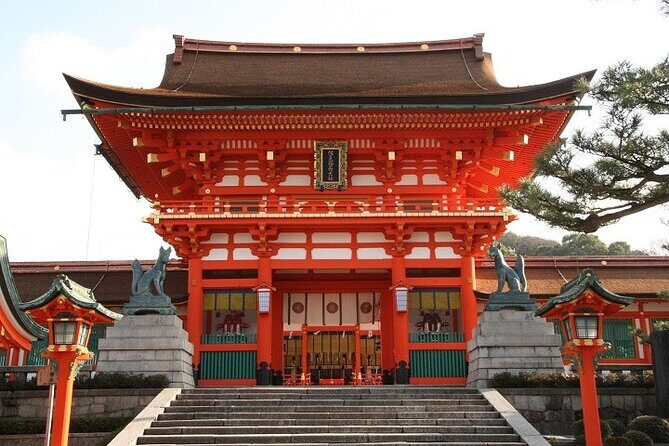
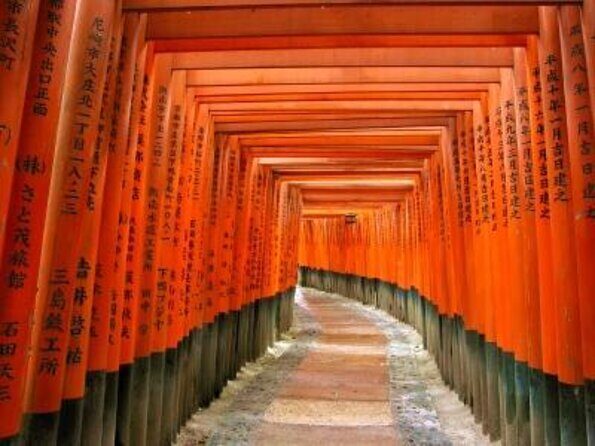
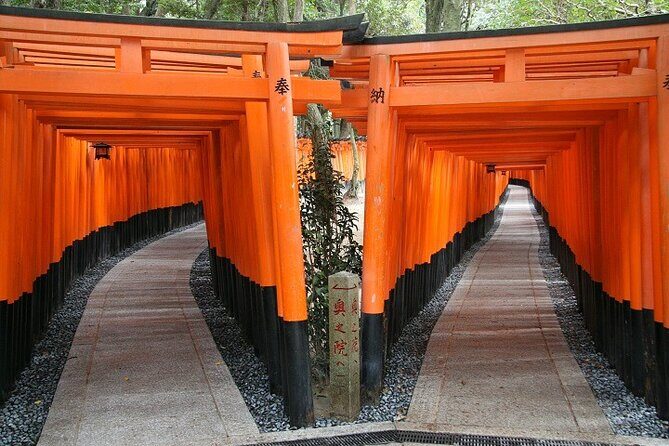
Next comes Fushimi Inari Taisha, famous for its red Senbon Torii gates. This is the head shrine connected to the god Inari, and it draws visitors for a reason: walking among the gates feels like stepping into a maze of red symbolism.
The tour schedule keeps it short. You’ll go by coach to the area, then walk from the parking area to the shrine grounds. The time allotted is about 30 minutes, which means you should plan your priorities before you arrive.
Here’s how to make the most of limited time:
- Spend your first minutes orienting yourself toward the gates, because photo lines and foot traffic often compress right at the start.
- If you want deep gate-walking, you’ll need to move quickly; with a guided group, your pace will usually be dictated by the schedule.
- Expect lots of people. Even with a guide, the sidewalks can feel busy, especially closer to the densest gate stretches.
One of the best things about this stop is that it gives you a Kyoto signature instantly. Even if your time is brief, Fushimi Inari is the kind of sight that sticks in your memory because it’s instantly recognizable and visually dramatic.
The drawback is also the same reason: it’s a top attraction, so you’re not getting quiet or slow. If you’re someone who enjoys calm temple atmospheres more than highlight photos, you may find the crowds take energy from the experience.
Worth weighing up alongside this Tokyo pick:


Sanjusangendo Hall: 1,001 Kannon statues and what to expect inside
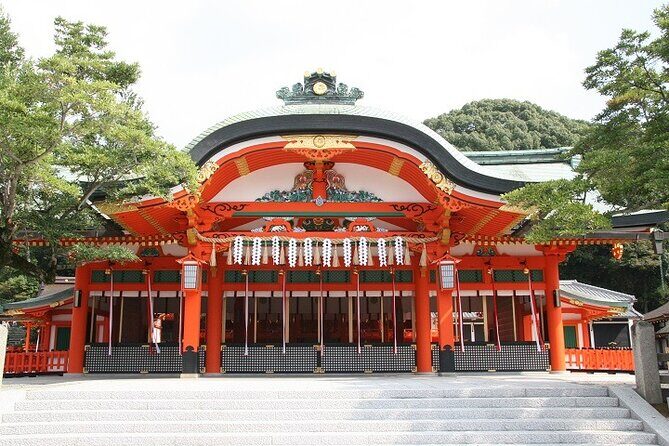
After Fushimi Inari, you head to Sanjusangendo Temple, home to a structure known for being the world’s longest wooden hall and for housing 1,001 life-size statues of the Buddhist Kannon deities. This stop is where the day shifts from cinematic Kyoto to something more focused and spiritual.
The time here is also about 30 minutes, so the key is to understand what you’re looking at before you walk in. The hall is dedicated to Kannon, and the way the statues are arranged makes the space feel dense with meaning. Even if you only spend a short time, you’ll leave with a strong sense that this is not just another temple stop.
One detail from the experience details you shared is important for planning: you may be restricted from taking photos inside. That means it’s worth using your attention more than your camera for this one. If you like studying religious art, look for the visual repetition and the scale effect as you move along the viewing area.
The practical advantage: Sanjusangendo is often easier to manage than the largest crowd magnets because the viewing style is more set. The crowd can still be present, but it’s usually easier to experience the hall’s uniqueness without feeling like you’re constantly dodging tour groups at every turn.
Kiyomizu-dera hilltop views: the best payoff, plus the tight timing
Your final temple stop is Kiyomizu-dera Temple, one of Kyoto’s World Heritage sites. This is where the day pays off visually. You get a view over Kyoto from a hilltop setting, and the walk up often includes the historic shopping lane leading toward the temple grounds.
The allotted time is about 1 hour 10 minutes, which sounds generous until you consider how Kiyomizu-dera bottlenecks. People queue. People stop for photos. People hover for that perfect vantage shot. Even with a guide keeping the group together, you’re still sharing the space with thousands of other visitors.
Here’s a realistic approach that works. When you arrive, move with intention:
- If you want souvenirs, do it before you get too close to the main viewing areas, because time disappears near the bottlenecks.
- If you want views, prioritize the high points first, then circle back for any shopping you still have energy for.
- Bring a light rain layer if weather looks iffy. Some people noted rain affected their experience, and temple crowds become less forgiving when ground conditions slow everyone down.
The upside is that Kiyomizu-dera is extremely photogenic, and the viewing moment can feel like the emotional climax of the day. The guide also shares the story behind the temple’s construction, which adds meaning beyond just the scenery.
The downside is simply time pressure. More than one detail included a feeling of not getting enough time at the last stop—especially when the crowd density made movement slow. If Kiyomizu-dera is your top priority, plan to accept that you’ll be viewing it through a time-limited lens.
Price and value: does $452.45 make sense for a Kyoto day trip?
Let’s talk money honestly. The tour price is listed at $452.45 per person, and that’s not casual. So where does the value come from?
You’re paying for a lot of “time-saving packaging”:
- Round-trip Shinkansen between Tokyo and Kyoto
- A licensed English guide interpreter for the sightseeing portion
- Coach transportation during Kyoto’s sightseeing block
- Lunch included at a hotel restaurant
- Admissions at Sanjusangendo and Kiyomizu-dera (and the tour structure includes the relevant ticketing)
If you were to do this on your own, you would spend significant time figuring out station logistics, train tickets, meeting points, and guided explanations. For some first-timers, that alone is worth a premium.
But you’re also buying something limited. You’re seeing only three major sites in a single afternoon, and at least one review detail explicitly mentions it can feel like a small snapshot of Kyoto. Another complaint points at long waiting or compressed pacing, where you spend more hours moving between points than lingering in the places themselves.
So the value equation depends on your travel style:
- If you’re short on days, want iconic Kyoto fast, and don’t want to manage logistics, the price can feel fair.
- If you prefer slow temple wandering, quieter spaces, and more time in each area, $452.45 might feel high for the time you’re actually in Kyoto.
I’d treat this tour as an efficient “best-of” day. It’s not a replacement for spending 2 to 3 days in Kyoto.
Pacing, crowds, and guide handoffs: how to get the most from a tight schedule
This tour runs on a schedule that’s built to protect your train connections. That’s why it can feel like a series of quick transitions: meeting points, lunch, coach rides, then temple blocks, all before you’re back on the Shinkansen.
From the experience details you shared, the pacing can be a mixed bag. Many people loved the organization and felt looked after all day. You can also see why: the escorts are frequent, and they help with the hardest part—getting you on the right train and linking you to the next guide or staff member at the right spot.
At the same time, some people reported extra waiting time after lunch or felt that the group was passed between guides. That can happen in multi-language, multi-tour scheduling systems, and it can make the day feel longer even if the overall temple time is what it is.
Here’s what you can do to protect your experience:
- Plan to move fast, but not frantic. If you try to “see everything,” you’ll get squeezed by the crowd flow.
- Use your guide’s explanations to make short visits feel meaningful. Even a brief stop becomes better when you understand what you’re seeing.
- Accept that crowds are unavoidable at these sites. Your best defense is preparation, not frustration.
Also, remember this group size is capped at 40 travelers. That’s small enough to feel manageable, but it’s still a lot of people in temple environments. Your personal comfort will depend on how well you handle busy foot traffic.
Who this Tokyo-to-Kyoto day trip is best for
This tour fits best when you’re one of these travelers:
- You’re visiting Japan with limited days and you still want Kyoto’s signature shrines and temples.
- You prefer an organized day with English support and clear handoffs between Tokyo Station and Kyoto Station.
- You like iconic sightseeing and can handle crowds without needing long, quiet time.
It’s less ideal if:
- You want deep, slow exploration of neighborhoods around each temple.
- You’re very sensitive to waiting or tight timing.
- You’re hoping lunch will be an authentic Kyoto food highlight rather than a practical included meal.
If you can spare one overnight in Kyoto, you’ll likely enjoy a calmer pace. But if your schedule forces a day trip, this is a strong way to stack the key sights without losing your day to train navigation.
Should you book this Tokyo to Kyoto tour?
Book it if you want an efficient Kyoto hit from Tokyo, and you care about smooth logistics as much as the temples themselves. The included Shinkansen and guided temple stops make it a good solution for short itineraries, especially when you’re new to Japan trains and busy stations.
Skip it—or rethink your expectations—if you dream of slow Kyoto mornings and long temple time. This is a highlight sprint, not a deep dive. And with crowds at Fushimi Inari and Kiyomizu-dera, you’ll be trading calm for speed.
If your priority is seeing those three places and you want English support plus a reliable day plan, this tour can be a smart buy. If your priority is feeling unhurried, you’ll probably want a longer Kyoto stay instead.
FAQ
What temples and sites does the tour include?
The tour visits Fushimi Inari Taisha, Sanjusangendo Temple, and Kiyomizu-dera Temple.
How long is the Tokyo to Kyoto day trip?
The duration is listed as about 12 hours.
Is lunch included, and what kind of lunch is it?
Yes. Lunch is included and is Western-style at a hotel restaurant. It’s served as a semi-buffet (with vegetarian requests handled through booking).
Can I choose standard or first-class train tickets?
Yes. The tour offers a choice of standard or first-class bullet train tickets.
How do the guides handle the station transfers?
An English-speaking conductor helps you get to the Shinkansen at Tokyo Station. In Kyoto, another English-speaking staff member escorts you to the lunch venue and later helps with the flow to the next meeting point.
Where do I meet in Tokyo?
You meet at Tokyo City i at KITTE B1F in Marunouchi.
Where does the tour end in Tokyo?
After returning from Kyoto, the tour ends at Shin-Yokohama Station, Shinagawa Station, or Tokyo Station.
Is admission included for the temples?
Admissions are included for Sanjusangendo Temple and Kiyomizu-dera Temple. Fushimi Inari Taisha is listed as free.
Are there any limits on luggage for the Shinkansen?
Yes. Large luggage with total height, width, and length exceeding 160 cm cannot be brought on the Shinkansen, and you’re advised to use a delivery service if needed.
Is this tour only for international visitors?
Yes. It’s described as a special tour for international visitors, and residents of Japan cannot book it.
Easier with a Guide

More Tours in Tokyo




More Tour Reviews in Tokyo



Fresh reviews from around Tokyo






Train Experiences, compared.
 ★ 4.0Mt Fuji & Hakone Cruise, Drum Show Bullet Train 1 Day from TokyoFrom $1497,413 reviews
 ★ 4.4Tokyo Mt Fuji 5th St & Hakone Cruise Bus Tour w/Bullet TrainFrom $1545,024 reviews
 ★ 4.2From Tokyo: Mt. Fuji & Hakone Tour w/ Return by Bullet TrainFrom $1171,278 reviews
 ★ 4.0Mt. Fuji and Hakone Day Trip From Tokyo with Bullet Train OptionFrom $97368 reviews
 ★ 4.5Mt. Fuji & Hakone Bus Tour Bullet Train Return & 28-Hotel Pick-upFrom $145107 reviews
 ★ 4.1Kamakura & Enoshima Day Tour with Pickup & Train RideFrom $1361 reviews
 ★ 4.5Snow Monkey Park and Miso Production Tour Bullet Train from TokyoFrom $28926 reviews
 ★ 5.0Mt Fuji & Hakone Private Tour from Tokyo: Return by Bullet TrainFrom $29522 reviews
Browse the lists this tour appears in