
Reviewed · HISTORICAL TOURS
Imperial Palace to Tokyo Station Historical Walking Tour
Tokyo’s royal-meets-modern story is easy to see on foot. This Imperial Palace to Tokyo Station Historical Walking Tour strings together a smart sequence of gates, garden paths, and Edo Castle remnants, then finishes at one of the city’s most photogenic landmarks. You get the feel of how old power and new Tokyo share the same few train stops.
Two things I really like about it: the route includes specific palace-gate structures and watchtowers (not just generic sightseeing), and it ends right in central Tokyo where you can roll into shopping and food without a transfer headache. The guides you’ll be paired with—people like Naoki, Futami, Masa-san, and Mitsuko Shirai—sound like they keep things moving while answering questions with patience.
One drawback to think about: this walk focuses on the outer areas of the Imperial Palace grounds, and access to the Inner Palace isn’t part of the tour. Also, schedules and closures can limit what you can see beyond exteriors, so plan for gates, bridges, and models rather than rooms you’d normally expect from a full palace visit.
In This Review
- Key highlights you’ll notice right away
- Why this route feels so logical in Tokyo
- Meeting point and timing: start near Wadakura Fountain Park
- Wadakura Fountain Park: a wedding memorial with palace-neighbor calm
- Ōte-mon Gate and Ote-San’no Gate ruins: read the entrance system
- Hyakunin Bansho guardhouse: why “order” was part of architecture
- Ninomaru Garden and Suwa-no-chaya: a quiet break that still teaches
- Bairinzaka (Plum Tree Hill): views and seasonal scent
- Edo Castle keep model and Honmaru: the history scale you can grasp
- Fujimi-yagura and takehashi gomon ruins: the defense logic
- Kokyo Gaien National Garden: Nijubashi Bridge views and a clean exit
- Marunouchi district: modern office Tokyo beside historic bones
- Ending at Tokyo Station: red-brick charm meets transit reality
- Price and value: what $39.09 buys you in Tokyo time
- Tips to make the walk smoother (and more fun)
- Should you book this Imperial Palace to Tokyo Station tour?
- FAQ
- How long is the Imperial Palace to Tokyo Station Historical Walking Tour?
- How much does the tour cost?
- Where do you start and where do you end?
- What’s included in the price?
- Is the Inner Palace included?
- How many people are in the group?
Key highlights you’ll notice right away
- East Gardens first, with key Edo-era gate remains that help you read the site instead of just passing it
- Nijubashi Bridge and Kokyo Gaien viewpoints that make for easy orientation photos near the palace
- Ninomaru Garden + Suwa-no-chaya setting for that calm pause in the middle of a city day
- Edo Castle takehashi gomon ruins and Fujimi-yagura for a sharper look at how surveillance and defense worked
- A restored-style Tokyo Station finish that feels like a time jump from shogunate to rail-era modernity
- Small-group format (max 12), which usually means more questions and fewer “where is everyone?” moments
Tokyo at walking pace, a few more ways
- Tokyo Tsukiji Fish Market Food and Culture Walking Tour★ 5.0 · 3,184 reviews
- Tokyo: Shinjuku Local Bar and Izakaya Guided Walking Tour★ 4.9 · 1,794 reviews
- Tokyo: Tsukiji Fish Market Food and Walking tour★ 5.0 · 1,724 reviews
Why this route feels so logical in Tokyo
Tokyo can be a lot. You land, you look at a map, and everything feels spread out and themed by neighborhood. This tour keeps the theme tight: royal grounds and Edo Castle foundations first, then Marunouchi’s skyline-and-shops reality, ending at Tokyo Station where you can seamlessly keep exploring.
The pace also makes sense. At roughly 2 hours 30 minutes, you’re not stuck on a half-day commitment, and you’re not speed-walking through “checklist Japan.” It’s long enough to matter, short enough to still have energy for a museum, a market, or an evening stroll after.
What you’re really paying for is translation of place into meaning. You’ll see gates, garden design, and stonework details that most people pass without context. With a guide, those details click into place: why there were walls and guard structures, why certain areas were kept ceremonial, and why the station ending matters in Tokyo’s travel story.
Meeting point and timing: start near Wadakura Fountain Park
You start at Starbucks Coffee – Kokyo Gaien Wadakura Fountain Park (3-1 Kōkyogaien, Chiyoda City). That’s a helpful choice because it’s close to where you’ll begin seeing palace-adjacent landscapes, moats, and garden edges. It also gives you an easy landmark if you’re arriving from a train or mixing it with other plans.
Since the tour is mobile-ticket based, you’ll want your phone charged and ready. Mobile check-in tends to go smoother when you don’t have spotty reception. If you’re the kind of person who likes buffer time, arrive a bit early so you can settle in and start calm.
Also note the headcount: it’s capped at 12 travelers. That’s not “big group theater,” and it usually helps the guide keep a steady rhythm without leaving people behind.
Wadakura Fountain Park: a wedding memorial with palace-neighbor calm
The walk begins at Wadakura Fountain Park, right near the Imperial Palace area. This park was established in 1961 to commemorate the marriage of Emperor Akihito, so it carries a modern ceremonial layer even though you’re standing in a place people often associate with older eras.
I like this first stop because it gives you a tempo reset. You start with fountains and open space rather than immediately hiking into dense historic stone and gates. It’s a quick introduction to the idea that the Imperial grounds aren’t just relics—they’re still part of Japan’s living public imagination.
Time here is brief (about 5 minutes), so treat it as a warm-up. If the day is already hot or cold, this early pause can help you conserve energy for the more detailed stops that follow.
Ōte-mon Gate and Ote-San’no Gate ruins: read the entrance system
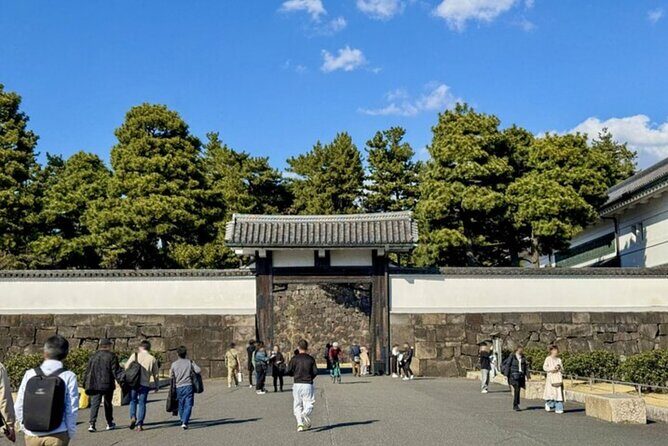
Next you’ll reach the Kokyo Otemon Gate (the main entrance to the Imperial Palace East Gardens). This imposing gate once served as a primary access point to Edo Castle, which is a key link: you’re not just looking at an entrance; you’re looking at a system of movement and authority.
From there, you go to the Ote-San’no Gate Ruins, remnants that show how Edo-era defensive design worked. Even if you don’t have a military history background, ruins like these help you see the logic of protection: where pressure points might have been, how structures supported security, and how the castle’s layout shaped what visitors could do.
One practical note: ruins are visually “small” compared to the imagination they trigger. Don’t rush them. Spend a few moments letting the guide point out what to look for in stone lines and layout before moving on.
More paths into old Tokyo

Hyakunin Bansho guardhouse: why “order” was part of architecture
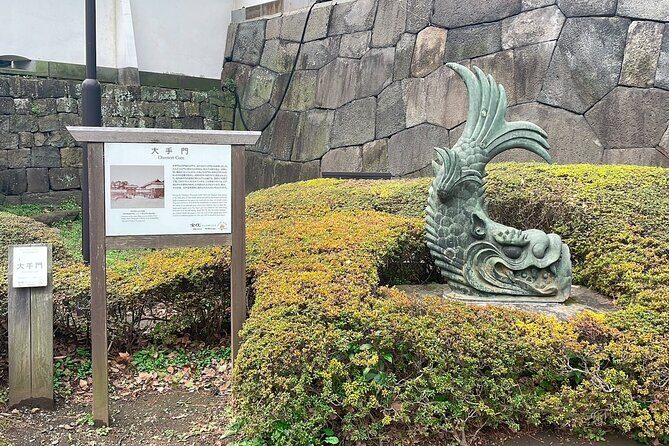
At the Hyakunin Bansho Guardhouse, you’ll learn about the role of a hundred samurai responsible for security within the castle’s inner sections. The term points to a clear idea: this wasn’t only about bravery—it was about routine, watchfulness, and controlled access.
I like this stop because it turns architecture into behavior. The question stops being What am I looking at? and becomes What job did this place do? Once you think that way, the rest of the gardens and gate remains start to feel more intentional, not just decorative.
This is also one of the spots where a good guide really matters. The structure is historical, but the meaning is interpretive—your guide connects the physical elements to human roles.
Ninomaru Garden and Suwa-no-chaya: a quiet break that still teaches
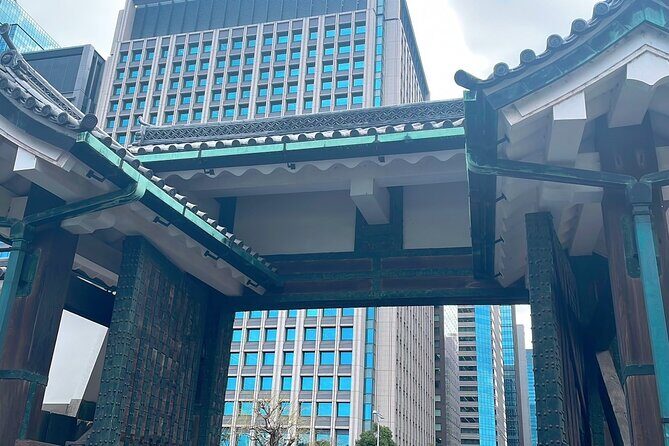
Now the tour slows down into atmosphere with Ninomaru Garden, known for its landscaped paths, seasonal flora, and water features. Gardens in Japan aren’t just pretty; they’re planned experiences. You can often “read” them as a sequence—how you approach a view, where you pause, and how water and plantings shape the mood.
Right near that calm moment is Suwa-no-chaya, a historic teahouse. The teahouse itself is not operational, but its presence adds cultural context, especially for tea as a social and aesthetic practice tied to place.
This is a smart pairing: you get both the physical garden plan and the cultural cue of tea. If you’re visiting Tokyo and everything feels rushed, this part gives your brain a breather while still keeping the tour educational.
Bairinzaka (Plum Tree Hill): views and seasonal scent
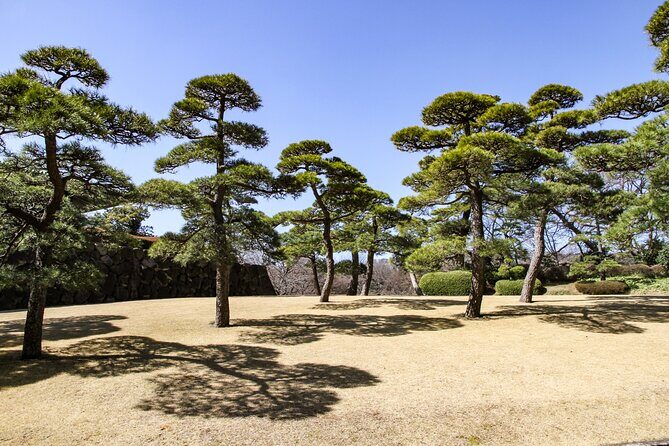
Next is Bairinzaka, also called Plum Tree Hill. The key detail here is seasonal: it’s known for plum tree blooms that bring color and fragrance during the right time of year. Even if you visit outside peak bloom, the hill-and-view concept usually helps you understand how elevation changes what you notice inside the gardens.
This stop is short (about 5 minutes), so treat it like a “reset and look” moment. If the weather is clear, it’s one of the better chances on this route for broader sightlines rather than just stonework and gate details.
If you’re sensitive to cold or heat, this is also a practical stop to dress for. Outdoor hill air can feel different from shaded garden paths.
Edo Castle keep model and Honmaru: the history scale you can grasp
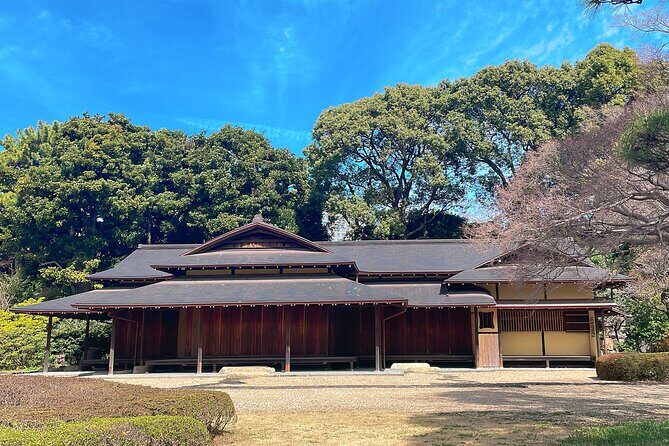
Back inside the East Gardens area, you’ll see an Edo Castle keep restoration model. It recreates the main keep (Tenshukaku) based on historical records and drawings. Models can feel like museum stuff—until you realize they solve a major problem: the original structure is no longer there, so your imagination might otherwise guess wrong.
Right after that is Honmaru (Main Hall), which was the central compound area of Edo Castle and the Tokugawa shogunate’s political headquarters. This stop connects the “defense and gates” theme to governance. You get to see how the castle wasn’t only a stronghold; it was also where decisions happened.
If you like history that’s tied to geography, this is a strong duo. A model gives scale, and Honmaru gives purpose.
Fujimi-yagura and takehashi gomon ruins: the defense logic
Two more Edo Castle remnants bring the architecture back toward security. First, the Edo Castle Takehashi Gomon ruins focus on the main keep area with remaining stone foundations and walls. Even without the full structure, the scale is the point: you can tell this was a seat of power built to last and built to control.
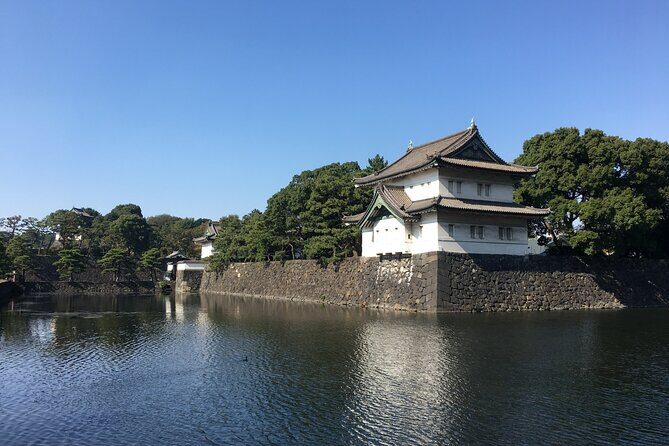
Then there’s Fujimi-yagura, a surviving watchtower. Watchtowers make it easy to picture surveillance and defense. You’re no longer guessing how people might have observed movement; you’re seeing a specific structure designed for it.
One caution: ruins and towers can be visually subtle depending on lighting and angle. If the day is windy or you’re rushing photos, slow down for a minute and let the guide explain what the tower placement meant.
Kokyo Gaien National Garden: Nijubashi Bridge views and a clean exit
After the East Gardens stops, you’ll exit into Kokyo Gaien National Garden. This area feels more open, with unobstructed views of the palace’s outer structures and the famous Nijubashi Bridge. It’s also one of the best parts of the route for easy photos because you’re not stuck behind dense crowds of buildings.
This stop is short (about 5 minutes), but it does a useful job: it transitions you from intimate garden detail to wide-angle Tokyo context. Once you see the bridge and outer views, the rest of Marunouchi makes more sense.
Marunouchi district: modern office Tokyo beside historic bones
From Kokyo Gaien, the walk continues through Marunouchi, Tokyo’s business hub. Here, modern skyscrapers sit near older buildings and cultural installations. The point isn’t to prove Tokyo is modern—it’s to show how the city keeps layering new life on top of old space.
This part is also where practical sightseeing helps you later. If you’re planning a longer stay, it’s useful to know where the “fast Tokyo” neighborhoods are relative to major landmarks like the palace grounds. You’re basically building a mental map in real time.
If you prefer shorter attention spans to long lectures, this section is a good place for that. You can look at storefronts and architecture while your guide ties it back to the historical theme.
Ending at Tokyo Station: red-brick charm meets transit reality
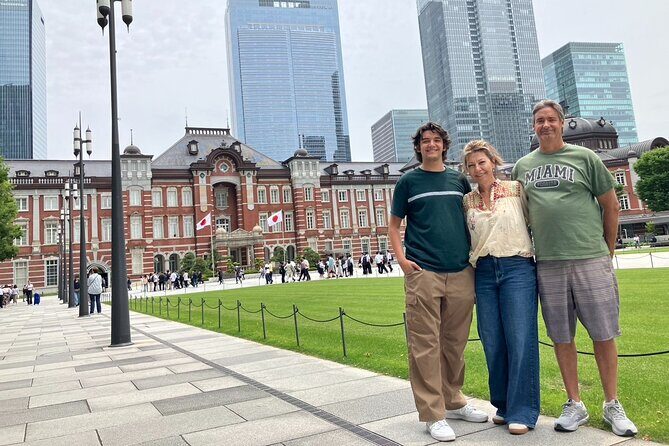
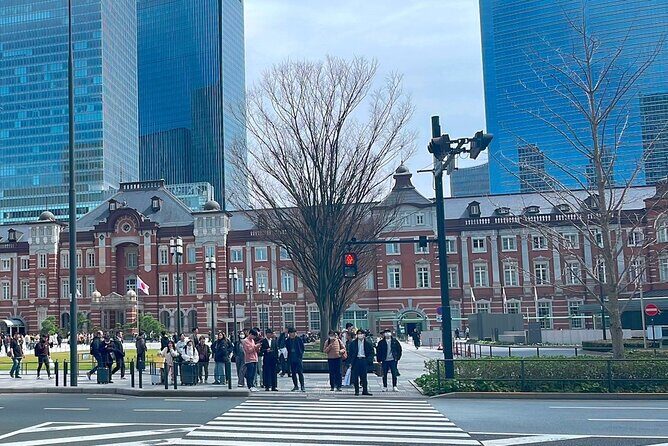
The tour concludes at Tokyo Station, famous for its red-brick façade restored to its 1914 glory. It’s a fitting ending: you start with imperial and shogunate structures, then you land in a rail-era centerpiece that has helped move Japan’s people and ideas around the country.
The station interior is a busy mix of shops and dining, so it’s easy to turn the tour into a real plan. If you want to eat something nearby, you’ll find options without needing to think too hard about logistics.
This final stretch lasts about 20 minutes, and that’s enough time to orient yourself. It’s also helpful if you’re continuing onward by train. Tokyo Station is a major hub, and finishing here can save energy compared to ending in a less-connected area.
Price and value: what $39.09 buys you in Tokyo time
The tour costs $39.09 per person, and it’s typically booked about 23 days in advance. That price isn’t about rides or fancy add-ons. It’s paying for a local guide and a guided storyline across multiple meaningful stops, most of which have free admission.
You also get a sensible time investment. At about 2 hours 30 minutes, you’re not sacrificing a whole day to make history happen. For many first-timers, that’s the best “value per hour” style of sightseeing: enough stops to feel like you did something, short enough to stay flexible.
Small group size (max 12) also matters here. If you’ve ever been stuck behind others on a narrow walkway, you know why this can feel worth it. It’s easier to ask questions and hear explanations when the group isn’t huge.
Food isn’t included. You’ll want to plan a snack before or after, because you’ll be walking and viewing for most of the tour.
Tips to make the walk smoother (and more fun)
Wear shoes you trust. This is a walking tour, and even if it feels “easy pace,” you’ll be on your feet for the full 2.5 hours. Tokyo weather can change fast, so bring a light layer and something for rain if forecasts look uncertain.
If the Imperial Palace areas you want to see are partially closed, you can still enjoy a lot of the tour because key points are gates, ruins, gardens, models, and viewpoints. In past experiences, some people have mentioned getting exterior glimpses rather than full entry, so it’s smart to come expecting gates and grounds more than interior rooms.
Bring your phone for photos at the Nijubashi Bridge and Tokyo Station ending. Those are the moments where your camera angle really matters, and short stops mean you’ll want to move with purpose.
Also, if you’re a question person, this tour rewards that. The guide format (and the small group size) is ideal for clarifying what you’re seeing—like how a watchtower fit into defense or how garden layouts guide walking.
Should you book this Imperial Palace to Tokyo Station tour?
If you want a day that feels both historic and practical, I’d book it. This route is a strong choice for first-timers, history lovers who like clear explanations, and anyone who wants to connect Edo Castle geography to modern Tokyo without taking separate tickets and taxis.
I’d skip it only if you specifically want the Inner Palace interiors. Since the Inner Palace isn’t part of this tour and some palace access can be limited depending on conditions, you’ll get more value from the East Gardens, ruins, and viewpoints approach.
If your goal is to leave Tokyo with a mental map—where the old capital’s power sat and how today’s city grew around it—this is one of the smoother ways to get there on foot.
FAQ
How long is the Imperial Palace to Tokyo Station Historical Walking Tour?
It runs for about 2 hours 30 minutes (approx.).
How much does the tour cost?
The price is $39.09 per person.
Where do you start and where do you end?
You start at Starbucks Coffee – Kokyo Gaien Wadakura Fountain Park and end at Tokyo Station (Marunouchi).
What’s included in the price?
The tour includes a local tour guide and uses a mobile ticket. Food and drinks are not included.
Is the Inner Palace included?
No. Access to the Inner Palace is not open to the public and isn’t included as part of this tour.
How many people are in the group?
The tour has a maximum group size of 12 travelers.
Tokyo on Foot: More Walks



More Tours in Tokyo





More Tour Reviews in Tokyo




Fresh reviews from around Tokyo






Historical Tours, compared.
 ★ 4.9Imperial Palace Japanese History Walking TourFrom $32987 reviews
 ★ 5.0Shinjuku Historical Walking Tour & Secret BackstreetsFrom $25530 reviews
 ★ 4.9From Tokyo: Nikko World Heritage Site Private Full-Day TripFrom $483243 reviews
 ★ 5.0Yanaka Historical Walking Tour in Tokyo’s Old TownFrom $81182 reviews
 ★ 5.0Kamakura Historical Walking Tour with the Great BuddhaFrom $98129 reviews
From Tokyo: Nikko World Heritage Sight Full Day Private TourFrom $362127 reviews
★ 5.0Kamakura Historical Walking Tour with the Great BuddhaFrom $98129 reviews
From Tokyo: Nikko World Heritage Sight Full Day Private TourFrom $362127 reviews
 ★ 4.8Yanaka District: Historical Walking Tour in Tokyo’s Old TownFrom $79117 reviews
 ★ 4.8Nikko Heritage & Nature Day Trip from TokyoFrom $39194 reviews
Browse the lists this tour appears in