
Reviewed · KAMAKURA DAY TRIPS
Full Day Kamakura Tour, From/To Tokyo, Yokohama, 2- 12 guests
A bamboo grove day, without train stress. This private Kamakura and Enoshima full-day experience is interesting because you skip the commuter chaos and move in a private vehicle at a pace that actually feels human. I love the chance to see the Hokoku-ji bamboo grove atmosphere up close, and I love that the day is taught as you go with a driver-guide who helps you understand what you’re looking at. One possible drawback: admission fees add up, since temple and island tickets are not included.
The day runs about 9 hours with flexible timing for your group (from 2 to 12 people). You also get pickup and a mobile ticket, which helps if you’re trying to avoid extra hassle before you even reach Kanagawa. Lunch is built in with about an hour in Kamakura, so you can choose what you’re in the mood for rather than eating on someone else’s schedule.
If you’re the type who likes planning ahead but still wants room to breathe, this is a smart way to see a lot of icons without feeling rushed.
In This Review
- Key things I’d zero in on before you book
- Why this private Kamakura and Enoshima day beats train-hopping
- Hokoku-ji Temple’s bamboo grove: small pathways, huge mood
- Kotoku-in and the Great Buddha: the 11.4-meter scale trick
- Hase-dera’s eleven-headed Kannon: mercy and healing themes you can feel
- Tsurugaoka Hachimangu: Kamakura’s most important shrine, with breathing room
- Enoshima Island: an easy island feel just off Kamakura
- Lunch time in Kamakura: one hour to eat well and reset
- Price and what you’re really paying for (and not paying for)
- Who this Kamakura and Enoshima tour suits best
- Should you book it? My practical take
- FAQ
- How long is the Kamakura and Enoshima tour?
- What’s included in the tour price?
- Are temple and island admissions included?
- How much time do we have at each main stop?
- Is pickup included?
- Is this a private tour?
- What’s the group size?
- Does the tour require good weather?
Key things I’d zero in on before you book
- Private car over public trains: you avoid crowds and get smoother transfers between scattered sights
- Driver-guide explanations on the move: you get context for temples, shrines, statues, and rituals
- A focused temple circuit plus Enoshima: Kamakura’s major stops pair well with island scenery
- Time for bamboo, Buddha scale, and Kannon devotion: not just photos, but meaningful sights
- Built-in lunch window: about an hour in Kamakura to eat and reset
More escapes to the Great Buddha and the coast
- Kamakura 8 hr Private Walking Tour with Licensed Guide from Tokyo★ 5.0 · 80 reviews
- Tokyo: Kamakura & Enoshima Day Tour with Pickup & Train Ride★ 4.1 · 61 reviews
- Kamakura Private & Customizable Tour – All-in-One Experience★ 5.0 · 49 reviews
Why this private Kamakura and Enoshima day beats train-hopping
Kamakura and Enoshima can be a lot. The sights are spread out, and public transport can get crowded at the times most day trippers want to travel. What I like here is the straightforward solution: you ride in a private vehicle, so the day feels like a real outing instead of a series of station sprints.
You’re also buying more than transit. The driver-guide aspect matters because Kamakura temples and shrines have lots of small details that become obvious only when someone points them out. A good example is Hokoku-ji: once you understand the bamboo grove setting behind the main hall, it clicks as more than a pretty photo spot.
One more practical point: you’re not locked into train schedules. If the group wants a slower pace around the Great Buddha or needs a bathroom break before Enoshima, the schedule is flexible. That may sound minor, but it’s often the difference between a calm day and a tense one.
Hokoku-ji Temple’s bamboo grove: small pathways, huge mood
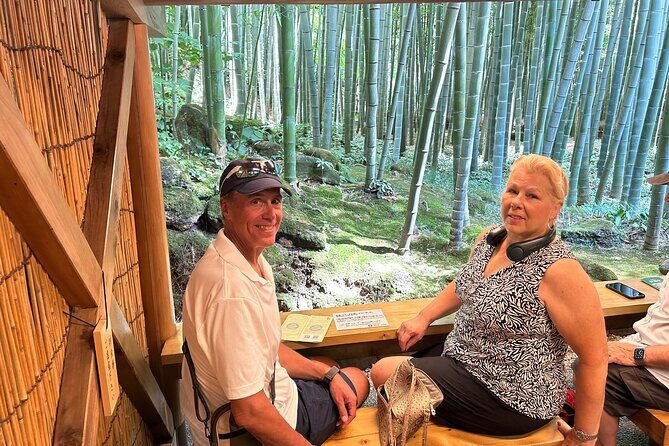
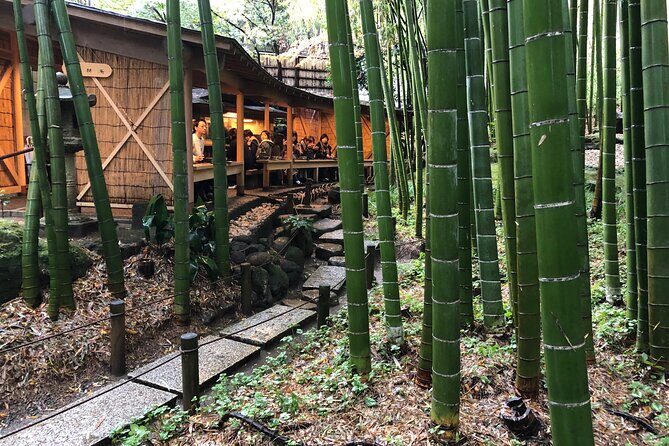
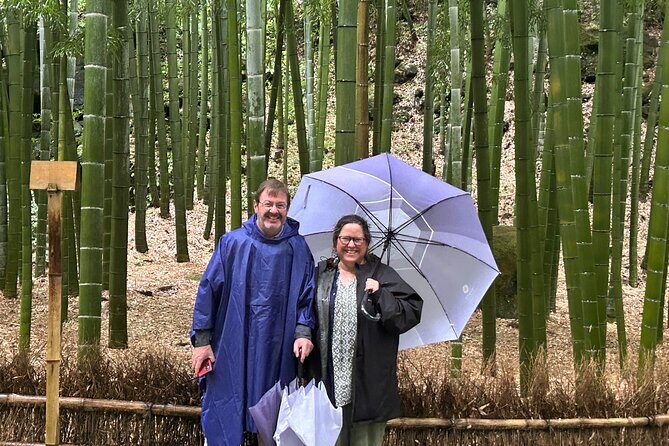
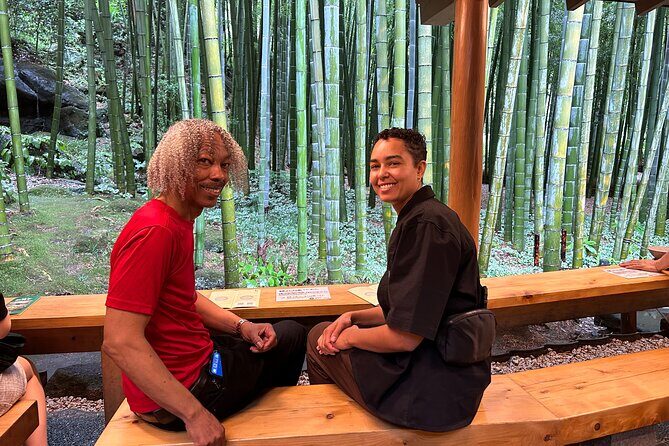
Hokoku-ji is best known for its bamboo grove tucked behind the main hall. The grove is thick with over 2,000 dark green stalks, and the paths are narrow enough that you slow down naturally. This is the kind of place where the atmosphere changes as you walk deeper—quiet, cooler-feeling, and more grounded than a typical roadside garden.
You’ll have about an hour here. That’s enough time to step through, pause for a few angles, and take in the grove rather than just passing through. If you like temple gardens for the way they control your pace, you’ll appreciate the timing.
A small consideration: the bamboo temple ticket and admission are not included, so plan for the added cost. Still, I think Hokoku-ji is the kind of stop where paying extra for the main experience feels worth it—this is the signature Kamakura moment.
Kotoku-in and the Great Buddha: the 11.4-meter scale trick
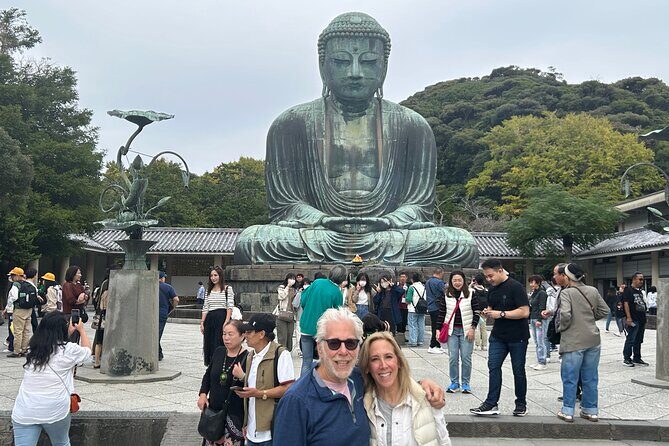
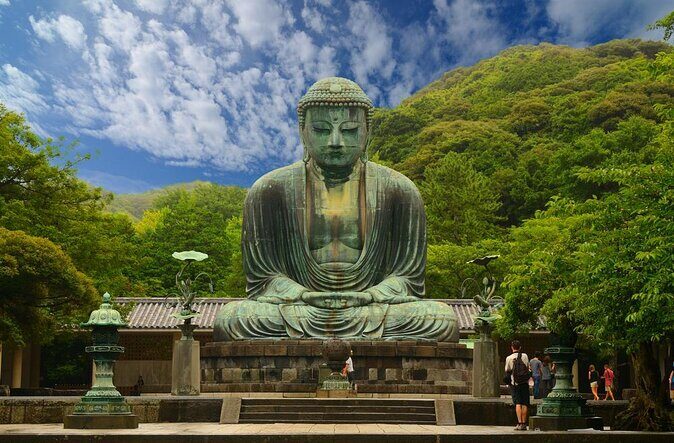
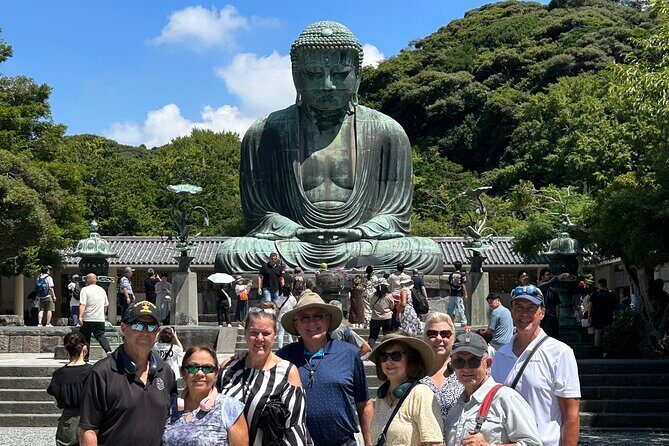
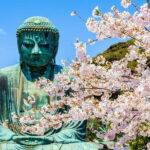
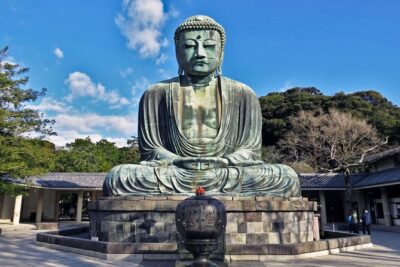
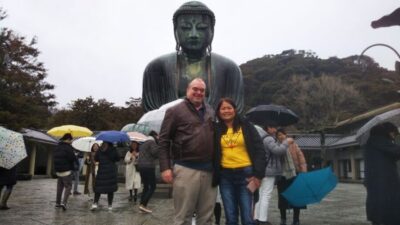
Next up is Kotoku-in Temple and the Great Buddha of Kamakura. The statue is a bronze Amida Buddha that’s about 11.4 meters tall. Even if you’ve seen big Buddhas in other cities, the scale here is the point. You don’t feel like you’re looking at an ornament. You’re looking at a landmark.
You’ll have about 30 minutes. That’s a good length for this stop. Long enough to get your bearings, but short enough that the day doesn’t drag. If you’re the type who likes reading context while you stand back and notice proportions, you’ll get satisfaction from that time window.
Don’t forget: Kotoku-in’s admission fee is also separate. But if you’re doing Kamakura in one day, this is the stop you’ll be grateful you didn’t skip.
Hase-dera’s eleven-headed Kannon: mercy and healing themes you can feel
Hasedera Temple is famous for its eleven-headed statue of Kannon, the goddess of mercy. The gilded wooden sculpture is 9.18 meters tall, and it’s regarded as one of the largest wooden sculptures in Japan.
You’ll have about an hour, which is ideal here because Hasedera isn’t just one statue at one angle. It’s the way the temple grounds and devotion themes build as you move. Kannon statues like this are meant to communicate care and compassion, and Hasedera leans into that.
I also like that this stop adds a different emotional tone from the bamboo grove and the Great Buddha. Bamboo gives you calm. The Great Buddha gives you grandeur. Hasedera gives you a more human, mercy-focused atmosphere.
From a practical angle, Hasedera’s admission is separate too, so budget for it.
More of the harbour city next door


Tsurugaoka Hachimangu: Kamakura’s most important shrine, with breathing room
Tsurugaoka Hachimangu Shrine is Kamakura’s key shrine. It was founded by Minamoto Yoriyoshi in 1063, then enlarged and moved to its current site in 1180 by Minamoto Yoritomo. That lineage matters because Kamakura’s story is tied closely to the Minamoto clan, and this shrine is one of the clearest anchors.
You’ll have about 45 minutes. That time works well because you can see the main shrine approach, take in the overall setting, and then move on without feeling like you’re trapped in a long line or stuck circling for more angles.
This is also one of the easier stops to pace well. You get structure, signage, and a central focus. If you’re traveling with people who need a break from walking hills or dense temple halls, this stop is often a smoother transition.
Enoshima Island: an easy island feel just off Kamakura
After Kamakura’s temple cluster, the day shifts to Enoshima Island. It’s just a short ride west and connected by bridge to the mainland, so it doesn’t feel cut off. It feels like a coastal escape with a tourist vibe, shrine corners, and great opportunities for views when the weather cooperates.
You’ll have about 1.5 hours here. That’s enough time to stroll and enjoy the island atmosphere without letting the day run late. Also, Enoshima has optional ticketed sightseeing: the Enoshima Escar is listed as separate and is priced on its own.
A weather note matters: this tour requires good weather. If conditions are poor, the tour may be offered on a different date or refunded. Since island time is part of the plan, don’t count on forcing it in bad weather.
Lunch time in Kamakura: one hour to eat well and reset
You get about 1 hour for lunch in Kamakura. That’s a healthy chunk of time for Japan—long enough to sit down, order, and still come back refreshed. What I like is that you’re not forced into a specific restaurant in the schedule data you have. A private guide gives you flexibility to pick something practical for your group.
Based on what people highlight from this kind of route, ramen tends to be a popular lunch choice here. If you want ramen, I’d ask your driver-guide for a spot that fits the time window and is easy to reach without turning lunch into a second sightseeing mission.
If you prefer lighter food, you can go that way too. The big value of this lunch block is control: you can steer it toward whatever you need after temple walking.
Price and what you’re really paying for (and not paying for)
The price is $715.34 per group for up to 12 people, and the total you pay mostly covers transportation and the driver-guide service. Admission fees and lunch are on you.
Here’s the value math that matters in real life: if you’re in a smaller group, the cost per person rises fast because it’s one price for the vehicle and guide. If you’re booking with 8 to 12 people, it becomes a very reasonable way to do a high-effort day without fighting transit.
Also, compare this to the hidden cost of public transport stress: time lost to transfers, crowds, and lining up your route. This tour’s biggest “service value” is that you’re free to enjoy each stop instead of optimizing bus routes like it’s a video game.
What to budget for on top:
- Bamboo temple: ¥1,000
- Hase Temple: ¥400
- Kotoku-in Temple: ¥300
- Enoshima Escar: ¥500
- Plus the tour data lists ¥2,200 per person for admission-related costs
If you add lunch (typically ¥1,500–¥2,000), you’ll land at a fuller day budget than the base price suggests. Still, for a private, structured day across both Kamakura and Enoshima, it’s a fair setup—especially if you care about comfort and explanations, not just ticking boxes.
Who this Kamakura and Enoshima tour suits best
This is a great fit if:
- You want a temple-and-island day with minimal logistics stress
- Your group is 2–12 and you’d rather split the private cost than piece together trains
- You appreciate context while you walk, not just a photo stop
- You’re time-bound and want the major sights covered in one day
It may be less ideal if:
- Your group hates paying separate ticket fees on top of the tour price
- You want lots of free, unplanned detours with no structure (even though the schedule is flexible, it’s still a curated flow between stops)
Should you book it? My practical take
Book it if you want to see Hokoku-ji, Kotoku-in, Hasedera, Tsurugaoka Hachimangu, and Enoshima in one smooth day without wrestling crowded transit. This route is built for people who like meaningful sights, steady pacing, and a guide who helps you understand what the statues and rituals represent.
Skip it (or reconsider) if your priority is maximum spontaneity and minimal add-on costs. Since multiple admissions are separate and Enoshima is weather-dependent, you’ll want a day that fits the plan.
If your goal is a calm, well-paced Kamakura day that feels like a proper excursion, this private tour is a strong choice.
FAQ
How long is the Kamakura and Enoshima tour?
It runs about 9 hours.
What’s included in the tour price?
The tour includes transportation costs and guide service.
Are temple and island admissions included?
No. Admission fees for Hokoku-ji bamboo area, Hase Temple, Kotoku-in, and Enoshima Escar are listed separately.
How much time do we have at each main stop?
You’ll have about 1 hour at Hokoku-ji, 30 minutes at Kotoku-in, 1 hour at Hasedera, 45 minutes at Tsurugaoka Hachimangu, 1.5 hours on Enoshima Island, and about 1 hour for lunch in Kamakura.
Is pickup included?
Pickup is offered.
Is this a private tour?
Yes. It’s private, and only your group participates.
What’s the group size?
It’s designed for groups of 2 to 12 guests.
Does the tour require good weather?
Yes. The experience requires good weather, and if it’s canceled due to poor weather, you’ll be offered a different date or a full refund.
More Tour Reviews in Tokyo






Next Door in Yokohama
More Days by the Great Buddha
Fresh reviews from around Tokyo






Kamakura Day Trips, compared.
 ★ 4.5Kamakura & Enoshima Day Trip including Temple TicketsFrom $581,375 reviews
 ★ 4.5From Tokyo: Kamakura & Enoshima 1-Day Bus TourFrom $66189 reviews
 ★ 5.0Kamakura Historical Walking Tour with the Great BuddhaFrom $98129 reviews
Kamakura Private Tour: Temples, Nature, and the Great BuddhaFrom $98121 reviews
Kamakura Walking Tour – The City of ShogunFrom $35100 reviews
★ 5.0Kamakura Historical Walking Tour with the Great BuddhaFrom $98129 reviews
Kamakura Private Tour: Temples, Nature, and the Great BuddhaFrom $98121 reviews
Kamakura Walking Tour – The City of ShogunFrom $35100 reviews
 ★ 5.0Kamakura 8 hr Private Walking Tour with Licensed Guide from TokyoFrom $20180 reviews
 ★ 4.1Kamakura & Enoshima Day Tour with Pickup & Train RideFrom $1361 reviews
 ★ 4.8Kamakura: Private Guided Walking Tour with Local GuideFrom $10660 reviews
Browse the lists this tour appears in