
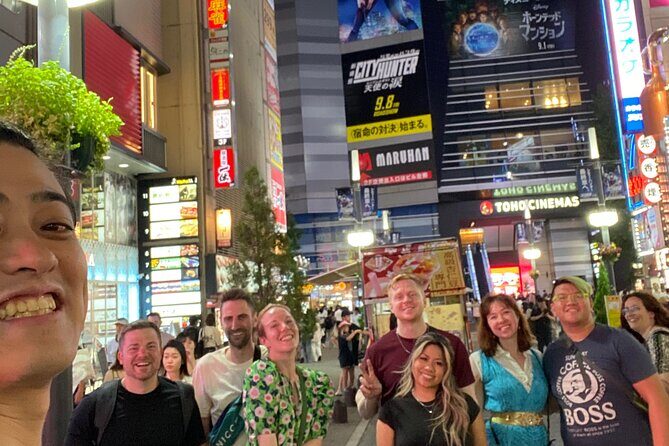
Reviewed · SHINJUKU BAR HOPPING
Bar Hopping Tour with a local Guide in Shinjuku
Shinjuku gets a lot more interesting after dark. This 3 to 3.5-hour bar-hopping tour links three very different drinking areas with a local guide, so you’re not just walking around with a map. I like how it mixes famous Shinjuku sights (hello, Godzilla) with places that feel more lived-in, and you get the language support to order and understand what you’re looking at.
Two things I especially like: the group stays small (max seven), and Shingo’s guidance makes the night feel easy, friendly, and practical. One thing to consider is that food and drink aren’t included in the base price, so you’ll want to plan for extra spending as the night goes on.
In This Review
- Key things to know before you go
- Shinjuku After Dark: Why This Route Works
- Meeting at UNIQLO Shinjuku West: The Logistics That Matter
- Stop 1: Omoide Yokocho (Memory Lane) in 40 Minutes
- Stop 2: Kabukicho’s Neon Zone and Karaoke Energy (1.5 Hours)
- Stop 3: Hanazono Shrine and Golden Gai’s Micro-Bars (With a Drink Segment)
- What You’re Actually Paying For (and What You Should Budget)
- Shingo’s Role: English Support and Staying Loose
- How the Timing Plays Out in Real Life
- Who This Tour Fits Best (and Who Might Skip It)
- Should You Book This Shinjuku Bar Hopping Tour?
- FAQ
- How long is the bar hopping tour?
- How many people are in the group?
- What is the starting meeting point?
- Where does the tour end?
- What stops are included?
- Is food and drink included in the price?
- What’s included besides the guide?
Key things to know before you go
- Small group, big attention: capped at seven travelers, which helps you move as a unit without feeling lost.
- Shinjuku nightlife, sequenced: Memory Lane, Kabukicho, then Golden Gai, so you’re not zigzagging across town.
- Shingo’s local flow: English support and steady pacing, with communication if you’re running late.
- A shrine stop mid-night: Hanazono Shrine (the largest shrine in Shinjuku) adds a grounded pause between bars.
- Photo coverage included: photos are taken during the tour, so you don’t rely on your own shaky selfies.
Different nights, same neon: more Shinjuku crawls
- Tokyo: Shinjuku Food Tour (13 Dishes at 4 Local Eateries)★ 5.0 · 6,603 reviews
- Tokyo Bar Hopping Tour in Shinjuku (All-You-Can-Drink + Dinner)★ 5.0 · 3,587 reviews
- Tokyo: Shinjuku Food Tour (15 Dishes and 4 Eateries)★ 4.9 · 2,033 reviews
Shinjuku After Dark: Why This Route Works
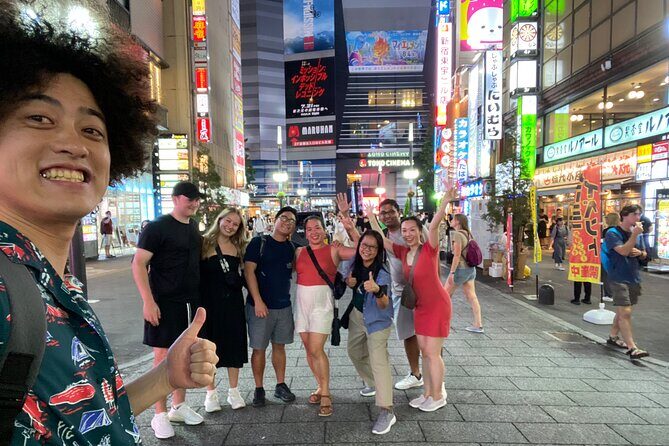
Shinjuku nightlife can be a little like turning the volume knob all the way up. You get crowds, neon, noise, and a lot of signage that doesn’t help much if your Japanese is limited. What makes this tour smart is the way it orders your evening: you start in a classic drinking-street vibe, move into a louder entertainment zone, then finish at the kind of micro-bar scene people talk about when they want a real change of pace.
I also like that you’re not being asked to solve everything on your own. The guide is there to help with the “what is this?” moments: menu items, what to order, and the difference between places that look similar from the street.
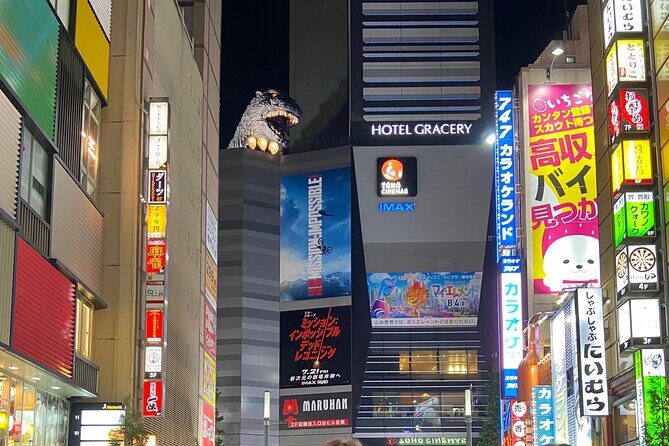
And yes, you can also check off a major Shinjuku icon along the way, including the Godzilla statue area. It’s not just bar hopping as a checklist; it’s still Shinjuku, with context for what you’re seeing as you go.
Meeting at UNIQLO Shinjuku West: The Logistics That Matter
This tour starts at the UNIQLO Shinjuku West Japan building (Shinjuku Palette Building B1-4F), and it ends back at the meeting point. That matters more than it sounds. In Shinjuku, the streets shift fast by neighborhood, and having the end point anchored near where you started keeps you from trying to re-navigate the city after you’ve had a few drinks.
The tour runs about 3 hours to 3 hours 30 minutes. That’s a sweet spot for an evening out: long enough to visit multiple areas and get a feel for each one, but not so long that you feel cooked before the last stop.
You also get a mobile ticket, which is handy if you don’t want to mess with printouts. And it’s designed for groups up to seven travelers, so you’re less likely to get stuck waiting outside places while the group chats about what to do next.
Stop 1: Omoide Yokocho (Memory Lane) in 40 Minutes
Your first stop is Omoide Yokocho, also known as Memory Lane. This is a narrow drinking street with a nostalgic Showa-era feel, and it’s a great place to start because it quickly teaches you the “local rhythm” of the night. The tour allocates about 40 minutes here, which is enough time to settle in, get comfortable with the menu vibe, and try something without dragging the night out too early.
Admission here is listed as free, so this is mostly about atmosphere and orientation. I like that approach: you get an immediate sense of place before you head into bigger entertainment zones.
A practical tip for this part: arrive ready to look up at signs and labels, even if you can’t read everything. The guide is there to help you interpret what you see, but your best experience comes from being open to ordering what feels fun rather than searching for a familiar brand.
Stop 2: Kabukicho’s Neon Zone and Karaoke Energy (1.5 Hours)
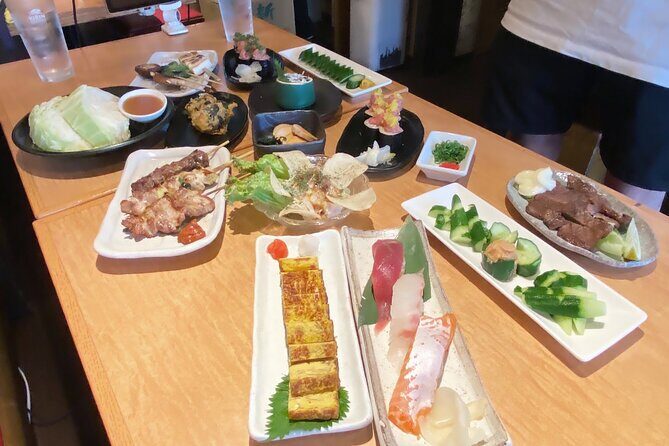
After Memory Lane, you move to Kabukicho, the entertainment district in Shinjuku. Expect a shift: more lights, more activity, and a wider mix of restaurants, bars, and karaoke spots. The tour gives this area about 1 hour 30 minutes, which is a good chunk of time for a neighborhood like Kabukicho.
Admission here is also free, so you’re paying primarily for your guide and pacing—helpful in a place where it’s easy to wander in circles. The real value is what the guide adds: what to try, what menus look like in this part of town, and how to order without getting flustered.
One reason I think this stop works well is contrast. Memory Lane is tight and nostalgic. Kabukicho is outward-facing and loud. You’re basically training your senses to switch gears. If you’re nervous about going out at night, that structure can calm things down because you always know there’s another stop coming.
Also, because Kabukicho includes adult entertainment, some people feel a little uncomfortable just by proximity to that scene. If you prefer a nightlife evening that stays family-friendly or low-key, you’ll want to mentally prep for the district’s tone here.
More days made easy by a guide
Stop 3: Hanazono Shrine and Golden Gai’s Micro-Bars (With a Drink Segment)
The final section is where Shinjuku gets truly specific. You head to Hanazono Shrine first, noted as the largest shrine in Shinjuku. That’s a smart move in the itinerary. It breaks up the noise and gives you a quick reset, so the last stop doesn’t just feel like one long bar crawl.
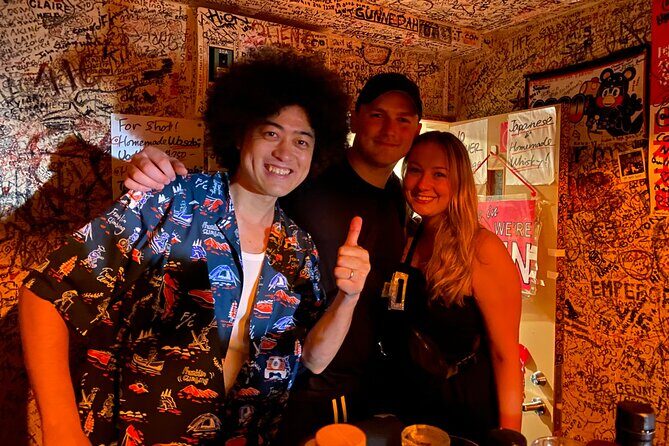
Then you go to Shinjuku Golden Gai, the famous pocket of tiny bars. The tour time here is about 1 hour 10 minutes, and this stop includes an admission ticket. The schedule also notes an all-you-can-drink experience before moving on to Golden Gai, so you get a structured drinking moment rather than everything being purely pay-as-you-go.
Golden Gai is the kind of place where each bar feels distinct, and that’s why a guide helps. Without language support and local know-how, you can end up staring at doors, unsure which place matches your mood. With a guide, you get pointed toward what makes sense for your group and what you’re after.
What You’re Actually Paying For (and What You Should Budget)
At $100 per person, this tour is priced like a guided evening experience, not just a “walk and good luck” outing. Here’s the value breakdown from what’s included:
- Local and professional guide: the big-ticket item. They handle language barriers, sequencing, and menu translation so you don’t lose time.
- Photos taken during the tours: small perk, but it’s real value when you’re moving and it’s hard to stop and shoot.
- Some admission coverage: Stop 3 includes an admission ticket.
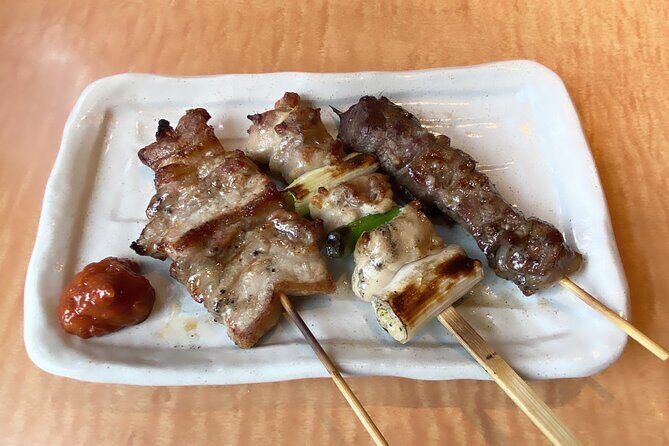
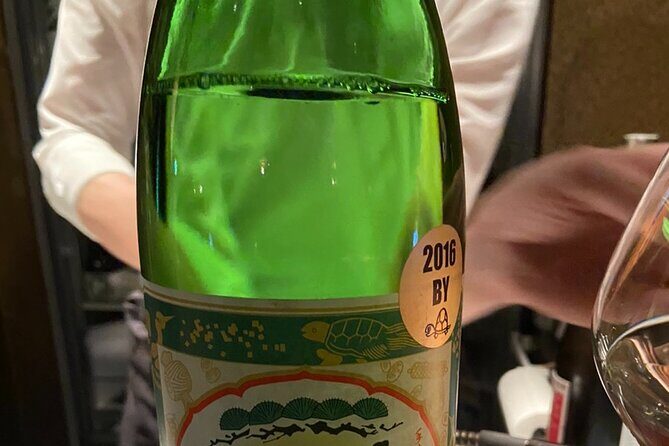
What’s not included is food and drink in general. That means you should plan to spend extra during the night, especially if you want to order draft beers or skewers (the tour explicitly mentions chances to purchase these, and the guide explains what to try). The good news is that you’re not stuck without options; you’ll get guidance along the way on what local items might be worth your money.
If you’re someone who wants to sample without thinking too hard, this is a strong setup. If you’re on a tight budget and want strict cost control, you’ll need to decide ahead of time what your drink and snack limit is.
Shingo’s Role: English Support and Staying Loose
Shingo Travel leads the experience, and Shingo comes up again and again in the feedback for a simple reason: he keeps the night fun while still being organized. People highlight his communication and ease, including the way he stays in contact if delays happen. That kind of reassurance matters in Tokyo, where meeting points can be easy to miss if you’re a few minutes off.
One detail I’d pay attention to is how guests describe the vibe: it’s less like a formal lecture and more like going out with a friend who knows the shortcuts. That translates directly to how you enjoy each stop. You’re not spending the evening translating every sign yourself. You’re spending it interacting with the nightlife.
And because the group is capped at seven, Shingo can likely manage attention and pacing in a way that feels personal instead of chaotic.
How the Timing Plays Out in Real Life
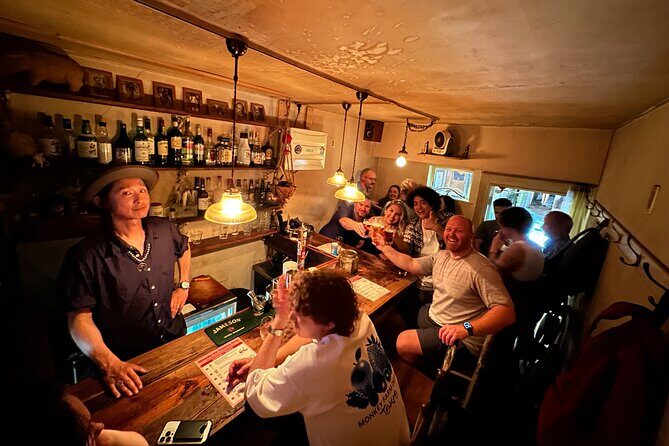
This tour is about moving through three zones without rushing. The durations are set like this:
- Memory Lane: about 40 minutes
- Kabukicho: about 1 hour 30 minutes
- Golden Gai area: about 1 hour 10 minutes
That totals to roughly 3 to 3.5 hours, depending on the flow of the night. In practice, nightlife can create small delays—lines, crowd density, and how quickly a group decides what to try. The tour structure helps because you’re never stuck in one place for too long.
Also, since the night ends back at the starting point, you don’t have to figure out transportation while your energy is already lower.
Who This Tour Fits Best (and Who Might Skip It)
This tour is a great match if you want:
- Bar hopping without language stress
- A mix of famous Shinjuku sights and areas that feel more local
- A guide-led approach to ordering and choosing snacks or drinks
- A group size where you can actually talk and keep moving
You might think twice if:
- You don’t want to spend extra money on drinks and snacks (food and drink aren’t included)
- You’re sensitive to the adult-entertainment atmosphere you’ll encounter in Kabukicho
- You’re looking for a quiet cultural tour with low sound and low crowds
Should You Book This Shinjuku Bar Hopping Tour?
I’d book it if your goal is one solid evening of Shinjuku nightlife with less guesswork and more actual guidance. The small group size, the guide-led menu help, the structured stop sequence, and the photo component all point to good value for a guided night out.
I’d skip it if you want strict fixed costs with no surprises, or if Kabukicho’s setting would make you uncomfortable. Otherwise, this is the kind of tour that helps you feel confident the moment you step into the neon, because you’re not just following your own instincts—you’ve got a local plan.
If you’re traveling on your first night in Shinjuku (or you only have one evening to spare), this is also a smart way to get your bearings fast.
FAQ
How long is the bar hopping tour?
The tour lasts about 3 hours to 3 hours 30 minutes.
How many people are in the group?
The tour has a maximum of seven travelers.
What is the starting meeting point?
The tour starts at UNIQLO Shinjuku West Japan, 160-0023 Tokyo, Shinjuku City, Nishishinjuku, 1-chōme11 新宿西口会館(新宿パレットビル B1-4F.
Where does the tour end?
It ends back at the meeting point.
What stops are included?
The tour includes Omoide Yokocho (Memory Lane), Kabukicho District, and Shinjuku Golden Gai, with a stop at Hanazono Shrine along the way.
Is food and drink included in the price?
Food and drink are not included as a general item, but the itinerary mentions a chance to purchase draft beers and skewers, and it also notes an all-you-can-drink experience before Golden Gai.
What’s included besides the guide?
Photos are taken during the tour, and a local and professional guide is included. A mobile ticket is used for the activity, and an admission ticket is included for the Hanazono Shrine/Golden Gai segment as listed.
More Tours in Tokyo


More Tour Reviews in Tokyo




Shinjuku After Hours: The Other Crawls
Fresh reviews from around Tokyo






Shinjuku Bar Hopping, compared.
 ★ 5.0Shinjuku Food Tour (13 Dishes at 4 Local Eateries)From $866,603 reviews
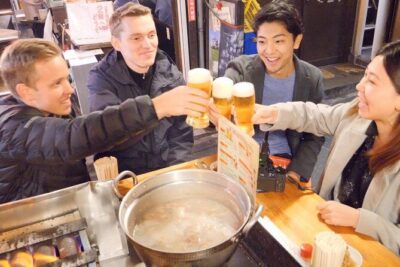 ★ 5.0Tokyo Bar Hopping Tour in Shinjuku (All-You-Can-Drink + Dinner)From $1063,587 reviews
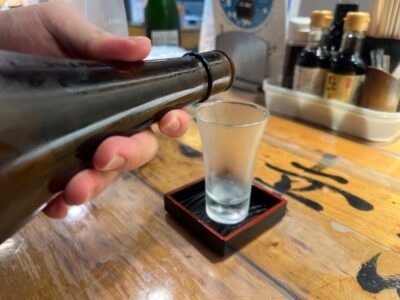 ★ 4.9Shinjuku Food Tour (15 Dishes and 4 Eateries)From $852,033 reviews
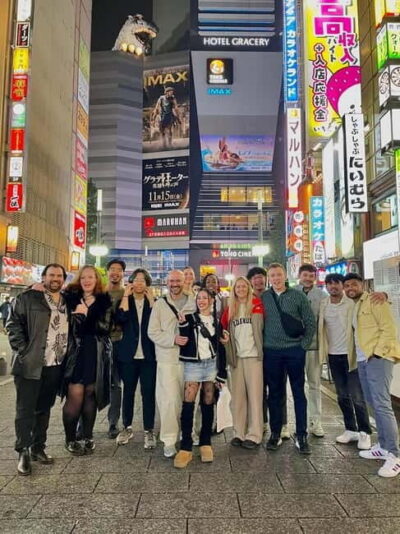 ★ 4.9Shinjuku Local Bar and Izakaya Guided Walking TourFrom $341,794 reviews
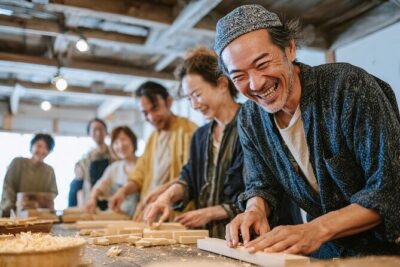 ★ 5.0Tokyo Shinjuku Chopsticks Making ClassFrom $201,763 reviews
 ★ 5.0Tokyo Shinjuku Sumo Show & Experience with PhotoFrom $791,750 reviews
 ★ 5.0Tokyo Night Foodie Tour in Shinjuku – Seasonal Sushi, Wagyu BeefFrom $1111,161 reviews
 ★ 4.8Sumo Show and Experience in ShinjukuFrom $691,001 reviews
Browse the lists this tour appears in