
Reviewed · COOKING CLASSES
AKEMI’s SUSHiKiTCHEN: A fun sushi cooking lesson in Tokyo
Tokyo sushi feels easier here than you expect.
This class works because it’s in a real Japanese home and you focus on vinegar rice technique instead of just copying shapes. I also love the way Akemi walks you through sushi-making history and the logic behind each step, not just the final bite. One thing to consider: there’s a set menu, so you can’t pick which exact sushi you’ll make.
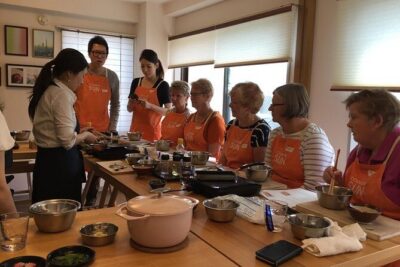
If you’re coming from Shinjuku or Shibuya, the access is simple, and the class stays relaxed with a small group size. Akemi Castellano teaches in English and Japanese, with help from her husband Dan, so it feels friendly even if your sushi skills start at zero. The drawback to keep in mind for planning: there are no food or animal allergy accommodations, and it’s not suitable for children under 10.
In This Review
- Key things I’d mark on your Tokyo food list
- A Tokyo Home Where Sushi Starts With Vinegar Rice
- Fish Prep and Sushi Basics That Transfer to Your Next Meal
- Making Four Sushi Styles in One 3-Hour Lesson
- Nigiri-zushi: Hand-pressed, not random
- Maki-sushi: Rolling with control
- Gunkan (battleship sushi): The shape you earn
- Inari: The tofu pocket twist
- A note on the set menu
- Sushi Culture Lessons: Edo Origins and Food Logic
- Eating What You Cook: Sake, Dessert, and Vegetarian Option
- Price and Value: What $103 Buys You in Tokyo
- Logistics You’ll Actually Care About: Meeting, Timing, and Group Size
- Who Should Book This Sushi Lesson (and Who Might Skip It)
- Should You Book AKEMI’s SUSHiKiTCHEN?
- FAQ
- How long is the sushi lesson?
- What kinds of sushi will I learn to make?
- Is the class a small group?
- Can I choose which sushi items I make?
- Is there a vegetarian option?
- What language is the instruction in?
- Are food or animal allergies accommodated?
- Where do I meet for the class?
- Is this suitable for children?
Key things I’d mark on your Tokyo food list
- At-home setup in a house near major hubs, not a busy studio
- Vinegar rice method you can reuse on your next sushi night
- Hands-on sushi styles: Nigiri, Maki, Gunkan, and Inari
- A fish prep walkthrough that explains what changes before it becomes neta
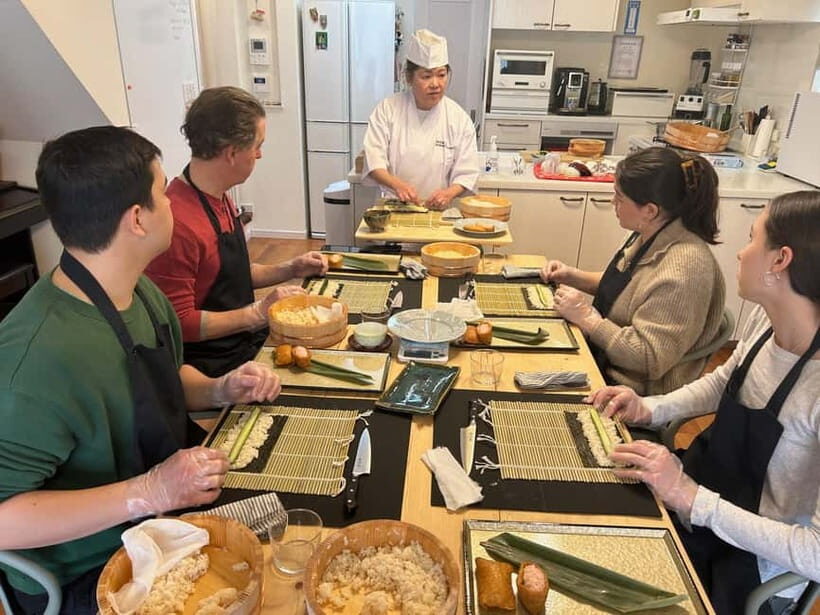
- Small group (max 6) so you get real attention
- A full meal after class, often paired with sake and dessert
More aprons-on time in Tokyo kitchens
- Ramen & Gyoza Cooking Class in Tokyo with Local Supermarket Visit★ 5.0 · 823 reviews
- Tokyo: Easy Ramen Cooking Experience in Kabukicho, Shinjuku★ 4.6 · 321 reviews
- Ramen and Sushi Cooking Class with Sake Pairing Set in Tokyo★ 5.0 · 291 reviews
A Tokyo Home Where Sushi Starts With Vinegar Rice
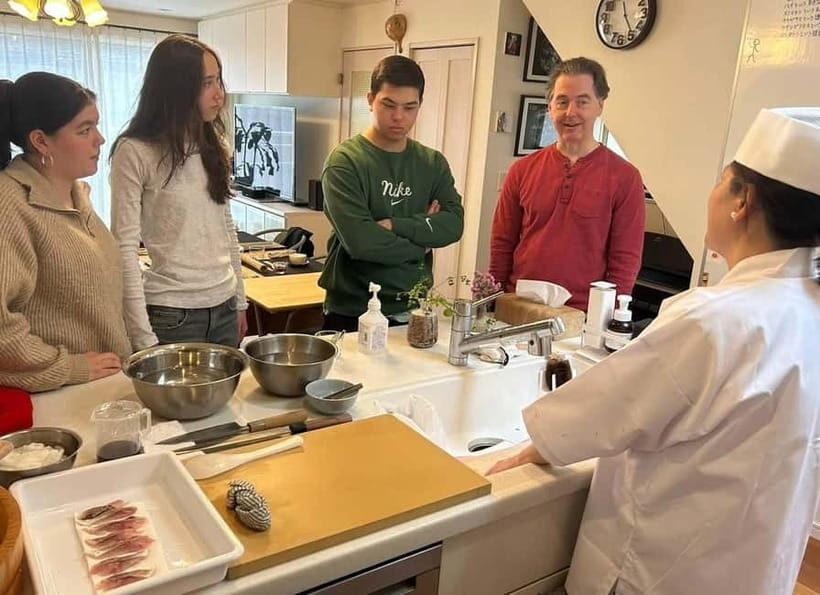
I like cooking classes where you can actually hear the explanation, not just watch from across a counter. This one is set up that way: you learn inside Akemi’s home, with a calm, everyday rhythm. It doesn’t feel like a show. It feels like someone teaching you how they cook when the kitchen is quiet and the food matters.
The practical win is location. It’s easy to reach from both Shinjuku and Shibuya, two of Tokyo’s main subway worlds. Many people simply find the house using Google Maps. If you’d rather not play navigation games, you can ask to be met at the nearest train station. That option helps if you’re tired, arriving late, or you just want the stress level to stay low.
From the start, the class frames sushi as more than raw fish on rice. You begin with vinegar rice. That’s the base flavor for everything you’ll make later—Nigiri, Maki, and the rest. If you only remember one thing from the lesson, make it this: rice seasoning and handling are where sushi quality begins. When your rice is right, the rest of the class makes more sense fast.
You’ll also notice the ingredient approach. The class uses carefully selected components like rice and vinegar, plus seafood neta for sushi. That matters because you’re learning with ingredients that behave the way proper sushi ingredients do. Some classes teach technique but rely on whatever is cheapest that week. This one feels more intentional.
Fish Prep and Sushi Basics That Transfer to Your Next Meal
Before you start shaping sushi, you get a demonstration of how fish is prepared for sushi. The point isn’t fear or science cosplay. It’s understanding what needs to be done to make fish suitable for sushi use, and how preparation affects texture and taste. Even if you never cut fish at home again, you’ll end up with a clearer view of why sushi in Japan tastes the way it does.
This also changes how you eat afterward. If you’ve ever wondered why some sushi tastes cleaner or more balanced than others, you start tracing it back to preparation and selection. The class nudges you toward that way of thinking. You’re not just building a roll. You’re learning what’s happening before the food reaches the table.
Akemi’s teaching style is hands-on and structured. The lesson is in English and Japanese, so communication stays smooth. And because the group is limited to 6 participants, you’re not shouting over a crowd. You can ask questions and get adjustments. That’s a big deal for rice handling, where tiny differences change everything.
Another practical plus: you learn in a friendly pace. The class runs for about 3 hours, so it’s long enough to do real work but short enough that you don’t feel stuck at the kitchen bench for your entire afternoon.
Making Four Sushi Styles in One 3-Hour Lesson
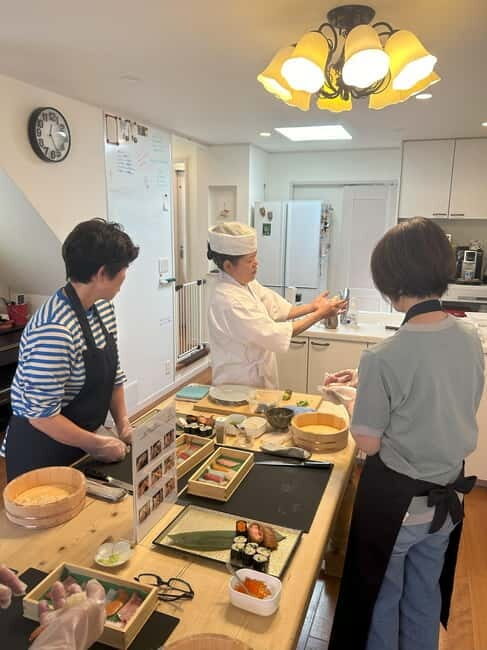
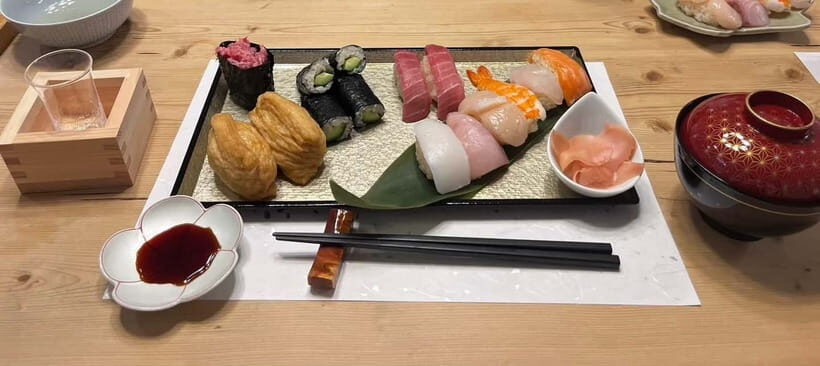
You’ll make four kinds of sushi: Inari, Gunkan, Maki-sushi, and traditional Nigiri-zushi. The easiest way to appreciate this is to treat each style like a different skill set.
Nigiri-zushi: Hand-pressed, not random
Nigiri is the signature style, and it’s also the most technique-dependent. You learn how to press and shape rice by hand, then top it with neta. The rice needs the right stickiness and pressure. Too light, and it falls apart. Too firm, and it can get dense instead of tender.
This part is where the vinegar rice work pays off. If your rice is seasoned well and handled properly, the shaping feels doable rather than stressful.
More things to make with your own hands


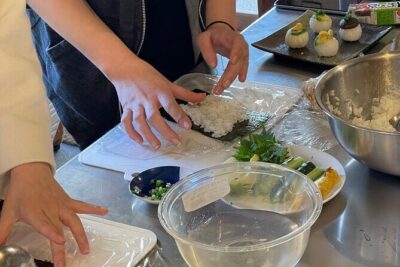
Maki-sushi: Rolling with control
Maki is the roll. It’s also a chance to learn consistency: filling amount, tightening the roll, and cutting cleanly. You’re not just stuffing ingredients in and hoping for the best. You practice building something that holds together and still tastes balanced in every bite.
If you enjoy practical crafts, this is the satisfying step. You watch the roll take shape, then you get to eat what you made—no mystery.
Gunkan (battleship sushi): The shape you earn
Gunkan is the one that often looks dramatic on the plate. It’s also a useful lesson in structure. Instead of focusing only on rolling or topping, you build a shape that can hold ingredients.
This style tends to reward patience. You’ll understand why sushi chefs care about form as much as flavor: form affects how you eat, and how the toppings stay where they belong.
Inari: The tofu pocket twist
Inari means fried tofu pockets filled with seasoned rice. It’s a different texture world from raw-fish sushi, and that’s why it’s such a great inclusion. You’ll learn how to handle the tofu pocket and fill it without making it messy or uneven.
From what I’ve heard from past participants, this is often the surprise favorite. If you usually think sushi equals fish, inari is the gentle correction.
A note on the set menu
You can’t choose which sushi you make. The class has a set sequence, so plan on learning these four styles specifically. For many people, that’s fine—four different skills in one sitting. If you have a strong preference for only one type of sushi, you’ll want to know that you won’t be able to swap it.
Sushi Culture Lessons: Edo Origins and Food Logic
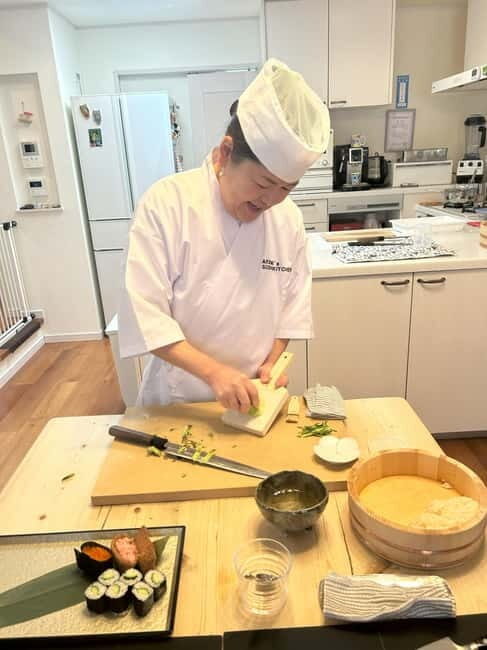
The cooking is the star, but the explanation gives it meaning. Akemi shares the history of sushi and how sushi developed in Edo-era context, including where it came from and why certain techniques took hold. You don’t need a lecture background for this. It’s tied to what you’re doing at the counter.
I like when a food lesson explains the logic behind the habits. Here, you get that. Why rice vinegar is used. Why seasoning matters. Why certain fish prep steps are important. It’s not just story time. It’s the why behind the how.
And this is also where the at-home format helps. In a home kitchen, the lesson feels less like performance and more like real cooking knowledge passed along. That tone makes the cultural part land without feeling forced.
Eating What You Cook: Sake, Dessert, and Vegetarian Option
By the end of the class, you eat a meal you prepared yourself—either lunch or dinner depending on your session. The class is designed so the food you make becomes your reward, and that’s one of the best parts. You’ll taste your own vinegar rice, your own rolls, and your own hand-pressed nigiri.
Adults can enjoy sake, and dessert is included. Some past sessions also mention extras like matcha tea and ice cream dessert, which helps make the meal feel like more than a snack after class. That’s good value, because you’re not paying just to learn; you’re getting a proper meal out of it.
There is also a vegetarian option. You’ll need to indicate your preference when you place your order. Since the class includes fish prep and seafood neta, the vegetarian version is the way they handle dietary preferences, but you should still treat the vegetarian option as something to request upfront rather than assume a default.
Price and Value: What $103 Buys You in Tokyo
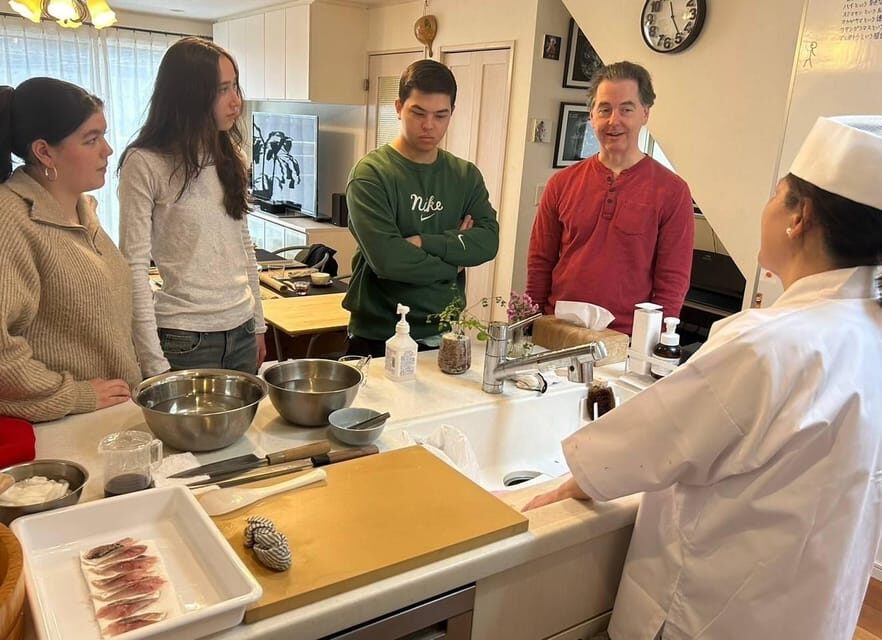
At $103 per person for a 3-hour lesson, you’re not getting a budget cooking activity. You are paying for a few things that are hard to replicate on your own:
- A chef-led lesson in a small group (max 6), with English/Japanese instruction
- Real instruction on vinegar rice and multiple sushi styles, not a single demo
- Ingredients and seafood preparation included
- A meal you make yourself, plus sake and dessert
When you add that up, it starts to feel more reasonable. Sushi can be expensive in Tokyo, especially if you’re eating at places that deliver consistent quality. This experience gives you a hands-on skills lesson plus a meal. You’re basically buying both dinner and a cooking framework you can reuse.
The other value angle is attention. A small group changes everything. If you were in a large class, rice handling would turn into guesswork. Here, you’re more likely to get correction at the right moment.
Logistics You’ll Actually Care About: Meeting, Timing, and Group Size
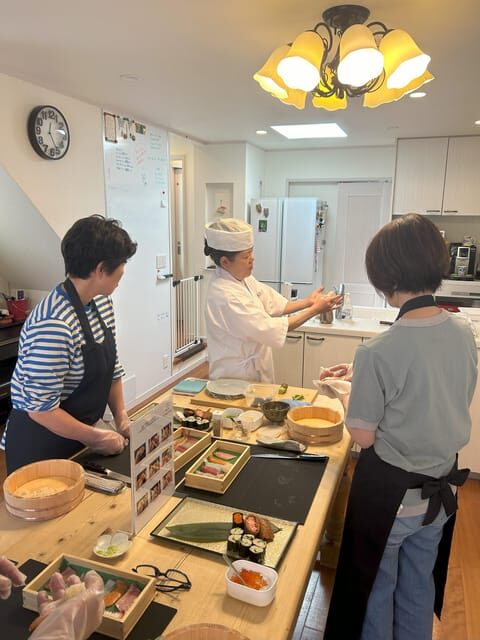
This runs for about 3 hours, with morning sessions paired with lunch and afternoon sessions paired with dinner. Pick the timing based on how you like Tokyo days. If you want your class early so the rest of the day stays open, go morning. If you’d rather end with a full meal and keep the evening calm, choose afternoon.
Group size is limited to 6 participants, which keeps the experience personal. You’ll also feel it when you’re shaping rice or rolling maki. Those tasks benefit from quick feedback.
For getting there, you can find the house using Google Maps. If that sounds annoying, request a meeting at the nearest train station. The class is convenient from both Shinjuku and Shibuya, which is helpful if you’re staying in a typical Tokyo base and don’t want to spend hours on cross-town transfers.
Two more practical reminders:
- The class is taught by an instructor who speaks English and Japanese. If you’re more comfortable with one language, you’ll still get what you need.
- It’s not suitable for children under 10.
Who Should Book This Sushi Lesson (and Who Might Skip It)
You should book this if you love sushi and want more than a quick tasting. This is for people who like learning technique: rice seasoning, fish prep concepts, and how to build different sushi shapes. If you enjoy food culture too, the Edo-era context and sushi history pieces add meaning.
It’s also a great choice for couples and small groups because the atmosphere is relaxed and social without being chaotic. Solo travelers do well here too, because small group format helps you connect with others while still getting personal coaching.
You might skip it if:
- You need allergy accommodations. The class cannot accommodate customers with food or animal allergies.
- You only want one specific sushi type. The menu is set.
- You’re traveling with children under 10.
Should You Book AKEMI’s SUSHiKiTCHEN?
I’d book this if you want a hands-on sushi skill lesson in a calm Tokyo home kitchen, with a meal you can eat right after making it. The value is in the combination: multiple sushi styles, careful instruction, and dinner or lunch with sake and dessert. For $103, you’re paying for both learning and a real curated food experience, not just a light snack and a demo.
If allergies are part of your planning, skip this one and look for an option that explicitly accommodates your needs. Otherwise, this class is a solid way to leave Tokyo with something practical: sushi technique you can reuse, plus a better understanding of why good sushi tastes the way it does.
FAQ
How long is the sushi lesson?
The lesson lasts 3 hours.
What kinds of sushi will I learn to make?
You’ll make four kinds of sushi: Inari (fried tofu pockets), Gunkan (battleship sushi), Maki-sushi (rolled sushi), and traditional Nigiri-zushi (hand-pressed sushi).
Is the class a small group?
Yes. It’s a small group limited to 6 participants.
Can I choose which sushi items I make?
No. The class uses a set menu, so you don’t select the sushi you’ll be making.
Is there a vegetarian option?
Yes. There is a vegetarian option, and you should indicate your preference when you place your order.
What language is the instruction in?
The instructor teaches in English and Japanese.
Are food or animal allergies accommodated?
No. They cannot accommodate customers with food or animal allergies. If you have any allergies, you should let them know beforehand.
Where do I meet for the class?
Many guests find the house on their own using Google Maps. If you prefer, you can request to meet at the nearest train station.
Is this suitable for children?
No, it is not suitable for children under 10.
Make Something to Take Home
Learn Another Dish: Tokyo Cooking Classes
More Tour Reviews in Tokyo






Fresh reviews from around Tokyo






Cooking Classes, compared.
 ★ 5.0Ramen & Gyoza Cooking Class in Tokyo with Local Supermarket VisitFrom $122823 reviews
 ★ 4.6Easy Ramen Cooking Experience in Kabukicho, ShinjukuFrom $29321 reviews
 ★ 5.0Ramen and Sushi Cooking Class with Sake Pairing Set in TokyoFrom $79291 reviews
 ★ 4.9Wagyu and 7 Japanese Dishes Cooking ClassFrom $67273 reviews
 ★ 5.0Tokyo Washoku 4-hour Cooking Class: From Market to TableFrom $79253 reviews
 ★ 5.0Small-Group Wagyu Beef and 7 Japanese Dishes Tokyo Cooking ClassFrom $72190 reviews
 ★ 5.0Private Home Cooking in Yanaka – Local Flavors in a Warm SettingFrom $122173 reviews
 ★ 5.0Tokyo Sushi Making Experience & Japanese Cooking ClassFrom $59150 reviews
Browse the lists this tour appears in