
Reviewed · TOKYO
A One-of-a-Kind Sushi Experience in a Special Place of Japan
Knife skills meet Tokyo politics.
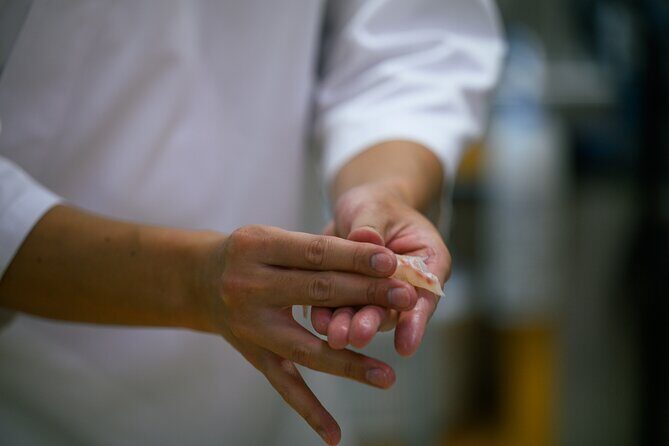
This 2-hour sushi workshop is interesting for one reason that almost sounds fake: you practice and eat sushi inside Japan’s House of Representatives building, normally closed to the public. You also start with fresh fish sourced from Toyosu Market, so what you learn isn’t just theory. You’ll be guided step-by-step in English, with a focus on the hands-on parts that matter—knife basics, slicing fish, and shaping your sushi.
I love how confidence builds fast here, especially with Sushi Chef Sasao, who’s cooked for Japanese politicians (including the Prime Minister). I also like that your lunch isn’t an afterthought: you make and eat around 8 pieces of sushi, plus miso soup or green tea, so you leave fed and proud, not just impressed by watching.
One possible drawback: this is a short, hands-on class in a government building, so if you want a long tour, lots of downtime, or a relaxed street-festival vibe, you might find the pacing a bit more structured—and the $220 price is not “cheap eats.”
In This Review
- Key things I’d bookmark before you go
- Entering the House of Representatives for sushi making
- Toyosu Market fish: what it changes for your lesson
- From knife basics to slicing fish: where beginners build skills
- Shaping sushi and eating what you made (about 8 pieces)
- The real cultural lesson: sushi as a craft, not just food
- What the 2 hours feels like on the ground
- Practical notes: where it starts and what’s not included
- Price check: is $220 a good deal?
- Who should book this sushi workshop (and who should skip it)
- Should you book this Tokyo sushi workshop?
- FAQ
- What is the location of the sushi experience in Tokyo?
- How long is the experience?
- What is included in the price?
- Is transportation included?
- Is there an English-speaking guide?
- How many people are in the group?
- Can I cancel for a full refund?
- Do I get a ticket on my phone?
Key things I’d bookmark before you go
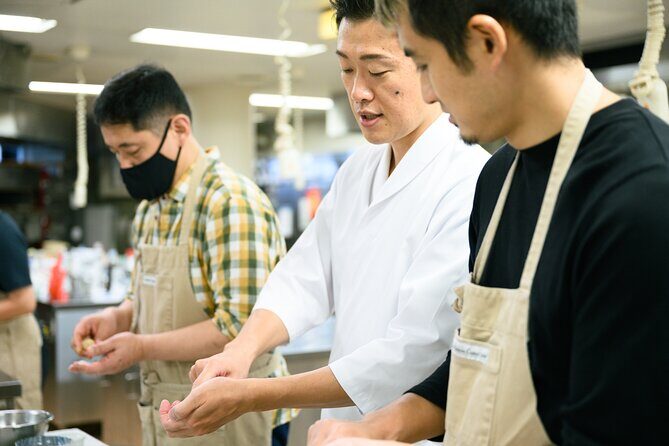
- Inside-the-House-of-Representatives setting: a normally closed Tokyo landmark turns your lesson into a story you’ll remember.
- Toyosu Market fish, used for your own sushi: ingredients are part of the lesson, not just something you admire.
- Knife-to-finish instruction: you practice the steps that separate sushi-school photos from real results.
- Made-for-beginners teaching style: you get support so first-timers can shape sushi without panicking.
- Small group size (max 20): more attention from the guide during the hands-on parts.
- Lunch included in the outcome: about 8 pieces of sushi plus soup/tea, so the value lands quickly.
Before you commit, see how this one stacks up against a few Tokyo favourites:
- Mt Fuji and Hakone 1-Day Bus Tour Return by Bullet Train★ 5.0 · 26,383 reviews
- 1-Day Tokyo Bus Tour★ 5.0 · 14,250 reviews
- Tokyo: teamLab Planets TOKYO Digital Art Museum Entry Ticket★ 4.6 · 9,779 reviews
Entering the House of Representatives for sushi making
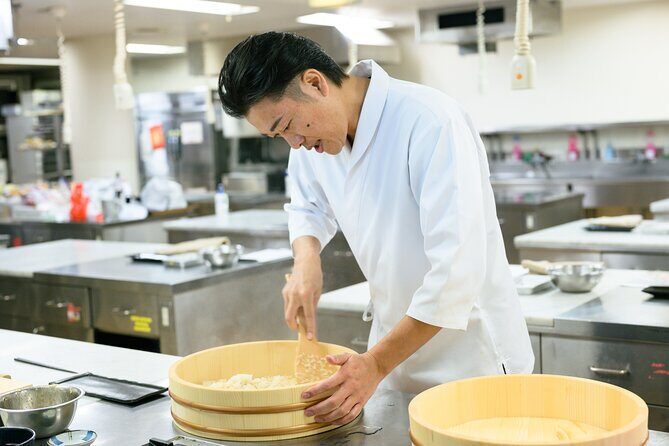
You don’t need to be a food superfan to get why this experience hits differently. Most Tokyo cooking classes happen in regular schools or demo kitchens. This one happens where Japanese politicians work—inside the House of Representatives building, a place that’s normally closed to the public. That one detail changes the tone of the whole event.
You’ll feel it the moment you arrive: the setting is serious, quiet, and controlled. That’s actually helpful for a beginner. The atmosphere encourages focus. You’re not trying to learn knife technique while the room is loud, crowded, or chaotic. Instead, you can concentrate on the basics—how to handle tools carefully, how to slice cleanly, and how to shape sushi so it looks good and eats right.
And since the class is about sushi-making culture—not just food—you get a different kind of Tokyo snapshot. You’re experiencing a slice of Japan where precision and procedure matter, then translating that into something delicious in your hands.
Toyosu Market fish: what it changes for your lesson
The class uses fresh seafood sourced directly from Toyosu Market, one of Japan’s largest seafood hubs. That matters because sushi is unforgiving: flavor and texture hinge on freshness. When your fish is genuinely fresh, it teaches you faster. You can taste the difference immediately and connect it to what you learned—like slicing and portioning.
Here’s the practical part: when you’re new, it’s easy to think sushi is mostly about fancy presentation. This workshop makes it clear it’s also about process. The instructor guides you through handling and prep with an eye toward what you’ll do next with your own hands. Instead of reading about sushi rice or watching someone else assemble perfect nigiri, you’ll learn by doing.
The best value of using Toyosu-grade ingredients is simple: your first attempts don’t feel like a compromise. Even if your shapes aren’t identical to a pro’s, the taste still has a real “this is sushi” punch. That’s the fastest way to make the lesson stick.
From knife basics to slicing fish: where beginners build skills
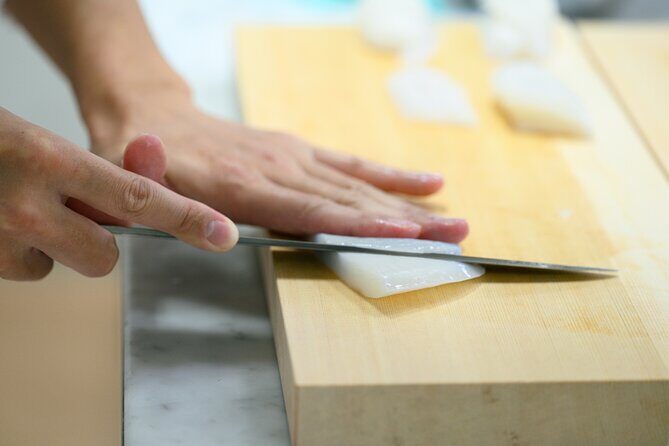
Sushi-making sounds mystical until you start working. Then it becomes mostly physical skills: grip, angle, control, and timing. This experience targets those exact points.
You’ll be taught the basics of sushi-making in English, including:
- How to handle the knife
- How to slice the fish
- How to shape sushi
If you’ve never used a knife for cooking before, you’ll appreciate that the teaching style is meant to be calm and confidence-building. The structure is designed so you don’t have to guess what comes next. You get guidance for the actions that create the final result.
Also, slicing isn’t just about cutting. It’s about consistency—so the fish stacks and pairs well with the rice. When your slices are even, your sushi holds together better and tastes more balanced. That’s the moment when sushi stops being a mystery and turns into a skill you can actually practice.
One of the most common “aha” moments in classes like this is realizing why sushi chefs look so precise. When you try it yourself, you see how delicate technique really is—down to small details you can’t fully catch just by watching someone on YouTube.
Shaping sushi and eating what you made (about 8 pieces)
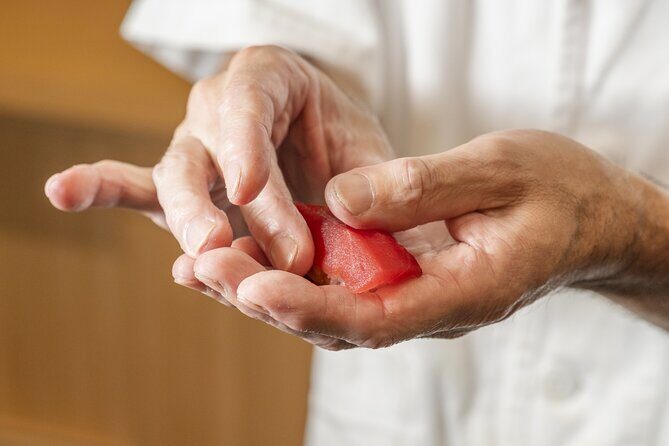
The workshop includes lunch, and that’s a huge deal for value. You’ll eat what you make—around 8 pieces of sushi made by yourself, freshly prepared during the class. That turns the lesson into something you experience start-to-finish, not something you rush through to get to a souvenir photo.
Along with the sushi, you’ll get miso soup or green tea. Small add-ons like that matter more than you might think. Miso soup gives you warmth and comfort between bites. Green tea helps reset your palate, so you can actually notice how the fish and rice balance changes from piece to piece.
When I think about “learning outcomes,” this is one of the strongest setups: you practice, you assemble, you taste immediately, and you adjust. In a normal restaurant meal, you can admire sushi. Here, you also understand the mechanics behind it. That’s why people often leave saying they’ll remember the taste and the technique for years.





The real cultural lesson: sushi as a craft, not just food
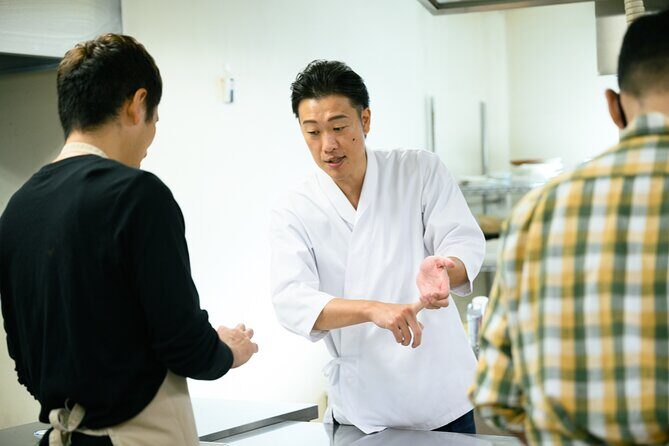
This class isn’t trying to turn you into a sushi chef by the end of 2 hours. It’s smarter than that. It teaches you how to respect the craft—and how Japanese food culture works when it’s done well.
Sushi is built on the meeting point of multiple disciplines:
- Ingredient quality (your Toyosu fish)
- Care and control (knife handling and slicing)
- Assembly precision (shaping)
- Time and texture (how sushi feels when you eat it)
By learning a few of those steps properly, you get a better mental model for why Japanese chefs are so focused on details. You also get a clearer sense of what makes sushi different from other types of Japanese cuisine. It’s less about bold flavor explosions and more about proportion, cleanliness, and refinement.
And because your host, Sushi Chef Sasao, has served sushi to top Japanese politicians, you’re not just learning technique—you’re learning in a setting that signals how seriously sushi craft is taken. Even if you never studied Japanese politics, the contrast between that world and your hands shaping nigiri is part of the magic.
What the 2 hours feels like on the ground
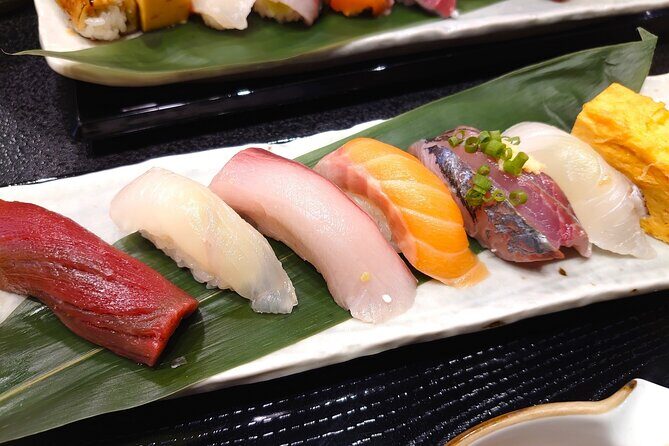
The total duration is about 2 hours. In that time, you’ll go from welcome to hands-on sushi-making, then eat what you made. The schedule is compact by design, which keeps the experience efficient and prevents you from feeling stuck in a long demo.
You’ll also be in a small group (up to 20 people). That matters because sushi-making is not a “watch and clap” activity. You need room to work and time for the guide to check your technique and answer questions as you go. A smaller group usually means quicker feedback and less waiting.
Pacing-wise, expect a guided rhythm: learn a step, practice it, move on. If you’re the type who wants to linger over every detail, bring patience. This isn’t a slow cooking retreat; it’s a focused workshop with an outcome you can taste immediately.
Practical notes: where it starts and what’s not included
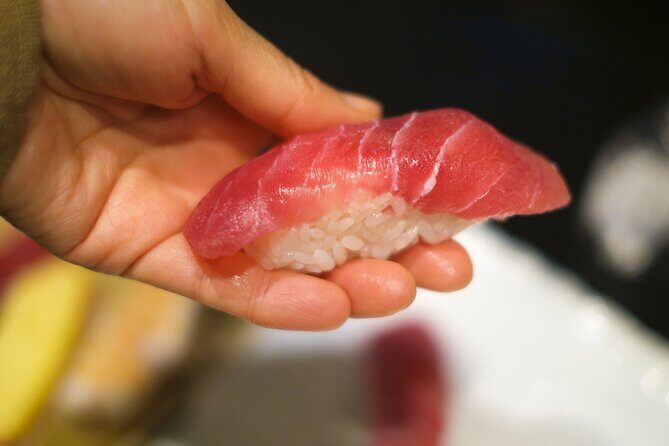
You’ll meet at 2-chōme-2-2 Nagatachō, Chiyoda City, Tokyo 100-0014, Japan, and the tour ends back at the meeting point. It’s near public transportation, so you can plan to arrive by train/subway without needing a complicated transfer.
What’s not included is private transportation or hotel pick-up/drop-off. So plan to get yourself there on your own. Also, there’s no mention of dietary customization in the information provided, so if you have food allergies or strong dietary restrictions, it’s smart to ask before booking.
Since the location is a government building, you should also factor in normal security and entry procedures you might experience at official sites. Nothing unusual is stated, but it’s reasonable to expect that you won’t walk in like you’re entering a casual restaurant.
Price check: is $220 a good deal?
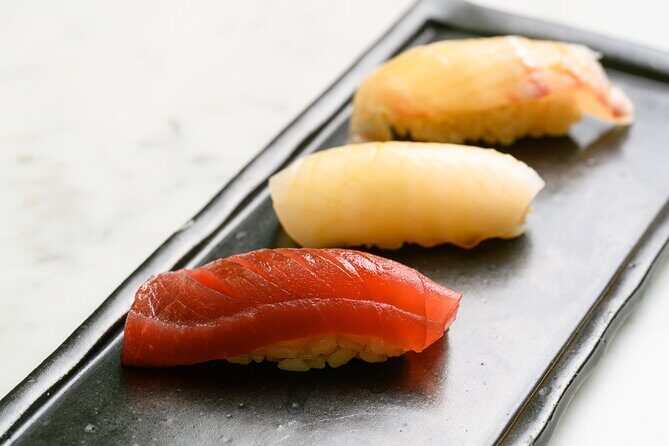
$220 per person for about 2 hours might feel steep if you compare it to a generic cooking class. But when you break down what’s included, the price starts to make sense.
You’re paying for:
- Fresh fish sourced from Toyosu Market
- Sushi-making instruction in English
- Tools and equipment for cooking
- Lunch outcome: around 8 pieces of sushi you make
- Miso soup or green tea
- Access to an exclusive location that’s normally closed to the public
- A group limit of 20, which supports hands-on guidance
For value, the key isn’t just the food. It’s the combination of ingredient quality, chef-level instruction under the name of Sushi Chef Sasao, and the wow-factor setting inside a major government building. If your goal is to buy souvenirs, this won’t be the best spend. If your goal is to buy a story that includes technique and taste, the math gets friendlier.
One more reason it can be worth it: sushi classes are one of the few activities where your learning comes with immediate payoff. You leave with food you made yourself, which is harder to say for many “experience” tickets.
Who should book this sushi workshop (and who should skip it)
This is a great fit if you want:
- A hands-on Tokyo food experience (not just eating)
- Beginner-friendly instruction with knife and shaping skills
- A memorable, unusual location you can’t replicate on your own
- Lunch included as the result of the workshop
It’s also a strong choice for groups like friends or families where laughter matters. Sushi-making can get uneven at first, and that’s part of the fun—because the class teaches you to improve step by step.
You might want to rethink if:
- You only want to browse and watch, with minimal participation
- You’re expecting a long market-style tour of Toyosu
- You’re trying to keep costs very low (this is premium pricing)
Should you book this Tokyo sushi workshop?
If you care about authentic food technique and want your meal to be part of the learning, I’d book it. The mix of Toyosu Market fish, English instruction, and the seriously exclusive setting inside the House of Representatives building is exactly the kind of experience that makes Tokyo feel different beyond famous streets and photo stops.
Just go in with the right mindset: expect focus, a short timeline, and practical learning. If that sounds like your style, this is a high-value way to end—or anchor—your trip with something you made yourself.
FAQ
What is the location of the sushi experience in Tokyo?
The meeting point is 2-chōme-2-2 Nagatachō, Chiyoda City, Tokyo 100-0014, Japan. The activity ends back at the meeting point.
How long is the experience?
The experience lasts about 2 hours.
What is included in the price?
Included items are cooking utensils, fresh sushi ingredients sourced directly from Toyosu Fish Market, a sushi-making lesson with an English-speaking guide, lunch (around 8 pieces of sushi you make), and miso soup or green tea.
Is transportation included?
No. Private transportation and hotel pick-up/drop-off are not included.
Is there an English-speaking guide?
Yes. The experience includes a sushi-making lesson with an English-speaking guide.
How many people are in the group?
The maximum group size is 20 travelers.
Can I cancel for a full refund?
Yes. You can cancel up to 24 hours in advance of the experience for a full refund. If you cancel less than 24 hours before the start time, the amount paid will not be refunded.
Do I get a ticket on my phone?
The experience includes a mobile ticket. Confirmation is received at booking time.
If you want, tell me your travel dates and whether you’re going as a couple, friends, or family, and I’ll suggest the best time of day to book it around the rest of your Tokyo plans.
More Tour Reviews in Tokyo



Fresh reviews from around Tokyo






Tokyo, compared.
 ★ 5.0Mt Fuji and Hakone 1-Day Bus Tour Return by Bullet TrainFrom $16326,383 reviews
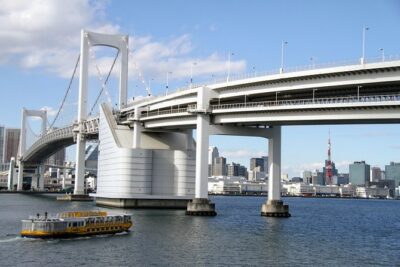 ★ 5.01-Day Tokyo Bus TourFrom $12914,250 reviews
 ★ 4.6teamLab Planets TOKYO Digital Art Museum Entry TicketFrom $259,779 reviews
 ★ 4.0Mt Fuji & Hakone Cruise, Drum Show Bullet Train 1 Day from TokyoFrom $1497,413 reviews
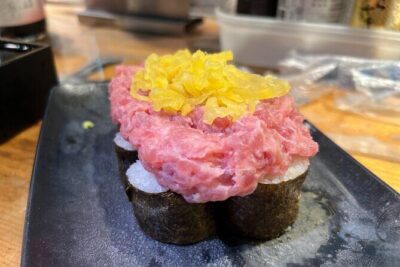 ★ 5.0Shinjuku Food Tour (13 Dishes at 4 Local Eateries)From $866,603 reviews
 ★ 4.4Tokyo Mt Fuji 5th St & Hakone Cruise Bus Tour w/Bullet TrainFrom $1545,024 reviews
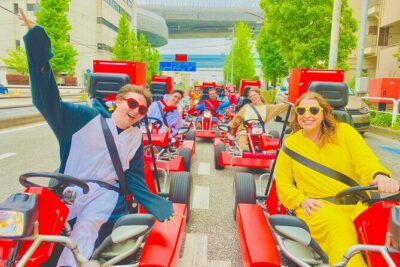 ★ 5.0Flagship 2-Hours Official Street Go-Kart Tour – Tokyo Bay ShopFrom $644,974 reviews
 ★ 4.5From Tokyo: Mount Fuji Full-Day Sightseeing TripFrom $684,970 reviews