
Reviewed · SUMO SHOWS
Tokyo: Challenge Sumo Wrestlers and Enjoy Meal
Sumo in a small room beats TV. This Tokyo experience pairs a real dohyo-style demonstration by former wrestlers with an easy explanation in English, then adds a hands-on moment where you suit up and try sumo moves yourself. I love that it is both fun and informative, with a friendly Q&A at the end, not just a silent show. I also love the meal part: you get a proper tonkatsu lunch or a sukiyaki dinner as part of the same ticket, so you leave fed and smiling.
One thing to consider: the experience is short and group seating can vary, so it helps to choose your spot wisely. If you end up farther back, you may catch the action but miss some of the commentary, especially when the room gets noisy.
In This Review
- Key things to know before you go
- What this Tokyo sumo show really gives you
- Ring time plus real explanations in plain English
- The hands-on part: costume on, moves tried, laughs guaranteed
- The meal you’ll actually remember: tonkatsu lunch or sukiyaki dinner
- Seating and the noise factor: what can affect your experience
- Photo time: worthwhile, but don’t skip the teaching moment
- Price and logistics: is it worth $117?
- Getting to the meeting point near Kikukawa Station
- Who should book this sumo experience?
- Quick decision guide: book or skip?
- FAQ
- How long is the Tokyo sumo demonstration and meal experience?
- Where do we meet for the activity?
- Is lunch or dinner included?
- Do you provide hotel pickup or drop-off?
- Can I bring my own food or drink?
- Is the ticket refundable?
Key things to know before you go
- Former wrestlers teach you: you are learning from people who actually competed, not just storytellers
- You step into the ring: it is costume-on, technique-try, playful competition
- English explanation is built in: the session includes interpretation so you follow the terms and rules
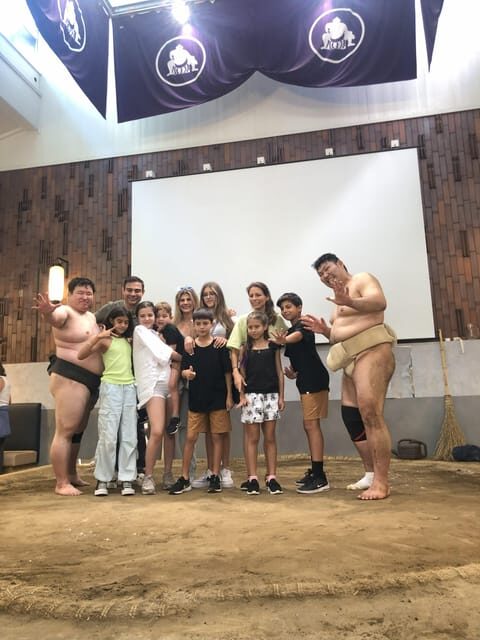
- Photo time is scheduled: you get a moment alongside the wrestlers, plus a structured end-of-session photo
- Meal is included: tonkatsu lunch or sukiyaki dinner, depending on what you book
- Seating affects what you hear: front-ish seats can help you follow questions and answers
More chances to sit ringside
- Tokyo: Sumo Show and Dining Experience★ 4.8 · 2,742 reviews
- the SUMO show★ 5.0 · 1,960 reviews
- Tokyo Shinjuku Sumo Show & Experience with Photo★ 5.0 · 1,750 reviews
What this Tokyo sumo show really gives you
This is not the big formal sumo tournament vibe. It is more like a focused, traveler-friendly introduction to sumo culture, built around one question: how do you go from watching sumo on TV to actually understanding what you are seeing?
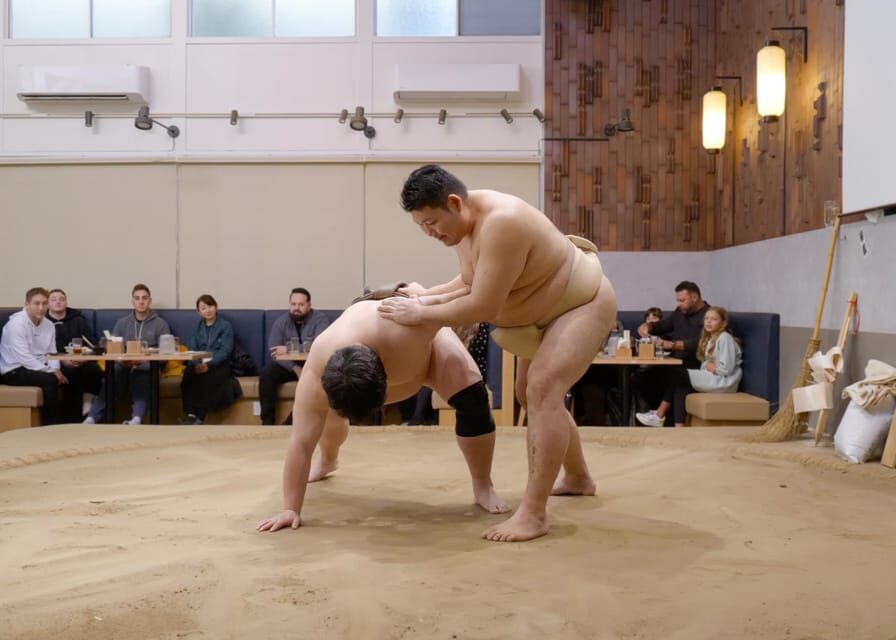
The format is simple. You watch an exhibition match style demonstration from retired wrestlers. You get English explanations along the way so the sport’s key terms make sense while you are still looking at the ring. Then you get your own turn in the sumo suit, with instructors coaching you and pushing you toward a fun, safe “try it” version of the real thing.
The payoff is that sumo stops being abstract. You start noticing details like footwork, balance, and why so much of the sport looks like controlled chaos. It also helps that the wrestlers bring personality: you are not just absorbing facts, you are getting a human story of what the sport feels like.
Finally, the meal closes the circle. You leave with a full stomach and a better sense of how sumo culture connects to everyday Japanese food and routine.
Ring time plus real explanations in plain English
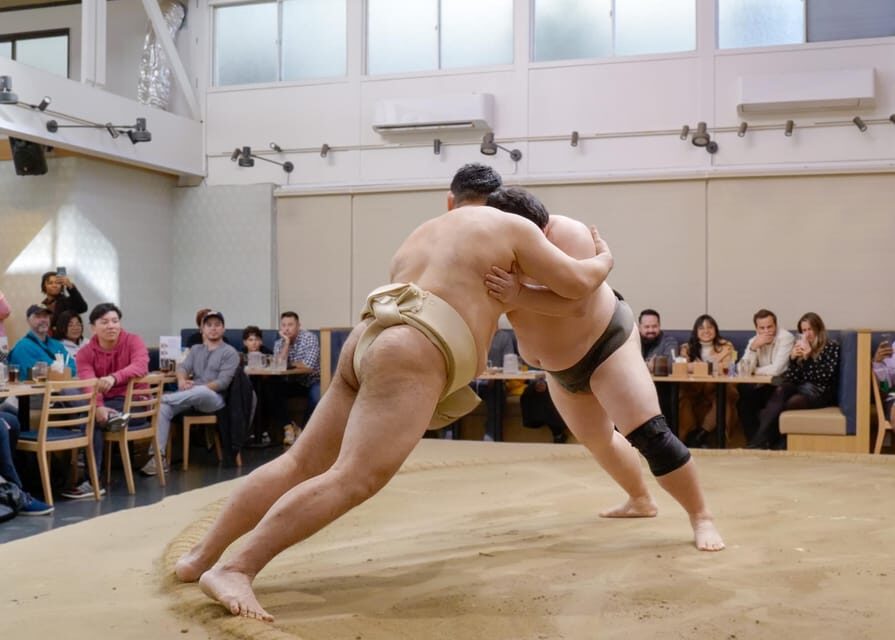
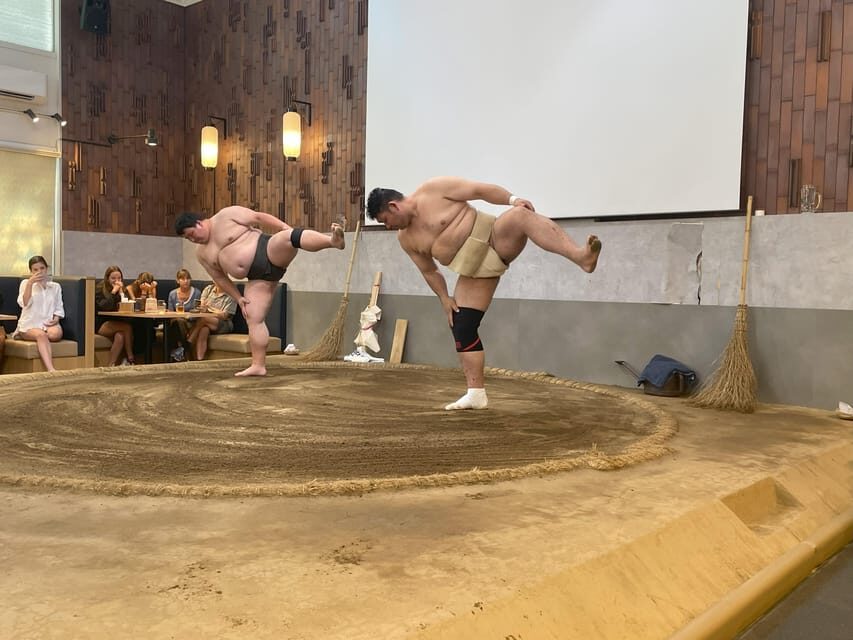
The star of the show is the demonstration by retired sumo wrestlers in the dohyo (the ring). The emphasis is on clarity. You are watching, listening, and picking up the meaning of common sumo terminology as the session flows.
What I like about this style is that you do not need prior knowledge. The sport’s rules and vocabulary can sound dense at first. Here, they are introduced while you can still connect the words to what is happening right in front of you.
A big plus from people who have done it is the quality of the interpretation. The session is conducted in English with explanation support, and the emcee’s command of English is often highlighted. That matters, because good translation can turn a “cool show” into a “now I get it” moment.
You also get an end portion with Q&A. That is where the experience becomes personal. If you ever wondered how wrestlers train, how match strategy is taught, or what daily life looks like after retirement, this is the time to ask. The session is designed so you are not just watching a match and leaving.
The hands-on part: costume on, moves tried, laughs guaranteed
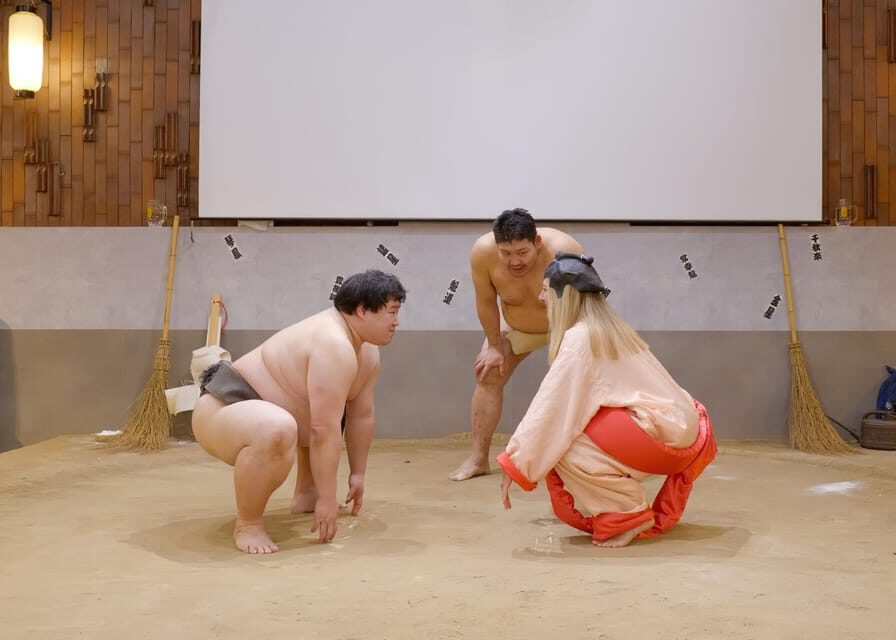
This experience earns its keep with participation. After the demonstration, you get to put on a sumo costume and step into the ring for your own attempt at sumo technique. Think of it as coached play with real athletes supervising.
You are not expected to do anything complicated. The goal is to feel the basics in your body: stance, balance, and the challenge of pushing and getting pushed while wearing a big suit that changes how you move. It is surprisingly hard. That is part of the fun.
One important practical tip: treat it like a lesson, not like a photo prop. The wrestlers take you seriously in a friendly way, and you’ll learn more if you pay attention during coaching rather than rushing straight for the end picture.
Also, do not expect this part to last forever. The session is designed to fit into roughly 1.5 hours, and the timing moves quickly from demonstration to hands-on to meal and wrap-up.
The meal you’ll actually remember: tonkatsu lunch or sukiyaki dinner
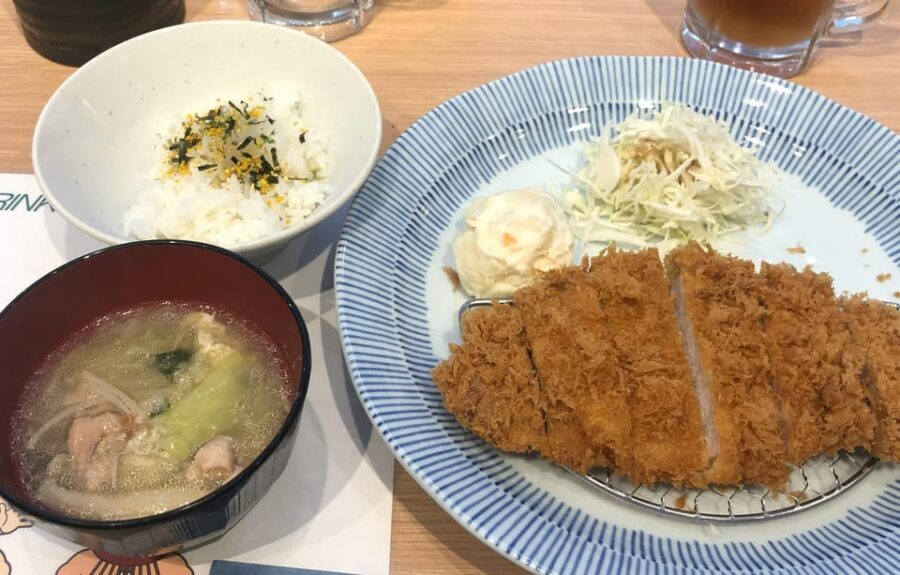
In Japan, a lot of tours tack on a meal like an afterthought. Here, the food is part of the main plan. You select the option during booking, and the experience includes either a tonkatsu lunch (deep-fried pork cutlet) or a sukiyaki dinner (beef and vegetables cooked in a sweet soy broth).
How to think about value:
- You are paying for a complete cultural event plus a sit-down meal component, not a ticket-only show.
- The meal is included, and you do not need to organize lunch separately afterward, which saves time in a city where meal logistics can get annoying.
One nuance: menus can vary. People have mentioned set lunch styles like chanko-based options or lunchbox formats (such as a Genghis Khan style lunchbox) depending on the session. The consistent point is that you get a full, cooked meal at the end, not just a snack.
If you are picky about fried foods, tonkatsu is still typically straightforward. If you are not into hot pot or sweet-savory broths, sukiyaki might be a better match for you. If you have dietary requirements, tell the team ahead of time, since the experience asks you to advise of needs during booking.




Seating and the noise factor: what can affect your experience
This is a small-room style event. That is a plus for closeness, but it means the sound environment matters.
One lesson I’d pass on: if you want the most from the commentary and Q&A, try to sit where you can hear well. Getting closer is not necessarily about a better view of the ring so much as catching the explanations and questions. If a group sits near you and talks loudly throughout, it can make the English narration harder to follow.
So when you arrive, look around quickly and pick a spot that helps you hear. Then settle in. Once the session starts, the staff will guide the flow, and trying to relocate after things begin can be distracting.
Photo time: worthwhile, but don’t skip the teaching moment
You will have time for a photo alongside the wrestlers. That is part of the experience and you should plan for it.
That said, treat the photo as the final icing, not the whole cake. The most useful part is the coaching and explanation before you get to the camera moments. If you only focus on getting the photo, you may miss the best context for understanding what sumo is and how the wrestlers approach technique.
Also, note that there is a structured photo moment at the end. If you’re worried about time, the best mindset is: watch first, participate second, photo third.
Price and logistics: is it worth $117?
At $117 per person, this is not a bargain-basement activity. But it is priced like a ticket that includes three things at once:
1) guided sumo demonstration by retired wrestlers
2) an English explanation component
3) a full lunch or dinner meal
That matters because you are not paying separately for a show and a meal. In central Tokyo, bundling helps. You also get the hands-on costume and ring attempt, which is the part that typically costs extra in other “watch-only” formats.
Where the value is strongest:
- You want an organized cultural activity with a clear schedule.
- You will appreciate explanation, terminology, and the chance to ask questions.
- You like participatory experiences more than just watching.
Where the price may feel harder to justify:
- If you mainly want a passive photo op and do not care about explanations or trying the suit.
- If your group wants long, unhurried time, since the whole event is built to fit into about 1.5 hours.
Getting to the meeting point near Kikukawa Station
The meeting point is simple and transit-friendly. You take the Shinjuku Line and get off at Kikukawa Station. From the A1 exit, it is about a 5–8 minute walk to the venue.
The activity ends back at the meeting point, so you do not need to plan separate drop-off. Just be sure you are on time. When staff guides the room flow, being late can put you behind the pacing, especially for seating and the hands-on segment.
One more practical point: there is no hotel pickup or drop-off. You will need to handle your own transit to the restaurant location.
Who should book this sumo experience?
This one is a good match if you:
- want a first taste of sumo without needing background knowledge
- like interactive activities and do not mind getting a little goofy in a costume
- want an English-led experience in Tokyo that is easy to follow
- appreciate food being part of the plan (tonkatsu or sukiyaki)
It can also work well for families, since the interaction and comedy of a coached demo often lands well. If you are traveling with kids, the “try the suit” element is usually the highlight, not the seating.
If you are a die-hard sumo nerd who wants full tournament detail or training-stable access, you may find this lighter than you hoped. But as a cultural introduction plus hands-on fun, it hits the mark.
Quick decision guide: book or skip?
Book if you want: retired wrestlers, English explanation, a costume-and-ring moment, and a real meal, all in one ticket.
Skip or consider alternatives if you mainly want: a quiet, long match viewing with minimal participation, or if you are sensitive to room noise and prefer narration-free activities.
One smart approach is to treat this as your “sumo primer” when the big tournament schedule is not in play. If you’re in Tokyo for a short visit, it’s also a convenient way to pack culture, activity, and lunch (or dinner) into a tight time window.
FAQ
How long is the Tokyo sumo demonstration and meal experience?
It runs about 1.5 hours. Starting times vary, so you’ll want to check availability for the specific slot you can book.
Where do we meet for the activity?
You meet near Kikukawa Station. Take the Shinjuku Line, get off at Kikukawa Station, and walk about 5–8 minutes from the A1 exit.
Is lunch or dinner included?
Yes. The experience includes lunch or dinner depending on the option you select when booking.
Do you provide hotel pickup or drop-off?
No. Hotel pickup and drop-off are not included. You’ll need to get to the meeting point on your own.
Can I bring my own food or drink?
Yes, it is acceptable to bring your own food and drink.
Is the ticket refundable?
No. The experience is non-refundable.
More Tour Reviews in Tokyo



More Mornings with the Wrestlers
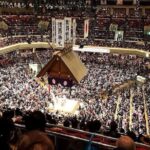
Fresh reviews from around Tokyo






Sumo Shows, compared.
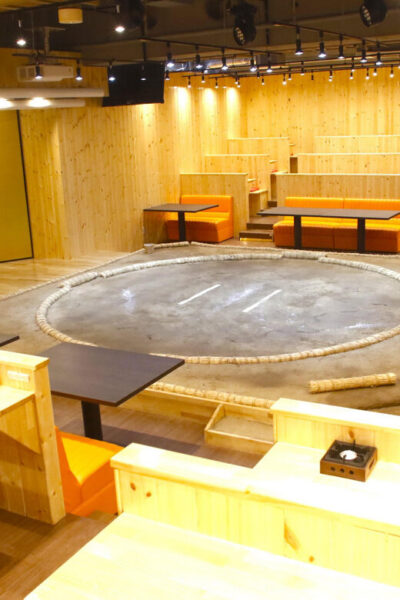 ★ 4.8Sumo Show Experience with Chicken Hot Pot and a PhotoFrom $1036,678 reviews
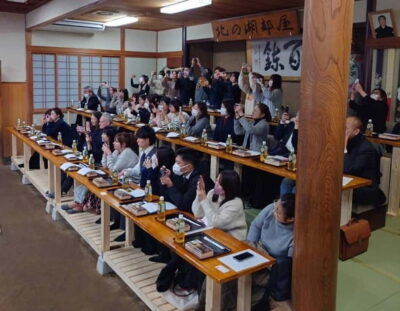 ★ 4.8Sumo Show and Dining ExperienceFrom $792,742 reviews
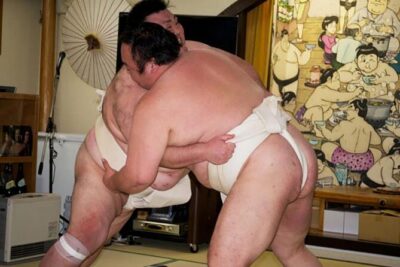 ★ 5.0the SUMO showFrom $891,960 reviews
 ★ 5.0Tokyo Shinjuku Sumo Show & Experience with PhotoFrom $791,750 reviews
 ★ 4.8Sumo Show and Experience in ShinjukuFrom $691,001 reviews
 ★ 5.0Authentic Sumo Experience in Tokyo: Enter the SanctuaryFrom $171603 reviews
 ★ 4.8Tokyo Sumo Experience: Chanko & Mochi with a Former ProFrom $103567 reviews
 ★ 5.0Ultimate Sumo Tournament: Tokyo, Osaka, Nagoya, FukuokaFrom $184468 reviews
Browse the lists this tour appears in