
Reviewed · TSUKIJI FISH MARKET TOURS
Tsukiji Food Strolling and Hama Rikyu Garden Walking Tour
Tokyo smells like seafood and calm.
This tour pairs Tsukiji Market with Hama-rikyu Gardens, so you get a vivid food-focused walk and then a slow, quiet reset in an Edo-period garden. You’ll cover Tsukiji’s real wholesale-market world (with huge variety: about 480 seafood types and 270 produce types) and then step into a landscape that sits right next to Tokyo’s skyline. I like that the guide connects what you see with why it matters, not just where to walk.
I really like two parts of the experience. First, you start with temple and market stops that are ticket-light, so you can focus your money on what you actually want to taste. Second, the pacing works: about an hour in the market, then about an hour in Hama-rikyu, with time to breathe and look, not just rush through. The group is small too (up to 12), and the guide roster includes friendly pros like Masumi, Miyuki, Erica, Pepito, and Yuko, who bring a mix of history, local routing, and food-culture context.
One thing to plan for: food and drinks aren’t included. If you want sushi, wagyu beef, fruit, or snacks, you’ll pay for them yourself. Also, the optional matcha and wagashi etiquette lesson costs extra (about 1,000 yen), and the amount of explanation you want at the market can vary a bit by guide style, so it helps to go with the right expectations.
In This Review
- Key points before you go
- Why Tsukiji and Hama-rikyu work as one 2.5-hour plan
- Start at Starbucks Tsukiji Station: getting oriented fast
- Stop 1: Tsukiji Hongwanji Temple for a quick calm reset
- Stop 2: Tsukiji Jogai Market and how to get real value from the walk
- Stop 3: Hama-rikyu Gardens—Edo-period calm with skyline views
- Optional matcha and wagashi etiquette lesson: the 1,000 yen choice
- Price and value: is $32.32 a smart deal?
- Who this tour is best for (and when to skip)
- Should you book Tsukiji Food Strolling + Hama-rikyu?
- FAQ
- How long is the Tsukiji and Hama-rikyu tour?
- What’s included in the price?
- Is the matcha and wagashi etiquette tasting included?
- What are the main stops on the itinerary?
- Where do I meet and where does the tour end?
- Can I cancel for a full refund?
Key points before you go
- Market-and-garden contrast: Tsukiji’s wholesale energy, then a quiet Edo-period garden with skyline views
- Small group size: a max of 12 keeps it manageable and easier to ask questions
- Included garden entry: Hama-rikyu access is covered (300 yen/pax), so you only pay for food you choose
- Optional tea moment: matcha and wagashi etiquette lesson on-site for about 1,000 yen
- Guide-led context: history and practical navigation, with guide names like Masumi, Miyuki, Pepito, Erica, and Yuko showing up in strong feedback
Still hungry? More Tsukiji breakfasts and market walks
- Tokyo Tsukiji Fish Market Food and Culture Walking Tour★ 5.0 · 3,184 reviews
- Tokyo: Tsukiji Fish Market Food and Walking tour★ 5.0 · 1,724 reviews
- Tokyo: Tsukiji Fish Market Guided Walking Tour★ 4.9 · 1,397 reviews
Why Tsukiji and Hama-rikyu work as one 2.5-hour plan
I love tours that solve a common Tokyo problem: how do you do something iconic without spending the whole day in lines and confusion? This one is built for that. You get a compact walk-through of Tsukiji followed by an honest-to-goodness garden stroll at Hama-rikyu, which is famous for its calm atmosphere right beside major city structures.
Tsukiji is the kind of place where you can’t fully “self-tour” with zero effort. Even if you’re curious, the value of having a guide is that they help you understand what you’re seeing in the moment: why certain stalls exist, what the wholesale focus changes about the shopping vibe, and how Tsukiji fits into Tokyo’s broader food culture. The market side also isn’t just seafood. The range is enormous, with roughly 480 seafood categories and about 270 produce types moving through the ecosystem.
Then you get the counterweight. Hama-rikyu is an Edo-period landscape garden created more than 370 years ago. You’re not just looking at plants—you’re walking through a designed space with seasonal character, a tidal-water feel in the garden setting, and those classic skyline views that remind you you’re still in Tokyo.
If you like structure but don’t want a rigid museum tour, the 2 hours 30 minutes format is a sweet spot. It’s long enough to feel like you experienced both worlds, but short enough that you’re not exhausted by the time you finish.
Start at Starbucks Tsukiji Station: getting oriented fast
You meet at Starbucks Coffee – Tsukiji Station (Chuo City, Tsukiji). The ending point is Hama-rikyu Gardens, and the tour dismissal happens at the tea house area. If you want, you’ll be escorted to the entrance gate as you wrap up.
This matters more than it sounds. In Tokyo, “meeting point clarity” saves your morning. The Starbucks choice is practical—easy to find, easy to regroup, and you can grab a quick water or coffee before you start if you want. You also get a mobile ticket, which keeps check-in simple.
The tour runs with a max group size of 12. That’s big enough to have a lively feel, but small enough that the guide can keep things moving without losing people every few minutes. You’ll also be near public transportation throughout the day, which is helpful if you want to extend your own exploration after the tour ends.
Timing note: I’d aim for a morning schedule when possible. The market experience tends to feel more meaningful when your day is still fresh and you have energy to wander and choose bites.
Stop 1: Tsukiji Hongwanji Temple for a quick calm reset
Your first stop is Tsukiji Hongwanji Temple near the market. It’s only about 10 minutes here, and admission is free. That short window is intentional. It’s a breather before you hit market intensity.
The temple’s architecture is a fun contrast to the surrounding food world: it mixes Indian- and Western-inspired design elements. Inside, the mood shifts quickly from city movement to quiet reflection. Even if you’re not a temple expert, this is a helpful mental gear-change. You start the morning with something peaceful, which makes the later walk feel less like a rush and more like a journey through different sides of Tokyo.
What to expect in practice: keep your camera ready for the exterior details, but don’t rush inside just to grab photos. Even a brief pause here helps you appreciate the market stop without feeling overstimulated.
Stop 2: Tsukiji Jogai Market and how to get real value from the walk
The main market portion focuses on Tsukiji Jogai Market for about 1 hour, with admission included (no ticket cost). This is where the tour earns its keep.
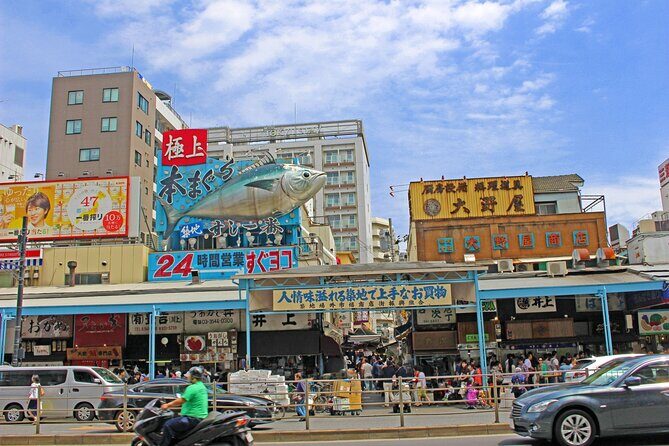
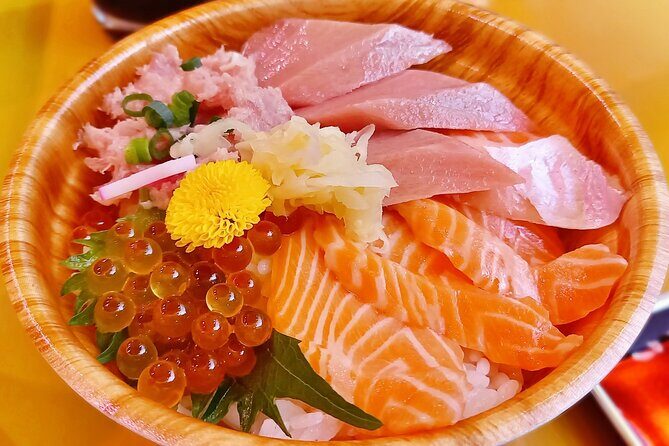
Tsukiji’s reputation is global, but the real “wow” comes from variety and scale. The market handles roughly 480 types of seafood and around 270 produce categories. On the street level, that translates into endless visual cues: different fish cuts, different packaging styles, and tons of vendors with very specific specialties.
Here’s where I think your guide matters most. A good guide helps you translate what you see into what’s worth your money and time. In strong feedback, guides like Masumi and Yuko are praised for sharing history and current knowledge, while Miyuki is noted for being friendly and tailoring things to what people cared about. That kind of guidance can turn a simple walk into a “now I get it” experience.
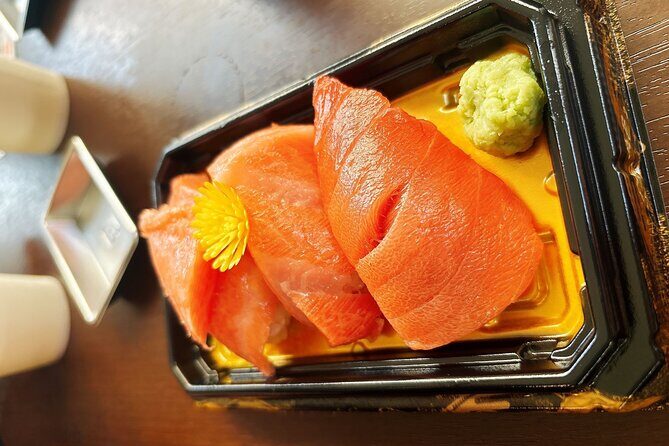
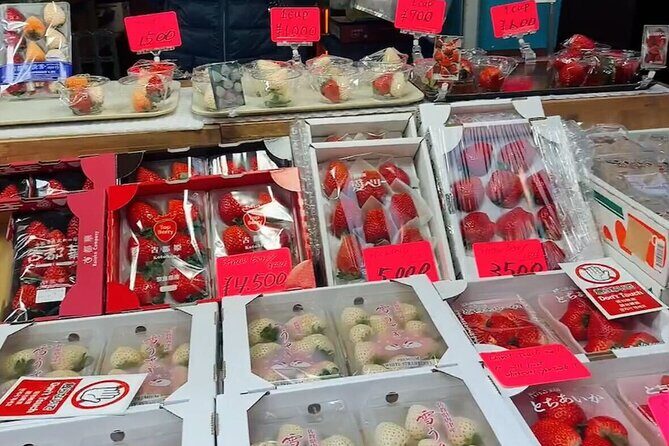
A useful way to approach the market: decide in advance that you’ll buy only a few things and make them count. Food and drinks aren’t included, so you’ll choose what fits your appetite and budget. If you want a classic food sampler, you might look for quick, walk-and-eat friendly items like sushi, wagyu beef, or fruit. The point is not to eat everything. The point is to try a couple of things that represent what Tsukiji does best, then move on while the market still feels fresh.
One practical consideration: if you come expecting a super-deep lecture about each stall, you might feel the explanation level varies a bit by guide style. Feedback includes an example where someone felt they wanted more information but still valued having a local route and guidance. So go in expecting a guided walk with context, not a slow, sit-down class.
Tokyo at walking pace, a few more ways

Stop 3: Hama-rikyu Gardens—Edo-period calm with skyline views
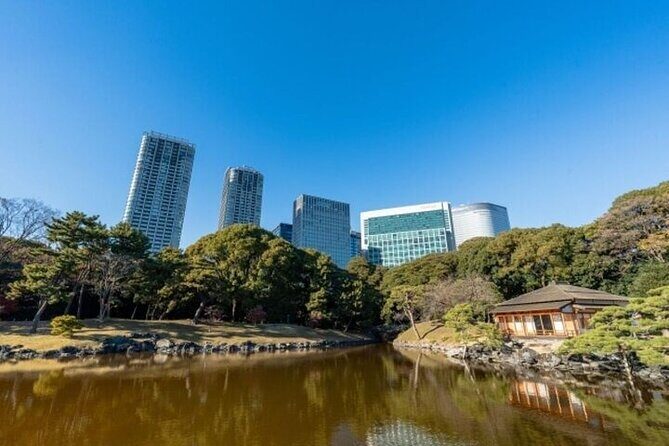
After Tsukiji, you head to Hama-rikyu Gardens for about 1 hour. The garden admission is included, and the tour lists it as 300 yen/pax. This stop is the emotional payoff of the entire itinerary.
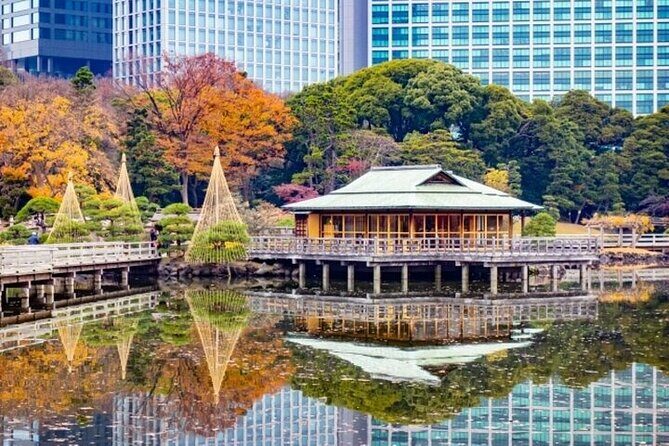
Hama-rikyu is an Edo-period landscape garden created over 370 years ago. You’ll likely notice the seasonal feel right away, since the garden changes with the weather and flowers in bloom. Even when it’s not peak season, the layout is designed for strolling—paths, views, and water features that slow your pace naturally.
One standout description of Hama-rikyu is the contrast: you get a tranquil garden experience while Tokyo’s skyline frames the edges. That’s not a small detail. It’s the whole point. This is how Tokyo can feel both modern and old at the same time—quiet nature moments inside a city you can’t fully escape.
If you like taking photos, this is your moment. But I’d also encourage a slow walk without constantly looking through your phone screen. The best views here come when you stop for a few seconds and let your eyes adjust.
At the end, you’re dismissed around the tea house area in the gardens. If you want to exit smoothly, you can ask to be escorted to the entrance gate.
Optional matcha and wagashi etiquette lesson: the 1,000 yen choice
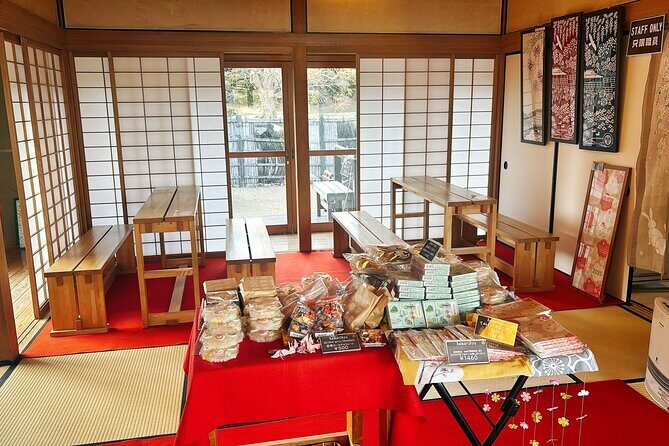
There’s an optional add-on tied to Japanese etiquette: a matcha and wagashi tasting plus etiquette guidance. It costs about 1,000 yen and is paid on-site, and it’s available depending on timing and season.
Is it worth it? For me, it’s worth considering when you like cultural details that make food taste better. Matcha isn’t just a drink here. The etiquette component gives you a framework for how to slow down, how to handle sweets, and what to pay attention to beyond flavor.
It’s also a convenient pause after the sensory intensity of Tsukiji. Think of it as the “final chapter” before you head out—an explanation-led moment that helps you appreciate what you’re tasting rather than just finishing a snack and moving on.
The downside is simple: it adds cost and time. And since food isn’t included on the rest of the tour, budget travelers should treat this as an optional experience, not a default expectation.
Price and value: is $32.32 a smart deal?
At $32.32 per person, this is priced like a mid-range guided experience. The value is strongest when you use what’s included:
- Local guide
- Hama-rikyu Gardens admission (300 yen/pax)
Everything else—your food and drinks at Tsukiji—is on you. The tour explicitly notes that lunch and snacks aren’t included. So the real cost depends on what you choose to buy in the market.
For value, you’re paying for three things:
1) someone to keep the flow efficient (so you don’t waste time guessing)
2) the historical and cultural context (especially for Tsukiji’s role as a central wholesale market with decades of operation)
3) the garden access, which saves you from figuring out entry timing and purchasing
When a tour includes a major admission fee like Hama-rikyu and keeps the group small, $32.32 can feel fair. If you plan to buy multiple full meals at Tsukiji, the total day cost rises fast—but that’s true for any Tsukiji-style food morning. The cost is best controlled if you commit to a small set of tastings.
Booking timing also matters. It’s often booked about 26 days in advance on average, which tells me demand is real. If you have a tight schedule in Tokyo, lock in your spot early.
Who this tour is best for (and when to skip)
This tour fits well if you want a guided morning that balances food culture with breathing space. It’s especially good for:
- First-timers who want Tsukiji without getting lost
- Food lovers who like sampling, but don’t want to plan stall-by-stall
- People who also want a calmer second half (Hama-rikyu is a real change of pace)
- Travelers who prefer smaller groups (max 12) for easier questions
It may be less ideal if:
- You want a totally free-form market wandering day with no structure
- You’re not interested in gardens at all, since the garden is a core part of the plan
- You expect food to be included; you’ll need to budget for your own bites and drinks
Also, guide style can affect your experience. Some feedback highlights guides like Masumi and Yuko for history and knowledge-sharing, while Erica is described as friendly and helpful with routing, even if someone wanted more explanation. So if your ideal tour is very lecture-heavy, you might want to choose your expectations accordingly.
Should you book Tsukiji Food Strolling + Hama-rikyu?
I’d book this if you want the easiest way to experience Tsukiji plus a proper garden escape in one morning. The included garden entry and the guide-led context make it a practical pick, and the itinerary’s rhythm is smart: temple calm, market focus, then a slow walk through Hama-rikyu’s designed landscape.
I’d hesitate if you mainly want to eat your way through Tsukiji with no guided structure. In that case, you could spend more time at your favorite spots on your own. But if you want your morning to feel purposeful—seeing why Tsukiji matters and then cooling down with Edo-period scenery—this tour is a solid use of time.
One last thought: bring your appetite, but not your whole shopping list. Pick a few bites, take your time, and let the garden be the reward at the end.
FAQ
How long is the Tsukiji and Hama-rikyu tour?
It runs for about 2 hours 30 minutes.
What’s included in the price?
You get a local tour guide and admission to Hama-rikyu Gardens (300 yen per person). Food and drinks are not included.
Is the matcha and wagashi etiquette tasting included?
No. The matcha and wagashi etiquette experience is optional, costs about 1,000 yen, and is paid on-site.
What are the main stops on the itinerary?
You visit Tsukiji Hongwanji Temple, Tsukiji Jogai Market, and then Hama-rikyu Gardens.
Where do I meet and where does the tour end?
You meet at Starbucks Coffee – Tsukiji Station. The tour ends at Hama-rikyu Gardens near the tea house area, and you can request escort to the entrance gate.
Can I cancel for a full refund?
Yes. You can cancel up to 24 hours before the experience starts for a full refund.
More Tours in Tokyo





More Tour Reviews in Tokyo




Back to the Market: More Tsukiji Tours




Fresh reviews from around Tokyo






Tsukiji Fish Market Tours, compared.
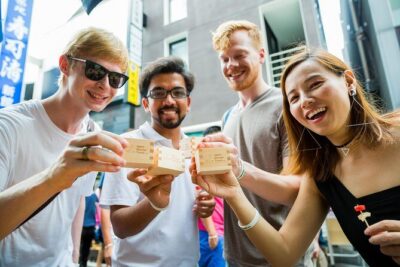 ★ 5.0Tokyo Tsukiji Fish Market Food and Culture Walking TourFrom $993,184 reviews
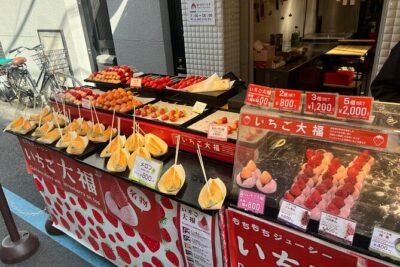 ★ 5.0Tsukiji Fish Market Food and Walking tourFrom $301,724 reviews
 ★ 4.9Tsukiji Fish Market Guided Walking TourFrom $221,397 reviews
 ★ 5.0Tokyo Sushi Making Class in Tsukiji with Professional ChefFrom $491,177 reviews
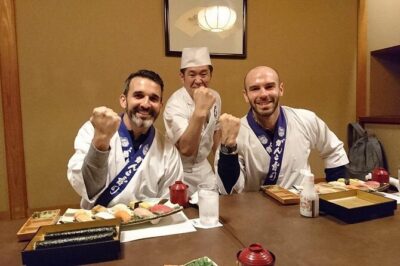 ★ 5.0Tsukiji Fish Market Guided Tour and Sushi Making with Pro ChefFrom $104775 reviews
★ 4.7Tsukiji Fish Market Food and Culture Walking TourFrom $96757 reviews
★ 5.0Tsukiji Fish Market Guided Tour and Sushi Making with Pro ChefFrom $104775 reviews
★ 4.7Tsukiji Fish Market Food and Culture Walking TourFrom $96757 reviews
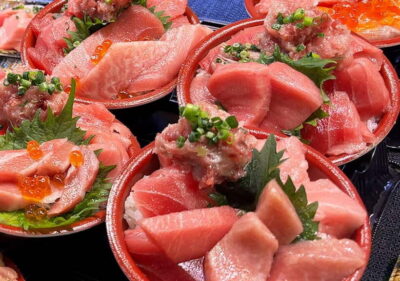 ★ 5.0Tsukiji Fish Market: Street Food & Culture Walking TourFrom $33669 reviews
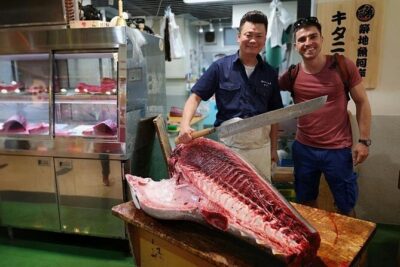 ★ 5.0Tsukiji Fish Market Small-Group Food Walking TourFrom $87621 reviews
Browse the lists this tour appears in