
Reviewed · TSUKIJI FISH MARKET TOURS
Tsukiji Fish Market Street Food & Culture Walking Tour
Tsukiji can overwhelm fast, so this tour keeps you sane. I like that you get a local English guide and a relaxed route with frequent stops, so you actually have time to eat, ask questions, and catch photos instead of power-walking through crowds. Two things I especially love: the variety of tastings (from juicy meats to sweet treats) and the way your guide explains what you’re seeing, not just what you’re eating. One drawback to consider: it’s still a walking market experience, so you’ll want comfortable shoes and a plan for keeping your belongings close in busy lanes.
If you’re worried about doing Tsukiji “wrong,” this helps you get your bearings fast. The group time is 90 minutes, and the pace is designed for breaks and easy flow, which is great if you’re traveling with family or juggling jet lag. You’ll start at Family Mart, then head into Tsukiji’s Outer Market area, with Tsukiji Jogai Market and Tsukiji Hongwanji Temple included along the way.
In This Review
- Key highlights to know before you go
- Tsukiji Outer Market: Why a guided walk beats a DIY scramble
- The 90-minute pace: easy walking, built-in breaks, and fewer headaches
- Where the tour starts: meeting at Family Mart and getting oriented fast
- Tastings that cover salty, smoky, and sweet
- A concrete example of what the tastings can include
- Tsukiji Jogai Market: the culture you can see and the stalls you’ll recognize
- Tsukiji Hongwanji Temple: a calm pause with real context
- Hidden routes and less-obvious stops: why the guide matters
- Small group vibes: private potential and better attention
- Edited photos: proof you were there, minus the blur
- Price and value: what $38 buys you in this market format
- What to bring and how to not get annoyed
- Who this tour suits best
- Should you book the Tsukiji Fish Market Street Food & Culture Walking Tour?
- FAQ
- Where does the tour meet?
- How long is the tour?
- Is the tour guide available in English?
- What does the tour include?
- What is not included in the price?
- Is there free cancellation?
- Do I have to pay right away?
- Is the tour easy for walking?
Key highlights to know before you go
- A relaxed 90-minute loop with frequent stops and time to rest
- Street food tastings that cover salty, savory, and sweet
- Temple + market entry included, not just a sidewalk stroll
- English guide with plenty of Q and A, plus culture and history context
- Photo moments plus edited photos included
- You might end up in a tiny group or even private depending on bookings
Still hungry? More Tsukiji breakfasts and market walks
- Tokyo Tsukiji Fish Market Food and Culture Walking Tour★ 5.0 · 3,184 reviews
- Tokyo: Tsukiji Fish Market Food and Walking tour★ 5.0 · 1,724 reviews
- Tokyo: Tsukiji Fish Market Guided Walking Tour★ 4.9 · 1,397 reviews
Tsukiji Outer Market: Why a guided walk beats a DIY scramble
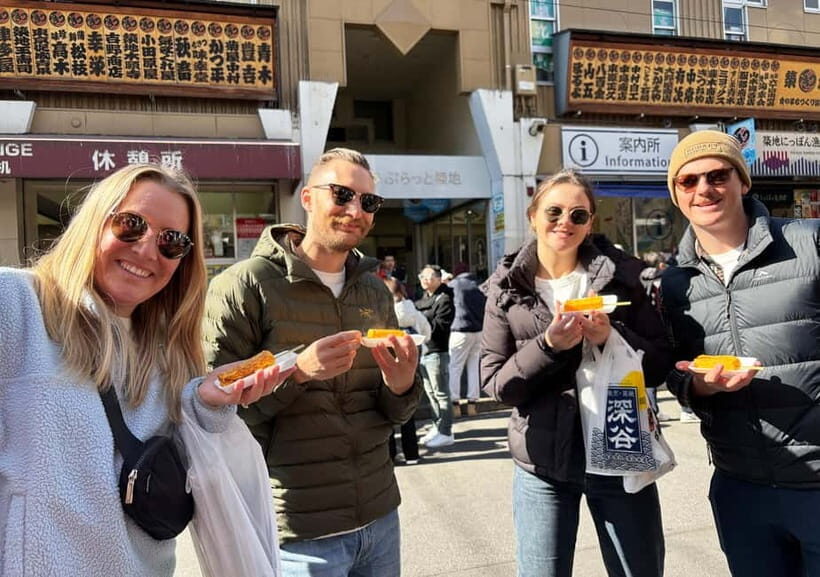
Tsukiji is famous, which means it can also feel chaotic if you try to do it solo. This kind of guided street food format solves that problem because you’re not guessing where to go or when to stop for food. You walk, taste, and learn in a steady rhythm that feels more like a local outing than a chore.
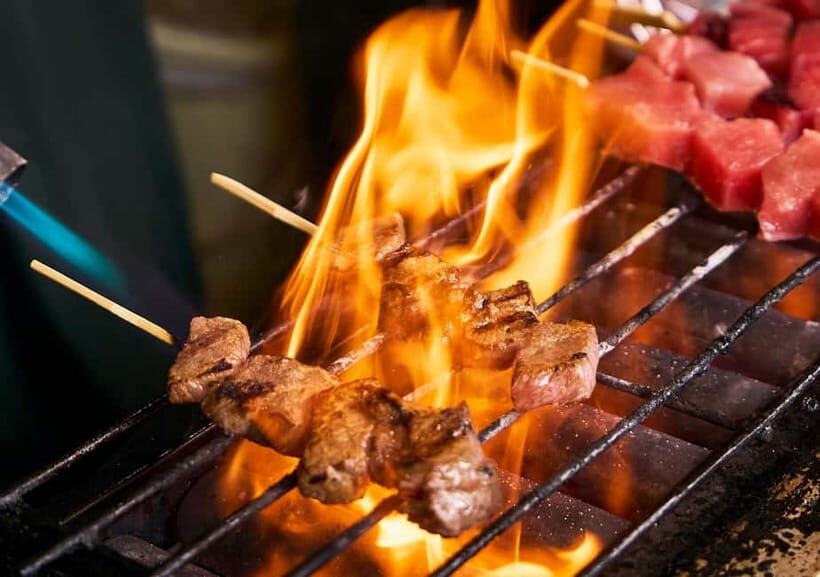
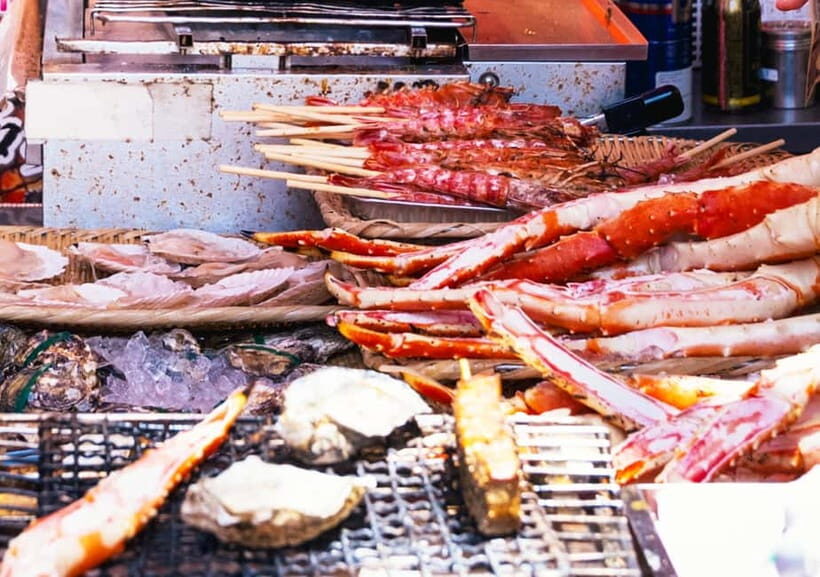
I like the tour’s focus on the Outer Market street-food vibe rather than treating Tsukiji like a museum exhibit. You’re surrounded by stalls, sizzling grills, and constant food smells, so having someone interpret the scene makes the whole place click. Even better, you don’t need a map to keep moving in the right direction.
The other advantage is that the guide can point out what matters. Instead of ordering blindly, you’re guided to “this is why that style is popular” and “this is how it’s prepared,” which turns tastings into actual context.
The 90-minute pace: easy walking, built-in breaks, and fewer headaches
This experience is designed around a short walking window: 90 minutes. That matters because Tsukiji can make your feet angry, and a tight schedule can turn fun into discomfort. Here, the route is intentionally relaxed, with frequent stops and time to rest when you need it.
That break structure is also practical for photos. You get natural moments to step aside, frame the stalls, and capture the colorful chaos without being rushed. It’s especially helpful if you’re traveling with kids or you simply don’t want your day to feel like a sprint.
The tour still involves walking, so treat it like a market walk. Wear comfortable shoes, keep your phone secure, and don’t plan on carrying bulky bags through crowded lanes. You’ll have a better time if you travel light and let the guide handle the flow.
Where the tour starts: meeting at Family Mart and getting oriented fast
Your tour begins at Family Mart. That sounds simple, but it’s one of the biggest “stress reducers” in busy areas. A clear meeting point means you spend less time wandering and more time eating and exploring.
Once you’re with your guide, the tour’s structure kicks in right away: you’re not left to figure out the market’s layout while everyone else moves ahead. This is a big deal if you’re new to Tokyo food neighborhoods and you want a plan that works even if you don’t speak the language.
Also, the guide format helps with confidence. When you know what you’re looking for, you stop feeling like you’re just watching from the sidelines and you start participating.
Tastings that cover salty, smoky, and sweet
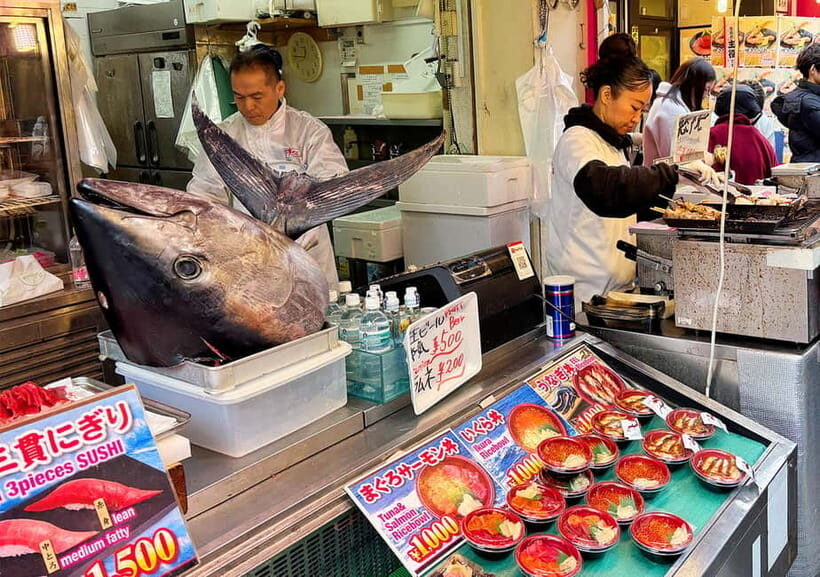
This is a street food tour, so food is the point. You’ll taste a variety of items across the market, with the guide directing you to memorable stops. The tastings are described as covering juicy meats and sweet treats, so you’re not stuck eating only one flavor lane.
What I like about this setup is balance. Markets can trick you into focusing on one thing at a time, like only grilled items or only seafood. A guided tasting mix helps you sample multiple styles so you leave with a better sense of what Tsukiji is known for day-to-day.
You should also expect that the guide will help you understand what you’re eating. In at least one case, the guide spent time explaining how items were prepared, so the food doesn’t feel like random bites—it feels like a story you can taste.
Tokyo at walking pace, a few more ways

A concrete example of what the tastings can include
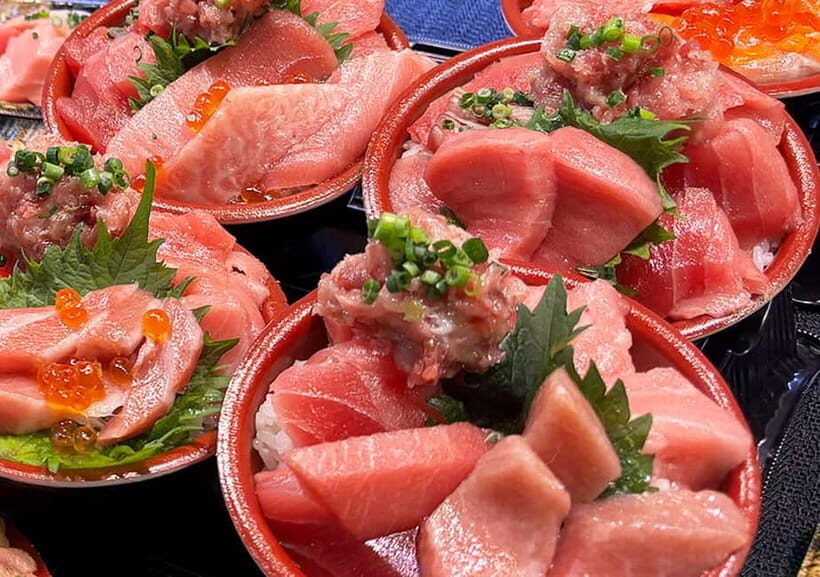
One solo booking included favorites like fatty tuna nigiri and grilled scallops. Even if your exact tastings vary, that gives you a clear picture of the tour’s sweet spot: classic market hits with a focus on strong flavors and satisfying textures.
Tsukiji Jogai Market: the culture you can see and the stalls you’ll recognize
The tour includes Tsukiji Jogai Market (Jogai means outside market areas), which is where you’ll feel the day-to-day rhythm of Tsukiji. This isn’t just sightseeing—it’s about experiencing the market as a working food neighborhood where stall culture matters.
Why this is valuable: you get a chance to see how vendors operate and how food traditions show up in everyday choices. A guided walk also helps you notice details you’d likely miss if you just walked through—things like why a certain stall is popular or what makes one product stand out from another.
If you like food photography, this stop is also practical. The market setting gives you plenty of angles: vendor counters, packaging, grills, and the constant motion of people exchanging orders. Just remember: crowd + camera is a combo that needs care, so keep your gear close and move thoughtfully.
Tsukiji Hongwanji Temple: a calm pause with real context
One of the included stops is Tsukiji Hongwanji Temple. Adding a temple visit might sound like a change of pace, but it actually helps the experience feel complete. After all the food energy, you get a quieter moment that lets you reset and absorb the surrounding culture.
In a market tour, context is often the difference between “I ate a lot” and “I understood why this place matters.” The guide’s storytelling helps connect the religious and cultural setting with the market environment around it.
There’s also a practical bonus: you get a break from the densest crowds. Even if the crowd levels shift during the tour, a temple stop naturally gives you a different atmosphere for photos and posture.
Hidden routes and less-obvious stops: why the guide matters
A big theme here is that you’re not only following the most obvious tourist path. The tour includes stops in areas that other visitors may not take time to see. That’s especially valuable if you want Tsukiji to feel like a living place rather than a photo checklist.
Your guide’s role goes beyond pointing at stalls. They’re conversational and energetic, answering questions as you walk and offering explanations about specialties and favorite foods. In one example, a guide named Atsu (a university student) showed the market with a local perspective and highlighted specialties while pointing out what he personally likes to eat.
That matters because it turns the tour into a conversation. You can ask why something is made a certain way, what to order for different tastes, or how vendors differ from stall to stall. If you like learning while you eat, this format fits you well.
Small group vibes: private potential and better attention
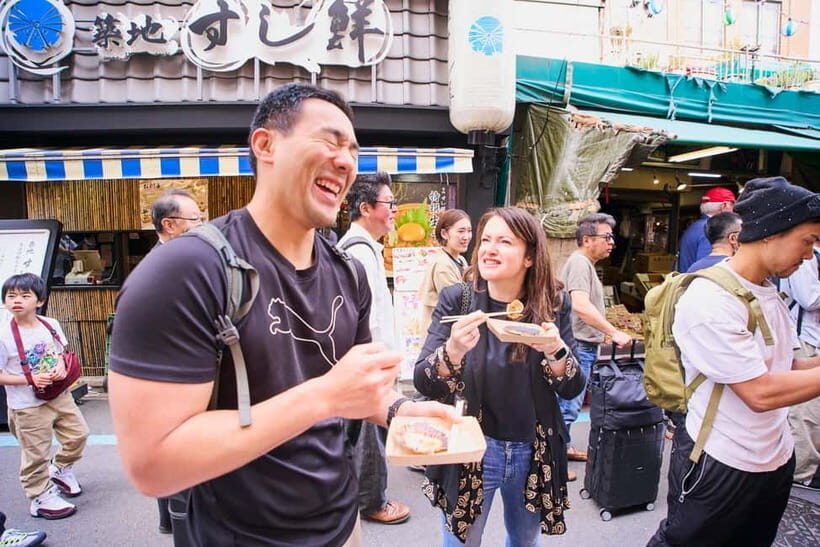
The tour is designed to be small-group friendly, and on at least one booking a solo traveler ended up with a private tour. That’s not something you can demand, but it’s a real possibility based on how bookings work.
Small groups make a difference in the market. With fewer people, you’re less likely to be rushed through tastings, and the guide can adjust the pace to your needs—especially when you’re navigating tight spaces and crowded counters.
Even with a small group, you still get frequent stops and time to rest. That combo keeps the experience comfortable instead of exhausting.
Edited photos: proof you were there, minus the blur
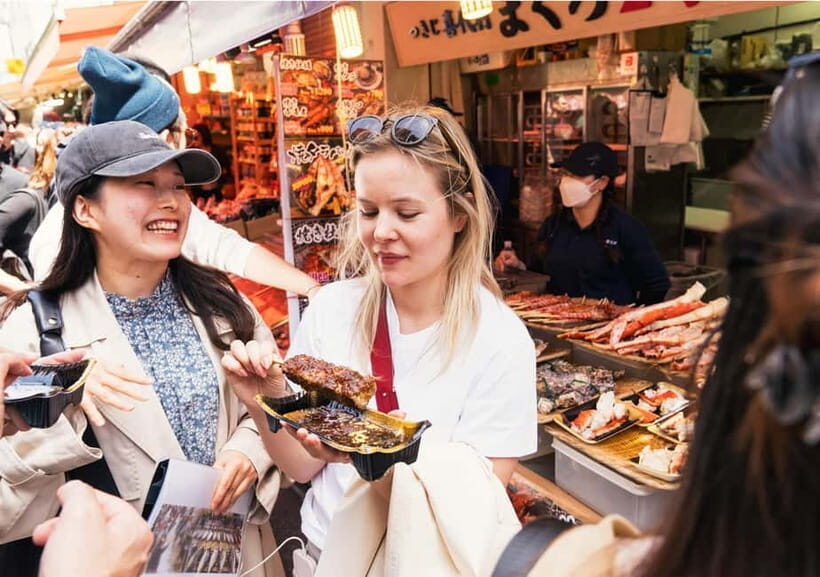
You don’t just get photo moments during the tour—you also get edited photos included. That’s a surprisingly practical add-on in a market environment. With crowds and moving grills, it’s easy to end up with blurry shots and missed framing.
The photo bonus also changes how you experience the day. You can focus more on eating and enjoying the walk, knowing you’ll end up with usable photos afterward. Bring a camera anyway, but you won’t feel like you have to capture everything perfectly in the moment.
Price and value: what $38 buys you in this market format
At $38 per person for 90 minutes, you’re paying for more than a walk. You’re paying for guiding, multiple tastings, entry included for Tsukiji’s areas and the temple, plus edited photos.
Here’s how I’d think about value: you’re covering costs that add up fast if you DIY. Market entry areas and temple admission aren’t always free, and tastings are often where you’d otherwise spend extra. Plus, the guide can save you time by steering you to food stops that fit the tour’s style of sampling rather than leaving you to guess.
If you enjoy street food and want the market explained in plain English, this price tends to feel fair. If you already know exactly where you want to eat and you’re comfortable navigating Tsukiji alone, a self-guided day could be cheaper. But for most people, the guiding + tastings + admissions bundle is what makes the $38 feel like a deal.
What to bring and how to not get annoyed
Plan for a walking market. Wear comfortable shoes and keep an eye on your belongings in crowded areas. Tsukiji lanes can feel tight, and you don’t want to be constantly repositioning bags while you’re trying to eat.
Bring a camera for the photo moments. Even if you get edited photos afterward, having your own shots can help you remember specific flavors, stalls, and the general visual chaos that makes Tsukiji fun.
If you get motion sick or you’re sensitive to smells, you might want to pace yourself during grilling areas. The tour includes breaks, but you’ll still be close to food prep.
Who this tour suits best
This tour is a strong match if:
- you want a guided street food experience with culture context
- you’re traveling with family and want a relaxed pace
- you’re solo and would like a local English guide steering the plan
- you care about photos, including the idea of edited images
- you like learning while you eat, especially about preparation and market specialties
It’s also a good fit for first-timers who feel overwhelmed by the idea of doing Tsukiji on their own. The structure handles the logistics, so you can focus on tasting and seeing.
Should you book the Tsukiji Fish Market Street Food & Culture Walking Tour?
I’d book it if you want Tsukiji to feel friendly and understandable. The mix of market walking, food tastings, and included Tsukiji Jogai Market plus Tsukiji Hongwanji Temple makes the experience feel like more than just snacks.
I’d skip it if you’re the type who hates guided groups and prefers to wander without stopping. Also skip if you’re not comfortable walking in crowded spaces, even with rest stops.
If you’re aiming for an easier Tsukiji day with a local perspective, this tour checks the boxes. It turns famous market chaos into a guided, bite-sized experience you can handle with a smile.
FAQ
Where does the tour meet?
Meet up at Family Mart.
How long is the tour?
The duration is 90 minutes.
Is the tour guide available in English?
Yes, there is a live tour guide in English.
What does the tour include?
The guiding fee, edited photos, and entry/admission to Tsukiji Hongwanji Temple, Tsukiji, and Tsukiji Jogai Market are included.
What is not included in the price?
Transportation to and from the market, personal expenses, and additional food and drinks beyond the tastings are not included.
Is there free cancellation?
Yes. You can cancel up to 24 hours in advance for a full refund.
Do I have to pay right away?
No. The tour offers reserve now & pay later, so you can book your spot and pay nothing today.
Is the tour easy for walking?
It involves walking, so wear comfortable shoes. The pace is short and relaxed with frequent stops and time to rest.
More Tours in Tokyo





More Tour Reviews in Tokyo




Back to the Market: More Tsukiji Tours



Fresh reviews from around Tokyo






Tsukiji Fish Market Tours, compared.
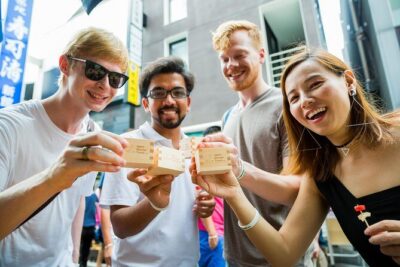 ★ 5.0Tokyo Tsukiji Fish Market Food and Culture Walking TourFrom $993,184 reviews
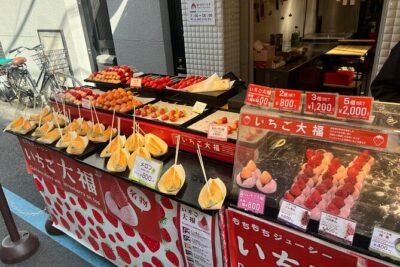 ★ 5.0Tsukiji Fish Market Food and Walking tourFrom $301,724 reviews
 ★ 4.9Tsukiji Fish Market Guided Walking TourFrom $221,397 reviews
 ★ 5.0Tokyo Sushi Making Class in Tsukiji with Professional ChefFrom $491,177 reviews
 ★ 5.0Tsukiji Fish Market Guided Tour and Sushi Making with Pro ChefFrom $104775 reviews
★ 4.7Tsukiji Fish Market Food and Culture Walking TourFrom $96757 reviews
★ 5.0Tsukiji Fish Market Guided Tour and Sushi Making with Pro ChefFrom $104775 reviews
★ 4.7Tsukiji Fish Market Food and Culture Walking TourFrom $96757 reviews
 ★ 5.0Tsukiji Fish Market: Street Food & Culture Walking TourFrom $33669 reviews
 ★ 5.0Tsukiji Fish Market Small-Group Food Walking TourFrom $87621 reviews
Browse the lists this tour appears in