
Reviewed · DINNER EXPERIENCES
Tokyo: Traditional Geisha Experience Show & Japanese Dinner
Geisha culture in a small room feels personal. What I like most here is the zashiki (tatami) setting and how the evening pairs it with a true Kyoto-style kaiseki multi-course dinner. It’s one of those experiences that feels more like an art session than a quick tourist stop.
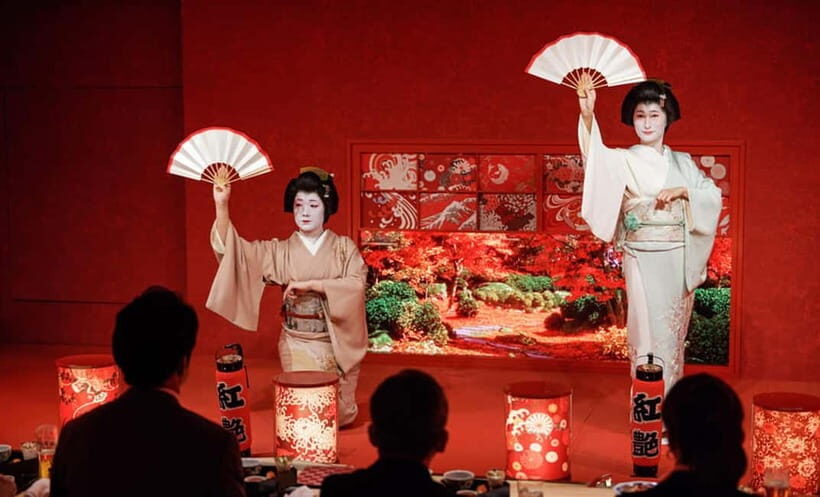
You’ll watch a live geisha performance up close, with shamisen music, then switch to lighter moments with ozashiki games and conversation support from English-speaking staff. One key consideration: flash photography isn’t allowed, so plan for softer, less dramatic photos than you might get on a stage show.
In This Review
- Key things I’d plan around
- Benitsuya on the 6th floor: location, setup, and arrival feel
- The geisha performance: what intimate really means in practice
- Kyoto-style kaiseki dinner: seasonal courses and why it’s worth the price
- Ozashiki games and conversation: the part many people don’t expect
- Kimono photo time without flash: how to get the shots you want
- What’s included (and why that actually helps your budget)
- Price and value: is $141 a good deal for this kind of access?
- Should you book the geisha show and Japanese dinner at Benitsuya?
- FAQ
- How long is the experience?
- What’s included in the price?
- Where do I meet for Benitsuya?
- Is there English support?
- Is flash photography allowed?
- Are there any rules on smoking?
- Can I bring food allergies or dietary needs?
- Who can join?
- FAQ
- Is it wheelchair accessible?
- Can I cancel and get a refund?
Key things I’d plan around
- Rare access to Benitsuya: this is usually not open to first-time visitors without special introductions, so the doorway matters.
- Tatami seating and an intimate room: you’re close enough to feel the rhythm of the dances, not just watch from far away.
- Kyoto-inspired kaiseki with seasonal changes: expect multiple delicate courses, and the menu shifts by season.
- Shamisen + dance live: the music is part of the performance, not just background.
- Ozashiki games after dinner: it’s not only watching; you’ll participate and ask questions with guidance.
- Photo time with kimono, but no flash: you’ll still get memorable shots, just with available light.
Worth weighing up alongside this Tokyo pick:
- Tokyo Bar Hopping Tour in Shinjuku (All-You-Can-Drink + Dinner)★ 5.0 · 3,587 reviews
- Tokyo: Sumo Show and Dining Experience★ 4.8 · 2,742 reviews
- Sumida River: Japanese Traditional Yakatabune Dinner Cruise★ 4.6 · 779 reviews
Benitsuya on the 6th floor: location, setup, and arrival feel
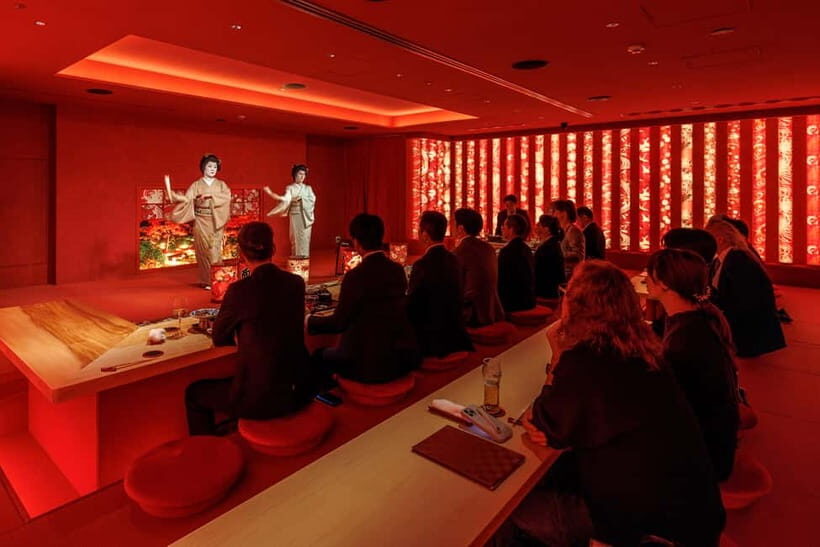
This experience happens at Benitsuya, on the 6th floor of Tokyo’s Grand Hammer building. The vibe starts before you even sit down. You’ll enter the building and head up to Benitsuya (紅艶), with the room designed for a traditional hosting style—so it feels like you’ve stepped into someone’s carefully prepared space.
Your meeting point is very easy to find: it’s about 1 minute from Shimbashi Station (H04/E21), west exit 7, just in front of Shimbashi SL Square. If you’re the type who hates last-minute navigation, you’ll appreciate that this is in a central, well-signed area.
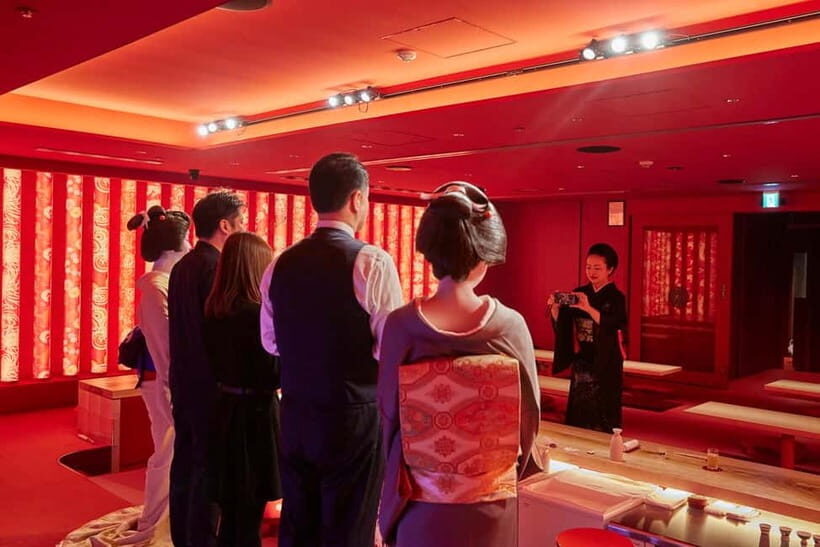
Inside, you’re welcomed into a zashiki (tatami) room with traditional decor and crimson walls. That color choice isn’t random; it sets a deeper, more formal mood than a modern theater ever could. You’ll sit, you’ll eat, and you’ll watch in the same small world—no moving between venues.
The geisha performance: what intimate really means in practice
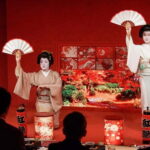
The biggest reason to book is simple: you get to watch a geisha performance up close in a zashiki room. This isn’t a big, distance-heavy stage show. The whole point is that the dance and music happen in front of you in an intimate setting, so details feel sharper—movement, timing, and the feel of the shamisen music.
The performance includes traditional dance, plus live shamisen music. If you’ve only heard shamisen as a soundtrack in movies, this is the real thing in a live setting where you can follow the musical flow while the dance happens.
Also, the evening is paced to keep you engaged. You’re not stuck in one moment for 60-plus minutes of sitting in silence. You watch, you experience, and then the evening opens into conversation and games. That structure matters because it keeps the culture from turning into a museum display.
Kyoto-style kaiseki dinner: seasonal courses and why it’s worth the price
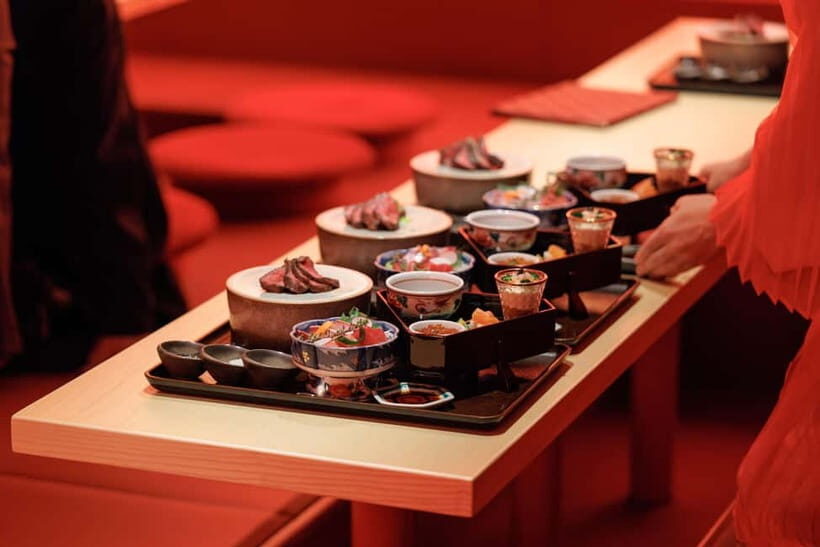
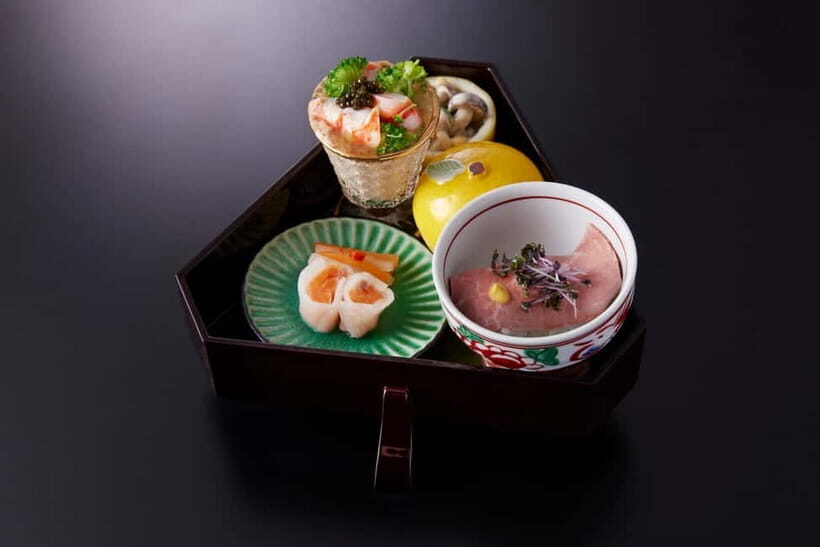
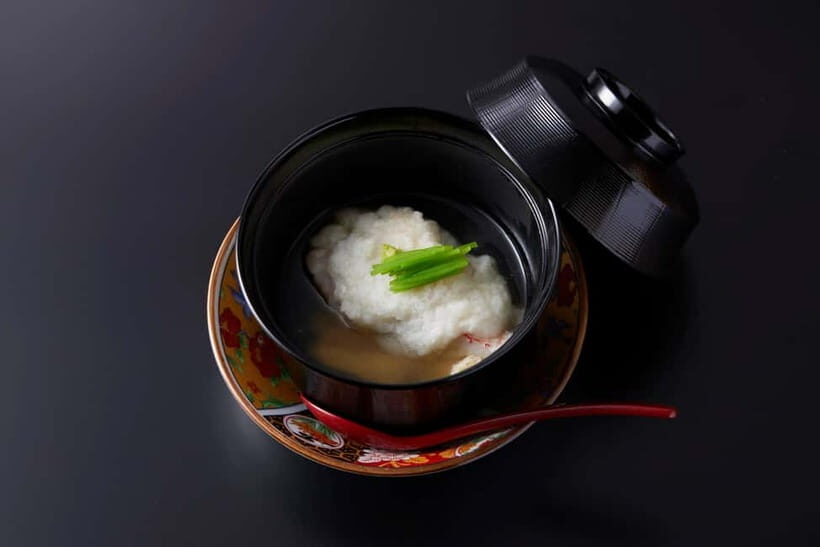
Food is a major part of the value here, not a side quest. You’ll enjoy a multi-course kaiseki dinner inspired by Kyoto, with seasonal Japanese delicacies and careful presentation. And yes, the lineup changes depending on the season, which means you’re not guaranteed the same menu year-round. That’s a good thing if you’re picky about novelty, and it also means the meal feels tied to the time of year instead of a fixed script.
Kaiseki-style dining is all about balance—light courses, small portions, and a focus on how each dish tastes and looks. The effect is that even if you’re full after the show, you’ll still remember the meal because it’s structured to be noticed course by course.
From what you can expect about the experience, the meal is often described as fresh and fantastic. That matches how kaiseki tends to work: ingredients matter, and the presentation is part of the flavor. You should also appreciate that the dinner is built into the ticket. At $141 per person for a 90-minute evening, you’re paying for access, the cultural program, and the dining in one package—so you’re not budgeting separately for food and entry.
One practical note: you can (and should) advise the staff of any food allergies when booking. Since the menu is seasonal and multi-course, letting them know early is the safest way to get a dinner that works for you.
Ozashiki games and conversation: the part many people don’t expect
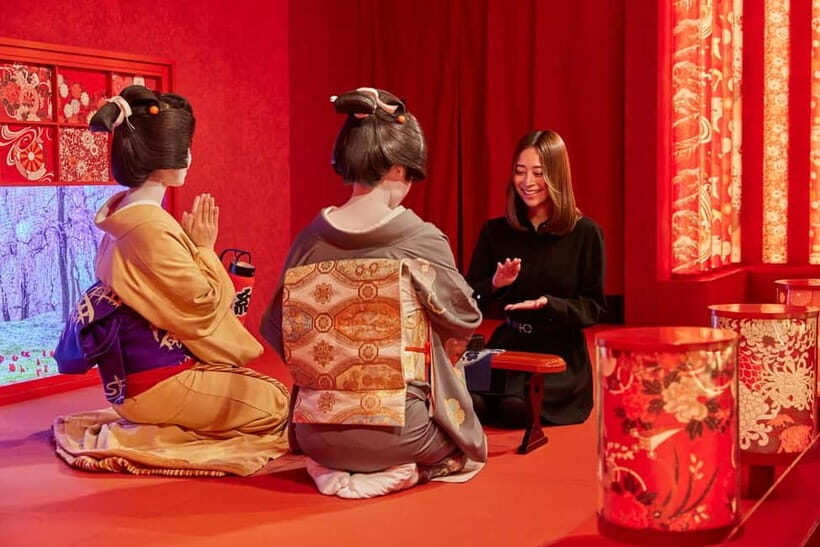
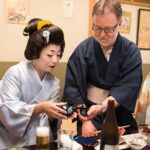
After the performance, you move into the best kind of cultural interaction: you play ozashiki games and have a chance to talk with the geisha. This is one of the rare moments where you’re not only watching tradition—you’re engaging with it, even if you’re doing it as a polite beginner.
The English-speaking staff are there to guide the flow. That matters more than you might think. With language barriers, cultural moments can turn awkward fast. With support, you can ask questions about their art, lifestyle, and culture without worrying that your curiosity will go unanswered.
What makes this section feel meaningful is that it’s guided participation, not a forced script. The geisha are in character and respectful, but the whole experience aims to make guests comfortable. In other words: the focus stays on the cultural encounter, not on pushing you to perform.
If you want an evening that’s more than a camera-and-standstill situation, this games-and-conversation portion is where it starts to feel memorable.
Worth weighing up alongside this Tokyo pick:

Kimono photo time without flash: how to get the shots you want
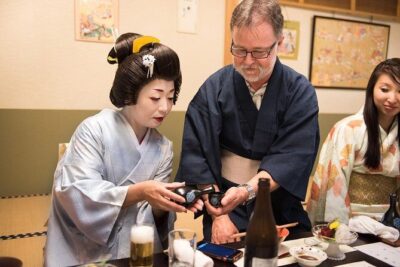
The evening ends with time for photos with the geisha in elegant kimono. This is often the souvenir moment people remember, and it’s handled in a way that respects the setting—because you’ll be following staff guidance and room rules.
Just remember: flash photography isn’t allowed. That one rule changes the entire photo strategy. Instead of expecting a bright, high-contrast snapshot like you’d get outdoors, you’ll rely on softer lighting and careful phone/camera positioning. If you’re planning this, you’ll get better results by keeping your device ready and following the staff timing rather than fumbling with settings.
Also, don’t treat this like a quick selfie line. You’ll be in a traditional space, so keep your movements calm and respectful. The best photos usually come when you’re relaxed enough to follow direction.
What’s included (and why that actually helps your budget)
This ticket isn’t just an entry fee to watch something. It includes food, drinks, the entrance fee, and tip. Drinks and tip being included is genuinely helpful in Tokyo, where you can otherwise end up budgeting piecemeal for small extras.
You’re also getting English-speaking staff support throughout the guided experience, which reduces the mental load. You don’t need to translate everything on your own while you’re trying to enjoy the performance and dinner.
Duration is 90 minutes. That length is a sweet spot: long enough for multiple dinner courses and a full performance, short enough that you’re not stuck for half a day when you could be out exploring Tokyo.
And if you’re worried about mobility: it’s wheelchair accessible, so it’s built to include more guests than many small-room cultural experiences.
Price and value: is $141 a good deal for this kind of access?
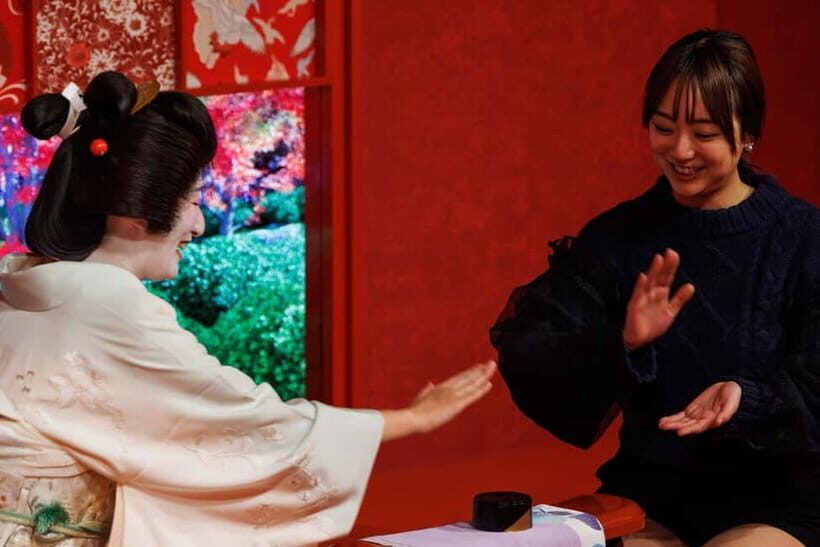
At $141 per person, this isn’t a budget bargain. But it also isn’t only a show ticket. You’re paying for a rare kind of access to geisha culture in a proper zashiki room, plus a full multi-course kaiseki dinner, plus live shamisen and dance, plus guided ozashiki games and conversation, plus photo time.
If you only want a cheap, one-size-fits-all performance, you might decide this is too much. But if you care about authenticity, intimacy, and the fact that the night includes food and participation, the price starts to make sense fast.
The value also comes from the structure. The evening is designed as a complete cultural program, not a loose collection of activities. With English guidance, it’s easier to get more out of the experience even if you don’t speak Japanese.
Who it suits best: first-time Tokyo visitors who want something more meaningful than a general “look at costumes” show, couples, and anyone who loves Japanese dining as much as performing arts.
Should you book the geisha show and Japanese dinner at Benitsuya?
Book it if you want a rare, traditional evening where you’re seated in a zashiki (tatami) room, you’ll eat Kyoto-inspired kaiseki, and you’ll get to participate in ozashiki games with staff support. If you care about details and you like formal, calm experiences, this fits your style.
Skip it if you’re traveling with someone under 20 (the experience isn’t available for guests under 20), or if the idea of a seated, etiquette-friendly evening would stress you out. Also, if you absolutely need flash-heavy, spontaneous photos, the no-flash rule may frustrate you.
If you’re choosing one special cultural night in Tokyo, this is the kind that can feel genuinely different from anything you can pick up on the street.
FAQ
How long is the experience?
It lasts 90 minutes.
What’s included in the price?
The ticket includes food, drinks, the entrance fee, and tip.
Where do I meet for Benitsuya?
Meet 1 minute from Shimbashi Station (H04/E21), west exit 7, in front of Shimbashi SL Square. Then enter GrandHammer (グランハマー) and go up to 6F for Benitsuya (紅艶).
Is there English support?
Yes. There are English-speaking staff who guide the experience.
Is flash photography allowed?
No. Flash photography is not allowed.
Are there any rules on smoking?
Smoking isn’t allowed.
Can I bring food allergies or dietary needs?
You should advise of any food allergies when booking.
Who can join?
It’s not available for those under 20.
FAQ
Is it wheelchair accessible?
Yes, the experience is wheelchair accessible.
Can I cancel and get a refund?
Yes. Free cancellation is available up to 24 hours in advance for a full refund.
More Dinner Experiences in Tokyo

More Dining Experiences in Tokyo
More Tour Reviews in Tokyo






Fresh reviews from around Tokyo






Dinner Experiences, compared.
 ★ 5.0Tokyo Bar Hopping Tour in Shinjuku (All-You-Can-Drink + Dinner)From $1063,587 reviews
 ★ 4.8Sumo Show and Dining ExperienceFrom $792,742 reviews
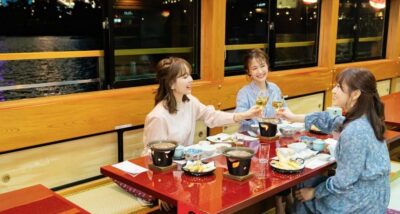 ★ 4.6Sumida River: Japanese Traditional Yakatabune Dinner CruiseFrom $103779 reviews
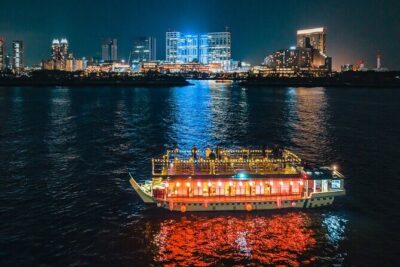 ★ 4.5Tokyo Bay Yakatabune Dinner/Day Cruise with Japan Show and DrinksFrom $65473 reviews
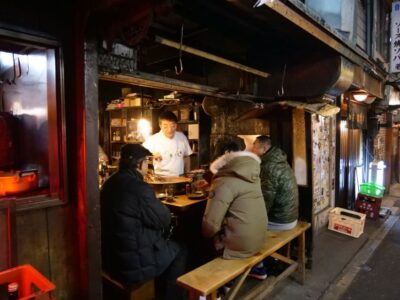 ★ 4.9Shinjuku Bar Hopping with All-You-Can-Drink & DinnerFrom $108440 reviews
Tokyo Dinner Cruise & Tradition Show & Drinks & Tokyo TowerFrom $95315 reviews
★ 4.9Shinjuku Bar Hopping with All-You-Can-Drink & DinnerFrom $108440 reviews
Tokyo Dinner Cruise & Tradition Show & Drinks & Tokyo TowerFrom $95315 reviews
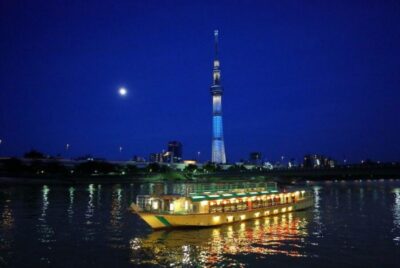 ★ 4.7Tokyo Bay: Traditional Japanese Yakatabune Dinner CruiseFrom $108243 reviews
 ★ 4.5Authentic Geisha Performance with Dinner in TokyoFrom $239101 reviews
Browse the lists this tour appears in