
Reviewed · WORKSHOPS
Tokyo: Taishu Engeki Show with Kimono and Sword Lesson
A show you can touch. In Asakusa, Taishu Engeki at Mokubakan blends drama, music, swordplay, and dance in a way you can follow without special language skills.
Asakusa is right in the middle of it, so the experience feels like you stepped into a working slice of Japanese performance culture, not a staged tourist act.
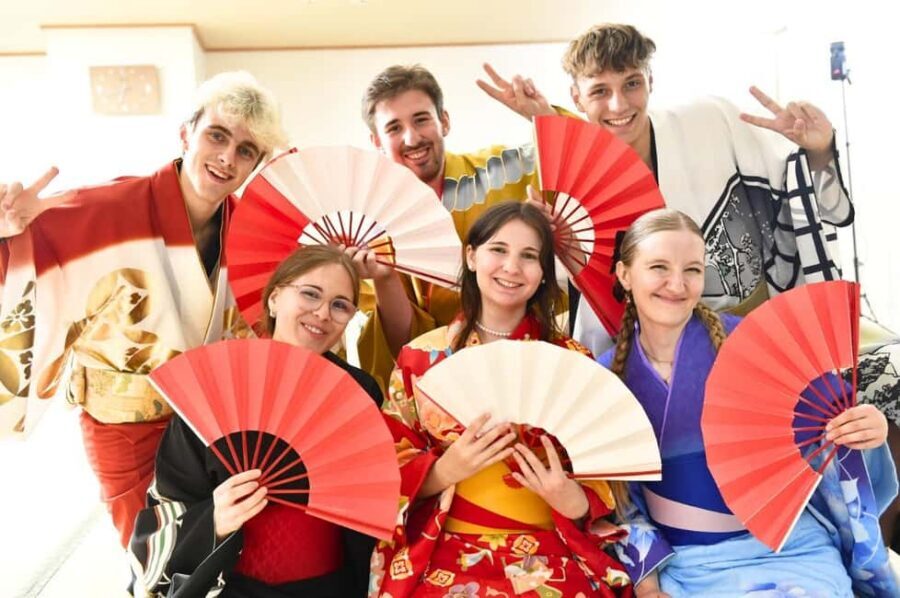
What I really like is the hands-on combo: kimono dressing plus learning movements with a local professional dancer. And you also get practice with samurai swordplay in a structured, beginner-friendly way that’s meant for fun, not perfection.
One thing to think about first: the performance part uses flashing/strobe lights and loud sounds, even though the workshop portion is quieter. If you’re sensitive to that, ask ahead so you can plan your evening comfortably.
In This Review
- Key things to know before you go
- Taishu Engeki at Mokubakan: popular theater with big visual storytelling
- Your 3-hour flow: show-first afternoon vs workshop-first evening
- Welcome and performance briefing: knowing the rules helps you enjoy it
- Kimono dressing at the theater: the fastest way to switch gears
- The fan dance workshop on tatami: where you learn with zero pressure
- Chanbara swordplay basics: safe, choreographed, and fun to try
- Watching Taishu Engeki live: close-up action and onnagata elegance
- The lighting and sound note: plan for strobe sensitivity
- Photos in your kimono: the memory you’ll actually want
- Price and value: why $12 can work (if you want “learn + watch”)
- Who should book this Taishu Engeki show and sword lesson?
- Should you book this Taishu Engeki show with kimono and sword lesson?
- FAQ
- How long is the Taishu Engeki show with kimono and sword lesson?
- Where does it take place?
- How much does it cost?
- What’s included in the program?
- What happens during the workshop?
- Do I need to speak Japanese?
- Is the group large?
- Are there flashing lights or loud sounds?
- Is alcohol allowed?
- Is the evening meeting point different from the afternoon?
Key things to know before you go
- Taishu Engeki is popular theater: story + emotion come through through body language, music, and big visual moments.
- Small group size (limited to 6) means you actually get guided, not just watched.
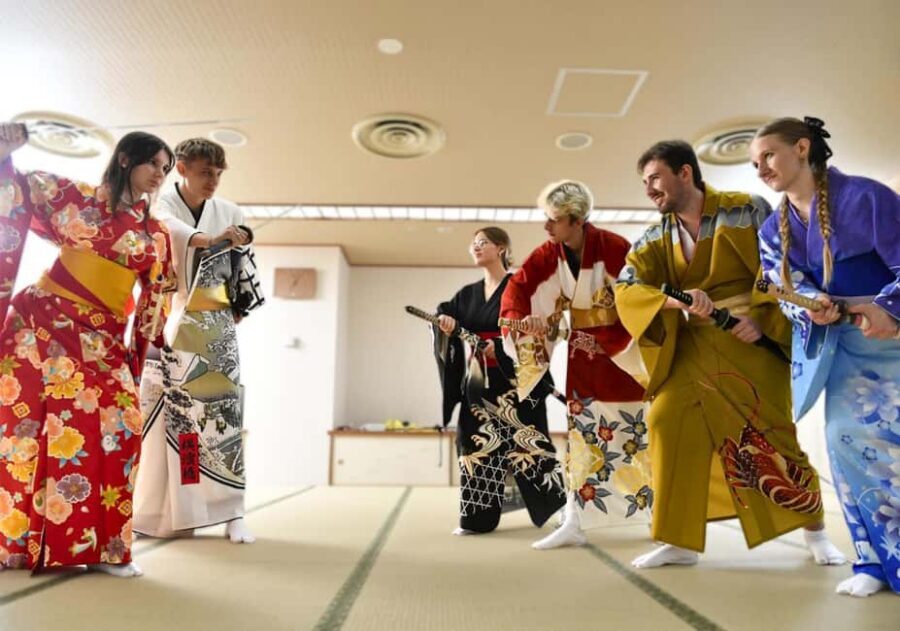
- Kimono + tatami workshop: you’ll change into a kimono and practice in the traditional setting.
- Fan dance and chanbara: a folding fan routine and choreographed sword-combat dancing designed for easy participation.
- Close-up performance at Mokubakan: the theater is dedicated to Taishu Engeki, running since 1977.
- Photos in your kimono: you get a commemorative photo moment at the end of the program.
Worth weighing up alongside this Tokyo pick:
- Mt Fuji & Hakone Cruise, Drum Show Bullet Train 1 Day from Tokyo★ 4.0 · 7,413 reviews
- Tokyo: Sumo Show and Dining Experience★ 4.8 · 2,742 reviews
- the SUMO show★ 5.0 · 1,960 reviews
Taishu Engeki at Mokubakan: popular theater with big visual storytelling
Taishu Engeki is Japanese popular theater, and it’s built for people to actually get it in real time. Instead of relying on complex text, it leans on emotion you can see, strong music, and expressive acting. The result is that even if you don’t speak Japanese, you’re still following the drama with your eyes.
At Mokubakan in Asakusa, the focus is exactly this style. The venue is dedicated exclusively to Taishu Engeki, with a long-running tradition since 1977. That matters, because you’re not borrowing a space for a one-off show. You’re stepping into a place that lives and breathes this form.
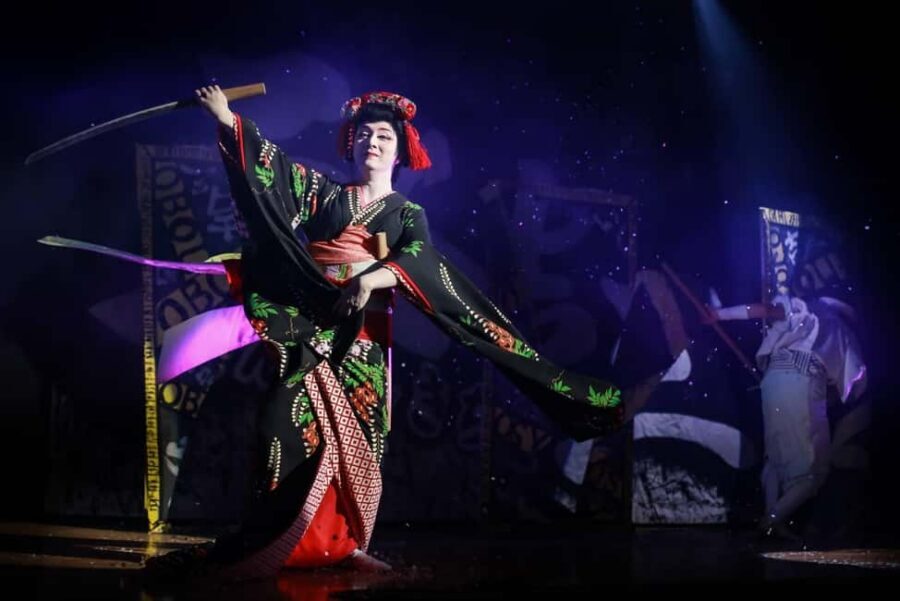
One neat detail inside Taishu Engeki is the onnagata tradition, where male actors portray female roles with poise and elegance. You’ll see style choices and character work that are extremely visual, and that’s part of why this show travels well across language barriers.
Your 3-hour flow: show-first afternoon vs workshop-first evening
This program runs about 3 hours, but the order changes depending on which slot you choose.
For the afternoon slot, you meet at 2:20pm. You start with a welcome and briefing. Then you watch the professional show first, followed by a short walk to the workshop venue. After that comes kimono dressing and the hands-on session with the dancer.
For the evening slot, you meet at 5:40pm at a specific address in Asakusa (1 Chome-38-6, Taito City, Tokyo 111-0032). In the evening, the workshop happens first, then the performance. Same ingredients, different cooking order.
The scheduling change is more than trivia. If you’re the type who likes to “get the costume and practice first,” pick the evening slot. If you prefer to see how it looks before you try it, choose the afternoon slot. Either way, you end with a photo moment in your kimono.
Welcome and performance briefing: knowing the rules helps you enjoy it
Right after you arrive, your program leader does a welcome and short briefing about Taishu Engeki and the Mokubakan theater. That briefing is useful because it helps you spot what you’re about to see: the mix of drama, swordplay, music, and dance, and how the style communicates.
During the performance segment, there’s also a cultural custom you’ll be guided through. Your program fee includes a small token of appreciation, and you may be guided to participate in a local tradition of tipping or offering small gifts to performers (お花を贈る, ohana o okuru). If that’s new to you, don’t stress. The leader will walk you through what to do.
Since the group is small (up to 6 participants), expect more “talking with you” and less “herding you around.” It’s one of the big reasons the whole thing works.
Kimono dressing at the theater: the fastest way to switch gears
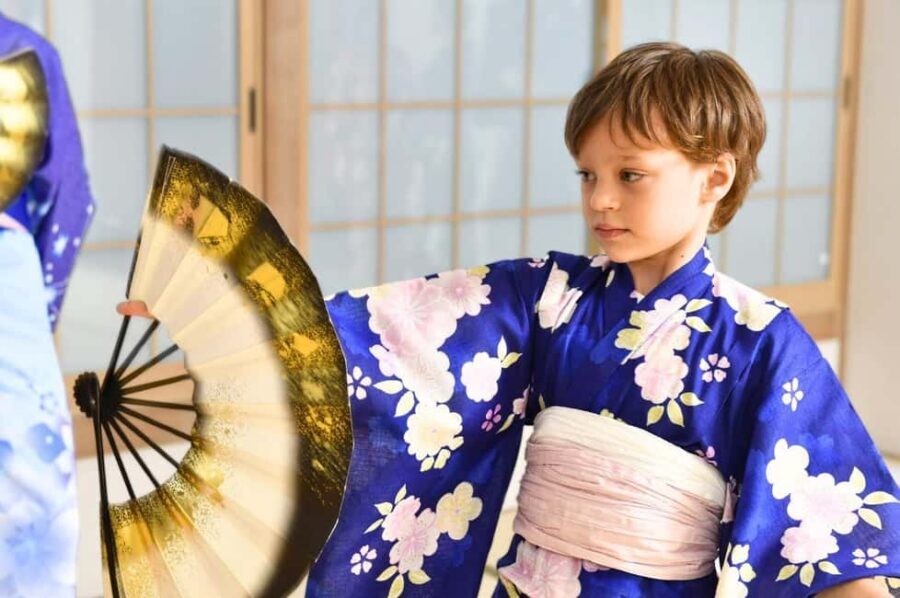
The kimono part is scheduled after the venue transfer in the afternoon slot (and after the performance in the evening order). Either way, you change into your kimono as a big reset button. It’s not just for pictures. Wearing it makes you slow down and pay attention to posture and movement—exactly what you need for a dance-and-sword workshop.
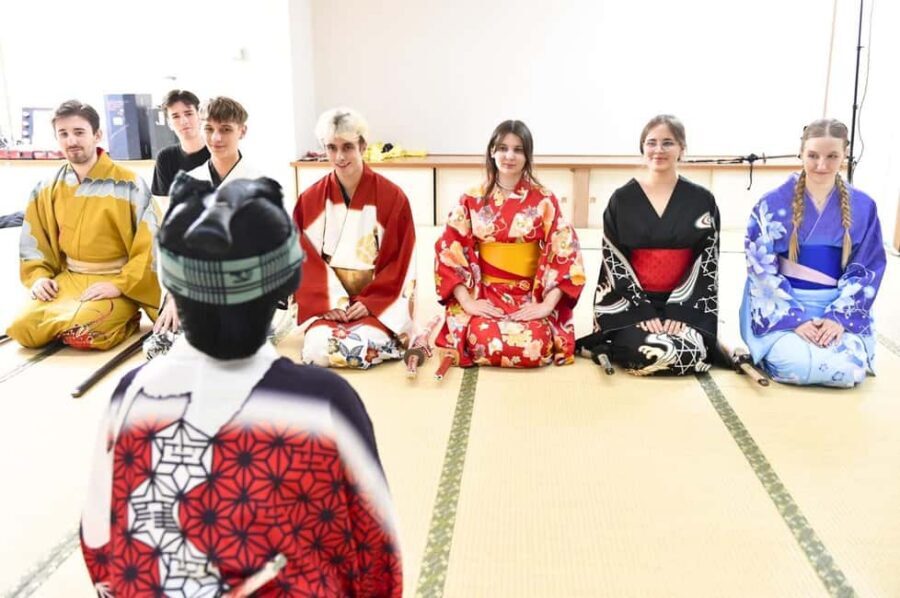
You’ll be in a traditional tatami room for the hands-on portion once you’re dressed. Tatami changes the sound and the pace of the room, and that helps the instruction feel more grounded and “local” rather than classroom-like.
One practical tip: if you’re wearing glasses or you have hair accessories, keep them simple. The experience is designed to be smooth and fun, but you’ll enjoy it more if you’re not constantly adjusting things while the group is waiting.
More things to make with your own hands


The fan dance workshop on tatami: where you learn with zero pressure
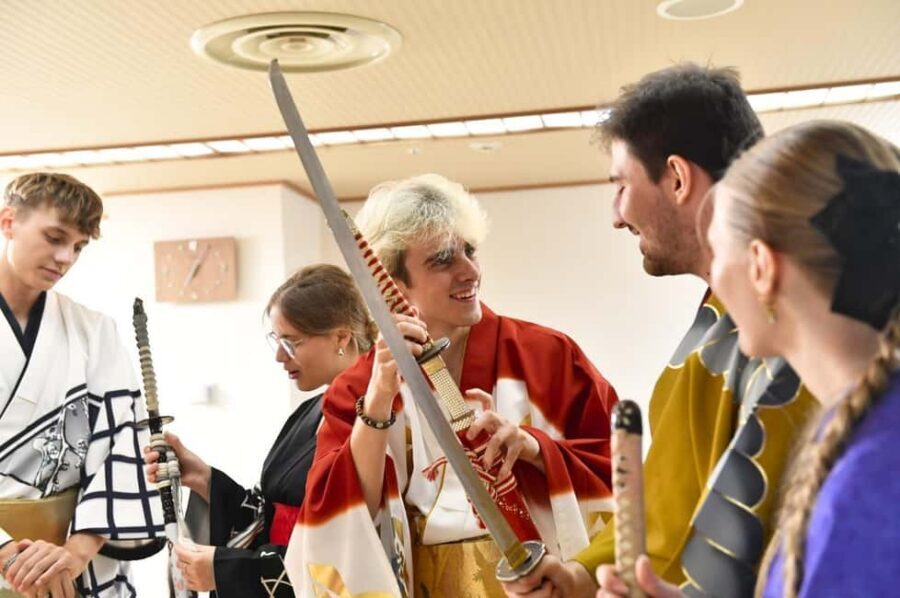
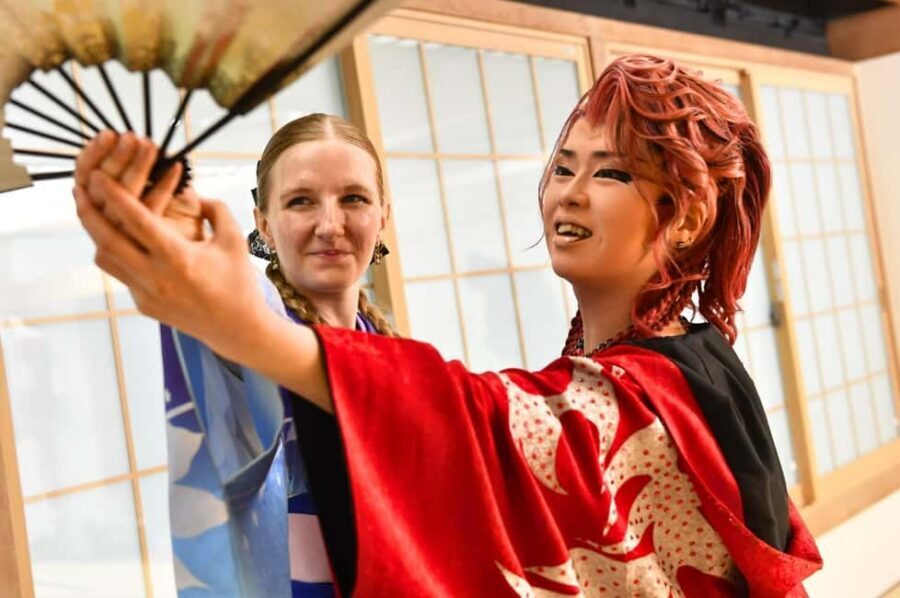
Once you’re in the tatami room, a local professional dancer guides you. This is one of the best parts of the program because it’s beginner-friendly by design. The workshop focuses on enjoyment, not difficult choreography.
The first movement block centers on a folding fan (sensu). The learning goal is basically: learn how the fan helps shape your gestures. You’re not trying to master an advanced recital. You’re building muscle memory for the style—timing, arm angles, and graceful stops.
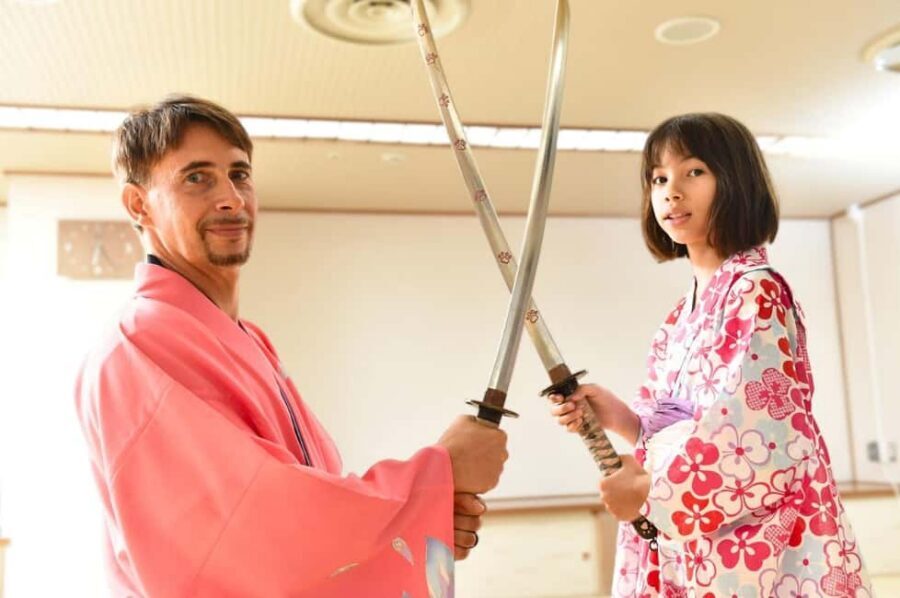
Then you move into the more athletic side: the choreographed sword-combat dance known as chanbara. That part looks intense, but the emphasis is still on following cues safely and in sync, not on surviving a movie fight scene.
During the workshop, you can expect guided participation—especially with a max group size of 6. That small number gives the instructor room to correct posture and hand positions without making it feel like a strict test.
Chanbara swordplay basics: safe, choreographed, and fun to try
The sword lesson uses a katana as part of the session. It’s called out as hands-on training alongside the fan work, and it’s taught by a performer. That detail matters: this isn’t generic “sword class” content. It’s built around the theater language of action and rhythm.
Your success here depends on two things: listening for the counts, and remembering that this is staged movement. You’ll be taught the choreographed motions so you can participate confidently without needing prior martial arts experience.
You also get the kind of physical confidence that’s hard to get from watching. One theme across the program is that you’re not stuck on the sidelines. You’re becoming part of the visual storytelling—like a living prop, but in a good way.
Safety is taken seriously. The workshop is physically active, and if you feel dizzy or unwell, you’re told to notify staff right away for assistance. That’s the right kind of common-sense approach for anyone doing movement-heavy activities.
Watching Taishu Engeki live: close-up action and onnagata elegance
After the workshop (evening slot) or before it (afternoon slot), you’ll watch a professional Taishu Engeki performance. This is where you see the whole system work: drama, music, and the big expressive moves that make the story readable.
What makes this feel special is closeness. The theater experience is designed to be intimate, not distant. You’re able to see steps, jumps, and physical expressions clearly, which is how the emotional tone lands even if you don’t know every word.
You’ll also notice the dramatic contrast within Taishu Engeki: delicate elegance in dance moments alongside kinetic swordplay and more intense action sequences. That contrast is why the whole evening doesn’t blend into one long performance. It changes mood constantly.
Also, keep an eye out for the onnagata elements—male performers portraying female roles with distinct poise. Even if you only catch it visually, you’ll feel the discipline behind the elegance.
The lighting and sound note: plan for strobe sensitivity
One caution that’s worth respecting: flashing/strobe lights and loud sounds are used during the professional theatre performance portion. The workshop portion doesn’t use those effects.
So if you’re sensitive to strobe lights, loud noises, or sudden effects, contact the operator beforehand and ask about what you can expect. You can still fully participate in the workshop and other non-performance segments.
It’s also smart to show up on time. The program depends on a tight flow from welcome to show to workshop moves to photos.
Photos in your kimono: the memory you’ll actually want
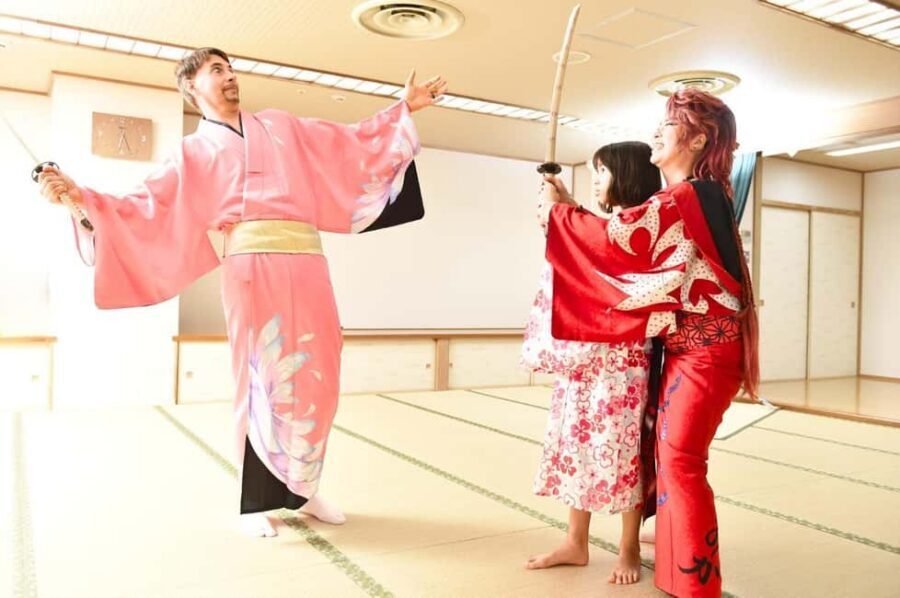
The program ends with commemorative photos in your kimono. This isn’t a vague souvenir shop stop. It’s a planned photo moment that fits the theme of the experience.
If you like having real visual proof of doing something in Japan, this part is worth paying attention to. The kimono dressing happens earlier, so your look matches the workshop and performance vibe. It’s not like you change outfits for a random snapshot.
In the experience, staff are friendly and help with photos. They also encourage you to take home mementos like photos and videos from the session, which is a nice bonus when you want to remember how it felt to hold the fan and move with the sword choreography.
Price and value: why $12 can work (if you want “learn + watch”)
At $12 per person for a roughly 3-hour program that includes a live Taishu Engeki performance, kimono dressing, a fan-and-sword workshop with a local professional dancer, and a commemorative photo moment, this is strong value.
Here’s how I think about pricing like this: you’re paying for three separate experiences that normally cost more when bought separately. The show is the show. The kimono adds an activity and a costume-change moment. The workshop adds instruction and participation, not just seating.
The small group size also helps the value make sense. Up to 6 participants means the instruction has breathing room, and you don’t get lost in a crowd.
If you’re mostly hunting for a long, scenic neighborhood walk, this isn’t that. But if you want a compact hit of Japanese performance culture in Asakusa, this price-to-content ratio is hard to ignore.
Who should book this Taishu Engeki show and sword lesson?
This experience is a great match if you want:
- A hands-on cultural activity, not just a ticket to sit and watch
- A beginner-friendly way to try fan dance and choreographed sword movement
- A live performance in Taishu Engeki at a dedicated venue (Mokubakan)
- Kimono dressing plus photos as part of the experience
It’s also a good fit for solo travelers, couples, and friends who want something you can actually do together. The group stays small, so you won’t feel like you’re part of a factory line.
Who should be cautious:
- Pregnant women: the program is not suitable.
- Anyone who reacts strongly to flashing lights and loud sounds during the performance portion should ask ahead.
- If you dislike physically active tasks, remember the workshop includes movement.
Should you book this Taishu Engeki show with kimono and sword lesson?
If you want one evening in Tokyo that mixes tradition with action and lets you participate instead of just observe, I’d book it. The price is low enough that you’re not taking a big risk, and the structure gives you both the “watch” and the “try” parts.
Choose the afternoon slot if you like seeing how the performance looks before you attempt fan and sword moves. Choose the evening slot if you prefer to start with the workshop and then watch the professionals afterward, seeing your own movements echoed back on stage.
Just go in with two expectations: you’ll follow guidance closely during the choreography, and the performance portion has strobe-like effects and loud sound. If that works for you, this is one of the more memorable ways to spend a few hours in Asakusa.
FAQ
How long is the Taishu Engeki show with kimono and sword lesson?
The experience lasts about 3 hours.
Where does it take place?
It takes place at Mokubakan theater in Asakusa, Tokyo.
How much does it cost?
The price is listed as $12 per person.
What’s included in the program?
You get a Taishu Engeki performance, kimono dressing, a hands-on workshop with a local professional dancer (fan dance and choreographed samurai swordplay), and a commemorative photo session in your kimono.
What happens during the workshop?
You’ll practice graceful folding fan movements and choreographed sword-combat dance (chanbara). The workshop is designed for enjoyment and is beginner-friendly.
Do I need to speak Japanese?
No. The program lists instruction in English and German, and the performance style is described as accessible through music and expressive body language.
Is the group large?
No. It’s a small group, limited to 6 participants.
Are there flashing lights or loud sounds?
Flashing or strobe lights and loud sounds are used during the professional theatre performance portion. The workshop portion does not use these effects.
Is alcohol allowed?
No. Alcohol and drugs are not allowed.
Is the evening meeting point different from the afternoon?
Yes. The evening slot meets at 1 Chome-38-6 Asakusa, Taito City, Tokyo 111-0032. The leader meets you in front of the Asakusa Mokubakan Theater with the Meeting Point sign for that time slot.
Make Something to Take Home

A Night at a Tokyo Show


More Tour Reviews in Tokyo





Fresh reviews from around Tokyo






Workshops, compared.
 ★ 5.0Sushi Making Tokyo Roll and Authentic Japanese Sushi ClassFrom $593,971 reviews
 ★ 5.0Tokyo Shinjuku Chopsticks Making ClassFrom $201,763 reviews
 ★ 4.8Chopstick Making Workshop in GinzaFrom $251,366 reviews
 ★ 5.0Tokyo Sushi Making Class in Tsukiji with Professional ChefFrom $491,177 reviews
 ★ 5.0Ramen & Gyoza Cooking Class in Tokyo with Local Supermarket VisitFrom $122823 reviews
 ★ 5.0Matcha Making Class in Tokyo with Authentic Japanese Sweets SetFrom $21744 reviews
 ★ 5.0Samurai Sword & Archery Class from Samurai DescendantFrom $193603 reviews
 ★ 4.9Tsukiji Fish Market Sushi Making Class with Pro ChefFrom $63506 reviews
Browse the lists this tour appears in