
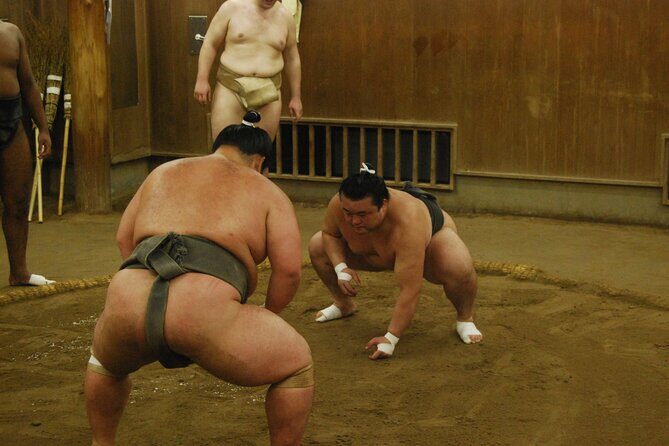
Reviewed · SUMO SHOWS
Tokyo: Sumo Morning Practice -Stable Visit Tour with a Guide
Morning sumo is loud and close.
This tour gives you an eye-level look at stable training and the people behind Japan’s national sport, with the action happening much closer than the official arena setup at Kokugikan. I really like seeing the breathing, faces, and body contact from a distance you can actually observe, and I also like the chance to take photos and ask questions at the end. One thing to plan for: the schedule starts early at 8:30am, and you’ll need to follow strict stable rules like no flash, no video, and no food during practice.
If you’re the type who enjoys culture that still runs on routine, you’ll get it fast. The coach’s voice can sound sharp at first, but the point is focus and trust inside the stable. This is a small group experience, capped at 10 people, which helps keep the atmosphere calm.
In This Review
- Key Highlights You’ll Care About
- Morning Sumo in Tokyo, Without the Stadium Distance
- Where You Meet at Oshiage and Why the 8:30am Start Matters
- Inside the Stable: What You’ll Actually See for About an Hour
- Stop One in Sumida: How Photos and Questions Fit In
- The Photo and Video Rules You Must Follow (No Flash, No Video)
- Food, Drinks, and Stable Manners: What’s Allowed and What Isn’t
- Price and Value: Is $82 Reasonable for This Kind of Sumo?
- Who Should Book This Tour (And Who Might Want Something Else)
- Tips After Practice: A Simple Way to Support the Rikishi
- Should You Book This Sumo Morning Practice Tour?
- FAQ
- How long is the sumo morning practice tour?
- What time does the tour start?
- Where is the meeting point in Tokyo?
- Is video or flash photography allowed inside the stable?
- Can I take photos without flash?
- Is food allowed during morning practice?
- What’s included in the tour price?
- How big is the group?
- Is there free cancellation?
Key Highlights You’ll Care About
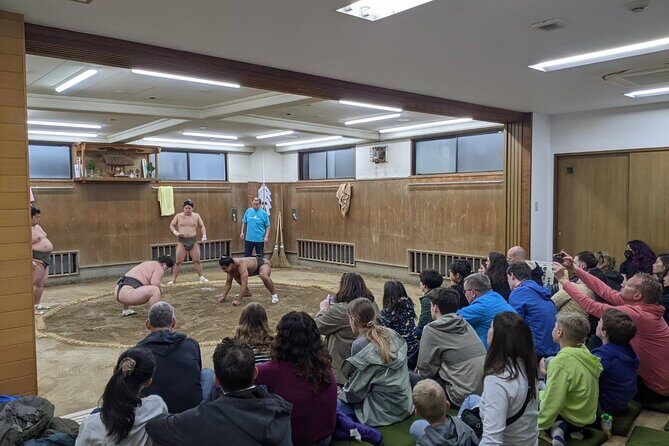
- Ikazuchi Sumo Stable training: watch morning practice up close, not from far-off seats
- Real atmosphere: you hear the collisions and feel the intensity from a safe viewing distance
- Photos with rikishi: you’ll get time for pictures after practice
- Q&A time: you can ask questions and get better context fast
- Strict rules: no flash photography, no video, and no eating during practice
- Small group size (max 10): easier questions and less disruption
More chances to sit ringside
- Tokyo: Sumo Show and Dining Experience★ 4.8 · 2,742 reviews
- the SUMO show★ 5.0 · 1,960 reviews
- Tokyo Shinjuku Sumo Show & Experience with Photo★ 5.0 · 1,750 reviews
Morning Sumo in Tokyo, Without the Stadium Distance
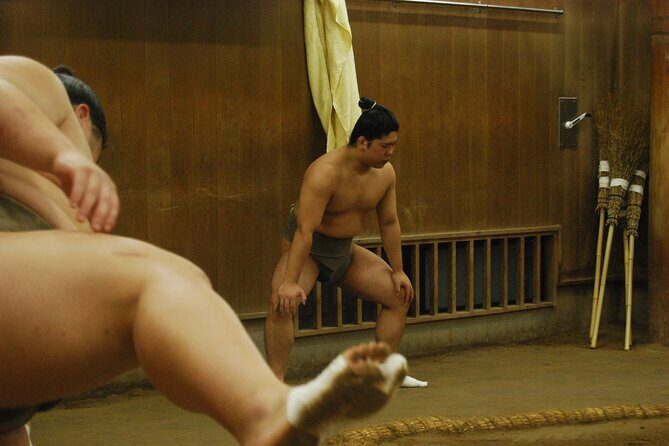
Sumo is one of those sports where you can watch the big tournament on TV and still miss what the sport feels like day to day. This experience puts you where the training happens: a sumo stable in Tokyo during morning practice. You see apprentices and rikishi working on technique, rhythm, and conditioning with the same seriousness they use every day.
The biggest reason I think this tour is worth your time is proximity with context. You’re not stuck behind a crowd, and you’re not forced to read the sport like a textbook. You can observe the faces and breathing that usually only show up when you’re close enough to notice body control, tension, and fatigue.
Another plus is the guide-led structure. You get a special brochure, and the tour flow makes it easier to understand what you’re seeing without slowing everything down inside the stable.
There is also a side of sumo that surprises people: the environment runs on discipline. The coach’s voice may sound strong and harsh at first. The good news is that the stable is built on trust, and that trust is exactly what keeps the training grounded and safe.
Where You Meet at Oshiage and Why the 8:30am Start Matters
The meeting point is in Oshiage, Sumida City, at Water section 1-chōme-1-1 Oshiage, Sumida City, Tokyo 131-0045. The tour starts at 8:30am and ends back at the same meeting point.
Why the early start matters: morning practice is when the stable is at full focus. If you show up late, you’ll spend the best part of the experience trying to catch your bearings, instead of watching the wrestlers warm up and train. I suggest building in buffer time for the walk from nearby public transportation.
Also, this is not the kind of tour where you can wander at your own pace once you’re inside. You’re going to be asked to keep your voice down and avoid private conversations. That’s a small ask, but it matters in a stable where concentration is treated like part of training.
Inside the Stable: What You’ll Actually See for About an Hour
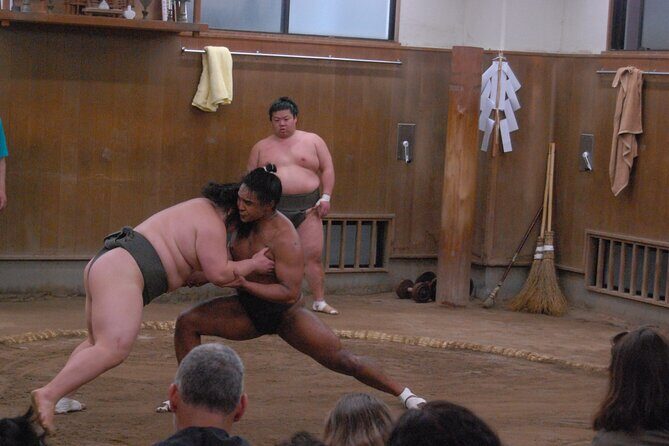
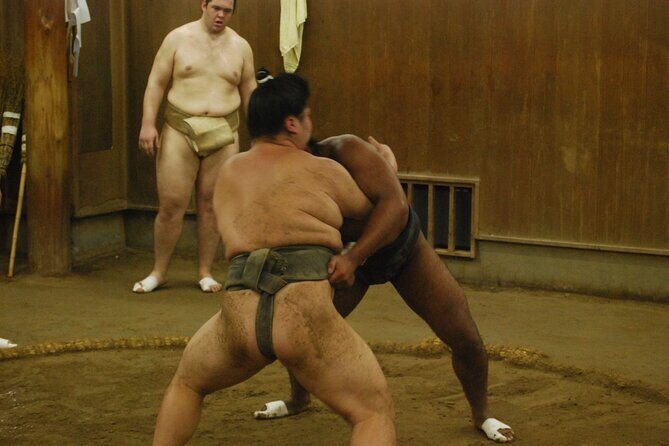
The core of this experience is straightforward: you visit a strong sumo stable in the Sumida area and watch practice for about one hour. You’ll get to observe from close enough range to notice the details that change everything—like how a rikishi holds his breathing, how apprentices move into position, and how quickly adjustments happen when technique doesn’t land the way it should.
From a distance, you can still read intensity. The training is physical in a way that feels different from watching matches. This is about repetition and precision. You’ll likely notice the rhythm of footwork, the tension before contact, and the sound of bodies meeting—sounds that can be surprisingly sharp for something that looks slow at first.
And yes, you’ll hear that coach voice. It can feel abrupt if you’re used to polite instruction. But the tone is part of a system where trust is earned. The coach is speaking to apprentices and rikishi who understand the purpose behind the discipline: you learn by doing, correcting, and doing again.
One more thing that helps you enjoy the experience: the guide’s presence. Even if you know nothing about sumo, you’ll have someone helping you interpret what you’re looking at while you’re there.
Stop One in Sumida: How Photos and Questions Fit In
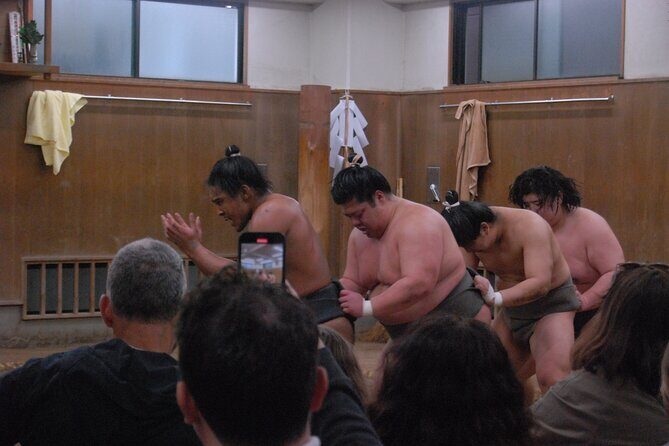
After the practice window, you’ll get a small moment of human connection. The tour includes time for photos with sumo wrestlers and the chance to ask questions.
That combination is smart for two reasons. First, photos give you a memory that’s tied to something real, not just a crowd shot. Second, the Q&A turns the experience from entertainment into understanding. Questions help you learn terms, training ideas, and how stable life works in plain language—without forcing you to do research after the fact.
I like that this part comes after you’ve already watched practice. It means you ask better questions. You’re not wondering what you should be looking for; you’ve already seen the work being done. Now you can ask why that particular drill matters or what you noticed that you’re unsure about.
You should expect the stable atmosphere to be focused. The rules include requests like refraining from private conversation during the tour so the rikishi and apprentices can stay concentrated. Keep questions clear and short, and listen for the parts the guide thinks are most useful for newcomers.
More days made easy by a guide



The Photo and Video Rules You Must Follow (No Flash, No Video)
One of the most important practical parts of this tour is photography etiquette, because the stable rules are specific:
- Video or flash photography is prohibited inside the sumo stable.
- Photographs without flash are fine.
That means you should plan to shoot with your phone or camera in a way that doesn’t trigger the flash automatically. Many devices have flash turned on by default in some modes, so check before you arrive.
Also remember the “why” behind these rules. Flash can distract and interrupt concentration. Video gear can also feel intrusive when everyone is working. Treat photography as a permissioned part of the tour, not an endless side quest.
Tip for your camera roll: get a few steady shots during the allowed photo moment after practice, not during the height of training. It’s easier for you and less disruptive for everyone.
Food, Drinks, and Stable Manners: What’s Allowed and What Isn’t
Practice time has food restrictions. Snacks, bread, rice balls, and other food are not allowed during morning practice. You can bring drinks with lids, which is the practical compromise that keeps people hydrated without creating clutter.
If you’re bringing kids, this rule is especially relevant. You’ll want a plan for when to eat before you arrive, not during practice. A lid on the drink is key, and you’ll likely want to keep it out of the way until appropriate.
Just as important: keep your voice down. The tour notes request that you refrain from private conversation during the tour for the concentration of the rikishi and apprentices. Think of it like stepping into a studio where training is the main event. You don’t need to be silent forever, but don’t turn it into a group hangout.
These rules can feel strict, but they make the experience better. They protect the calm focus that lets you see the real intensity of morning training.
Price and Value: Is $82 Reasonable for This Kind of Sumo?
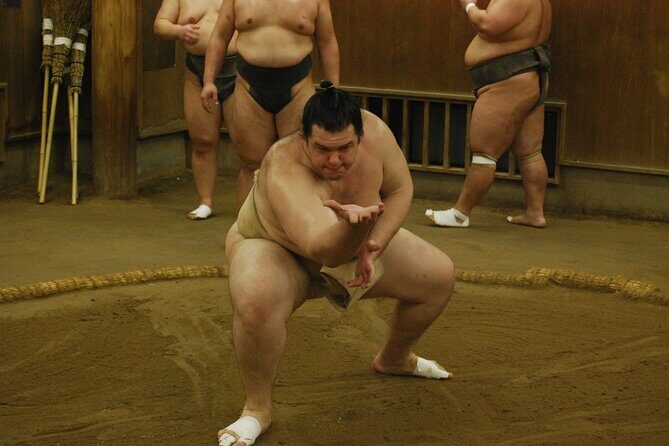
The price is $82 for about two hours total, including the guide and a special brochure. That sounds simple, but the value comes from how the tour is structured.
First, you’re paying for access to a stable practice session that isn’t the same as walking in off the street. You also get a guide to help you interpret what you’re watching, which cuts down on the confusion that many first-time visitors feel with sumo.
Second, you’re getting time that goes beyond passive viewing. You have the practice observation, plus photos and Q&A afterward. That’s a lot of “activity per hour,” especially because you’re watching close enough to notice expression and technique.
Third, group size helps. With a maximum of 10 people, you’re less likely to be boxed out by a large crowd. It’s easier for the guide to manage questions, and it keeps the experience from feeling rushed or chaotic.
If you’re comparing this to paying for an arena seat on tournament days, remember: tournament sumo is its own spectacle. This is different. You’re watching practice as a living routine, not a one-day performance. If you want that day-to-day reality, the price starts to make sense fast.
Who Should Book This Tour (And Who Might Want Something Else)
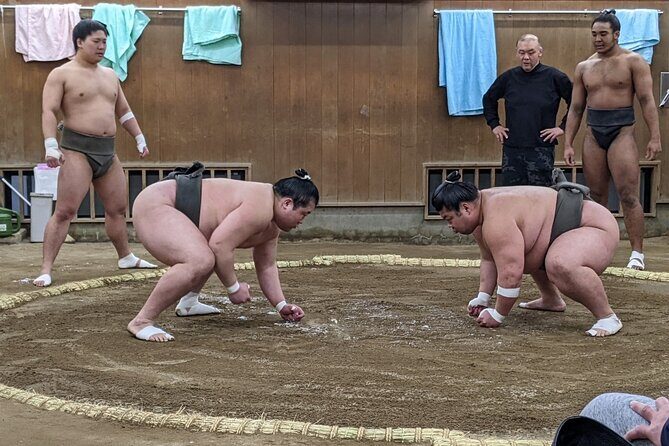
This is a great match if you want sumo as real training, not only as match-day drama. You’ll especially enjoy it if you’re the kind of person who likes:
- learning by watching small routines
- asking questions and getting context
- seeing cultural practices that many visitors don’t get to witness
I also think it works well for families. One strong point from the experience feedback is that it can be fun and interesting even with kids. The training is visually clear, and the Q&A helps kids connect the spectacle to real meaning.
If you’re the type who hates early starts, this might be harder. The 8:30am start is non-negotiable if you want to see the practice at full intensity. Also, if you strongly prefer unrestricted filming or you’re carrying food around like a picnic, you may find the stable rules a bit limiting.
Tips After Practice: A Simple Way to Support the Rikishi
The tour description includes a thoughtful suggestion: if you feel inclined to support the rikishi after practice, leave them a tip.
This is optional, but it’s the kind of gesture that fits the spirit of stable life. You’re not just taking in a show; you’re witnessing work done through discipline. A tip is a small signal of respect.
If you plan to do this, treat it as a quiet, respectful moment—don’t turn it into a spectacle. Ask the guide if there’s a right way to do it during the flow of the tour.
Should You Book This Sumo Morning Practice Tour?
Book it if you want sumo the way it actually happens: early, focused, and close enough to notice human effort. For the price, the mix of stable training viewing, plus photos and Q&A, is a strong value combo. The small group cap of 10 also helps keep it personal and calm.
Skip or consider an alternative if you’re not willing to follow the rules—especially no flash, no video, and no eating during practice. Also, if waking up early isn’t your thing, the 8:30am start may be a dealbreaker.
If you’re curious about Japan beyond monuments and shopping streets, this is the kind of morning experience that gives you a real story to take home.
FAQ
How long is the sumo morning practice tour?
It runs for about 2 hours total, with roughly 1 hour spent watching practice.
What time does the tour start?
The start time is 8:30am.
Where is the meeting point in Tokyo?
You meet at Water section 1-chōme-1-1 Oshiage, Sumida City, Tokyo 131-0045, Japan and the tour ends back at the same point.
Is video or flash photography allowed inside the stable?
No. Video and flash photography are prohibited inside the sumo stable.
Can I take photos without flash?
Yes. Photographs without flash are fine.
Is food allowed during morning practice?
No. Snacks, bread, rice balls, and other food are not allowed during morning practice. You may bring drinks with lids.
What’s included in the tour price?
You get a tour guide and a special brochure. The tour also uses a mobile ticket.
How big is the group?
The group maximum is 10 travelers.
Is there free cancellation?
Yes. You can cancel for a full refund up to 24 hours in advance, and changes within 24 hours aren’t refunded.
More Tours in Tokyo




More Tour Reviews in Tokyo




More Mornings with the Wrestlers
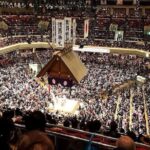
Fresh reviews from around Tokyo






Sumo Shows, compared.
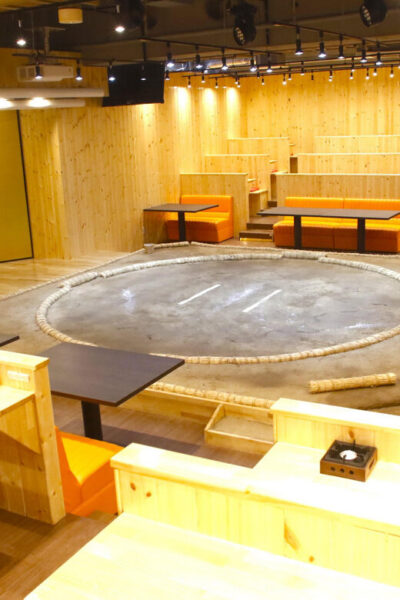 ★ 4.8Sumo Show Experience with Chicken Hot Pot and a PhotoFrom $1036,678 reviews
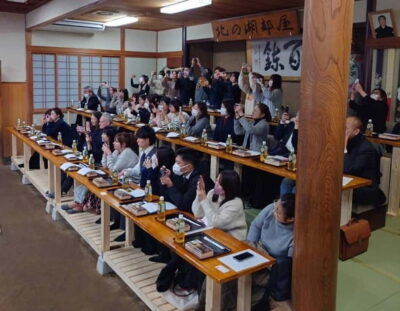 ★ 4.8Sumo Show and Dining ExperienceFrom $792,742 reviews
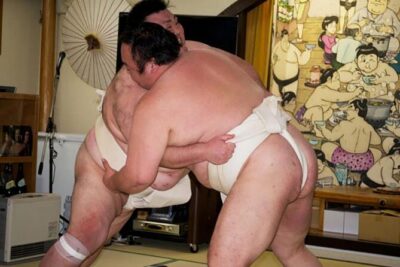 ★ 5.0the SUMO showFrom $891,960 reviews
 ★ 5.0Tokyo Shinjuku Sumo Show & Experience with PhotoFrom $791,750 reviews
 ★ 4.8Sumo Show and Experience in ShinjukuFrom $691,001 reviews
 ★ 5.0Authentic Sumo Experience in Tokyo: Enter the SanctuaryFrom $171603 reviews
 ★ 4.8Tokyo Sumo Experience: Chanko & Mochi with a Former ProFrom $103567 reviews
 ★ 5.0Ultimate Sumo Tournament: Tokyo, Osaka, Nagoya, FukuokaFrom $184468 reviews
Browse the lists this tour appears in