
Reviewed · IMPERIAL PALACE TOURS
Tokyo: Imperial Palace East Gardens and Tokyo Station Tour
Tokyo’s palace story starts under quiet skies. This walking tour ties together the Imperial Palace East Gardens moats and gardens, the Edo Castle ruins nearby, and then the modern city energy of Marunouchi—ending at the restored Tokyo Station. The guide (often Yuki) keeps it clear, with easy, sometimes funny explanations that help you picture what Tokyo looked like centuries ago.
Two things I especially like: you get practical sights tied to specific landmarks, like Ote-mon Gate and Hyakunin Bansho Guardhouse, and you also get a view payoff at Nijubashi Bridge while learning why it mattered. One consideration: it’s a moderate walk, and there are rules like no flash photography and no backpacks—so you’ll want to come prepared with comfortable shoes and light, weather-ready gear.
In This Review
- Key moments you’ll remember
- Imperial Palace East Gardens: moats, gates, and what to notice
- Ninomaru Garden and the Edo Castle ruins you can track
- Marunouchi on foot: art, modern architecture, and the Nijubashi moment
- Tokyo Station finish: why the walk ends so well
- Price and value: what $38 buys you in 150 minutes
- Getting the most out of it: shoes, weather, and photo rules
- Who should book this Imperial Palace to Tokyo Station tour?
- Should you book it?
- FAQ
- FAQ
- Where does the tour start?
- How long is the tour?
- What’s included in the guided part?
- Do I need to pay an admission fee for the Imperial Palace East Gardens?
- What landmarks are part of the route?
- What will I see near the end of the tour?
- Is the tour wheelchair accessible?
- What languages are available for the guide?
- Are there any rules about what I can bring or how I can photograph?
Key moments you’ll remember
- Meet at Wadakura Fountain Park Starbucks: an easy starting point right by the palace grounds
- Ninomaru Garden visit: a calmer stop that sets the scene before the larger palace area
- Edo Castle details you can actually picture: watch for Fujimi-yagura watchtower notes and the main keep scale model
- Imperial Palace East Gardens guided segment: includes key points like Ote-mon Gate and Hyakunin Bansho Guardhouse
- Nijubashi Bridge viewpoints: scenic breaks with historical context
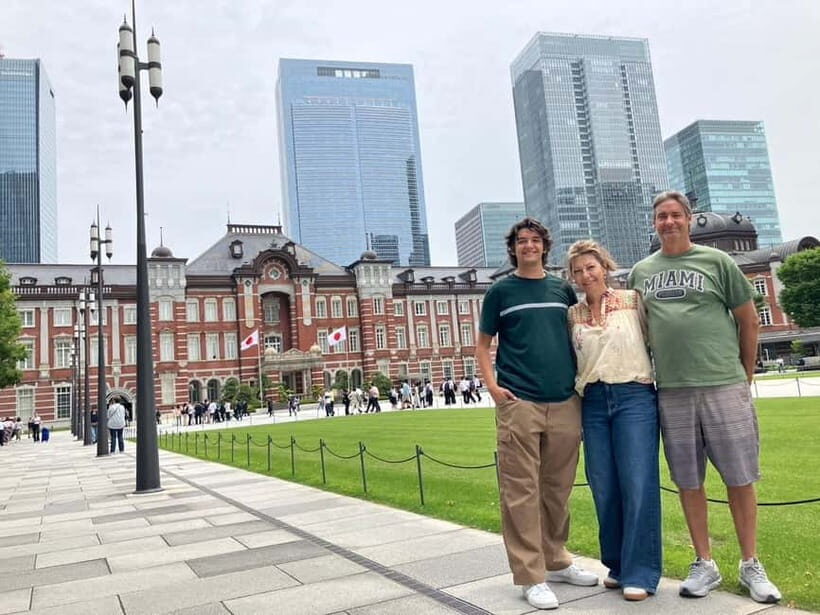
- Marunouchi to Tokyo Station finish: modern architecture and art leading to the iconic red-brick station exterior
Before you commit, see how this one stacks up against a few Tokyo favourites:
- Mt Fuji and Hakone 1-Day Bus Tour Return by Bullet Train★ 5.0 · 26,383 reviews
- 1-Day Tokyo Bus Tour★ 5.0 · 14,250 reviews
- Tokyo: teamLab Planets TOKYO Digital Art Museum Entry Ticket★ 4.6 · 9,779 reviews
Imperial Palace East Gardens: moats, gates, and what to notice
The tour begins at スターバックス コーヒー 皇居外苑 和田倉噴水公園店, a convenient meeting point near the palace area. From the first minutes, you’re not just “looking around.” You’re being taught how to see: where the water lines are, how the grounds were shaped, and how the placement of gates and fortification points fits the story.
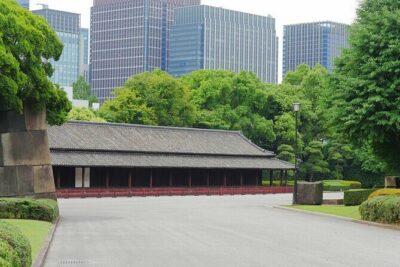
This is where the Imperial Palace East Gardens shine. Even if you’re not a hardcore history person, you’ll get something useful: a way to connect what you’re standing in front of with the power that used to run through this area. The East Gardens route includes landmark stops such as the Ote-mon Gate area and the Hyakunin Bansho Guardhouse, so the tour doesn’t stay abstract. You’ll also hear how the grounds relate to the Edo Castle ruins concept, which helps make sense of what’s left today.
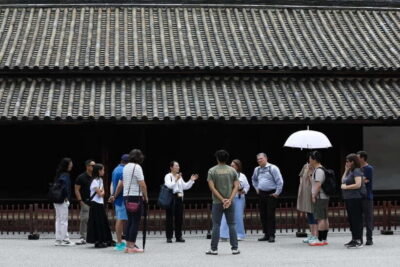
If you like your history with specifics, this part delivers. The explanation style—mentioned in multiple guides’ descriptions—leans into being easy to follow and grounded in the geography. When Yuki is your guide, the tone tends to be approachable and lightly humorous, which matters here because palace explanations can otherwise get dry fast. You’ll finish this segment understanding what each “small” detail meant, not just that it existed.
How it feels on foot: peaceful for the scenery, but structured for the learning. You’ll likely pause often enough to absorb things without feeling rushed.
Ninomaru Garden and the Edo Castle ruins you can track
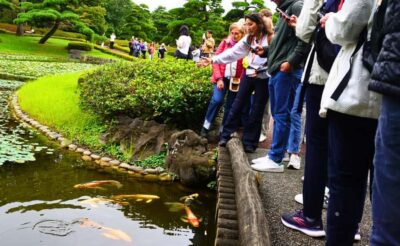
After the initial orientation, the tour includes a visit to Ninomaru Garden. This is a smart choice for a short walking tour because it’s not only scenic—it gives you a reset. Gardens in Japan often reward slow looking, and in this case it helps you transition from big political history into the physical layout of the grounds.
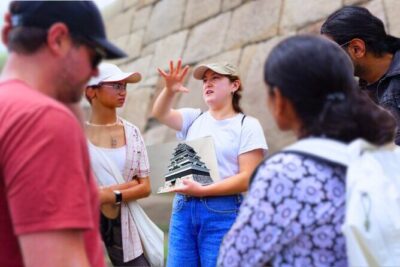
Then you move into the broader Imperial Palace East Gardens area and nearby historical points tied to the former Edo Castle. What I like about this approach is that you get both “real scale” and “historical reconstruction.” For example, you’ll hear about and view an Edo Castle main keep scale model, which can be surprisingly helpful if you’ve struggled with imagining what the castle looked like in its original size. Seeing a scale model alongside on-the-ground positions makes the story click.
You also get references to fortification features, including the Fujimi-yagura watchtower. Even if you can’t physically compare every structure the way a historian would, the guide’s job is to give you landmarks you can match with what you see around you. That’s exactly what makes a guided route valuable: it turns the environment into a map.
Another included component here is walking through the Honmaru area and the Kokyo Gaien National Garden segment. That matters because these spaces help show how the palace zone functions as a preserved park today while still being tied to older defensive layouts.
Potential drawback to keep in mind: this is a 150-minute total tour, so you don’t get hours inside every sub-area. Instead, you get a focused run where each stop is chosen to teach a particular piece of the story. If you want unhurried wandering and lots of solo photo time, you may want to plan extra time on your own after the tour.
Marunouchi on foot: art, modern architecture, and the Nijubashi moment
The tour shifts from the palace side into Marunouchi, and the walking transfer is short—about 10 minutes—so you won’t feel like you’re “traveling” more than you’re experiencing. Once you’re in Marunouchi, you’ll get a different kind of Tokyo lesson: how the modern business district sits alongside the world of imperial and shogunate-era planning nearby.
This is where the tour balances “sightseeing” with meaning. You’ll get a guided look at Marunouchi’s modern architecture and art. Even if you’re not an architecture critic, it’s a good way to spot patterns: straight lines, public spaces, and how the city presents itself just beyond the palace grounds.
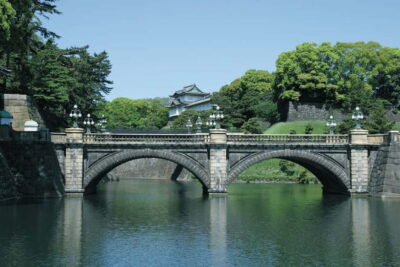
And then comes one of the tour’s most rewarding pauses: the Nijubashi Bridge viewpoint. The Nijubashi area works as more than a photo stop. The guide helps you understand why this view connects to the way power was displayed. Once you know what you’re looking for, the bridge and surrounding sightlines feel less random.
If you’re the type who likes to photograph cities, this section gives you variety—garden calm, then urban geometry, then a classic view tied to imperial-era framing.
Tokyo Station finish: why the walk ends so well
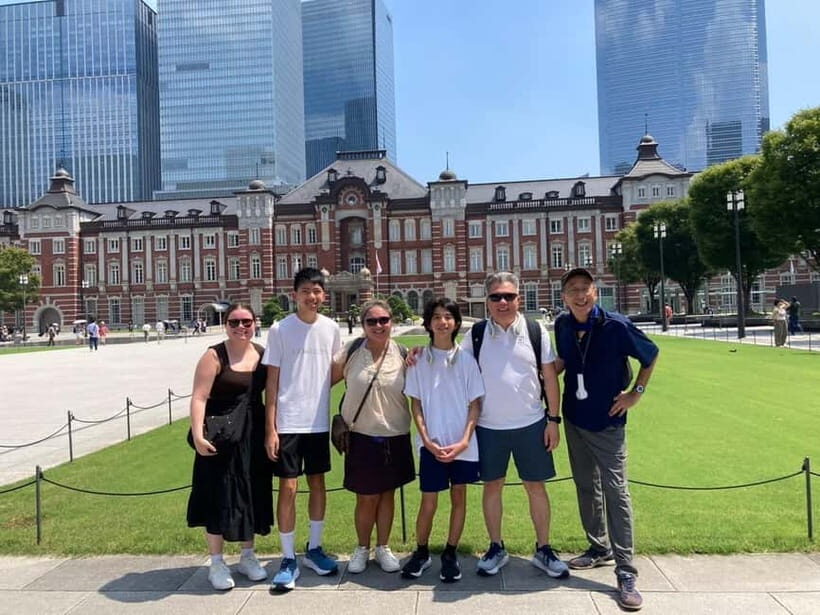
The grand finale is Tokyo Station. The tour includes a guided look at the station area and then you finish at 東京駅. What I like about this ending is that it feels like a clean bookend: you start in a quiet, enclosed historical zone and end at a station that’s instantly recognizable and designed for movement.
Tokyo Station’s exterior is especially good at late-day light or clear weather. It’s also a practical finish point. From there, you can hop onto trains with less hassle than if your tour ended somewhere less connected.
One more thing: because the route ends at Tokyo Station after Marunouchi, your brains still feel “in Tokyo mode.” The station landing doesn’t feel like a random stop; it feels like you’re exiting history and stepping back into daily life.





Price and value: what $38 buys you in 150 minutes
At $38 per person for a 150-minute guided walk, this tour sits in the “good value if you like structure” category.
Here’s the value logic:
- You’re paying for an English-speaking (and multi-language) guide with Japanese history and culture context, not just for sightseeing.
- The route includes multiple key reference points—Ote-mon Gate, Hyakunin Bansho Guardhouse, Ninomaru Garden, and Edo-related highlights like the main keep scale model and Fujimi-yagura watchtower notes.
- You get the Nijubashi viewpoint and the Marunouchi segment with modern architecture and art.
- The tour’s Imperial Palace East Gardens entry is handled as part of the experience, and you’re told there’s no admission fee required for the East Gardens in this tour context.
If you tried to do this by yourself, you’d likely spend time figuring out where each historical point fits and why it matters. This tour essentially “saves you the translation work,” plus it helps you notice the right details along the way.
If you’re the kind of traveler who hates group pacing or wants full control over stops, the $38 may feel like paying for someone else’s schedule. But if you want the story to make sense quickly, it’s priced pretty reasonably for what you receive.
Getting the most out of it: shoes, weather, and photo rules
This is a walking tour, and you’ll want to treat it like one. The basics matter:
- Bring comfortable shoes and be ready for a moderate amount of walking.
- Pack a hat, sunscreen, and water, especially if you’re visiting on a sunny day.
- Use weather-appropriate clothing, because you’re outside for much of the route.
There are also clear restrictions:
- No smoking
- No flash photography
- No backpacks
That last one is important. If you normally carry a backpack for camera gear or snacks, you’ll need a different plan for this tour day.
Also note you’re working with a live multilingual guide setup. The tour is offered in English, Japanese, Spanish, Chinese, and French, and it’s described as wheelchair accessible—so it’s built for a range of visitors.
Who should book this Imperial Palace to Tokyo Station tour?
This tour is a strong fit if:
- You want a guided route that connects the Imperial Palace area to Edo Castle and shogunate-era context.
- You like a mix of old and new Tokyo: gardens and gates, then Marunouchi’s modern side, then Tokyo Station.
- You appreciate when the guide explains with humor or storytelling style—especially if you’re easily bored by lectures.
It may be less ideal if:
- You dislike structured pacing and prefer wandering alone with no schedule.
- You want lots of time at one location to fully linger. Here, the focus is breadth and clarity, not long stays everywhere.
Should you book it?
Yes, I’d book it if you want your first visit to the Imperial Palace East Gardens area to come with meaning, not just photos. The guided pacing helps you understand big concepts fast—Edo Castle layout ideas, why Nijubashi matters, and how the palace zone connects to the city around it. And the finish at Tokyo Station is a practical win.
If you’re already spending multiple days in Tokyo and can add solo time later, this tour becomes an excellent anchor: it teaches you what to look for, then you can return on your own with better eyes.
FAQ
FAQ
Where does the tour start?
It starts at スターバックス コーヒー 皇居外苑 和田倉噴水公園店.
How long is the tour?
The duration is 150 minutes.
What’s included in the guided part?
You’ll get a guided walking tour through the Imperial Palace East Gardens and surrounding historical sites, plus guided sightseeing in Marunouchi and at Tokyo Station.
Do I need to pay an admission fee for the Imperial Palace East Gardens?
The experience includes entry to the Imperial Palace East Gardens, and it states no admission fee is required in this context.
What landmarks are part of the route?
Key stops include Ote-mon Gate, Hyakunin Bansho Guardhouse, Ninomaru Garden, and more. The tour also references the Edo Castle ruins, including Fujimi-yagura watchtower, and includes viewing an Edo Castle main keep scale model.
What will I see near the end of the tour?
You’ll explore the Marunouchi district and then visit the Tokyo Station exterior, finishing at 東京駅.
Is the tour wheelchair accessible?
Yes, it is listed as wheelchair accessible.
What languages are available for the guide?
The tour offers live guides in English, Japanese, Spanish, Chinese, and French.
Are there any rules about what I can bring or how I can photograph?
No smoking is allowed, flash photography is not allowed, and backpacks are not allowed. The tour also notes you should bring comfortable shoes, a hat, sunscreen, and water.
More Tours in Tokyo


More Tour Reviews in Tokyo



Fresh reviews from around Tokyo






Imperial Palace Tours, compared.
 ★ 4.9Imperial Palace Japanese History Walking TourFrom $32987 reviews
 ★ 5.0Imperial Palace East Garden and Edo Castle Walking Tour in TokyoFrom $25510 reviews
 ★ 4.8Imperial Palace East Gardens Walking TourFrom $19353 reviews
 ★ 4.5Imperial Palace, Sensō-ji Temple, & Tokyo Tower TourFrom $40339 reviews
 ★ 5.0Tokyo Castle, Imperial Palace, Shogun & Garden Walking TourFrom $31211 reviews
 ★ 4.7Edo Castle & East Garden of the Imperial Palace TourFrom $42112 reviews
 ★ 5.0Tokyo Private Tour! Edo Castle & Imperial Palace East GardensFrom $65105 reviews
 ★ 5.0Imperial Palace, the history of Japan (ENGLISH GUIDE)From $4077 reviews
Browse the lists this tour appears in