
Reviewed · TOKYO
Fast & Furious Tokyo Drift 3 (Kaila Yu-SP) : Experience Ride JDM
Engines, neon, and Tokyo night scenes. This tour gets you into Daikoku Parking Area for the real car-meet atmosphere, then back out for Rainbow Bridge and Tokyo Bay night views. I also love the hassle-free hotel drop-off, so you can focus on the cars, not logistics.
I love that you’re not just riding in silence. Your driver can help with questions about the cars, and the language support is built in (English, Japanese, Portuguese, and Spanish). If you’re chasing full movie-style action, one consideration: you may not get constant high-drama drifting on this street-legal, real-world route.
In This Review
- Key things that make this Tokyo Drift ride worth your time
- Daikoku Parking Area at night: the JDM moment you came for
- Rainbow Bridge and Tokyo Bay lights: the photo stop that feels like a soundtrack
- Toyosu Pit and the Autobacs-style stop: souvenirs, parts, and car talk
- Tokyo Tower in 30 minutes: iconic backdrop, short and sweet
- Shibuya Crossing by car: the famous intersection, minus the crowds
- How the group size and flow affect your night
- Meet at Akihabara, then either end in Shibuya or at your hotel
- Price and value: what $169.46 gets you (and why it can make sense)
- Drivers, languages, and why the guide choice shapes everything
- Speed expectations: adrenaline, but still Tokyo rules
- Photo and question tips that actually help during the stops
- Should you book Fast & Furious Tokyo Drift 3?
- FAQ
- How long is the Fast & Furious Tokyo Drift 3 ride experience?
- How much does the tour cost?
- Where is the meeting point?
- Is Daikoku Parking Area entry included?
- What car will I ride in?
- Does the tour include Tokyo Tower admission?
- Do drivers speak English?
- What happens if weather is bad or I need to cancel?
Key things that make this Tokyo Drift ride worth your time
- Insider navigation at Daikoku Parking Area so you spend time looking, not guessing
- Night views of Rainbow Bridge and Tokyo Bay that look great from a moving car and from stops
- You can ask car questions during the drive, and the guides often keep the vibe light
- A real car-meet feel, with time to walk around and take photos
- A short Tokyo Tower and Shibuya pass-by that adds iconic Tokyo backdrops without eating your whole night
Before you commit, see how this one stacks up against a few Tokyo favourites:
- Mt Fuji and Hakone 1-Day Bus Tour Return by Bullet Train★ 5.0 · 26,383 reviews
- 1-Day Tokyo Bus Tour★ 5.0 · 14,250 reviews
- Tokyo: teamLab Planets TOKYO Digital Art Museum Entry Ticket★ 4.6 · 9,779 reviews
Daikoku Parking Area at night: the JDM moment you came for
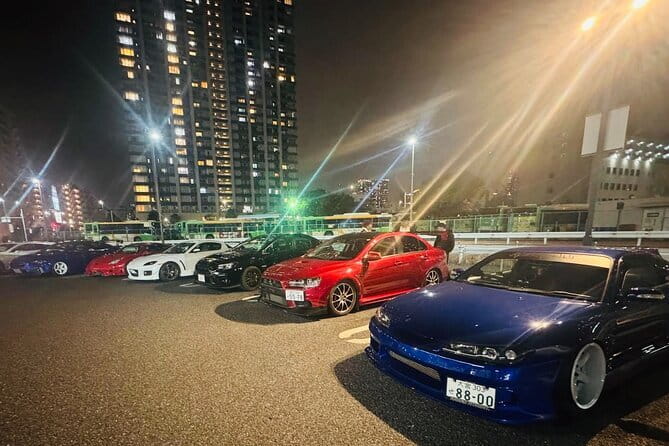
Daikoku Parking Area is the headline for a reason. This is where Tokyo’s modified-car scene shows off in a way that’s hard to replicate anywhere else. At night, the parking lanes and overhead lighting turn it into an informal gallery: cars up close, owners talking shop, and you watching build choices you’d never notice from a distance.
What I like about how this tour sets it up is the mix of structure and freedom. You’re guided in so you’re not standing around confused about where to go next. Then you get time to roam at your own pace, check hoods, look for details on aero and wheels, and take photos without feeling rushed every ten seconds.
You’ll also notice the tour doesn’t try to oversell you with fake “tourist” energy. The point is the scene itself: the volume of cars, the mix of styles, and the social rhythm of people greeting each other and showing off what they built. Even if you’re not a hardcore gearhead, it’s the kind of stop where you can just stand there and soak it up.
One more thing: this is a street-legal night experience, not a movie stunt. So think of Daikoku as the cultural peak, not a guarantee of uninterrupted thrills.
Rainbow Bridge and Tokyo Bay lights: the photo stop that feels like a soundtrack
After the car-meet time, the route shifts into city-night mode. You’ll get scenic nighttime views around Rainbow Bridge and Tokyo Bay, with the lights reflecting off water and glassy skyscrapers. This is where the tour earns its “Tokyo Drift” mood, because the driving setting is part of the experience.
From a practical standpoint, these views are best if you’re ready with a camera position plan. Ask your driver where the best angles tend to be, and don’t be shy about quick photo stops when the route allows it. The payoff is those skyline frames that feel like you’re driving through the backdrop of a music video.
The other payoff is mental. Tokyo at night is different. Street signs, elevated roadways, and neon storefronts all feel faster and louder. When you add a powerful JDM car atmosphere to it, the city stops being something you “see.” It becomes something you experience.
Toyosu Pit and the Autobacs-style stop: souvenirs, parts, and car talk
One stop is at Toyosu Pit, tied to an Autobacs-style car superstore experience. This is not just a random detour. It’s a chance to connect what you saw at Daikoku with what you can actually buy in Japan—models, branded merch, books, and car-related goods.
If you like cars, this store stop does two smart things:
- It breaks up the night so your brain can reset from pure visuals.
- It gives you a tangible way to take the theme home, even if you’re not buying big parts.
The timing matters here. You’re on a nighttime tour with a tight schedule overall, so this stop is your chance to grab small items, check out accessories, and ask questions while you’re in a car-obsessed environment. If you’re hoping to find specific merch, arrive ready to browse rather than trying to decide everything in two minutes.
Also, admission is listed as free for this stop, so you’re not stuck paying extra just to walk around.
Tokyo Tower in 30 minutes: iconic backdrop, short and sweet
Tokyo Tower gets you a compact 30-minute stop. That’s good, because it keeps the pace moving and protects the rest of the night’s momentum. You’re not paying for a full sightseeing day here—you’re collecting the big Tokyo postcard while your JDM night still feels like a night out.
A key detail: the tower’s admission ticket is not included. So treat this as a photo-and-view window, not a “go to the top” plan. If you do want to go inside or upgrade your view, plan for that cost on your own time.
Even just standing outside can be worth it. The tower is bright at night and easy to frame against the car scene. And since you’re coming off Rainbow Bridge and Bay, it feels like another chapter in the same visual story.



Shibuya Crossing by car: the famous intersection, minus the crowds
Shibuya Crossing is the kind of place you’ve likely seen a hundred times in photos and movies. The difference here is that it’s part of your driving night, not the main walking event.
You’ll have about 30 minutes in the Shibuya area. That’s enough time for a couple photos and a quick “I’m really here” moment, without turning your evening into a stamina test. Since the tour ends in Shibuya or continues to your hotel/Airbnb area, you’re not stuck trying to navigate public transit alone after an adrenaline-heavy night.
If you’ve never been to Shibuya, you’ll still get the core vibe: crosswalk energy, neon district atmosphere, and the sense that the city is moving even when you’re paused.
How the group size and flow affect your night
This tour caps at a maximum of 30 travelers. That’s not tiny, but it’s not a cattle-call either. In practice, what matters is how your group gets organized once everyone is together.
One real pattern you might notice: you could meet everyone in a designated space and then get grouped into smaller sets before being assigned to your driver. That means you’re not always in full control of who you’re paired with.
What you can control is your expectations. You’re here for:
- your driver’s route choices,
- your time at key stops,
- and the chance to experience Tokyo’s car culture in motion.
If you came expecting to be in perfect “movie sequence” timing, street life will remind you this is a real city. Traffic can change the pacing, and the meet scene has its own rhythm too.
Meet at Akihabara, then either end in Shibuya or at your hotel
The meeting point is FamilyMartJapan at 101-0022 Tokyo, Chiyoda City, Kanda Neribeichō, 3番地 富士ソフト秋葉原ビル 1F. It’s in the Akihabara area, and it’s listed as near public transportation.
At the end, the tour offers drop-off at your Hotel/Airbnb or customer places. If you’d rather be done at Shibuya, you can choose that option too.
This matters for value. A tour that dumps you somewhere inconvenient can eat time and energy. Here, the drop-off is part of the experience design, so you can keep the night moving without a second plan.
You’ll also get a mobile ticket, which is exactly what you want in a city where you may be bouncing between landmarks quickly.
Price and value: what $169.46 gets you (and why it can make sense)
At $169.46 per person for about 4 hours, this isn’t a budget activity. But the price isn’t only for sitting in a car.
You’re paying for:
- access and time at Daikoku Parking Area (entry is included),
- a guided route at night with scenic stops (Rainbow Bridge/Tokyo Bay, Tokyo Tower, Shibuya),
- and a driver who can connect you to JDM culture and answer questions.
When this kind of experience works, it’s because you’re buying time and context. You’re not trying to figure out where the meet is, how to time your visit, where photos will look best, or how to talk cars with people who know the scene.
It’s also a great use of an evening. Tokyo can feel overwhelming when you’re juggling transit, sights, and nightlife. This folds a specific interest—JDM culture—into one plan, with enough variety to keep it from feeling repetitive.
The only way it feels overpriced is if you mainly want a generic sightseeing drive. If you want a themed night around engines, photo moments, and car culture locations, it’s easier to justify.
Drivers, languages, and why the guide choice shapes everything
The driver support is a big part of what makes this tour feel personal. Drivers speak English, Japanese, Portuguese, and Spanish. On top of that, many guides act like fans first, instructors second. That tone makes it easier to ask questions even if your Japanese is basic.
You’ll see different names across the experience, like Sato, Marcelo, Hiroto, Ryo, Kobayashi, Kei, and others. The common thread is friendly communication and safety-focused driving.
Here’s what I’d take from those real guide styles:
- Some guides are great at guiding your attention, like telling you where to look at the meet.
- Others keep the mood high with music choices that match the theme. One driver even used driving music tied to the Tokyo Drift vibe.
- Some guides are extra careful with families or younger participants, checking in without killing the energy.
If you’re worried about a language gap, don’t overthink it. If needed, a simple workaround people used was Google Translate to keep the conversation going. With multilingual support built in, you usually won’t be stranded.
Speed expectations: adrenaline, but still Tokyo rules
Let’s talk about the elephant in the roadside neon. You’re not booking this to drift like a movie scene on a closed set. Street-legal driving comes with constraints: traffic, speed camera reality, and the simple fact that you’re in Tokyo.
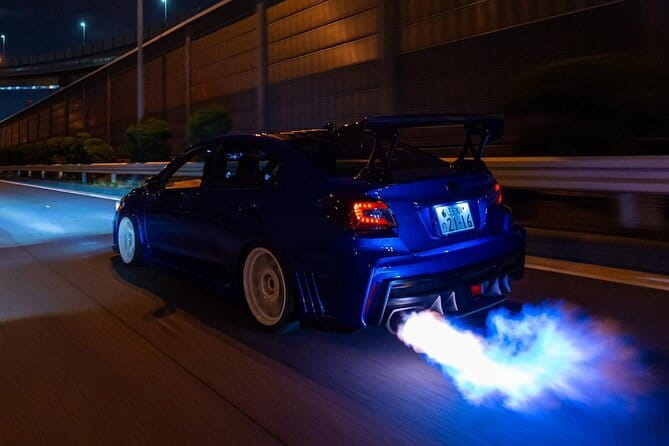
What you can expect is spirited driving and a fun pace. Several guides are described as keeping control, driving confidently, and making sure you feel safe while still having energy.
Also, the meet scene itself can be affected by how things are going. One account mentioned police attention leading to the meet being shut down shortly. That’s not something you can predict from the booking page, but it’s a reminder that Daikoku is a living scene, not a timed attraction.
So here’s the best way to protect your enjoyment: go in wanting a fast-feeling Tokyo night and real car culture access, not a guaranteed Hollywood stunt show.
Photo and question tips that actually help during the stops
This tour gives you multiple chances to capture the night. Your best move is to treat photos and questions like a two-part game.
- For photos: ask where to stand first. At Daikoku, a small shift in angle can mean a much cleaner background. At Tokyo Tower, you want your shot ready as soon as the car stops.
- For questions: ask about the car choices you’re seeing. Don’t just ask what’s fast. Ask what the owner changed and why. It’s usually where the real story lives.
- For conversations: if language is a struggle, keep questions short and use a translation app. It works, and it keeps things moving.
And if you’re doing this on a Friday or weekend, expect city timing to vary. The drive could feel slower early in the night and faster after you get onto more open stretches.
Should you book Fast & Furious Tokyo Drift 3?
Book it if you want a themed night in Tokyo where Daikoku Parking Area, night skyline views, and JDM car culture are the core of the plan. It’s a strong pick for car lovers, people who want an Instagram-worthy Tokyo night without doing a full multi-day itinerary, and anyone who likes chatting about cars with a friendly driver.
Pass on it or adjust expectations if you mainly want classic sightseeing or you’re expecting nonstop movie-level drifting. This is real Tokyo driving with real constraints. If you can accept that, you’ll likely enjoy the contrast: controlled excitement plus a genuine car-meet atmosphere.
FAQ
How long is the Fast & Furious Tokyo Drift 3 ride experience?
It runs for about 4 hours (approx.).
How much does the tour cost?
The price is $169.46 per person.
Where is the meeting point?
You meet at FamilyMartJapan, 101-0022 Tokyo, Chiyoda City, Kanda Neribeichō, 3番地 富士ソフト秋葉原ビル 1F.
Is Daikoku Parking Area entry included?
Yes. Daikoku PA entry is included, and the experience notes no entry fee for Daikoku PA.
What car will I ride in?
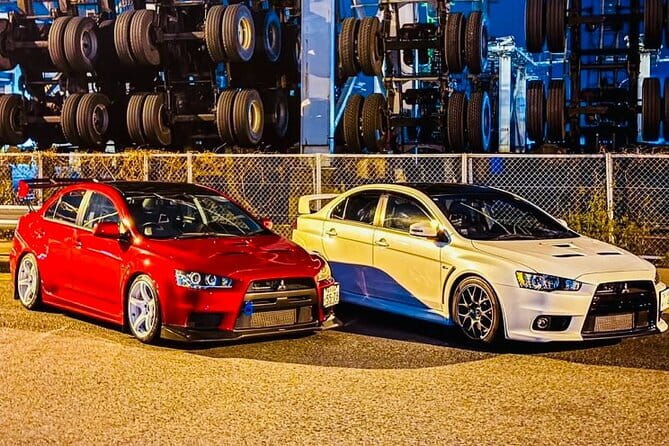
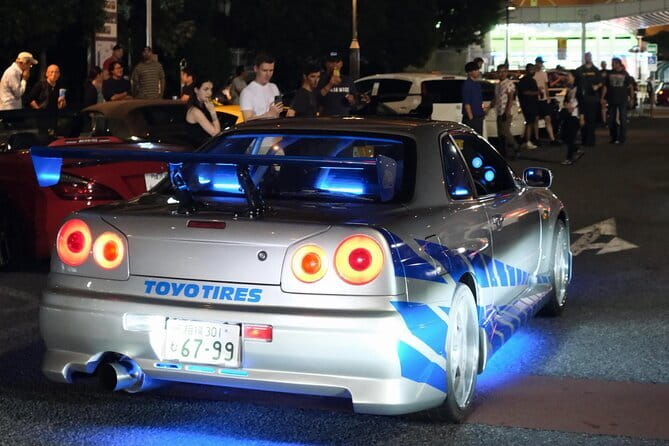
The experience may use high-performance JDM cars such as a Nissan Skyline GT-R 34 or Mitsubishi Lancer Evolution, depending on availability.
Does the tour include Tokyo Tower admission?
Tokyo Tower stop time is included, but the admission ticket is not included.
Do drivers speak English?
Yes. Drivers speak English and also Japanese, Portuguese, and Spanish.
What happens if weather is bad or I need to cancel?
The experience requires good weather. If it’s canceled due to poor weather, you’ll be offered a different date or a full refund. You can cancel for a full refund up to 24 hours before the start time.
More Tour Reviews in Tokyo



Fresh reviews from around Tokyo






Tokyo, compared.
 ★ 5.0Mt Fuji and Hakone 1-Day Bus Tour Return by Bullet TrainFrom $16326,383 reviews
 ★ 5.01-Day Tokyo Bus TourFrom $12914,250 reviews
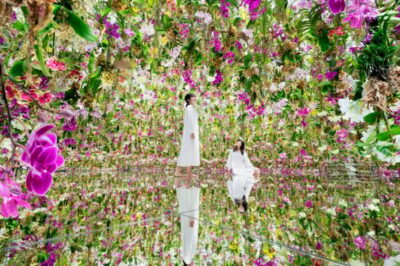 ★ 4.6teamLab Planets TOKYO Digital Art Museum Entry TicketFrom $259,779 reviews
 ★ 4.0Mt Fuji & Hakone Cruise, Drum Show Bullet Train 1 Day from TokyoFrom $1497,413 reviews
 ★ 5.0Shinjuku Food Tour (13 Dishes at 4 Local Eateries)From $866,603 reviews
 ★ 4.4Tokyo Mt Fuji 5th St & Hakone Cruise Bus Tour w/Bullet TrainFrom $1545,024 reviews
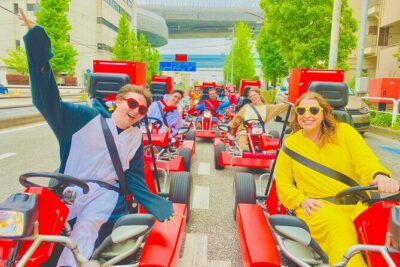 ★ 5.0Flagship 2-Hours Official Street Go-Kart Tour – Tokyo Bay ShopFrom $644,974 reviews
 ★ 4.5From Tokyo: Mount Fuji Full-Day Sightseeing TripFrom $684,970 reviews