
Asakusa is where old Tokyo still feels close to the ground, and this 3-hour walking tour is built to show you the headline sights without making you plan every step. I like the way it strings together Kaminarimon Gate and the shopping street of Nakamise-dori, then funnels you straight to the Sensō-ji complex through the Hōzomon Gate. You’ll also like the practical feel of the route: it moves from big landmarks to small cultural details like the Asakusa Sumo Club, then wraps with a fun shopping stop at Don Quijote.
One drawback to consider: the meeting point is specific, and a rideshare drop-off can be far off. If you arrive late or get dropped in the wrong spot, it’s easy to miss your guide—so rely on the meeting pin and the guide’s blue panda flag, not vibes.
In This Review
- Key highlights you’ll actually feel on the route
- Starting at Sumida Park: views before the walking grind
- Kaminarimon Gate and Nakamise-dori: the iconic red lantern walk
- Sensō-ji through the Hōzomon Gate: where the main hall draw happens
- Asakusa Shrine: the Buddhism–Shinto blend in plain sight
- Sumo culture at Asakusa Sumo Club: tradition as a living thing
- Don Quijote: souvenirs and harmless chaos for the last stretch
- Price and value: why $21 can make sense
- The Spanish live guide: helpful context without language drama
- Pace, weather, and what to bring for a smooth 3 hours
- Logistics that can make or break the day
- Who should book this Asakusa walk
- Should you book the Tokyo: Asakusa Walking Tour?
- FAQ
- How long is the Tokyo: Asakusa Walking Tour?
- What is the price per person?
- Where is the meeting point, and how do I find the guide?
- What language is the live tour guide?
- Is the tour wheelchair accessible?
- Are admissions to attractions included?
- What should I bring for the tour?
- Can I cancel for a full refund, and can I pay later?
Key highlights you’ll actually feel on the route
- Sumida Park start for river views and Tokyo Skytree in the background before you hit the main sights
- Kaminarimon Gate crossing under the big red lantern moment you came for
- Nakamise-dori strolling with old-school shopfronts and traditional sweets stalls
- Sensō-ji access via Hōzomon Gate to the Main Hall area of Tokyo’s oldest Buddhist shrine
- Asakusa Shrine + the Buddhism–Shinto link tied to the temple founders
- Asakusa Sumo Club pass-by + Don Quijote for culture, then practical souvenirs and quick fun
More mornings around Senso-ji and the old town
- Tokyo: Japanese Dance Cabaret Theater Asakusa-Kaguwa Ticket★ 4.8 · 2,270 reviews
- Tokyo: Asakusa Walking Tour with Sensoji Temple Visit★ 4.8 · 1,583 reviews
- Tokyo Asakusa Rickshaw Tour★ 5.0 · 1,375 reviews
Starting at Sumida Park: views before the walking grind
The tour kicks off at Sumida Park, with the Sumida River close by and Tokyo Skytree visible from the area. This is more than a pretty warm-up. It helps you orient fast—so when the route gets dense around the temple area, you’re not trying to guess where you are on a map.
It also sets the tone for the day: you start in open space, then move toward the classic Asakusa cluster of landmarks and shopping. If you’ve got photos in mind, I’d plan to look up early for Skytree angles before you end up surrounded by signage and umbrellas.
Kaminarimon Gate and Nakamise-dori: the iconic red lantern walk
Next comes the moment almost everyone pictures: crossing the Kaminarimon Gate with that famous red lantern. In places like this, the gate isn’t just decoration—it’s a landmark that tells you you’re entering the temple district proper. Crossing it feels like a line from modern Tokyo into the older rhythm.
From there you’ll stroll along Nakamise-dori. This street is lined with century-old shops and stalls selling traditional sweets, so it’s a mix of sight-seeing and snack-hunting. Even if you don’t buy anything, you’ll get a sense of what Asakusa trade looks like: snack counters, small gifts, and the kind of storefronts that still feel local instead of generic.
Practical tip: wear shoes you can stay in for hours. Nakamise-dori can slow you down with crowds, and the tour is only 3 hours total—so you’ll feel every extra minute.
Sensō-ji through the Hōzomon Gate: where the main hall draw happens
The route brings you to the Hōzomon Gate, the entrance to the Main Hall of Sensō-ji. Sensō-ji is described as the oldest and most visited Buddhist shrine in Tokyo, and that reputation is exactly what you’ll sense right away. The space pulls people in, and the energy can be intense compared with the park start.
What I like about structuring this portion as an entry via the Hōzomon Gate is simple: you’re not just wandering around the grounds. You’re guided to the key entrance point that frames how you experience the shrine area—how you approach, where your eyes go first, and how you orient on arrival.
A note on expectations: in temple districts, the main hall area can be photo-friendly one second and traffic-heavy the next. Keep your camera ready, but don’t get stuck. The tour is designed as a sequence, so you’ll want to keep moving to get the full experience.
Asakusa Shrine: the Buddhism–Shinto blend in plain sight
After Sensō-ji, you’ll visit Asakusa Shrine, dedicated to the founders of the temple. This stop matters because it explains the dual cultural layer that Tokyo does well. The shrine is described as a symbol of the fusion between Buddhism and Shintoism, and you can feel that theme in the way these spaces sit side by side.
If you’re the type who likes meaning behind the sights, this is where the tour earns its place. You’re not only collecting landmarks; you’re seeing how different religious traditions share space and story.
Timing-wise, this is also a good mid-to-late stop because it gives you a different kind of atmosphere from the main temple entry crowd. It’s still part of the Asakusa core, but the focus shifts from the big “main hall moment” to a more interpretive stop.
Tokyo at walking pace, a few more ways
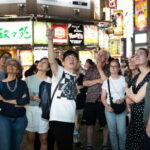
Sumo culture at Asakusa Sumo Club: tradition as a living thing
One of the fun parts of this tour is that it doesn’t end at shopping. You pass by the Asakusa Sumo Club, which keeps this Japanese tradition alive. Even if you’re not a hardcore sumo fan, the value here is cultural texture. Sumo in Japan isn’t only sport; it’s ceremony, identity, and community visibility.
A pass-by stop is also honest and efficient. You don’t lose your whole tour to one indoor attraction, and you still get the signal: Asakusa isn’t frozen in time. It’s traditional practices continuing in daily life and local spaces.
If you want to buy something related to sumo later, you may find you’re better at spotting the connection once you’ve seen this cultural reference point.
Don Quijote: souvenirs and harmless chaos for the last stretch
To close, the tour passes by Don Quijote, one of the most popular shopping and curiosity stores in Japan. This is a smart finale for two reasons.
First, it’s where you can quickly turn your sightseeing into practical souvenirs. Second, it’s where the experience can become lighter. You’ve spent time in temple gates and shrine areas; now you’re free to browse without the pressure of “what do I do here?”
I also like using a store like this as a wrap-up because you control your pace. If you need snacks, gifts, or small last-minute items, this kind of stop lets you move at your comfort level.
Price and value: why $21 can make sense
At $21 per person for about 3 hours, the value comes from two things: focus and included entry costs where fees apply.
This tour includes admission to sites that require a ticket purchase and covers admissions for attractions that require tickets (the description mentions examples like temples/museums and even Imperial Gardens-type venues). That matters because in Japan, fees can pop up in unexpected places. You don’t want to spend your mental energy checking which stop costs what when you’re already walking through a landmark area.
Also, transportation between attractions is optional private transportation at extra cost. That tells you the core of the experience is walk-based and planned to fit the time window. In practice, that can be great if you enjoy moving and seeing things in sequence. If you’re someone who hates crowds and prefers minimal walking, you might feel more “effort per minute” than on a ride-heavy tour.
Balanced take: $21 is budget-friendly for an organized route with a guide and admission coverage. The main thing that can change your satisfaction is whether the meeting goes smoothly and whether you’re comfortable with a compact 3-hour pacing.
The Spanish live guide: helpful context without language drama
The tour is led by a live guide in Spanish. That’s useful if you want explanations while you walk—especially around the meaning of specific shrine/temple elements. You might also see some content in its original language, which is common for Japanese heritage sites and signage.
So here’s the practical expectation: you’ll still get the core story and route guidance, but not every word will be translated perfectly. If you’re traveling with basic English only, you’ll still likely follow the landmarks because they’re physical and obvious. But Spanish is a real advantage if you’re comfortable with it.
Pace, weather, and what to bring for a smooth 3 hours
This tour runs regardless of weather. That means you should plan for rain. Bring an umbrella or rain gear, plus comfortable clothes and comfortable shoes. The route is outdoors-based and concentrated, so wet streets and crowded walkways can slow you down.
No smoking and no drones are stated as restrictions. Alcohol and drugs are also not allowed. Keep it simple: water, a light rain layer, and shoes you trust.
One small but important reality: temple areas often mean lots of walking in sandals-to-sneakers territory. If your shoes aren’t comfortable, 3 hours can start to feel longer fast.
Logistics that can make or break the day
The meeting point is at Sumida Park area, using coordinates 35.7107915, 139.7979734. The guide will be carrying a blue flag with a panda.
This is where I’d be extra careful. One documented issue involved difficulty finding the tour person and trouble when a rideshare drop-off didn’t line up with the meeting spot. That’s a good reminder that in a crowded tourist area, “nearby” can still be too far.
My advice:
- Arrive a bit early so you’re not searching while others are moving on.
- Use the panda flag as your primary visual cue.
- Save the meeting coordinates offline or in your maps app so you can self-locate fast.
If you do that, you reduce the chance of the most frustrating travel problem: missing the start and then trying to catch up in a busy area.
Who should book this Asakusa walk
This tour is a strong fit if you want a structured way to see the most famous Asakusa landmarks in a short time window. It’s also ideal if you like a mix of religious sites and local culture, with a final sweep through a shopping store for souvenirs.
You’ll especially enjoy it if:
- You’re visiting Tokyo for the first time and want a hit list that still feels connected
- You prefer walking routes where you learn the layout as you go
- You want a Spanish guide to add context around Sensō-ji and Asakusa Shrine
You might reconsider if:
- You strongly dislike crowds or standing in entry areas
- You want a slow, flexible pace with lots of downtime
- You know you’ll have trouble finding meeting points and prefer tours that include tighter pickup logistics
Should you book the Tokyo: Asakusa Walking Tour?
If your priority is a practical, landmark-first Asakusa route that takes about 3 hours, this looks like good value for $21—especially because admission costs where tickets apply are covered and the guide keeps you moving between the key points. The best part of booking is that you won’t have to figure out how the sights connect; the route does that for you.
The main reason to pause is simple: meeting point reliability matters. If you’re the type who double-checks locations and shows up early, you’re likely to have a smoother experience. If you tend to rely on rideshare drop-offs without verifying the exact spot, build in extra time.
If that logistics part is under control, this is a solid way to see Asakusa’s biggest hits—Kaminarimon, Nakamise-dori, Sensō-ji, Asakusa Shrine, plus a culture-and-shopping ending that keeps the day fun.
FAQ
How long is the Tokyo: Asakusa Walking Tour?
The tour lasts about 3 hours.
What is the price per person?
It costs $21 per person.
Where is the meeting point, and how do I find the guide?
You meet at the Sumida Park area (35.7107915, 139.7979734). The guide will be holding a blue flag with a panda.
What language is the live tour guide?
The tour guide speaks Spanish.
Is the tour wheelchair accessible?
Yes, it is listed as wheelchair accessible.
Are admissions to attractions included?
Yes. The tour includes admission to sites that require a ticket purchase, including places such as temples and other venues that have entry fees.
What should I bring for the tour?
Wear comfortable shoes and comfortable clothes. Since the tour runs in all weather, bring an umbrella or rain gear if rain is likely.
Can I cancel for a full refund, and can I pay later?
Yes. You can cancel up to 24 hours in advance for a full refund, and you can reserve now and pay later.
More Tours in Tokyo





More Tour Reviews in Tokyo




Around Senso-ji: More Asakusa Picks


Fresh reviews from around Tokyo






Asakusa Tours, compared.
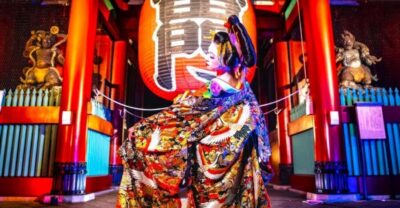 ★ 4.8Japanese Dance Cabaret Theater Asakusa-Kaguwa TicketFrom $492,270 reviews
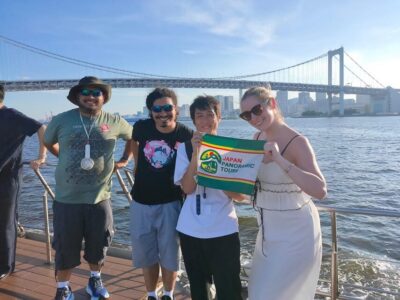 ★ 4.7Meiji Shrine, Asakusa, Skytree Bus Tour and CruiseFrom $1221,986 reviews
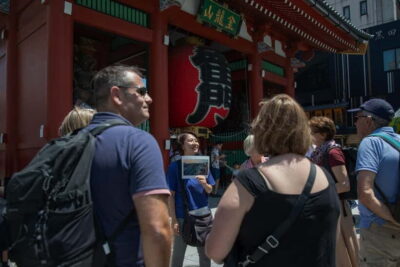 ★ 4.8Asakusa Walking Tour with Sensoji Temple VisitFrom $221,583 reviews
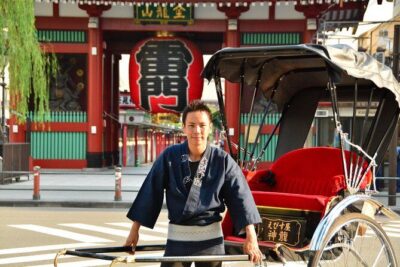 ★ 5.0Tokyo Asakusa Rickshaw TourFrom $421,375 reviews
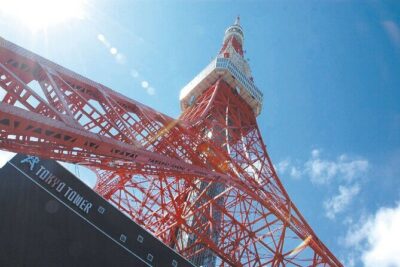 ★ 4.5Tokyo Panoramic 1 Day: Meiji Shrine, Asakusa, Odaiba and SKYTREE®From $851,222 reviews
 ★ 4.8Samurai Ninja Museum Asakusa: Samurai Sword Lesson & TourFrom $63306 reviews
Asakusa Sightseeing Tour by RickshawFrom $35195 reviews
Asakusa Kimono Dressing and Matcha ExperienceFrom $56173 reviews
★ 4.8Samurai Ninja Museum Asakusa: Samurai Sword Lesson & TourFrom $63306 reviews
Asakusa Sightseeing Tour by RickshawFrom $35195 reviews
Asakusa Kimono Dressing and Matcha ExperienceFrom $56173 reviews
Browse the lists this tour appears in