
Reviewed · MT FUJI DAY TRIPS
Mt. Fuji and Hakone Day Trip From Tokyo with Bullet Train Option
Steam, views, and speed—one day. This Mt. Fuji and Hakone tour is built for people who want the big sights without doing the math on trains and transfers. You start at Shinjuku, ride out in an air-conditioned coach with free Wi-Fi, then hit Mt. Fuji 5th Station, Owakudani, the Hakone Ropeway, and a pirate-ship cruise on Lake Ashi before returning to Tokyo.
I especially like how the schedule packs in the highlights while still giving you small windows to wander and take photos. The second win is the way guides show up as the difference-maker: you’ll see name after name like Happy, Ai, Sunny, Emi, and Kenji (Ken) in feedback, and the consistent theme is clear, upbeat explanations during the bus rides.
One thing to consider up front: it’s a long day, and Fuji visibility depends on weather. If fog rolls in, you still get the tour, but you may see much less than the postcard view.
In This Review
- Key points worth knowing
- Why This Fuji and Hakone Day Trip Works From Tokyo
- Shinjuku Meeting Point: The Easy Landmark for a 8:30 Start
- Coach With Wi-Fi vs Bullet Train Return: Pick Your Kind of Speed
- Stop 1: Robert Indiana Sculpture Love as Your Photo-and-Start Button
- Stop 2: Mt. Fuji 5th Station (and What Happens When Roads Don’t Cooperate)
- Stop 3: Owakudani Valley Steam Vents and Sulfur-Air Reality
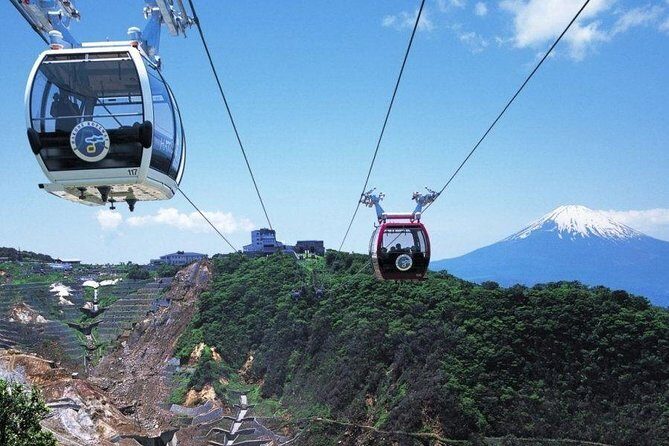
- Stop 4: Hakone Ropeway Ride From Owakudani to Sounzan
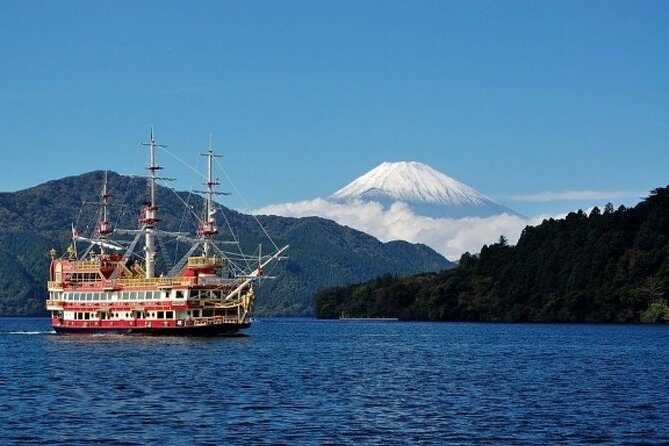
- Stop 5: Lake Ashi Pirate-Themed Cruise for the Best Wind-Down
- Stop 6 and 7: Odawara Split-Point and a Quick Final Photo Stop
- Lunch, Buses, and the Real Pace of an 11-Hour Day
- Guides Are the Difference: From Tiako to Happy, Ai, Sunny, and Kenji
- When Weather Hits: No Refunds, But the Day Still Keeps Moving
- Value Check: Is $97.52 a Good Deal?
- Should You Book This Mt. Fuji and Hakone Day Trip?
- FAQ
- How long is the Mt. Fuji and Hakone day trip?
- Where do I meet the tour in Tokyo?
- What time does the tour depart?
- Is lunch included?
- What parts of the tour have tickets included?
- Do I get Wi-Fi on the bus?
- If I choose bullet train return, do I get reserved seats?
- What if Mt. Fuji is not visible due to fog or bad weather?
- What happens if the Ropeway or pirate ship cannot operate?
- What if I miss my bullet train after the tour?
Key points worth knowing
A guided route through Mt. Fuji, Owakudani, Hakone Ropeway, and Lake Ashi in one day
Free Wi-Fi on the coach plus an option for faster bullet-train return
Owakudani steam and sulfur valley stops that feel hands-on, not just scenic
Lake Ashi cruise plus Hakone Ropeway tickets included in the main flow
Guides are often praised by name for keeping the day organized and informative
Weather can reduce Mt. Fuji views, and you should plan for that risk
Other routes to the mountain, compared
- Mt Fuji & Hakone Cruise, Drum Show Bullet Train 1 Day from Tokyo★ 4.0 · 7,413 reviews
- Tokyo Mt Fuji 5th St & Hakone Cruise Bus Tour w/Bullet Train★ 4.4 · 5,024 reviews
- From Tokyo: Mount Fuji Full-Day Sightseeing Trip★ 4.5 · 4,970 reviews
Why This Fuji and Hakone Day Trip Works From Tokyo
This tour is attractive if you like structure. You get a clear plan, a set meeting point in Shinjuku, and a guide to handle the moving parts between mountain and lake.
The best part is the variety. You’ll do high-altitude views at Mt. Fuji 5th Station, then switch gears to a geothermal zone at Owakudani, then glide by ropeway and finally slow down on the water. It’s the kind of day that feels like two different trips welded into one.
I also appreciate that you’re not stuck staring at a bus seat for the entire day. Even though you will travel, the stops are built around specific experiences, like the Hakone Ropeway segment and the Lake Ashi cruise, rather than only look-at-it-from-a-distance moments.
Shinjuku Meeting Point: The Easy Landmark for a 8:30 Start
You’ll meet at the Robert Indiana sculpture labeled Love in central Shinjuku (6-chōme-5-1 Nishishinjuku). Staff are waiting with a blue flag with the HIS logo, so you can get your bearings fast.
The start time is 8:30 am, and the tour departs on schedule unless you’re told otherwise by the operator. That means you should plan to arrive a bit early, especially if your hotel is far from Shinjuku.
Practical tip: if you’re choosing a bullet train return, still plan your day around the group schedule. Some of the stress in feedback comes at the end, when people are navigating Tokyo stations and transfers after the tour finishes.
Coach With Wi-Fi vs Bullet Train Return: Pick Your Kind of Speed
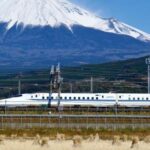
This is one of the main value levers. You can return to Tokyo by coach, or you can switch to a bullet train from Odawara to Tokyo Station to save time.
If you choose the bullet train option, you’re given a non-reserved seat ticket. The schedule runs frequently, with about two trains per hour on average, so you’re not locked into one single departure. Still, you’ll want to be ready and follow the guide’s timing so you don’t miss your intended service.
Important nuance: the tour guide will not board the bullet train from Odawara to Tokyo. The guide will explain how to get back to your hotel from Tokyo Station before you go. Some guests find this part smooth; others found the connection confusing. So if you’re the type who likes clear instructions, show up with a screenshot of your route and be ready to ask questions once you’re in the station.
If you choose to return by coach, you avoid the station-transfer headache. You also get the simpler ending: the group gets back to Shinjuku West Exit (tour end location differs by option).
Stop 1: Robert Indiana Sculpture Love as Your Photo-and-Start Button
The first stop is a quick one: the Robert Indiana sculpture with the Love design. It’s free, and it’s only about 15 minutes.
Why it matters: it gives you a recognizable “anchor” at the start of a tour day that can otherwise feel like a blur. Also, it’s a fun, modern Tokyo contrast before you go to the more dramatic scenery of Mt. Fuji and Hakone.
This stop is not about deep sightseeing. Think of it as: meet, group-check, quick photos, and then you’re on your way.
More Hakone loops, ropeways and lake crossings

Stop 2: Mt. Fuji 5th Station (and What Happens When Roads Don’t Cooperate)
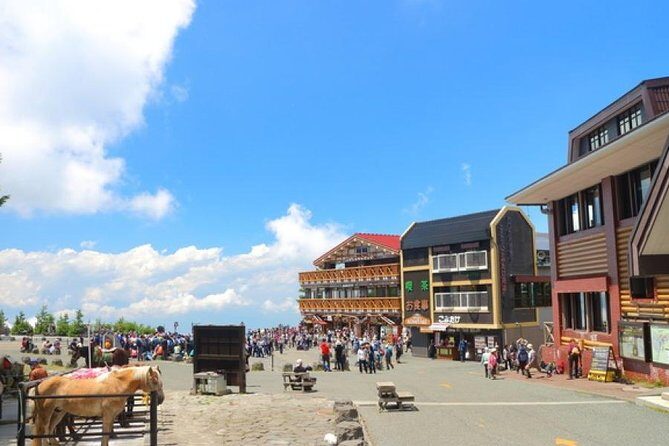
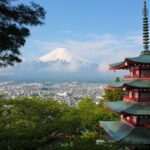
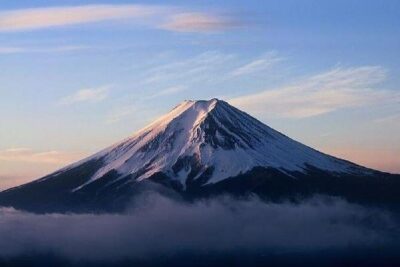
Mt. Fuji 5th Station is the big name stop. You get roughly 30 minutes, with panoramic views if the weather’s cooperative. The spiritual tone is real here too, with the area described as sacred.
The tour is flexible when road access or weather blocks the 5th Station. If they can’t get there, you’ll visit the highest station possible. There are also fallback options mentioned, such as stopping at the Fuji World Heritage Center or sightseeing at Fuji 1st to 4th Station depending on conditions.
Here’s the practical truth: 30 minutes is not a long time, so plan to move efficiently. Get your photos early if visibility is good, and don’t wait until the end to walk around. If clouds roll in, you want to already have what you came for.
Weather warning (you should take this seriously): Mt. Fuji can be hidden by fog or rain, and the tour is not cancelled or refunded for visibility issues. In other words, treat the Mt. Fuji view as a bonus, not a guarantee.
Stop 3: Owakudani Valley Steam Vents and Sulfur-Air Reality
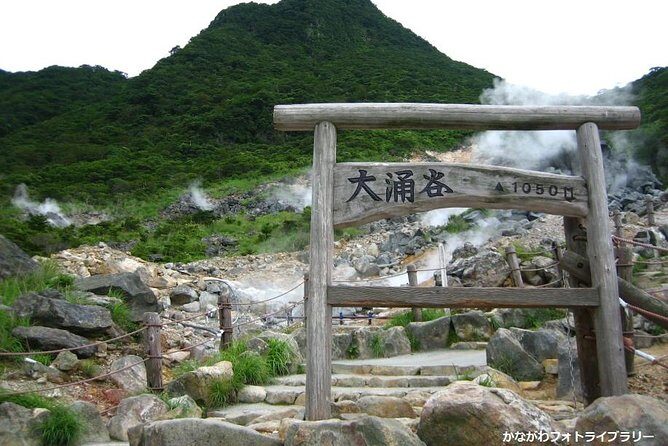
Owakudani Valley is one of the most memorable parts of the day because it’s not subtle. You’ll see geothermal steam and fumaroles, and the guide explains the geothermal landscape before you board onward transport.
You get about 30 minutes here. That’s enough time to walk the main areas, take photos, and absorb the weird-and-wonderful atmosphere.
A note on comfort: sulfur-rich air isn’t “cute,” but it’s part of why Owakudani is worth doing. Wear shoes that handle uneven surfaces and don’t expect the air to smell like a fresh mountain brochure.
If you’re traveling with people who want photos that look different from Tokyo, Owakudani is where you get that “how is this real?” feeling.
Stop 4: Hakone Ropeway Ride From Owakudani to Sounzan
The Hakone Ropeway is included, and the ride takes about 25 minutes. You’ll glide above the volcanic area, with views of the steaming vents and dramatic terrain when weather cooperates.
This stop is usually a highlight, and it often shows up in feedback as a favorite experience, especially when skies are clear. But weather and timing do matter: one review described a switch in ropeway systems that created a long wait, and another mentioned issues tied to windy conditions.
So here’s how I’d handle it if you’re aiming to have a smooth day: keep your buffer tolerance high. The ropeway area can become line-heavy during peak times, and the tour may adjust connections to keep things moving.
Stop 5: Lake Ashi Pirate-Themed Cruise for the Best Wind-Down
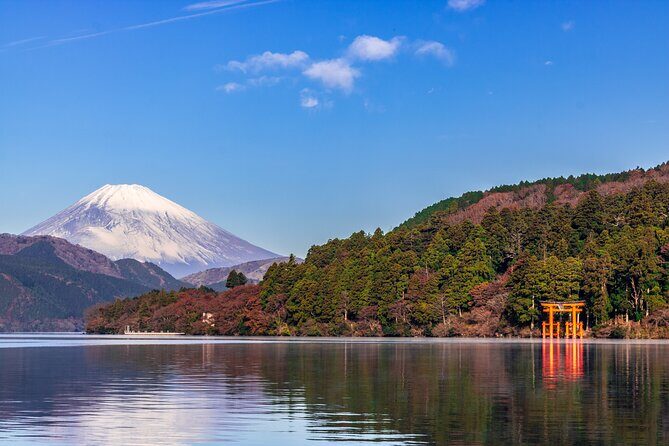
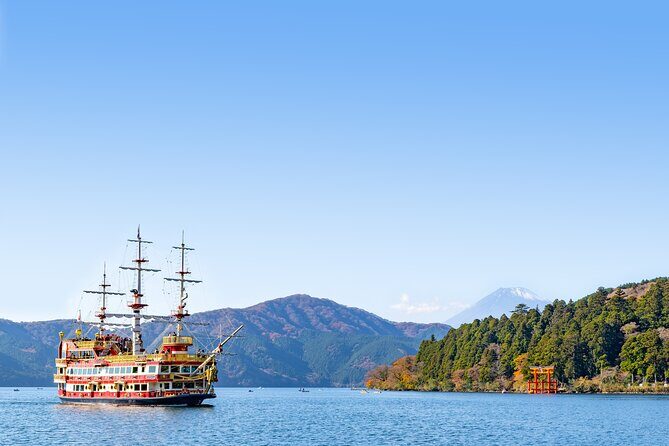
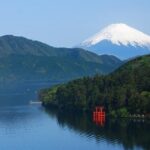
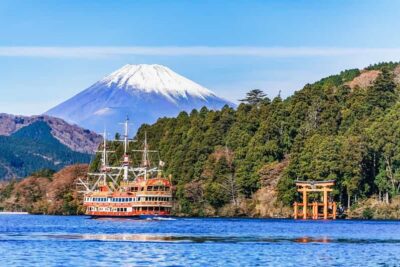
After the ropeway, you head to Lake Ashinoko for a pirate-themed cruise. The ticket is included, and the ride is about 30 minutes.
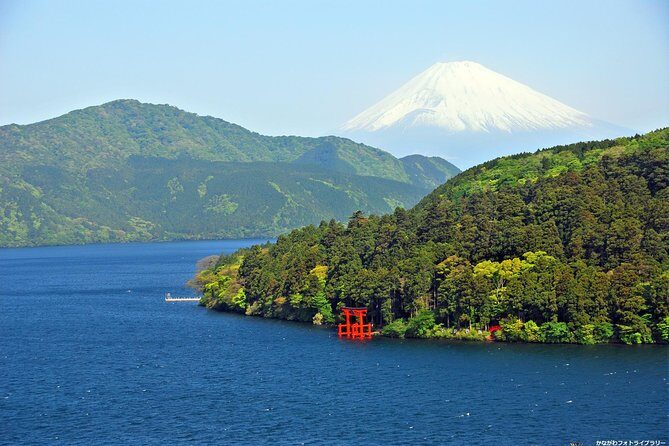
This is where the tour slows down. Lake time gives you a break from climbing and queuing, and if the day is clear, Mt. Fuji can appear from behind the hills when you’re out on the water deck.
Two practical notes:
- Wind can affect comfort on the boat. Pack accordingly even in warm months.
- Capacity can vary. One review flagged overcrowding on the pirate ship, so don’t be shocked if you feel shoulder-to-shoulder at busy times.
Still, when it works, it’s the kind of scenery that makes the whole day feel worth it. You go from steam vents to water views, and the contrast is what makes the itinerary feel like a whole arc.
Stop 6 and 7: Odawara Split-Point and a Quick Final Photo Stop
Around the end, the tour handles the return flow based on your chosen option.
If you’re returning by bullet train, the group splits at Odawara Station Tourist Information Center (about 10 minutes). That’s where bullet train passengers go their own way.
If you’re returning by coach, the end includes a quick stop at Mode Gakuen Cocoon Tower (about 10 minutes) and then the tour ends at Shinjuku West Exit.
These final stops are short. Their main role is to help the operator control timing and movement.
Lunch, Buses, and the Real Pace of an 11-Hour Day
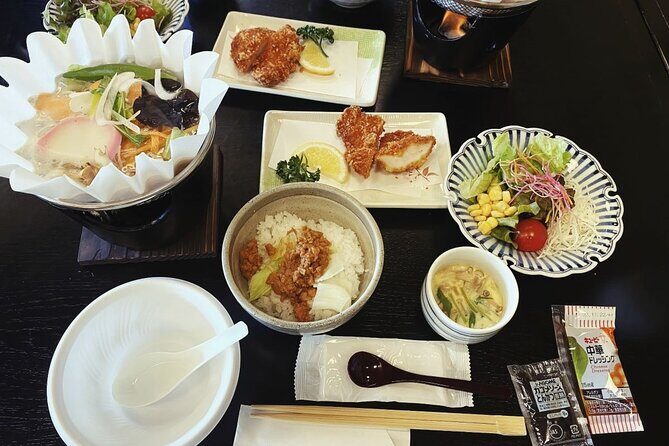
Lunch is optional in the booking, and if you select +Lunch, you get a Japanese-style lunch included. Reviews often describe a buffet-style setup and mention it being decent or good, but there are also a few unhappy notes about lunch quality and the dining environment.
Here’s the takeaway: if food matters a lot to your day, consider how you’ll feel if lunch is only “fine.” The tour’s value is more about the combined sightseeing package than about culinary artistry.
Also, even with multiple stops, this is still an 11-hour tour (approx.). If you’re hoping for a light, low-effort day, you might feel the “long day on the move” side of things. One review basically said the bus time felt heavy early in the day, even if the later ropeway and cruise parts improved the experience.
If you don’t pick the lunch option, you should plan ahead. The tour data suggests lunch places may not be available in time gaps.
Guides Are the Difference: From Tiako to Happy, Ai, Sunny, and Kenji
The strongest theme in the feedback is the guide. You’ll see many names praised for engaging delivery, organization, and helpful handling of the group.
Examples from the feedback include:
- Happy, noted for strong English and extra touches like an origami lesson
- Ai, praised for being informed, patient, and empathetic
- Sunny, praised for being informative about the surrounding sites
- Kenji (Ken), praised for professionalism during challenges
- Rino and Yuka, praised for keeping the group engaged and on schedule
- Emi, praised for being friendly and guiding the day well
- Harry and Shun, praised for good English and an enjoyable pace
This matters because a tour like this is partly timing and partly “making sense of what you’re seeing.” When the guide can explain Owakudani steam or the logic of the stops, you’ll get more satisfaction from the time you spend between locations.
And yes, even when the itinerary shifts because of weather or lines, a good guide keeps it from feeling like chaos.
When Weather Hits: No Refunds, But the Day Still Keeps Moving
Mt. Fuji visibility is the big weather variable. Fog and clouds can wipe out the view, and there’s no promise of seeing it clearly. The tour won’t cancel or issue refunds for weather-related visibility problems.
The operator may also adjust the day if ropeway or the pirate ship can’t operate. In that case, you’ll be guided to alternative destinations such as other ropeway/boat options around the Hakone area or nearby scenic stops.
This is the moment where you decide what kind of traveler you are:
- If you want a guaranteed Mt. Fuji postcard view, this isn’t the strictest bet.
- If you want a guided day full of unique places even when the view changes, you’re in the right lane.
Either way, bring flexible expectations. A clear day can feel like a gift. A gray day can still feel like a meaningful geothermal and lake excursion.
Value Check: Is $97.52 a Good Deal?
At $97.52 per person, the value is mostly about consolidation: you’re bundling multiple paid segments, guided narration, and transport out of Tokyo for one set price.
What you’re getting in the core flow includes the Hakone Ropeway segment and the Lake Ashi cruise. Both are major “activity costs” compared to simply going on your own and buying tickets one by one.
Add in the free Wi-Fi coach, an English-speaking tour conductor, and all fees and taxes. If you’d otherwise spend time coordinating routes across Mt. Fuji and Hakone, this package can feel like buying time and reducing stress.
The best value comes when:
- you’re traveling as a group or with family who benefit from a fixed schedule
- you want less planning and more guided movement
- you catch at least some clear views of Mt. Fuji
The value dips when you get a gray weather day and the stops feel short, because your “what I wanted most” moment might be reduced.
Should You Book This Mt. Fuji and Hakone Day Trip?
I’d book this tour if you want a structured, guided taste of Mt. Fuji and Hakone without doing the heavy logistics yourself. It’s especially appealing if you like geothermal scenery (Owakudani), want a signature ropeway ride, and want a Lake Ashi cruise that breaks up the day.
Skip it or choose your expectations carefully if you’re very weather-dependent. When visibility drops, Mt. Fuji can be hidden, and there are no refunds for that. Also, know that it’s a long day with limited time at each major stop.
If you care about the smoothest possible ending, consider how comfortable you are with station navigation after Odawara. Some people handle the bullet train transfer calmly; others found the Tokyo-to-Shinjuku connection confusing. If you’re easygoing and follow the instructions closely, you’ll likely be fine.
Bottom line: this is a strong “big sights in one shot” option, with guides doing a lot of the heavy lifting when conditions are imperfect.
FAQ
How long is the Mt. Fuji and Hakone day trip?
The tour runs for about 11 hours (approx.), with the return to Shinjuku around 19:30, depending on traffic.
Where do I meet the tour in Tokyo?
You meet at the Robert Indiana Sculpture labeled Love in Shinjuku, at 6-chōme-5-1 Nishishinjuku, Shinjuku City, Tokyo 160-0023, Japan.
What time does the tour depart?
The tour starts at 8:30 am.
Is lunch included?
Lunch is included only if you select the +Lunch option. Without the lunch option, you should plan for your own lunch since lunch places may not be available.
What parts of the tour have tickets included?
The Hakone Ropeway and the Lake Ashi pirate-themed cruise include admission tickets in the tour. Other listed stops have free admission tickets.
Do I get Wi-Fi on the bus?
Yes. The coach includes free Wi-Fi.
If I choose bullet train return, do I get reserved seats?
No. You receive a non-reserved seat ticket for the bullet train from Odawara to Tokyo.
What if Mt. Fuji is not visible due to fog or bad weather?
The tour will not be cancelled and there will be no refund for weather-related visibility issues. The schedule continues unless you are notified otherwise.
What happens if the Ropeway or pirate ship cannot operate?
If they can’t operate, the tour will be guided to alternative destinations. The tour will not be cancelled and refunds will not be issued for this reason.
What if I miss my bullet train after the tour?
If you miss your bullet train after disembarking at Odawara due to a delay, you won’t receive a refund. You should take the next train using the non-reserved section. Make sure you choose the bullet train departing from Odawara Station.
More Tour Reviews in Tokyo






Hakone, Three More Ways
The Fuji Shortlist: Other Days Out to the Mountain


Fresh reviews from around Tokyo






Mt Fuji Day Trips, compared.
 ★ 4.0Mt Fuji & Hakone Cruise, Drum Show Bullet Train 1 Day from TokyoFrom $1497,413 reviews
 ★ 4.4Tokyo Mt Fuji 5th St & Hakone Cruise Bus Tour w/Bullet TrainFrom $1545,024 reviews
 ★ 4.5From Tokyo: Mount Fuji Full-Day Sightseeing TripFrom $684,970 reviews
 ★ 4.7Mt. Fuji Tour, Hakone Ropeway, Owakudani, Lake AshiFrom $544,002 reviews
 ★ 5.0Private Tour to Mt. Fuji and Hakone (Fully Licenced Operator)From $4971,910 reviews
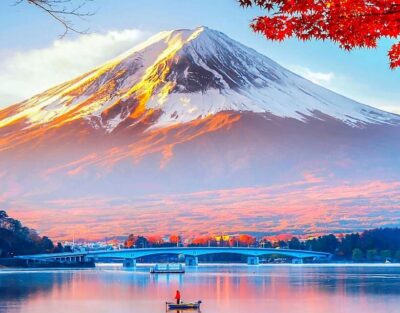 ★ 4.9Mount Fuji Full-Day Private Tour from Tokyo (Customizable)From $3931,470 reviews
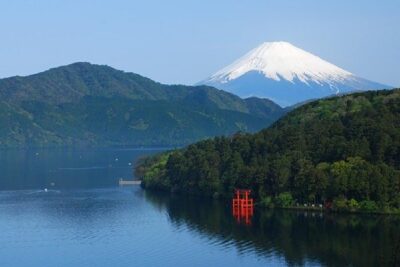 ★ 4.0Mt Fuji & Hakone Cruise, Drum Show Bus 1 Day from TokyoFrom $1221,287 reviews
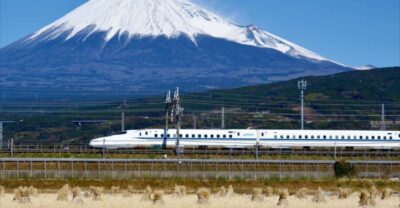 ★ 4.2From Tokyo: Mt. Fuji & Hakone Tour w/ Return by Bullet TrainFrom $1171,278 reviews
Browse the lists this tour appears in