
Reviewed · ASAKUSA TOURS
Asakusa Night Evening Walking Tour with English-Speaking Guide
Tokyo calms down after dark. This short walk helps you see Asakusa’s famous sights with context, not just photos, while the area feels calmer in the evening. I like that you hit Kaminarimon Gate and Sensō-ji Temple under warm nighttime lights, and an English-speaking guide adds the why behind what you’re looking at.
My second big win is practical timing: you get the highlights fast, so it’s a great fit before dinner. One thing to consider is the 6 PM cutoff for parts of Sensō-ji, so if you’re aiming for late evening, plan to be there with some time in hand.
In This Review
- Key Highlights You Should Care About
- Asakusa at Night: Why This 1-Hour Stroll Works
- Meeting Point by Kaminarimon: Easy Start, Clear Finish
- Kaminarimon Gate and Nakamise Street After Dark
- Sensō-ji Temple: Seeing the Famous Place Without the Day-Trip Rush
- Asakusa Shrine: A Nearby Stop That Adds Meaning
- Hanayashikidori: Street Life Near the Old Amusement Park
- Hoppy Street: Your Built-In Jump to Izakaya Dinner
- English-Speaking Guides Like Takumi and Mio: What You Gain From a Story
- Price and Value: Is $34.29 Worth It?
- What to Bring and How to Time Your Evening
- Should You Book This Asakusa Night Walk?
- FAQ
- How long is the Asakusa night walking tour?
- How much does the tour cost?
- Is food included in the tour price?
- What’s the group size?
- What places do we visit during the walk?
- Does the tour include admission tickets?
- Where do I meet and where does the tour end?
- Is the tour refundable if plans change?
Key Highlights You Should Care About
- English-speaking guides who explain the stories, not just the sights
- Night-friendly pace: about an hour for major Asakusa landmarks
- Kaminarimon Gate at night with photo-ready lantern vibes
- Sensō-ji and Asakusa Shrine with lower daytime crowds
- Izakaya alley finish at Hoppy Street, ready for your own dinner plans
- Small groups (max 8) for an easier, more personal walk
More mornings around Senso-ji and the old town
- Tokyo: Japanese Dance Cabaret Theater Asakusa-Kaguwa Ticket★ 4.8 · 2,270 reviews
- Tokyo: Asakusa Walking Tour with Sensoji Temple Visit★ 4.8 · 1,583 reviews
- Tokyo Asakusa Rickshaw Tour★ 5.0 · 1,375 reviews
Asakusa at Night: Why This 1-Hour Stroll Works
Asakusa in the evening has a different rhythm than during the day. Daytime brings tour groups and shopping crowds that can make it hard to focus. At night, you get a more relaxed pace while still seeing the big-name landmarks that anchor this old neighborhood.
This tour is designed for one smart goal: help you understand what you’re seeing quickly, then set you loose nearby to eat. It’s not trying to be an all-night event. It’s a focused introduction—about an hour—covering temple space, shopping streets, and the start of izakaya alley life. That makes it a strong option if you want a first taste of Tokyo without turning your evening into a long project.
I also like that the structure is simple. You’ll move from landmark to landmark in a logical loop, so you don’t waste time wondering where to go next. And because it’s guided in English, you can ask quick questions instead of guessing what something means.
Meeting Point by Kaminarimon: Easy Start, Clear Finish
You meet near Kaminarimon at a Burger King location in the Kaminarimon area, specifically Burger King Asakusa Azumabashi. That’s helpful because it gives you a recognizable anchor in a neighborhood with lots of side streets.
You’ll finish on Hoppy Street, which is a very practical ending. Hoppy Street is known for izakayas—casual Japanese pubs—so when the walk ends, you’re already where dinner energy starts. You’re not standing around with your stomach growling while figuring out logistics.
The tour runs in a small group (up to 8 travelers). That’s a big deal for a night walk. Smaller groups tend to move more smoothly through narrow areas, and it’s easier for the guide to keep everyone together without rushing.
Kaminarimon Gate and Nakamise Street After Dark
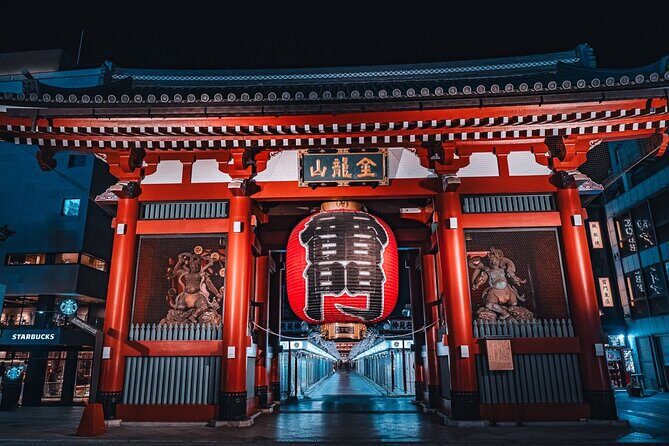
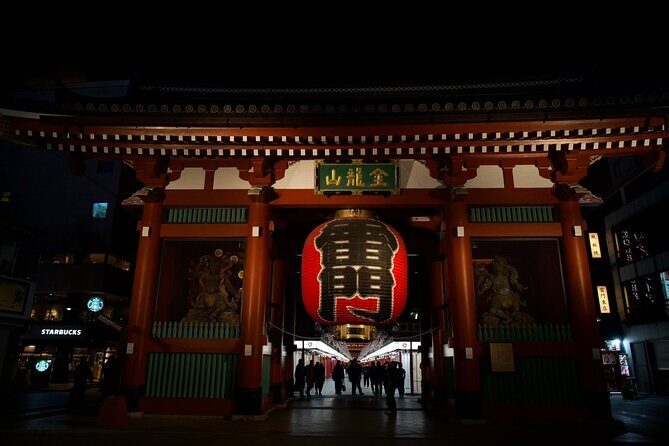
The walk begins at Kaminarimon Gate, often called the Thunder Gate. Even if you’ve seen it in photos, you’ll notice a difference at night: the huge red lantern and the gate’s details feel more dramatic in lower light. It’s an instant “yep, I’m really here” moment.
What makes this stop more than a quick photo is the context the guide provides. You’ll hear about the gate’s connection to Sensō-ji Temple, and you’ll learn what to look for in the statues flanking the entrance. Those figures—Fujin (wind) and Raijin (thunder)—help the space feel like living mythology instead of just an architectural backdrop.
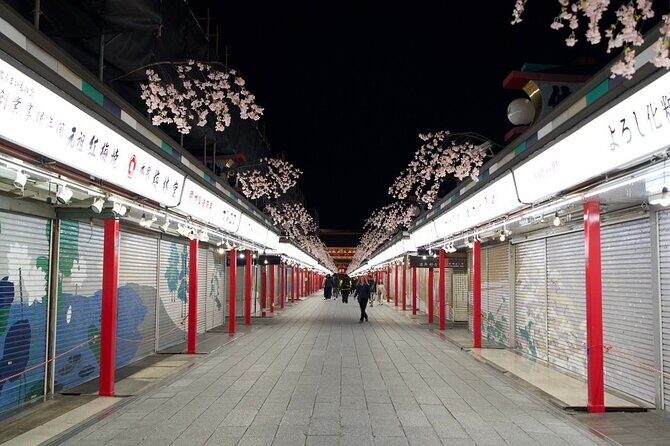
Next comes Nakamise Shopping Street, the approach street leading toward Sensō-ji. During the day it’s busy, and you can end up shoulder-to-shoulder with snack cravings everywhere. At night, it still feels lively, but you’re more likely to notice the mix of traditional snacks, souvenir stalls, and handcrafted goods.
A useful way to enjoy Nakamise at night is to treat it like a browsing runway. Since the tour doesn’t include food, you can decide what you want later—or pick up one small item now and save room for dinner. Either way, you’ll know what you’re looking at, instead of just reading packaging in a hurry.
Possible drawback: because Nakamise is a shopping street, it can be noisy and distracting if you’re trying to listen closely. Bring your focus back to what the guide is pointing out—turning the shopping into “information time” is the whole payoff of doing this as a guided night walk.
Sensō-ji Temple: Seeing the Famous Place Without the Day-Trip Rush
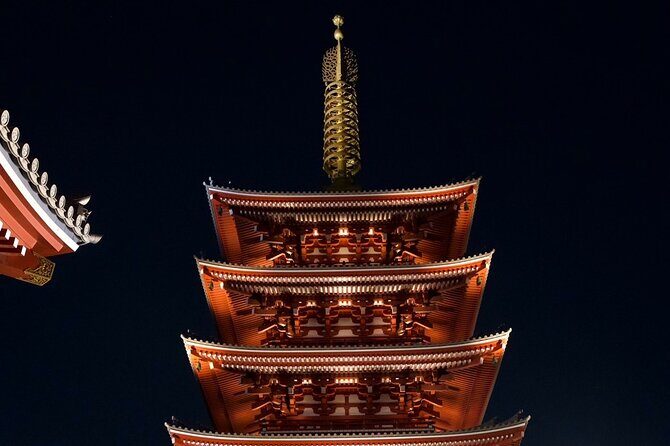
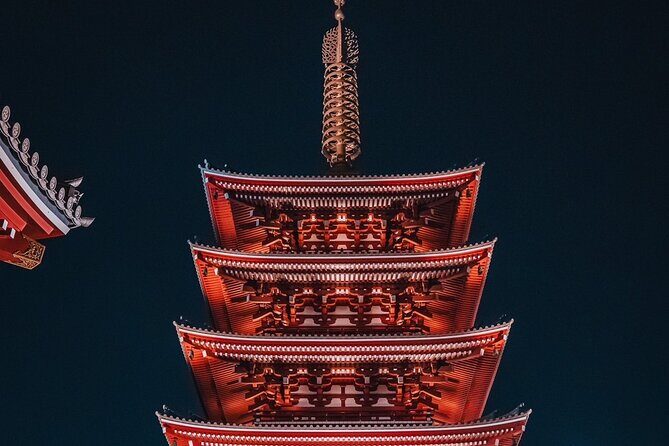
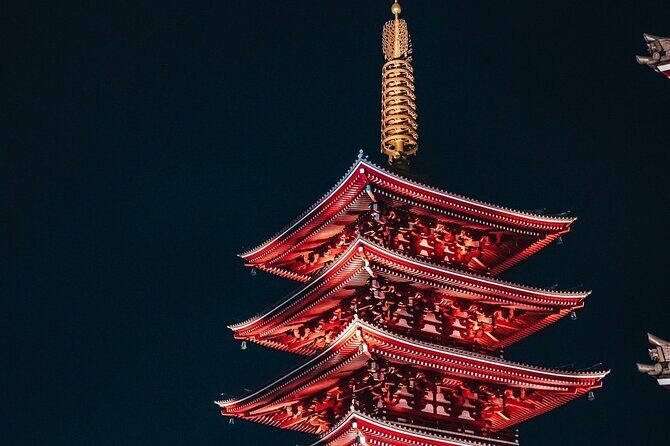
Sensō-ji is one of Tokyo’s best-known temples, and it can feel almost too famous—like you’ve seen it already. Night helps. The temple complex feels quieter, and you get a better sense of space and atmosphere, especially after daytime crowds thin out.
You’ll stop by the main temple area for a brief moment to take it in. The important practical note here is the main hall closing time: it closes at 6 PM, and entry may not be available later. That affects how you should plan your timing. If you want the full experience inside the main hall area, try to be earlier in the evening rather than cutting it close.
Even if you can’t enter every interior space, you can still get a lot from this stop. Temples aren’t just about walking into rooms. The layout, the gate views, and the visual hierarchy of the complex tell you where to focus. A guide helps you avoid the common problem of seeing everything at once, then remembering nothing.
One good approach: think of your visit as “learn what matters first,” then “take photos second.” When you know what you’re looking at—what building is what, which direction matters, and why certain decorations exist—your photos get better because you’re actually seeing.
Tokyo at walking pace, a few more ways
Asakusa Shrine: A Nearby Stop That Adds Meaning
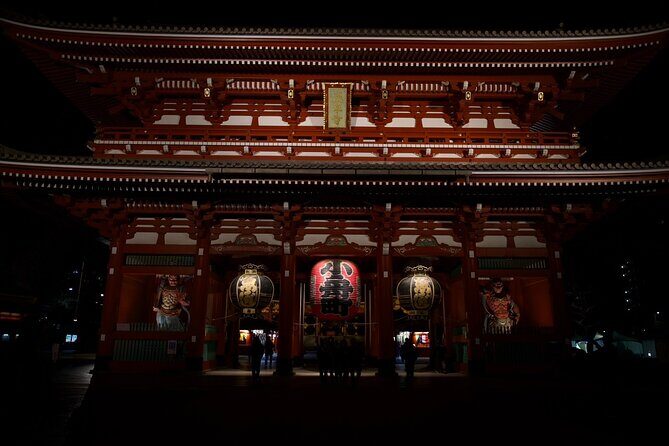
Right next to Sensō-ji is Asakusa Shrine. It’s a Shinto shrine with its own identity, and it adds another layer to your night route. You’ll learn that it’s dedicated to the three men who founded Sensō-ji, and you’ll also hear how the shrine survived the worst of World War II. That history gives the neighborhood a sense of continuity: this isn’t a themed set. It’s still a living spiritual area.
You’ll also get a feel for the shrine’s theme of harmony, which helps explain why these spaces sit side by side. In other parts of Tokyo, temples and shrines can feel separate. Here, they reinforce each other, and that makes your evening walk feel like you’re moving through a broader cultural pocket rather than checking boxes.
This stop is short, so don’t expect a slow contemplative visit. Instead, treat it as a meaning anchor. Once you learn the founder connection and the resilience story, you’ll see more than just a pretty shrine doorway.
Hanayashikidori: Street Life Near the Old Amusement Park
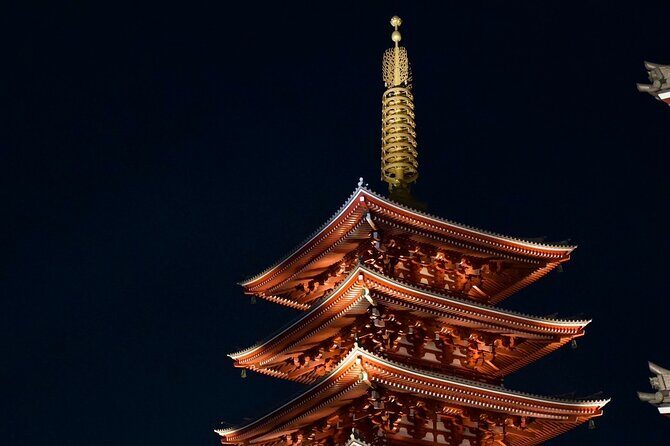
After the temple cluster, you’ll head into Hanayashikidori, an area named for Hanayashiki, Japan’s oldest amusement park. Even if you don’t go into the amusement park itself, the street has a distinct character. It’s more casual, more everyday, and it feels like you’re transitioning from spiritual tourism into local leisure life.
Along this stretch, you’ll see shops, restaurants, and cafés. The value of this stop during a guided tour is not that it’s famous in a headline way. It’s that you get the “in-between” texture of Asakusa—how people live and snack and hang out next to cultural landmarks.
Since food and drinks aren’t included, this is where your choices begin. If you want something light before dinner, you’ll know you’re close to options. If you prefer to save your appetite, you’ll still have enough context to know what kinds of places you’re passing.
Practical tip: if you’re the type who likes to plan while walking, this is a great moment to spot where you might eat after the tour ends on Hoppy Street.
Hoppy Street: Your Built-In Jump to Izakaya Dinner
The final stop is Hoppy Street. This is the part of Asakusa where the night energy gets more social. The street is lined with izakayas, and it’s especially known for serving hoppy, a popular local drink.
Since the tour ends here, you’re basically given dinner timing support without forcing a restaurant reservation. You can keep moving, compare places, and choose based on your mood—quiet corner table or busier counter scene.
I like that Hoppy Street is a “decision-friendly” finish. You can decide what you want right away. You’re not still in temple mode, and you’re not far from options.
If you’re nervous about ordering, don’t worry. The point of this tour is to get you into the neighborhood and explain how it connects. Once you’re on Hoppy Street, you can use the simple logic of where it feels comfortable to sit.
English-Speaking Guides Like Takumi and Mio: What You Gain From a Story
The guides are the heart of this tour. You’ll get English explanations along the way, and the difference shows up most when you stop treating the night walk like a checklist.
I’ve seen guides in this style that go beyond surface facts. For example, Takumi has a reputation for making the evening walk both enjoyable and informative—especially useful if you’ve already visited Asakusa in daylight but didn’t understand what you were looking at. That’s exactly the kind of situation this tour fits: you’ve seen the landmarks, but you still want meaning.
Another guide name that stands out is Mio, described as energetic and fun, with stories that make a brief visit feel more satisfying. When a guide connects temple details and street life with legends and practical context, you end up feeling oriented. You don’t leave with 50 random sights. You leave with a story arc.
In plain terms, a good guide helps you:
- know what matters in each stop
- understand why a gate or shrine layout feels the way it does
- avoid wasting time wondering what things are
Also, with a maximum group size of 8, it’s easier for the guide to keep explanations clear without talking over everyone.
Price and Value: Is $34.29 Worth It?
At $34.29 per person for about 1 hour, the price is in the “worth it if you’ll actually use the guidance” category. You’re paying for time with an English-speaking guide, not for transportation or a big food spread.
Here’s how I think about value for this one:
- You get multiple key stops in one evening.
- You don’t have to plan a route through Asakusa landmarks on your own.
- The guide adds context that would take extra time to look up later.
Food and drinks aren’t included, so you’re not paying for a meal you might not want. Instead, you’re paying for a better evening plan. If you’re the type who likes to eat locally after a walk, this format often feels more flexible than tours that include a set dinner.
If you already speak Japanese well and love self-guided walking, you could DIY. But if you want the stories and the fastest path to understanding, this price is reasonable for what you get.
What to Bring and How to Time Your Evening
Because this tour focuses on a short walking window, comfort matters. Wear shoes you can walk in for the full hour and bring a light layer if the evening feels cool.
The biggest timing issue is the Sensō-ji main hall closing at 6 PM. If you’re visiting later in the evening, you might still enjoy the exterior areas and the guide’s explanations, but you may not get access to the main hall interior. Plan to start earlier if that interior experience matters to you.
Also remember that the tour ends at Hoppy Street. So yes, you’re basically building dinner into your route. If you want to eat right after, consider going hungry but not starving—bring water if you think you’ll need it.
Should You Book This Asakusa Night Walk?
Book it if you want a smart way to start your Asakusa evening. It’s especially good if:
- you’ve seen photos of Kaminarimon and Sensō-ji and want to understand what you’re looking at
- you want something short and well paced before dinner
- you like your Tokyo with an English explanation layer
- you prefer smaller groups and easier logistics
Skip it only if you’re already fully confident navigating Asakusa on your own and you don’t care about stories or context. If your goal is purely photos with zero talking, a self-guided stroll might save you money.
If you do book it, keep your plan simple: walk, learn, then eat nearby. That’s where the evening really clicks.
FAQ
How long is the Asakusa night walking tour?
The tour lasts about 1 hour.
How much does the tour cost?
It costs $34.29 per person.
Is food included in the tour price?
No. Food and drinks are not included.
What’s the group size?
The tour has a maximum of 8 travelers.
What places do we visit during the walk?
You’ll visit Kaminarimon Gate, Nakamise Shopping Street, Sensō-ji Temple, Asakusa Shrine, Hanayashikidori (near Hanayashiki), and you’ll end at Hoppy Street.
Does the tour include admission tickets?
Most stops note free admission. However, Sensō-ji’s main hall closes at 6 PM, and entry may not be available if you arrive later.
Where do I meet and where does the tour end?
You meet at Burger King Asakusa Azumabashi near Kaminarimon. The tour ends at Hoppy Street.
Is the tour refundable if plans change?
Yes, it has free cancellation. You can cancel up to 24 hours in advance for a full refund.
More Tours in Tokyo




More Tour Reviews in Tokyo




Around Senso-ji: More Asakusa Picks


Fresh reviews from around Tokyo






Asakusa Tours, compared.
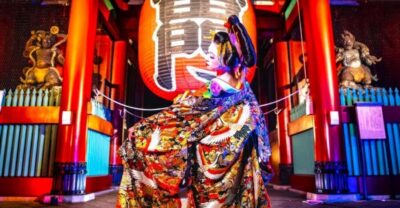 ★ 4.8Japanese Dance Cabaret Theater Asakusa-Kaguwa TicketFrom $492,270 reviews
 ★ 4.7Meiji Shrine, Asakusa, Skytree Bus Tour and CruiseFrom $1221,986 reviews
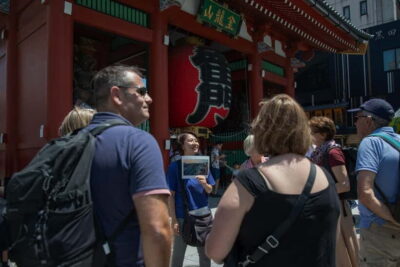 ★ 4.8Asakusa Walking Tour with Sensoji Temple VisitFrom $221,583 reviews
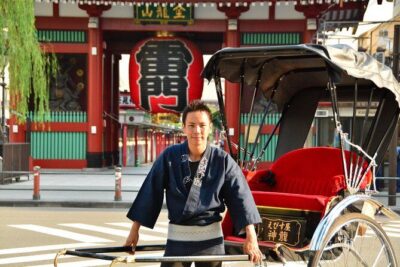 ★ 5.0Tokyo Asakusa Rickshaw TourFrom $421,375 reviews
 ★ 4.5Tokyo Panoramic 1 Day: Meiji Shrine, Asakusa, Odaiba and SKYTREE®From $851,222 reviews
 ★ 4.8Samurai Ninja Museum Asakusa: Samurai Sword Lesson & TourFrom $63306 reviews
Asakusa Sightseeing Tour by RickshawFrom $35195 reviews
Asakusa Kimono Dressing and Matcha ExperienceFrom $56173 reviews
★ 4.8Samurai Ninja Museum Asakusa: Samurai Sword Lesson & TourFrom $63306 reviews
Asakusa Sightseeing Tour by RickshawFrom $35195 reviews
Asakusa Kimono Dressing and Matcha ExperienceFrom $56173 reviews
Browse the lists this tour appears in