
Reviewed · ASAKUSA TOURS
Asakusa Classic Ramen & Crispy Gyoza Cooking Class
Ramen gets way easier here. This small-group class in Asakusa teaches you how to make a ramen broth and base from scratch and pair it with hand-folded gyoza. You’re not just eating out—you’re building the flavors and learning what changes the texture, from gyoza crunch to ramen depth.
I also like the “take it home” approach. You’ll get recipes so you can recreate the dishes later, plus an organized setup where apron and utensils are provided. One consideration: ramen is a multi-step project, and even with guidance, it’s not a 10-minute meal—expect real hands-on work, including some knife prep.
In This Review
- Key highlights you’ll actually care about
- Where Asakusa turns a meal into a skill
- The 3-hour rhythm: from broth basics to a gyoza crunch
- Step 1: Ramen broth and base from scratch
- Step 2: Ramen toppings and assembly thinking
- Step 3: Gyoza filling and vegetable cutting
- Step 4: Fold crispy gyoza by hand
- Step 5: Eat the ramen and gyoza you made
- Meeting at Chagohan Tokyo: small-group energy from minute one
- Ramen broth: why this class is more than noodle making
- Crispy gyoza by hand: the crunch comes from process
- What’s on your plate at the end
- Recipes you can use: the real value after Tokyo
- Ingredients style: natural, no MSG, and easy to trust
- Vegetarian and vegan options: ask ahead, plan smart
- Price and value: what $167.81 buys in real terms
- Who this class fits best (and who should consider timing)
- Should you book it?
- FAQ
- How long is the cooking class?
- What time does the class run?
- How many people are in the group?
- Do I need to bring anything?
- Will I receive recipes to take home?
- Are there ingredients provided, and is there MSG?
- Are vegetarian or vegan options available?
- Where do I meet the class?
- What is the cancellation policy?
Key highlights you’ll actually care about
- One class, two dishes: ramen broth from scratch plus crispy gyoza folding
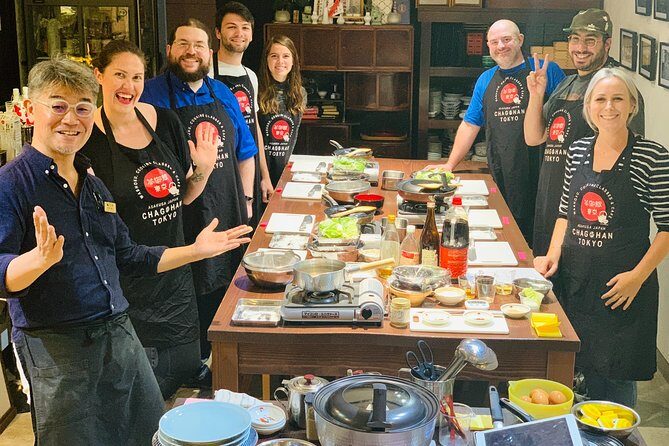
- Max 8 people: intimate teaching and real attention from the hosts
- No need to bring gear: apron and utensils are provided
- Natural ingredients, no MSG: you cook with ingredients prepared for the class
- Take-home recipes: enough detail to try again later
- Optional veg plans: vegetarian and vegan options with advance notice
More mornings around Senso-ji and the old town
- Tokyo: Japanese Dance Cabaret Theater Asakusa-Kaguwa Ticket★ 4.8 · 2,270 reviews
- Tokyo: Asakusa Walking Tour with Sensoji Temple Visit★ 4.8 · 1,583 reviews
- Tokyo Asakusa Rickshaw Tour★ 5.0 · 1,375 reviews
Where Asakusa turns a meal into a skill
Asakusa is the right neighborhood for this kind of food class. It’s not just “Tokyo sightseeing with a snack attached.” The whole point here is learning how Japanese comfort food is put together—step by step—then sitting down to eat your results.
The class is built around two core goals:
1) Make a ramen base and broth from scratch
2) Fold and cook gyoza that are juicy inside and crisp outside
That combo matters. If you only learn one dish, you miss how flavors and techniques connect. But if you tackle both together, you start to understand Japanese cooking as a system: taste balance, texture, timing, and method.
And the hosting style helps. The class is run by Masa and Junko, a husband-and-wife team. They’re the kind of teachers who keep the pace moving while still explaining what’s going on—especially if your Japanese kitchen skills are… optimistic at best.
The 3-hour rhythm: from broth basics to a gyoza crunch
The schedule is simple and practical. You choose either a morning session (10:00 a.m. to 1:00 p.m.) or an afternoon session (3:00 p.m. to 6:00 p.m.). The exact timing can shift a bit, but the goal stays the same: you’ll learn, you’ll cook, and you’ll eat what you make.
Here’s what the flow is like, based on how the class is structured:
Step 1: Ramen broth and base from scratch
You’ll work on the ramen base and broth, plus ramen toppings. This is the part that makes ramen taste like ramen and not like a bowl of hot noodles. You learn what goes into the base, then how it all comes together.
In real terms, this means you’re getting taught the “why” behind the flavor—not just dumping ingredients into a pot. And you’ll also handle components that go into toppings, so your final bowl feels intentional, not accidental.
Step 2: Ramen toppings and assembly thinking
As you go, you’re also building the mindset for assembly: what belongs in the bowl, how much, and in what order. One of the nicest parts is that the class ends with you assembling a bowl. That makes all the earlier prep feel worth it.
More aprons-on time in Tokyo kitchens

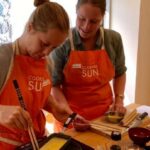
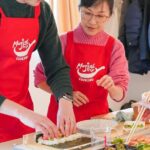
Step 3: Gyoza filling and vegetable cutting
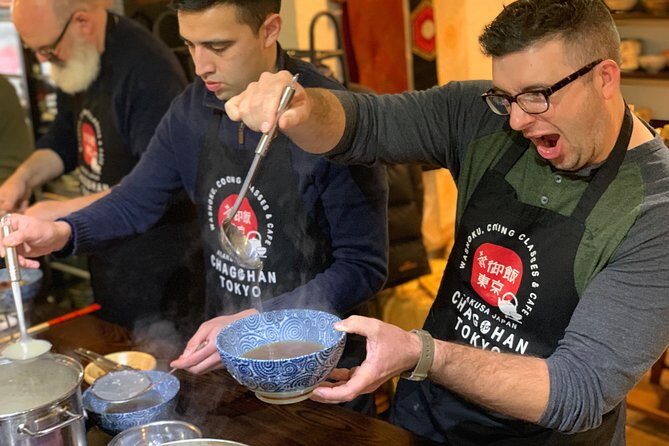
Then you shift to gyoza. You’ll make the filling and prep vegetables using hand cutting techniques. This is a good moment to note your own comfort level with kitchen work—knife work is part of the process, and it’s not staged to be painless.
If you’re cooking with teens, the class can still work well, but plan for ages that can handle careful prep. You’ll be more relaxed if you show up ready to focus.
Step 4: Fold crispy gyoza by hand
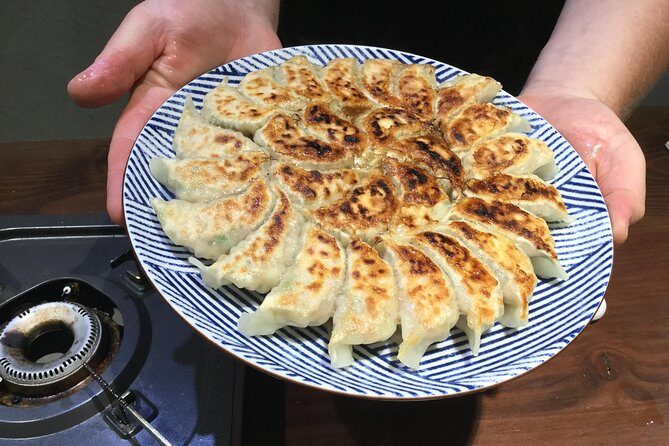
You’ll fold gyoza by hand. The goal is a dumpling that stays tender inside but turns crisp and crunchy outside. Getting the folding right isn’t just for looks—closure affects how the dumpling cooks.
Step 5: Eat the ramen and gyoza you made
At the end, you sit down and enjoy the dishes you prepared. Many classes teach skills and then send you off to find dinner. This one keeps the meal tied to your effort, which is a big part of why people leave happy.
Meeting at Chagohan Tokyo: small-group energy from minute one
The meeting point is 茶御飯東京 (Chagohan Tokyo), Taito City, Nishiasakusa, 2-chōme 17-13, 1F. It’s near public transportation, so you’re not locked into taxis and long walks.
Because the group size is capped at 8 travelers, the vibe stays calm and manageable. You’re not hovering around a demo counter while everyone else waits. You’re in the working kitchen environment, where questions are easier to ask and mistakes don’t pile up.
Also, the class is very “come as you are.” Apron and utensils are provided, so you don’t need to shop for special tools or pack kitchen gear. The best cooking classes remove friction so you can learn.
Ramen broth: why this class is more than noodle making
Ramen is famous for being “just noodles and broth.” The truth is that ramen is technique plus patience. This class aims straight at the technique part.
You learn to prepare the ramen base and broth from scratch. You also prepare toppings. That matters because ramen flavor isn’t only in the liquid. It’s in how the topping interacts with the broth and noodles, and how the final bowl tastes balanced.
A practical thing I like here: you don’t walk away with “trust your instincts” advice. You get instruction that’s designed to be repeatable later. The recipes help, too, because ramen is one of those foods where small ingredient and timing differences show up fast.
One reality check: shoyu-style stock building and broth depth take multiple steps. Even with help, it’s not the kind of cooking where you can zone out and still do it well. If you’re the type who likes a hands-on project, you’ll fit right in.
Crispy gyoza by hand: the crunch comes from process
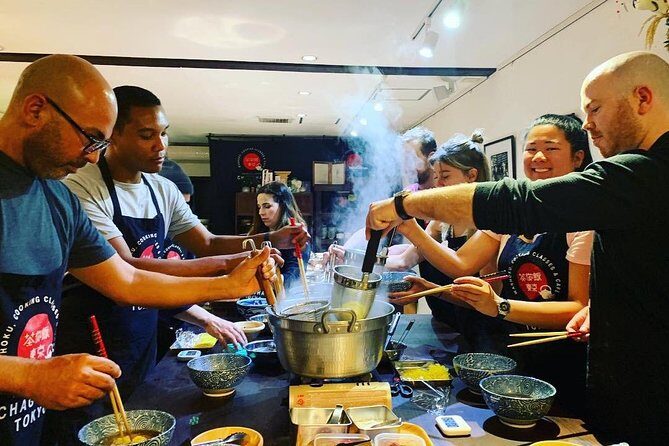
Gyoza is where this class becomes very satisfying. The goal is explicit: juicy on the inside, crisp outside.
You’ll make the filling, fold the dumplings, and work through vegetable cutting. Then you’re not done until you get that crisp and crunchy result. Texture is the whole point with gyoza. A soft dumpling isn’t the win here.
What you’re really learning is control:
- How the filling behaves once folded
- How the edges hold together
- How cooking translates to crispness
Hand folding also changes your relationship with the food. When you physically close each dumpling, you start understanding why certain outcomes happen. It turns “food” into a process you can repeat.
And because Masa and Junko guide you, you don’t have to guess. If your folds look imperfect at first, that’s normal. The class is structured so you gradually improve during the session.
What’s on your plate at the end
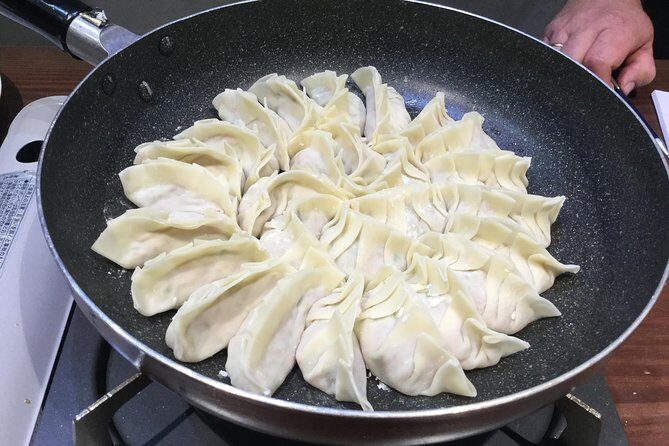
This experience finishes the way the best meal lessons do: you eat what you made.
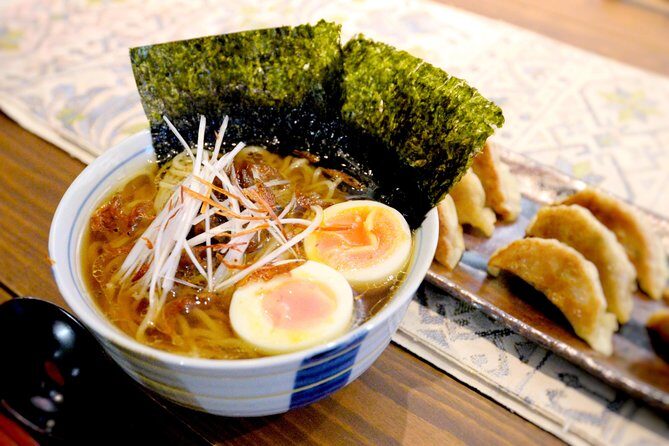
You’ll have ramen assembled into a photogenic bowl and gyoza cooked as part of the session. One review notes that participants get around 8 gyoza and a full bowl of chicken ramen, which gives you a sense of portion size. The exact menu can vary with the class plan, but you should count on a full, satisfying meal.
Here’s a small but important mindset tip: approach the meal like a tasting, not just a celebration. Compare the ramen broth depth to what you usually get from packaged soup. Then notice how the gyoza crunch changes as the dumplings cook. That attention helps you remember what to reproduce at home.
Recipes you can use: the real value after Tokyo
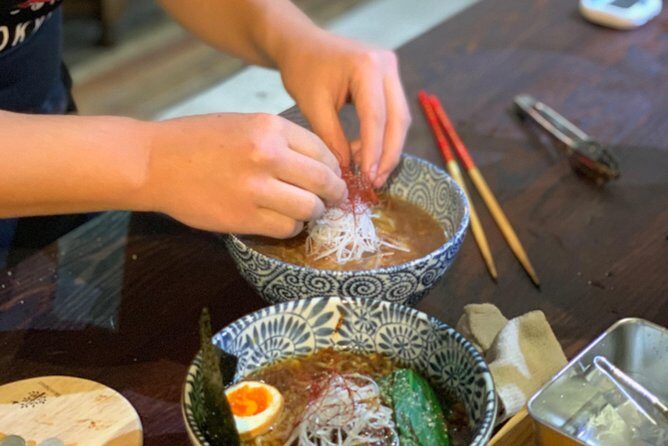
Most cooking classes end with a nice memory and a vague idea of how to cook something. This one includes recipes so you can recreate what you learned.
That’s a big reason the class has such strong satisfaction. Ramen and gyoza aren’t “one-and-done” foods. Once you learn the basics, you’ll want to try again. The recipe takes you from inspiration to execution.
Also, one review mentions digital copies of the recipes with detailed instructions. That’s handy because you can save them, zoom in on steps, and cook from your phone or tablet later without pulling out a printed booklet.
If you’re the type who likes cooking at home, this is where your money turns into something lasting. Not just souvenirs. Skills.
Ingredients style: natural, no MSG, and easy to trust
The class uses all natural ingredients, and you’re told there’s no MSG or artificial additives. That helps you feel confident about what you’re cooking and what you’re tasting.
It also makes the lesson more transferable. If you decide to cook again at home, you won’t be stuck trying to match an ingredient you didn’t expect.
One more practical point: the class provides what you need, including ingredients for the dishes. You’re not hunting down specialty items before you come. That’s a comfort when you’re visiting Tokyo with limited time.
Vegetarian and vegan options: ask ahead, plan smart
If you eat vegetarian or vegan, this class offers options with advance notice. That’s important because ramen broth is usually built around meat or fish stock in many styles. Being able to request changes makes the class workable rather than “adjusting on the fly.”
How to think about it: send your dietary needs early and be specific. The class says vegetarian and vegan friendly options are available with advance notice, so don’t count on last-minute adjustments.
Price and value: what $167.81 buys in real terms
At $167.81 per person for about 3 hours, this is not a cheap add-on. But for Tokyo, it can be good value because you’re paying for the full teaching experience and a complete meal outcome.
Here’s how the value breaks down:
- Small group size (max 8) means more hands-on help
- You cook both ramen and gyoza, not just one dish
- Ingredients are provided, and you don’t need to bring tools
- You eat what you made, so you’re not buying dinner separately
- You get recipes to recreate at home
If you’ve ever taken a class where you chop a bit and watch most of the cooking happen, you’ll appreciate the structure here. The format is designed so you do the key tasks—especially folding gyoza and participating in ramen prep.
Could it be less expensive? Sure, but then you might lose the small-group attention and the recipe follow-through. In this case, the skill transfer is the payoff.
Who this class fits best (and who should consider timing)
This class fits best if you:
- Love ramen and gyoza and want to understand how they’re made
- Want a hands-on lesson, not a passive food tour
- Prefer small-group instruction
- Want recipes you can actually use later
- Travel with friends, couples, or family members who can handle kitchen work
It might be less ideal if:
- You’re hoping for a super short, low-effort meal
- You dislike knife work or worry about careful prep time
- You want only tasting and no cooking labor
Also keep in mind that it’s weather dependent. If conditions force a cancellation, you should expect a different date or a full refund.
Should you book it?
I think you should book this class if you want Tokyo to leave you with more than photos. Learning ramen broth and gyoza folding is the kind of experience that pays off in future dinners, and the class is set up to be repeatable at home with the recipes you receive.
If you’re strictly looking for the cheapest activity, you’ll find cheaper options. But for people who care about technique and want a real meal at the end, this is a smart, focused use of time in Asakusa.
If you’re still deciding, match your expectations to the reality: this is a real cooking class. You’ll work. Then you’ll eat.
FAQ
How long is the cooking class?
The class lasts about 3 hours (approx.).
What time does the class run?
There are two options: a morning class from 10:00 a.m. to 1:00 p.m., or an afternoon class from 3:00 p.m. to 6:00 p.m.
How many people are in the group?
The class has a maximum of 8 travelers.
Do I need to bring anything?
No. An apron and utensils are provided, so you can come as you are.
Will I receive recipes to take home?
Yes. You’ll receive recipes so you can recreate the dishes at home. Digital copies are mentioned in one review.
Are there ingredients provided, and is there MSG?
Yes, all natural ingredients are provided, and there is no MSG or artificial additives.
Are vegetarian or vegan options available?
Yes, vegetarian and vegan friendly options are available with advance notice.
Where do I meet the class?
You meet at 茶御飯東京 (Chagohan Tokyo), Taito City, Nishiasakusa, 2-chōme 17-13, 1F.
What is the cancellation policy?
The experience is non-refundable and cannot be changed. If canceled due to poor weather, you’ll be offered a different date or a full refund. If the minimum traveler requirement isn’t met, you’ll be offered a different date/experience or a full refund.
Learn Another Dish: Tokyo Cooking Classes
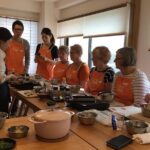
More Tour Reviews in Tokyo






Around Senso-ji: More Asakusa Picks


Fresh reviews from around Tokyo






Asakusa Tours, compared.
 ★ 4.8Japanese Dance Cabaret Theater Asakusa-Kaguwa TicketFrom $492,270 reviews
 ★ 4.7Meiji Shrine, Asakusa, Skytree Bus Tour and CruiseFrom $1221,986 reviews
 ★ 4.8Asakusa Walking Tour with Sensoji Temple VisitFrom $221,583 reviews
 ★ 5.0Tokyo Asakusa Rickshaw TourFrom $421,375 reviews
 ★ 4.5Tokyo Panoramic 1 Day: Meiji Shrine, Asakusa, Odaiba and SKYTREE®From $851,222 reviews
 ★ 4.8Samurai Ninja Museum Asakusa: Samurai Sword Lesson & TourFrom $63306 reviews
Asakusa Sightseeing Tour by RickshawFrom $35195 reviews
Asakusa Kimono Dressing and Matcha ExperienceFrom $56173 reviews
★ 4.8Samurai Ninja Museum Asakusa: Samurai Sword Lesson & TourFrom $63306 reviews
Asakusa Sightseeing Tour by RickshawFrom $35195 reviews
Asakusa Kimono Dressing and Matcha ExperienceFrom $56173 reviews
Browse the lists this tour appears in