
Reviewed · ASAKUSA TOURS
22-Min Tokyo City Lights Helicopter Tour – Skytree and Asakusa
Tokyo looks totally different from above.
This 22-minute city lights flight is built for people who want the big-picture Tokyo view fast, with illuminated landmarks spread across the night skyline. I especially like that you get Tokyo Skytree views without buying entry tickets for the tower—just see it from the sky as the lights come alive below.
What makes it feel easy is the comfort and scale. The helicopter has air-conditioning, and you’re in a small private group (up to 3), so it doesn’t feel like you’re herded into a giant crowd before takeoff.
One thing to plan around: the flight is weather dependent, and if conditions are poor, it can be canceled. Also, at 22 minutes, it’s more “great highlights” than a long loop—so go in wanting quick wow, not an all-night tour.
In This Review
- Key Highlights That Actually Matter
- A Helicopter-Style View of Tokyo, in Just 22 Minutes
- Where You Meet: Funabashi Heliport and a Simple Getting-There Plan
- Skytree From Above: No Ticket Line, Just Night Lights
- Asakusa at Night: Old Streets Become a Map From the Sky
- Tokyo Station Gallery in the Flight Path
- Comfort Matters: Air-Conditioned Cabin and Private Groups
- Price and Value: What $912.14 per Group Really Buys
- Weather and Timing: Why This Flight Needs a Backup Plan
- Who Should Book This Night Flight (and Who Might Pass)
- What to Expect From the Ride Itself
- Should You Book the 22-Min Tokyo City Lights Tour?
- FAQ
- How long is the Tokyo City Lights Helicopter Tour?
- What’s the meeting point for the tour?
- How many people can be in one booking?
- Is the helicopter air-conditioned?
- Do I need to buy Tokyo Skytree entry tickets for this tour?
- What’s the weight limit?
- What happens if the weather is bad?
- Is there a mobile ticket?
- How far in advance is this tour typically booked?
Key Highlights That Actually Matter
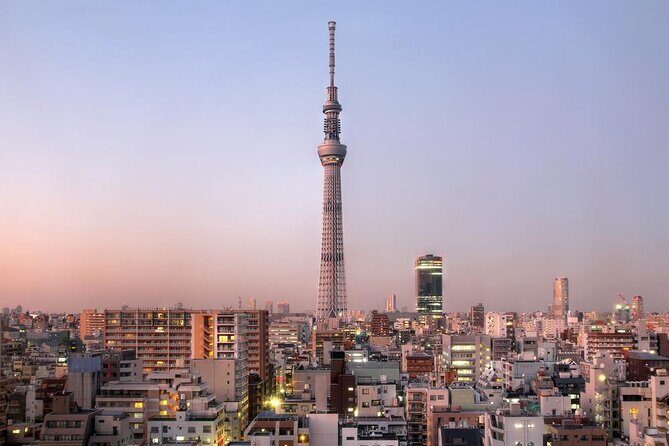
22 minutes, multiple landmarks: You pack in major night sights in a short flight window.
Skytree without the tower ticket: Get the landmark look without planning for observation access.
Asakusa from the air: See the neighborhood grid and street-light patterns that are hard to notice on the ground.
Air-conditioned cabin: Night flights can still be comfortable.
Private group of up to 3: More personal, less chaotic.
Funabashi Heliport is your start line: Plan transport early to avoid last-minute stress.
More mornings around Senso-ji and the old town
- Tokyo: Japanese Dance Cabaret Theater Asakusa-Kaguwa Ticket★ 4.8 · 2,270 reviews
- Tokyo: Asakusa Walking Tour with Sensoji Temple Visit★ 4.8 · 1,583 reviews
- Tokyo Asakusa Rickshaw Tour★ 5.0 · 1,375 reviews
A Helicopter-Style View of Tokyo, in Just 22 Minutes
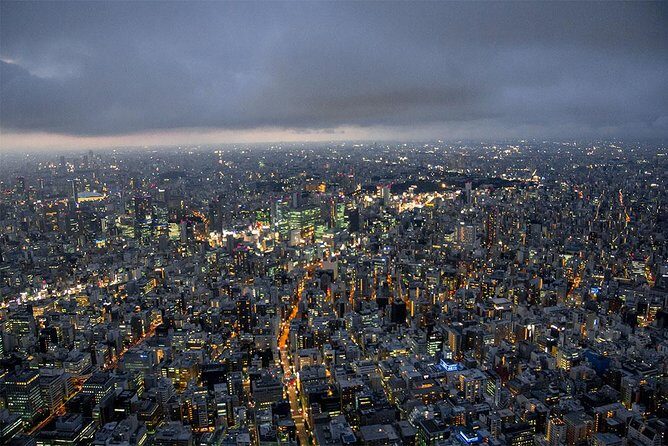
Let’s be honest: Tokyo is intense on the ground. Streets are busy, signage is everywhere, and night photos can still come out flat. From a helicopter, the city becomes a glowing map—straight lines, curving rivers, and clusters of lit buildings that suddenly make sense.
This experience is about 22 minutes, which is perfect if you’re short on time or you want a clean “wow factor” slot on an evening. You’re not trying to see Tokyo by foot or by train in one go. Instead, you get a condensed aerial tour of key illuminated areas.
You’ll also appreciate the pacing. In that brief window, the flight passes multiple famous landmarks, so you’re not stuck staring at just one view. It’s a ride designed for quick perspective: city scale, density, and the way neighborhoods light up after dark.
Where You Meet: Funabashi Heliport and a Simple Getting-There Plan
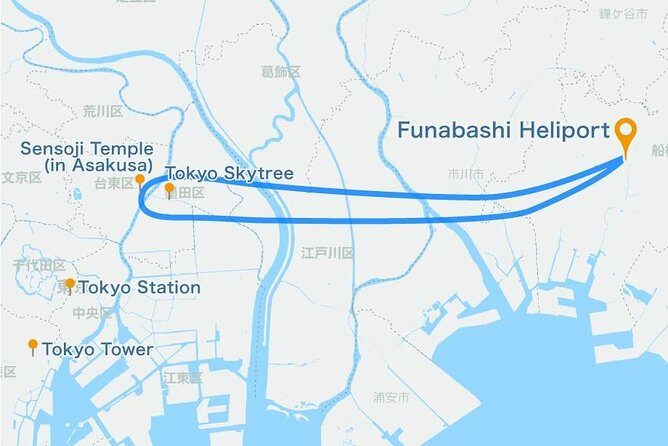
Your starting point is Funabashi Heliport, at 1-chōme-44-2230 Kanasugi, Funabashi, Chiba 273-0853. The listing notes it’s near public transportation, but here’s the practical takeaway I’d follow: plan for a smooth ride to the heliport so you’re not rushing.
A smart tip: take a taxi from Funabashi station rather than attempting to walk. It’s the kind of “sounds fine” decision that turns into a time sink, especially when you’re carrying anything small but essential (a jacket, camera strap, phone charger, whatever you bring).
Also, keep your phone ready. You’ll use a mobile ticket, so you don’t want to be hunting through apps or low battery while heading to check-in.
Skytree From Above: No Ticket Line, Just Night Lights
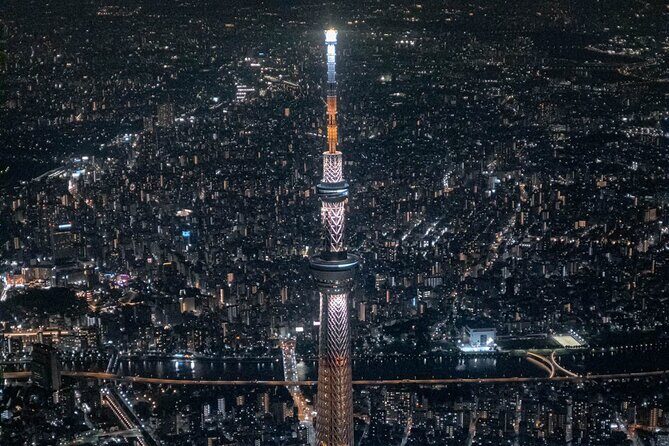
Tokyo Skytree is one of those sights that’s instantly recognizable, and seeing it from the air gives you a totally different kind of impact. From ground level, it’s towering and dramatic. From above, it becomes a landmark in a bigger system—surrounded by the glow of nearby neighborhoods and lit city corridors.
What I like about choosing this kind of view is the “planning math.” Instead of spending time navigating observation access and ticket steps, you’re just enjoying a flying perspective where Skytree is part of the overall night picture. It’s a high-value shortcut for people who want the icon shot without turning it into an entire half-day project.
The night lighting helps too. You’re not just looking at a structure—you’re seeing how it anchors the city’s illumination. That matters because Tokyo at night isn’t one uniform look. It’s layers: street-level light, taller building glow, and then the skyline taking shape as you rise.
Asakusa at Night: Old Streets Become a Map From the Sky
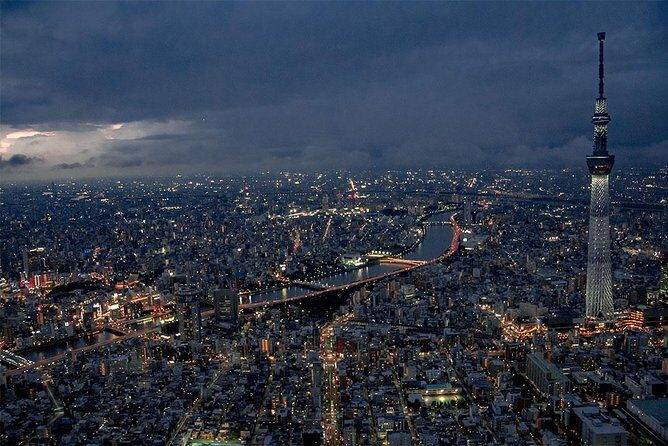
Asakusa is one of those areas where you can spend hours walking and still not feel like you’ve “seen it all.” From above, though, you get a fast understanding of how the neighborhood sits within the larger city.
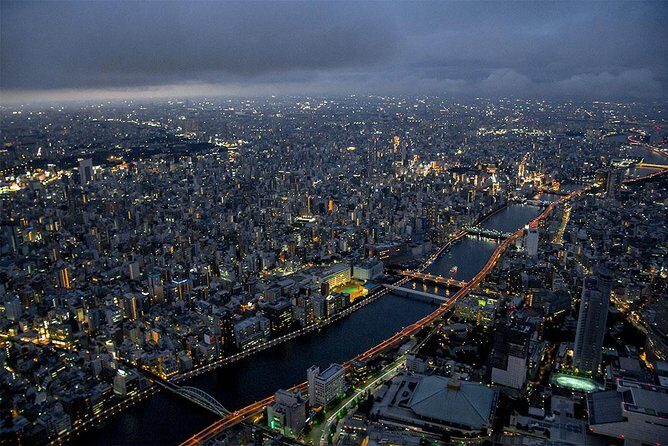
In the air, Asakusa reads like an organized pattern of lights. You can pick up the shape of streets and the way activity zones cluster. That doesn’t replace walking through Asakusa, but it does help you understand what you’re looking at when you’re back on the ground later.
This is the value of an aerial night tour: it turns your later sightseeing into something more meaningful. You’re not just moving from stop to stop. You’re connecting locations with real spatial context.
And because you’re flying at night, the view leans into the “Tokyo feeling” most people chase: the city as light, not just buildings. That’s why this format works so well for couples celebrating something special, and it’s why it’s an easy win for anyone who loves photos but doesn’t want to spend the entire evening shooting at ground level.
Bigger sweeps: other Tokyo city tours
Tokyo Station Gallery in the Flight Path
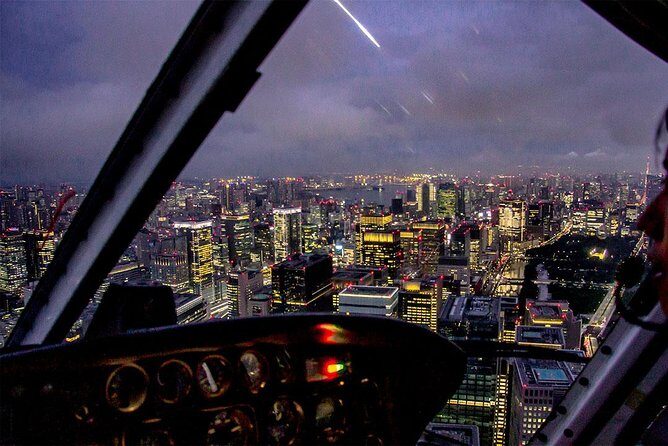
Another highlight on the flight route is Tokyo Station Gallery. Even if you’re not fixated on station architecture, getting a skyline-style view around a major hub helps you see how Tokyo’s transportation heart fits into the surrounding geometry.
From the air, large landmarks near major transit areas often look surprisingly “clean.” Streets and rail corridors form lines that are hard to interpret on foot at night. You get a better sense of direction, distance, and how the city connects itself.
This is one of the reasons a short helicopter tour can be more satisfying than it sounds on paper. It isn’t just sightseeing for the sake of sightseeing. It gives your brain reference points—so your later maps, train rides, and neighborhood exploration feel easier to place.
Comfort Matters: Air-Conditioned Cabin and Private Groups
A lot of helicopter experiences rise and fall on comfort. This one checks an important box: the helicopter is equipped with air-conditioning. That may not sound dramatic, but it matters when you’re doing night flying and you want to stay comfortable enough to actually enjoy the view.
The cabin is also small by design. Your booking is private, and the group size maxes at 3 people per booking. That keeps things calmer and makes it feel more like your experience rather than an assembly line.
There’s also a clear practical limit you should respect: the weight limit listed is 220 kg per flight / 120 kg per passenger. The info also notes a total weight per passenger: 265 lbs. If you’re close to the limit, confirm before you plan your night around it—don’t assume it’ll be okay last minute.
Price and Value: What $912.14 per Group Really Buys
The price is $912.14 per group (up to 3). That sounds pricey—because it is. But helicopter flights are expensive for a reason: you’re paying for access to the airspace view and the aircraft time, not for a museum ticket.
Here’s how I’d judge value:
- If you book as two or three, the cost per person drops fast compared with solo pricing.
- You’re getting a high-impact night experience that can include multiple major landmarks in one shot.
- You’re not paying for Skytree entry because you’re seeing it from above instead.
I also like that this is a short flight that fits into an itinerary. You’re buying a concentrated experience rather than time-consuming planning. For many people, that’s the real value: not just the view, but the fact you can fit it without disrupting your whole trip.
If you’re on a tight budget, this probably isn’t your best spend. If you want one special Tokyo-night memory that feels different from everything else, this is the kind of splurge that can genuinely pay off.
Weather and Timing: Why This Flight Needs a Backup Plan
This tour requires good weather. If the flight can’t be conducted due to inclement weather or aircraft/operations issues, you’ll receive a full refund or an alternative date.
Here’s the tip that’s worth taking seriously: if you’re planning to fly within 5 days, check the weather forecast, because cancellation due to bad weather is possible.
This is the main “watch out” factor. When you book something that depends on visibility and safe conditions, you need mental flexibility. If your schedule is rigid and you can’t move things around, you’ll feel the stress.
On the flip side, Tokyo has lots of nights to work with. If you’re planning with some breathing room—especially around your Skytree/Asakusa time window—this becomes a strong option.
Who Should Book This Night Flight (and Who Might Pass)
This experience fits best if you:
- Want a big Tokyo view without spending hours on observation lines and transfers.
- Like the idea of a private, small-group ride.
- Are celebrating something—this is the type of “wow moment” that lands well when you want a memorable surprise.
- Want night photos with a perspective you can’t recreate on foot.
You might skip it if:
- You hate the idea of weather-based uncertainty.
- You want a longer tour with time to explore each area on-site.
- Your group can’t meet the weight limit requirements.
Also, consider your expectations. This isn’t a sightseeing bus route. It’s short, focused, and built for aerial landmark viewing. Go in wanting that quick hit.
What to Expect From the Ride Itself
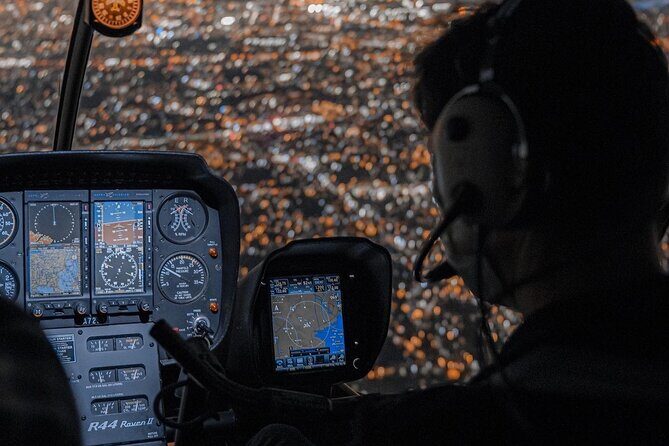
You’ll take off from Funabashi Heliport and then fly over several notable Tokyo points. The flight is designed for night viewing, so the city lighting is the main star of the show.
As the helicopter moves, you’ll see the way Tokyo’s neighborhoods connect. Tall landmarks and dense clusters stand out against darker gaps. It’s one of the few times Tokyo’s scale becomes obvious without you needing to walk for hours.
And since the helicopter has air-conditioning, you can stay comfortable enough to look out and enjoy the ride rather than huddling and hoping your photos turn out.
Should You Book the 22-Min Tokyo City Lights Tour?
If you want one Tokyo-night experience that feels special and different, I’d say yes—especially if you can book as a group of two or three to make the cost make more sense. The Skytree view from above and the chance to see Asakusa and Tokyo Station Gallery along the way in just 22 minutes is a great mix of iconic and practical.
If you hate weather uncertainty or your schedule is locked, wait or keep a backup night in mind. A short, private helicopter ride is the kind of plan that works best when you’re okay with moving dates if the sky doesn’t cooperate.
FAQ
How long is the Tokyo City Lights Helicopter Tour?
It’s about 22 minutes.
What’s the meeting point for the tour?
The tour starts at Funabashi Heliport, 1-chōme-44-2230 Kanasugi, Funabashi, Chiba 273-0853, Japan.
How many people can be in one booking?
A maximum of 3 people per booking, and it’s private (only your group participates).
Is the helicopter air-conditioned?
Yes, the helicopter is equipped with air-conditioning.
Do I need to buy Tokyo Skytree entry tickets for this tour?
No. The experience is designed so you can see Tokyo Skytree from above instead of paying for entry.
What’s the weight limit?
The weight limit is listed as 220kg per flight / 120kg per passenger, and it also notes a total weight per passenger of 265 lbs.
What happens if the weather is bad?
This experience requires good weather. If it’s canceled due to inclement weather or flight operation issues, you’ll receive a full refund or an alternative date.
Is there a mobile ticket?
Yes, the tour uses a mobile ticket.
How far in advance is this tour typically booked?
On average, it’s booked about 45 days in advance.
More Tours in Tokyo




More Tour Reviews in Tokyo




Around Senso-ji: More Asakusa Picks
Fresh reviews from around Tokyo






Asakusa Tours, compared.
 ★ 4.8Japanese Dance Cabaret Theater Asakusa-Kaguwa TicketFrom $492,270 reviews
 ★ 4.7Meiji Shrine, Asakusa, Skytree Bus Tour and CruiseFrom $1221,986 reviews
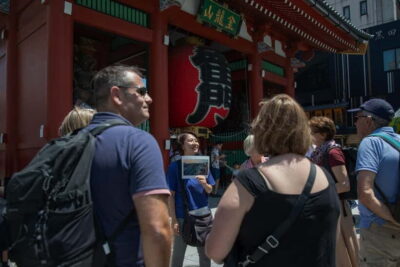 ★ 4.8Asakusa Walking Tour with Sensoji Temple VisitFrom $221,583 reviews
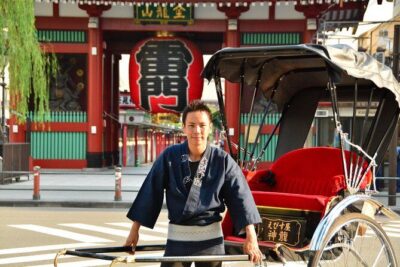 ★ 5.0Tokyo Asakusa Rickshaw TourFrom $421,375 reviews
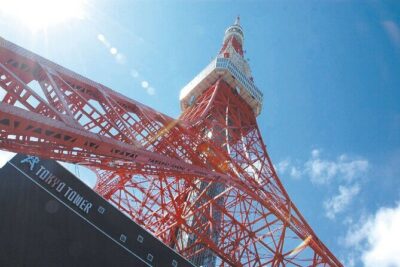 ★ 4.5Tokyo Panoramic 1 Day: Meiji Shrine, Asakusa, Odaiba and SKYTREE®From $851,222 reviews
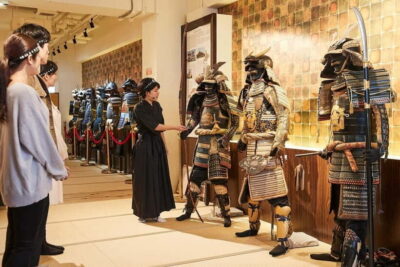 ★ 4.8Samurai Ninja Museum Asakusa: Samurai Sword Lesson & TourFrom $63306 reviews
Asakusa Sightseeing Tour by RickshawFrom $35195 reviews
Asakusa Kimono Dressing and Matcha ExperienceFrom $56173 reviews
★ 4.8Samurai Ninja Museum Asakusa: Samurai Sword Lesson & TourFrom $63306 reviews
Asakusa Sightseeing Tour by RickshawFrom $35195 reviews
Asakusa Kimono Dressing and Matcha ExperienceFrom $56173 reviews
Browse the lists this tour appears in