
Reviewed · SAMURAI & NINJA EXPERIENCES
Tokyo:Samurai sword and archery class from a samurai descendant
Real samurai training beats any show.
This Tokyo-area class runs at a real dojo just outside the city, taught by Yoshioki Sumida of Toyama-Ryu BizenkaI. In about 2 hours 30 minutes, you’ll go from a short lecture to hands-on practice with a bokken-style sword and even try archery with a real bow and arrow. Small group size (max 15) helps you get real feedback, not just photos.
I especially like two things: the structure and the safety mindset. You’re taught in clear sections—lecture, sword basics, then sparring/cutting/archery—with active coaching throughout. And the instructors keep emphasis on correct technique and being safe, so beginners don’t feel like they’re being thrown into the deep end.
One drawback to plan for: this is physical. You’ll swing, move, and practice timing, and it can leave you sore for days after (that part is honestly part of the point). Also, the dojo is in Machida, so build extra time to find it and get settled.
In This Review
- Key things that make this class special
- Getting to Machida: how the location shapes the experience
- Your instructors at Toyama-Ryu BizenkaI: what you should watch for
- The opening lecture and getting into training wear
- Iai lesson: handling and swinging a mock sword correctly
- Gekken lesson: timing, defense, and sparring with a training sword
- Slashing while moving: the moment you realize it’s hard
- Blade-line checks and test cutting: seeing what makes a sword a weapon
- Archery practice: using a bow the samurai depended on
- Watch the Toyama-ryu 7th grade demonstration
- How the 2.5 hours tends to feel: pacing and focus
- Price and value: what $198.20 really buys you
- Who this class fits best (and who should adjust expectations)
- Final call: should you book this Tokyo samurai sword and archery class?
- FAQ
- FAQ
- What is the duration of the Samurai sword and archery class?
- Where does the class meet?
- How large is the class?
- What do I do during the class?
- Is the equipment provided?
- Do I need to bring my own katana?
- Do I need to share my body measurements?
- Is this class only for experienced martial artists?
- What happens if the weather is bad?
- Can I cancel for a full refund?
Key things that make this class special
- A master instructor with lineage: training led by Yoshioki Sumida, with Harry assisting and guiding you through technique and safety
- Sword basics that go beyond waving a katana: handling, motion, and kata-style slashing forms
- Iai + gekken lessons: practice sword draw/swing (iai) and attack-defense timing (gekken)
- Cutting and blade-line checks: you try a mock sword blade-line test and then test cutting
- Archery with a real bow and arrow: a major samurai weapon, practiced by you during the session
- Live-style demonstration: you may see a demonstration of Toyama-ryu 7th grade during class
More blades, bows and dojo hours
- Tokyo: Samurai Ninja Museum Guided tour and Experience★ 4.6 · 1,010 reviews
- Tokyo: Samurai Sword & Archery Class from Samurai Descendant★ 5.0 · 603 reviews
- Best Samurai Experience in Tokyo★ 5.0 · 458 reviews
Getting to Machida: how the location shapes the experience
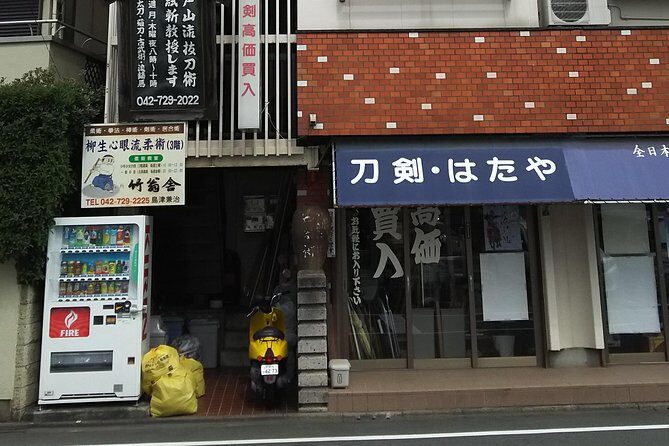
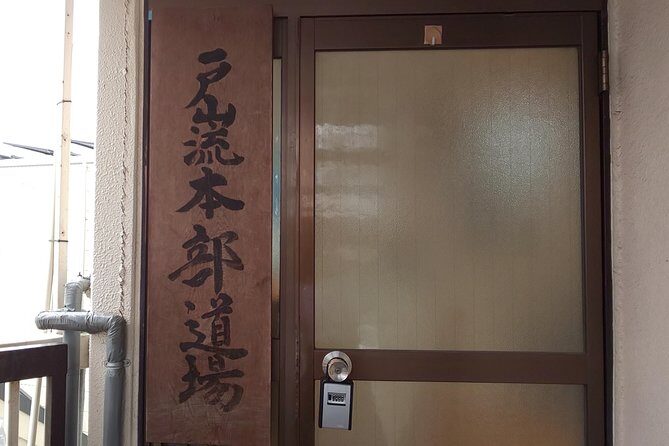
Tokyo gets most of the headlines, but the real value here is the dojo setting outside the tourist core. Your meeting point is at 3-chōme-14-14 Haramachida, Machida, Tokyo 194-0013, and the area is near public transportation—good news if you don’t want to rely on a taxi the whole day.
What you gain by going to a less-central neighborhood: the class feels like training, not a staged activity. When you change into training wear and step into the practice space, the tone shifts fast. You’re not waiting in line for a “once-through” performance—you’re learning how technique actually looks and feels when repeated properly.
Plan for time. Even with public transport nearby, Machida is not “turn the corner and you’re there” convenient. I’d rather you arrive early, get your bearings, and be ready to focus than show up rushed and carry that tension into your first swings.
Your instructors at Toyama-Ryu BizenkaI: what you should watch for
This class is run by 戸山流備前会 / Toyama-Ryu BizenkaI. The named instructor you’ll likely meet is Yoshioki Sumida—and many descriptions also mention Harry as part of the teaching team. That matters because you’re not just getting one-way instruction. You get correction and encouragement as you move through the sections.
Here’s the vibe I’d expect: disciplined, but not cold. The teaching style in this kind of dojo environment usually aims for two things at once: repeatable mechanics and safe distance. Expect clear safety eye-lines, careful spacing, and instruction that aims to keep everyone comfortable enough to keep practicing.
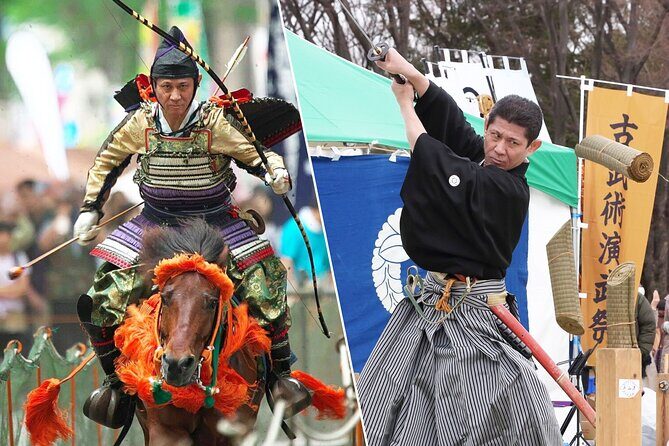
During the session, you’ll also see technique that isn’t “for show.” People often say this isn’t tourist gimmick training, and the strongest evidence is that you watch a live demonstration of Toyama-ryu 7th grade, plus you practice harder elements like timing and moving slashes. In other words, the instructors don’t treat you like an audience—they treat you like students.
The opening lecture and getting into training wear
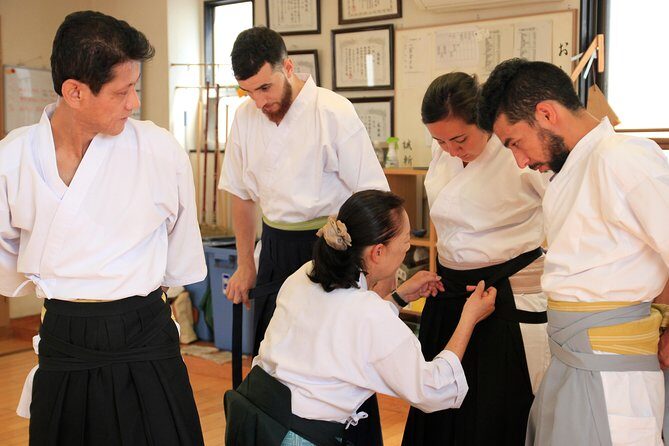
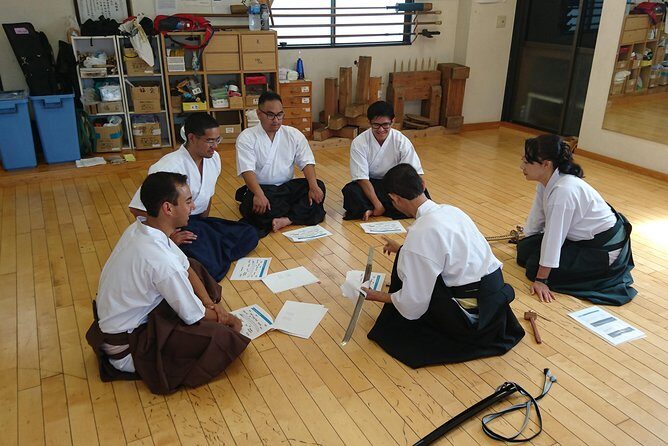
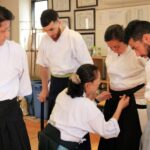
Before you start moving, you’ll receive a short lecture after arrival. Then you change into training clothes. The booking info includes a practical detail: you’ll be asked for your height and weight so the instructors can prepare the right clothing.
That small admin step matters more than it sounds. Good training wear helps you bend, step, and swing without constantly adjusting loose fabric. It also makes the session more comfortable if you’re not used to martial arts clothing.
In the early portion, you’ll also get context about Japanese swords and samurai culture. The goal is not to drown you in dates—it’s to give your brain something to attach the physical practice to. When you understand what the sword is meant to do, even a simple stance and swing feels less like random arm motion.
Iai lesson: handling and swinging a mock sword correctly
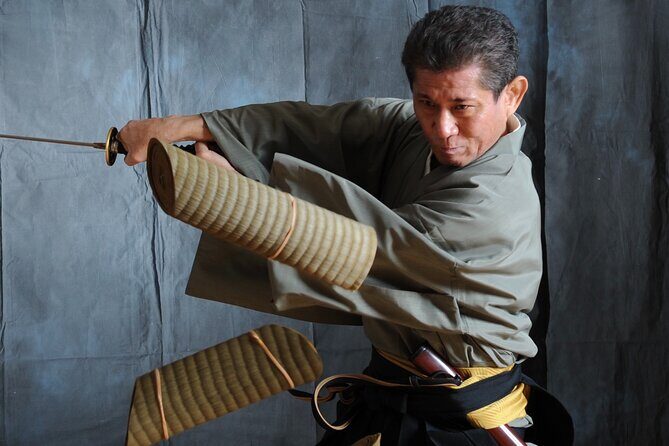
One of the first hands-on sections is iai, focused on how to handle and swing a mock sword. Even if you’ve never touched a sword before, the class doesn’t start at “go try to duel.” It starts with form: how you hold, how your body aligns, and how the movement should flow.
This is where you’ll notice why “sword videos” never translate cleanly to real life. Proper technique isn’t only about strength. It’s timing, posture, and how you move your feet so the swing has the right path.
In this iai portion, you can think of it like learning the language before you try writing poetry. If you get the basics down—stance, grip, motion—everything afterward feels more teachable and less frustrating. If you rush, it shows quickly, and the instructors will correct you so you don’t build bad habits.
More things to make with your own hands


Gekken lesson: timing, defense, and sparring with a training sword
Next comes gekken, which focuses on timing of attack and defense. This is where the class shifts from solo mechanics into paired interaction.
You’ll spar with a moch sword. Many classes like this use foam or training-safe tools for the sparring part, and the point is controlled practice: learn distance, learn response timing, and learn how to defend without panic.
Expect this to feel challenging fast. Sparring forces you to react rather than execute from a script. When someone comes at you with a practiced rhythm, your body has to handle fear, surprise, and coordination in the same second. That’s why it’s good training even if your goal is cultural curiosity.
Also, safety is emphasized throughout. The teachers will keep the environment controlled, and they’ll likely coach you on how to stop, reset, and respond safely. You don’t need to be athletic, but you do need to pay attention and follow instructions.
Slashing while moving: the moment you realize it’s hard
The lesson includes kata-style slashing forms and practice with slashes that hit multiple targets while moving. That’s not a casual add-on. Moving slashes are genuinely hard because your body must coordinate three things at once:
1) stepping or turning correctly
2) swinging with consistent timing
3) hitting targets accurately without over- or under-rotating
This is one of the best parts of the class because it gives you instant feedback. If you’re off, you feel off. If you’re late, you miss the line. If you rush the swing, it doesn’t land cleanly.
You can also think of this section as the class’s reality check. It’s one thing to watch swords work in fiction. It’s another to feel how much effort it takes to make a technique repeatable. That difficulty is part of why the session gets such strong praise—students walk out with a real sense of what samurai training demanded.
Blade-line checks and test cutting: seeing what makes a sword a weapon
You’ll get an activity where you check the blade line with a mock sword. It’s a technical step, but it’s also visual—you’ll quickly understand that a sword isn’t just “sharp and swing.” The path of the edge matters, and lining up the blade affects the cut.
Then you try test cutting. The details of the target type can vary by setup, but you should expect some kind of mat or cutting target practice where you apply what you learned about angle and swing path.
This portion is especially valuable because it connects the lecture to the physical reality. If your swing angle is wrong, it’s obvious. If your timing is wrong, you feel it. If you keep your posture stable, the cut becomes more consistent.
A fun side note: instructors often warn you that your body will ache days afterward if you do the work properly. That soreness is usually a sign that you used correct muscles and moved with control—not just flailed.
Archery practice: using a bow the samurai depended on
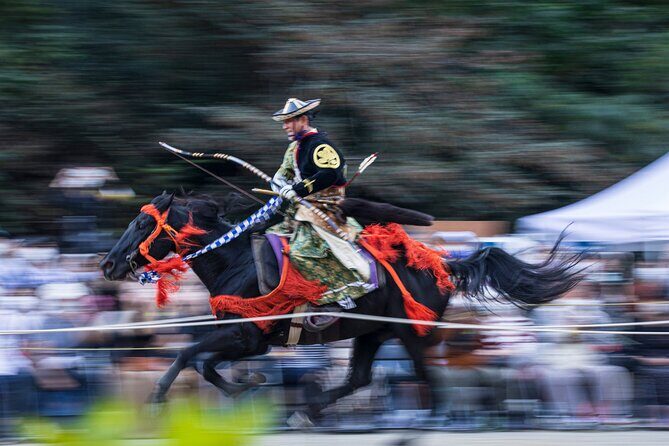
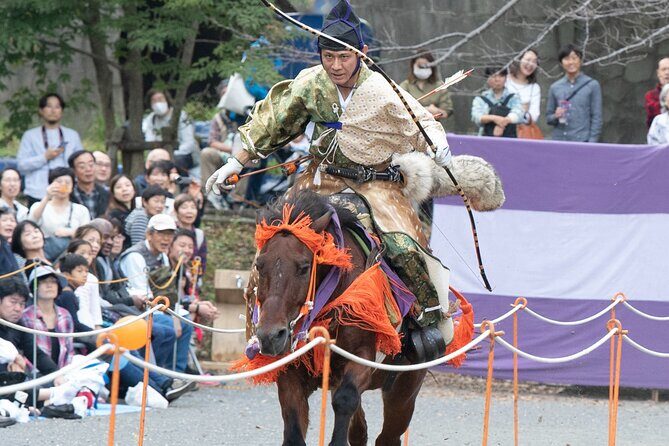
The class includes an archery section where you try a bow. The training includes real bow and arrow equipment, which is a big deal for value.
Even if you’ve shot before, Japanese archery mechanics can feel different. The session is short, so you won’t master everything—but you will get hands-on experience with how archery works as a skill set, not a gimmick. Also, the instructor is described as a master of swordsmanship and horseback archery, so you’ll likely get technique notes that connect sword timing to ranged timing and discipline.
What you’ll probably feel: archery demands patience and breath control, not just arm strength. And since the class mixes sword work with bow work, your body gets a broader samurai-style training picture. You’re not only learning one weapon—you’re learning how training mindset transfers across them.
Watch the Toyama-ryu 7th grade demonstration
At some point during class, you’ll have the chance to see a live demonstration connected to Toyama-ryu 7th grade. It’s not treated like entertainment. The emphasis is on difficult techniques and how they’re supposed to look.
For you, this is one of the best “why it matters” moments. The demonstration shows the end result of kata, timing, and discipline. When you’ve spent the prior part practicing basic elements, the demo stops being random and starts being readable.
It’s also a good reality check. If you came thinking this would be a light, playful sword lesson, the demo helps correct that assumption. This is training with standards—even for beginners.
How the 2.5 hours tends to feel: pacing and focus
The duration is about 2 hours 30 minutes, and a big theme is that you don’t sit around much. The session moves through multiple sections: lecture and changing, iai instruction, gekken sparring, blade-line checks, test cutting, and archery practice.
Because the group max is 15, you get enough space and enough attention. Small group matters here, because sword practice needs personal feedback on stance, grip, and timing. Bigger groups usually mean longer wait times and fewer corrections. Here, it’s more “do, get fixed, do again.”
Expect you’ll leave tired. Expect you’ll also leave knowing what you did and what to improve next time. That’s the best kind of souvenir.
Price and value: what $198.20 really buys you
At $198.20 per person, this isn’t the cheapest activity in Tokyo. But for what you get, it can feel like good value if you want hands-on training.
You receive practice gear and instruction components, including a practice uniform, practice sword/bokken, and access to real bow and arrow equipment. The instructors also give structured coaching across sword and archery instead of “try one thing quickly.”
Also, the small-group limit helps justify the price. When an activity costs this much, you should ask: do I get time with the instructor? In this class, the format is built to keep you involved with feedback.
There is one extra consideration: facility charter fees may apply. The info says facility charter fees occur, and if you wish to rent the facility exclusively you should contact them. For the standard shared class, you should focus on the included training gear and instruction.
Who this class fits best (and who should adjust expectations)
This class is a strong match if you want:
- hands-on katana-style technique practice, not passive watching
- both sword and archery in one session
- a class run like dojo training, with safety coaching and discipline
- a structured experience that still feels fun and encouraging
It’s also great for people who like physical challenges. Even if you’re a beginner, the class description says most travelers can participate. But you should still be ready to work with focus and listen carefully.
Who might think twice: if you have serious mobility limits or you dislike any activity that involves swinging, sparring timing, and active movement. This is not “sit and learn.” It’s training.
Final call: should you book this Tokyo samurai sword and archery class?
I think you should book it if you want an authentic-feeling dojo experience with real instruction, not just a photo-friendly katana session. The combination of iai + gekken, plus blade-line checks and test cutting, plus real-bow archery, gives you a full samurai-skills snapshot in one sitting.
You might skip it if you’re looking for an easy, casual activity. Come ready to move, learn, and accept that your arms and legs will remind you later.
FAQ
FAQ
What is the duration of the Samurai sword and archery class?
It’s about 2 hours 30 minutes.
Where does the class meet?
The meeting point is 3-chōme-14-14 Haramachida, Machida, Tokyo 194-0013, Japan.
How large is the class?
The maximum group size is 15 travelers.
What do I do during the class?
You’ll receive a short lecture, change into training wear, practice iai with a mock sword, learn gekken timing and defend/attack while sparring with a training sword, check the blade line with a mock sword, try test cutting, and try shooting a bow and arrow.
Is the equipment provided?
Yes. Practice uniform and practice sword/bokken are provided, and you’ll use real bow and arrow equipment during the archery portion.
Do I need to bring my own katana?
No. You’ll use provided training equipment during the class.
Do I need to share my body measurements?
Yes. You’ll be asked to let the instructor know your height and weight so they can prepare the lesson clothes.
Is this class only for experienced martial artists?
No. Most travelers can participate, but you should still be ready to follow safety rules and practice actively.
What happens if the weather is bad?
The experience requires good weather. If it’s canceled due to poor weather, you’ll be offered a different date or a full refund.
Can I cancel for a full refund?
You can cancel up to 24 hours in advance for a full refund. If you cancel less than 24 hours before the start time, the amount paid won’t be refunded.
Make Something to Take Home

More Tour Reviews in Tokyo






The Way of the Sword, Continued

Fresh reviews from around Tokyo






Samurai & Ninja Experiences, compared.
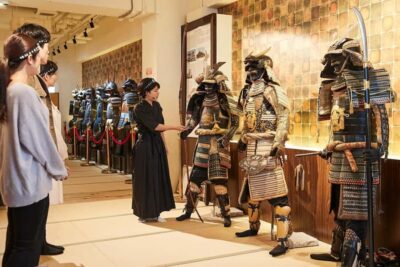 ★ 4.6Samurai Ninja Museum Guided tour and ExperienceFrom $271,010 reviews
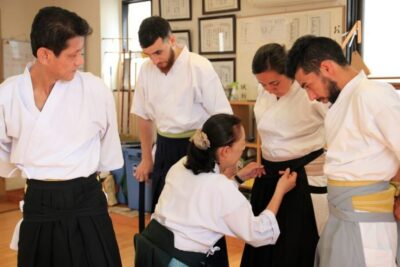 ★ 5.0Samurai Sword & Archery Class from Samurai DescendantFrom $193603 reviews
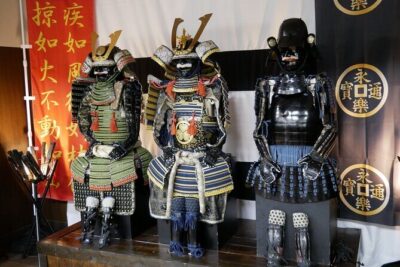 ★ 5.0Best Samurai Experience in TokyoFrom $65458 reviews
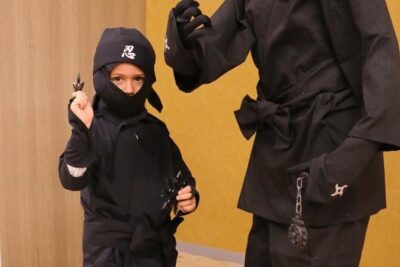 ★ 5.0Ninja Experience (Family Friendly) at Samurai Ninja Museum TOKYOFrom $47441 reviews
 ★ 4.6Samurai Entertainment Night Show in Kanda ShrineFrom $41417 reviews
 ★ 5.0Tokyo Sword Experience – includes Museum Ticket/Ninja ExperienceFrom $84314 reviews
 ★ 4.8Samurai Ninja Museum Asakusa: Samurai Sword Lesson & TourFrom $63306 reviews
 ★ 5.0Samurai Sword Experience (Family Friendly)at SAMURAI MUSEUM TOKYOFrom $65168 reviews
Browse the lists this tour appears in