
Reviewed · TEA CEREMONY EXPERIENCES
Tokyo: Two Types of Japanese Sweets Making and Tea Ceremony
This is the kind of Tokyo class you can actually taste. You’ll make two seasonal Japanese sweets and then switch gears to grind matcha and enjoy a tea moment that’s more relaxed than fancy-theater.
I especially liked that the sweets use high-quality, properly traditional ingredients—Kyoto-made white/red bean paste and Wasanbon sugar for the dried sweets. I also liked the clear English instruction and the way the instructor explained what you’re making and why it matters.
One drawback to plan for: shaping nerikiri takes a steady hand. If you rush, it’ll be harder to get the clean flower look.
In This Review
- Key things I found genuinely interesting
- Wagashi in Tokyo: what you’re really learning
- The full 125-minute schedule, step by step
- First, a short intro to wagashi (about the first 20 minutes)
- Part 1: Ohigashi (dried-type wagashi) shaping
- Break time (you get breathing room before nerikiri)
- Part 2: Nerikiri flower shaping, including Kinton Nerikiri
- Another short break, then the tea section begins
- Tea explanation, matcha grinding demo, then your turn
- Tea ceremony experience (casual, but with structure)
- What’s the point of doing all three parts?
- Ingredient quality: why this class feels more serious
- Price and value: is $28 fair for Tokyo?
- The instructor and the language support that actually helps
- Who should book this wagashi and matcha experience
- Practical tips to get the best results
- Should you book it?
- FAQ
- FAQ
- What does the Tokyo wagashi and tea experience include?
- How long is the experience?
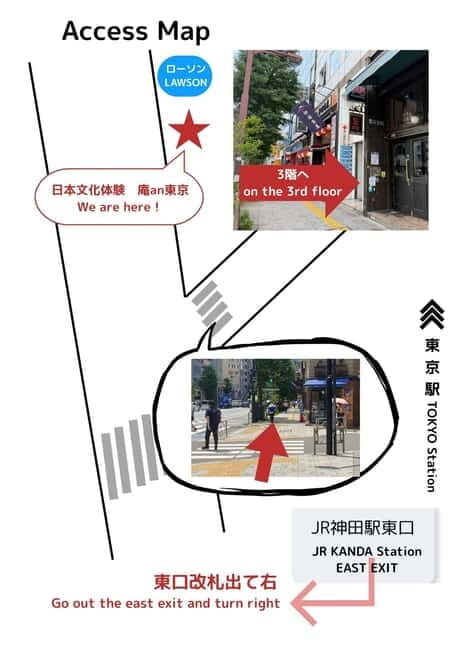
- Where is the meeting point?
- What sweets will I make?
- What matcha will be used?
- Are instructions available in English?
- What is the price?
- Is there anything extra I might need to pay for?
- What are the operation hours?
- Is it refundable if I cancel?
- Do children have a different fee?
Key things I found genuinely interesting
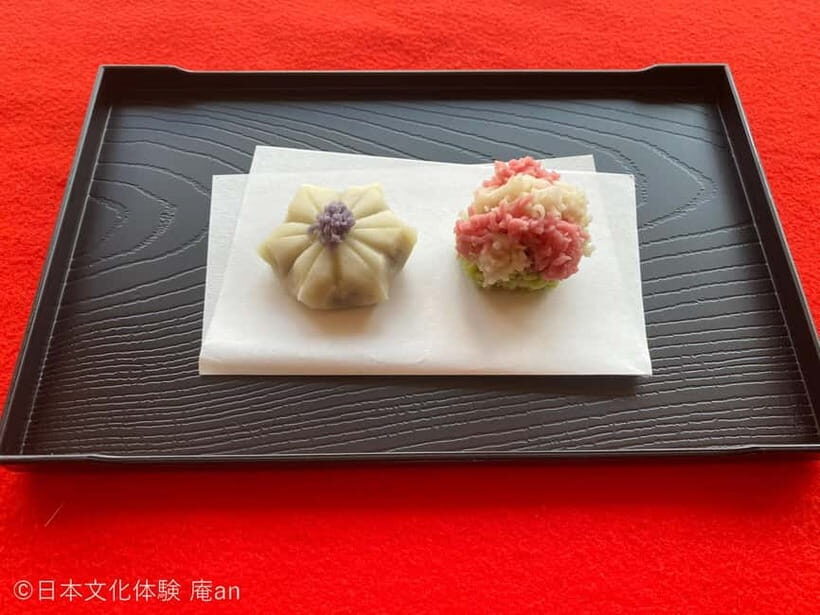
- Wasanbon-based ohigashi: you’re working with traditional Japanese sugar, not a shortcut.
- Two seasonal nerikiri designs: you make more than one shape, including Kinton Nerikiri.
- Kyoto bean paste: the bean filling comes from long-established shops in Kyoto.
- Single-origin special matcha: you grind and taste it, not just watch.
- A casual tea ceremony: it’s structured, but you’re not pressured to perform.
- English support plus food context: you learn the difference between green tea and matcha while you work.
Quieter hours: more tea rooms and ceremonies
- Tokyo: Traditional Tea Ceremony with a Tea Master★ 5.0 · 528 reviews
- Tea Ceremony Workshop in Tokyo by the Experienced Instrucor★ 5.0 · 189 reviews
- Tea Ceremony Experience in a Private Tea Room in Shibuya★ 4.9 · 125 reviews
Wagashi in Tokyo: what you’re really learning
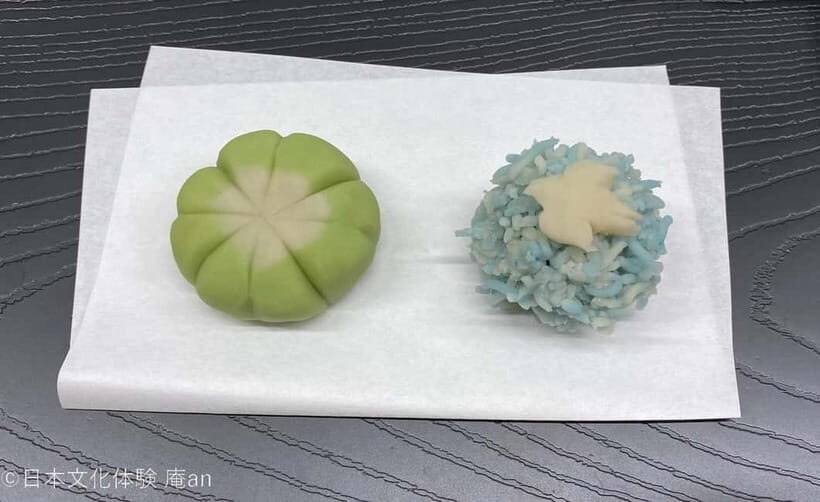
Wagashi classes can be split into two types. Some are mostly watching with a quick hands-on moment at the end. Others are hands-on but still a bit too generic. This one lands in the sweet spot: you actively make both dried sweets and shaped sweets, then you connect it to tea.
For you, the value is simple. You don’t just get a snack. You get a feel for how Japanese sweets balance sweetness, texture, and presentation—plus how matcha fits into the bigger picture of taste.
And since the sweets are made to match the season, you’re not learning an abstract technique you’ll never use again. You’re learning something seasonal and specific, which is exactly how Japanese sweets are meant to work.
The full 125-minute schedule, step by step
The experience runs 125 minutes at AN TOKYO Japanese Culture Experience. It’s designed as three connected parts: Ohigashi, Nerikiri, and matcha/tea.
Here’s what the timing feels like in real life.
First, a short intro to wagashi (about the first 20 minutes)
You start with an explanation of Japanese traditional sweets. This is where the instructor sets up the logic: ingredients and techniques aren’t random. The goal is consistency in taste and form, and a look that fits the season.
This is also where you’ll pick up useful context before you touch anything messy.
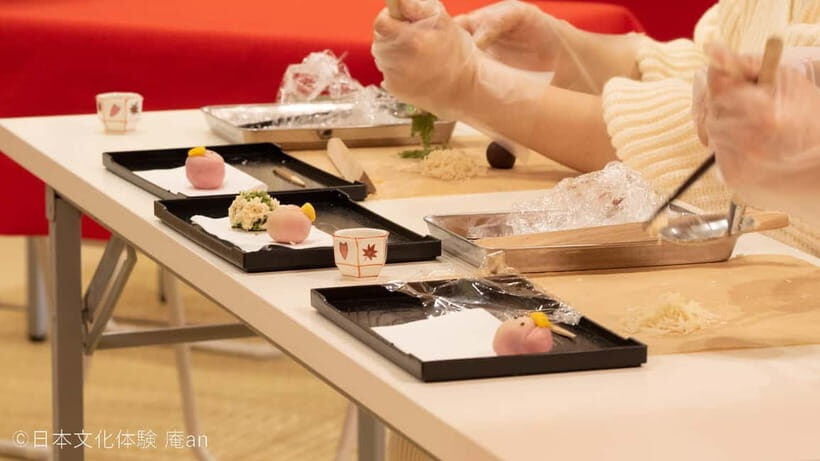
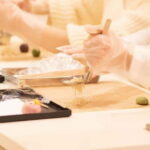
Part 1: Ohigashi (dried-type wagashi) shaping
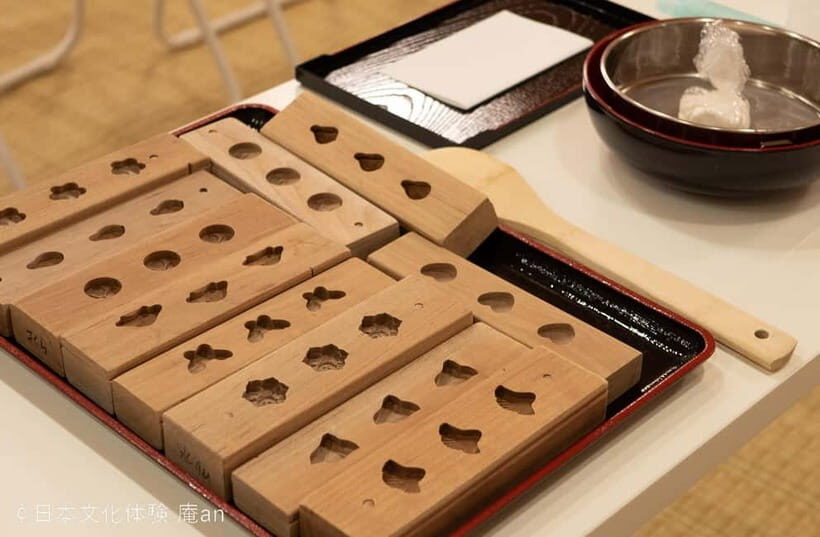
Then you move into making Ohigashi, the dried-type Japanese sweets. This part uses traditional Japanese sugar called Wasanbon.
What to expect: this section is usually more about careful handling and shaping, with less “wet sculpting” stress than nerikiri. You’ll work in a way that feels closer to crafting than cooking—think precision and light pressure.
If you’re new to wagashi, this is a great entry point. It gives you quick momentum, and it sets you up to understand how texture matters when you get to the softer bean-paste sweets later.
Worth weighing up alongside this Tokyo pick:


Break time (you get breathing room before nerikiri)
After the ohigashi work, there’s a break. Use it to reset. Your hands will thank you later during the nerikiri shaping.
Part 2: Nerikiri flower shaping, including Kinton Nerikiri
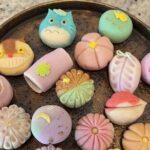
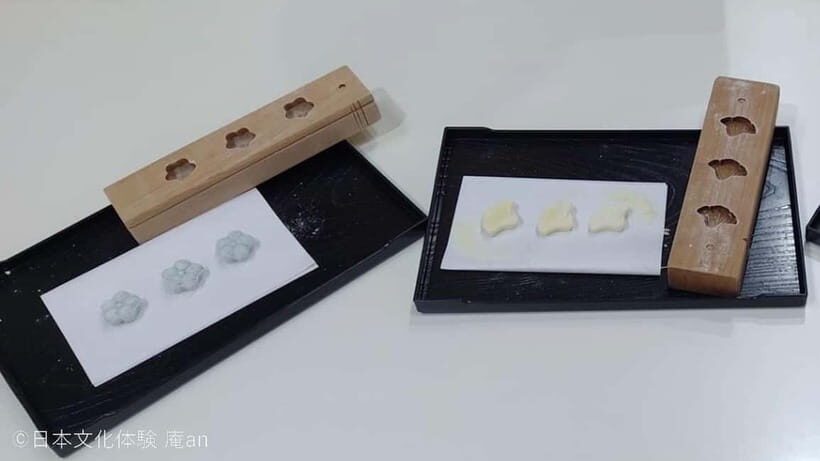
Next comes the main fun: Nerikiri, the bean-paste-based shaped sweets.
You make two seasonal sweets, and the program specifically includes:
- A flower-shaped Nerikiri look
- Kinton Nerikiri
This is the part I’d flag for you if you’re the type who wants instant results. Nerikiri can be a little tricky. You need patience and a light touch to keep the shape crisp while working the paste.
One nice detail: the bean filling is white/red bean paste produced by Kyoto’s long-established shops. That means the taste is part of the lesson—when you finish, you’re not eating a generic sweet. You’re eating something aligned with Japanese craft tradition.
Another short break, then the tea section begins
After the nerikiri making window, there’s another break. Then you shift into tea.
Tea explanation, matcha grinding demo, then your turn
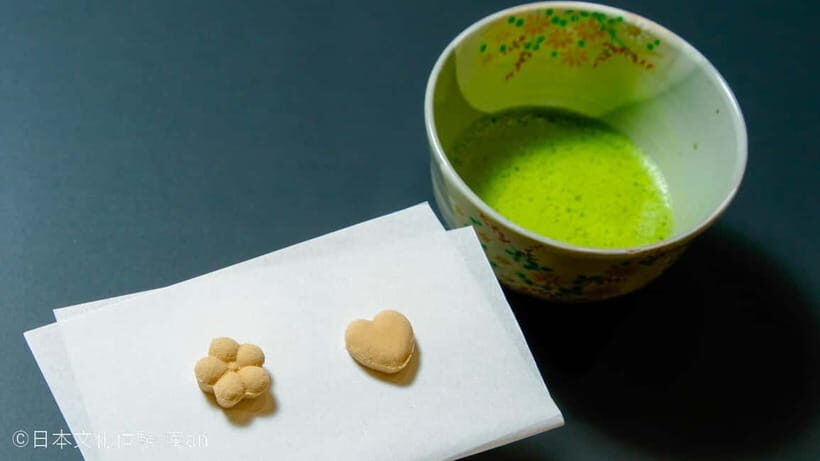
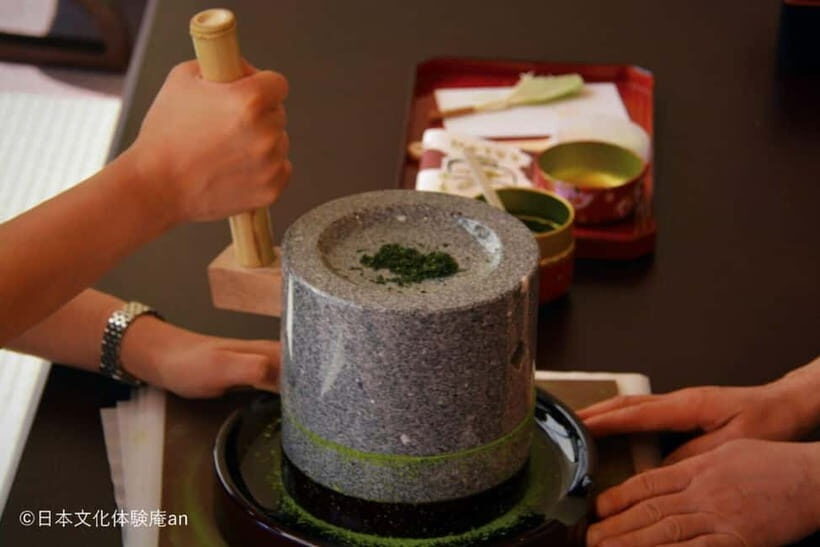
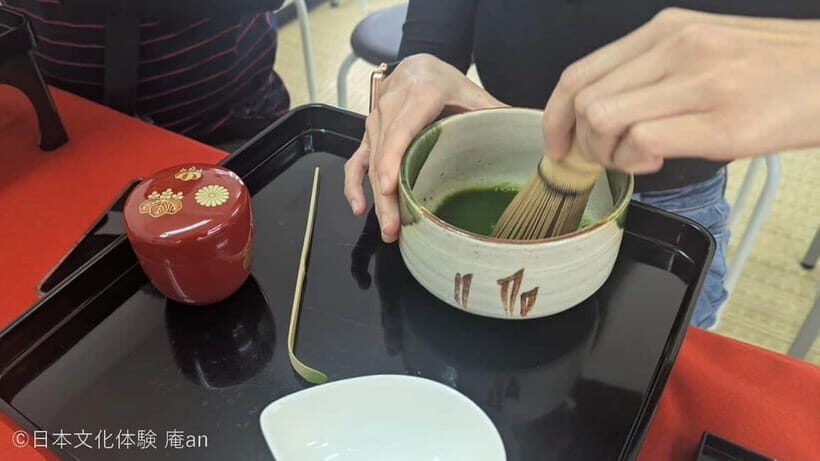
You’ll get an explanation about tea, followed by a matcha grinding demonstration. The matcha is described as single-origin special Matcha, and you’ll grind and then enjoy it as part of the tea experience.
This is where the class becomes more than “make snacks.” You learn the difference between green tea and matcha, and how matcha changes the whole flavor profile because it’s not just brewed—it’s consumed as ground tea powder.
Tea ceremony experience (casual, but with structure)
The tea ceremony part is described as casual, and that’s the right expectation. You’ll get the basics and a sense of how the ritual supports the taste experience. You’re not expected to be a tea performer; you’re expected to participate.
Then you get picture time, and finally eating/drinking time before the session ends.
What’s the point of doing all three parts?
If you’re deciding whether this is worth your time, here’s how I’d think about it: wagashi without tea is a snack class. Tea without wagashi is a drink class. Doing both in one session is where the learning sticks.
- Ohigashi teaches texture contrast. Dried sweets are all about the bite and sweetness balance.
- Nerikiri teaches shape, softness, and the look of seasonal presentation.
- Matcha teaches bitterness and depth, and how that pairs with sweet bean paste.
That pairing matters. Bean paste sweets tend to be sweet and rounded. Matcha brings a different kind of energy—earthy, slightly bitter, and calming. Put together, it feels like a designed experience instead of two random treats.
Ingredient quality: why this class feels more serious
A lot of sweet-making classes don’t brag about ingredients. This one does, and those details help you understand why it tastes good.
You’ll work with:
- Wasanbon for the dried-type Ohigashi
- White/red bean paste from long-established shops in Kyoto
- Single-origin special Matcha
Those aren’t just marketing words. They signal that the teacher cares about tradition and consistency. And when you eat what you made, you can actually tell the difference between a gimmick class and a craft class.
Price and value: is $28 fair for Tokyo?
At $28 per person for 125 minutes, you’re paying for three connected experiences, not one. That includes:
- Two Japanese sweets making sessions
- Matcha grinding and a tea ceremony experience
- A single instructor-led flow built around seasonal wagashi
Yes, there are optional extras. A take-out box is 100 JPY, adding color is 200 JPY, and a completion certificate is 300 JPY. None of that is required, but it’s good to know you might add a little on top if you want a souvenir.
My take: this is good value if you want hands-on time and real tasting, not a quick demo. If you only want photos and a mild taste, you might not use the full value of making two sweets plus matcha.
But if you like learning by doing—and you enjoy eating what you make—this price feels reasonable for Tokyo.
The instructor and the language support that actually helps
One of the most praised parts is the instructor approach: kind, clear, and willing to explain. You’ll also get English translation as much as possible.
That matters because wagashi and tea have vocabulary that can otherwise feel like fog. Here, you’re not just copying shapes. You learn why the sweets are designed the way they are, and you get basic tea context like the green tea vs matcha difference.
Also, the class description notes that the instructor is Japanese, which is fine. You’re not stuck guessing—there’s translation support.
Who should book this wagashi and matcha experience
I think this suits you best if:
- You want a hands-on Tokyo food activity that’s not just sushi or ramen
- You enjoy Japanese craft details—shape, texture, and presentation
- You like tea, or you’re curious about matcha beyond Starbucks-style powder
- You want a class that balances making, learning, and eating
It may be less ideal if:
- You’re very short on time and want only a tiny tasting
- You dislike anything hands-on and prefer watching
- You expect everything to be 100% effortless. Nerikiri shaping needs patience.
Practical tips to get the best results
A few things to do before you go:
- Wear clothes you don’t mind getting a little messy. Making sweets can be light work, but bean paste handling happens.
- Take your time during nerikiri shaping. The class seems designed for careful work, not fast production.
- If you care about photos, remember you get picture time after the tea steps.
- Be ready for a full participation style. Those who do not participate aren’t allowed to enter.
Should you book it?
Book it if you want a genuine Japanese sweets-and-tea experience in Tokyo where you make two seasonal wagashi plus matcha. It’s especially worth it for first-timers who want context, not just a hands-on craft session with zero explanation.
Skip it if you’re only looking for a quick sugar fix or you hate working with your hands. Also, if you’re the type who struggles with detailed shaping, treat the nerikiri part as a chance to learn rather than to perfect.
FAQ
FAQ
What does the Tokyo wagashi and tea experience include?
It includes making two types of Japanese sweets (Ohigashi and Nerikiri) and a matcha tea ceremony experience.
How long is the experience?
The duration is 125 minutes.
Where is the meeting point?
The meeting point is AN TOKYO Japanese Culture Experience.
What sweets will I make?
You’ll make dried-type Ohigashi and two seasonal Nerikiri sweets. The program includes a flower-shaped Nerikiri and Kinton Nerikiri.
What matcha will be used?
You’ll use single-origin special Matcha, and you’ll have a grinding demonstration as part of the experience.
Are instructions available in English?
English translation will be provided as much as possible.
What is the price?
The price is $28 per person.
Is there anything extra I might need to pay for?
A take-out box costs 100 JPY, adding color costs 200 JPY, and an experience completion certificate costs 300 JPY. These are not included.
What are the operation hours?
Operation hours are 10:00 to 17:00.
Is it refundable if I cancel?
Yes, it offers free cancellation up to 24 hours in advance for a full refund.
Do children have a different fee?
Children who sit on their parents’ laps are free of charge if they are under 2 years old.
More Dessert Tours in Tokyo

More Tour Reviews in Tokyo






More Tea Rooms Worth Booking

Fresh reviews from around Tokyo






Tea Ceremony Experiences, compared.
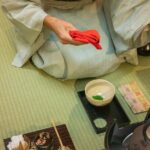
 ★ 5.0Traditional Tea Ceremony with a Tea MasterFrom $38528 reviews
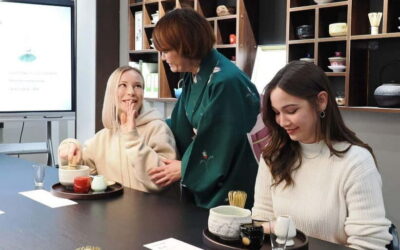
 ★ 5.0Tea Ceremony Workshop in Tokyo by the Experienced InstrucorFrom $38189 reviews
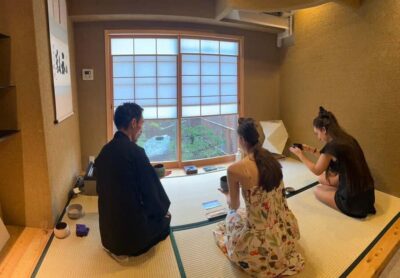 ★ 4.9Tea Ceremony Experience in a Private Tea Room in ShibuyaFrom $30125 reviews
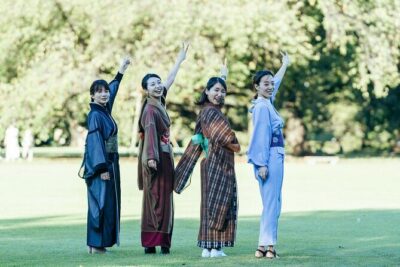 ★ 5.0Matcha Kimono Tea Ceremony in TokyoFrom $59104 reviews
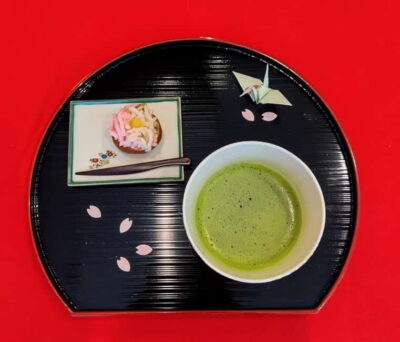 ★ 4.9Tea ceremony experience in Japanese-style room 60minFrom $4586 reviews
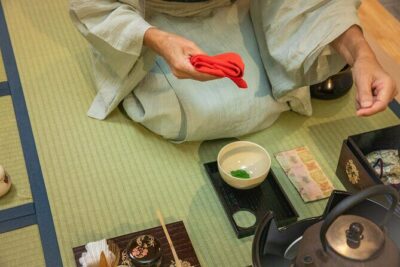 ★ 5.0Casual Japanese Tea Ceremony ExperienceFrom $2574 reviews
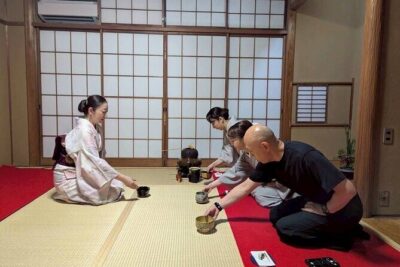 ★ 5.0Shibuya Authentic Tea Ceremony with experienced instructorFrom $2554 reviews
 ★ 4.9Tea Ceremony Experience in a small tea roomFrom $5153 reviews
Browse the lists this tour appears in