
Reviewed · AUDIO TOURS
Tokyo Self-Guided Audio Tour
Tokyo is easier with a plan.
This self-guided audio tour turns 22 famous stops into something you can do at your pace, skipping the places you’d rather not see. I like that you can start and stop whenever you want, and that the audio covers major highlights from Meiji-Jingu Shrine all the way to Ueno Park without making you march in a big group. The one drawback to keep in mind: the experience relies on you clicking the right spot on the map, so if your phone setup is glitchy, the flow can feel confusing.
What makes it interesting is the mix: rail history, imperial grounds, war memory, garden calm, modern art, big viewpoints, and classic temples. I also like the simple idea of an all-in-one listening option (a single playlist for the full route) plus a map where each point links to its own audio. My consideration for you: some stops have admission fees not included, so your final spend depends on which towers or museums you choose to enter.
In This Review
- Key things to know before you press play
- How the Tokyo self-guided audio route works (and why it feels freer)
- Price and value: what $9 buys you in Tokyo
- Stop-by-stop Tokyo: from rail history to Ueno Park
- Tokyo Central Railway Station to Chidorigafuchi moat stroll
- Yasukuni-jinja and Shinjuku Gyoen: war memory and garden styles
- Tokyo Metropolitan Government Buildings to Shibuya Crossing
- Art stops in Roppongi: National Art Center to Tokyo Tower and Zojoji
- Gardens and bay views: Hama Rikyu, Rainbow Bridge, Odaiba, Skytree
- Senso-ji, Asakusa, and museum time in Ueno
- Practical tips so the audio matches where you are
- Who this Tokyo self-guided tour is best for
- Should you book this $9 audio tour?
- FAQ
- How long is the Tokyo self-guided audio tour?
- What does the $9 price include?
- Do I need to be online during the tour?
- How do I access the audio guides?
- Can I start and stop the tour whenever I want?
- What attractions on the route are free versus not included?
- How long are the access links valid?
- Is the tour refundable if I cancel?
Key things to know before you press play
- Mobile ticket + offline-friendly audio: you do not need to stay online while using the tour.
- Two private links arrive by email: one for audio (SoundCloud) and one for an interactive map (Google My Maps).
- 22 stops, about 4 hours as a guide, but you can stretch it by lingering at the places you like.
- Entry fees vary: several attractions are listed as not included, so check what costs extra before you commit.
- You trigger the audio yourself by tapping the map pins, so take a minute to get your setup right early.
More days made easy by a guide
- Tokyo 6hr Private Tour with Government-Licensed Guide★ 5.0 · 3,902 reviews
- Tokyo: Shinjuku Local Bar and Izakaya Guided Walking Tour★ 4.9 · 1,794 reviews
- Tokyo: Private City Highlights Tour with Local Guide★ 4.8 · 1,433 reviews
How the Tokyo self-guided audio route works (and why it feels freer)
The whole point here is control. After booking, you get a mobile ticket and an email with two links for your selected date. One link opens the audio guides (hosted on SoundCloud), and the other opens an interactive Google My Maps route with 22 clickable points. Each point takes you to the audio for that specific stop.
You can listen to one attraction guide at a time, or run the full 22-stop playlist to get a feel for the order before you head out. Once you are in Tokyo, you simply follow the map from place to place, then click the matching stop to play the right audio track. The tour is private, meaning it is only for your group, not a shared bus-style experience with strangers.
One small reality check: the tour is designed so you actively use the map to match location to narration. If you are the type who prefers a guide walking you from A to B, you may need a bit of patience in the first 15 minutes while you learn the system.
Price and value: what $9 buys you in Tokyo
At $9 per person, you are paying for narration, not entrance tickets. That matters in Tokyo, where the difference between free sights and ticketed venues can be big. In this route, lots of stops are listed as free, but several are not included (for example, certain gardens, towers, and multiple museums).
Think of the value like this: the audio helps you understand what you are looking at, plus it saves you the time of figuring out which places are worth stopping for. Since the route includes both iconic sights and museums, the audio can turn a quick walk into something more meaningful. But your final cost will depend on how many optional paid entries you add on top of the tour.
Also, because the audio links stay valid for up to 6 days, you can adjust your schedule. If Tokyo throws you a curveball—weather, jet lag, long lines—you do not have to cram everything into one perfect afternoon.
Stop-by-stop Tokyo: from rail history to Ueno Park
Tokyo Central Railway Station to Chidorigafuchi moat stroll
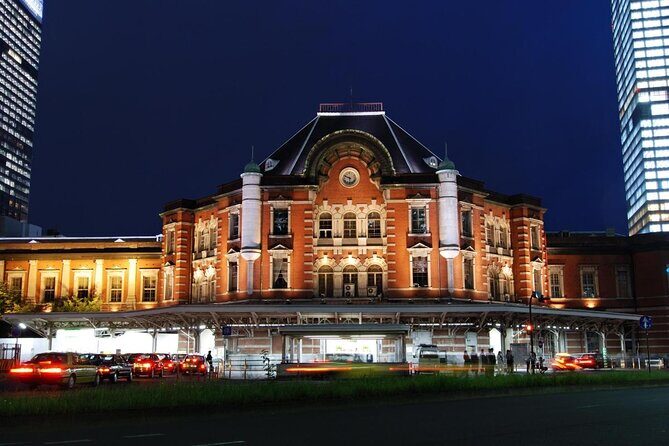
Start at Tokyo Central Railway Station, a historic rail hub where the building itself signals how Tokyo modernized. The stop is short, so I treat it like a quick orientation moment: look up, notice the scale, then connect that setting to the story the audio is telling about the rail network’s role in Japan’s modernization.
Next, head to the East Gardens of the Imperial Palace (Edo Castle ruins). This is your calm reset. You walk through landscaped grounds that sit where Edo Castle once stood, and the narration focuses on imperial history and the quieter rhythm of the space.
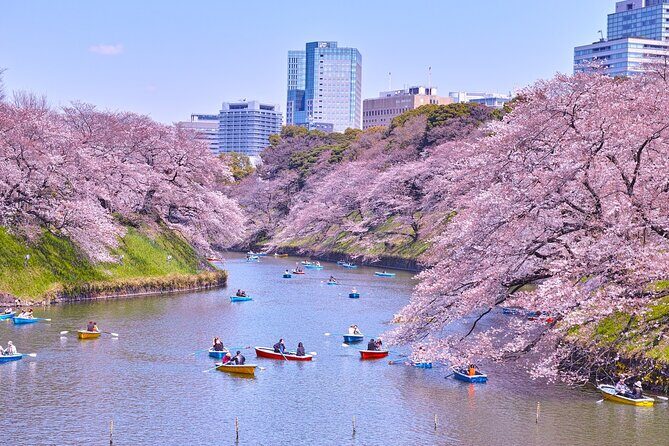
Then comes Chidorigafuchi, the moat area known for cherry blossoms in spring and also tied to feudal defenses. In the warmer months, it can be crowded; in cooler months it can feel surprisingly peaceful. The key planning note: admission there is listed as not included, so decide in advance whether you want to pay and, if you do, build in extra time for checking details on-site.
Worth weighing up alongside this Tokyo pick:


Yasukuni-jinja and Shinjuku Gyoen: war memory and garden styles
At Yasukuni-jinja Shrine, you will get a narration track that does not hide the controversy. The audio is meant to explain why this place is culturally significant and how its history is complex. I like this stop because Tokyo is not only temples and views; it also has memory and debate built into its geography. Take a moment to read the tone around you—this is the kind of site where respect and context matter.
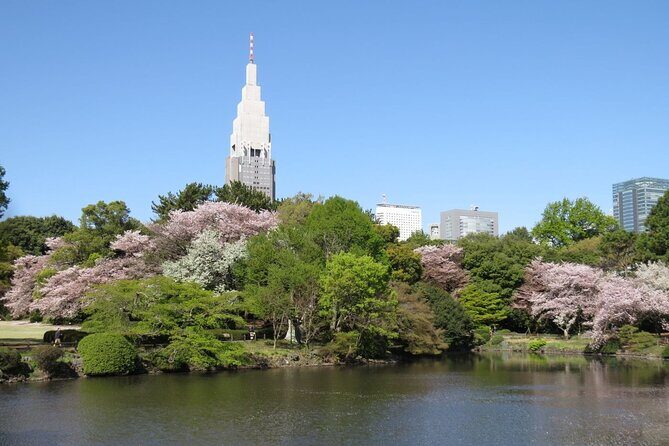
After that, go to Shinjuku Gyoen National Garden. The tour frames it as a blend of Japanese, French, and English garden styles, which is a neat way to understand how tastes changed over time. The garden also has imperial roots and later became part of Japan’s postwar transformation.
One thing to know: this garden is listed as not included, so you will likely pay an entry fee if you want to go inside. If your budget is tight, you might still enjoy the area from outside, but you would miss the full garden experience the audio is describing.
Tokyo Metropolitan Government Buildings to Shibuya Crossing
For a big view, the tour takes you to the Tokyo Metropolitan Government Buildings. This is one of those stops where the payoff is straightforward: climb up and take in panoramic city scenes, while the narration ties modern architecture to Tokyo’s governance.
Then shift gears to pure city energy: Shibuya Crossing. The audio here focuses on the area’s evolution—from residential district roots to fashion hub status—and the intersection’s reputation as one of the world’s busiest crossings. This is a great stop when you want Tokyo to feel like Tokyo: quick, loud, and instantly recognizable.
If you are trying to keep your feet happy, I suggest doing Shibuya later in the day when you have enough stamina to enjoy the spectacle without rushing. The narration is best when you slow down for a moment, even if only for a minute, and let the chaos be the show.
Art stops in Roppongi: National Art Center to Tokyo Tower and Zojoji
Next is the National Art Center, Tokyo, described as an “empty museum.” The idea is that the building’s design shapes how you move and see temporary exhibitions. This works well with an audio guide because the narration can help you understand what you are walking through, instead of just snapping photos and moving on.
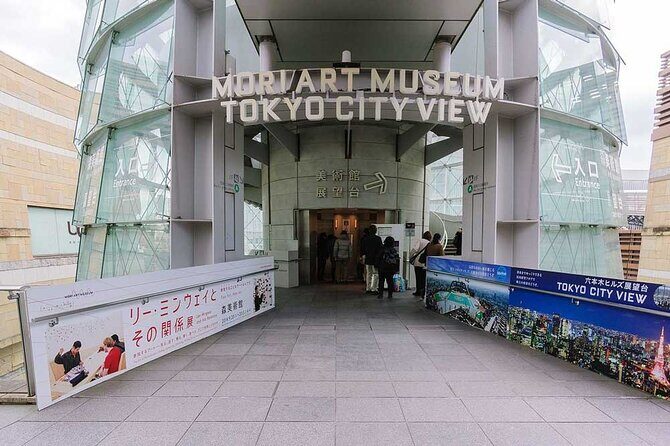
From there, go up to the Mori Art Museum in Roppongi Hills. It is a contemporary art stop with a sky-high feel, and the audio also points you toward the views. This one is listed as not included, so your choice hinges on whether you want ticketed museum time or prefer to keep the tour mostly free.
Then hit the skyline icon: Tokyo Tower, inspired by the Eiffel Tower. The audio connects it to post-war significance, which is useful because it helps you see Tokyo Tower as more than just a landmark you photograph at night.
Right next door in spirit is Zojoji Temple, an ancient Buddhist temple linked to the Tokugawa shogunate, with Tokyo Tower looming in the backdrop. I love this pairing because it shows contrast in one frame: old faith and old power, right beside a symbol of modern Tokyo.
Gardens and bay views: Hama Rikyu, Rainbow Bridge, Odaiba, Skytree
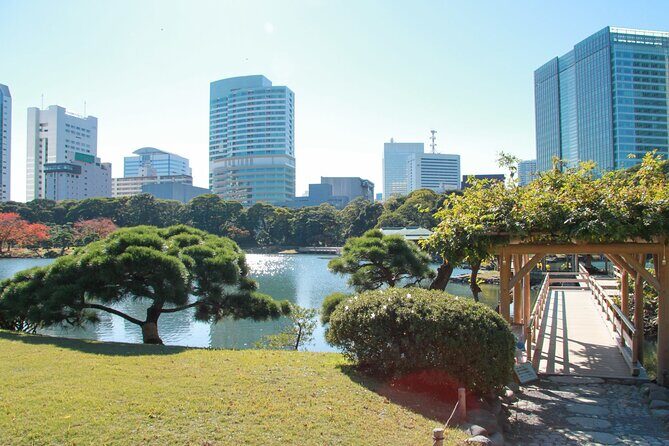
After temples and towers, take a slower pace at Hama Rikyu Gardens. This was once a feudal lord’s residence, and the audio explains how the place has adapted through centuries of Tokyo’s growth. It is a good stop to reset your day and let your brain switch from neon to nature edges (and yes, you will likely walk a bit).
Then cross into the Tokyo Bay story with Rainbow Bridge. The narration covers its construction and also mentions the nightly illumination. If you are visiting in the evening, this can become a standout moment; if you are here earlier, it still works as a visual break and a way to connect Tokyo to water.
From there, head to Odaiba, a futuristic entertainment district built on artificial islands. The audio frames it as a development story that moved from fortress roots to leisure destination. This is a nice “Tokyo of the future” counterweight after all the historical stops.
If you still want skyline drama, the tour includes Tokyo Skytree. The audio points to the tower’s design inspiration from traditional Japanese aesthetics, and it is listed as not included. Decide based on your mood: Skytree is a strong visual anchor, but it can add cost.
Senso-ji, Asakusa, and museum time in Ueno
Start your classic Tokyo temple sequence with Senso-ji, Tokyo’s oldest temple. The audio covers the founding legend and why it mattered in Edo period life. This is one of the best places on the route to feel the long continuity of Tokyo’s spiritual side.
Then wander through Asakusa, where the old Tokyo atmosphere is still present. The audio frames the area’s shift from entertainment district roots toward a cultural center, which helps explain why it feels both touristy and traditional at the same time.
If you want a full indoor block, the tour brings you to Tokyo National Museum, listed as not included. The audio describes it as Japan’s oldest and largest museum and highlights its broad Japanese art and antiquities collection. This is where you should slow down—ten minutes is enough for a directional taste, but not for finishing a gallery you love.
Next door in spirit is National Museum of Nature and Science. The audio focuses on natural world themes and technology advancements, and it is also not included. This can be a great choice if your feet are tired or if the weather turns.
Then consider National Museum of Western Art, housed in a Le Corbusier-designed building and listed with UNESCO World Heritage status. The audio is aimed at showing you why the architecture matters as much as the art. This stop is not included, so it is a good one to choose only if you enjoy museums or the building design interests you.
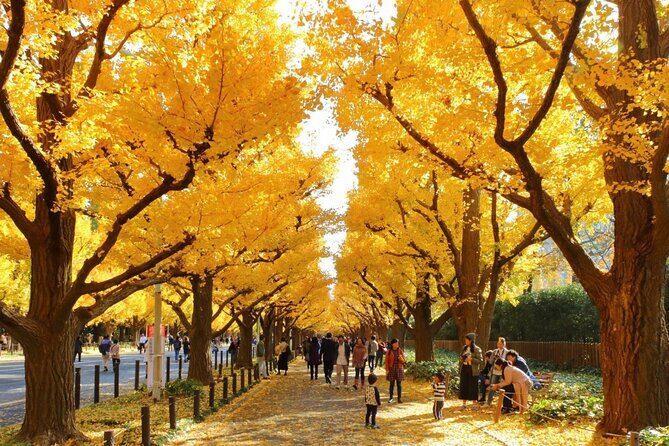
Finish with Ueno Park, Tokyo’s most popular public park, with museums and big seasonal importance—especially cherry blossom season. The audio is light on paid-entry pressure because the park itself is free on this route, even if nearby museums are ticketed.
Practical tips so the audio matches where you are
Based on the tour’s setup, your success comes down to small habits. First, open the email links before you leave your hotel. Test that the audio plays and that the map pins click correctly. If you wait until you are standing at a busy intersection, you lose time fast.
Second, use the interactive map as your “source of truth.” The audio is designed to be tied to the exact stop you select. If the commentary feels like it is talking about the wrong place, the fix is usually to tap the correct map pin again rather than continuing with the same track.
Third, plan around phone battery and signal. The tour says you do not need to be online to use it, but you still have to access the links and load the audio the first time. Bring a charger, lower your power drain, and consider doing the first stop while you still have a comfortable amount of battery.
Finally, treat the 10-minute timing as a default. Tokyo is not polite about lines, crowds, and transit delays. The best use of the audio tour is to let it guide your attention, then adjust your pace at each stop.
Who this Tokyo self-guided tour is best for
This tour is a good fit if you want Tokyo highlights without the stress of a fixed group schedule. It works especially well for people who like structure but hate rushing. If you enjoy learning why places matter—rail history, imperial grounds, Shinto tradition, modern governance, art architecture—this route can help you make quick stops feel smarter.
It is also a solid pick for visitors who like to build their day around neighborhoods, because you can start where you want and stop when you want. That flexibility is a big deal when you are mixing free sights with ticketed ones.
If you dislike using apps or tapping map pins to start audio, you may find the experience less pleasant than you expect. The tour is self-guided by design, and the system only works if you engage with it.
Should you book this $9 audio tour?
I would book it if you are trying to cover a lot of Tokyo highlights with minimal cost, and you are comfortable navigating with a map. The value is strongest when you plan to use both links (playlist + map) and when you go into it knowing that some stops cost extra beyond the $9.
Skip it if you need a hands-on guide who fixes problems in real time. Since the tour is driven by access links and interactive map taps, you want to be the kind of traveler who can manage basic tech setup and check your access email early.
If your cancellation plans are uncertain, keep in mind this experience is non-refundable and cannot be changed. Book only when your date is solid.
Overall, this is a budget-friendly way to experience Tokyo’s big sights in a way that lets you choose what to linger on—just give yourself a few minutes at the start to get the audio working smoothly.
FAQ
How long is the Tokyo self-guided audio tour?
The tour is listed as approximately 4 hours.
What does the $9 price include?
The price covers access to the audio guide and the interactive itinerary map links for the 22 attractions. It does not include admission fees for stops marked as not included, and transportation is not included.
Do I need to be online during the tour?
The tour information says you do not need to be online to use the audio tour.
How do I access the audio guides?
You receive an email before your starting time with two links: one to a secure SoundCloud web link for the audio guides and another to a Google My Maps link for the itinerary map.
Can I start and stop the tour whenever I want?
Yes. The tour is designed so you can start and stop whenever you wish.
What attractions on the route are free versus not included?
The itinerary marks several stops as free admission (like Tokyo Central Railway Station, East Gardens, Meiji Jingu, Shibuya Crossing, and Senso-ji), while others are listed as admission not included (like Chidorigafuchi, Shinjuku Gyoen, Mori Art Museum, Tokyo Tower, Hama Rikyu Gardens, Odaiba, Tokyo Skytree, and multiple museums).
How long are the access links valid?
The private access links are valid for up to 6 days.
Is the tour refundable if I cancel?
No. The experience is non-refundable and cannot be changed for any reason.
Easier with a Guide

More Tours in Tokyo




More Tour Reviews in Tokyo




Fresh reviews from around Tokyo






Audio Tours, compared.
 ★ 3.8Open Top Panoramic Sightseeing Bus with Audio GuideFrom $11254 reviews
60min Panoramic Open Top Bus Tour with Audio GuideFrom $1440 reviews
★ 3.8Open Top Panoramic Sightseeing Bus with Audio GuideFrom $11254 reviews
60min Panoramic Open Top Bus Tour with Audio GuideFrom $1440 reviews
 ★ 4.8Sumo Keiko Training Tour with Audio Guide & PhotoFrom $855 reviews
 ★ 4.5Open Top Sightseeing Bus with Audio GuideFrom $115 reviews
Browse the lists this tour appears in