
Tokyo from the top feels different.
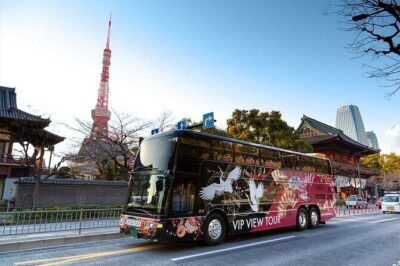
This 60-minute open-top bus turns the usual Tokyo sightseeing chaos into a simple loop with continuous views. I like that the ride is designed for uninterrupted panoramic sightlines (double-decker, open-top), and I also like the built-in GPS automated guidance in 8 languages so you can follow along even if you miss a stop name.
Here’s the main thing to factor in: weather.
If it’s raining hard, the roof may be closed and the tour may get canceled for bad weather, which can change how “open” the experience feels.
In This Review
- Key points at a glance
- A One-Hour Panoramic Tokyo Loop From Tokyo Station
- Who this suits best
- Double-Decker Open-Top Views and GPS Audio in 8 Languages
- Hibiya Park to Tokyo Tower: Classic Sights Rolling Past
- Rainbow Bridge and Odaiba: Waterfront Views With a Breeze Factor
- Tsukiji Outer Market and Kabuki-za: Culture in Motion
- Ginza and the Finish Back at Hato Bus Tokyo Office
- Price and Value: Is $14 for 60 Minutes Actually Fair?
- Comfort Tips: Snacks, Earphones, and Weather Reality
- What You’ll Learn From the Route (Even Without Leaving the Bus)
- Should You Book This 60-Minute Open-Top Bus Tour?
- FAQ
- Where does the tour start and end?
- Is this hop-on hop-off sightseeing?
- How long is the tour?
- Do I get an audio guide, and what languages are available?
- Do I need my own earphones?
- Can I bring food or drinks on the bus?
- What happens in rain?
- Is hotel pickup included?
Key points at a glance
- Open-top, double-decker views for wide angles you can’t get from most ground-level routes
- GPS automated guidance in 8 languages helps you keep up without hunting for info
- Tokyo Station start and finish makes it easy to plug into a day plan
- Route hits major landmarks by passing Hibiya Park, Tokyo Tower, Rainbow Bridge, Odaiba, and Ginza
- Audio needs your own earphones and a smartphone that works in Japan
More days made easy by a guide
- Tokyo 6hr Private Tour with Government-Licensed Guide★ 5.0 · 3,902 reviews
- Tokyo: Shinjuku Local Bar and Izakaya Guided Walking Tour★ 4.9 · 1,794 reviews
- Tokyo: Private City Highlights Tour with Local Guide★ 4.8 · 1,433 reviews
A One-Hour Panoramic Tokyo Loop From Tokyo Station
This tour is built for people who want Tokyo’s highlights without committing to long train rides or a strict schedule. You get a focused, straight-to-the-point one-hour ride that starts and ends at the Hato bus stop near JR Tokyo Station (Marunouchi South Exit).
I like that the meeting point is easy to orient around: when you exit via the Marunouchi South side, you turn left and walk straight about 2 minutes to the yellow Hato Bus stop. For a first-day sightseeing plan, that’s a comfort factor because you’re not spending time figuring out transit just to begin.
It’s also a good length for mixed-energy days. One hour won’t fry your legs, and you can still pivot afterward for food, shopping, or museums.
Who this suits best
This tour tends to work well if you:
- Want big views fast
- Prefer staying on a vehicle rather than switching lines and walking blocks
- Like the idea of hearing what you’re seeing through an audio guide
It’s less ideal if your goal is deep exploration at one place for a long time, since this is not described as a stop-and-shop sightseeing format.
Double-Decker Open-Top Views and GPS Audio in 8 Languages
The core of the experience is simple: you’re up high, you’re in an open-top double-decker, and the route is paired with GPS-based automated guidance. The audio support covers eight languages, including English, Chinese, Korean, Spanish, French, Thai, Indonesian, and Vietnamese.
Even better, you’re not locked into one language experience. The system is designed so your smartphone and earphones become your remote control for what you hear and when.
A practical note I want you to catch early: you should bring a smartphone usable in Japan and your own earphones. The tour doesn’t provide rentals for GPS devices or earphones. The system itself is provided free of charge, but there’s also a clear warning that if your earphones or playback have technical issues, refunds aren’t offered for those malfunctions.
In other words: test your earphones before you leave. A tiny battery problem or dead jack can turn a smooth hour into a frustrating hour.
Hibiya Park to Tokyo Tower: Classic Sights Rolling Past
The tour begins at the Hato bus Tokyo office and then slides into central sightseeing right away. You pass Hibiya Park first, which is a helpful early “breather” view—green space right near major business streets gives you a sense of Tokyo’s scale.
Next up is the National Diet Building, a key landmark that’s easy to recognize from the street-level big shapes and government district vibe. Even when you’re just passing by, seeing it from the top helps you understand how Tokyo organizes power and infrastructure.
Then the route continues through Toranomon, and you start getting the “this is a global city” feeling. Tall buildings, dense city blocks, and that strong Tokyo street geometry become more obvious when you’re looking down at the intersections.
After that comes Tokyo Tower, and this is where the value of the open-top ride really shows. From an elevated bus angle, you can catch Tokyo Tower from different sightlines instead of only from the main viewing approaches. A five-star review specifically called out the fun of seeing Tokyo Tower from various angles that aren’t easy to get otherwise.
Worth weighing up alongside this Tokyo pick:


Rainbow Bridge and Odaiba: Waterfront Views With a Breeze Factor
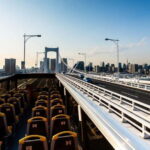
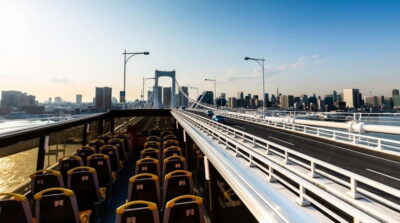
Then the bus moves you toward the signature waterfront mood: Rainbow Bridge and the surrounding Tokyo Bay area. The highlights list explicitly mentions passing Rainbow Bridge and feeling Tokyo’s breeze, which is exactly what the open-top format is best at.
Waterfront sections often feel different from central districts, mainly because the air and horizon change. From the bus, you get the big picture—long lines of water, the city wrapping around it, and that “Tokyo is massive” effect that’s hard to notice from one street photo spot.
Next is Odaiba, which tends to read visually like a separate Tokyo world. From above, you can spot the layout changes—more open spaces, broader roads, and that modern district feel.
After Odaiba, you pass Toyosu. Toyosu is another name that’s worth catching because it signals the route’s pivot from iconic landmarks into contemporary Tokyo zones. Even if you don’t know every building, seeing it from the bus gives you a practical map of where the city is heading.
Tsukiji Outer Market and Kabuki-za: Culture in Motion
Once the tour shifts back toward “old-meets-new” central Tokyo, you pass Tsukiji Outer Market. You won’t be getting a market wandering session here, but you will see the area’s density and the way it sits near major roads.
This kind of passing view is useful when your planning is about neighborhoods. You can mark the general zone in your head so later, when you decide to walk Tsukiji properly, you have a better sense of orientation.
Then you pass Kabuki-za, one of those landmarks you notice even from a moving bus. The theater’s presence is instant, and from the double-decker perspective you get cleaner lines of sight than you would standing behind street traffic.
A detail I appreciate from the experience setup is that you’re not left guessing. There’s a Japanese-speaking guide on board, and the route guidance is supported by automated GPS prompts. That combo helps you connect the “spot names” to the visuals you’re actually seeing as the bus moves.
Ginza and the Finish Back at Hato Bus Tokyo Office
The route returns toward Ginza, which is where the shopping-district energy makes itself known. Even from the pass-by angle, Ginza reads as more polished, more focused, more “mainstream Tokyo.” It’s a good late stop because by then you’ve already built a mental map of what you saw earlier: tower, bridge, waterfront, and cultural anchors.
Then you arrive back at the Hato bus Tokyo office. I like that the return is straightforward because it keeps your day flexible. You don’t need to figure out a new meeting point or hop to a different transit hub just to end the tour.
In one hour, you’ll likely remember the big landmarks more than the exact street details, and that’s fine. This tour is built to help you pick the places you want to go back to on foot later.
Price and Value: Is $14 for 60 Minutes Actually Fair?
At $14 per person for a one-hour ride, the value comes from what’s included rather than the sticker price. You’re paying for:
- A double-decker open-top bus experience
- Audio support through the GPS automated guidance and included audio guide
- A route that passes multiple major landmarks in a tight loop
The big “value win” is time. Tokyo can be fast, but it can also eat hours in transit and walking. This tour compresses the sightseeing geography into a single, low-effort hour.
The tradeoff is also straightforward: it’s not hop-on hop-off. You’re not meant to exit and spend an hour at Tokyo Tower or hop out for Tsukiji snacks. If your ideal day includes long stays, you’ll want other plans for that.
Also, hotel pickup and drop-off aren’t included. You’ll need to get yourself to the Hato bus stop near Tokyo Station, so if you’re staying far away, plan your morning transit accordingly.
Comfort Tips: Snacks, Earphones, and Weather Reality
Comfort is surprisingly central to whether this kind of tour feels worth it. One five-star review highlighted that the ride felt comfortable, and that matches the idea that the bus ride is the main event.
Still, there are a few rules you’ll want to follow:
- Eating is not allowed on the bus.
- Drinks in plastic bottles are permitted.
That matters because it keeps the space cleaner and reduces distractions, but it also means you should grab any snacks before you board.
Weather is the other comfort factor. The information you get is clear: if rain gets heavy, the bus roof may close and the tour may even cancel due to bad weather. If open-top views are the reason you’re booking, keep a weather-aware mindset.
Finally, don’t skip the gear checklist:
- Bring earphones (not provided)
- Bring a smartphone that you can use in Japan
- Have enough charge so the audio/GPS works through the full ride
What You’ll Learn From the Route (Even Without Leaving the Bus)
This tour works when you treat it like a moving orientation session. The pass-by structure is actually helpful because it trains your eyes to recognize Tokyo’s major districts quickly. After you see the National Diet Building, Toranomon, Tokyo Tower, and Ginza from an elevated viewpoint, you get a shortcut understanding of how the city’s centers connect.
The GPS guidance also helps you connect names to places. Instead of just collecting photos, you get simple context while the landmarks roll by. One review praised the instruction style, saying the guide gave complete directions during the trip, which supports the idea that you won’t feel totally lost even if you’re seeing these spots for the first time.
And that “sites may be old but kept new” note from a review is a reminder that Tokyo’s landmarks often function as both history and ongoing civic space. The experience doesn’t ask you to study details for hours; it gets you the big-picture view quickly.
Should You Book This 60-Minute Open-Top Bus Tour?
I think this is a smart booking if you want a fast, scenic sampler of Tokyo’s headline landmarks with audio support and minimal effort. If you like the idea of seeing Tokyo Tower from multiple angles, passing Rainbow Bridge and the Odaiba waterfront zone, and finishing back at Tokyo Station, then the structure fits well.
You should skip or reconsider if:
- You hate rain-related uncertainty, since the roof may close and the tour can cancel in bad weather
- You want extended time in any one location, since this is not hop-on hop-off
- You don’t want to rely on your smartphone and earphones for the audio experience
If you’re building a first-day itinerary, this tour is a practical way to get the city’s geometry in your head fast. Then you can decide what deserves a second visit on foot.
FAQ
Where does the tour start and end?
It starts and ends at the Hato Bus Tokyo office near JR Tokyo Station (Marunouchi South Exit). The stop is described as a yellow bus and is about a 2-minute walk from the exit.
Is this hop-on hop-off sightseeing?
No. This is described as a route where you stay on the bus for the full loop, not a hop-on hop-off format.
How long is the tour?
The tour duration is 60 minutes.
Do I get an audio guide, and what languages are available?
Yes. The audio guide is included, and the GPS automated guidance supports eight languages: English, Chinese, Korean, Spanish, French, Thai, Indonesian, and Vietnamese.
Do I need my own earphones?
Yes. You’ll need your own earphones, and GPS devices and earphones aren’t provided for rental.
Can I bring food or drinks on the bus?
Eating is not allowed on the bus. Drinks in plastic bottles are permitted.
What happens in rain?
The bus roof may be closed in case of rain, and the tour may be canceled due to bad weather or heavy rain.
Is hotel pickup included?
No. Hotel pickup and drop-off are not included. You need to get to the Hato bus meeting point near Tokyo Station.
Easier with a Guide



More Tours in Tokyo




More Tour Reviews in Tokyo




Fresh reviews from around Tokyo






Audio Tours, compared.
 ★ 3.8Open Top Panoramic Sightseeing Bus with Audio GuideFrom $11254 reviews
 ★ 3.5Tokyo Self-Guided Audio TourFrom $910 reviews
 ★ 4.5Open Top Sightseeing Bus with Audio GuideFrom $115 reviews
 ★ 4.8Sumo Keiko Training Tour with Audio Guide & PhotoFrom $855 reviews
Browse the lists this tour appears in