
Reviewed · AUDIO TOURS
Tokyo: Open Top Panoramic Sightseeing Bus with Audio Guide
Tokyo looks great from a bus.
This open-top panoramic sightseeing ride is a fast, low-stress way to see a lot of Tokyo’s headline sights without juggling stations or timing. You sit up high, feel the wind, and follow the route while a GPS-enabled audio guide explains what you’re seeing. It’s especially useful on day one, when you’re still sorting out neighborhoods and landmarks.
I really like two things here: the open-top perspective (it makes Tokyo Tower and Rainbow Bridge feel close), and the audio system that’s tied to the bus’s location. One possible drawback: the ride is still outdoors, so if rain (or cold/heat) hits, the roof may be closed and you’ll lose some of that sky-and-water view.
In This Review
- Key things to know before you board
- Open-Top Bus Views in 70 Minutes
- Choosing the City Course or Bay Course
- City Course: classic central Tokyo vibes
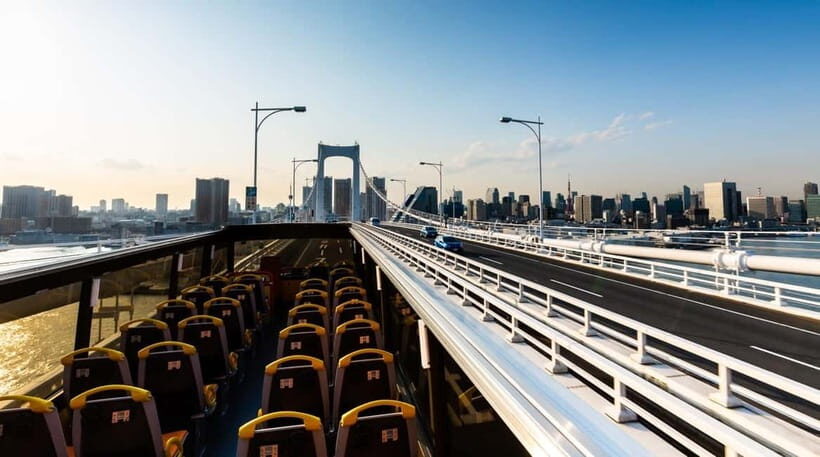
- Bay Course: Tokyo Bay, Rainbow Bridge, and Odaiba
- City Course Stops: From Tokyo Station to Ginza
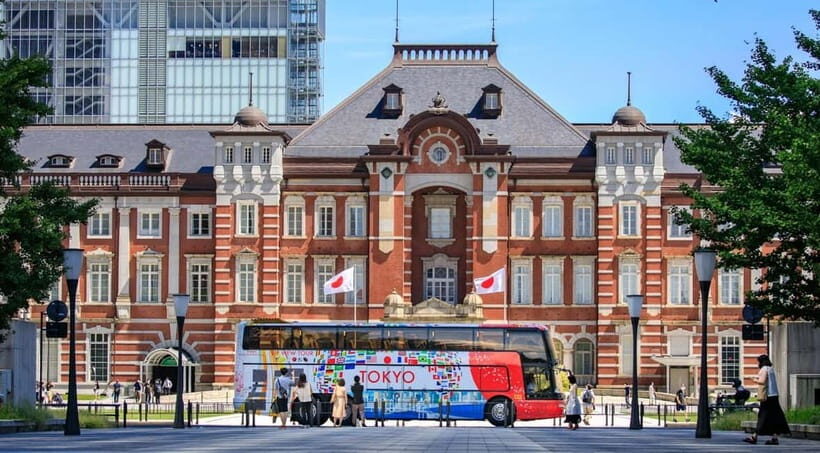
- Tokyo Station Red Brick Station Building → Marunouchi
- Zojoji Temple → Tokyo Tower
- Chidorigafuchi → Akasaka State Guest House → Meiji Jingu Gaien
- Tokyo Midtown → Roppongi → Hibiya → Ginza
- Bay Course Stops: Rainbow Bridge and Odaiba Highlights
- Tokyo Station Red Brick Station Building → Marunouchi
- Zojoji Temple → Tokyo Tower
- Shibaura Rainbow Bridge (1st Level) → Fuji TV Building → Statue of Liberty
- Odaiba Seaside Park → Rainbow Bridge (2nd Level) → Shiodome
- Ginza
- How the GPS Audio Guide Works (and What to Listen For)
- Comfort, Weather, and Small Rules That Change the Ride
- Meeting Point: Tokyo VIP Lounge by Tokyo Station
- Price and Value at About $11
- Who This Tour Suits Best
- Should You Book This Open-Top Bus?
- FAQ
- How long is the bus tour?
- Are headphones included?
- Does the tour have a live guide?
- What languages are available on the audio guide?
- Does it run in rain?
- What are the two route options?
- Where is the meeting point?
- What should I bring or avoid on the bus?
- How early should I arrive?
Key things to know before you board
- GPS audio guide that matches what’s coming next as the bus moves
- Two route options in the same 70-minute format: City Course or Bay Course
- Optional headphones cost extra (and the jack is 3.5mm mini plug)
- Open-top rules: no smoking, no selfie sticks, no food, and no umbrellas onboard
- You’ll get a lot of iconic names in a short time (Tokyo Tower, Ginza, Roppongi, Odaiba, Rainbow Bridge)
More days made easy by a guide
- Tokyo 6hr Private Tour with Government-Licensed Guide★ 5.0 · 3,902 reviews
- Tokyo: Shinjuku Local Bar and Izakaya Guided Walking Tour★ 4.9 · 1,794 reviews
- Tokyo: Private City Highlights Tour with Local Guide★ 4.8 · 1,433 reviews
Open-Top Bus Views in 70 Minutes
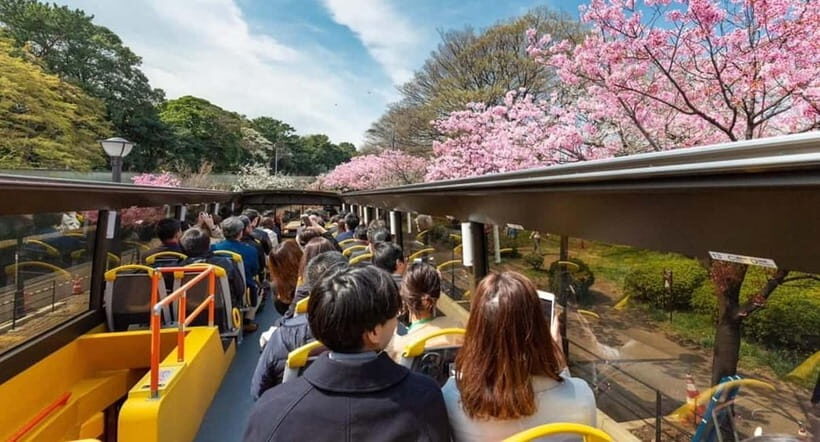
If you only have a small window of time in Tokyo, this kind of tour does a smart job: it turns the city into something you can actually take in. Instead of hopping between stops, you ride a loop and let the landmarks line up in front of you. At $11 for a 70-minute open-top bus experience, it’s one of the cheaper ways to get a “big picture” overview of the center and the waterfront.
The open-top setup matters more than it sounds. Tokyo Tower is a perfect example: from street level it’s impressive, but from the bus you get a cleaner angle and less street clutter. Same with Ginza—watching the city move around you makes it feel like Tokyo is a living machine, not a list of photos you need to check off.
One more practical point: this tour includes Japanese-speaking staff for assistance, which helps if you get turned around at the meeting point. You’re also traveling with a fixed schedule, so you don’t spend your whole day trying to “figure it out” while everyone else is eating ramen.
Choosing the City Course or Bay Course
You’ll ride one of two routes, both timed at 70 minutes with the audio guide. The “right” choice is mostly about what you want more of: skyline and neighborhoods, or water and famous bridges.
City Course: classic central Tokyo vibes
The City Course is the one I’d pick if you want Tokyo’s major districts in a single sweep. You’ll pass landmarks like the Imperial Palace area, Meiji Jingu Gaien, Tokyo Midtown, Roppongi, Tokyo Tower, and end with Ginza. It’s built for skyline views and “this is what central Tokyo looks like” energy.
Bay Course: Tokyo Bay, Rainbow Bridge, and Odaiba
The Bay Course leans into water views and flashier city geometry. You get Tokyo Bay and the Rainbow Bridge experience on both sides (more on that below), plus stops and sights around Odaiba. If your dream Tokyo includes water, modern architecture, and that photogenic bridge moment, this is your route.
Worth weighing up alongside this Tokyo pick:

City Course Stops: From Tokyo Station to Ginza
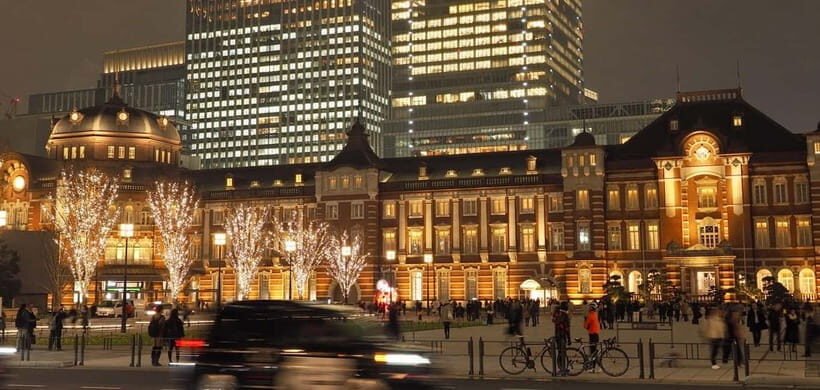
This route moves through central Tokyo in a way that’s easy to follow, especially if you’re new and want landmarks without homework.
Tokyo Station Red Brick Station Building → Marunouchi
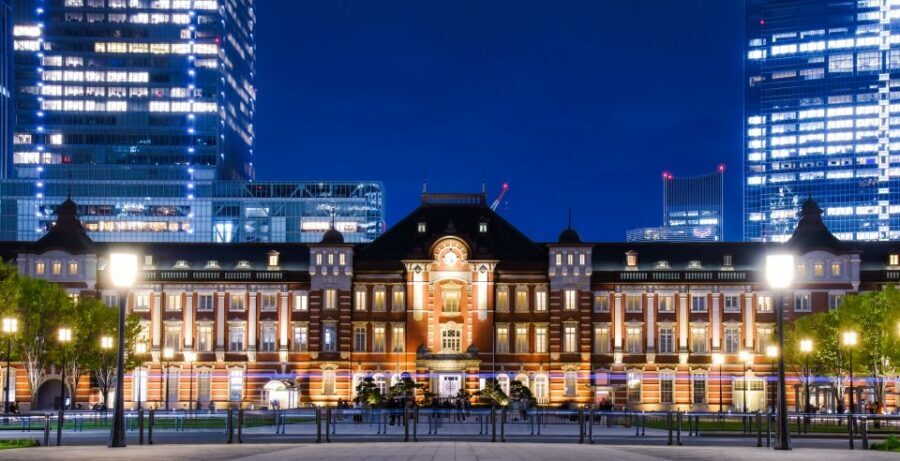
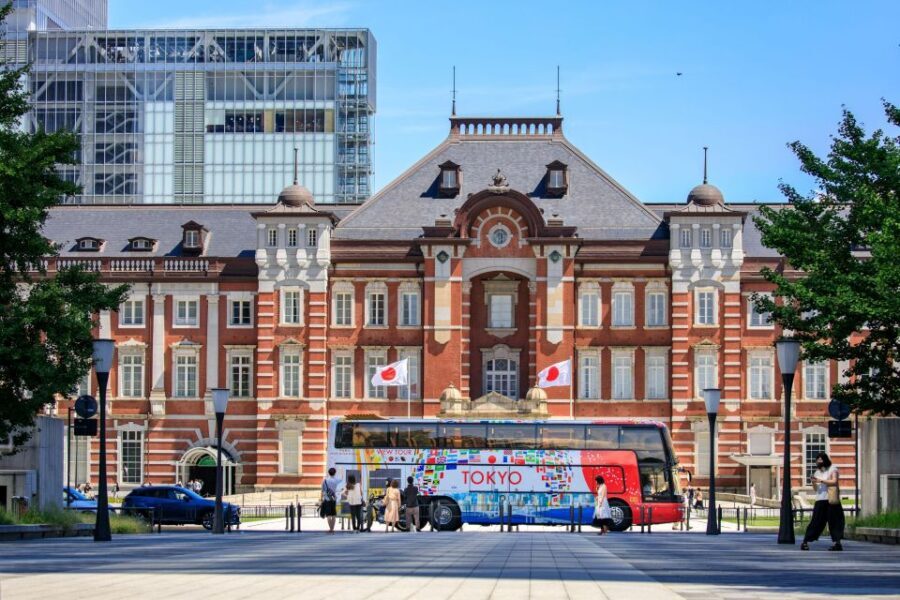
You start near Tokyo Station’s Red Brick Station Building, one of the city’s most recognizable historical facades. Even if you’ve only seen Tokyo Station from photos, you’ll immediately understand why people use it as a reference point. The ride through Marunouchi helps you connect Tokyo’s “power center” vibe with the older look of the station area.
Practical note: these first minutes are your chance to get oriented. After you see where the city’s main arteries are, the rest of the tour makes more sense.
Zojoji Temple → Tokyo Tower
In the Bay Course you’ll see Zojoji, but the City Course still keeps you close to Tokyo Tower with a later pass. Tokyo Tower is one of those landmarks that looks different depending on where you catch it from, and the bus gives you a moving vantage point.
When audio kicks in, pay attention to the context—this is where you’ll learn what the landmark represents instead of just admiring it as a shape.
Chidorigafuchi → Akasaka State Guest House → Meiji Jingu Gaien
These are the kinds of sights you might not line up on your own if you’re short on time. The bus gives you broad, low-effort views as you glide past: Chidorigafuchi, then Akasaka State Guest House, then Meiji Jingu Gaien.
This part is great for learning Tokyo’s contrasts. You’ll get a sense of how the city pairs big civic spaces with carefully planned green and ceremonial areas.
Tokyo Midtown → Roppongi → Hibiya → Ginza
The skyline portion starts picking up in energy here. Tokyo Midtown and Roppongi bring the high-rise look, and Hibiya and Ginza keep pulling you toward Tokyo’s shopping-and-business center.
If your goal is to leave with a mental map—where the districts are, what feels dense versus open—this section helps a lot. And if you want to go back later, you’ll already have a target neighborhood to revisit.
Possible drawback on this route: because it’s city streets, road conditions and traffic can influence timing and exact sight lines, and the audio system is designed to follow the bus’s movement. That’s good, but it also means you shouldn’t expect a perfectly timed view of every single landmark moment.
Bay Course Stops: Rainbow Bridge and Odaiba Highlights
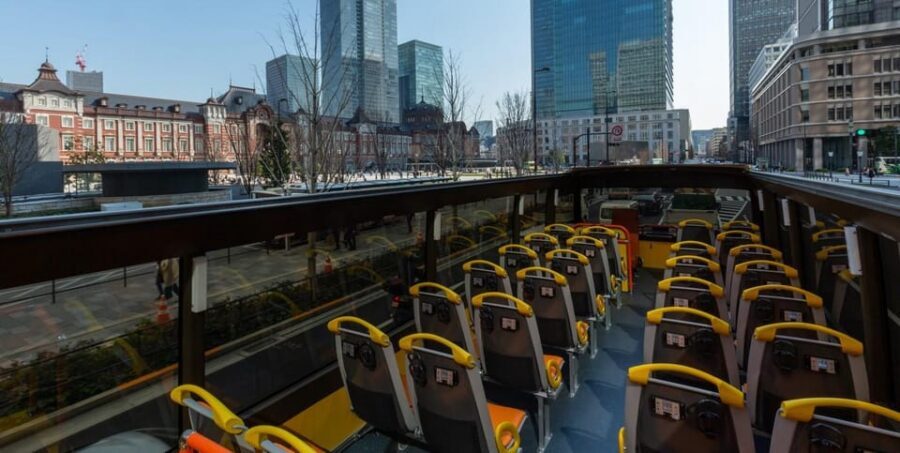
The Bay Course has the most “wow” factor per minute if you like modern Tokyo’s glow and scale. It’s also the route that tends to feel more like you’re watching the city expand.
Tokyo Station Red Brick Station Building → Marunouchi
Same start as the other course. You get that anchor point again, which makes the two routes feel connected even if your experience shifts toward water.
Zojoji Temple → Tokyo Tower
You pass Zojoji Temple and Tokyo Tower early, then swing toward the waterfront. This pairing is smart: it reminds you Tokyo isn’t only glass and metal; it also has temples and older structures that show up alongside major city icons.
Shibaura Rainbow Bridge (1st Level) → Fuji TV Building → Statue of Liberty
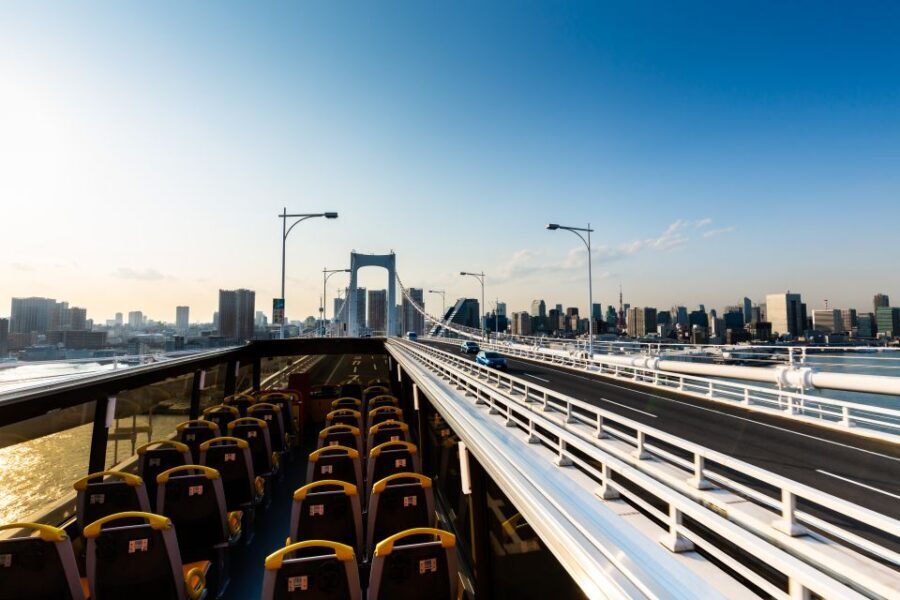
The highlight is the Rainbow Bridge sequence. On this route you hit the bridge on the 1st Level, then you’re in that scenic stretch where you can spot Fuji TV Building and the Statue of Liberty scene area.
Even if you already know the names, the bus view helps you understand how these landmarks sit within the waterfront system—how the bridge, skyline, and bay shape the Tokyo silhouette.
Odaiba Seaside Park → Rainbow Bridge (2nd Level) → Shiodome
You roll into Odaiba Seaside Park, then you go back to the bridge for the 2nd Level pass, and continue through Shiodome.
That second pass on the Rainbow Bridge is key. You don’t just see one angle—you get a chance to compare how the bridge and skyline shift as you move. It’s the kind of thing that looks better in motion than it does as a single photo.
Ginza
You finish with Ginza, which makes the route feel like a complete loop: temple and tower, bay and bridge, then back to the city’s most famous streets.
If you’re pairing this tour with an evening plan, Ginza is a practical end point because it’s easy to move from there to food and shopping.
How the GPS Audio Guide Works (and What to Listen For)
This is where the experience becomes more than just “sit and watch.” The audio system uses GPS and the bus location to line up the commentary with what you’re passing.
You’ll get multilingual support, including Japanese, English, Chinese, French, Korean, Vietnamese, and Thai, with the system delivering sightseeing information in three languages based on current location. Translation won’t be perfect, but the timing is the real value here: you’re not stuck listening to an unrelated track while the bus already moved on.
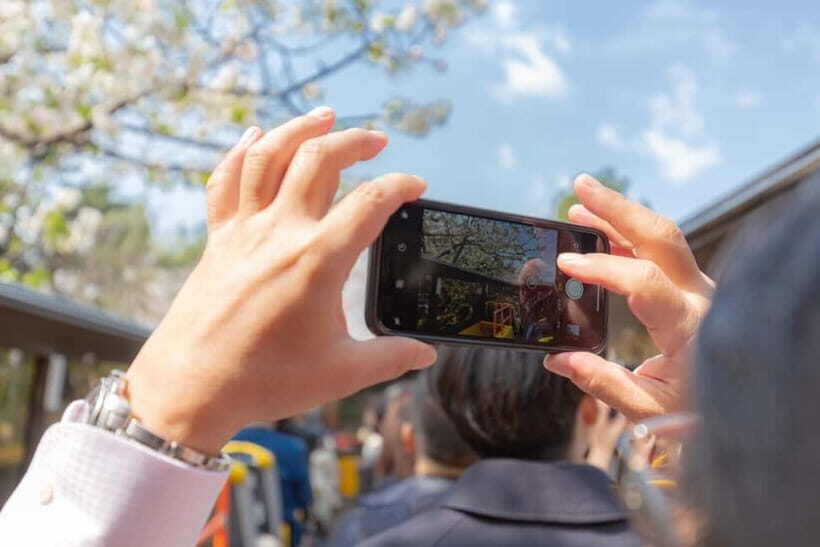
Headphones matter more than you’d think. The tour notes that headphones are optional and cost 100 Yen, with a 3.5mm mini plug jack. Some audio can feel loud through open-air noise, and one review comment specifically wished the music between announcements were quieter. If you’re sensitive to background sound, consider bringing earplugs or picking up the optional headphones so you can focus on the voice.
Also, there’s mention that a live Japanese commentary over a loudspeaker can interfere with hearing audio. That’s not a reason to avoid the tour, but it’s a good expectation to set: if you want clean sound, headphones help.
Comfort, Weather, and Small Rules That Change the Ride
Open-top buses are great until the weather calls the shots. One review noted the seat comfort as a consideration (not much knee space) and another highlighted the reality of temperature—too cold or too hot depending on conditions.
The good news: the tour runs rain or shine, but it can be adjusted in extreme conditions like typhoons. If it rains, the open top may be closed. That doesn’t mean the tour is ruined, but it does change the “panoramic” feel. Think of it as going from open sky to a more enclosed ride.
Here are the on-board rules you should plan around:
- No smoking
- No selfie sticks
- No food in the vehicle
- No umbrellas
If you’re traveling with bags, keep them secured and avoid anything that would snag. Also, if your camera setup is big, check how you’ll handle it without selfie sticks.
Meeting Point: Tokyo VIP Lounge by Tokyo Station
The meeting point is a paid facility called Tokyo VIP Lounge, located on the 2nd and 3rd floors of the building with FamilyMart on the ground floor. It’s about a 5-minute walk from Tokyo Station’s Yaesu North Exit.
The big practical tip: check in 20–40 minutes before departure. That buffer matters because it’s a shared space with other users, and you need time to find the right spot and settle before boarding. If you arrive late or at the wrong location, the tour departs promptly and refunds aren’t issued for late arrivals based on the rules provided.
One detail that can save you stress: open-top bus customers can use the facility for free starting 40 minutes before departure. Outside that window, you should be prepared to pay the facility fee and confirm details on the day.
If you hate surprises, do yourself a favor and load the map link before you leave your hotel, then do a quick walk-through of the route to the lounge so you’re not relying on last-minute phone navigation.
Price and Value at About $11
At $11 per person for a 70-minute ride with an open-top view and GPS audio, the value is mostly in what you don’t have to manage.
You’re getting:
- Transportation via bus (not self-planning between stops)
- A guided audio layer that explains what you’re seeing
- A tight time window that’s perfect for orientation
In Tokyo, that time is money. When you’re on day one, the biggest cost isn’t just cash—it’s the hours you lose figuring out routes, stations, and neighborhood distances. This tour pays you back quickly: sit down, follow the bus, and you’ll come away with names and places you can target later.
Could you do the same route solo with trains? Sure, but you’ll spend more mental effort and likely miss the effortless panoramic view that only comes from riding above street level on an open-top bus.
Who This Tour Suits Best
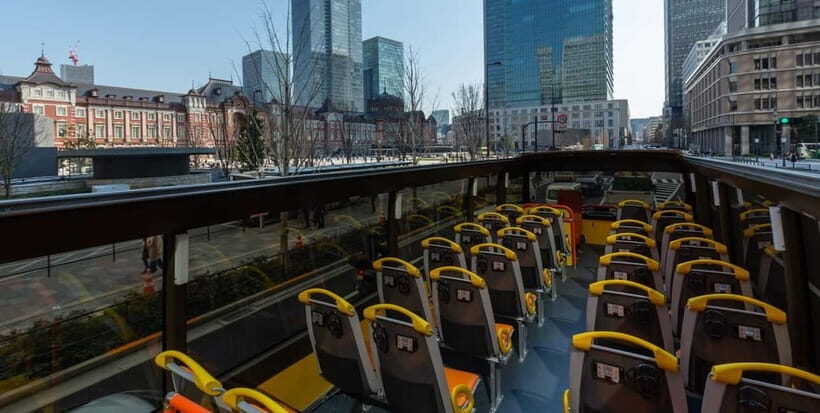
This tour fits best when you want:
- A first-day Tokyo overview
- A low-effort way to see major landmarks fast
- A scenic ride with audio guidance instead of reading signage all day
- Options between City Course (districts and skyline) and Bay Course (water and bridges)
It’s also a good fit if you don’t want a live guide pace. This one is built around the audio system and scheduled departures.
If you hate crowds or need maximum quiet, you should know the setup is a bus ride and there can be loudspeaker audio in addition to the guide system. Also, plan for less-than-perfect hearing in noisy conditions unless you use the optional headphones.
Should You Book This Open-Top Bus?
Yes, if you want a simple Tokyo snapshot with iconic stops and a price that won’t wreck your budget. I’d book it if:
- You’re short on time and want immediate orientation
- You care about big views like Tokyo Tower and Rainbow Bridge
- You’re comfortable riding outdoors and can handle weather changes
I’d think twice if:
- You’re very sensitive to audio quality and hate background noise (headphones help, but the system is still audio-in-a-bus)
- You’re hoping for a fully open-top experience no matter what—rain can lead to a closed roof
- You’re tall or have trouble with cramped seating (some knee space can feel tight)
If you’re trying to choose between the two, pick Bay Course for the bridge-and-water moment and City Course if you want districts and skyline with a finish in Ginza. Either way, you’ll leave with a clearer Tokyo map and a handful of landmarks that make your next day feel easier.
FAQ
How long is the bus tour?
The tour duration is 70 minutes with the audio guide.
Are headphones included?
No. Headphones are optional and cost 100 Yen. The jack is 3.5mm mini plug.
Does the tour have a live guide?
No. The tour includes an audio guide, not a live guide.
What languages are available on the audio guide?
The audio guide supports Japanese, English, Chinese, French, Korean, Vietnamese, and Thai.
Does it run in rain?
The tour operates rain or shine, but the open-top may be closed if it rains. Cancellations happen only in extreme weather conditions like typhoons.
What are the two route options?
You can choose the City Course or the Bay Course, both lasting 70 minutes with audio.
Where is the meeting point?
The meeting point is at Tokyo VIP Lounge, on the 2nd and 3rd floors of the building with FamilyMart on the ground floor, about a 5-minute walk from Tokyo Station’s Yaesu North Exit.
What should I bring or avoid on the bus?
Smoking, selfie sticks, food in the vehicle, and umbrellas are not allowed.
How early should I arrive?
Check in 20–40 minutes before the scheduled departure time to ensure smooth boarding. The tour departs promptly, and late arrivals may not be accommodated.
More Self-Guided Tours in Tokyo
Easier with a Guide
More Tour Reviews in Tokyo






Fresh reviews from around Tokyo






Audio Tours, compared.
 ★ 3.5Tokyo Self-Guided Audio TourFrom $910 reviews
 ★ 4.5Open Top Sightseeing Bus with Audio GuideFrom $115 reviews
 ★ 4.8Sumo Keiko Training Tour with Audio Guide & PhotoFrom $855 reviews
Browse the lists this tour appears in