
Reviewed · AUDIO TOURS
Tokyo: Open Top Sightseeing Bus with Audio Guide
Tokyo looks different from an open-top bus.
This one is a simple, low-stress way to clock the big sights fast, with GPS-enabled audio that helps you follow what you’re passing as the route moves through central Tokyo. I like it because it’s not trying to be a full-day plan. It’s built for that first-day goal: get your bearings quickly and enjoy the ride.
Two things I really like: the multi-language audio guide (including English plus several others) and the fact that there’s Japanese-speaking staff on hand if you need help. One thing to consider: this is not hop-on, hop-off, and there’s no live guide, so if the recording feels a little hard to match to what you’re seeing, you’re on your own to look out the windows and enjoy the views anyway.
In This Review
- Key highlights worth your attention
- Why this open-top bus works so well in Tokyo
- Bay Course: Tokyo Station to Odaiba and the Rainbow Bridge views
- City Course: Imperial Palace zone to Midtown, Roppongi, Tokyo Tower, and Ginza
- GPS audio guide: multi-language help that follows your route
- Earphones and how to listen
- The big “no live guide” consequence
- Bay vs City: how to choose the right route for your day
- Meeting point in Yaesu: arrive early or you’ll miss the start
- On-board rules and comfort tips that can make or break the ride
- If it rains, expect a change in the vibe
- Luggage: one piece per person, stored in the trunk
- Value check: does $11.71 make sense for this ride?
- Should you book the Tokyo open-top bus?
- FAQ
- How long is the Tokyo open-top sightseeing bus tour?
- Is it hop-on, hop-off?
- Where do I meet the bus?
- What languages are available on the audio guide?
- Do I need earphones to listen to the audio?
- Does the tour run in the rain?
- Is there a luggage limit?
- What if I’m late to the meeting point?
Key highlights worth your attention
- GPS-tracked audio that updates by location while the bus rolls through traffic changes
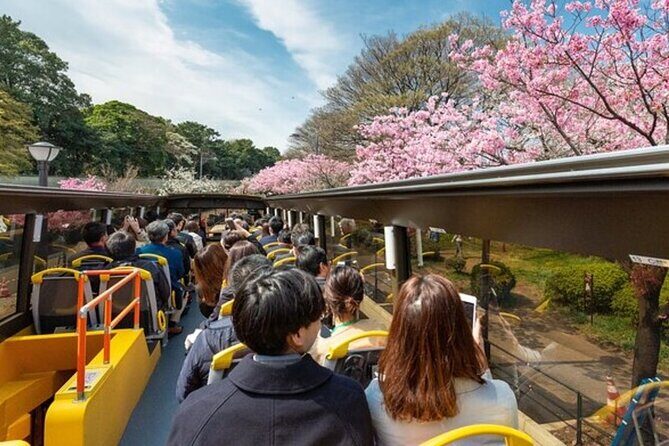
- Open-top views over Tokyo Tower, Rainbow Bridge, Ginza, and the bay area
- Two themed routes (Bay Course and City Course) focused on different parts of town
- Multiple language support using the audio system, with Japanese-speaking staff for questions
- Small-group feel with a maximum of 40 travelers on board
More days made easy by a guide
- Tokyo 6hr Private Tour with Government-Licensed Guide★ 5.0 · 3,902 reviews
- Tokyo: Shinjuku Local Bar and Izakaya Guided Walking Tour★ 4.9 · 1,794 reviews
- Tokyo: Private City Highlights Tour with Local Guide★ 4.8 · 1,433 reviews
Why this open-top bus works so well in Tokyo
If you only have a short time in Tokyo, this style of tour can be a smart move. You get a moving “overview” of the city without paying for multiple trains, transfers, or guesswork about where to stand for photos.
The duration is about 1 hour 10 minutes, and that pacing matters. Tokyo can drain you fast, especially after long flights or busy days. A bus loop lets you sit back, look up, and get a sense of how neighborhoods connect—without turning the day into logistics homework.
Also, the tour keeps things practical: it runs with an audio system (no live guide), and it’s designed for most people to join. The small cap of 40 travelers helps the ride feel more relaxed than big-vehicle chaos.
Bay Course: Tokyo Station to Odaiba and the Rainbow Bridge views
The Bay Course is the one I’d pick if you want a mix of classic Tokyo landmarks and that “wow” factor from the water. The route links the station area to central icons, then pushes out toward Odaiba and the views of Tokyo Bay.
Here’s what you can expect from the Bay Course drive:
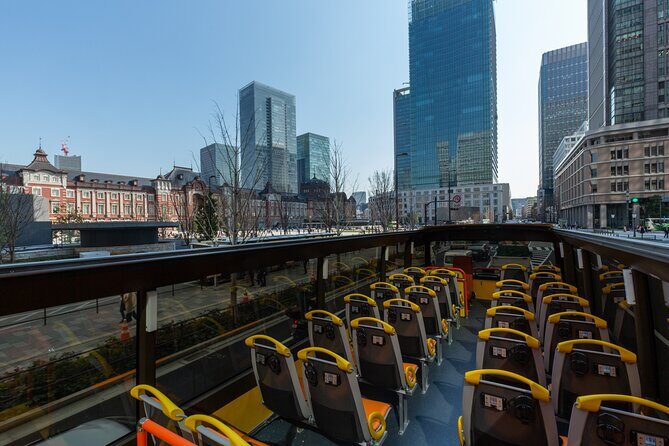
- You start near the Tokyo Station Red Brick Station Building, then pass through Marunouchi—a good warm-up section for central Tokyo architecture and the sense of scale.
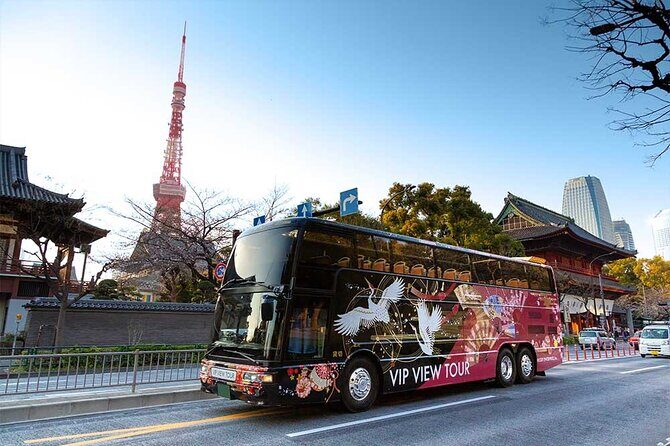
- Next comes the Zojoji Temple area, which gives you a contrast: traditional tones next to the modern skyline that comes right after.
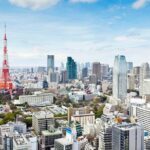
- You then hit Tokyo Tower, and this is one of those landmarks where the bus is actually a plus. From an open-top seat, you can get an easy sightline without trying to time a train platform.
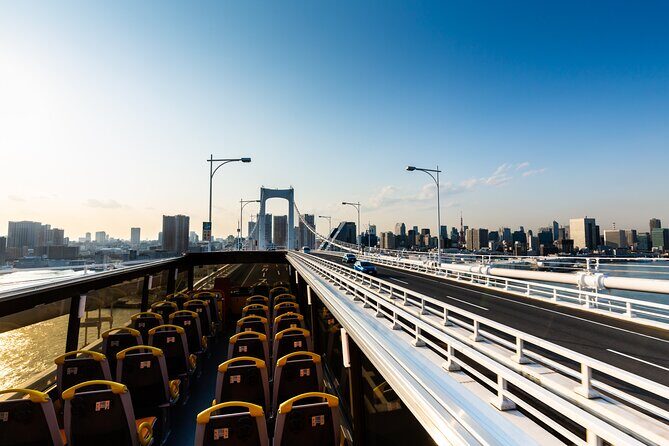
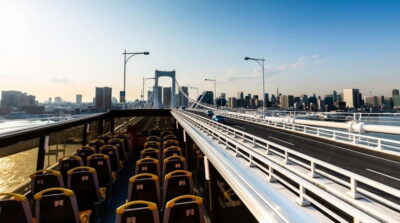
- After that, you pass the Shibaura Rainbow Bridge (1st Level) and keep rolling along the bay view corridor, heading toward Fuji TV Building and the Statue of Liberty at Odaiba.
- The route continues through Odaiba Seaside Park and then offers a second angle of the bridge at Rainbow Bridge (2nd Level).
- Finally, it returns toward Shiodome and Ginza, two areas that feel like Tokyo’s “show me everything” zone—busy, bright, and full of street-level energy.
Practical note: with this route, you’ll spend a chunk of time looking out over the bay and skyline. If you’re sensitive to glare or wind, plan your seat choice accordingly once you’re on board. Even with those views, it’s still a 70-minute experience—so don’t expect long photo stops. You’re here for the ride and the perspective.
City Course: Imperial Palace zone to Midtown, Roppongi, Tokyo Tower, and Ginza
The City Course leans more toward central Tokyo’s big districts—less bay, more city core. It’s a good fit if your goal is to understand where the shopping, offices, and iconic neighborhoods sit relative to each other.
Based on the route highlights, you’ll cruise past:
- Imperial Palace area
- Tokyo Midtown
- Roppongi
- Tokyo Tower again (yes, the tower shows up here too, so you may see it from a different approach)
- Ginza
This course is ideal if you already know you want to spend time later in places like Ginza or Roppongi. The bus gives you a quick “map in your head” of how these areas connect, so you don’t start your next day feeling like Tokyo is one giant blur.
One thing to keep your expectations realistic: this is a ride-through loop, not a walking tour. You’ll get the sights as you pass them, then you’ll need to decide later whether you want to return and explore on foot.
GPS audio guide: multi-language help that follows your route
The standout functional feature here is the GPS-enabled audio system. It uses the bus’s location to deliver the right information based on what area you’re in, and it’s designed to adjust when road conditions change. That matters because Tokyo traffic can shift your timing, and a static script can feel out of sync.
The system supports a wide set of languages: Japanese, English, Chinese, French, Korean, Vietnamese, and Thai. The tour also indicates it provides sightseeing info in three languages based on current location—so you’re not limited to just one option.
Worth weighing up alongside this Tokyo pick:


Earphones and how to listen
The audio system uses an earphone connection that supports 3.5mm mini plugs. If you don’t bring earphones, the tour notes optional earphones are available for 100 Yen.
Here’s the real-world tradeoff: without a live guide, you’ll rely on the recording to explain what you’re seeing. That can be great when the timing lines up. It can also be slightly frustrating if you can’t always tell what the audio is referencing just by glancing out (especially at busy intersections).
The big “no live guide” consequence
Because there’s no live guide included, the audio is your main explanation layer. If you want immediate clarification—like what you’re seeing right now, or how to get there later—this tour won’t provide that. It’s best treated as a moving introduction, not a deep Q&A session.
Bay vs City: how to choose the right route for your day
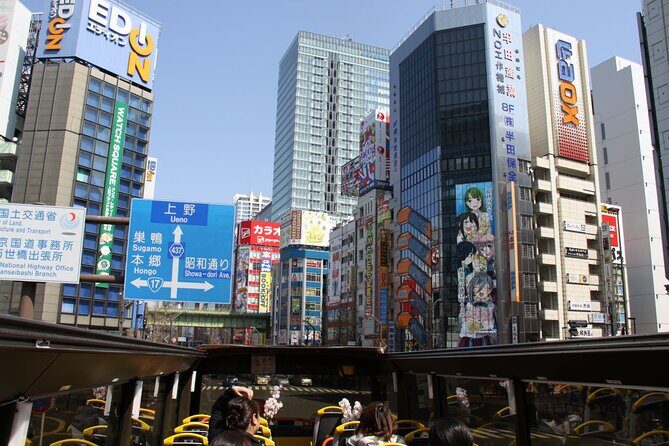
If you’re deciding which route fits your schedule, think about what you want the bus to teach you.
- Choose Bay Course if you want the water views and big skyline moments: Tokyo Tower, Rainbow Bridge (both levels), Odaiba area landmarks, and the transition from central Tokyo to the bay.
- Choose City Course if you want neighborhood context for your next day: Imperial Palace zone, Tokyo Midtown, Roppongi, and Ginza.
Since the experience is a loop and not hop-on, hop-off, your choice should be about which parts of Tokyo you want to visually anchor in your memory. Then you can build a walking plan afterward around those areas.
Meeting point in Yaesu: arrive early or you’ll miss the start

The meeting point is Tokyo VIP Lounge in Yaesu, Chuo City. It’s listed at 1-chōme59, 2nd/3rd floor (Japan, 103-0028 Tokyo). The tour ends back at the same place.
Plan on arriving early. The guidance asks you to check in 20–40 minutes prior and emphasizes that the bus leaves promptly. This is a strict part of the deal: they won’t wait for late arrivals, and refunds aren’t issued for showing up late or at the wrong location.
The meeting point is also a paid facility, which you should treat like a useful waiting room, not a mystery maze. You can use it for free starting 40 minutes before departure. If you show up earlier than that window, you may have to pay based on the facility rules on the day.
On-board rules and comfort tips that can make or break the ride

This is one of those tours where small rules matter, because you’re on an open-top bus with limited space.
A few key points:
- No smoking and no food in the vehicle
- No selfie sticks and no umbrellas
- Rain or shine operation is stated, but open-top may be closed if it rains
- Capacity is limited to 40 travelers
If it rains, expect a change in the vibe
The tour operates rain or shine, but the open-top option may be closed. Translation: you can still do the tour, but your viewing experience could shift from breezy skyline photos to a more enclosed ride.
Luggage: one piece per person, stored in the trunk
You’re allowed one piece of luggage per person, and it must be manageable and fit in the vehicle. The trunk storage has a size limit noted as a total of 155 cm (combined height, width, depth).
Important: items stored in the trunk aren’t accessible between stops. So keep valuables with you, especially if you’re carrying a day bag and cameras.
Value check: does $11.71 make sense for this ride?
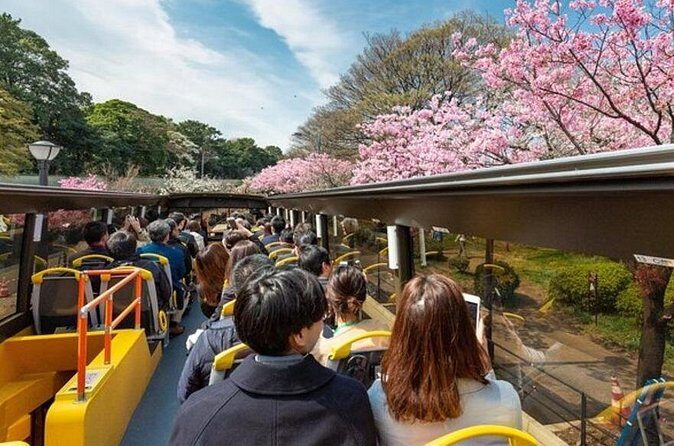
At $11.71 per person, this tour is positioned as an inexpensive “orientation tour.” That pricing matters in Tokyo, where transportation costs add up quickly and time is your most expensive resource.
You get:
- an open-top sightseeing experience (weather-dependent)
- GPS audio in many languages
- a tour duration around 70 minutes
- assistance from Japanese-speaking staff
What you don’t get is just as important: it’s not hop-on, hop-off, and there’s no live guide. So you’re paying for the ride and the audio orientation, not for flexible exploration or deep history lectures.
If you treat it like that—an easy overview that helps you plan later walks and train rides—you’ll usually feel you got your money’s worth.
Should you book the Tokyo open-top bus?
Book it if:
- it’s your first or second day in Tokyo and you want quick orientation
- you like skyline views and don’t need to get off at every stop
- you’d rather sit, listen, and look than plot a complicated route
Skip it if:
- you hate recorded audio that might not perfectly match what you’re seeing
- you want a guide to answer questions on the spot
- you need hop-on flexibility to explore each attraction at length
My practical take: this is a solid choice for getting your bearings fast and building a mental map of Tokyo’s key areas. If you go in knowing it’s a ride-through with audio support, you’ll get a lot of value from a short window.
FAQ
How long is the Tokyo open-top sightseeing bus tour?
The duration is approximately 1 hour 10 minutes.
Is it hop-on, hop-off?
No. This is not a hop-on, hop-off tour.
Where do I meet the bus?
You meet at Tokyo VIP Lounge in Yaesu, Chuo City (103-0028 Tokyo), listed on the 2nd/3rd floor. The tour ends back at the same meeting point.
What languages are available on the audio guide?
The audio system supports Japanese, English, Chinese, French, Korean, Vietnamese, and Thai.
Do I need earphones to listen to the audio?
You can use earphones with a 3.5mm mini plug. Optional earphones are available for 100 Yen.
Does the tour run in the rain?
It operates rain or shine, but the open-top may be closed if it rains.
Is there a luggage limit?
Yes. You can bring one piece of luggage per person, with a maximum size noted as 155 cm total (height + width + depth). Luggage goes in the trunk and isn’t accessible between stops.
What if I’m late to the meeting point?
The tour departs promptly. Late arrivals or arriving at the wrong location aren’t accommodated, and refunds aren’t issued for late arrivals.
More Self-Guided Tours in Tokyo
Easier with a Guide

More Tour Reviews in Tokyo






Fresh reviews from around Tokyo






Audio Tours, compared.
 ★ 3.8Open Top Panoramic Sightseeing Bus with Audio GuideFrom $11254 reviews
60min Panoramic Open Top Bus Tour with Audio GuideFrom $1440 reviews
★ 3.8Open Top Panoramic Sightseeing Bus with Audio GuideFrom $11254 reviews
60min Panoramic Open Top Bus Tour with Audio GuideFrom $1440 reviews
 ★ 3.5Tokyo Self-Guided Audio TourFrom $910 reviews
 ★ 4.8Sumo Keiko Training Tour with Audio Guide & PhotoFrom $855 reviews
Browse the lists this tour appears in