
Reviewed · WORKSHOPS
Tokyo Manga Drawing Workshop Guided by Active Pro Manga Artist
Manga fans often find this workshop way more fun than expected. In just 2 hours 30 minutes, you’ll build a finished manga-style piece with a professional mangaka guiding you step-by-step, from first ideas to the final look. It’s hands-on, friendly, and designed for complete beginners as well as people who already draw.
I particularly like that you can choose your own character and make the drawing yours. I also love that the class teaches real manga tool techniques, including screen tone, not just “coloring by numbers.”
One thing to watch: the studio address can be a bit tricky to nail on the first try. So you’ll want to double-check the exact location instructions before you leave.
In This Review
- Quick hits before you book
- Tokyo Manga Drawing Workshop: the 2.5-hour format that actually works
- Finding your way: meeting near Ebisu (and why you should re-check the address)
- What you learn: manga workflow from idea to finished look
- Choosing your character: make it yours instead of copying a template
- Instruction style: how a pro mangaka keeps the class moving
- Screen tone and tools: the included “real manga” materials
- What you leave with: a take-home manga keepsake
- Duration and timing: why 2.5 hours is the right length in Tokyo
- Price and value: why $132.10 can make sense
- Who this workshop suits best (and who might want to adjust expectations)
- Practical tips to make your class day smoother
- Should you book this Tokyo manga drawing workshop?
- FAQ
- What is the duration of the Tokyo Manga Drawing Workshop?
- How much does it cost?
- Where is the meeting point?
- Do I need to know how to draw manga beforehand?
- What materials are included?
- Is bottled water or snacks provided?
- What is the group size limit?
- FAQ
- Is free cancellation available?
- How close is it to public transportation?
- Is a mobile ticket used?
- When will I receive confirmation?
- Can most travelers participate?
- How does the minimum participant rule work?
Quick hits before you book
- Small group size (max 8): you get more time and attention than big-group classes
- You pick what to draw: your personality shows up in the final piece
- Screen tone is included: a very classic manga look, taught hands-on
- All materials provided: you can show up empty-handed and still finish
- Near Ebisu Station: easy to fit into a busy Tokyo day
More days made easy by a guide
- Tokyo 6hr Private Tour with Government-Licensed Guide★ 5.0 · 3,902 reviews
- Tokyo: Shinjuku Local Bar and Izakaya Guided Walking Tour★ 4.9 · 1,794 reviews
- Tokyo: Private City Highlights Tour with Local Guide★ 4.8 · 1,433 reviews
Tokyo Manga Drawing Workshop: the 2.5-hour format that actually works
Tokyo has plenty of hands-on art options, but this one hits a sweet spot: short, structured, and made for real results. You’re not signing up for a long class where you slowly find your way. Instead, you get a tight 2-hour 30-minute session that takes you from rough planning to a finished, take-home drawing.
The workshop runs back to the meeting point, so you’re not left wondering how to get home with your art supplies. And because it’s small group limited (maximum 8), you won’t feel like a passenger in your own class.
Most importantly, it’s designed so you don’t need to be “good at drawing.” The instruction is step-by-step. If you can hold a pen and follow directions, you can make progress fast. If you already draw, you’ll still get useful technique adjustments.
Finding your way: meeting near Ebisu (and why you should re-check the address)
The meeting point is listed at Ishikawa 3-chōme-8-11, Shibuya, Tokyo. The class is described as being close to Ebisu Station, which is great for logistics. Ebisu is easy to reach from a lot of central areas, and it’s a zone where you can usually walk a few blocks and be fine.
Still, one practical caution stands out from people’s experiences: the studio location details can be a little tricky. Some participants report getting directions that didn’t match where the class ended up happening. That doesn’t mean something is wrong, just that Tokyo addresses and small offices can be finicky.
My advice: once you book, use your confirmation details to verify the exact studio location right before you go. If you’re early, don’t wait near the “general” area—look for the specific office instructions you’re given.
What you learn: manga workflow from idea to finished look
This class isn’t just about drawing a character. It teaches the typical workflow manga artists use to make a page look “right.”
You’ll practice parts of the process like:
- Coming up with an idea for what to draw
- Sketching your chosen character
- Refining lines and proportions into a manga-style shape
- Adding color elements (depending on the project you pick)
- Using screen tone, one of those details that instantly makes the drawing feel manga-authentic
That combination matters because it mirrors how manga art is built: first you get the concept and composition on paper, then you convert it into clear line work, then you add the effects and texture that manga readers recognize instantly.
The class also gives technique guidance in a way that’s meant to be usable later. You’re not just copying a teacher’s example. You’re learning methods you can repeat at home with your own tools.
Choosing your character: make it yours instead of copying a template
One of the most praised parts of the experience is choice. You don’t have to draw a single assigned character. You can pick what you want to draw, and the instructor helps steer your idea into something workable in the time you have.
This is more important than it sounds.
When you’re choosing the subject, you’re more likely to stay engaged. And when you’re emotionally invested in the result, you’re also more patient with the tricky bits like line clean-up and tone placement. People also describe that you get options for how to approach the drawing depending on skill level, from doing your own sketch to building step-by-step with guidance.
If you’re a beginner: pick something simple for the face and silhouette. A character with recognizable hair shape and big eyes is a good bet, because you’ll focus on key manga elements instead of getting lost in details.
If you’re more experienced: you can bring your own style preferences, and the instructor can help you translate it into manga conventions—especially with line weight and tone.
More things to make with your own hands


Instruction style: how a pro mangaka keeps the class moving
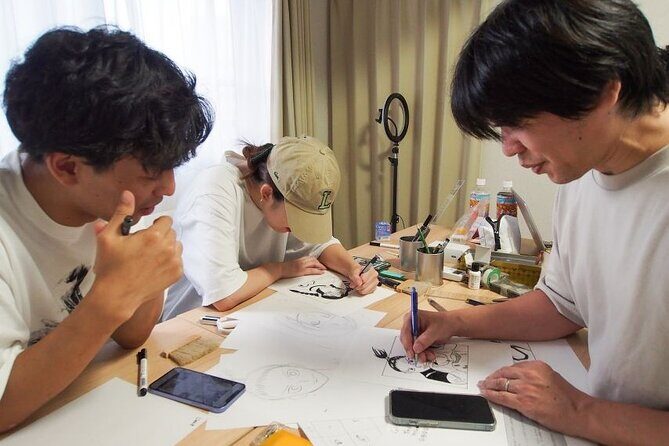
A workshop stands or falls on teaching. Here, the structure is built around keeping you moving through the whole project, so you’re not stuck watching the teacher finish while you do nothing.
In multiple accounts, the instructor (sometimes referred to as Masa) and the teaching team guide students through each stage. There’s also often an assistant or translator present, which matters if your Japanese is limited. One participant specifically noted a translator who speaks English and Spanish.
What this looks like in practice:
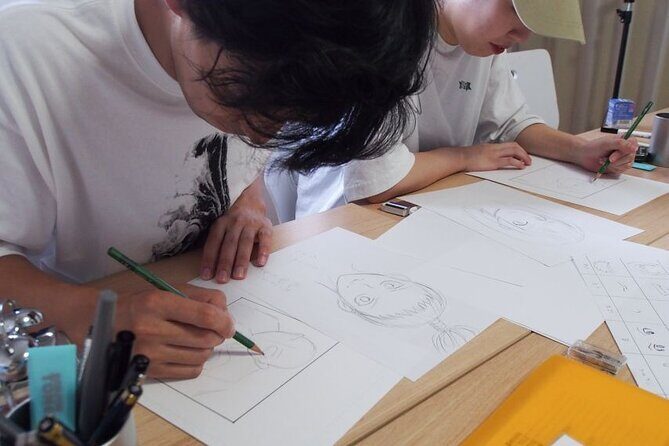
- The artist demonstrates a small step
- You follow the step on your own paper
- The instructor checks your progress and helps correct proportions, line confidence, and placement
- You finish the piece with the right manga effects so it doesn’t look unfinished
It’s also clear the team adapts to different skill levels. Some people with past drawing experience still got help adjusting sketches to match their own tastes. Some people with no experience got solid support to reach a strong finished product anyway.
Screen tone and tools: the included “real manga” materials
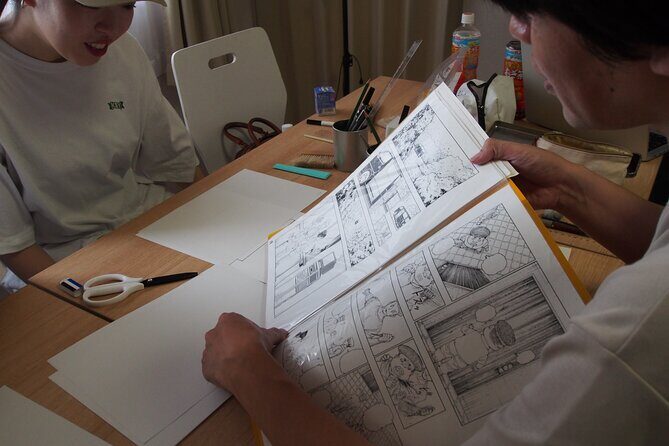
You don’t have to buy anything extra for the class. All manga drawing tools are provided, including screen tone. That’s a big deal for value, because screen tone materials can be fiddly and easy to waste if you’re trying to learn on your own.
Screen tone is used to create:
- Shading and texture
- Depth without heavy rendering
- That classic printed-manga look
In a short workshop, the goal isn’t to turn you into a print studio technician. The goal is to teach enough technique so your piece looks finished and manga-styled, not like a sketch that stopped halfway.
You should also know there’s a small practical reality: tone and finishing steps require patience and steady handling. This is not hard, but it’s not like “press a button and you’re done.” The upside is that instruction is right there to help you stay on track.
What you leave with: a take-home manga keepsake
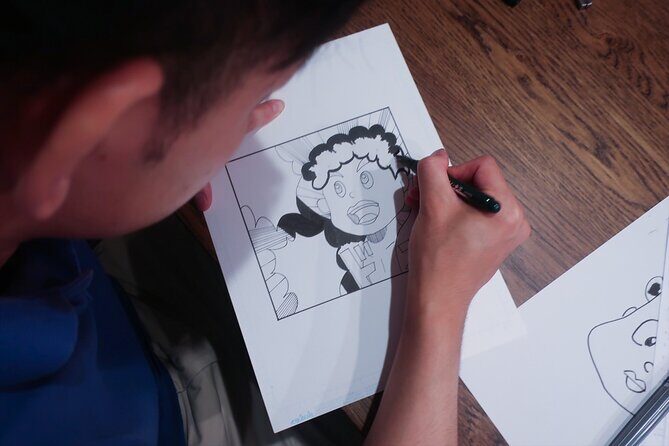
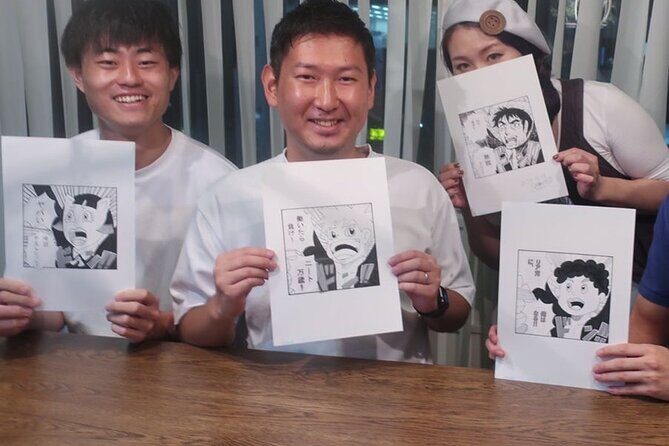
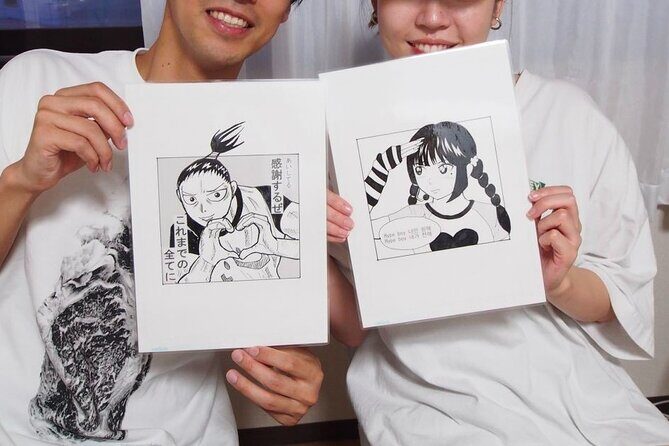
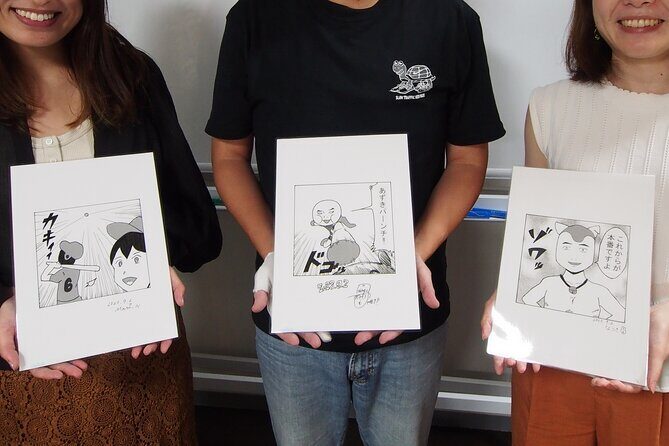
The payoff here is concrete. You make your own manga-style artwork and you keep the finished piece as a souvenir.
That matters on a trip because a lot of activities produce photos. This one produces something you can pack, frame, or keep for later. People also describe the final result as a memorable highlight—often because it looks like something you could only make with guidance from someone who does manga professionally.
It’s also personal: because you pick the character, your drawing tends to feel like a real creation rather than a generic craft.
Duration and timing: why 2.5 hours is the right length in Tokyo
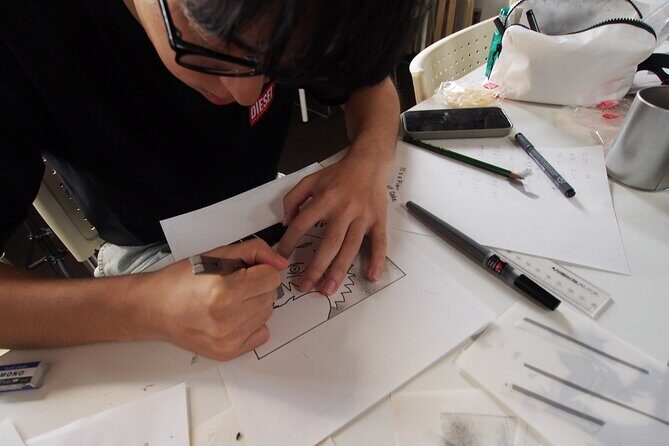
For a city like Tokyo, shorter activities with a defined ending are easier to plan. This experience is about 2 hours 30 minutes, and it fits nicely into a day where you’re also doing neighborhoods, shopping, or visiting a museum.
Because the group is limited to 8, the session has structure. You’re not likely to get stuck waiting for the teacher to finish with other students for long stretches.
If you’re planning around it, give yourself a little buffer time before the class to find the studio confidently. Being late is usually avoidable if you confirm the exact location.
Price and value: why $132.10 can make sense
At $132.10 per person, it’s not the cheapest activity in Tokyo. But the value comes from a few clear factors you can’t fully replicate at home.
You’re paying for:
- A professional manga artist teaching a structured workflow
- Step-by-step instruction for different skill levels
- Included tools, including screen tone
- A small-group setting (max 8)
- A finished, take-home piece created during the session
If you’ve ever tried to learn manga techniques from YouTube while also trying to buy the right supplies, you know how quickly time and money disappear. Here, the class compresses learning into one organized afternoon and removes the guesswork about materials.
For fans of One Piece, Naruto, and general anime/manga culture, this hits a nerve because you’re learning the craft behind the stories you already love. For non-artists, it can still be worth it because the guidance is built to prevent blank-page frustration.
Who this workshop suits best (and who might want to adjust expectations)
This experience works best if you want an active, hands-on class rather than a “watch and observe” tour. You’ll enjoy it if:
- You’re a manga fan and want technique, not just fandom
- You want a guided art session with a real professional
- You’re traveling with teens or motivated adults who like creative activities
A useful note from how the class is described: it’s suitable for complete beginners, but it still rewards people who come with an idea of what they want to draw. If you show up with no clue at all, you’ll still get help, but it can help to think beforehand so you’re not stuck deciding while the clock moves.
On age: the class has been enjoyed by family groups, including kids around elementary-to-early-teen range. If you’re bringing younger children, you might find you’ll need a bit more patience and careful handling, because tone and finishing steps require attention.
Practical tips to make your class day smoother
A few small things can improve your experience a lot:
- Plan your character idea ahead of time. Even a simple choice helps you move faster in the early sketch stage.
- Wear comfortable clothes. You’ll be drawing for the full session, and you’ll want to move your wrist and arm freely.
- Bring patience for finishing steps. Screen tone and clean lines are where “manga look” happens.
- Skip heavy expectations about speed. The class is short, but it’s designed for steady progress rather than rushing.
- Expect no snacks or bottled water. This isn’t a problem if you eat beforehand, but don’t assume it’s provided.
Should you book this Tokyo manga drawing workshop?
I think it’s a strong booking if you want a Tokyo activity with real output: you leave with your own manga-style artwork, made with included tools and guided by a pro manga artist. It’s also one of those rare experiences that fits both complete beginners and people who already draw, because instruction is step-by-step and adaptive.
You should be slightly cautious if you’re the type who hates logistics surprises. The studio location can be easy to miss if you don’t follow the exact address instructions you receive, so confirm the meeting details before you set out.
If you’re craving an authentic pop-culture craft, this workshop is one of the most practical ways to get your hands on the techniques behind what you love.
FAQ
What is the duration of the Tokyo Manga Drawing Workshop?
The class runs for about 2 hours 30 minutes.
How much does it cost?
The price is $132.10 per person.
Where is the meeting point?
The workshop meets at Ishikawa3-chōme-8-11 Shibuya, Tokyo 150-0002, Japan, and it ends back at the meeting point.
Do I need to know how to draw manga beforehand?
No. The workshop is designed for both beginners and people with drawing experience.
What materials are included?
Manga drawing tools are included, including screen tone.
Is bottled water or snacks provided?
No. Bottled water and snacks are not included.
What is the group size limit?
The class has a maximum of 8 travelers, and the minimum number of participants is 2.
FAQ
Is free cancellation available?
Yes, you can cancel for a full refund up to 24 hours in advance of the experience start time.
How close is it to public transportation?
It’s near public transportation, with the studio described as close to Ebisu Station.
Is a mobile ticket used?
Yes, it uses a mobile ticket.
When will I receive confirmation?
Confirmation is received at the time of booking.
Can most travelers participate?
The experience says most travelers can participate.
How does the minimum participant rule work?
If there are fewer than 2 participants, the fee for participation alone is the same as for two people.
Make Something to Take Home

Easier with a Guide



More Tour Reviews in Tokyo






Fresh reviews from around Tokyo






Workshops, compared.
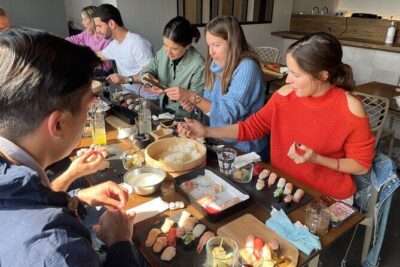 ★ 5.0Sushi Making Tokyo Roll and Authentic Japanese Sushi ClassFrom $593,971 reviews
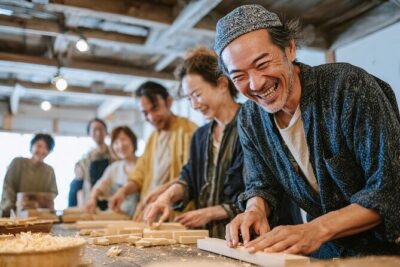 ★ 5.0Tokyo Shinjuku Chopsticks Making ClassFrom $201,763 reviews
 ★ 4.8Chopstick Making Workshop in GinzaFrom $251,366 reviews
 ★ 5.0Tokyo Sushi Making Class in Tsukiji with Professional ChefFrom $491,177 reviews
 ★ 5.0Ramen & Gyoza Cooking Class in Tokyo with Local Supermarket VisitFrom $122823 reviews
 ★ 5.0Matcha Making Class in Tokyo with Authentic Japanese Sweets SetFrom $21744 reviews
 ★ 5.0Samurai Sword & Archery Class from Samurai DescendantFrom $193603 reviews
 ★ 4.9Tsukiji Fish Market Sushi Making Class with Pro ChefFrom $63506 reviews
Browse the lists this tour appears in