
Reviewed · TSUKIJI FISH MARKET TOURS
Tokyo: Guided Walking Tour of Tsukiji Market with Breakfast
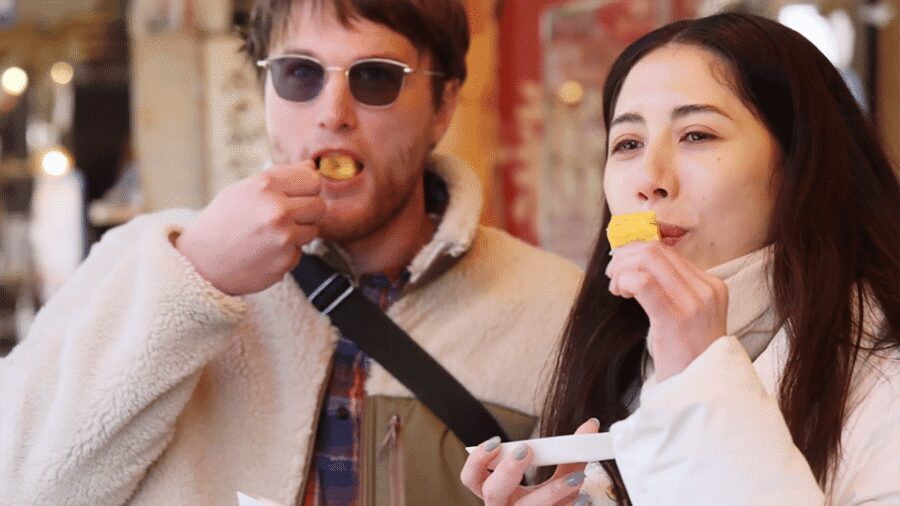
Tokyo mornings can taste like a story. This Tsukiji guided walk turns Tokyo’s Outer Market breakfast into something you can actually understand, from temple symbolism to how wholesalers work at first light. I especially like the combo of 7 food tastings plus a guide who explains how Japanese culture and religion connect to what people eat. One possible drawback: the market moves fast and it’s an eat-and-walk style tour, so if you want a slow museum pace, you may feel rushed.
You’ll start at Tsukiji Hongwanji Temple, then head into the Outer Market lanes where workers are busy and the food isn’t staged. The pace is just long enough to sample a lot without killing your whole morning. It’s also small group sized (up to 10), which makes questions, substitutions, and line-waiting a lot easier.
In This Review
- Key highlights you’ll feel right away
- Tsukiji Hongwanji Temple: your morning starts with faith and design
- Finding your way: meeting point and first 30 minutes
- Outer Market lanes: watching wholesalers at work without feeling lost
- The 7 included breakfast tastings: what you’ll actually eat
- Grilled seafood or beef skewers
- Japanese-style omelette
- Tuna sandwiches
- Fried fish paste skewers
- A drink
- Sample of Japanese tea
- Sample of dashi soup stock
- Why the guide makes this worth paying $85
- Who should book this Tsukiji breakfast walk?
- Should you book it?
- FAQ
- How long is the Tsukiji market breakfast walking tour?
- What is the price per person?
- What food is included in the tastings?
- Where do I meet the guide?
- How do I get there from Tsukiji Station?
- Is the tour guided in English?
- What should I bring?
- Is there free cancellation and can I pay later?
- Is the tour wheelchair accessible and how big is the group?
Key highlights you’ll feel right away
- Tsukiji Hongwanji Temple exterior right at the start, with an ancient Buddhist-inspired look
- Small group (max 10) so you don’t get lost in the crowd
- 7 included tastings covering skewers, omelette, tuna, fried fish paste, tea, and dashi stock
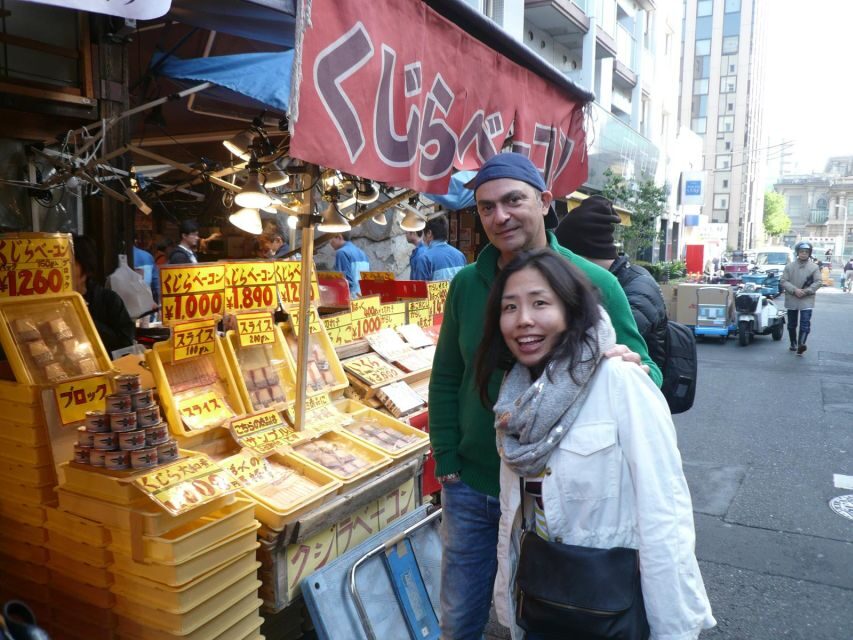
- Outer Market real-work atmosphere as you pass expert wholesalers and storefronts
- English live guide plus cultural context linking food with Japanese beliefs
Still hungry? More Tsukiji breakfasts and market walks
- Tokyo Tsukiji Fish Market Food and Culture Walking Tour★ 5.0 · 3,184 reviews
- Tokyo: Tsukiji Fish Market Food and Walking tour★ 5.0 · 1,724 reviews
- Tokyo: Tsukiji Fish Market Guided Walking Tour★ 4.9 · 1,397 reviews
Tsukiji Hongwanji Temple: your morning starts with faith and design
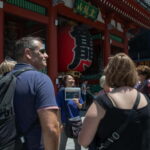
The tour begins at the main gate of Tsukiji Hongwanji Temple, a practical start point and a surprisingly meaningful one. Even before you reach the food stalls, the exterior has an old-school, Buddhist-inspired presence, described as ancient and Indian-inspired in style. That matters because it sets the tone: food here isn’t only about taste. It’s also about respect, routine, and the everyday way culture shows up in what people consume.
From a value standpoint, this first stop does two useful things for you. First, it gives you a clear landmark so you can actually begin the day without stress. Second, it gives context before the market noise and crowds hit. By the time you’re walking among vendors and wholesalers, you’ll be paying attention to more than just visuals—you’ll notice how religious culture and daily food habits connect.
If you’re someone who likes a tour to teach you something you can carry into your next meal, this start helps a lot. You’re not only eating; you’re learning why people eat the way they do, even in a place best known for fish.
Finding your way: meeting point and first 30 minutes
Plan to arrive a bit early and get your bearings. The meeting point is in front of Tsukiji Hongwanji Temple. If you’re coming from Tsukiji Station on the Hibiya Line, take Exit A1, turn left, and walk about 50 meters (55 yards). It’s close enough that you won’t need a complicated route, which is great in a busy area.
In the first part of the walk, your guide typically sets expectations: how the market works, what to watch for, and what flavors you’ll likely run into during the tastings. You’ll also get guidance for how to move through crowded lanes without constantly stopping and starting.
Comfort matters here. Wear comfortable shoes because you’ll be standing and walking in tight spaces. The market is active, and the tour is built around eating while you go. If you prefer long sits, this isn’t that kind of experience.
English is part of the package with a live guide. Still, one review did note that at times English could be harder to follow. If you’re sensitive to accents or fast explanations, don’t panic—ask questions when you can and slow your pace slightly at each stop so you can catch the key points.
Outer Market lanes: watching wholesalers at work without feeling lost
Once you step into the Tsukiji Outer Market area, you’ll notice the difference between seeing food and understanding how it reaches the counter. This tour is designed to help you move through the maze of restaurants, shops, stalls, and wholesale activity like a person who knows where to look.
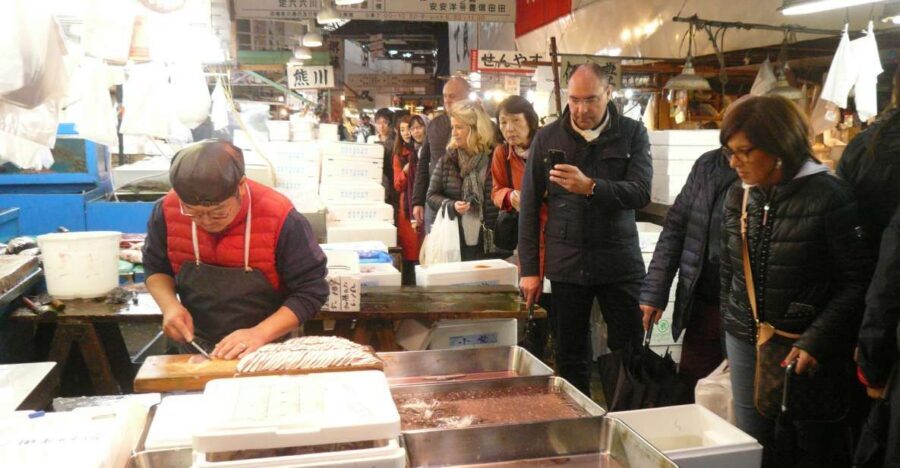
The Outer Market is one of the large wholesale fish market areas in the world, and it shows. You’re not only looking at displays; you’re observing workers busy at work—people handling products, arranging items, and running a steady morning rhythm. Your guide points out unusual products and explains what you’re seeing, which is a big deal because Tsukiji can feel chaotic if you arrive without a plan.
I like that the tour keeps you from doing the hard part: figuring out what’s worth trying and which stalls are good for tasting. Instead, you get a guided path that balances sight-seeing with enough breaks to actually eat.
The downside to be aware of: you’ll be surrounded by crowds and activity. There’s no way around that. If you need a quiet, low-stimulation experience, the market may feel intense. If you’re curious and enjoy people-watching, this is exactly where the morning energy comes from.
The 7 included breakfast tastings: what you’ll actually eat
The heart of the tour is 7 included tastings, planned so you try a range of flavors and textures rather than just repeating one style. Come hungry. This is breakfast sampling, not a single bite parade.
Here’s what’s included, with what to pay attention to at each one:
Tokyo at walking pace, a few more ways

Grilled seafood or beef skewers
You’ll start with grilled skewer-style bites. Watch for a balance of char and seasoning, and how the flavors shift between seafood and beef options depending on what’s available that day. Skewers are a smart way to taste because they’re fast, hot, and easy to compare.
Japanese-style omelette
The omelette tasting is where the tour slows down just a touch in terms of flavor variety. Look for a soft, savory profile rather than a heavy western-style egg. It’s often a comforting bridge between richer fish flavors and lighter drinks.
Tuna sandwiches
Tuna shows up in more than one form here. The sandwich format helps you understand how tuna can be both bold and easy to eat on the move. Pay attention to how the tuna is seasoned and how the bread holds up to it.
Fried fish paste skewers
This is one of those tastes that can surprise first-timers—in a good way. Fried fish paste often has a different texture than whole fish, so you’re tasting how Japanese cuisine uses ingredients creatively, not only how it presents them.
A drink
A drink tasting is included, which is practical in a market setting where everything is served quickly and you’re walking constantly. It also helps reset your palate between savory bites.
Sample of Japanese tea
You’ll get a tea sample as part of the lineup. Tea works like a palate tool here: it cuts through grease, refreshes your mouth, and makes the next bite easier to enjoy.
Sample of dashi soup stock
The dashi tasting is a big clue to Japanese flavor logic. Even small samples can show you the depth behind broth-based cooking. If you’ve ever tasted miso, noodles, or sauces and wondered what that core flavor is, this is the best on-ramp the tour offers.
Because the tour is guided, you’re not stuck guessing. The guide can help you understand what you’re eating, and you can ask questions on the spot.
Why the guide makes this worth paying $85
At $85 per person for 150 minutes, you’re paying for more than food. You’re paying for time-saving and sense-making in a place that can swallow your morning if you try to self-navigate.
The biggest value comes from three things:
1) Tastings in the right order.
Seven tastings is a lot, and a self-guided stroll might lead you to repeats or to stalls that don’t actually fit breakfast sampling. Here, the plan is built around variety.
2) Translation and vendor coordination.
The market is active and language barriers are real. A guide can handle ordering and help you get exactly what you want. Some guides also adjust when you tell them what you don’t want to try, which is a meaningful benefit if you have a sensitive palate or specific preferences. You might meet guides such as Rico, Yumi, Nori, or Minoko, and the shared theme in their approach is taking care of the group’s meal flow.
3) Cultural context, not just snack stops.
You’ll get explanations about how Japanese culture and religion link to cuisine, and that makes each tasting feel less random.
Now, one consideration: if you’re expecting a long sit-down breakfast, you won’t get it. This is a walking tour built for motion and quick tastes. If you love the thrill of sampling while the market is awake, it’s perfect. If you prefer slow pacing, consider whether you want to spend your morning standing in lines and weaving through crowds.
Who should book this Tsukiji breakfast walk?
This tour is best for you if you want a structured introduction to Tsukiji that includes real food, not just photos. I’d especially recommend it if you:
- are short on time and want a guided start in one focused morning window
- like street-food style eating, where you can try many things in one go
- want cultural context before your own market wandering
It’s also a good fit for people who appreciate small group dynamics. With a limit of 10 participants, you’ll move together, ask questions, and still have enough flexibility to manage preferences.
One more practical note: bring comfortable shoes and plan for crowds. This area rewards curiosity, and it can feel tight. If you’re traveling with mobility needs, the tour is listed as wheelchair accessible, which is good to know in advance.
Should you book it?
If your goal is to eat a smart, varied breakfast while understanding Tsukiji beyond the obvious highlights, book this. For $85, you get a guided path, English interpretation, and seven included tastings that cover seafood, beef, eggs, tuna, fish paste, tea, and dashi. That’s hard to replicate on your own unless you already know exactly where to go and what to order.
Skip it only if you want a slow, quiet tour with minimal standing. Otherwise, it’s a strong choice for first-time Tokyo food explorers who want value and a morning that actually feels like Tokyo.
FAQ
How long is the Tsukiji market breakfast walking tour?
The tour lasts 150 minutes.
What is the price per person?
The price is $85 per person.
What food is included in the tastings?
You’ll get 7 tastings including grilled seafood or beef skewers, a Japanese-style omelette, tuna sandwiches, fried fish paste skewers, a drink, a sample of Japanese tea, and a sample of dashi soup stock.
Where do I meet the guide?
Meet in front of Tsukiji Hongwanji Temple.
How do I get there from Tsukiji Station?
From Tsukiji Station (Hibiya Line), take Exit A1, turn left, and walk about 50 meters (55 yards) to the temple entrance.
Is the tour guided in English?
Yes, it includes a live English tour guide.
What should I bring?
Wear comfortable shoes since you’ll be walking through the market area.
Is there free cancellation and can I pay later?
Yes. There’s free cancellation up to 24 hours in advance for a full refund, and you can reserve now & pay later.
Is the tour wheelchair accessible and how big is the group?
The tour is wheelchair accessible and is a small group limited to 10 participants.
More Tours in Tokyo





More Tour Reviews in Tokyo




Back to the Market: More Tsukiji Tours



Fresh reviews from around Tokyo






Tsukiji Fish Market Tours, compared.
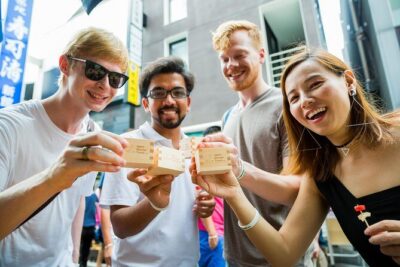 ★ 5.0Tokyo Tsukiji Fish Market Food and Culture Walking TourFrom $993,184 reviews
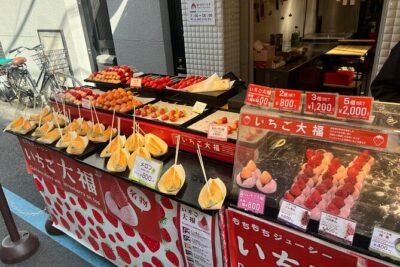 ★ 5.0Tsukiji Fish Market Food and Walking tourFrom $301,724 reviews
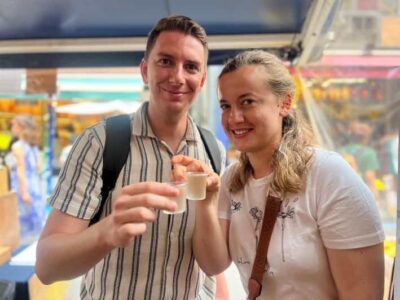 ★ 4.9Tsukiji Fish Market Guided Walking TourFrom $221,397 reviews
 ★ 5.0Tokyo Sushi Making Class in Tsukiji with Professional ChefFrom $491,177 reviews
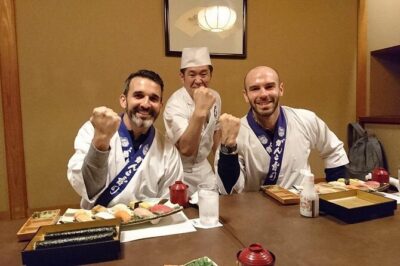 ★ 5.0Tsukiji Fish Market Guided Tour and Sushi Making with Pro ChefFrom $104775 reviews
★ 4.7Tsukiji Fish Market Food and Culture Walking TourFrom $96757 reviews
★ 5.0Tsukiji Fish Market Guided Tour and Sushi Making with Pro ChefFrom $104775 reviews
★ 4.7Tsukiji Fish Market Food and Culture Walking TourFrom $96757 reviews
 ★ 5.0Tsukiji Fish Market: Street Food & Culture Walking TourFrom $33669 reviews
 ★ 5.0Tsukiji Fish Market Small-Group Food Walking TourFrom $87621 reviews
Browse the lists this tour appears in