
Reviewed · CITY TOURS
Tokyo City Attractive One Day Tour
Tokyo can feel overwhelming. This one-day plan makes it manageable with a private tour that hits major culture and big-city energy in a steady rhythm. I like that you travel in an air-conditioned vehicle between neighborhoods, not on a sprinting schedule. One thing to plan for: lunch and dinner are on your own, and the big observation stops at Skytree and Tokyo Tower cost extra.
What I also really like is the personal feel. Your driver also serves as the guide, so you’re not just being dropped off at photo points. And because it’s private, you can adjust what you care about most (or how long you linger when a street or shrine is pulling you in). The trade-off is that with only about 9 hours, it’s still a full day, so you’ll want to keep your expectations tuned to highlights, not slow sightseeing marathons.
In This Review
- Key takeaways before you go
- Why this one-day Tokyo plan works (and who it fits best)
- Price and value: $500 per group up to 5
- Getting started at Tokyo Station Hotel and riding in comfort
- Asakusa and Sensoji: old Tokyo’s loudest welcome
- Skytree and Solamachi: 634 meters of city views
- Tokyo Tower: classic skyline drama with broadcast history
- Tsukiji Outer Market: Food Town that still works for casual visitors
- Shinjuku Gyoen and Meiji Jingu: calm breaks that reset your day
- Shibuya crossing, Hachiko, and Harajuku: modern Tokyo at full volume
- Smart ways to make the 9 hours feel smooth
- Should you book this Tokyo City Attractive One Day Tour?
- FAQ
- How much does the Tokyo City Attractive One Day Tour cost?
- How long is the tour?
- Does the tour include hotel pickup and drop-off?
- Are entry tickets to Tokyo Skytree and Tokyo Tower included?
- What is included during the day?
- Where does the tour start and end?
- Can I cancel for a full refund?
Key takeaways before you go
- Hotel round-trip transfers starting at Tokyo Station Hotel so you lose less time navigating.
- Driver-guided, private format that feels flexible without turning chaotic.
- Big Tokyo variety in one day: temples, markets, gardens, shrines, and neon intersections.
- Observation views may require extra tickets for Skytree and Tokyo Tower.
- Onboard comfort and convenience with an air-conditioned vehicle and a mobile setup for planning.
Bigger sweeps: other Tokyo city tours
- Tokyo: Private City Highlights Tour with Local Guide★ 4.8 · 1,433 reviews
- Tokyo: 3-Hour Bike or E-Bike City Highlights Tour★ 4.8 · 435 reviews
- Tokyo: Sumo Morning Practice Tour at Sumida City★ 4.8 · 308 reviews
Why this one-day Tokyo plan works (and who it fits best)
This tour is designed for people who want Tokyo’s greatest hits without turning the day into homework. You get a shaped route that mixes historic Tokyo (Asakusa and Meiji Jingu) with food Tokyo (Tsukiji Outer Market), then snaps into modern Tokyo (Skytree, Shibuya, Harajuku). It’s the kind of day that helps you get your bearings fast, so your next Tokyo day can be more intentional.
I’d call it a great match if you are:
- Visiting for the first time and don’t want to guess transit the whole day
- Short on time but want more than one neighborhood
- Traveling with up to 5 people who would rather share one private van than split into separate day plans
The most “value” part here is the balance. You’re not paying for one expensive stop and nine quick drive-bys. You’re paying for a guided, organized day that stitches together multiple areas that otherwise take time to coordinate.
Price and value: $500 per group up to 5
At $500 per group (up to 5), this is priced like a true private tour. For solo travelers, that can feel steep compared to joining a group bus. But for couples, families, or friend groups, the math shifts fast: with 4–5 people, you’re effectively splitting the cost in a way that can still feel reasonable versus buying multiple individual tours plus the friction of transit.
What makes it feel worth the price is what you’re getting bundled:
- Round-trip hotel transfers
- Air-conditioned vehicle for between-stop comfort
- Private attention (not just a lecture on a loud speaker)
- A full day built around multiple major highlights
Also, the cost of Skytree and Tokyo Tower tickets is not included. If you plan to go up both, add those on your budget so you don’t get surprised later. Even then, the tour still gives you structured time at the right places.
Getting started at Tokyo Station Hotel and riding in comfort
The day starts and ends at Tokyo Station Hotel in Marunouchi, so your meeting point is easy to find and hard to mess up. You’ll also get pickup offered and round-trip hotel transfers, which matters in Tokyo where “close” can still mean 30–40 minutes of train hopping.
Two small practical wins help you enjoy the day:
- You receive a mobile ticket, so you’re not juggling paper vouchers.
- You get a hotspot on board, which is handy for map checks, messaging your group, or quickly locating the next stop when you’re out on foot.
Wear comfortable shoes. This is a highlights day, so you’ll be moving enough to feel productive, but not so much that you’ll forget to eat. The vehicle does a lot of the heavy lifting between neighborhoods, which is exactly what you want when you’ve got 9 hours to cover Tokyo.
Asakusa and Sensoji: old Tokyo’s loudest welcome
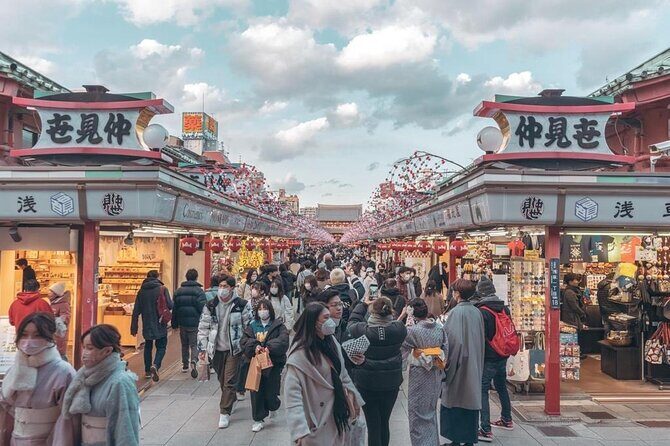
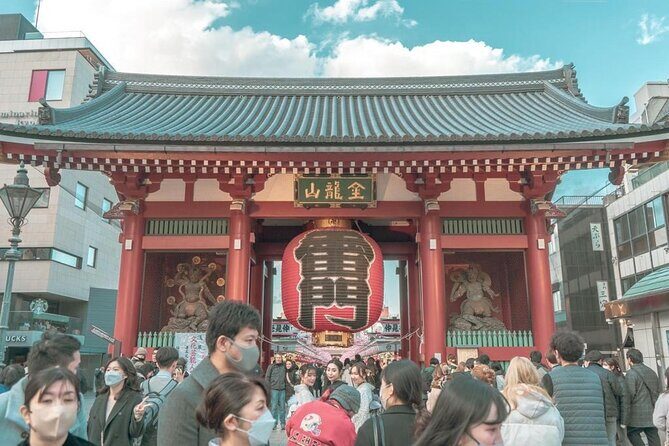
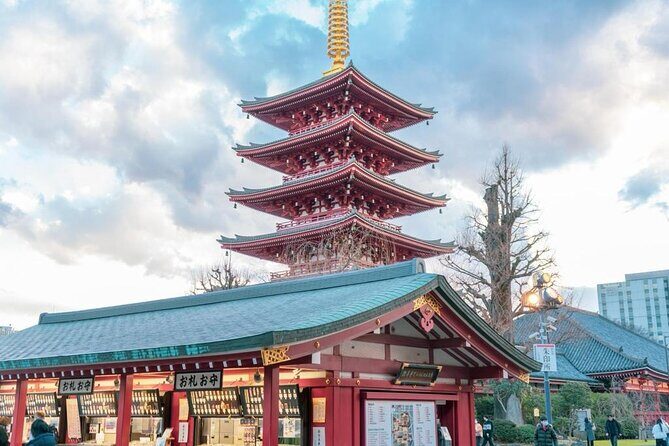
Asakusa is where Tokyo shows off its traditional face. Your first stop is Sensoji (also called Asakusa Kannon Temple), which is famous for color, crowds, and that unmistakable temple-stroll feeling.
This place has a strong backstory: a legend says two brothers fished a statue of Kannon from the Sumida River, returned it, and the statue kept coming back. The temple was then built nearby, and it was completed in 645, making it Tokyo’s oldest temple. That myth gives the visit a sense of continuity. You’re not just walking through a “pretty old building.” You’re stepping into a place with decades and centuries of meaning.
You’ll also pass through Nakamise, a shopping street over 200 meters long that runs from the outer gate area toward the temple’s inner sections. It’s a perfect place to grab small snacks and typical souvenirs without needing a shopping plan.
One practical note: this is a popular area. If you want photos, go with the idea that you might be waiting a bit, then take the picture when your moment appears.
Worth weighing up alongside this Tokyo pick:


Skytree and Solamachi: 634 meters of city views
Tokyo Skytree is the world’s highest free-standing broadcast tower at 634 meters tall, with observation decks around 350 meters and 450 meters. Even if you’re not a “views person,” Skytree is a strong way to understand Tokyo’s scale. From above, neighborhoods start to make sense.
Skytree itself connects to Skytree Town and Solamachi, which is a huge shopping complex with hundreds of shops and restaurants. If you decide not to go up, Solamachi still gives you plenty to do. There’s even an aquarium area with a large colony of penguins and a Postal Museum, plus exhibition spaces that highlight things like robot technology.
Tickets are not included. The tour notes an entry cost of about $12 USD for Skytree. Plan for lines. If you’re serious about going up, it’s smart to pick a time slot in advance so you’re not losing half your day to waiting.
Drawback to consider: Skytree is a popular magnet. If your timing is off, the visit can feel less relaxed. That’s the one place where you’ll really notice the difference between “on time” and “stuck in line.”
Tokyo Tower: classic skyline drama with broadcast history
Tokyo Tower sits at 333 meters in central Tokyo, and it’s known for being a symbol of Japan’s post-war rebirth as a major economic power. It was the country’s tallest structure after it opened in 1958, until Skytree took over in 2012. It’s also a broadcast antenna, so it’s not just a landmark. It’s part of Tokyo’s infrastructure.
One hour is a good window for Tokyo Tower if you keep the goals simple: photos, quick vibe check, and (if you choose) the observation experience. Tickets are not included, with an indicated cost of about $7 USD.
What makes this stop work in the context of the day is contrast. Skytree gives you the “new vertical Tokyo.” Tokyo Tower gives you an older skyline symbol. Together, they help you see how Tokyo’s self-image has changed.
If you’re on a budget or short on time, you could treat Tokyo Tower as mostly a street-level stop. But if you love skyline views, budget for the entry and make it count.
Tsukiji Outer Market: Food Town that still works for casual visitors
Tsukiji Outer Market is one of the best places in Tokyo to snack your way through the day. The focus here is the Outer Market, often described as Japan’s Food Town, with a mix of traditional foods, restaurants, and retail stalls lined up along the streets.
What I like about Tsukiji is the story behind why it looks and feels the way it does. The original market setup catered more to professionals, which meant many items were bigger and harder to take home. Now, many places have adapted for visitors, including ready-to-eat options and smaller portions. You can try something without committing to a full meal.
That flexibility makes it easy to fit Tsukiji into a packed day. You can keep lunch light, then still eat later, or you can build a full plan around small bites.
The practical drawback: it can be crowded, and popular stalls move fast. If you want specific items, go with a simple shopping goal and expect quick decisions when you see something you want.
Shinjuku Gyoen and Meiji Jingu: calm breaks that reset your day
Tokyo can swing from chaos to quiet in a single move. This tour gives you two strong “reset” stops.
Shinjuku Gyoen National Garden is a large park near Shinjuku Station with lawns, walking paths, and tranquil scenery that feels like a breather after busy streets. In spring, it’s especially known for cherry blossoms. Even if you’re not there for blossoms, the space is the point: you get time to slow down, stand somewhere shaded, and watch people drift by.
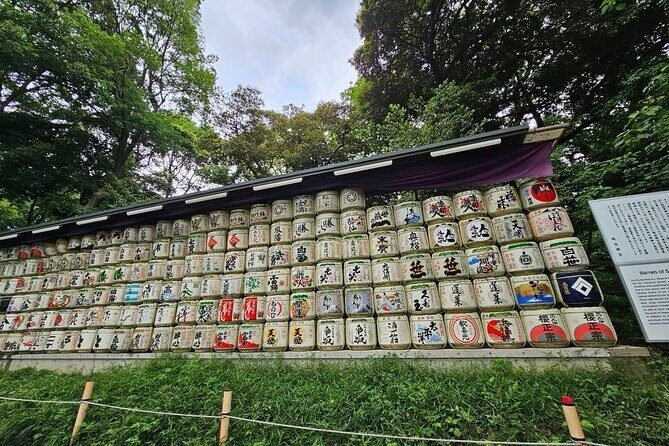
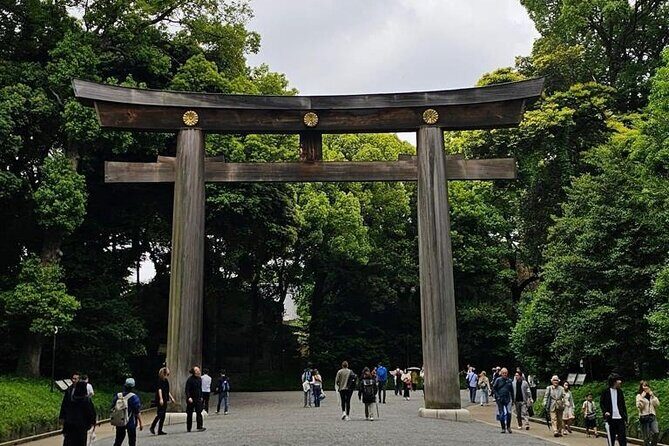
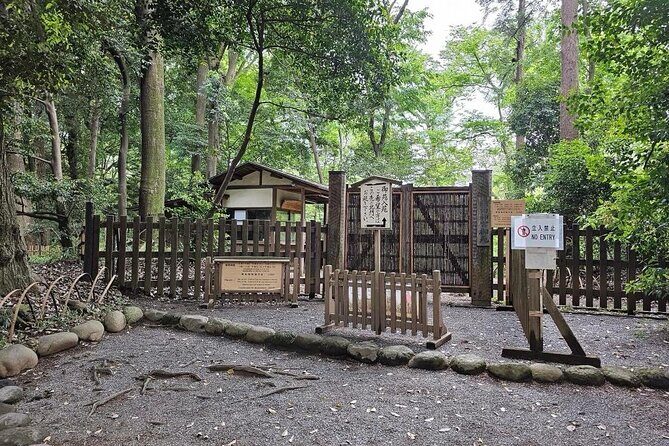
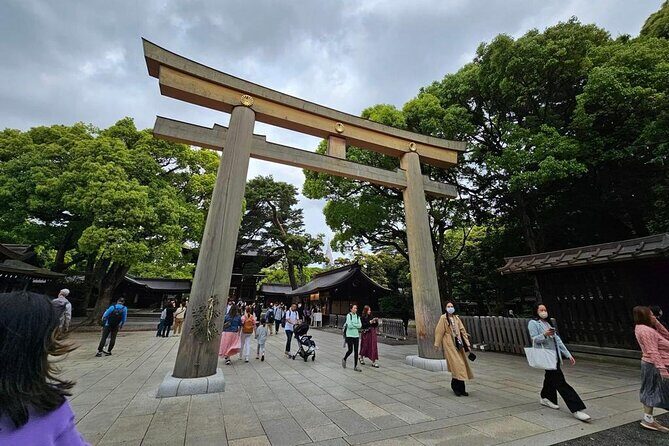
Then comes Meiji Jingu Shrine, a major shrine dedicated to Emperor Meiji and Empress Shoken. It was completed and dedicated in 1920, rebuilt after wartime destruction, and tied to Japan’s modern history. The shrine sits in a wooded setting that makes the city feel far away, even though you’re still very much in Tokyo.
This pairing works because it changes your sensory input:
- Shinjuku Gyoen gives you wide-open calm.
- Meiji Jingu gives you a forested, ritual-feeling calm.
Both are free to enter, and each gets about an hour. In a day this packed, that balance is what keeps Tokyo from feeling like a theme park.
Shibuya crossing, Hachiko, and Harajuku: modern Tokyo at full volume
After the quiet, the tour swings back into energy.
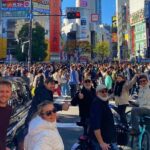
At Shibuya Scramble Square, you’re set up to watch one of Tokyo’s most famous scenes: the scramble crossing where multiple lanes and crosswalks meet. The crossing is often described as controlled chaos. You’ll also get a sense of why this area becomes a stage for major events, including New Year countdown celebrations and Halloween crowds.
A short walk brings you to Hachiko, the loyal dog statue connected to the story of Hachiko waiting for his owner at Shibuya Station. The tale is tied to Hidesaburo Ueno, and Hachiko’s daily waiting after Ueno’s death became legendary. It’s also been referenced in film culture, including a 2009 movie.
Then you finish at Harajuku Station and the area around Takeshita Street, famous for fashion, youth culture, and bold style. On weekends and holidays it’s packed with high school students and groups of visitors, and the energy can be intense in the best way. Takeshita Street is lined with clothing stores, cafés, dessert shops, and quirky memorabilia. If you want a practical souvenir with price tags that don’t make you wince, accessory shops like Paris Kids are a place you might find helpful options.
Time-wise, Shibuya and Hachiko are shorter stops (about 30 minutes each), and Harajuku is about an hour. That’s enough to feel the vibe, take photos, and buy a couple small things without losing the whole afternoon.
Potential drawback: this segment is where crowds peak. If you’re sensitive to noise or crowds, keep your expectations realistic. You’ll enjoy it more if you treat it like a sensory experience and not a slow museum visit.
Smart ways to make the 9 hours feel smooth
This tour is built to cover a lot, so your best strategy is to decide what matters most and let the rest be quick.
Here are a few practical moves I’d make before you go:
- Pick your observation goal early: If you want the best views, plan which tower you’ll pay to enter (Skytree and/or Tokyo Tower). Since tickets aren’t included, it helps to budget up front.
- Treat lunch and dinner as flexible: Lunch and dinner aren’t included, and the day is packed. I’d plan to grab something near Tsukiji or in the areas you’re already in, then keep dinner light.
- Use your onboard hotspot: When you step out at intersections and station areas, having map access makes the day feel less stressful.
- Expect some order pressure: With cherry blossom season or major events, the day can feel different. If timing matters for you, that’s where customizing your day helps.
Also, remember this is a private tour for up to 5 people. That means you can talk with your driver-guid e about pace. If you’re in a shopping mood, shift a few minutes. If you want more quiet time at a shrine or garden, do that. It’s one of the best parts of the private format.
Should you book this Tokyo City Attractive One Day Tour?
I’d book it if you want a high-impact day with major Tokyo landmarks, comfortable transport, and a route that avoids the usual planning headaches. The starting point at Tokyo Station Hotel is a big convenience, and the private setup keeps the day from feeling like a cattle run.
Skip it or reconsider if:
- You hate crowds and want only low-traffic sightseeing
- You’re trying to do a ultra-budget day and won’t pay extra for Skytree/Tokyo Tower
- You prefer slow, neighborhood-by-neighborhood exploration more than organized highlights
If you’re a first-timer, or you’re squeezing Tokyo into a tight schedule, this is the kind of tour that helps you leave with a clear picture of the city. Then you can come back on your own terms for the parts you want to revisit.
FAQ
How much does the Tokyo City Attractive One Day Tour cost?
It costs $500 per group, up to 5 people.
How long is the tour?
The tour runs about 9 hours.
Does the tour include hotel pickup and drop-off?
Yes. It includes handy round-trip hotel transfers, and pickup is offered.
Are entry tickets to Tokyo Skytree and Tokyo Tower included?
No. Entry tickets for Skytree and Tokyo Tower are not included. Skytree is listed at about $12 USD, and Tokyo Tower is listed at about $7 USD.
What is included during the day?
The tour includes an air-conditioned vehicle, private transportation, and a hotspot on board. It also uses a mobile ticket.
Where does the tour start and end?
It starts at Tokyo Station Hotel in Marunouchi and ends back at the same meeting point.
Can I cancel for a full refund?
Yes. You can cancel for free up to 24 hours in advance for a full refund. If you cancel less than 24 hours before the start time, the amount paid is not refunded.
The Whole City in a Day

More Tours in Tokyo




More Tour Reviews in Tokyo



Fresh reviews from around Tokyo






City Tours, compared.
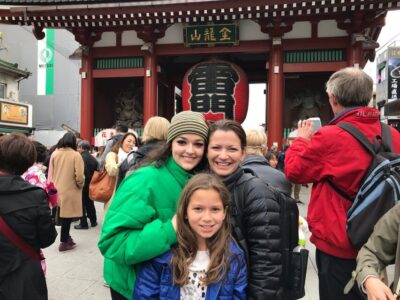 ★ 4.8Private City Highlights Tour with Local GuideFrom $1061,433 reviews
3-Hour Bike or E-Bike City Highlights TourFrom $45435 reviews
★ 4.8Private City Highlights Tour with Local GuideFrom $1061,433 reviews
3-Hour Bike or E-Bike City Highlights TourFrom $45435 reviews
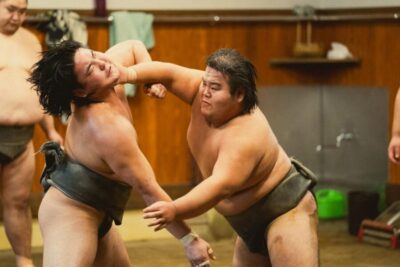 ★ 4.8Sumo Morning Practice Tour at Sumida CityFrom $116308 reviews
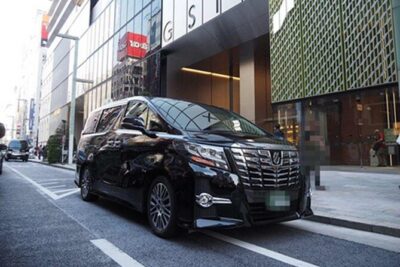 ★ 4.5Private Haneda Airport (HND) to Central Tokyo City TransferFrom $119260 reviews
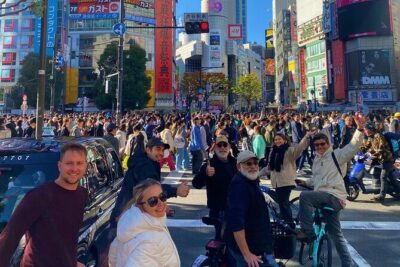 ★ 5.03-Hour Bike/E-Bike Tour of the City’s HighlightsFrom $63209 reviews
 ★ 5.0Small Town in the Big City: Tasting Tokyo’s KichijojiFrom $195195 reviews
 ★ 4.5Private departure transfer from Tokyo city to Tokyo Haneda Airport(HND)From $118123 reviews
Kamakura Walking Tour – The City of ShogunFrom $35100 reviews
★ 4.5Private departure transfer from Tokyo city to Tokyo Haneda Airport(HND)From $118123 reviews
Kamakura Walking Tour – The City of ShogunFrom $35100 reviews
Browse the lists this tour appears in