
Reviewed · CALLIGRAPHY EXPERIENCES
Tokyo: Calligraphy Workshop & Original T-Shirt Creation
Tokyo calligraphy can be surprisingly practical.
In this 2-hour workshop in Shinjuku, you’ll learn Japanese calligraphy in an English-guided class that feels calm even in the middle of a busy city. A professional teacher (often Sensei Sousen-sensei, and guides like Hiromi, Mayuko-san, or Nono) leads the hands-on parts, while the host helps you connect the technique to the meaning—so you’re not just copying symbols, you’re understanding what you’re writing.
What I love most is the quiet, step-by-step way you make ink and write your first strokes, plus the chance to leave with real artwork you can use right away as a souvenir. The main drawback to plan for: the t-shirt itself isn’t included, even though you can write your kanji on one during the class, so you may pay extra if you want the wearable version.
In This Review
- Key highlights I’d aim for
- Shinjuku Workshop Setup: Getting to the FamilyMart meeting point fast
- Workwear, Ink, and the Old-School start that makes everything click
- Turning your name into kanji: more than just copying symbols
- The calligraphy T-shirt option: fun souvenir, plus one money note
- How the English-guided format actually helps you learn
- Small group (up to 10) and why that changes the quality
- What the 2 hours feels like in real life
- Pricing and value: why $30 can actually feel fair
- Who should book this calligraphy workshop, and who might not
- Should you book Tokyo Calligraphy Workshop & Original T-Shirt Creation?
- FAQ
- How long is the calligraphy workshop?
- Is the experience in English?
- Does the price include the calligraphy materials?
- Can I write on a T-shirt during the workshop?
- What do I take home?
- Where do I meet the guide?
Key highlights I’d aim for
- Grind a solid inkstick to make authentic ink and slow your brain down
- Learn brush stroke order and positioning so letters look intentional, not accidental
- Turn your name into kanji and create original calligraphy you take home
- English support from a host who helps translate technique and context clearly
- Small group (up to 10) so you can actually get feedback, not just watch
More ink on paper
- Tokyo: Calligraphy on Kanji Fan & Scroll with Drink★ 5.0 · 210 reviews
- Let’s experience calligraphy in YANAKA, Taito-ku, TOKYO !!★ 5.0 · 127 reviews
- Tokyo: Calligraphy Workshop & Original T-Shirt Creation★ 4.9 · 105 reviews
Shinjuku Workshop Setup: Getting to the FamilyMart meeting point fast
Your class starts at a FamilyMart near Okubo Station, specifically the FamilyMart Okubo Station South Exit store (1-23-21 Hyakunincho, Shinjuku-ku, Tokyo). There will be a guide holding a sign that says Local Guide Stars, which makes it much easier than guessing which group is yours.
This part matters more than it sounds. In Shinjuku, it’s easy to lose time wandering between stations and exits. If you give yourself buffer time and arrive a few minutes early, you’ll walk in relaxed and ready for the first instructions—because calligraphy is easier when you’re not rushing.
Also, this is the kind of activity where having your head clear helps. From the reviews, the tone inside the workshop is patient and supportive, and the small-group size (limited to 10) helps the teacher adjust to you.
Workwear, Ink, and the Old-School start that makes everything click
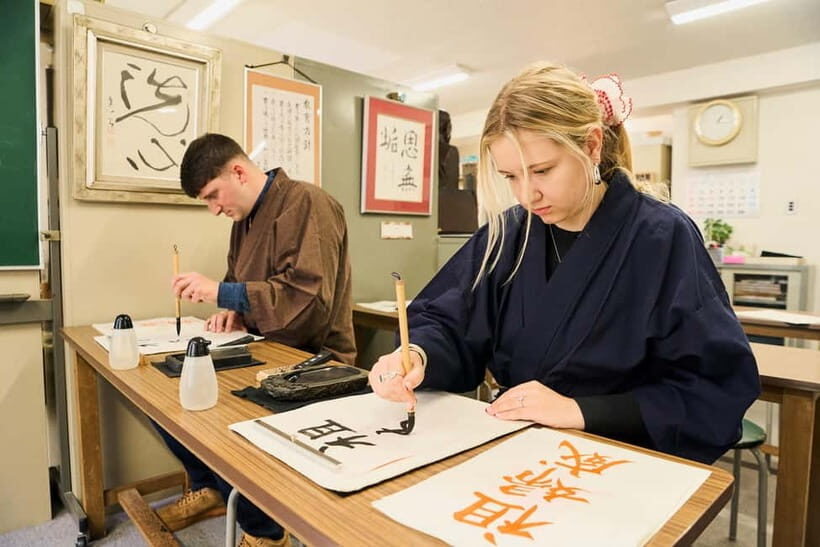
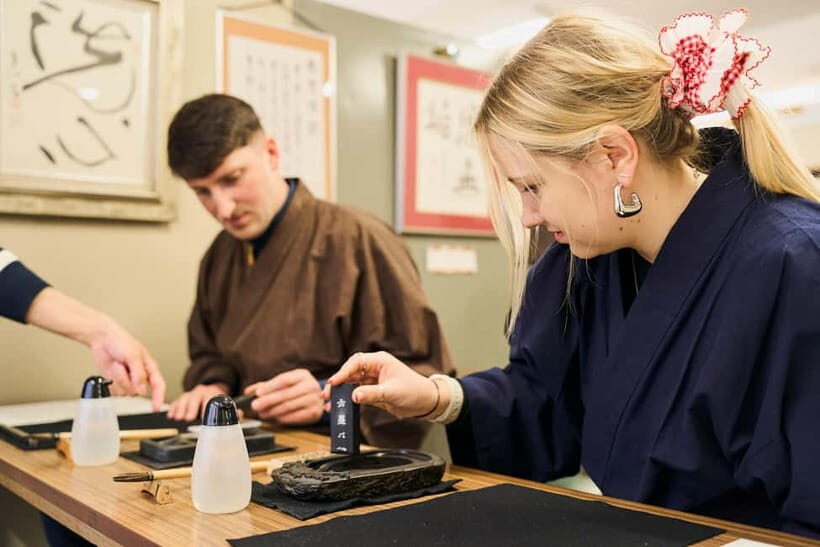
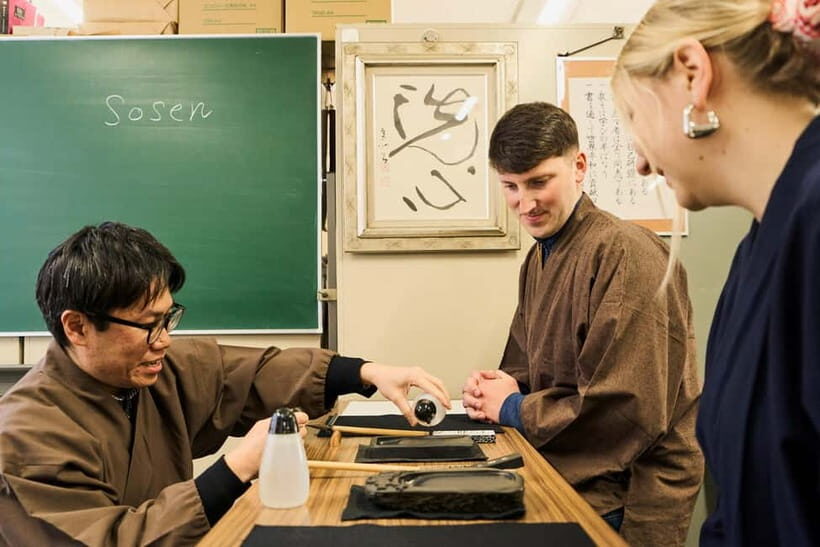
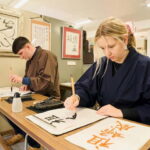
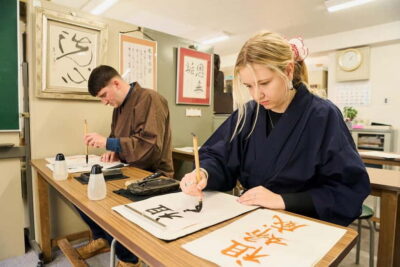
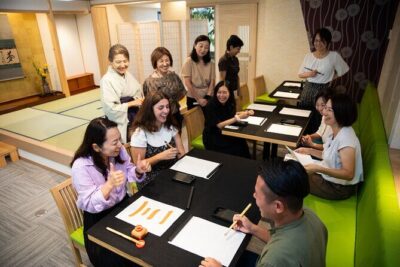
One of the most Japanese-feeling parts is how the workshop begins. You change into traditional Japanese workwear, then move into the ink-making segment—grinding a solid inkstick to create ink the authentic way.
That ink step isn’t a gimmick. You’re doing something physical and repetitive, and it changes your rhythm. Even if you’ve never written kanji before, you’ll feel the difference between quick scribbling and careful brush control once you’re working with the ink you made yourself.
You’ll also learn the basics of brush technique. Think pressure, angle, and stroke consistency—small adjustments that make a huge visual difference in calligraphy. It’s also where you start to notice that the class isn’t just “make a pretty thing.” It’s about the logic of the characters: how each component sits, how it connects, and how the strokes flow.
And yes, it’s hands-on. From the feedback, the teacher is very patient with beginners, including kids. If you’re traveling as a family, this is one of the few activities in Tokyo that can keep a wide age range engaged without turning into a lecture.
Turning your name into kanji: more than just copying symbols
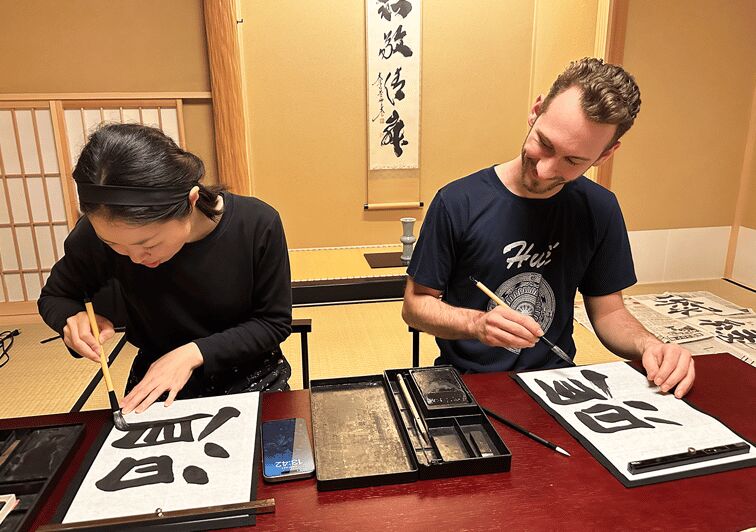
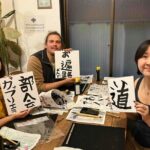
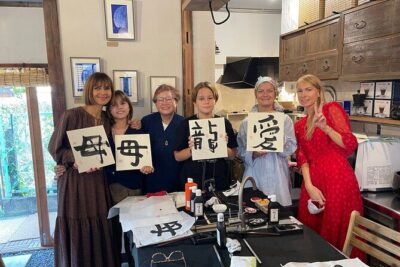
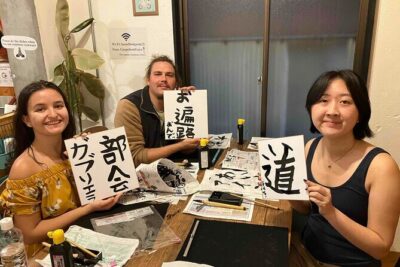
Here’s where the workshop becomes personal. You’ll transform your name into kanji and create an original piece based on your chosen characters.
Why this is valuable: your name is the one thing you don’t need to “pretend to care about.” When you write your own name, the workshop naturally becomes about identity—how Japanese writing works, how characters represent sounds or meanings, and why stroke order and structure matter. In the reviews, people specifically mentioned learning about the history and evolution of calligraphy, plus how Japanese characters developed over time.
You’ll also practice basic brush strokes first, then apply them to your final piece. A common theme in the feedback is learning the order of writing and the positioning next to each other—so the result looks balanced rather than random.
If you’re curious about the meaning side, this class often goes there too. Some participants noted that they could pick their own kanji characters and learned how those choices connect to Japanese names. Even when you’re not studying Japanese formally, that kind of context helps you understand why calligraphy isn’t just art—it’s language made visible.
The calligraphy T-shirt option: fun souvenir, plus one money note
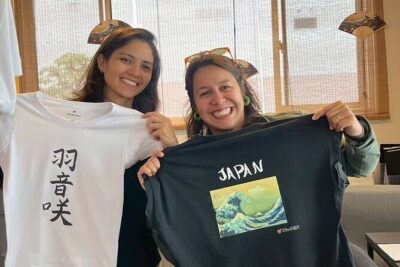
The experience includes the option to write your kanji directly on a T-shirt and design your own original piece. But there’s an important detail: the original t-shirts are not included.
So how should you think about it?
- If you want the wearable souvenir, budget extra for the shirt.
- If you’re on a tighter travel budget, you can still get a take-home artwork from the workshop without going for the shirt.
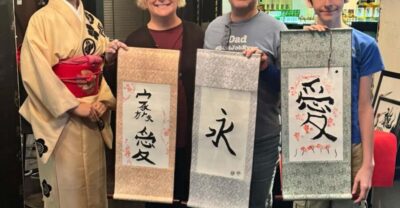
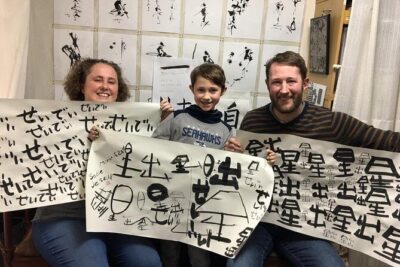
In the reviews, people described the t-shirt as a funny or unusual result in the moment—but also a memorable one once it’s finished. That makes sense: calligraphy is technically demanding, and your first attempt won’t look like a professional scroll. But that’s also why it’s special. You’re bringing home proof you tried the real method, not a printed souvenir.
My practical take: if you care about the final look, commit to the paper version first (so you learn the strokes), then do the shirt if you still want the extra fun. The workflow in a class like this usually builds in that order.
More things to make with your own hands



How the English-guided format actually helps you learn
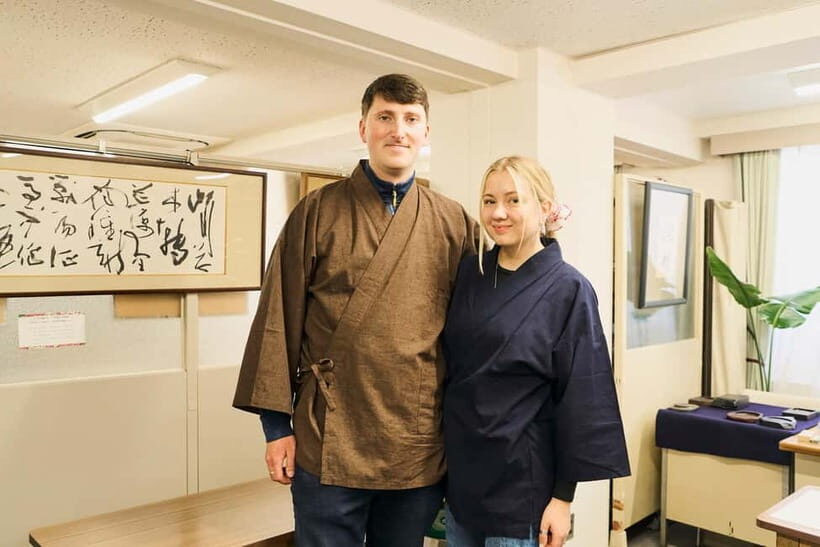
The workshop is guided in English, and you’ll have both a host and a professional calligrapher working with the group. Names that came up include Hiromi as an English host/translator, and Mayuko-san translating in at least one class, alongside Sensei teaching.
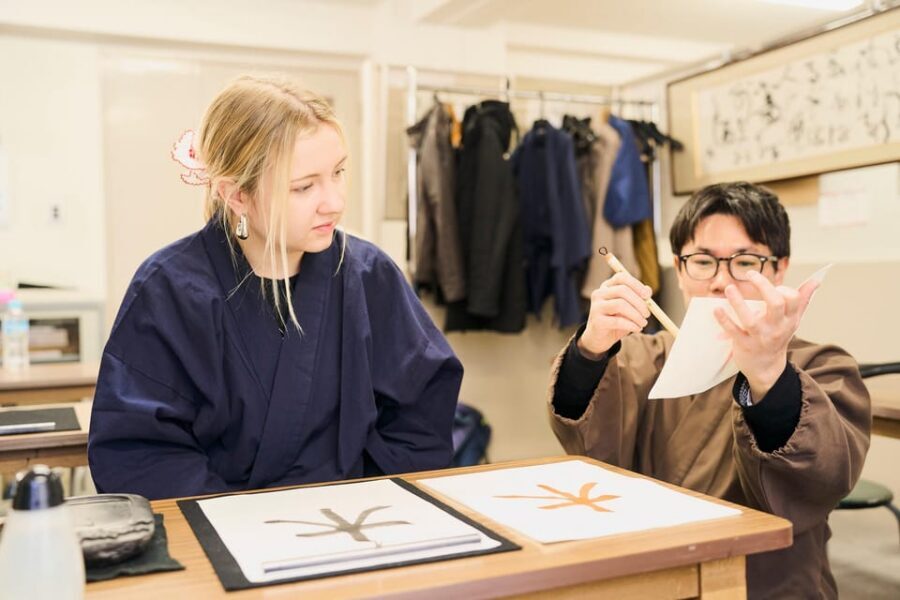
This structure matters for first-timers. Calligraphy has lots of small terms—stroke direction, order, positioning, ink consistency—and those details can be hard to catch if you only get instructions once. The host support means you can ask questions, get feedback that connects to what you see, and keep the pace comfortable.
From the reviews, the most praised aspect after the art itself was the combination of:
- patience from the teacher (lots of time spent improving strokes),
- kind, helpful translation/hosting.
In other words, you don’t have to pretend you understand. You can learn what’s happening in plain English, then apply it right away with the brush.
Small group (up to 10) and why that changes the quality
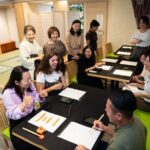
A limit of 10 participants might sound small, but for activities like this it’s everything. Calligraphy is one of those crafts where the difference between good and great is often a tiny correction: grip angle, brush pressure, how you start and stop a stroke.
In reviews, people specifically mentioned getting enough attention for improvement—sometimes even when someone was the only student. That’s the advantage of a small group: you’re more likely to get real feedback instead of generic encouragement.
It also helps the atmosphere. Multiple people described the workshop as calming and meditative, which fits the physical rhythm of ink-making plus careful stroke practice. If you’re visiting Tokyo and want a break from nonstop walking and crowds, this class does a good job of giving your body and mind a different pace.
What the 2 hours feels like in real life
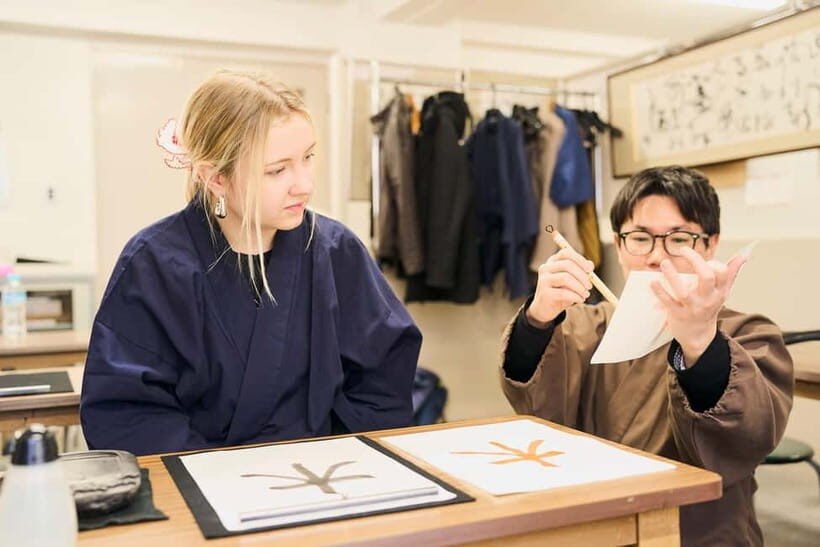
You’re in class for about 2 hours, and the structure is intentionally paced so you don’t feel overwhelmed.
A typical flow you can expect:
- Meet at the FamilyMart and group up with your host.
- Change into workwear.
- Grind ink and learn what authentic ink feels like.
- Practice basic brush techniques.
- Turn your name into kanji and create your final calligraphy.
- Optionally write/design your kanji on a T-shirt.
The big win of this timing is that you finish with something concrete. You’re not just learning brush basics for the sake of it. You learn, apply, and go home with artwork—often including the shirt option if you choose it.
Pricing and value: why $30 can actually feel fair
At $30 per person, the class is priced like a straightforward cultural workshop, not a high-end art lesson. But it includes the parts that usually cost extra elsewhere: instruction, calligraphy supplies to use during class, an English guide, and your own artwork to take home.
The only obvious add-on is the T-shirt, because the shirt itself isn’t included. If you skip it, you still come away with a souvenir. If you do it, you’re paying for the wearable version of your name-in-kanji.
Here’s how to judge value before booking:
- If you want a calm Tokyo experience plus real skills you can show off, the $30 makes sense.
- If you mainly want a photo op with minimal effort, you might not get as much from the technical parts.
But if you’re the kind of traveler who likes hands-on culture, this is exactly the right balance.
Who should book this calligraphy workshop, and who might not
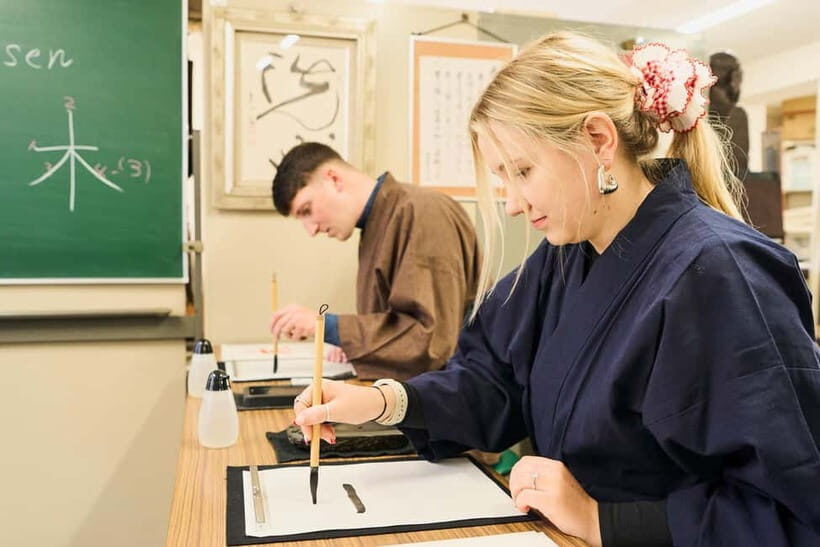
This workshop is a great fit for:
- beginners who want a guided art experience in English,
- families (the activity is designed to be enjoyable even for children),
- anyone who likes mindful breaks in the middle of a city trip,
- travelers who want a personal souvenir based on their own name.
You might think twice if:
- you dislike slower, detail-focused activities,
- you only want casual sightseeing and are short on time,
- you don’t want to deal with an extra optional cost for the T-shirt.
Should you book Tokyo Calligraphy Workshop & Original T-Shirt Creation?
I’d book it if you want an authentic-feeling craft experience that gives you a finished result. The combo of ink-making, stroke learning, kanji tied to your own name, and English support is hard to beat at this time and price.
Do it especially if you’re already planning a Shinjuku base. It’s an easy area to work into your schedule, and the payoff is a souvenir that’s personal, not mass-produced.
If you’re still deciding on the T-shirt: think of the shirt as the fun bonus. Prioritize the calligraphy lesson and take-home artwork first, and add the shirt if it fits your budget and you want the wearable version of your kanji experiment.
FAQ
How long is the calligraphy workshop?
The workshop runs for 2 hours.
Is the experience in English?
Yes. It includes an English live tour guide.
Does the price include the calligraphy materials?
Yes. Calligraphy supplies to use during the class are included.
Can I write on a T-shirt during the workshop?
You can create an optional piece by writing your kanji on a T-shirt, but the original T-shirts are not included.
What do I take home?
You take home your own artwork from the class.
Where do I meet the guide?
Meet at FamilyMart Okubo Station South Exit store (1-23-21 Hyakunincho, Shinjuku-ku, Tokyo). The guide will be holding a sign that says Local Guide Stars.
Make Something to Take Home

More Tour Reviews in Tokyo






Brush and Ink: More Calligraphy Hours

Fresh reviews from around Tokyo






Calligraphy Experiences, compared.
 ★ 5.0Calligraphy on Kanji Fan & Scroll with DrinkFrom $53210 reviews
 ★ 5.0Let’s experience calligraphy in YANAKA, Taito-ku, TOKYO !!From $75127 reviews
 ★ 5.0Calligraphy Workshop & Original T-Shirt CreationFrom $3380 reviews
 ★ 5.0Calligraphy Culture SHODO Experience in TokyoFrom $3366 reviews
 ★ 5.0Tokyo Asakusa:Calligraphy & Make T-shirt ActivityFrom $5862 reviews
 ★ 5.0Asakusa Calligraphy Workshop Craft Your Own Art in TokyoFrom $4054 reviews
 ★ 5.0Tokyo Japanese Calligraphy Experience with a Master ArtistFrom $9235 reviews
 ★ 5.0Calligraphy Experience with yukata or SamueFrom $6421 reviews
Browse the lists this tour appears in