
Reviewed · CALLIGRAPHY EXPERIENCES
Tokyo: Calligraphy Experience with yukata or Samue
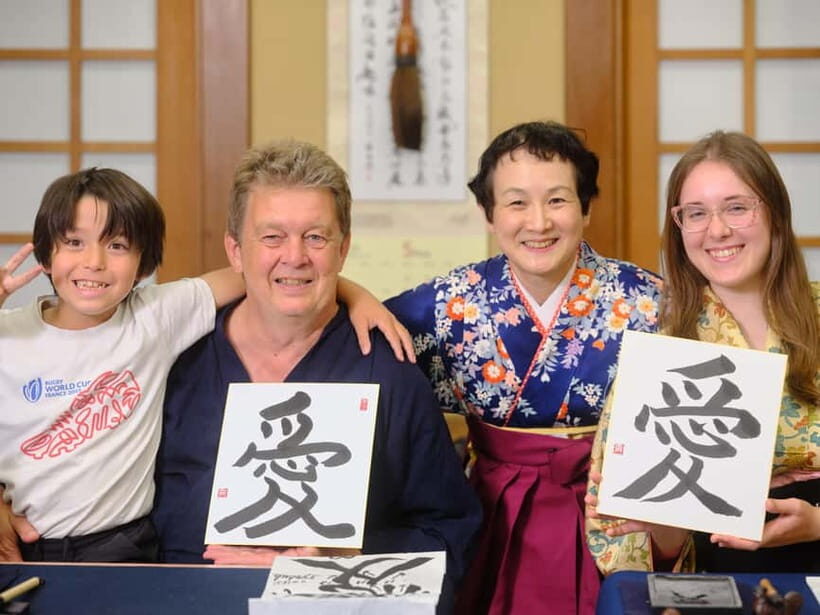
Brush strokes, real calm. In Tokyo, this class turns Japanese calligraphy from something you admire into something you can actually do, with a professional instructor and a relaxed tea break. You’ll get hands-on time with the brush, learn what the characters mean beyond their look, and finish with artwork you can keep.
I love two things most: the step-by-step teaching (not just a demo) and the fact that you leave with your own finished calligraphy. You also spend time on the spirituality and history behind the characters, which makes the session feel more like culture than a craft project.
One thing to consider: the session is 90 minutes, so you won’t become an expert. Also, the activity is messy by nature, so plan for brush ink and clothes that can get dirty.
In This Review
- Key highlights you’ll feel right away
- A 90-Minute Calligraphy Reset in Tokyo
- Getting Started: Dressing, Tea, and the First Brush Movements
- What You Actually Learn: Brush Control and Kanji Meaning
- Your Final Artwork: A Take-Home Souvenir You Can Be Proud Of
- The Teachers and the Atmosphere: Patient, Caring, and Hands-On
- Location Matters: Meeting Near a Nursery and 海德寺
- Price and Value: Why $64 Can Make Sense Here
- Who This Class Is Best For (And Who Might Skip It)
- Quick Practical Tips Before You Go
- Should You Book This Calligraphy Experience?
- FAQ
- How long is the calligraphy class?
- What does the price include?
- Is it a small group?
- What languages are available?
- Do I need to bring any materials?
- What should I wear?
- Where do I meet the group?
- Who is the class not suitable for?
Key highlights you’ll feel right away
- Yukata or samue dressing: a quick start that makes the class feel grounded and traditional
- English/French instruction with small-group attention (max 10 participants)
- Brush technique plus character meaning so you’re not copying without context
- A take-home finished work that becomes a real souvenir, not just a certificate
- Tea (and often snacks) that turns the session into a calm break
More ink on paper
- Tokyo: Calligraphy on Kanji Fan & Scroll with Drink★ 5.0 · 210 reviews
- Let’s experience calligraphy in YANAKA, Taito-ku, TOKYO !!★ 5.0 · 127 reviews
- Tokyo: Calligraphy Workshop & Original T-Shirt Creation★ 4.9 · 105 reviews
A 90-Minute Calligraphy Reset in Tokyo
Tokyo can be loud, fast, and full. This experience is the opposite mood. In a small room, you slow down, sit with intent, and learn how to guide a brush so a character looks confident, not accidental.
The format is simple: you meet up in Tokyo and then you learn classical calligraphy basics from professional calligraphers. The session is 90 minutes total, which is long enough to practice key movements and still short enough to fit neatly between other plans. Small group size matters here. With up to 10 people, you’re not lost in the back row.
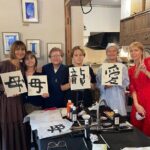
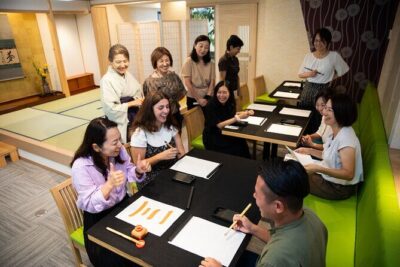
And yes, you get the traditional vibe. Multiple participants mentioned dressing in a kimono-style outfit at the start (you may see either yukata or samue depending on the class setup). That first step alone makes it easier to focus once the brush work begins.
Getting Started: Dressing, Tea, and the First Brush Movements
Before you touch paper, you’re typically welcomed, settled, and given a quick orientation. Several people noted that the arrival experience feels warm: tea and sometimes snacks show up early so you’re not rushed.
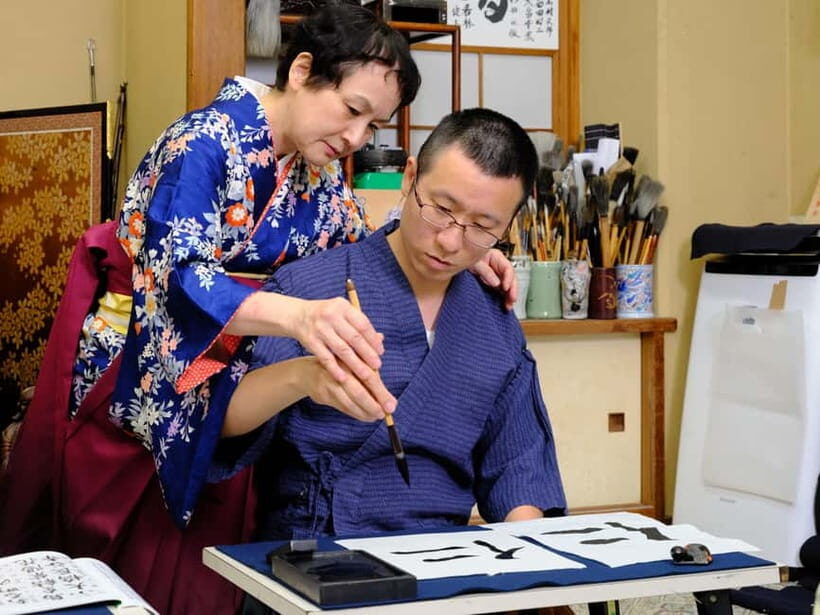
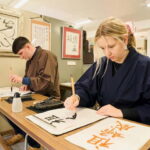
Then comes the practical part. You’ll be instructed on how to hold the brush and how to trace the basic lines that form characters. This is where most classes win or lose. Here, the instruction is organized enough that you’re not just copying shapes. You learn what the stroke is supposed to do: where it starts, how it moves, and how it lands.
This is also where clothes matter. You’ll want something you can live in for a little while. Calligraphy tools are included, but ink happens. Plan your outfit accordingly.
What You Actually Learn: Brush Control and Kanji Meaning
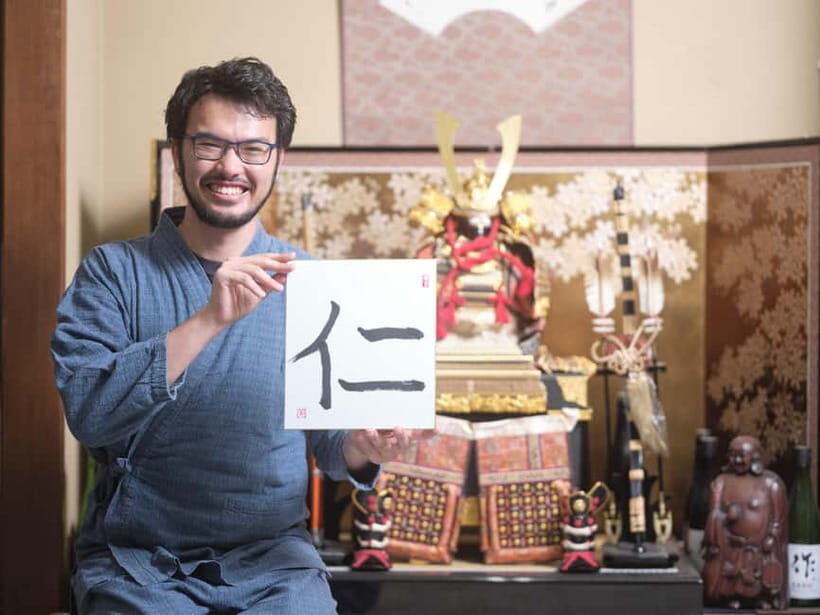
This isn’t just writing for decoration. A major part of the experience is understanding why a character looks the way it does. You’ll learn not only the mechanics, but also the spirituality and history behind the characters. That matters because it changes how you approach each stroke. You stop treating the page like a worksheet and start treating it like a message.
Expect to cover at least the basics of classical Japanese calligraphy, including:
- how to trace lines correctly
- how to use the brush (pressure, angle, and follow-through)
- how to write a kanji character with guidance
Different instructors may steer you toward different characters depending on the class flow. What stays consistent is that you practice the building blocks first, then use those skills for your final artwork.
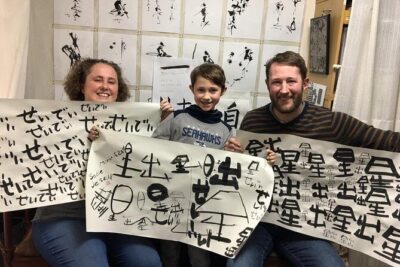
In one class, participants said the teacher even wrote their name as part of the final result. That’s a nice reminder that this isn’t a generic product. Your piece can feel personal in a way a souvenir shop can’t replicate.
Your Final Artwork: A Take-Home Souvenir You Can Be Proud Of
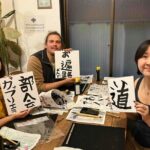
The payoff here is real: you take home your finished calligraphy work. You’re not leaving with only a photo or a thin worksheet. The tools and materials are provided, and you complete an artwork you can keep.
What makes the final piece meaningful is the training right before it. You spend time practicing the strokes first, then you apply them with support. That support is what turns beginner mistakes into corrections instead of frustration.
Also, because the group is small, instructors can adjust the details that matter: the brush angle, the consistency of line weight, and the rhythm of the stroke. That’s the difference between “I tried” and “I made something.”
If you want something unique for your Japan trip that won’t end up buried in a drawer, this does the job.





The Teachers and the Atmosphere: Patient, Caring, and Hands-On
This is one of those activities where the teaching style shows up quickly. Multiple people described the instructors as patient and very instructional, with step-by-step guidance that made it easier to progress even if it’s your first time.
Names that came up include Hana, Koushi, and Tomo. In one case, there was also an assisting interpreter who explained details and helped afterward. That kind of support is valuable, especially if you’re switching between explanation and doing.
You’ll likely notice a warm atmosphere throughout the session. People mentioned tea and snacks, kimono-style dressing, and a relaxed vibe that didn’t feel overly rigid. You still get structure, but the mood stays calm.
And there’s practical value too. One participant described the guide helping after the class with things like arranging a taxi and pointing them toward where to buy a calligraphy set. That’s the kind of extra care that turns a class into a smoother experience.
Location Matters: Meeting Near a Nursery and 海德寺
You’ll meet at a spot described by nearby landmarks: a nursery (保育園) next to 海德寺. That description is useful, but it does mean you should plan to arrive a few minutes early and double-check your map pin.
This kind of meeting point works best if:
- you’re comfortable walking a bit after arriving in the area
- you’re not counting down to the last minute before a train connection
If you like precise instructions, message ahead or arrive early enough to ask someone in the neighborhood. Once you’re there, the class itself feels easy and organized.
Price and Value: Why $64 Can Make Sense Here
At $64 per person for a 90-minute class, this sits in the mid-range for Tokyo activities. What helps it feel fair is what’s included:
- instruction by professional calligraphers
- all calligraphy tools
- your finished calligraphy work to take home
- Japanese tea
- an English-speaking guide (and instruction available in English and French)
- small group format (limited to 10)
The “value” part isn’t only the price. It’s what you walk away holding. A finished calligraphy piece is a real souvenir. Plus, the class gives you context on the characters’ meaning, so it’s not just aesthetics.
If you’re deciding between something with a photo-op vibe and something skill-based, this one leans skill-based. You’ll leave with a tangible artifact, and you’ll understand a bit more about why it matters.
Who This Class Is Best For (And Who Might Skip It)
This experience fits well if you:
- want a hands-on cultural activity
- like learning how traditions work, not just looking at them
- enjoy calm, focused sessions
- want a take-home art souvenir tied to real guidance
It’s also a good match for families, with at least one mention of it being especially great for families with kids.
There are some limits. It’s not suitable for children under 4 years old, and it isn’t suitable for people over 70 years old. Also, since you’re using ink and materials, you should plan for a bit of mess.
Quick Practical Tips Before You Go
Here’s how to set yourself up for an easy class:
- Wear clothes that can get dirty. Ink stains are real.
- Bring a mindset of short-term practice. You’re learning strokes, not writing a perfect masterpiece.
- If you have an interest in a specific character or your name, pay attention during instruction. Teachers may guide you toward a final piece that fits the class flow.
- Plan to slow down after. This type of session can make you want quiet time, not a sprint back into crowds.
Should You Book This Calligraphy Experience?
If your goal is a meaningful, skill-based Tokyo moment, I think you should book it. The combination of professional instruction, small group attention, and a real take-home finish is hard to beat for the time and cost.
Skip it if you’re looking for a long, free-form workshop or you hate any chance of getting ink on your clothes. And because it’s 90 minutes, it’s best as an introduction. If you want hours of advanced training, you’d likely need a different format.
Overall, this is the kind of activity that gives you something you can hold, something you can remember, and a little more understanding of what’s behind the characters on signs and paper around Japan.
FAQ
How long is the calligraphy class?
The class lasts 90 minutes.
What does the price include?
It includes instruction by professional calligraphers, all necessary calligraphy tools, Japanese tea, and your finished calligraphy work to take home, plus an English-speaking guide (with instruction available in English and French).
Is it a small group?
Yes. The group is limited to 10 participants.
What languages are available?
The instructor and guide support English and French.
Do I need to bring any materials?
No. All necessary calligraphy tools are included.
What should I wear?
Wear clothes that can get dirty, since calligraphy ink and tools are part of the process.
Where do I meet the group?
The meeting point is described as next to a nursery, and the other nearby landmark is 海德寺.
Who is the class not suitable for?
It’s not suitable for children under 4 years old, and it’s not suitable for people over 70 years old.
More Tour Reviews in Tokyo



Brush and Ink: More Calligraphy Hours

Fresh reviews from around Tokyo






Calligraphy Experiences, compared.
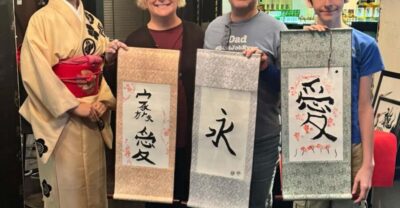 ★ 5.0Calligraphy on Kanji Fan & Scroll with DrinkFrom $53210 reviews
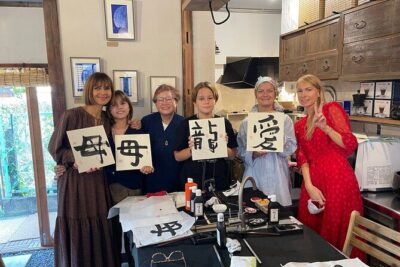 ★ 5.0Let’s experience calligraphy in YANAKA, Taito-ku, TOKYO !!From $75127 reviews
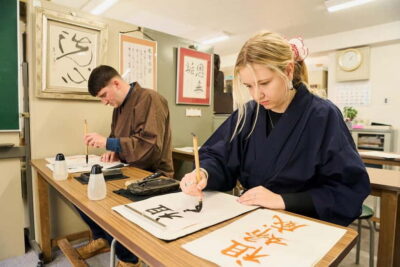 ★ 4.9Calligraphy Workshop & Original T-Shirt CreationFrom $30105 reviews
★ 5.0Calligraphy Workshop & Original T-Shirt CreationFrom $3380 reviews
★ 4.9Calligraphy Workshop & Original T-Shirt CreationFrom $30105 reviews
★ 5.0Calligraphy Workshop & Original T-Shirt CreationFrom $3380 reviews
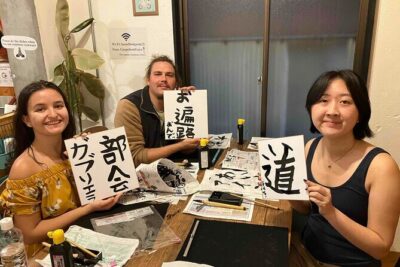 ★ 5.0Calligraphy Culture SHODO Experience in TokyoFrom $3366 reviews
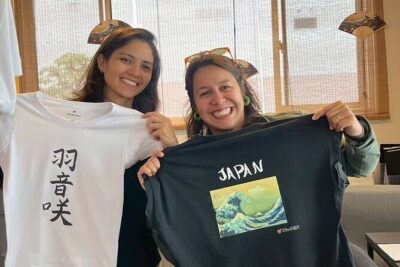 ★ 5.0Tokyo Asakusa:Calligraphy & Make T-shirt ActivityFrom $5862 reviews
 ★ 5.0Asakusa Calligraphy Workshop Craft Your Own Art in TokyoFrom $4054 reviews
 ★ 5.0Tokyo Japanese Calligraphy Experience with a Master ArtistFrom $9235 reviews
Browse the lists this tour appears in