
Reviewed · ASAKUSA TOURS
Asakusa Calligraphy Workshop Craft Your Own Art in Tokyo
Calligraphy feels personal fast. This Asakusa workshop gives you hands-on Japanese brush writing with close help from an instructor, and you get the satisfaction of taking your own piece home. I especially like the small group setup for real coaching, plus learning the basics that actually matter, like stroke order. One thing to plan for: bottled water is not included, so bring some or buy nearby.
You’ll do your work in one of Tokyo’s most historic-feeling areas, right by Asakusa, and you’ll start at the Tokyo Tourist Lounge on the 5th floor. It’s a simple, beginner-friendly format where you practice with traditional brushes and then switch to a modern fude pen (a brush pen) for extra control.
At $40 per person for about 1–1.5 hours, you’re paying for instructor time, tools, and the souvenir you make. The value is strongest if you want a structured lesson rather than trying to copy videos at home with zero feedback—plus the class includes entrance fees via the Tokyo Tourist Lounge service and some souvenirs.
In This Review
- Key things I’d focus on before you go
- Why Asakusa is a smart match for first-time calligraphy
- Meeting at Tokyo Tourist Lounge Asakusa (5F) and getting set up
- The 1–1.5 hour lesson flow: what you’ll actually do
- Brush grip and stroke order: the “boring” part that makes your art better
- Traditional brushes vs the fude pen: why they teach you different things
- Choosing characters: making the session feel like yours
- What you take home (and how to use it after the workshop)
- Price and value: is $40 a good deal here?
- Who this suits best (and who might want something else)
- Quick practical tips so your calligraphy comes out better
- FAQ
- FAQ
- How long is the Asakusa calligraphy workshop?
- What’s the group size?
- Is this workshop suitable for beginners?
- What will I use to write my calligraphy?
- Do I take anything home?
- Is bottled water included?
- Should you book the Asakusa Calligraphy Workshop?
Key things I’d focus on before you go
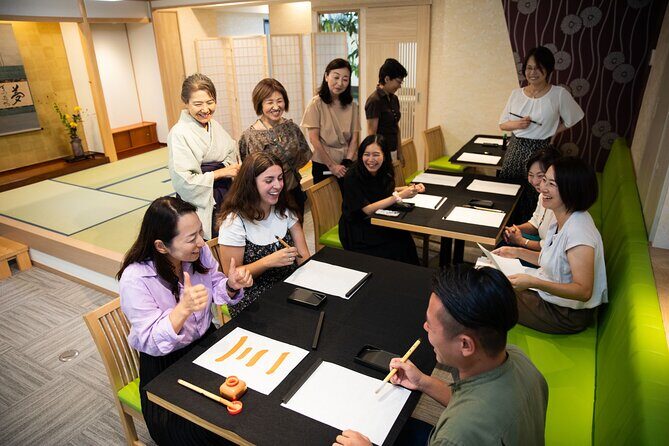
- Small group size (max 10): easier to get corrections and faster help when your grip feels awkward
- Proper technique, not just decoration: brush control, stroke order, and grip basics you can reuse later
- Two tools in one session: traditional brush practice plus a modern fude pen for precision
- Pick your own characters: choose what you want to write during the class
- Take-home keepsake: you leave with your finished calligraphy piece and additional souvenirs
- Asakusa location: historic neighborhood vibes that make the whole activity feel extra “Tokyo”
More mornings around Senso-ji and the old town
- Tokyo: Japanese Dance Cabaret Theater Asakusa-Kaguwa Ticket★ 4.8 · 2,270 reviews
- Tokyo: Asakusa Walking Tour with Sensoji Temple Visit★ 4.8 · 1,583 reviews
- Tokyo Asakusa Rickshaw Tour★ 5.0 · 1,375 reviews
Why Asakusa is a smart match for first-time calligraphy
Asakusa is the kind of place where your brain naturally slows down. That matters for calligraphy, because good brush work is less about speed and more about calm control.
This class also fits the way most first-time Tokyo days feel. You’re not committing to a half-day tour, and you’re not spending hours hunting for supplies. Instead, you get a focused 1–1.5 hour lesson that fits cleanly around sightseeing.
Meeting at Tokyo Tourist Lounge Asakusa (5F) and getting set up
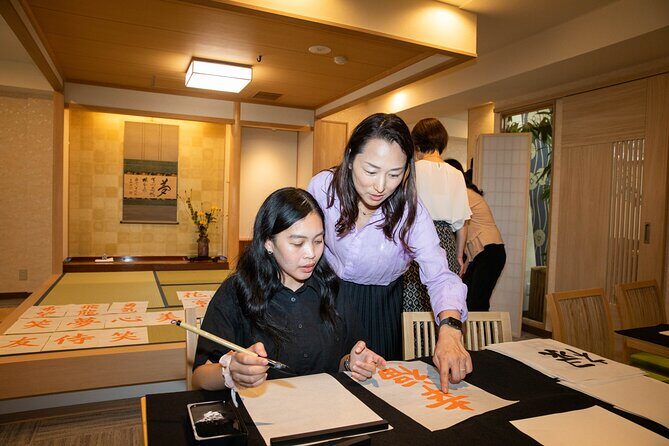
Your starting point is the Tokyo Tourist Lounge Asakusa, located at 111-0034, 5F, 2丁目-18-15 雷門, 台東区, 東京都. The good news: it’s marked as near public transportation, so you don’t have to plan a tricky transit route.
This is also one of those tours where the entry experience matters. You’ll use a mobile ticket, and the workshop includes the entrance fee, with mention that you can use the Tokyo Tourist Lounge service for free. Translation: you’re not paying extra to get into the right starting area and settle in.
If you run late, aim to keep it short. One instructor named Mei is specifically mentioned for being kind and patient when someone arrived late due to traffic, even adapting the session. That’s reassuring, but don’t use it as a scheduling strategy.
The 1–1.5 hour lesson flow: what you’ll actually do
The structure is straightforward, and that’s a win. You’ll start with fundamentals, then move into your own characters, then wrap up with a keepsake you can bring home.
Here’s the practical rhythm I’d expect based on how the class is described:
- You begin by practicing core skills like brush control, stroke order, and basic calligraphy technique.
- You then choose characters you want to write and practice them with both tools.
- You finish with your own written piece, plus souvenirs.
The key is that you’re not just watching. You’re writing, correcting, rewriting, and learning what to adjust. That’s why a guided class beats most self-learning attempts with a brush kit from the internet.
Brush grip and stroke order: the “boring” part that makes your art better
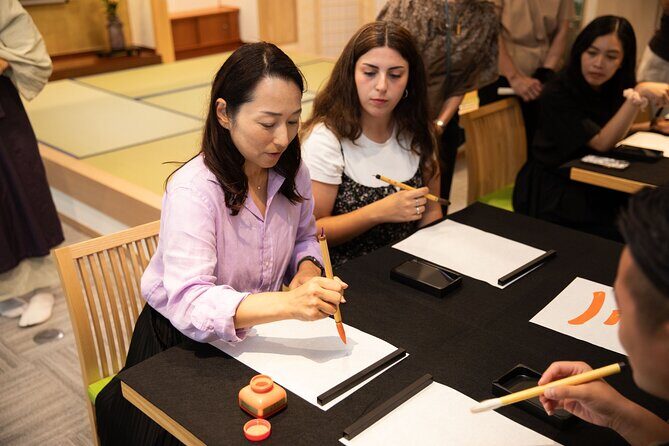
Calligraphy can look effortless in photos. In real life, it’s all tiny decisions: how you hold the brush, how much pressure you use, and when you lift and re-start.
This class trains you on exactly those fundamentals:
- Proper brush grip: where your hand should sit so your movements feel steady
- Control and pressure: how to make the same character look intentional, not messy
- Stroke order: the order of moves that prevents awkward shapes later
If you’re a total beginner, this is the part you’ll feel most. You’ll probably realize that your first attempt looks like… a first attempt. But with quick coaching, your second attempt starts looking like something you can recognize as Japanese calligraphy.
It’s also why this workshop is more than a souvenir factory. You’re getting a method you can practice again later, instead of copying one pretty character from a guide.
More ink on paper
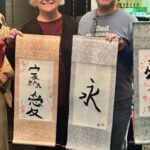
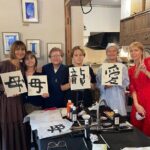
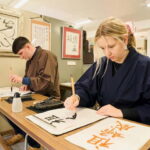
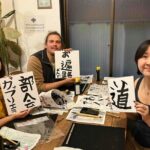
Traditional brushes vs the fude pen: why they teach you different things
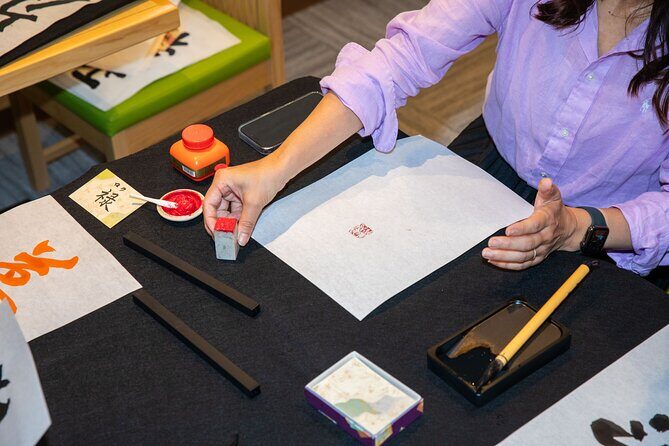
One of the smartest parts of this workshop is that you don’t get locked into only one tool. You’ll use traditional brushes and also a modern fude pen (brush pen).
Traditional brushes teach you how to work with the brush’s natural behavior—weight, flow, and the way a stroke changes as your hand moves. That can be harder at first, but the payoff is control.
Then the fude pen helps with something most beginners want: consistency. It’s often easier to get crisp results while still keeping the calligraphy feel. In the same lesson, you can compare what feels accurate and adjust your technique based on what you learn in real time.
Choosing characters: making the session feel like yours
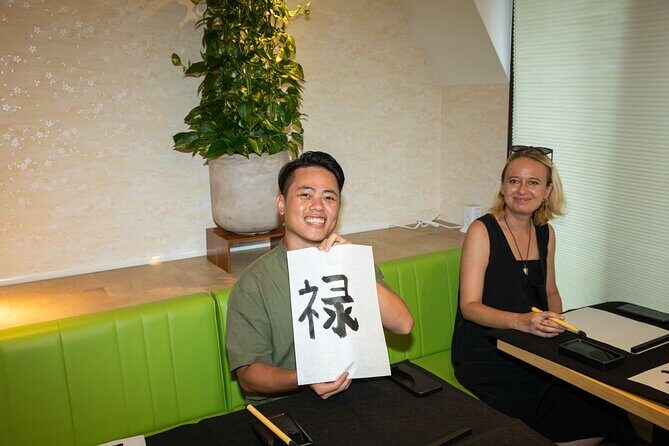
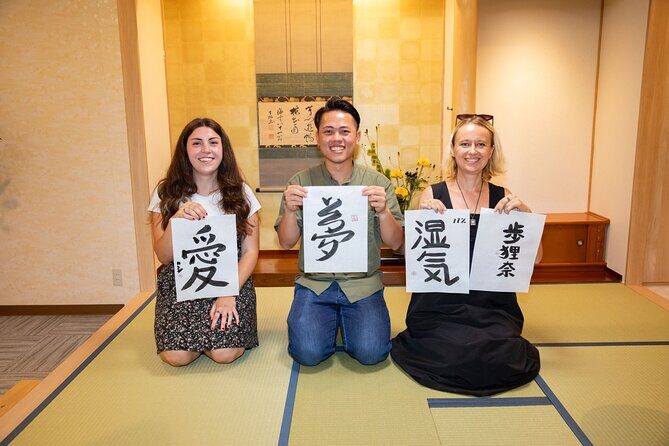
You get to write characters of your choice. That’s a small detail on paper, but it changes the whole tone of the class.
When you’re writing something personal—your name, a word you like, or a character you’ve seen around Japan—you’ll pay attention more carefully. You’ll also remember the lesson better because you’re not just repeating exercises.
This is the point where the workshop becomes a keepsake you actually care about. You’re not handing over $40 for a decorative print. You’re walking out with something you created with your own hand.
What you take home (and how to use it after the workshop)
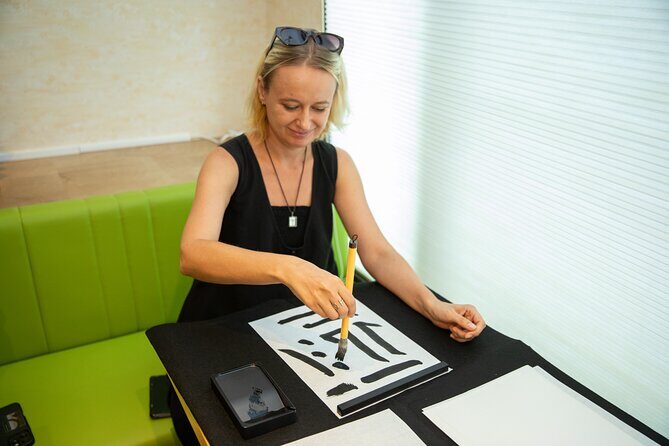
Included in the experience are souvenirs, and you take home your finished calligraphy piece. That’s the obvious part.
The less obvious part is what you can do after you return to your hotel:
- Practice the same stroke order you learned until it feels natural
- Re-check your grip if a stroke looks uneven
- Use the fude pen if you want a quicker, more controlled practice session
If you’ve ever tried to copy calligraphy from a video, you know how frustrating it is when strokes don’t come out right. The class helps you connect the look on the page with the physical technique behind it. That connection is what makes future practice easier.
Also, if you like souvenirs that aren’t just “I bought this,” calligraphy wins. It’s personal, and it fits Japan without looking like a random department-store bag.
Price and value: is $40 a good deal here?
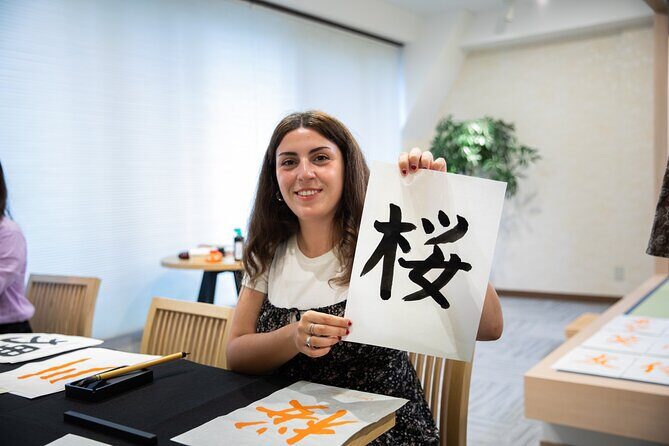
At $40 per person, this is positioned as an accessible, beginner-friendly cultural class. The price makes sense when you break down what’s actually included:
- You learn with a real instructor for about 1–1.5 hours
- You get practice with traditional brushes and a fude pen
- The class includes the entrance fee (via Tokyo Tourist Lounge service) and souvenirs
- You leave with the calligraphy keepsake you made
What’s not included is only bottled water, which is easy to handle. In practice, the value is strongest if you want guidance. If you already own tools and have a strong calligraphy background, you might find it less necessary. But for most visitors, structured feedback is exactly what turns a fun activity into a meaningful one.
Who this suits best (and who might want something else)
This is ideal for:
- Beginners who want instruction that explains the why behind each stroke
- Travelers who like hands-on activities more than passive museum time
- Anyone who wants a Japanese cultural souvenir with real personal effort
- People who prefer a small group so the instructor can correct hand position and technique
You might consider something different if:
- You’re looking for a long, multi-stop day of sightseeing. This is a focused workshop, not a full tour route.
- You strongly dislike any form of writing practice. You’ll be doing the work, not just watching.
Quick practical tips so your calligraphy comes out better
You’ll get the best results if you come ready to focus for about an hour. A few practical tweaks help:
- Bring a small water bottle since bottled water isn’t included
- Wear sleeves you don’t mind adjusting, since your wrist and hand will move a lot
- If you’re choosing characters, think ahead so you’re not deciding from scratch under time pressure
- Don’t worry about looking perfect on your first try. Calligraphy improves fast with corrections and repetition
FAQ
FAQ
How long is the Asakusa calligraphy workshop?
It lasts about 1 hour 30 minutes (approximately), though it’s listed as 1–1.5 hours.
What’s the group size?
The class has a maximum of 10 travelers, which keeps the experience more hands-on and gives you good access to the instructor.
Is this workshop suitable for beginners?
Yes. It’s described as perfect for beginners and travelers looking for an authentic cultural activity.
What will I use to write my calligraphy?
You’ll practice with traditional brushes and also with a modern brush pen called a fude pen for added precision.
Do I take anything home?
Yes. You’ll take home your finished calligraphy artwork, and the experience also includes souvenirs.
Is bottled water included?
No. Bottled water is not included, so plan to bring some or buy it nearby.
Should you book the Asakusa Calligraphy Workshop?
If you want one Tokyo activity where your hands actually learn something, I’d book it. The value hits hardest because you’re getting technique coaching in a small group, then walking away with a finished keepsake you made yourself.
Choose this if you’re the type who likes short, focused experiences with a clear payoff. Pass if you’re hunting for a big day of multiple attractions—this is a workshop, not a long sightseeing loop.
One final nudge: if you’re prone to rushing, slow down for this one. Good calligraphy comes from controlled motion, not speed. And that’s exactly what this class is designed to help you do.
More Tour Reviews in Tokyo






Brush and Ink: More Calligraphy Hours
Around Senso-ji: More Asakusa Picks
Fresh reviews from around Tokyo






Asakusa Tours, compared.
 ★ 4.8Japanese Dance Cabaret Theater Asakusa-Kaguwa TicketFrom $492,270 reviews
 ★ 4.7Meiji Shrine, Asakusa, Skytree Bus Tour and CruiseFrom $1221,986 reviews
 ★ 4.8Asakusa Walking Tour with Sensoji Temple VisitFrom $221,583 reviews
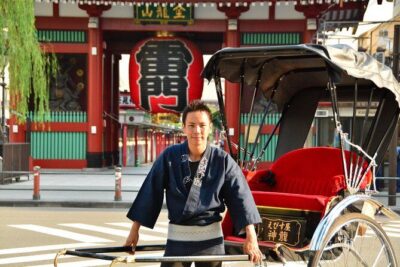 ★ 5.0Tokyo Asakusa Rickshaw TourFrom $421,375 reviews
 ★ 4.5Tokyo Panoramic 1 Day: Meiji Shrine, Asakusa, Odaiba and SKYTREE®From $851,222 reviews
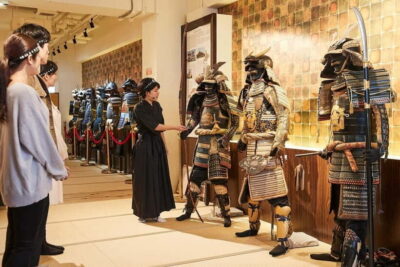 ★ 4.8Samurai Ninja Museum Asakusa: Samurai Sword Lesson & TourFrom $63306 reviews
Asakusa Sightseeing Tour by RickshawFrom $35195 reviews
Asakusa Kimono Dressing and Matcha ExperienceFrom $56173 reviews
★ 4.8Samurai Ninja Museum Asakusa: Samurai Sword Lesson & TourFrom $63306 reviews
Asakusa Sightseeing Tour by RickshawFrom $35195 reviews
Asakusa Kimono Dressing and Matcha ExperienceFrom $56173 reviews
Browse the lists this tour appears in