
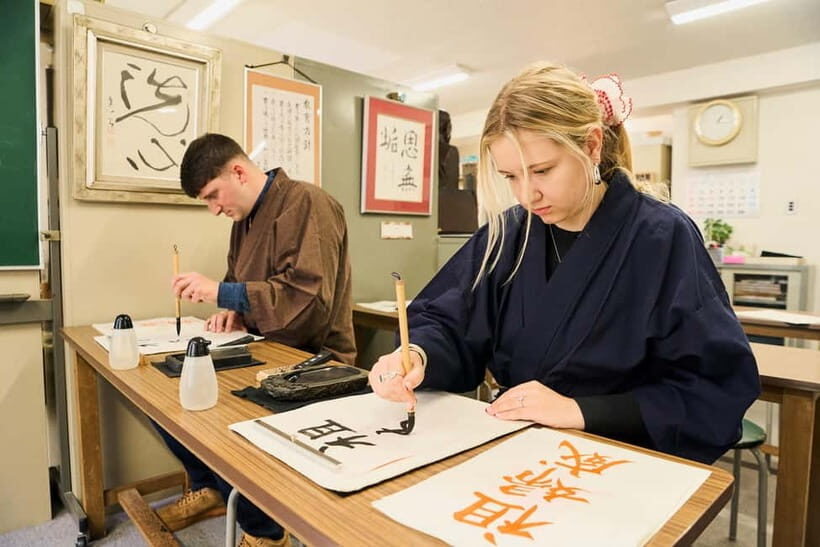
Reviewed · CALLIGRAPHY EXPERIENCES
Tokyo: Calligraphy Workshop & Original T-Shirt Creation
A handwritten kanji T-shirt beats any store souvenir.
This Tokyo workshop turns a basic idea, your name, into a personal piece of calligraphy you can take home. I like that you don’t need to bring supplies, and you’ll use authentic tools in a step-by-step lesson led by a professional calligrapher (names like Hiromi and Ai show up in past classes). One thing to consider: the core artwork is included, but if you want the extra T-shirt option, there’s an added cost.
It’s also one of those rare activities that feels calm, not rushed. The session walks you through proper brush technique and even includes the quieter moment of grinding an inkstick before you write. The pace is perfect if you enjoy doing one careful thing for a couple hours. The possible drawback is simple: calligraphy takes concentration, so it’s not a grab-and-go craft if you’re expecting instant results.
If you’re curious about how Japanese calligraphy actually works, this is a hands-on way to understand it without guessing.
In This Review
- Key points I’d plan around
- Why this calligraphy-and-T-shirt workshop is such a smart Tokyo souvenir
- From FamilyMart to workwear: how the 2-hour session usually runs
- Grinding the inkstick: the moment that makes the class feel special
- Turning your name into kanji: what you’re learning beyond the final result
- Writing your calligraphy on a T-shirt (and the extra ¥4,000 decision)
- Small-group help in Shinjuku: how much attention you get
- Price and value: what you get for about $33.03
- Who should book this workshop, and who might not love it
- Should you book this calligraphy workshop in Tokyo?
- FAQ
- How long is the calligraphy workshop in Tokyo?
- What’s the price and what’s included?
- Do I need to bring any calligraphy materials?
- Can I make a T-shirt with my calligraphy?
- How big is the group?
- Where do I meet for the workshop?
- Is there English guidance?
- Is cancellation free?
Key points I’d plan around
Learn your name in kanji and turn it into your own artwork
All materials and tools are provided, so you can pack lighter
Small-group format with English guidance (up to six in the class size)
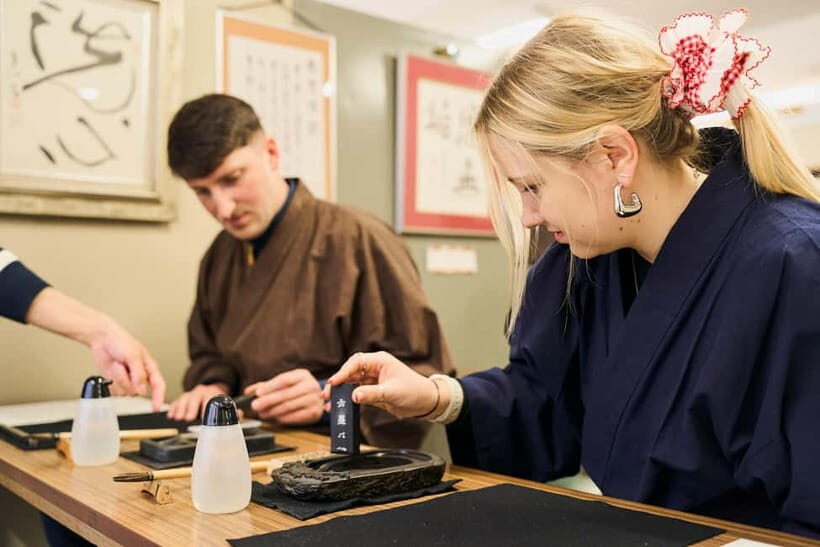
Inkstick grinding adds a real ritual feel, not just step-by-step craft
T-shirt option is extra (¥4,000 per person), but the lesson is included
You end back at the meeting point in Shinjuku
More ink on paper
- Tokyo: Calligraphy on Kanji Fan & Scroll with Drink★ 5.0 · 210 reviews
- Let’s experience calligraphy in YANAKA, Taito-ku, TOKYO !!★ 5.0 · 127 reviews
- Tokyo: Calligraphy Workshop & Original T-Shirt Creation★ 4.9 · 105 reviews
Why this calligraphy-and-T-shirt workshop is such a smart Tokyo souvenir
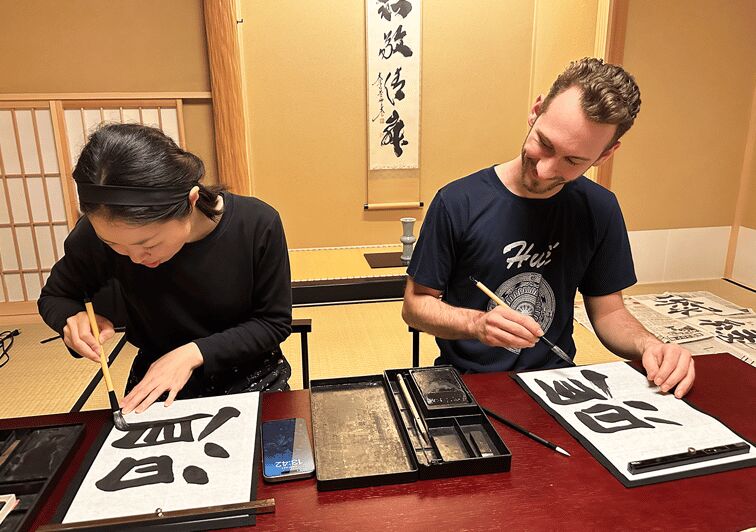
Tokyo is full of shopping. This isn’t that. The value here is that you’ll create something that feels personal in a way a mass-made keychain never will.
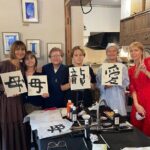
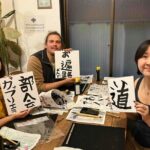
What you’re making is also specific enough to feel authentic: you’ll learn how to write your name in kanji (using calligraphy style rules your instructor guides you through). Then, you’ll transfer that work to paper during the lesson and have the option to write it directly on a T-shirt. That’s a big difference from many “paint-by-numbers” crafts. You’re learning the brush mindset—how pressure, angle, and timing change the look of the strokes.
Also, the workshop is built for real participation. The experience includes changing into traditional Japanese workwear and using professional tools, so you’re not just “watching a demo and leaving.” You’re doing the work.
The best part for me is the tone. Past sessions have been described as friendly, respectful, and even calming—exactly what you want after a day of train transfers and crowds.
From FamilyMart to workwear: how the 2-hour session usually runs
This is a 2-hour class in Tokyo with a mobile ticket. You’ll meet at FamilyMart, 1-chōme-23-21 Hyakuninchō, Shinjuku City, Tokyo 169-0073, Japan, and the activity ends back at the same meeting point.
Here’s the flow to expect, in the order that makes sense for beginners:
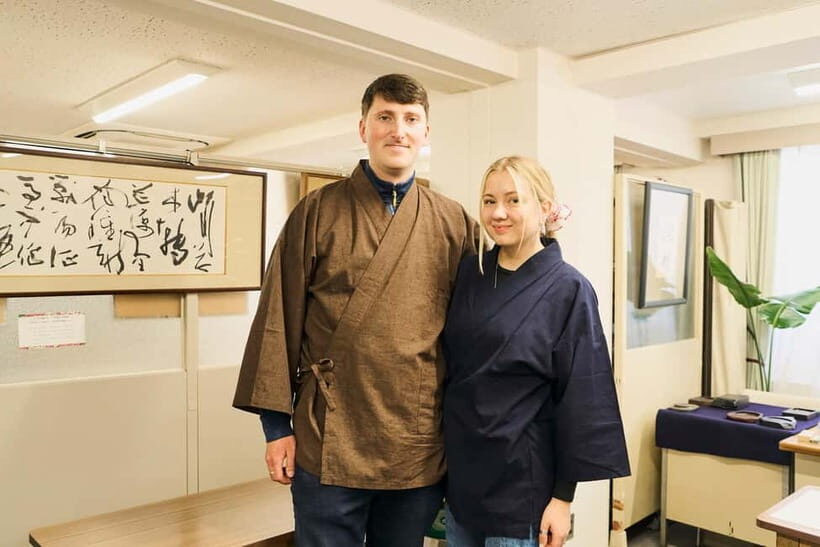
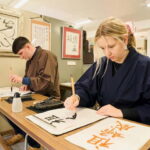
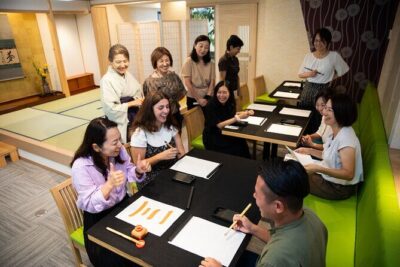
First, you arrive and get set up. The workshop environment is designed for doing calligraphy properly, not just making a quick craft. Then you change into traditional Japanese workwear. That small step matters more than you’d think—it helps you feel like you’re in the right headspace and encourages a more correct posture for brushwork.
Next comes the “prep” portion. You’ll make authentic ink by grinding a solid inkstick. Then you’ll practice basic brush techniques so your final calligraphy doesn’t look like you fought the brush.
After that, you move into the main act: you transform your name into kanji and create your original piece. Your instructor guides you through how the characters are formed and how each stroke should land.
Finally, you take home your artwork. If you choose the T-shirt option, you’ll do the additional step of writing directly onto the shirt. Either way, you leave with a souvenir you can actually use—framed artwork if you took that approach, or a wearable reminder if you went with the shirt.
Grinding the inkstick: the moment that makes the class feel special
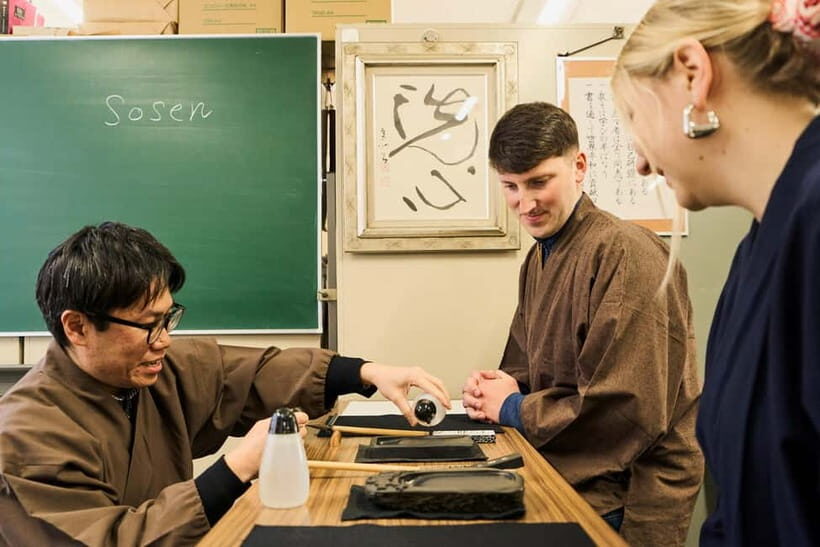
The workshop includes grinding a solid inkstick to make authentic ink. This isn’t just for show. It’s part of why calligraphy has a reputation for being calming: your hands slow down, your breathing settles, and you focus on the simple physical act of making ink.
Practically, it also helps you understand the tools. When you grind the ink, you learn something about the medium you’ll be using—how brush strokes behave when the ink is freshly prepared. Then, when you move into brush technique, your brain already “gets” the process.
Expect a guided moment of mindfulness. If you’re the type who likes crafts, but hates when you’re hurried through steps, this ritual portion is where the experience really earns its keep.
Turning your name into kanji: what you’re learning beyond the final result
The headline is writing your name in Japanese “kanji,” but the real learning is how to make strokes look right.
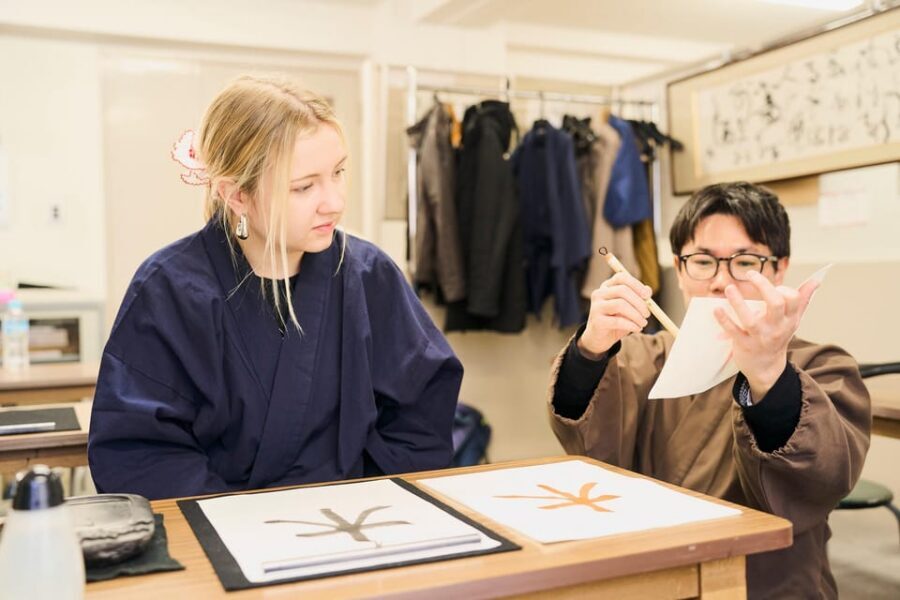
Your instructor will show you basic brush techniques first. That step is huge for first-timers because calligraphy can look simple in photos, yet the brush can behave differently than expected. The good news: you’re coached. Even if it feels harder than it looks at the start, the class format gives you time and support to improve.
When you get to your name, you’ll work through the characters and structure of your kanji. You’re not just copying; you’re guided toward forming the strokes in a way that matches calligraphy expectations.
And since the workshop is led by a professional calligrapher with English guidance, you’re not stuck translating instructions in your head. The point is to keep you moving with confidence, not embarrassed by mistakes. Past classes have highlighted patient teaching and encouraging coaching—exactly what you want when your first strokes aren’t great.
One more value angle: you leave understanding the idea of kanji stroke logic. Even if you can’t instantly reproduce perfect results later, you’ll come away with a stronger sense of how writing systems look when treated as art.
More things to make with your own hands



Writing your calligraphy on a T-shirt (and the extra ¥4,000 decision)
The included part is your calligraphy artwork. The optional part is the original T-shirt writing.
Here’s the practical breakdown:
- Your supplies are included, and you take home what you produce in the class.
- If you want the original T-shirt, it costs ¥4,000 per person (not included in the base price).
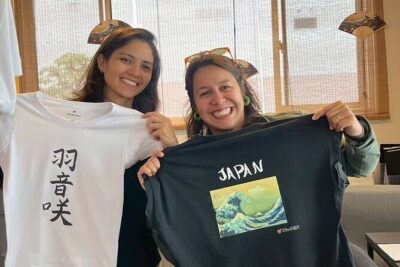
- You’ll write your kanji directly on the T-shirt and can design your own original piece as part of that option.
So should you pay the extra? If you want something wearable—something that gets attention in photos and becomes a daily reminder of your trip—this is a fun way to go. If you’d rather keep it framed and more formal, you might be happy with the included artwork and skip the shirt.
Either way, your calligraphy work stays the centerpiece. The T-shirt option simply changes the canvas from paper to fabric.
Small-group help in Shinjuku: how much attention you get
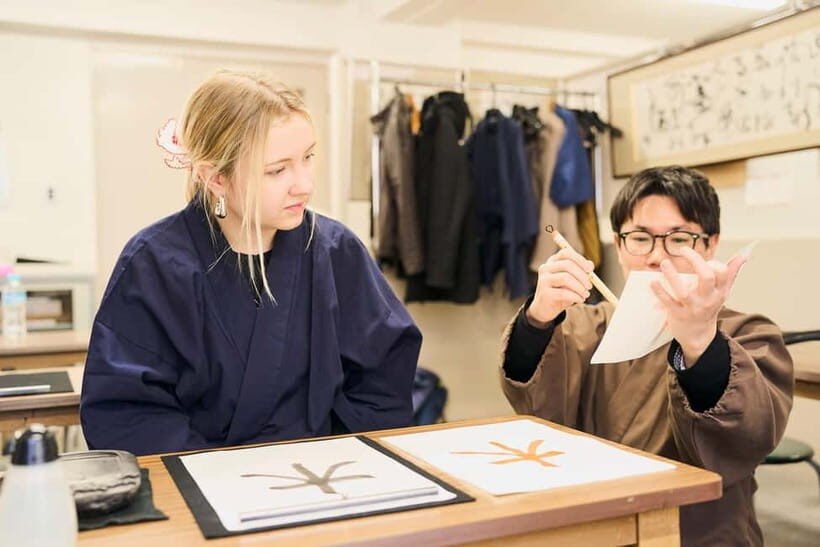
This is built as an intimate workshop.
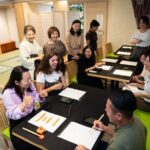
- The class is capped at six people, which is why most beginners feel comfortable asking questions.
- The overall activity has a maximum of 12 travelers, likely meaning scheduling capacity across groups or time slots, but the learning environment is still small.
In a class this size, you’re not lost in the back row. You can compare your brush angle to what you’re watching, and the instructor can spot issues quickly—like uneven pressure or strokes that are drifting out of their intended shape.
Language support is also part of the value. The class is guided in English, and you should expect a smooth experience even if your Japanese is limited. Past experiences have mentioned strong support from a translator alongside the instructor. So if you worry about misunderstanding terms like stroke order or brush technique, you’re in the right kind of setup.
Also, tools are professional. You’re not trying to do calligraphy with a novelty brush. That matters, because the difference between a good stroke and a messy one is often technique plus the right tool.
Price and value: what you get for about $33.03
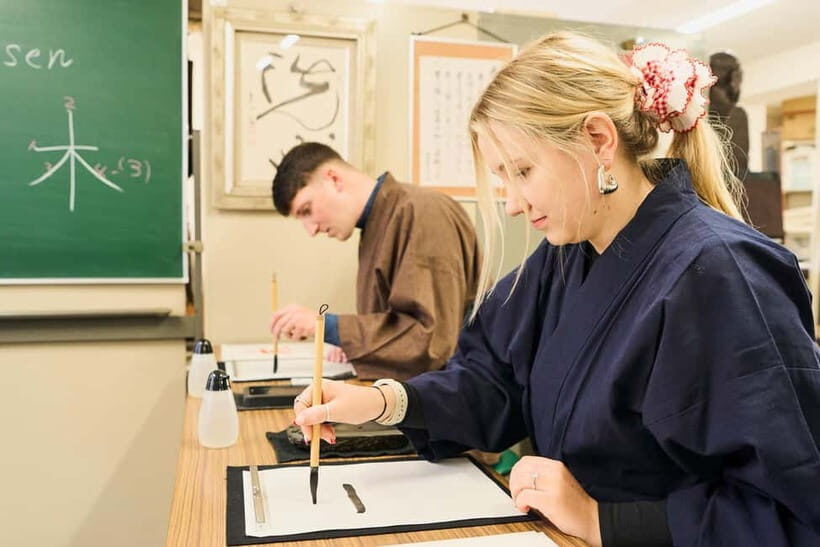
The price is $33.03 per person, and the class runs about 2 hours.
For that money, the important value items are:
- An expert calligraphy artist
- Calligraphy supplies to use during the class
- The artwork you create to take home
That’s a pretty efficient bundle. Many cultural workshops charge for instruction but still expect you to buy or bring materials. Here, you don’t need to bring ink, brushes, or the tools needed to start writing.
Then there’s the one upgrade option: the T-shirt at ¥4,000. Think of the base price as covering the teaching, ink-making, practice, and your main take-home artwork. The T-shirt is the special add-on that changes the final product.
Booked about 29 days in advance on average, so it’s smart to plan ahead if you want a time that fits your itinerary around Shinjuku.
Who should book this workshop, and who might not love it
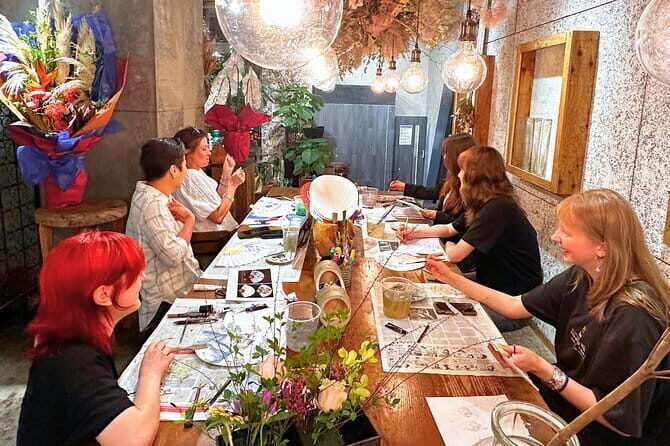
This fits best if:
- You want a hands-on cultural experience, not a passive one
- You like learning a skill you can actually use later (or at least appreciate when you see how it’s made)
- You want a souvenir with meaning: something that reflects your own name and effort
- You’d rather do something calm and focused for a couple hours in the middle of a busy Tokyo trip
You might like it less if:
- You only want quick results with zero concentration
- You hate anything “process-heavy,” like ink preparation and brush technique practice
- You expect the workshop to include the T-shirt cost. (It’s extra.)
Should you book this calligraphy workshop in Tokyo?
Yes—if you want a souvenir that feels personal and you’re open to slowing down for a skill session. The combination of small-group teaching, real calligraphy tools, and the option to create a wearable piece makes it a strong value choice.
Before you book, decide one thing: do you want the included artwork, the optional T-shirt, or both? If you’re traveling with limited luggage, the artwork might be easier. If you like clothing souvenirs and don’t mind the extra cost, the T-shirt option is the fun twist.
If your schedule allows, book ahead since this is popular and runs in short sessions.
FAQ
How long is the calligraphy workshop in Tokyo?
The workshop is about 2 hours.
What’s the price and what’s included?
The price is $33.03 per person, and it includes calligraphy supplies to use during the class, the artwork you take home, and instruction from an expert calligraphy artist.
Do I need to bring any calligraphy materials?
No. Everything is provided, including supplies and tools used during the class.
Can I make a T-shirt with my calligraphy?
You can write your kanji on a T-shirt as an optional part of the experience. The original T-shirt costs ¥4,000 per person and is not included in the base price.
How big is the group?
The small-group activity is capped at six people. The activity overall lists a maximum of 12 travelers.
Where do I meet for the workshop?
You meet at FamilyMart, 1-chōme-23-21 Hyakuninchō, Shinjuku City, Tokyo 169-0073, Japan. The activity ends back at the meeting point.
Is there English guidance?
Yes. The experience is guided in English with an expert host.
Is cancellation free?
Yes. You can cancel for a full refund if you cancel at least 24 hours in advance of the experience start time.
Make Something to Take Home

More Tour Reviews in Tokyo






Brush and Ink: More Calligraphy Hours

Fresh reviews from around Tokyo






Calligraphy Experiences, compared.
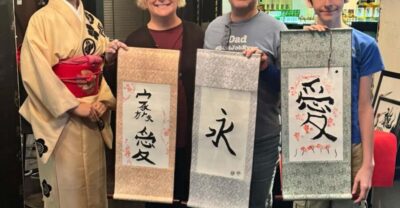 ★ 5.0Calligraphy on Kanji Fan & Scroll with DrinkFrom $53210 reviews
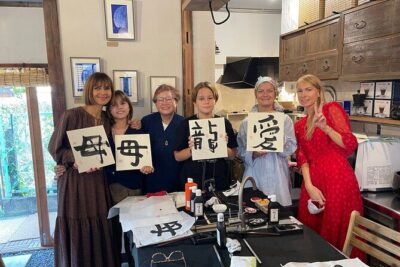 ★ 5.0Let’s experience calligraphy in YANAKA, Taito-ku, TOKYO !!From $75127 reviews
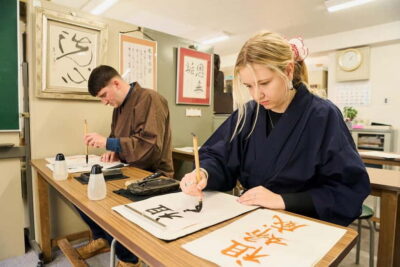 ★ 4.9Calligraphy Workshop & Original T-Shirt CreationFrom $30105 reviews
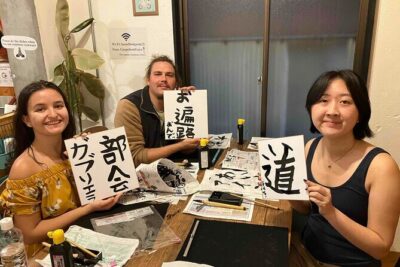 ★ 5.0Calligraphy Culture SHODO Experience in TokyoFrom $3366 reviews
 ★ 5.0Tokyo Asakusa:Calligraphy & Make T-shirt ActivityFrom $5862 reviews
 ★ 5.0Asakusa Calligraphy Workshop Craft Your Own Art in TokyoFrom $4054 reviews
 ★ 5.0Tokyo Japanese Calligraphy Experience with a Master ArtistFrom $9235 reviews
 ★ 5.0Calligraphy Experience with yukata or SamueFrom $6421 reviews
Browse the lists this tour appears in