
Reviewed · ASAKUSA TOURS
Tokyo Asakusa:Calligraphy & Make T-shirt Activity
One hour, one wearable souvenir, zero guesswork. In Asakusa you get a private calligraphy lesson that turns your writing into a take-home keepsake. I love that everything you need is handled for you, so you don’t waste time shopping for tools. I also like that you get the meaning behind Japanese characters, not just how to copy strokes. The only drawback: this is a short activity, so don’t count on a long, slow temple wander.
You’ll start with a short video on the history and meaning of Japanese calligraphy, then move into hands-on practice using a traditional brush tool called a fude and ink. After about 30 minutes of practice on thin paper, you choose your favorite design, decide where it goes on your shirt, and write a postcard to capture your trip. Then your clothes get printed with your design while you wait, about 10 minutes later.
If you want warm, encouraging guidance, this class hits the mark. In the feedback I saw, teacher Mana came up again and again for being kind, joyful, and a true calligraphy expert. It’s also set up as a private experience, so your group stays with the instructor and doesn’t feel rushed.
In This Review
- Key Things to Know Before You Go
- Asakusa by Senso-ji: Why Start Here?
- Meet Your Instructor and Get Oriented Fast
- The Fude, the Ink, and the Thing Most People Forget
- 30 Minutes on Thin Paper: Where Your Hands Learn
- Choosing Your Design and Deciding Where It Prints
- Writing a Trip Postcard While You Wait
- From Your Brushwork to the Printed T-Shirt
- Price and Value: Is $58.13 Worth It?
- How the Timing Works in a Tokyo Day
- Who This Asakusa Calligraphy Class Fits Best
- Should You Book This Calligraphy and T-Shirt Activity?
- FAQ
- How long does the calligraphy and T-shirt activity take?
- Is this a private activity?
- What is included in the experience?
- Do I need to bring calligraphy tools or supplies?
- Where does the activity meet?
- Is the meeting point near public transportation?
- What do you do at Senso-ji Temple during the activity?
- Do I get to choose the design that gets printed?
- Is there a history lesson before the practice?
- What if I need to cancel?
Key Things to Know Before You Go
- Private 1-on-1 style instruction: only your group participates, with time to ask questions.
- You don’t need to bring equipment: tools, ink, and the core materials are provided.
- Learn the characters, not just the strokes: there’s a history/meaning intro before you practice.
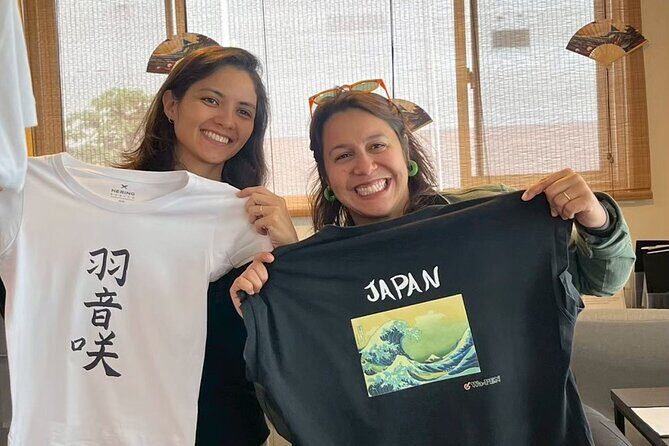
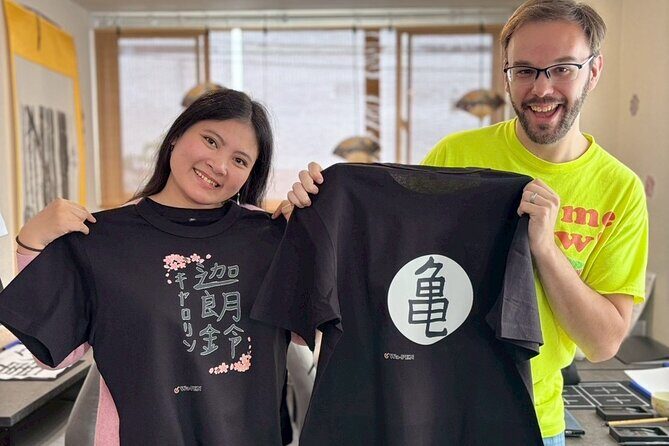
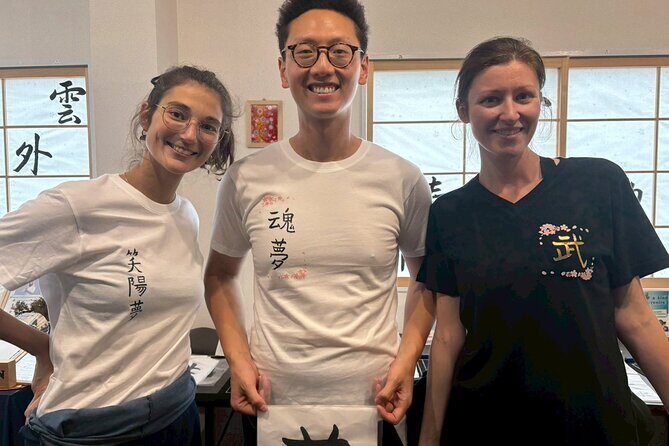
- Your writing becomes a take-home T-shirt: you choose your design and placement, then get it printed.
- A second souvenir: a trip postcard: you write memories on a postcard as part of the process.
More mornings around Senso-ji and the old town
- Tokyo: Japanese Dance Cabaret Theater Asakusa-Kaguwa Ticket★ 4.8 · 2,270 reviews
- Tokyo: Asakusa Walking Tour with Sensoji Temple Visit★ 4.8 · 1,583 reviews
- Tokyo Asakusa Rickshaw Tour★ 5.0 · 1,375 reviews
Asakusa by Senso-ji: Why Start Here?
Senso-ji is one of the most iconic pieces of Tokyo’s old-school spirit, and starting your lesson around it gives your calligraphy a stronger reason to exist. You’re not just copying symbols in a vacuum. You’re in a neighborhood where handwritten character culture still feels real.
Practically, the lesson structure also keeps you moving. You get a short orientation right after arrival, then the activity shifts into the classroom-like portion of the experience. That’s good if your Tokyo day is packed and you want a focused craft break without losing half the afternoon.
If you’re hoping for a slow, photo-heavy temple day, plan a separate block of time for that. This activity is built for making something, not for a long sightseeing marathon.
Meet Your Instructor and Get Oriented Fast
You meet at Wa-PEN Calligraphy Attractions&Make Design clothesJapan, located at 111-0035 Tokyo, Taito City, Nishiasakusa, 3-chōme 272 (3F). It’s listed as near public transportation, which matters in Tokyo where walking time can sneak up on you.
In the feedback about this experience, Mana is the standout. People describe her as kind and joyful, and they also point out that she’s genuinely skilled at calligraphy—not just teaching the steps, but helping you understand what you’re doing. That combination matters. With calligraphy, the difference between a good result and a great one often comes down to small corrections and encouragement.
One more thing I like about this format: it’s clearly paced for beginners. Most people can participate, and the session begins with context (a short video) before you touch the brush. That way you’re not staring at blank paper feeling clueless.
The Fude, the Ink, and the Thing Most People Forget
Japanese calligraphy isn’t only about looking pretty. It’s about control: pressure, direction, and timing. That’s why this class starts with the basics of using the brush tool called a fude and traditional ink. Even if your Japanese is limited, the teacher’s job is to guide you through the physical craft of making characters.
The session begins after arrival with an explanation of Japanese character culture. You’ll learn what the brush strokes represent and how calligraphy fits into the broader idea of Japanese writing. Then comes the practical part: you practice essential brushstrokes and build toward your own design.
Here’s a small but important takeaway for you: don’t treat this like handwriting practice you can rush. Calligraphy is closer to drawing with rules. When the brush meets ink and paper, the marks show your method. The faster you try to go, the less you notice your own pressure and shape.
30 Minutes on Thin Paper: Where Your Hands Learn
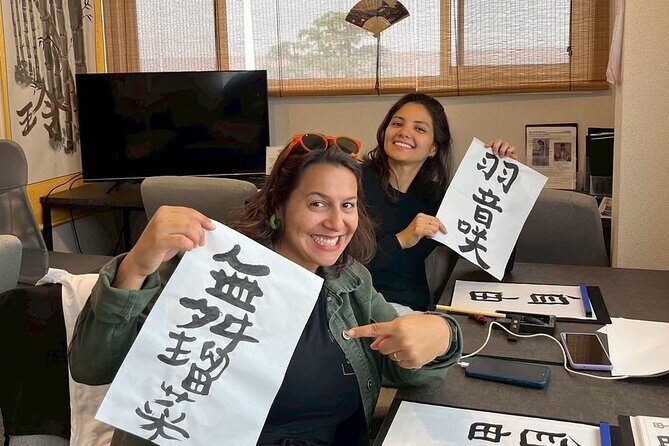
You’ll practice for about 30 minutes writing on thin paper with expert guidance. Thin paper is a big deal, because it forces you to be more precise. The brush can’t “forgive” sloppy technique the way thick paper sometimes does.
You’ll likely spend this time learning essential strokes first, then using those basics to shape your own choice of characters. The goal isn’t perfection in an artistic sense. The goal is clarity: strokes that read like the real thing.
If you’re the type who worries you’ll do it wrong, this is where the private setup helps. You can adjust based on feedback instead of guessing. And because your lesson is only for your group, you’re not competing for attention while someone else finishes their strokes.
More ink on paper
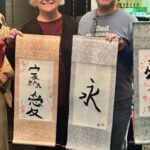
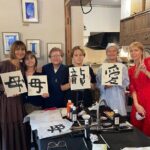
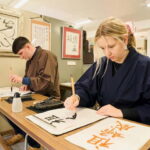
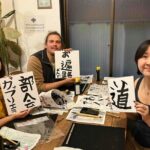
Choosing Your Design and Deciding Where It Prints
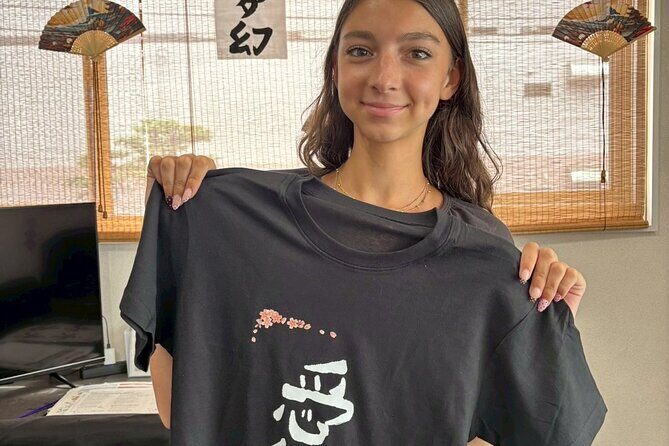
After practicing, you move into the creative decision part. You choose a favorite design you wrote, then decide where it will be printed on the shirt. That choice can matter more than you think.
Placement affects the feel of the finished item. Put it too high and it can look cramped. Put it too low and it might feel accidental. Deciding where the printing goes gives you control over the final souvenir, so it looks like something you meant to wear, not just something you made.
This stage also turns your work into something you can actually use right away. You’re not leaving with a sheet of paper you’ll forget in a drawer. You’re leaving with a wearable keepsake that carries the character work you practiced.
Writing a Trip Postcard While You Wait
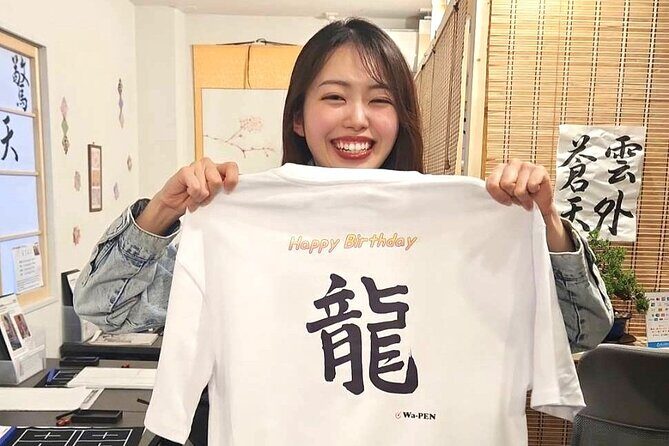
The class includes a postcard moment, where you write memories of your trip to Japan. It’s a simple detail, but it gives the experience a “slow down” beat inside a one-hour activity.
This postcard step works especially well if you’re traveling with people who like different kinds of souvenirs. One person might want the T-shirt. Another might prefer something they can mail or keep in a scrapbook. You get both in one smooth flow.
Also, a postcard is easier to write than you might expect here. You’re capturing your memories with calligraphy-inspired handwriting, not drafting a novel. If you’re worried about language skills, focus on your intention: one or two lines that explain what stood out to you.
From Your Brushwork to the Printed T-Shirt
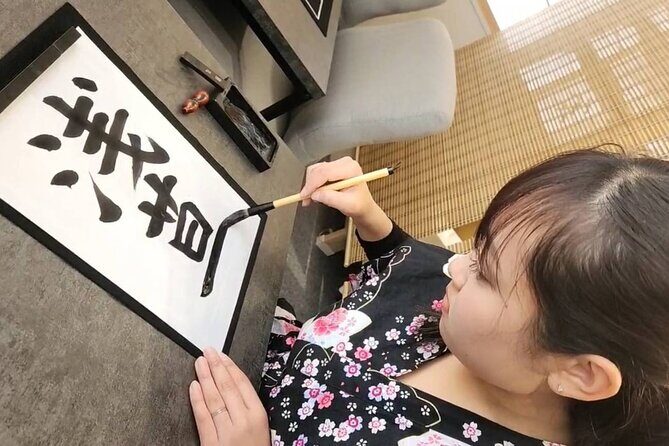
After your postcard and design choices, the printing part begins. Your clothes are printed with your design after about 10 minutes, so you’re not waiting around for a long production timeline.
This is where the value of the experience really clicks. You’re paying for more than practice. You’re paying for transformation: your strokes become a clean, wearable print. That means the final result looks “finished,” which you won’t always get from DIY craft classes.
One practical note: since the activity includes printing onto your clothing, go with a neutral mindset about what you’ll wear that day. Comfortable clothes are a smart pick, and you’ll be happy you didn’t dress for something fragile. If you have a favorite outfit, it might be safer to save it for later in your trip.
Price and Value: Is $58.13 Worth It?
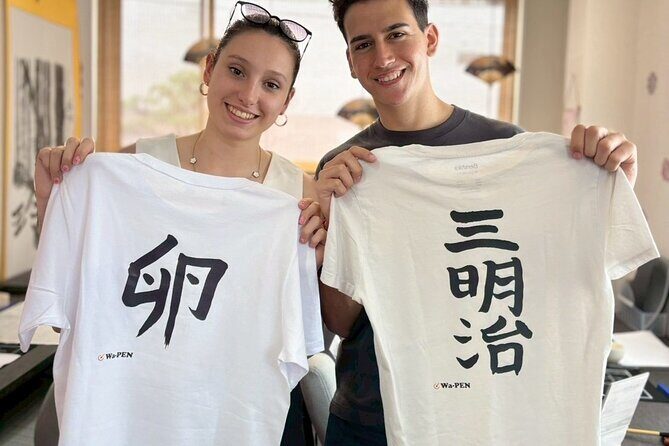
At $58.13 per person for about an hour, this is not a cheap souvenir-only workshop. But it isn’t only a souvenir either. You’re getting a private lesson, instruction on using the fude and ink, structured practice time, a postcard memory, and a custom-printed T-shirt outcome.
What you’re really buying is time plus materials plus a finished product. Calligraphy often turns into a “you try, then you leave with supplies” situation elsewhere. Here, the process ends with something you can wear. That’s the difference that justifies the price.
If you’re someone who likes making things while sightseeing, this can be a very good value. If you only want photos and you’re not into hands-on craft, you may find the cost harder to justify. But for a focused 1-hour activity with tangible results, it’s priced in a fair zone.
How the Timing Works in a Tokyo Day
This activity runs about 1 hour (approx.) and is designed to fit cleanly into a sightseeing schedule. The sequence is logical: context first (history video), then hands-on practice, then decision and printing, then postcard writing.
That short duration matters in Tokyo. Transit time and crowded routes can eat hours fast. A one-hour craft block is easier to protect in your day plan, especially if you’re trying to see Senso-ji and still have time for meals and neighborhood walks.
Because it’s private, you also avoid the “start when the last person arrives” problem that can happen with bigger group classes. The experience is meant to stay centered on your group.
Who This Asakusa Calligraphy Class Fits Best
I’d point this experience toward a few types of travelers:
- People who want a hands-on activity with an actual finished souvenir
- Anyone who likes Japanese culture beyond surface-level sights
- Visitors who want private instruction and don’t want to compete for attention
- First-timers who may be nervous about calligraphy but still want to try
If you’re traveling with someone who prefers taking photos, this can still work well. The surroundings around Senso-ji add the visual payoff, and the teacher-led instruction gives you something to do while you’re there.
If you’re trying to maximize pure sightseeing time, you might prefer a longer temple and neighborhood day. This class is for making, not for wandering for hours.
Should You Book This Calligraphy and T-Shirt Activity?
I think you should book it if you want a meaningful souvenir that’s tied to a real skill, not a generic shopping item. The private structure and the strong instruction from Mana make it feel like you’re learning something, not just following steps. The final printed T-shirt is the payoff: you get to wear your calligraphy later, which makes the experience stick.
Don’t book it if your main goal is a long, in-depth temple day. This is short by design. Also, if you don’t care about writing or crafts at all, the process may feel like time spent waiting for a finished object.
If you want an hour that’s practical, creative, and genuinely Tokyo—around Senso-ji—this is a strong pick.
FAQ
How long does the calligraphy and T-shirt activity take?
The experience lasts about 1 hour (approx.).
Is this a private activity?
Yes. It’s private, and only your group participates.
What is included in the experience?
You get a calligraphy lesson with instruction on using a fude and ink, practice on thin paper, help choosing a design and deciding where it prints, and you also write a postcard. Your custom design is printed onto your clothes for a take-home T-shirt souvenir.
Do I need to bring calligraphy tools or supplies?
No. Everything needed is provided, so you don’t need to source equipment.
Where does the activity meet?
It meets at Wa-PEN Calligraphy Attractions&Make Design clothesJapan, 111-0035 Tokyo, Taito City, Nishiasakusa, 3-chōme 272 (3F).
Is the meeting point near public transportation?
Yes, it’s listed as near public transportation.
What do you do at Senso-ji Temple during the activity?
The activity includes Senso-ji Temple as a stop, and your session begins with learning about Japanese character culture after arrival.
Do I get to choose the design that gets printed?
Yes. You choose your favorite design that you write and you decide where to print it.
Is there a history lesson before the practice?
Yes. You start by watching a short video introducing the history and meaning of Japanese calligraphy.
What if I need to cancel?
You can cancel for free up to 24 hours in advance for a full refund.
More Tour Reviews in Tokyo






Brush and Ink: More Calligraphy Hours
Around Senso-ji: More Asakusa Picks
Fresh reviews from around Tokyo






Asakusa Tours, compared.
 ★ 4.8Japanese Dance Cabaret Theater Asakusa-Kaguwa TicketFrom $492,270 reviews
 ★ 4.7Meiji Shrine, Asakusa, Skytree Bus Tour and CruiseFrom $1221,986 reviews
 ★ 4.8Asakusa Walking Tour with Sensoji Temple VisitFrom $221,583 reviews
 ★ 5.0Tokyo Asakusa Rickshaw TourFrom $421,375 reviews
 ★ 4.5Tokyo Panoramic 1 Day: Meiji Shrine, Asakusa, Odaiba and SKYTREE®From $851,222 reviews
 ★ 4.8Samurai Ninja Museum Asakusa: Samurai Sword Lesson & TourFrom $63306 reviews
Asakusa Sightseeing Tour by RickshawFrom $35195 reviews
Asakusa Kimono Dressing and Matcha ExperienceFrom $56173 reviews
★ 4.8Samurai Ninja Museum Asakusa: Samurai Sword Lesson & TourFrom $63306 reviews
Asakusa Sightseeing Tour by RickshawFrom $35195 reviews
Asakusa Kimono Dressing and Matcha ExperienceFrom $56173 reviews
Browse the lists this tour appears in