
Reviewed · SAKE TASTING
Tokyo: 7 Kinds of Sake Tasting with Japanese Food Pairings
Sake tasting in Minato City is a smart use of time. In a 75-minute small group (max 10), you sample seven sake styles and get food pairings designed to show you how sweetness, acidity, and texture change the drink. It’s not just drinking on autopilot, either. The accredited English instructor explains how sake is made and why it matters in Japanese tradition.
I especially like that the tasting is paired with a multi-course mix of Japanese and Western dishes, because it gives you an instant “taste lesson” instead of leaving you with a random list of flavors. I also like the way the hosts bring it to life—names like Tanaka-san and Taka-san come up often, and the vibe is friendly and easy to follow.
One caution: the meeting point can be confusing at first glance. The activity starts at the main entrance of Kikai Shinko Kaikan on the 1st floor, but if you can’t spot the instructor, you’ll need to go to True Japan Tour, room B109 on the B1 floor—so give yourself a few extra minutes.
In This Review
- Key things to know before you go
- Tokyo Tower area: why this location makes sense
- Meet your sake instructor and get oriented fast
- The tasting flow: seven pours in a tight, logical sequence
- Food pairings that actually teach your palate
- What you’ll learn about sake production and serving
- Price and value: what $106 buys you in Tokyo
- Logistics near Tokyo Tower: how to find the place without stress
- Who should book this sake tasting (and who should skip)
- What it feels like once you’re seated
- Should you book this sake tasting in Tokyo?
- FAQ
- How long is the tasting?
- How many sake samples are included?
- Are there food pairings included?
- What styles of sake should I expect?
- Who is the instructor and what language do they teach in?
- Is there a small group size?
- Where exactly do I meet the instructor?
- Is hotel pickup included?
- Is it wheelchair accessible?
- Who can join?
Key things to know before you go
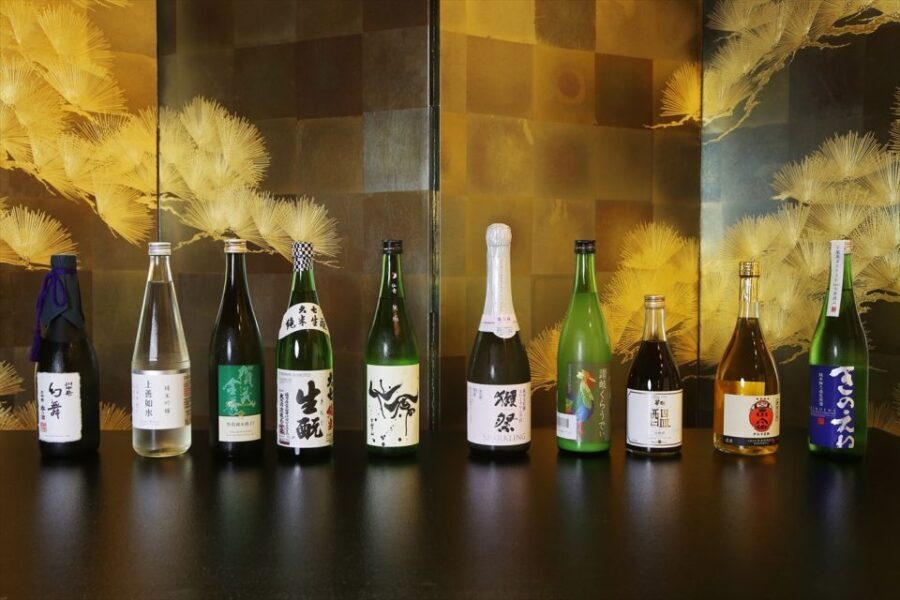
- Seven sake samples, from sparkling to sweet and dessert-style so you feel the range fast
- Seven food pairings built to explain why sake tastes different with each bite
- An accredited, English-speaking instructor who ties flavors back to production and serving
- A small-group format that keeps the pace personal (often even more intimate than you expect)
- Warm, cooked-to-pair bites may appear during the meal, not just cold nibbles
- Minato City, right by Tokyo Tower—great for tying this into the rest of your day
Another round: more sake tastings
- Ramen and Sushi Cooking Class with Sake Pairing Set in Tokyo★ 5.0 · 291 reviews
- Sake Tasting Masterclass in Shinjuku (8+ Varieties with a Pro)★ 5.0 · 271 reviews
- Wagyu & Sake Pairing in Shinjuku – Steak, Shabu-Shabu & More★ 5.0 · 112 reviews
Tokyo Tower area: why this location makes sense
This is one of those Tokyo activities that fits well into a sightseeing day. Minato City is busy, but the landmark is clear: Kikai Shinko Kaikan sits directly across from Tokyo Tower. That matters because you’re dealing with a short time window—75 minutes isn’t long—so easy navigation helps.
The setting is also practical. You’re meeting inside a building that functions like a teaching space (not a flashy restaurant stage). That’s a plus if you want to focus on the food and the drink rather than hunting for the perfect seat and lighting.
Meet your sake instructor and get oriented fast
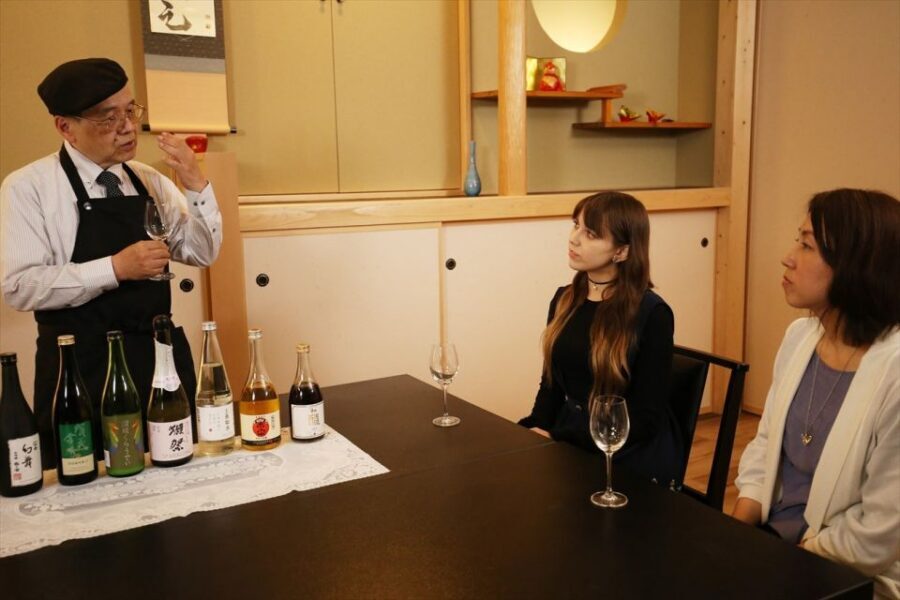
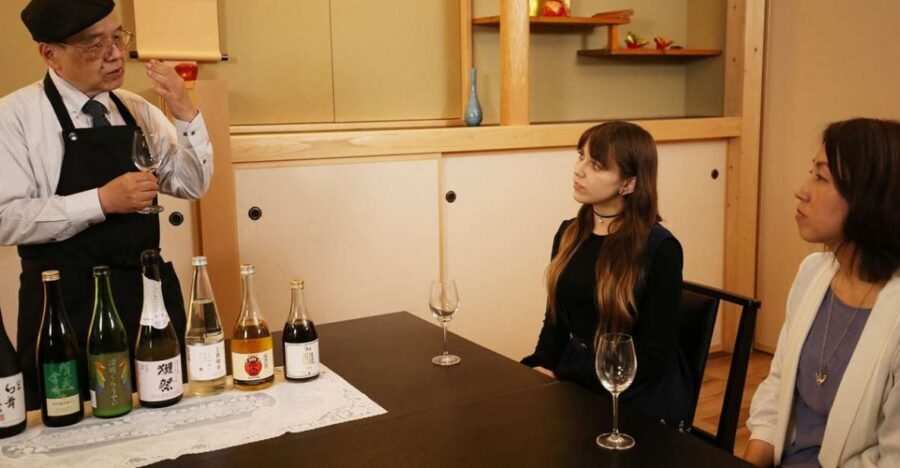
The heart of this experience is the instructor—an accredited sake instructor guiding you through tasting and pairings. They’ll walk you through some history and, more importantly for your taste buds, the basics of how sake is made and how different varieties behave on the palate.
You’ll also learn how Japanese culture treats sake as more than a casual alcohol choice. The talk frames sake as something tied into religious and traditional life for a very long time, then explains how it became widely enjoyed internationally as a stand-alone drink. That context doesn’t feel like a lecture for the sake of a lecture. It gives you a framework for noticing why the next pour tastes the way it does.
If you’re the type who likes to ask questions, you’re in a good spot. The format is small enough that it doesn’t feel like you’re shouting into a crowd.
The tasting flow: seven pours in a tight, logical sequence
You’ll taste seven different types of sake, and the collection covers a wide flavor spectrum. Expect styles that include sparkling, sweet, and even a dessert-style sake to end on something softer.
Why this order works: starting with lighter or brighter profiles helps you reset your palate. Then as the tasting moves into sweeter or richer styles, you can compare how texture and aroma shift. By the final dessert-style sample, the whole flight feels like a progression rather than seven random sips.
You won’t need to be a sake expert to follow along. The instructor’s job is to connect what you’re tasting to what you’re likely noticing: sweetness level, acidity, aroma, and how the sake feels in your mouth.
Food pairings that actually teach your palate
This is where the experience earns its price. You’re not just tasting sake. You’re tasting sake with bites designed to match it.
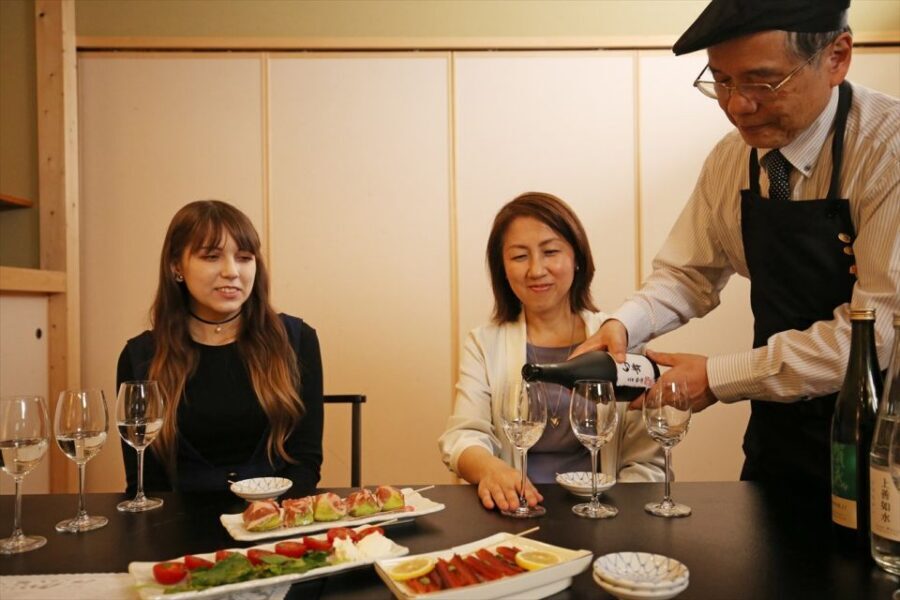
The menu blends Japanese and Western dishes, which is a smart choice because sake isn’t only meant for one kind of food. You might see pairings that include items like Japanese cheese, crudités, and duck-style bites, and the meal can include some warm or cooked-in-front-of-you components. Even if the exact dishes vary, the goal stays the same: show you how each sake style partners with different flavors and textures.
Here’s what you can look for while you eat:
- With sweet styles, you’ll usually notice how salt, fat, or savory umami helps prevent the drink from tasting one-note.
- With sparkling or brighter styles, crisp bites tend to make the sake feel lighter and more refreshing.
- With dessert-style sake, you’ll want to pay attention to how sweetness and aroma overlap with dessert flavors instead of fighting them.
This is why the tasting works better than a basic bar crawl. Each food pairing is a prompt. After a couple of rounds, you start predicting what will happen before the instructor even explains it.
Other plates worth crossing Tokyo for


What you’ll learn about sake production and serving
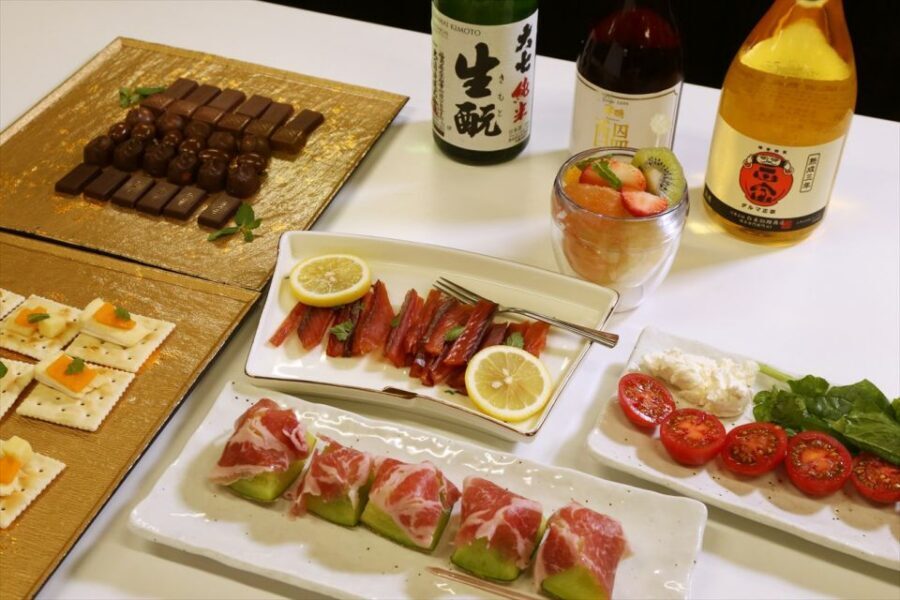
The instructor doesn’t just name flavors. You’ll get a practical explanation of how sake is made, plus how different varieties are meant to be served and enjoyed. That matters because sake isn’t one uniform drink. It’s a range—some lean crisp, some go fruit-forward, some aim for savory depth.
The cultural portion is also useful. When you understand that sake has long been part of Japanese religious and traditional settings, it makes the modern tasting format feel less like a gimmick and more like a window into how people historically valued fermentation, ceremony, and social drinking.
And because the lesson runs alongside tasting, you’re not left with facts floating around in your head. The information lands because you immediately taste the difference it’s describing.
Price and value: what $106 buys you in Tokyo
At $106 per person, this isn’t a casual impulse buy. But it’s also not overpriced for what you’re getting, if you care about both food and drink.
Here’s the value equation:
- You’re paying for an accredited English instructor
- You’re getting seven sake samples
- You’re getting seven food pairings designed for those samples
In other words, you’re not just paying to drink alcohol. You’re paying for structured tasting plus the meal components that help you understand what you taste.
For me, this is the kind of Tokyo activity that feels worth it when you’re a first-time visitor to sake or you want a guided way to expand beyond the basics.
Logistics near Tokyo Tower: how to find the place without stress
Start with the location: Kikai Shinko Kaikan, across from Tokyo Tower. That’s your big anchor point.
Then handle the meeting details early:
- Go to the main entrance on the 1st floor.
- If you can’t find the instructor, go to True Japan Tour, Room B109 on the B1 floor.
One small practical tip: arrive a few minutes early. The building is easy to locate, but getting the right floor/room quickly is the part that can cost you time. When you’re on a tight Tokyo schedule, those few minutes matter.
Also note that hotel pickup and drop-off aren’t included. Plan to get there on your own using the subway or taxi, then treat this like a normal on-foot arrival once you’re near Tokyo Tower.
Who should book this sake tasting (and who should skip)
This experience works best for you if:
- You want a guided introduction to sake with food pairings that make the flavors easier to understand
- You like structured tastings where you taste a range instead of only one style
- You appreciate small group formats where you can ask questions
It’s also a good fit if you’re the type who enjoys Japanese food but doesn’t want a full dinner that takes over your whole evening.
Skip it if:
- You’re under 20 (it’s not suitable for people under 20)
- You want a long, leisurely dining experience. This is 75 minutes, so it’s meant to be focused, not slow.
What it feels like once you’re seated
In a small group, the vibe tends to be relaxed. The goal isn’t to make you feel tested. It’s more like you’re learning a flavor system while eating and tasting through it.
Because the group is limited to 10 participants, you’re less likely to feel ignored when you ask about a style you liked or a bite you didn’t expect to pair well with sake. And the small size usually keeps the pacing smooth—no awkward wait times between pours.
Should you book this sake tasting in Tokyo?
If you want a Tokyo experience that’s both cultural and practical, this is a strong choice. The pairing format does the heavy lifting for you. You don’t have to guess what sake is supposed to taste like. You taste it in context, guided by an English instructor, with enough variety—seven styles—to learn quickly.
I’d book it if you’re staying in central Tokyo and you can reach Kikai Shinko Kaikan easily. It’s especially worth it when you like eating as much as you like drinking. The food isn’t an afterthought here.
But if you’re only curious about sake in a casual way and you don’t care about guided explanations or pairings, you might feel the structure is more than you need. In that case, you’d probably prefer a simpler stop at a sake shop or a restaurant with flights.
If you’re on the fence, choose based on this: do you want to understand sake, not just sample it?
FAQ
How long is the tasting?
It lasts 75 minutes.
How many sake samples are included?
You’ll taste 7 sake samples.
Are there food pairings included?
Yes. You get 7 food pairings with the sake.
What styles of sake should I expect?
The collection includes a range from sparkling to sweet, and it also includes dessert-style sake.
Who is the instructor and what language do they teach in?
The session is led by an accredited sake instructor. The experience is offered in English.
Is there a small group size?
Yes. It’s a small group limited to 10 participants.
Where exactly do I meet the instructor?
Meet at the main entrance of the Kikai Shinko Kaikan building on the 1st floor, across from Tokyo Tower. If you can’t find the instructor, go to True Japan Tour (Room B109) on the B1 floor.
Is hotel pickup included?
No. Hotel pickup and drop-off are not included.
Is it wheelchair accessible?
Yes, the experience is wheelchair accessible.
Who can join?
It’s not suitable for people under 20.
Eat Your Way Round Tokyo

More Tour Reviews in Tokyo





Tokyo by the Cup: More Sake Tastings
Fresh reviews from around Tokyo






Sake Tasting, compared.
 ★ 5.0Ramen and Sushi Cooking Class with Sake Pairing Set in TokyoFrom $79291 reviews
 ★ 5.0Sake Tasting Masterclass in Shinjuku (8+ Varieties with a Pro)From $72271 reviews
 ★ 5.0Wagyu & Sake Pairing in Shinjuku – Steak, Shabu-Shabu & MoreFrom $148112 reviews
 ★ 5.0Tokyo Wagyu & Sake Pairing Tasting Experience with Local FlavorsFrom $151108 reviews
 ★ 5.0Sushi and Ramen Cooking Class with Sake Pairing SetFrom $12981 reviews
 ★ 4.9Tsukiji: Outer Market Walking Tour & Sake Tasting ExperienceFrom $7081 reviews
 ★ 5.0Cozy Tokyo Class: Ramen, Sushi, Sake Pairing & Cultural ExchangeFrom $7974 reviews
 ★ 5.0Wagyu Beef and Sake Pairing Foodie Tour in TokyoFrom $21871 reviews
Browse the lists this tour appears in