
Reviewed · TOKYO
【Tokyo⇄Chiba】 Japanese School Day – Kimino High School
Wearing a uniform in Japan changes the day. This Tokyo-to-Chiba school experience is built around real classroom flow: homeroom, lessons with an English-speaking teacher, a proper school lunch, then PE and traditions that feel pulled straight from Japanese school life. I especially love the chance to get into character with a gakuran or sailor suit and the hands-on creativity of calligraphy you can take home. One thing to consider is the day runs like a real schedule—timing matters a lot, and the shuttle leaves promptly.
You also get a full run of school rhythms that most visitors never see: photos, classes, games, and even the post-activity cleaning time before the graduation moment. I like that it is not just watching from the sidelines; you participate. The possible drawback: media coverage and filming may happen during your experience, so if you are not comfortable being included, tell the provider in advance.
In This Review
- Key highlights you will feel fast
- From Shinjuku to a real school day in Chiba
- Getting changed: gakuran or sailor suit, indoor shoes included
- Homeroom at 11:00: the day starts like everyone else
- Japanese language class: calligraphy on a hanetsuki paddle
- School lunch at noon: how a student meal feels
- Social studies and cosplay at 1:00 PM
- PE at 2:00 PM: Undokai sports festival energy
- Cleaning time at 2:50 PM: the most Japanese part
- Graduation ceremony and receiving your diploma at 3:20 PM
- The traditional festival at 4:00 PM: games, food, and sake
- Price and value: what you are paying for at $277
- Who should book this school day experience
- Small things that make or break the day
- Should you book it?
- FAQ
- How long is the Japanese School Day experience?
- Where does the experience take place?
- What is included in the price?
- Is school lunch included?
- Do I get to take the calligraphy souvenir home?
- Is there physical activity?
- What happens after the sports festival?
- Is there a traditional festival at the end?
- What languages are used during the experience?
- What if I am late for the shuttle?
Key highlights you will feel fast
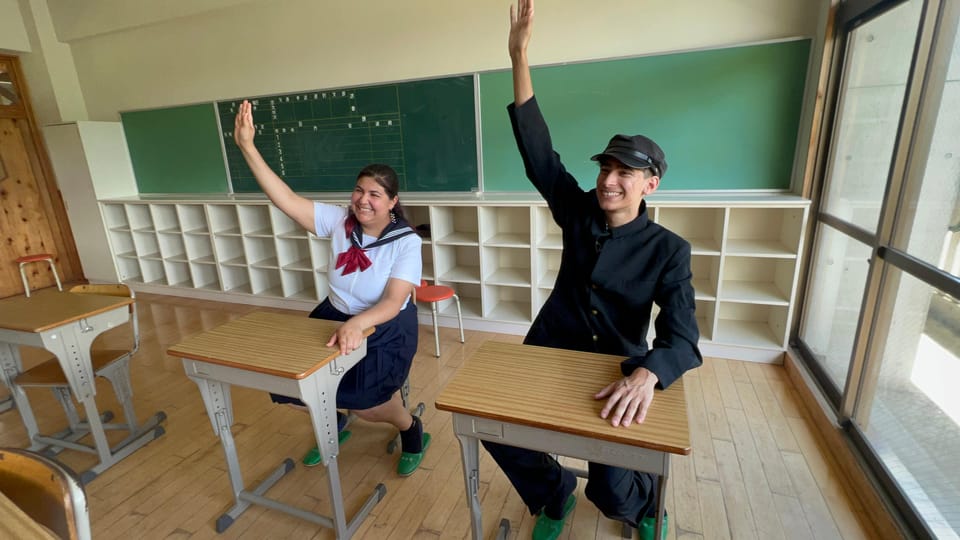
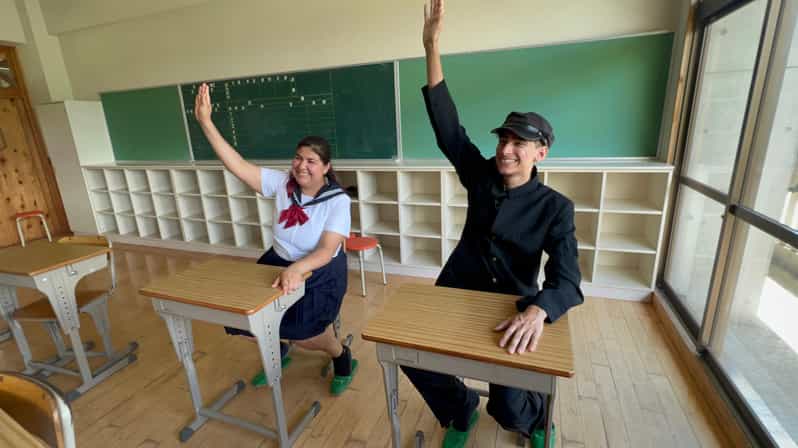
- Homeroom first, so you start in the mindset of a student, not a tourist
- Hanetsuki paddle calligraphy souvenir, made during class and brought home
- School lunch experience that follows the real student meal moment
- Undokai sports festival + ninja activities for active, playful participation
- Cleaning time and diploma graduation, finishing with a full school-style ceremony
- Traditional festival at the end with games, food, and sake
Before you commit, see how this one stacks up against a few Tokyo favourites:
- Mt Fuji and Hakone 1-Day Bus Tour Return by Bullet Train★ 5.0 · 26,383 reviews
- 1-Day Tokyo Bus Tour★ 5.0 · 14,250 reviews
- Tokyo: teamLab Planets TOKYO Digital Art Museum Entry Ticket★ 4.6 · 9,779 reviews
From Shinjuku to a real school day in Chiba
This is a Tokyo-area day trip that turns a normal sightseeing rhythm on its head. Instead of starting with a temple or a viewpoint, you start with student life. The program runs about 6 hours, and it is based in Chiba (near Kimitsu), with transfer options connected to Shinjuku Station.
What makes it work for most people is that it feels structured. You arrive, you change into uniform, and the day flows in blocks—class, lunch, PE, cleaning, graduation. It is the opposite of a chaotic sampler. You always know what comes next, and you get a lot of participation for your time.
The whole vibe is also very social. You are dressed like a school student, you take photos, and you end up doing group activities like PE and cleanup. If you like anime-and-manga style school scenes but also want the real-world version, this hits both.
Getting changed: gakuran or sailor suit, indoor shoes included
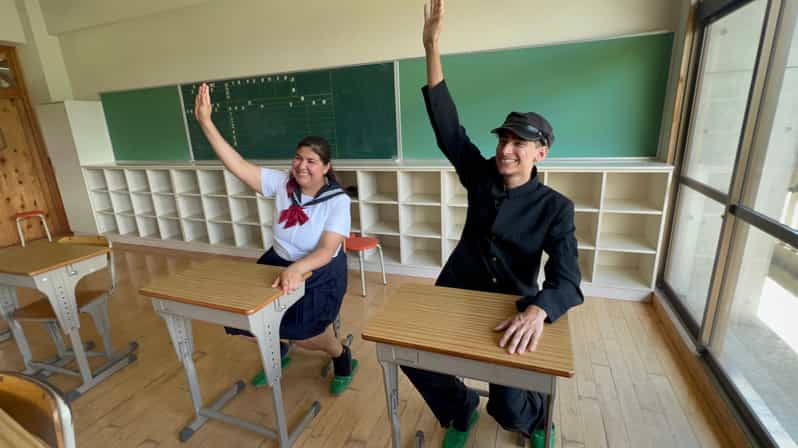
The moment you arrive, the day stops being hypothetical. You will change into a school uniform—either a gakuran (the dark, stiff boys uniform look) or a sailor suit (the classic sailor collar style). You also get indoor shoes, which matters more than people expect. It signals that you are entering school space the way students do, not tracking outdoor shoes through classrooms.
This is also when the photo opportunities start. You will be able to take pictures for social media, and yes, it feels a little funny the first minute. Then it clicks, because everyone else is in the same uniform mode too. It is not about posing at a monument; it is about becoming part of the school theme.
Practical tip: wear clothes that are easy to change out of quickly. You do not want to spend the best part of the morning wrestling buttons or zippers.
Homeroom at 11:00: the day starts like everyone else
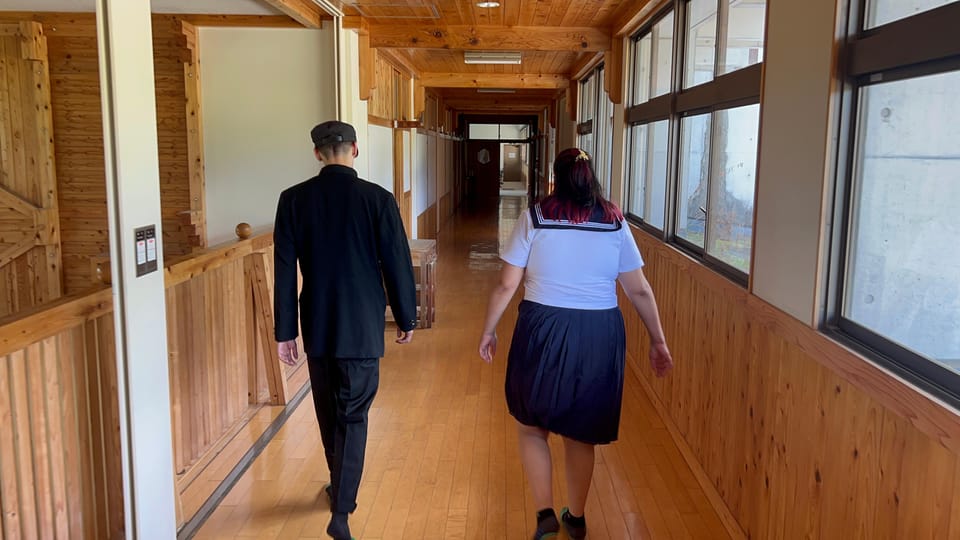
The itinerary begins with morning homeroom around 11:00 AM, led by a real homeroom teacher. This is a big deal. Many experiences claim authenticity, but homeroom is where the tone is set: rules, greetings, and that quiet sense of school order.
Even if you are not fluent, you will follow along through the teacher-led structure and the program guidance. The key value here is mindset. Your brain stops thinking, I am visiting, and starts thinking, I am in class.
This is also where the day becomes more than content. The homeroom moment makes everything after feel like a continuation, not separate attractions.
Japanese language class: calligraphy on a hanetsuki paddle
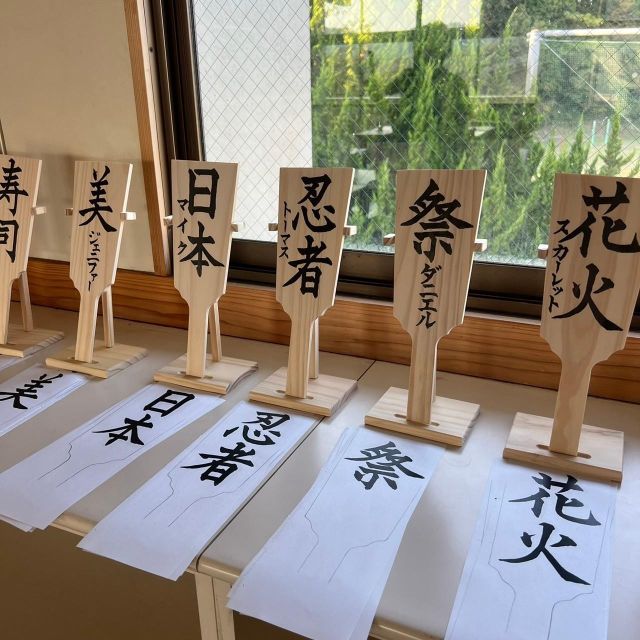
At about 11:30 AM, you shift into Japanese language (calligraphy). Instead of just watching someone write, you do calligraphy yourself on a hanetsuki paddle. That is a fun choice because it is not a flat paper worksheet. You are creating something shaped like a cultural object.
And you get to take it home. That matters for value. Lots of tours give you photos. This one gives you a physical reminder tied to the class itself. If you care about souvenirs that feel earned, this is one of the strongest parts of the day.
If you are the type who likes learning the story behind cultural practices, pay attention to the way the teacher explains it during the lesson. There is a reason calligraphy is taught in schools: it builds discipline, attention, and respect for form.





School lunch at noon: how a student meal feels
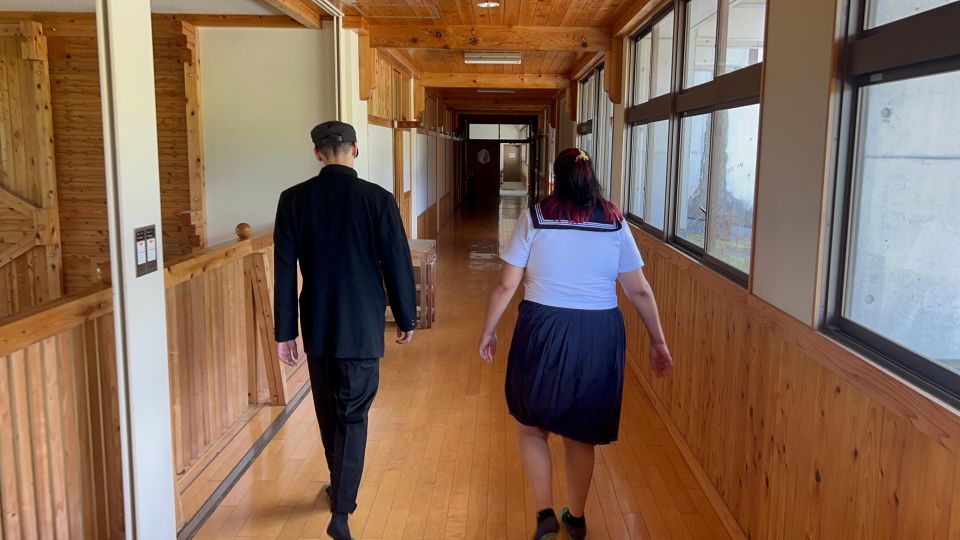
Around 12:00 PM, it is school lunch time. The day is built around the lunch as a core experience, not a side stop. You are eating as part of the program, in the school rhythm.
This is one of the best “now I get it” moments for visitors. Food teaches you the setting. When you eat lunch in the flow of school life—without the usual tourist pauses—you start noticing small things: how the meal fits the day, how everyone handles the same break time, and how casual the atmosphere feels once you are inside the school world.
You will also understand more about culture and daily routine, which is often what people really want when they say they want authenticity. It is not about big landmarks. It is about repeating small daily moments.
Note: drinks are not included, but vending machines are available.
Social studies and cosplay at 1:00 PM
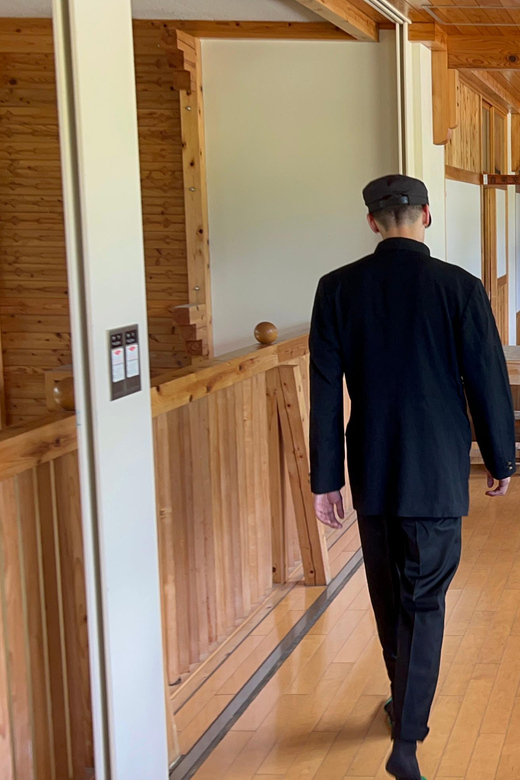
In the early afternoon, you get social studies (cosplay) around 1:00 PM. Yes, it includes a costume element, but the point is deeper than dressing up. Social studies in a school program often means learning how people live, how the country is organized, and what systems matter. In this experience, you get lessons that connect Japanese history, culture, and society to what it feels like to be in a classroom setting.
The cosplay component also helps you relax. Once you are in uniform and doing the class activities together, you stop treating it like a performance for yourself. You become a participant in the same environment.
If you worry that cosplay will feel childish, keep this in mind: the structure is school-based. It is not random entertainment; it is tied to the learning block.
PE at 2:00 PM: Undokai sports festival energy
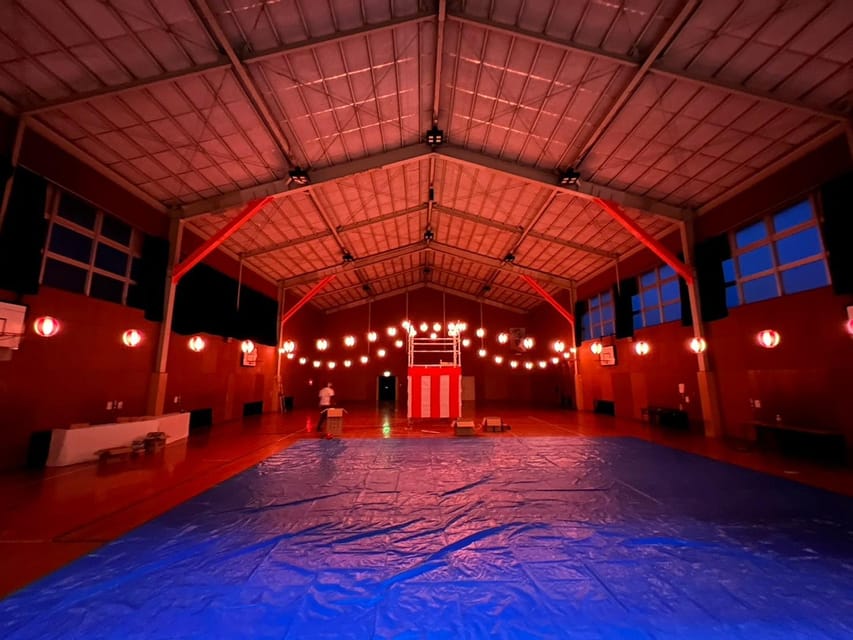
The day really turns lively around 2:00 PM with physical education. You experience Undokai, which is the Japanese school sports festival. Expect group competition energy and classic school-day fun.
And you also join ninja activities. That mix is clever. It gives you active participation in more than one style, so people who enjoy running and games are happy, and people who prefer playful challenge are also included.
For most people, Undokai is the moment where you forget you are an observer. You are moving with everyone else, reacting to the teacher-led flow, and working with the group. That is why this experience gets high praise: it is not passive.
Practical tip: bring the right mindset. You do not need athletic skill, but you do need to be willing to participate. Comfortable clothing helps, and you should expect some physical activity as part of the sports festival feel.
Cleaning time at 2:50 PM: the most Japanese part
At about 2:50 PM, you do cleaning time. This is one of those school customs that visitors often skip entirely because it is not a “sight.” In Japanese schools, cleaning is part of student responsibility, and here you get to experience it instead of hearing about it after the fact.
This moment is valuable because it adds realism. Schools are not only classrooms and sports; they are also shared spaces that get cared for by students. The cleaning time gives you a close-up look at how discipline and community responsibility show up in daily routines.
And it also changes the emotional tone of the day. After PE, cleaning is grounding. It helps you finish as a student, not as a visitor who overstayed.
Graduation ceremony and receiving your diploma at 3:20 PM
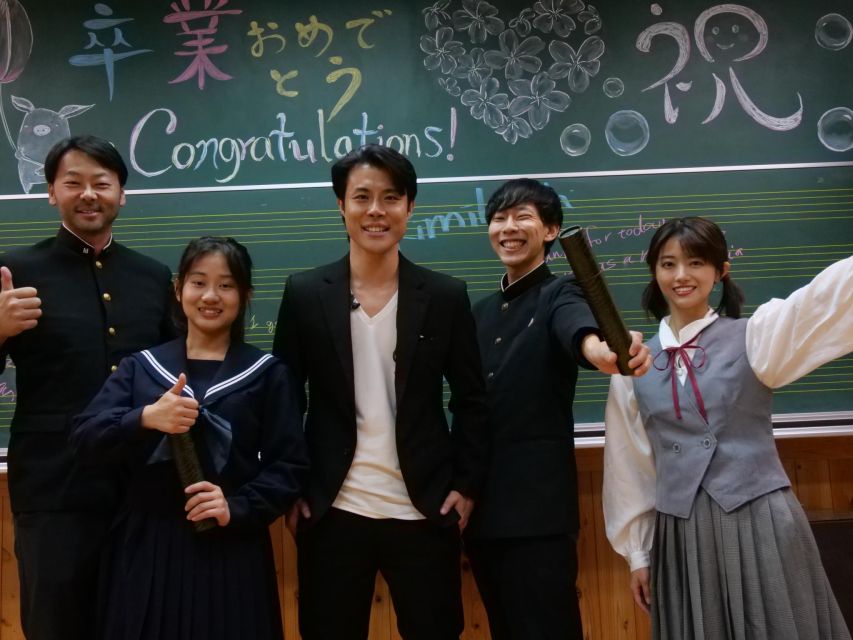
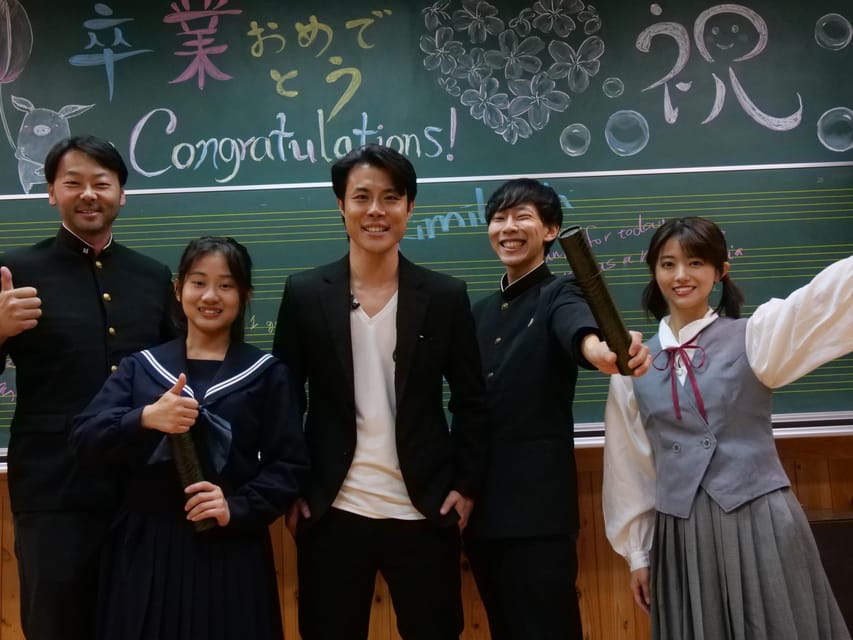
Around 3:20 PM, you have a graduation ceremony. You receive a diploma, and it is a small ritual with real feelings attached. For a lot of people, this is where the day stops being play and becomes memorable.
This is also one of the most praised parts in spirit. The entire experience is designed to let you feel like you actually completed a school day. The diploma is the physical marker that your time inside the school flow mattered.
If you like role-play that feels heartfelt rather than superficial, you will probably love this section.
The traditional festival at 4:00 PM: games, food, and sake
The day ends with a Japanese traditional festival at about 4:00 PM. You will experience games, food, and sake as part of the festival atmosphere.
This part matters because it ties the school day to the broader culture. You started in classrooms and student routines, then you finish with the kind of social festival energy you see in Japan’s town life.
Is it all formal and ceremonial? Not exactly. It is interactive—games and food first—then you get the sake element as part of the cultural flavor of the closing event.
Price and value: what you are paying for at $277
At $277 per person for a full 6-hour school day experience, this is not a budget snack tour. So here is how I think about the value:
You are paying for a complete package that includes:
- Transfer from Shinjuku Station (if that option is chosen)
- Uniform and indoor shoes rental
- A full school-day program with lesson blocks led by an English-speaking teacher
- School lunch
- A calligraphy hanetsuki paddle souvenir you keep
If you add up what those pieces would cost separately—transport, uniform rental logistics, guided instruction, and an organized day with lunch—this starts to make sense. You are not just buying access to a classroom; you are buying a structured day where you get to participate in multiple school traditions.
The price also buys time. In one day, you get homeroom, language class, lunch, social studies, PE with Undokai, cleaning, graduation, and a closing festival. For people who want a single memorable day in the Tokyo area with a strong cultural theme, this is priced like a focused experience, not like a generic sightseeing bundle.
Who should book this school day experience
This experience is a great fit if you:
- want an authentic-feeling Japanese school routine rather than another photo stop
- like hands-on activities, especially calligraphy you can take home
- enjoy active group events like Undokai
- want a day that feels like a story from anime and drama, but still organized and educational
- like meeting new people and doing group activities in a friendly environment
It is probably less ideal if you:
- hate participating in physical games or group activities
- are extremely sensitive about being filmed in the background (the program notes media coverage may occur)
- need ultra-flexible timing and cannot handle a prompt shuttle departure
Small things that make or break the day
A few details will help you enjoy it more:
- Be on time for the shuttle. It departs promptly at 8:30 AM, and late arrivals can mean the day is canceled for you the same day.
- Plan around a full schedule. Even though the session times are approximate, the day blocks are real.
- Expect group rhythm. This is a school day with lesson flow, not a pick-your-own-adventure.
- Bring patience for switching modes. You will go from classroom to sports to cleaning to a festival. That’s the point—just don’t fight it.
Should you book it?
I think you should book this if you want one organized day that gives you more than sightseeing. The combination of uniform role-play, calligraphy, a real-feeling school lunch, active Undokai sports festival, and ending with a traditional festival plus a diploma makes it unusually complete.
Skip it if you want low-effort, sit-and-watch tourism. This is hands-on, energetic, and structured, and it works best when you let yourself join in.
If you do book, send a quick note if you prefer not to be included in filming, and show up early enough to feel calm. Then enjoy the day like you are actually a student.
FAQ
How long is the Japanese School Day experience?
It runs about 6 hours for one day.
Where does the experience take place?
It’s in Chiba, Japan (Kimitsu area), on Honshu.
What is included in the price?
Transfer from Shinjuku Station (if selected), rental of uniforms and indoor shoes, school lessons with an English-speaking teacher, school lunch meals, and a hanetsuki paddle with calligraphy to take home.
Is school lunch included?
Yes, school lunch meals are included.
Do I get to take the calligraphy souvenir home?
Yes. You make calligraphy on a hanetsuki paddle and you can take it home.
Is there physical activity?
Yes. You take part in physical education, including Undokai sports festival style activities and ninja activities.
What happens after the sports festival?
You do cleaning time, then there is a graduation ceremony where you receive a diploma.
Is there a traditional festival at the end?
Yes. The day ends with a traditional Japanese festival with games, food, and sake.
What languages are used during the experience?
Instruction is provided in English and Japanese.
What if I am late for the shuttle?
The shuttle departs promptly at 8:30 AM. If you are late, it will be treated as a same-day cancellation.
More Tour Reviews in Tokyo



Fresh reviews from around Tokyo






Tokyo, compared.
 ★ 5.0Mt Fuji and Hakone 1-Day Bus Tour Return by Bullet TrainFrom $16326,383 reviews
 ★ 5.01-Day Tokyo Bus TourFrom $12914,250 reviews
 ★ 4.6teamLab Planets TOKYO Digital Art Museum Entry TicketFrom $259,779 reviews
 ★ 4.0Mt Fuji & Hakone Cruise, Drum Show Bullet Train 1 Day from TokyoFrom $1497,413 reviews
 ★ 5.0Shinjuku Food Tour (13 Dishes at 4 Local Eateries)From $866,603 reviews
 ★ 4.4Tokyo Mt Fuji 5th St & Hakone Cruise Bus Tour w/Bullet TrainFrom $1545,024 reviews
 ★ 5.0Flagship 2-Hours Official Street Go-Kart Tour – Tokyo Bay ShopFrom $644,974 reviews
 ★ 4.5From Tokyo: Mount Fuji Full-Day Sightseeing TripFrom $684,970 reviews