
Tokyo on an e-bike feels unfairly easy. What makes this tour interesting is the setup: start and finish at your hotel, ride an electric-assist bike, and keep the route flexible in a truly private format. I like that it saves you from the usual hunt for a meeting point. The main drawback to consider is simple: if your hotel is outside the pickup range, you may need to discuss a different starting point and pay extra.
The guide here matters. People talk about Kazuma’s calm, safety-first style, plus his humor and clear English. One more practical note: you can’t shoot photos or video while cycling, so you’ll rely on planned stops and Kazuma’s help for pictures.
In This Review
- Key things I think you’ll care about
- Hotel-to-hotel convenience in Tokyo’s maze of streets
- The e-bike part: easy riding, real rules, and how to prepare
- Private control: how customization actually changes your day
- What 3 hours feels like on this route length (15–20 km)
- Iconic Tokyo moments you can plan around (and what to notice)
- Tokyo Metropolitan Government Building photo stop
- Shinjuku and Shibuya: energy with story time
- Imperial Palace area and Tokyo Station zone
- Temples and classic views: Zojo-ji and Tokyo Tower
- Asakusa and Kaminarimon Gate
- Riverside stretches: Arakawa and Sumidagawa
- Tsukuda Island and Tsukishima Monja Street
- Optional extras depending on your route
- Guide quality: why Kazuma’s style keeps showing up
- Cost and value: what $141 gets you in Tokyo terms
- Who this tour suits best (and who should choose something else)
- Tips to get the best 3-hour ride
- Should you book Tokyo Bike Bliss’s 3-hour private e-bike tour?
- FAQ
- How long is the private e-bike tour?
- Does the tour start and end at my hotel?
- Is the tour private?
- What kind of bikes do you use?
- What locations can the tour include?
- What’s included in the price?
- Are food and drinks included?
- What languages is the live guide available in?
- Who is this tour not suitable for?
- How do you communicate before pickup?
- Is there a refund if I cancel?
Key things I think you’ll care about
- Hotel pickup and drop-off: the tour meets you where you’re already staying.
- Electric-assist comfort: you pedal, the motor helps, and hills stop being a problem.
- Private route control: you choose the pace and can request changes (with possible extra fees).
- Focused stops, not nonstop riding: short breaks for comments, photos, and drinks.
- Safety gear included: helmet, safety instruction, and insurance are part of the package.
- Strong guide feedback: Kazuma is repeatedly praised for patience and bike fit adjustments.
More of Tokyo by bike
- Tokyo Guided Small-Group Biking Tour★ 5.0 · 1,250 reviews
- Tokyo Great Cycling Tour★ 5.0 · 811 reviews
- Tokyo Top Highlights 3h Guided E-bike Tour★ 5.0 · 714 reviews
Hotel-to-hotel convenience in Tokyo’s maze of streets
In Tokyo, the fastest way to lose a morning or afternoon is the meeting-point shuffle. This tour fixes that problem at the start: the guide picks you up at your hotel lobby, and you ride together from there. Even better, the tour also ends at your hotel, so you’re not stuck figuring out transportation afterward while you’re tired or hungry.
You’re also dealing with a city where directions can feel like a puzzle, especially if you don’t read much Japanese. Here, you avoid the stress by handing everything to the guide and letting the tour handle the timing. The pickup process is straightforward: you’re expected to be ready about five minutes before the pickup time, and you’ll find the guide holding or wearing a bike helmet so it’s easier to spot each other in the lobby.
If your hotel is outside the service range, don’t panic. The operator says you can discuss a starting point, and additional charges may apply. That’s the one logistical catch. My advice: if your hotel is on the edge of Tokyo or in a less central area, ask early so you don’t get surprised later.
The e-bike part: easy riding, real rules, and how to prepare
E-bikes are the difference between seeing more of Tokyo and arriving sweaty and cranky. These bikes are electric-assist, meaning you pedal and the motor helps. That matters because Tokyo has plenty of stretches where your legs would otherwise be doing all the work. With assist, you’ll likely enjoy the ride more, and you’ll have energy for the stops.
That said, it’s not a free-for-all. You’ll get safety instruction and wear a provided helmet. The tour is also quite clear on what’s not allowed:
- no smoking
- no alcohol or drugs
- no alcoholic drinks in the vehicle
- no special risky footwear (no high heels, and no sandals or flip-flops)
- no skirts
You also need to follow the physical fit guidelines. The tour lists an ideal range of 145cm to 185cm (about 4’7” to 6’1”). It’s not suitable for kids under 10. It also flags people over 100kg / 220 lbs as not good for the tour. If you’re in that gray zone, I’d take the operator’s guidance seriously and ask about the best bike option before you book.
One more important rule: there’s no photo/video shooting while cycling. That’s common with guided bike tours for safety reasons, but it does change how you take photos. You’ll want to be ready for photo opportunities during stops, not while rolling.
Private control: how customization actually changes your day
This is a private 3-hour e-bike tour. That sounds like a marketing word, but it changes your experience in three real ways.
First, your guide can adapt the ride to your comfort level. In the reviews, people repeatedly highlight how patient Kazuma is and how careful he is with safety. If you’re new to biking or you just don’t want to feel rushed, a private format gives your guide room to manage your pace instead of herding a mixed group.
Second, you can steer the tour. The tour says the route and stops can be customized, and you can request changes like:
- a different starting time
- extending the tour duration
- visiting certain spots
The fine print is that requests for changes or visits far from the original route may have additional fees. That’s fair. Tokyo is big, and detours add time. My practical tip: group your must-sees into one or two clusters (for example, shrines and neighborhoods, or temples and rivers), so your guide can build a route that still fits the 3-hour window.
Third, you get multiple short stops. Even when you’re moving, the experience isn’t just a long ride with zero payoff. The tour includes commentaries and breaks so you can see what you’re actually passing, not just speed through it.
What 3 hours feels like on this route length (15–20 km)
You’ll typically cover around 15–20 km in about three hours, with multiple short stops. That’s a workable amount for a first-time Tokyo e-bike outing because it balances movement and viewing.
Here’s the way I think about it: Tokyo is too big to “do everything” in one day. This tour’s job is to compress a lot of different Tokyo vibes into one ride—skyscrapers, wide avenues, older streets, and river views—without exhausting you like a full-day walking plan.
Because the stops are built in, the tour should feel like a guided tour with mobility, not just transportation. If you want a low-stress introduction to the city, this format makes sense: you get orientation quickly, and you also learn which neighborhoods feel like you.
More private options with your own guide
Iconic Tokyo moments you can plan around (and what to notice)
This tour is flexible, so you might not see every listed place. Still, the stops tend to follow a few clear themes. Use these as a planning checklist when you think about what you want from your ride.
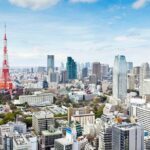
Tokyo Metropolitan Government Building photo stop
If the tour includes the Tokyo Metropolitan Government Building, expect a classic photo moment. It’s a good stop because it’s designed for visitors and gives you a clear sense of Tokyo’s scale.
How to get value: use this break to look outward, then remember what direction you’re in. When your ride moves later into neighborhoods, you’ll start recognizing Tokyo’s layout instead of feeling lost.
Shinjuku and Shibuya: energy with story time
Shinjuku Omoide Yokocho (Memory Lane) and Shibuya Crossing are the type of places that look famous even to people who’ve never been to Tokyo. If your route includes them, you’re not just ticking boxes—you’re seeing how different Tokyo can feel within a short ride.
- Shinjuku Omoide Yokocho: tight alleys and a nostalgic atmosphere. It’s the kind of place where your eyes want to wander, so a short stop helps.
- Hatonomori Hachiman Shrine: a quieter contrast nearby, giving you a religious and cultural pause before the city noise resumes.
- Gaien Ginkgo Tree Avenue: useful for slowing down and noticing the streetscape.
- Aoyama Cemetery Cherry Blossom Street: a seasonal stop when it fits the time of year and your guide’s route.
- Shibuya Crossing: big city choreography. Look at how people cross, not just the intersection itself.
A practical drawback: these iconic spots can be busy. Since you’re riding a private tour, you can usually keep the stop short and still enjoy it, but you should expect some crowd energy.
Imperial Palace area and Tokyo Station zone
If your route includes the Imperial Palace and the Tokyo Station / Nihonbashi Bridge area, you’ll get a different kind of Tokyo: broad, official-feeling spaces and historic-looking waterways and bridges.
This is where you learn the city’s rhythm outside the neon. Tokyo Station and nearby bridges help you understand how transit and old-world-looking corridors connect.
What to notice: the transitions. You’ll likely pass from modern infrastructure to older landmarks without changing neighborhoods drastically. That’s one of the reasons a bike tour works so well here: you experience Tokyo’s layers in motion.
Temples and classic views: Zojo-ji and Tokyo Tower
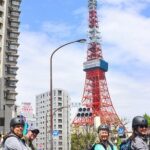
Zojo-ji Temple and Tokyo Tower show you Tokyo’s mix of spiritual and iconic skyline. If you get a stop here, it’s often for photos and for the sense of contrast—stone and ceremony beside a modern landmark.
One helpful angle: treat this as a visual anchor for your trip. When you later visit other parts of the city, you’ll better understand where Tokyo Tower fits in the bigger picture.
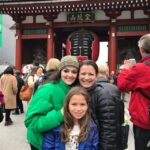
Asakusa and Kaminarimon Gate
Asakusa and the Asakusa Kaminarimon Gate area are a strong choice if you want Tokyo’s older, more traditional face. This part of the tour is where people tend to slow down and take in the details during the stop windows.
Potential challenge: the area can be crowded, and gates and streets can feel close. The upside is that this is the kind of Tokyo you can recognize instantly from photos, which makes the guided context more rewarding.
Riverside stretches: Arakawa and Sumidagawa
If your route includes Arakawa Riverside or Sumidagawa Riverside, you’ll get a calmer feel. Rivers in Tokyo can act like a break from the city’s tight blocks, even when you’re still in the middle of everything.
Why it matters: e-bikes let you reach these calmer sections without committing to a long walking day. It’s one of the easiest ways to balance Tokyo’s intensity.
Tsukuda Island and Tsukishima Monja Street
For a more food-culture flavored Tokyo segment, Tsukuda Island and Tsukishima Monja Street offer a different vibe than the big-name sights. If you like neighborhoods rather than just monuments, these stops can be a payoff.
Just keep your expectations practical: these places are about streets, atmosphere, and texture. If you go in hungry for details, you’ll get more out of the stop.
Optional extras depending on your route
The tour also lists other possible stops like National Stadium (Tokyo Olympics venue), Hibiya Park, Tokyo Skytree, and Kitasenju. Treat these as optional chapters:
- National Stadium gives you a modern landmark context.
- Hibiya Park offers a park pause.
- Skytree is an obvious skyline target.
- Kitasenju adds a more local neighborhood feel than central tourist zones.
Guide quality: why Kazuma’s style keeps showing up
The biggest repeated theme in the experience is not just “a guide speaks English.” It’s the way the guide runs the tour.
People praise Kazuma’s kindness, his humor, and his ability to add historical and cultural context while you ride. They also emphasize that he’s safety conscious and patient, which matters when you’re on a bike in an active city.
Another very practical detail: Kazuma is described as adjusting each bike to fit the riders. If you’ve ever borrowed a bike and spent the ride adjusting your posture every five minutes, you’ll appreciate how much that improves comfort.
Photo handling is also worth noting. Since you can’t take photos while cycling, the tour leans on stop moments. But reviews say Kazuma has taken photos for groups and sent them after the tour. That’s a nice bonus because it means you don’t have to choose between riding and documenting.
Cost and value: what $141 gets you in Tokyo terms
At $141 per person for about three hours, this isn’t the cheapest activity. It also isn’t the kind of price that only makes sense if you do this once in a lifetime. The value sits in what’s included and what it replaces.
You’re paying for:
- hotel start and end
- a private guide
- an e-bike plus helmet
- safety instruction and insurance
- a route you can customize within reason
The tour excludes food and beverages, so you’ll budget for breaks and water on your own (though the tour includes stops for drinking and comments). Still, because you’re covering roughly 15–20 km with guidance and stop time, you’re getting mobility plus context. For many people, that’s better value than paying for multiple separate taxi rides plus a walking tour.
If you’re a solo traveler, private tours can feel pricey. Here, though, you’re buying time savings. If you’re traveling as a couple or small group, the private structure can start to feel like smarter spending because you avoid waiting for the slowest person or missing the moment you want.
Who this tour suits best (and who should choose something else)
This tour is a great fit if you want:
- a first-day or early-trip introduction to Tokyo neighborhoods
- an active plan that doesn’t punish your legs
- a custom route rather than a rigid bus schedule
- safety support and an easy pace for less-experienced riders
It also fits people who like photos but don’t want to juggle a camera while riding, because the bike tour includes stop windows and (based on feedback) Kazuma often handles group photos.
It’s not ideal if:
- you’re under 10 years old (not allowed)
- you’re over 100 kg / 220 lbs
- you’re short or tall enough that the bike fit may be difficult (the ideal range is 145–185 cm)
- you’re expecting an all-day walking-style deep immersion, since this is a focused 3-hour loop
One more practical suitability check: if you’re strict about wearing skirts or sandals, you should rethink footwear and outfit for this particular experience. The rules are clear, and your ride depends on following them.
Tips to get the best 3-hour ride
Keep these things in mind and your tour will feel smoother:
- Wear closed-toe shoes. The tour bans sandals/flip-flops and high heels.
- Keep a light layer. Tokyo weather can change fast, and you’ll be on the bike.
- Plan your must-sees into one neighborhood cluster when possible. Far-flung requests may cost more.
- Decide how you want the ride to feel: more iconic stops, more quiet back streets, or a balance. The guide can tailor.
- Accept the photo/video rule while cycling. Use stops for your shots and let the guide handle group photos.
If you’re traveling for the first time in Japan, you’ll likely appreciate the “no meeting point stress” angle the most. It makes the tour feel like it starts right away, not like an extra errand.
Should you book Tokyo Bike Bliss’s 3-hour private e-bike tour?
Yes—if you want a private, hotel-to-hotel, electric-assist way to see multiple sides of Tokyo in a single afternoon. The best reason to book is practical: you save time and mental energy, and you get a guided route that can fit your pace.
Also book if you value safety and comfort. The repeated focus on Kazuma’s careful approach and patience is exactly what makes e-bike tours work for beginners.
Skip or reconsider if you know you don’t want to follow the footwear and clothing rules, or if the physical constraints (especially the >100kg note) apply to you.
If you’re planning only one guided experience in Tokyo early in the trip, this is a strong candidate. It’s not just sightseeing. It’s how you start to understand Tokyo’s geography fast—without spending your whole day walking.
FAQ
How long is the private e-bike tour?
The tour is about 3 hours.
Does the tour start and end at my hotel?
Yes, the tour includes hotel start and hotel end. Pickup may require discussion if your hotel is outside the range, and additional charges may apply.
Is the tour private?
Yes. It’s a private group, and the route, distance, and duration can be customized.
What kind of bikes do you use?
The tour uses e-bikes with motor assistance while you pedal.
What locations can the tour include?
The tour can include a mix of areas and landmarks such as Shinjuku, Shibuya Crossing, Imperial Palace, Tokyo Station, Nihonbashi Bridge, Asakusa Kaminarimon Gate, Tokyo Tower, Tsukishima Monja Street, and Tokyo Skytree, plus other options tailored to your taste.
What’s included in the price?
Included are hotel start, the e-bike, helmet, safety instruction, insurance, and a live guide.
Are food and drinks included?
No. Food and beverages are not included.
What languages is the live guide available in?
The live tour guide is available in Japanese and English.
Who is this tour not suitable for?
It’s not suitable for children under 10, people under 145 cm (4 ft 8 in), and people over 100 kg (220 lbs).
How do you communicate before pickup?
The operator contacts you via WhatsApp/iMessage/SMS for seamless communication.
Is there a refund if I cancel?
Free cancellation is offered up to 24 hours in advance for a full refund.
Tokyo on Two Wheels
More Tours in Tokyo




More Tour Reviews in Tokyo




Fresh reviews from around Tokyo






Cycling Tours, compared.
 ★ 5.0Tokyo Guided Small-Group Biking TourFrom $1061,250 reviews
 ★ 5.0Tokyo Great Cycling TourFrom $99811 reviews
 ★ 5.0Tokyo Top Highlights 3h Guided E-bike TourFrom $63714 reviews
3-Hour Bike or E-Bike City Highlights TourFrom $45435 reviews
★ 5.0Tokyo Top Highlights 3h Guided E-bike TourFrom $63714 reviews
3-Hour Bike or E-Bike City Highlights TourFrom $45435 reviews
 ★ 5.0Tokyo West-Side Cycling & Food TourFrom $99214 reviews
 ★ 5.03-Hour Bike/E-Bike Tour of the City’s HighlightsFrom $63209 reviews
 ★ 5.0Small Group Cycling Tour in TokyoFrom $66184 reviews
 ★ 5.03-Hour Tokyo Private E-Bike Tour Starting from Your HotelFrom $145117 reviews
Browse the lists this tour appears in