
Reviewed · TOKYO
Ride a rickshaw wearing a kimono in Asakusa! Enjoy authentic traditional culture!
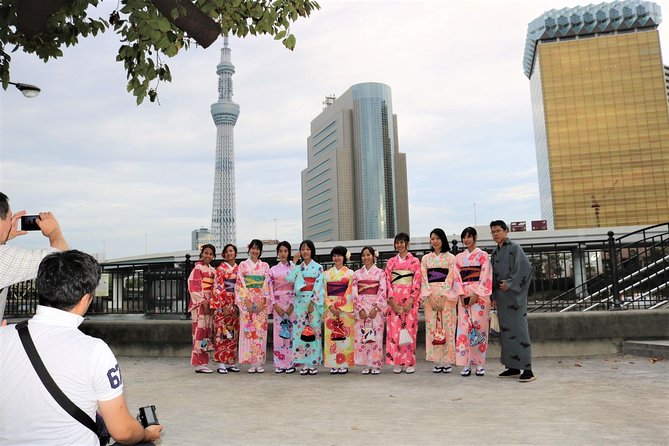
Street to kimono, fast. This is a hands-on Asakusa day where you get kimono dressing + a hair set and then hop into a classic rickshaw for a guided-style tour around Kaminarimon and Sensoji. I love that the package feels complete (you show up, and they handle the rest), and I also love the extra touch of commemorative photos and the driver’s little bits of local info during the ride. One thing to watch: if you need a larger fit, there can be an extra fee, and the dressing flow is quick.
The meeting point is at Asakusa Kimono Rental HANAKA near Kaminarimon, so you can pair this with real temple-and-street time afterward. The whole experience runs about 6 hours, and the shop is only open 11:00 AM–2:00 PM, so it pays to be punctual and plan your day around that window.
In This Review
- Key things to know before you go
- Getting dressed at Asakusa Kimono Rental HANAKA (the 30-minute magic)
- Choosing your kimono and hair set without overthinking
- The rickshaw pickup and that classic Asakusa feeling
- Where you roam: Kaminarimon and Sensoji time on your own
- The price: is $52.17 good value in Tokyo?
- Photos and the guide touch: making memories without effort
- Timing and logistics that actually matter for your day
- Fit and extra fees: how to avoid surprises
- Who this Asakusa kimono-and-rickshaw experience suits best
- Should you book this?
- FAQ
- How long is the experience?
- Where do I meet, and does it end there too?
- What is included in the price?
- Do I need to bring anything?
- What happens if I need a larger kimono?
- When do you use yukata instead of kimono?
- What if it’s raining or cold?
- What is the cancellation policy?
Key things to know before you go
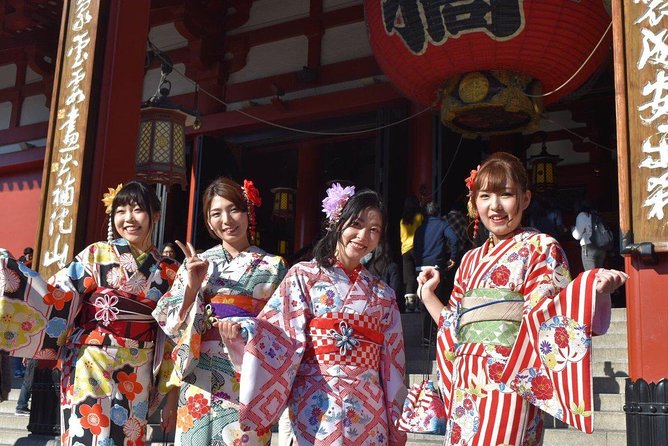
- Complete kimono rental: outfit, hair styling, and matching accessories are included, plus a drawstring bag and sandals
- Kimonos or yukata: yukata is used from June to September
- Quick start, then roaming: about 30 minutes to get dressed, then you ride and have time to explore until 6pm
- Choice with the driver: you can talk through where to get off near Kaminarimon and Sensoji
- Small group size: up to 5 people, so you’re not lost in a crowd
- Budget for fit: larger sizing can mean an extra fee of 1,000–2,000 yen (examples show it may come up for bust size)
Before you commit, see how this one stacks up against a few Tokyo favourites:
- Mt Fuji and Hakone 1-Day Bus Tour Return by Bullet Train★ 5.0 · 26,383 reviews
- 1-Day Tokyo Bus Tour★ 5.0 · 14,250 reviews
- Tokyo: teamLab Planets TOKYO Digital Art Museum Entry Ticket★ 4.6 · 9,779 reviews
Getting dressed at Asakusa Kimono Rental HANAKA (the 30-minute magic)
This starts at Asakusa Kimono Rental HANAKA, right by Kaminarimon. The shop is in a building (Dwell Asakusa IV, 4F), and it can be a little tricky to spot from the street. My practical advice: give yourself buffer time and use Google Maps, especially if you’re arriving from subway exits in a hurry.
Once you arrive, the shop runs a true rental setup. You don’t need to bring your own clothes or kit. They’ll handle the kimono dressing with a professional kimono dressing instructor, and the hair is done by a hairdresser with a national qualification. The shop also emphasizes hygiene management, which matters when you’re getting fitted and styled close up.
Here’s what you actually do:
- You’ll change into the kimono at the meeting point
- You’ll pick your kimono and get hair done with accessories included
- They’ll also provide sandals (and in summer, summer clogs)
Two details I really like for first-timers:
1) They keep the experience moving. Getting dressed takes about 30 minutes, which is fast enough that you’re not stuck in a long room session.
2) It’s designed to reduce decision stress. You can choose a kimono with confidence rather than trying to guess sizing or styling on your own.
Possible snag: kimonos follow standard Japanese sizing, and if you fall outside the standard proportions, you may need a larger size. The tour information notes extra charges for larger sizing (1,000–2,000 yen), and reviews include an example where extra payment applied due to bust size. If you’re considering this, measure yourself honestly before you go, not after.
Also, small logistics: you may need to follow shop rules about shoes. One review noted that you can’t bring your shoes into the store and that staff take care of shoes for you. So plan to move in and out smoothly and wear something easy to handle.
Choosing your kimono and hair set without overthinking
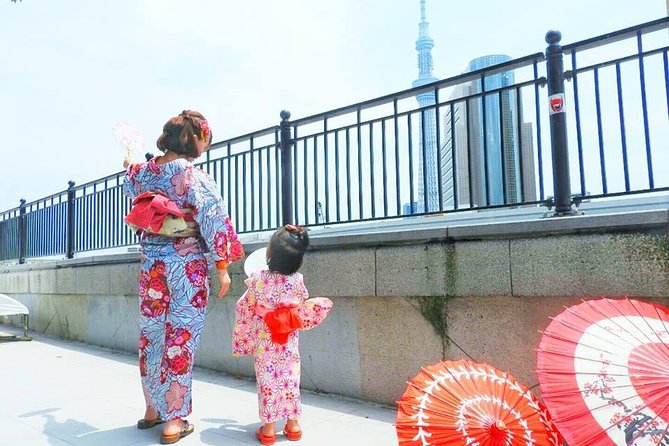
Most of the value here is the styling work. This isn’t just renting a garment and sending you on your way. You get:
- A kimono (or yukata in June–September)
- Hair styling and accessories
- A drawstring bag and sandals
The kimono section is where you feel the transformation. Reviews praise how professional and accommodating the staff are, and that you get step-by-step help. That’s the difference between wearing a kimono for photos and actually feeling comfortable walking around afterward.
One more thing that’s easy to miss: if you want an excellent look in the photos, hair matters as much as fabric. The hairdresser’s role is a big deal here, and the fact that hair accessories are included means you won’t have to hunt down extras.
If you’re traveling with kids, this can work nicely too. There’s at least one review praising the team for dressing a 5-year-old with care and keeping things organized.
The rickshaw pickup and that classic Asakusa feeling
After you’re ready, a rickshaw comes to pick you up in front of the shop. The rhythm is simple:
1) Take a commemorative photo
2) Board the rickshaw
3) Set off with the driver
The ride out is short—about 12 minutes—but it’s built for storytelling. The driver can discuss where you’d like to get off, and the experience includes tourist information inside the rickshaw. The vibe is part transportation, part moving “orientation” to Asakusa.
You’ll have control over your timing. You can talk through where to get off with the driver, and you’ll typically end up near Kaminarimon and Sensoji Temple, which makes it easy to start exploring right away.
Safety is also mentioned. The rickshaws are described as operating with a safety-first approach, which is exactly what I want to hear when you’re sitting back and letting someone else handle the driving.
Where you roam: Kaminarimon and Sensoji time on your own
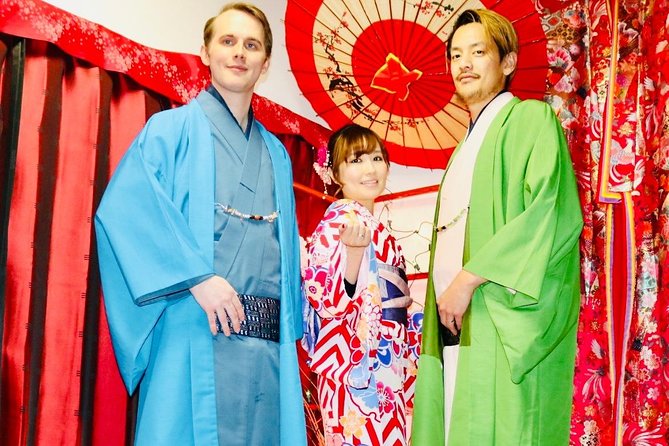
Once you get off near Kaminarimon and Sensoji, you’re in do-your-own-thing mode. The tour gives you free time until the return time at 6pm, and you can plan your own mini itinerary:
- Walk around the temple area and nearby streets
- Take photos in kimono (very popular here)
- Eat along the way
This is where the tour becomes more than a costume. Asakusa is built for slow wandering—especially when you’re dressed like you belong in the scene. The kimono turns the whole area into a lived-in experience. Even if you’re not a “photo person,” it changes how you notice details: shop fronts, temple approaches, and the rhythm of foot traffic.
A practical note: walking in kimono is different from walking in sneakers. Plan comfortable pacing. Also, your sandals/clogs are provided, so you won’t be stuck trying to wear your regular shoes out in the street after the fitting.





The price: is $52.17 good value in Tokyo?
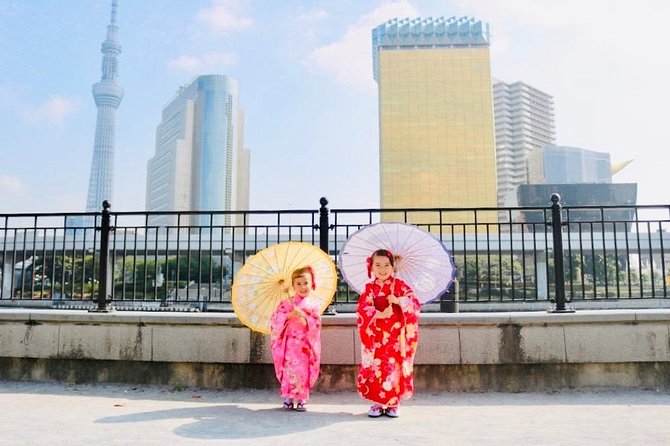
At $52.17 per person, this package can feel like a solid deal—mainly because you’re not paying just for the ride. You’re paying for a whole set of services that would cost more if you booked separately:
- Kimono rental
- Hair styling and accessories
- Sandals and a drawstring bag
- Rickshaw ride (with tourist-style information from the driver)
- Commemorative photo during the pickup
In other words, the money buys convenience and a “done-for-you” transformation. If you’ve ever tried to coordinate kimono rental and then figure out hair on your own, you’ll understand why this kind of setup has value.
Still, keep your budget realistic if you need a larger size. The tour notes extra fees may apply for some body sizes, and reviews describe cases where extra payment was required for larger bust. If you want to avoid surprises, think about fit early and accept that the standard kimono sizing is built around Japanese sizing.
Photos and the guide touch: making memories without effort
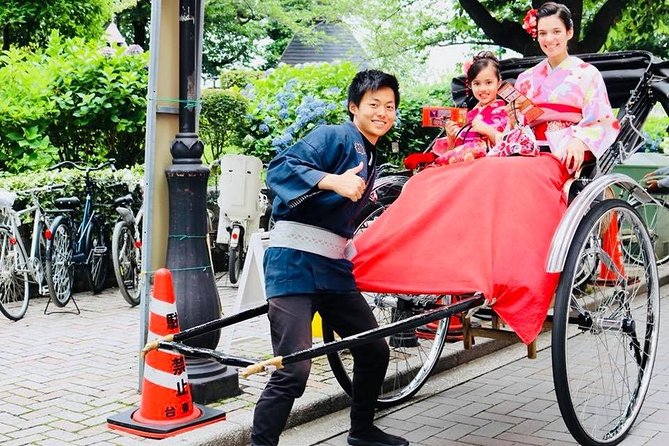
One of the most praised parts is the photography help. The experience includes a commemorative photo connected to the rickshaw pickup. There are also reviews praising a guide named Kai for taking incredible pictures, with the result that you leave with vivid memories instead of only shaky phone shots.
Here’s the advantage: someone else handles the framing. When you’re wearing kimono, it’s easy to focus so much on the outfit that you forget to document it well. Having a person guide you into photo-ready spots saves time and energy.
Also, even if you’re not chasing perfect photos, the whole point of this day is “you in Asakusa.” The combination of kimono, rickshaw, and temple-adjacent exploration makes it a natural memory machine.
Timing and logistics that actually matter for your day
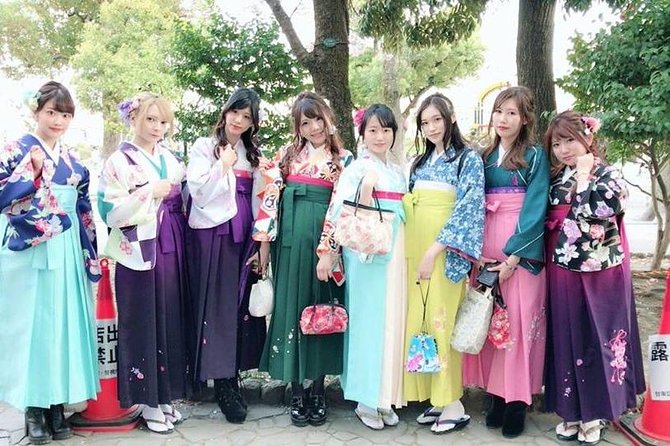
This is listed as approximately 6 hours, and the shop has opening hours from 11:00 AM to 2:00 PM. So you’re not signing up for an evening slot; you’re building a daytime block.
A simple way to think about the schedule:
- Arrive at HANAKA and get changed
- Expect about 30 minutes for dressing time
- Ride about 12 minutes on the rickshaw
- Explore around Kaminarimon and Sensoji until 6pm
- Return back to the meeting point by the end
Small group size helps. With a maximum of 5 people, it tends to feel more personal, and you’re less likely to be rushed by a huge crowd in the dressing area.
Location-wise, it’s near public transportation, which is a big win. Still, plan for the shop itself being in an alley/area that may not be obvious at first glance. Give yourself time to find the exact entrance and floor.
Fit and extra fees: how to avoid surprises
This is the one practical section you should take seriously.
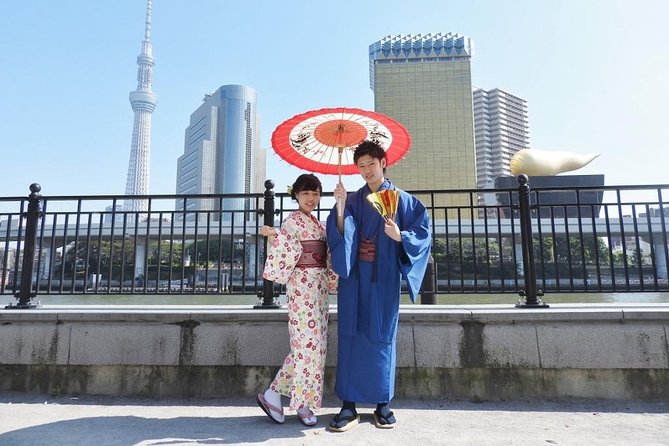
The tour data is clear that kimonos are standard Japanese sizes, and larger sizes can cost extra. Extra fee is stated as 1,000–2,000 yen for larger kimono due to body size, and reviews include an example where Americans with large breasts were charged extra (one review mentions 2,200 yen). The information also sets minimum height guidelines for larger sizing: women should be at least 168cm and men at least 175cm.
What does that mean for you? Two things:
- If you’re very tall or have proportions that don’t match standard sizing, you might want to plan your budget for the upgrade.
- If you’re unsure, ask early or be ready to pay on the day if they determine you need a larger fit.
Also, remember that kimono fit isn’t only about height and weight. Bust and waist proportions matter. The shop notes that whether you need a larger kimono depends on more than just height and weight.
Who this Asakusa kimono-and-rickshaw experience suits best
This is a great fit if you want a traditional Tokyo moment with clear structure. I’d especially recommend it to:
- First-timers to kimono who want help, not confusion
- People who like photo moments but don’t want to coordinate everything alone
- Families who want a memorable activity day (there are staff praised for dressing a child too)
- Anyone who’s exploring Asakusa anyway and wants to turn it into a theme day
It may be less satisfying if you strongly dislike extra costs for fitting. Also, if you’re expecting a slow, leisurely dressing experience, note that the dressing time is described as efficient and quick, and there may be limited English during the process. The staff are described as friendly and accommodating, but you should still be ready to follow instructions fast.
Should you book this?
If you want the classic Asakusa look without doing extra planning, I think this is a very reasonable way to spend your time. You get kimono rental with hair, a short but memorable rickshaw ride, and you still get hours to wander around Kaminarimon and Sensoji on your own until 6pm.
Book it if:
- You’re okay with quick dressing and tight timing
- You can handle small navigation challenges finding the 4F shop entrance
- You’re likely in standard sizing, or you’ve budgeted a potential extra fit fee
Skip or reconsider if:
- You need a guaranteed larger fit and want zero chance of extra charges
- You expect the event to be built around slow, long-form instruction rather than efficient getting-ready
FAQ
How long is the experience?
It runs for about 6 hours (approx.).
Where do I meet, and does it end there too?
You meet at HANAKAJapan, Asakusa (2-chōme 37, Dwell Asakusa IV 4F) and the activity ends back at the meeting point.
What is included in the price?
The package includes a drawstring bag and sandals (summer clogs in summer), plus the kimono rental and hair set as part of the dressing service.
Do I need to bring anything?
No. The rental is described as complete, so you don’t need to bring what’s needed for the outfit and styling.
What happens if I need a larger kimono?
An extra fee of 1,000 to 2,000 yen may apply depending on your body size, and payment is handled directly on the day. The information also notes height guidelines for larger sizing.
When do you use yukata instead of kimono?
Yukata is used from June to September.
What if it’s raining or cold?
Rain gear and cold protection are not included, so you’ll want to plan for weather yourself.
What is the cancellation policy?
You can cancel for a full refund if you cancel up to 24 hours in advance of the experience start time.
More Tour Reviews in Tokyo



Fresh reviews from around Tokyo






Tokyo, compared.
 ★ 5.0Mt Fuji and Hakone 1-Day Bus Tour Return by Bullet TrainFrom $16326,383 reviews
 ★ 5.01-Day Tokyo Bus TourFrom $12914,250 reviews
 ★ 4.6teamLab Planets TOKYO Digital Art Museum Entry TicketFrom $259,779 reviews
 ★ 4.0Mt Fuji & Hakone Cruise, Drum Show Bullet Train 1 Day from TokyoFrom $1497,413 reviews
 ★ 5.0Shinjuku Food Tour (13 Dishes at 4 Local Eateries)From $866,603 reviews
 ★ 4.4Tokyo Mt Fuji 5th St & Hakone Cruise Bus Tour w/Bullet TrainFrom $1545,024 reviews
 ★ 5.0Flagship 2-Hours Official Street Go-Kart Tour – Tokyo Bay ShopFrom $644,974 reviews
 ★ 4.5From Tokyo: Mount Fuji Full-Day Sightseeing TripFrom $684,970 reviews