
Reviewed · PRIVATE
Private Tour – Thousands of lucky cats! Go by tram, Gotokuji Tour
There’s a Tokyo cat moment waiting. This private Gotokuji tour takes you into Setagaya for a slow, peaceful walk that most first-time visitors skip. I like the way it mixes the spectacle of thousands of maneki neko with calmer stops like Shoin Shrine and old local landmarks. I also like that it’s guided in English, so you get context without guessing. One thing to plan for: some stops may not take cards, so you’ll want cash.
What makes this itinerary feel special is the rhythm. You start at Sangenjaya, ride in by tram, then walk between free cultural stops like a neighborhood local. By the time you reach Gotokuji, the energy shifts from everyday street life to that quiet, almost hypnotic atmosphere people associate with temple grounds.
In This Review
- Key Highlights You’ll Actually Feel
- A Quiet Tokyo Cat Hunt on the Tram
- Price and Logistics: Getting Value for $68.64
- Shoin Shrine and the Shoin Shrine Avenue Shopping Street
- Setagaya Daikan’s Residence: Feeling Like You Stepped Back
- Setagaya Local History Museum: Edo-Era Art and Stories Next Door
- Gotokuji Temple: Thousands of Maneki Neko and Zen Calm
- Private Tour Perks: English Guidance and Custom Pace
- Tips to Keep the Day Smooth (and Cheap-ish)
- Should You Book the Gotokuji Tram Tour?
- FAQ
- How long is the Gotokuji Tour?
- Where do I start and where do I end?
- Is this tour private?
- Are admission fees included?
- Do I need cash?
- Is lunch included?
- What if the weather is bad or a place is closed?
- Do I get a mobile ticket?
- Can I cancel for free?
Key Highlights You’ll Actually Feel
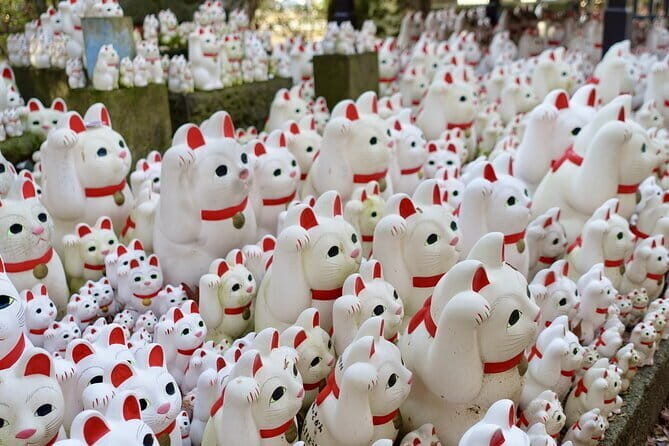
- Thousands of maneki neko at Gotokuji Temple, in a Zen temple setting
- A peaceful part of Tokyo that’s calmer than the usual neon-packed routes
- Free stops that still feel like real sightseeing, from shrines to museums
- English-speaking private guidance, with room to move at your pace
- Tram + walking flow that makes the area easy to explore without stress
More private options with your own guide
- Tokyo 6hr Private Tour with Government-Licensed Guide★ 5.0 · 3,902 reviews
- Private Tour to Mt. Fuji and Hakone (Fully Licenced Operator)★ 5.0 · 1,910 reviews
- Tokyo Customized Private Tour (Must See Places in 1 Day)★ 5.0 · 1,499 reviews
A Quiet Tokyo Cat Hunt on the Tram
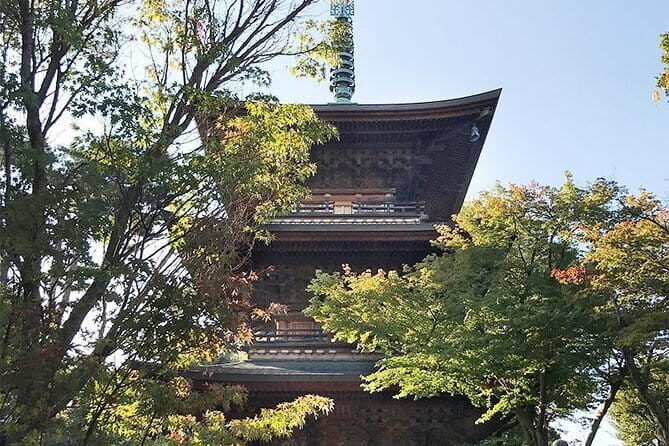
This is a private walking tour of Gotokuji, but it doesn’t feel like a single-purpose photo stop. You’re moving through Setagaya with time to notice details: shrine stones, old neighborhood storefronts, and the kind of local history that doesn’t show up on glossy “top sights” lists.
The tram helps here. Tokyo can be intense when you’re bouncing between far-flung areas. This route gives you a simple start-to-finish line: meet at Sangenjaya Station and end at Gotokuji Station. Along the way, you’re not hustled through a checklist. It’s more like getting shown around by someone who knows which corners are worth slowing down for.
If your idea of a great day is walking, questions, and atmosphere over big crowds, this fits. It also works well for cat lovers who want more than a quick temple stop. You’ll get the build-up: shrines first, history in the middle, then the “wow” of Gotokuji.
Price and Logistics: Getting Value for $68.64
At $68.64 per person for about 3 hours 30 minutes, the value is strongest if you care about guided context and a private pace. You’re not just buying admission. You’re paying for an English-speaking guide and the local routing between sites.
A practical note: the tour lists an estimated tour cost of 380 JPY per person, with transportation called out and admission fees listed as 0 JPY. Lunch is also not included. So think of it like this: your spending is mostly about transit (and whatever you choose to snack on), while the sightseeing costs are handled by the fact that the key stops are free.
You’ll also want to remember these logistics:
- It’s a private tour, so only your group participates.
- You get a mobile ticket.
- You’ll likely need cash, since some visited spots don’t accept credit cards.
- Your start and end points are different, ending at Gotokuji Station.
That cash detail matters more than people think. I’d rather you show up prepared than scramble at a shrine side-street when your card won’t work.
Shoin Shrine and the Shoin Shrine Avenue Shopping Street
Your first stop is Shoin Shrine, a shrine dedicated to Shoin Yoshida, a 19th-century educator and philosopher. Expect a holy, grounded atmosphere. The setting includes stone lanterns and even a stage for playing music to the gods. These are the kinds of specifics a regular self-guided walk can miss, especially if you don’t know what you’re looking at.
This part works because it slows your eyes down. You’re not sprinting to the next landmark. You’re learning the local “grammar” of the place—what shrines do, why certain objects show up, and how the neighborhood organizes around spiritual sites.
From there you move to the Shoin Shrine Avenue and the Shoin Shrine Street shopping district. This is the more human, street-level Tokyo: long-established shops and the kind of items you actually want to browse without feeling like you’re in a theme park. It’s a good contrast to temple grounds. You get variety without traveling far.
One drawback to note: this segment is great for strolling, but it assumes you’re comfortable walking at a gentle pace. If you’re expecting a tram-heavy tour with minimal walking, this isn’t that style. It’s a walking tour that uses transit to connect neighborhoods.
Setagaya Daikan’s Residence: Feeling Like You Stepped Back
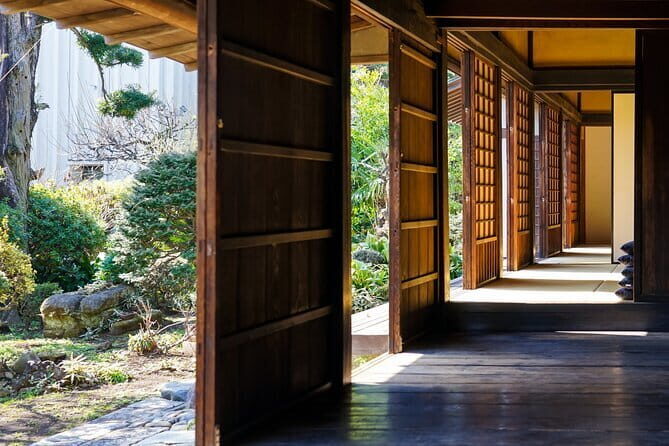
Next comes a big tone shift: Setagaya Daikan’s Residence (also referred to as Setagaya Daikanyashiki). This is a traditional mansion tied to a clan that ruled the area during the Edo era (roughly 1700 to 1900 AD).
What you’re looking for here isn’t just the building itself. It’s the feeling: the sense that you’ve wandered into a person’s home from another time. A guided explanation helps because you’ll understand what makes the Edo-era context important, and why this type of residence matters to understanding how Setagaya developed.
You’ll get about 20 minutes at this stop. That’s enough time to take it in without turning it into a sprint. If you like architecture, cultural heritage, or even just watching how space reflects social order, this is one of the stronger transitions on the route.





Setagaya Local History Museum: Edo-Era Art and Stories Next Door
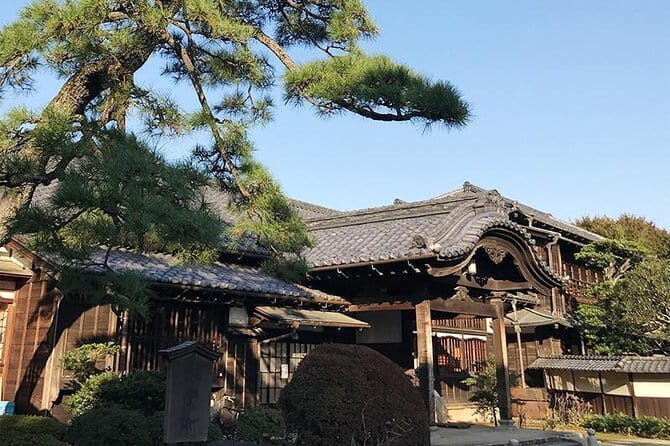
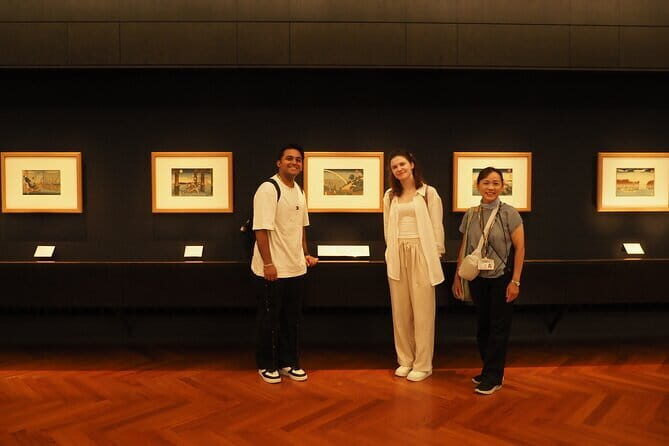
Right beside the Daikan residence is the Setagaya Local History Museum, another free stop. The museum focuses on Setagaya’s history, including Edo-era literature and paintings.
This is valuable because it connects the “past you see” with the “past you understand.” Temples and mansions can look beautiful, but you might not know what to make of them. A museum stop gives you anchors: names, themes, and the local lens.
The time here is also about 20 minutes. That’s important. Many tours cram too much museum time and then lose people. This keeps it focused: you get a clearer sense of Setagaya’s story without turning your day into an exam.
If you’re traveling with kids, this part can also work well because it’s structured. You can aim for a few key topics instead of randomly drifting through exhibits.
Gotokuji Temple: Thousands of Maneki Neko and Zen Calm
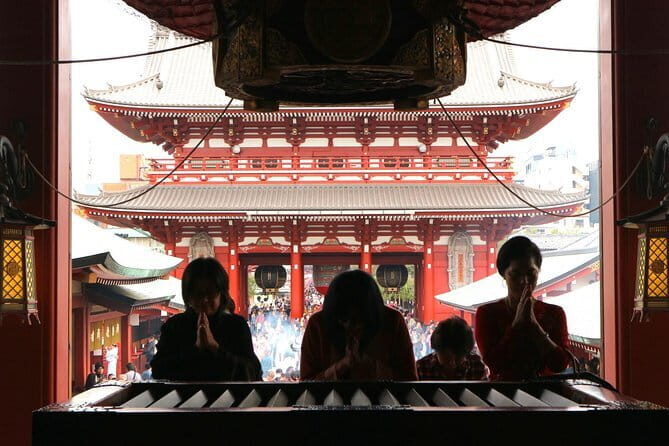
Finally, the main event: Gotokuji Temple, where the famous maneki neko—beckoning cats—are the headline. Gotokuji is described as a Zen sect temple with a history of around 600 years. And the legend connected to maneki neko centers on good luck and success, including in business.
This is where the tour’s pacing pays off. You’ve already walked through shrines and local history. So when you arrive at Gotokuji, you’re not only looking at cats. You’re experiencing a temple space that has a much deeper cultural context.
Your time here is about 30 minutes. That’s a sweet spot: enough to search for different cat scenes, absorb the atmosphere, and take photos without feeling rushed. Also, because this is part of a guided private walk, you can ask questions on the spot—what the cats mean, how the temple functions, and why certain things are arranged the way they are.
If you’re the type who can get overstimulated by busy Tokyo crowds, this temple stop is a good reset. It’s not a shopping mall version of culture. It’s a quiet place that asks you to slow down.
Private Tour Perks: English Guidance and Custom Pace
This is a private tour, which changes everything from the start. You’re not competing with strangers for the guide’s attention. You can ask follow-ups, linger at a shrine detail, and keep moving when your group is ready.
The tour is led by an English-speaking guide, and that matters in Japan where cultural context often lives in the details. Even when you can read signs, you usually won’t grasp the significance fast enough to enjoy it.
You also get the option to go at your own pace and even customize the itinerary to suit your needs. That flexibility is useful if:
- someone in your group wants more shopping time after Shoin Shrine Avenue
- you want to spend a bit longer taking in the Daikan residence setting
- you want extra time on the Gotokuji Temple grounds for photos
If you’re traveling as a family, this structure often plays well. One parent described how a ten-year-old stayed riveted by the guide, which tells you the pacing and explanation can work for mixed ages. (That’s not automatic on every tour, so it’s worth noting.)
Tips to Keep the Day Smooth (and Cheap-ish)
Here’s how to make this tour feel easy and not annoying:
- Bring cash just in case. Some stops don’t accept credit cards.
- Plan snacks or a small lunch stop on your own. Lunch isn’t included, so you’ll want something ready before you get hungry.
- Wear comfortable shoes. You’re walking between multiple sites.
- Expect route changes. If the weather turns bad, the tour may change the means of transportation, destinations, or route.
- Watch for closures. The tour may substitute alternative spots if a location is temporarily closed.
If you’re the kind of traveler who hates uncertainty, you can still keep this under control. The core experience is stable: Setagaya shrines, local history, and Gotokuji Temple. The details may shift, but the overall vibe stays the same.
Should You Book the Gotokuji Tram Tour?
Book it if you want:
- a private, guided day focused on a quieter part of Tokyo
- a cat experience that includes temple culture, not just a quick photo mission
- free-to-enter cultural stops with enough time at each place to actually enjoy them
- an English guide who can explain what you’re seeing along the way
Skip it if:
- you want a heavily scheduled, museum-only day with lots of indoor time
- you hate walking and want minimal foot travel
- you don’t want to carry cash for a few potential card-free spots
My take: this is a strong choice for travelers who value calm pacing and local context. You’re paying for guidance, routing, and the chance to see Gotokuji without turning it into a frantic scavenger hunt.
FAQ
How long is the Gotokuji Tour?
It runs for about 3 hours 30 minutes (approx.).
Where do I start and where do I end?
You start at Sangenjaya Station (2 Chome-15 Taishido, Setagaya City) and end at Gotokuji Station (1 Chome-43 Gotokuji, Setagaya City).
Is this tour private?
Yes. It’s a private tour/activity, and only your group participates.
Are admission fees included?
Admission fees are listed as 0 JPY for the stops mentioned, and the tour notes that estimated costs are mostly transportation. Some visited spots may have payment limitations like not accepting credit cards.
Do I need cash?
It’s a good idea. The tour notes that some spots we’ll visit do not accept credit cards, so bring cash.
Is lunch included?
No. Lunch is not included in this tour.
What if the weather is bad or a place is closed?
If the weather is bad, transportation and routes may change. If a destination is temporarily closed, the tour may visit alternative spots.
Do I get a mobile ticket?
Yes. The experience includes a mobile ticket.
Can I cancel for free?
Yes. You can cancel up to 24 hours in advance for a full refund.
Just Your Group: Private Options



More Tours in Tokyo

More Tour Reviews in Tokyo



Fresh reviews from around Tokyo






Private, compared.
 ★ 5.0Tokyo 6hr Private Tour with Government-Licensed GuideFrom $1553,902 reviews
 ★ 5.0Private Tour to Mt. Fuji and Hakone (Fully Licenced Operator)From $4971,910 reviews
 ★ 5.0Tokyo Customized Private Tour (Must See Places in 1 Day)From $1451,499 reviews
 ★ 4.9Mount Fuji Full-Day Private Tour from Tokyo (Customizable)From $3931,470 reviews
 ★ 4.8Private City Highlights Tour with Local GuideFrom $1061,433 reviews
 ★ 5.0Private Custom Tour: Tokyo in a DayFrom $1591,432 reviews
 ★ 5.0Tokyo 4hr Private Tour with Government-Licensed GuideFrom $1091,394 reviews
 ★ 5.0Tokyo Customized Private Tour: See Top Attractions in 1 DayFrom $1451,351 reviews