
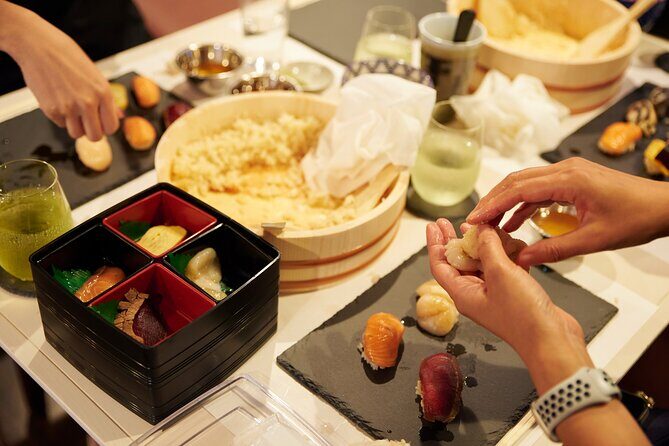
Reviewed · SUSHI MAKING CLASSES
Private Sushi Making with a Sushi Master
Sushi lessons, in a Michelin-star setting. In Tokyo, this private workshop places you in a Michelin-starred sushi restaurant for hands-on practice with a sushi master, plus a short quiz and a fun photo shoot. In about 1 hour 45 minutes, you’ll make three classic styles of sushi: maki, nigiri, and gunkan.
Two things I love: I really liked how the instructor team, including Rin and Chef Riku, guides you step-by-step with clear teaching and real technique. I also like that the ingredients are high quality and you eat a full meal you helped create, not just a tiny bite.
One drawback to plan around: timing matters because if you don’t contact them within 5 minutes after the scheduled start time, your reservation can be treated as a no-show with no refund.
In This Review
- Key Things You’ll Really Care About
- A Michelin-Starred Sushi Kitchen You Can Actually Touch
- What You’ll Make: Nigiri, Maki, and Gunkan
- Nigiri: the clean, classic bite
- Maki: rolls that depend on technique
- Gunkan (battleship-style): the ingredient-topped lesson
- Inside the 1-Hour-45-Minute Workshop Flow
- Step one: sushi basics and history, kept short
- Step two: a quiz that makes you pay attention
- Step three: sushi master demonstration
- Step four: hands-on making, with personalized coaching
- Step five: photos and your meal
- Your Sushi Master Experience: Rin and Chef Riku Style Guidance
- Meeting Point in Nishiazabu: Getting There Without Stress
- Allergy-Friendly Sushi That Still Keeps Standards
- Price and Value: Why $130.81 Can Make Sense
- Who This Workshop Fits Best
- Should You Book This Sushi Workshop?
- FAQ
- How long is the private sushi making workshop?
- What kinds of sushi will I learn to make?
- Is this a private experience?
- Can dietary restrictions be accommodated?
- Where do I meet for the workshop?
- What happens if I’m late?
- How does cancellation work?
Key Things You’ll Really Care About
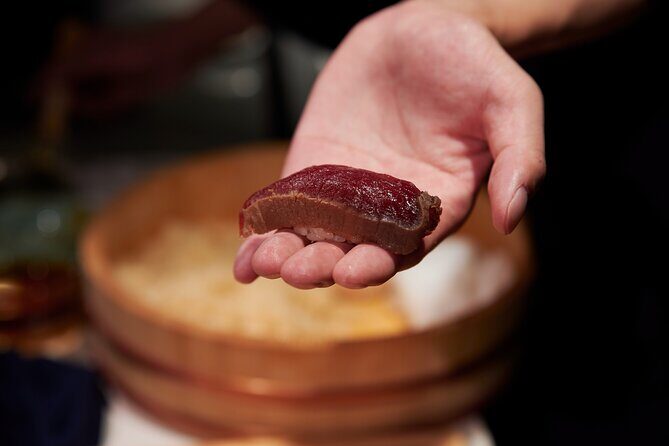
- Michelin-starred restaurant setting: You learn in a serious kitchen, not a watered-down demo space.
- Three sushi styles, not one: nigiri, maki, and gunkan each teach a different skill.
- Private attention for your whole group: the pace and explanations can stay focused on you.
- Quiz + sushi history, kept practical: it’s not just facts; it supports how you taste and season.
- Photo time with your creations: you’ll leave with something fun and shareable.
- Dietary needs are handled: vegetarian, vegan, gluten-free, and other restrictions can be accommodated.
More private options with your own guide
- Tokyo 6hr Private Tour with Government-Licensed Guide★ 5.0 · 3,902 reviews
- Private Tour to Mt. Fuji and Hakone (Fully Licenced Operator)★ 5.0 · 1,910 reviews
- Tokyo Customized Private Tour (Must See Places in 1 Day)★ 5.0 · 1,499 reviews
A Michelin-Starred Sushi Kitchen You Can Actually Touch
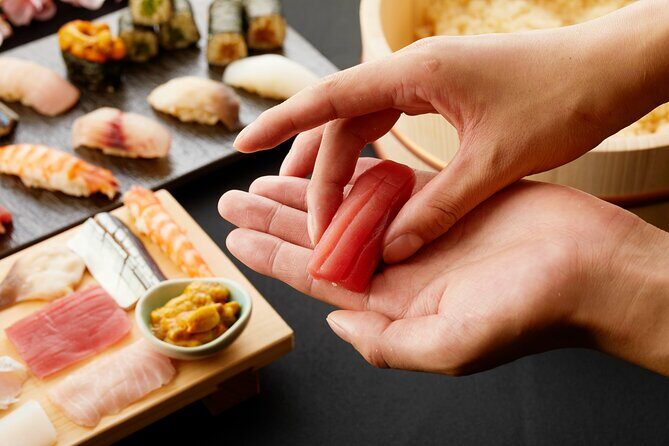
This isn’t one of those Tokyo food experiences where you watch from across the room while someone else does the work. The big appeal here is the setting: you’re learning inside a Michelin-starred sushi restaurant. That matters because the standards are real. The way rice is treated, how fish is handled, and how ingredients are kept in pristine condition all reflect what you’d expect in a top dining room.
Also, the experience is genuinely structured for learning. You start with a short introduction to sushi’s background, then you get a quiz moment that helps you lock in what matters. After that, you see a demonstration, and then you get hands-on.
The private format is where it gets especially good. You’re not competing with another group for attention, and you’re not stuck guessing what to do next. The instructor can correct your grip, your knife angle, your assembly order, and even how you plate.
One more detail I appreciate: you come hungry. The workshop ends with a freshly prepared meal made from what you learn and what the sushi master selects for you.
What You’ll Make: Nigiri, Maki, and Gunkan
You’ll make three types of sushi, and the mix is smart. Each one teaches a different part of the craft.
Nigiri: the clean, classic bite
Nigiri is the style most people recognize fast: rice with a slice of fish on top. This is where you learn how rice texture and fish placement work together. You’re not just building a pretty plate. You’re practicing how the sushi should feel in one bite, including how the rice supports the fish instead of overpowering it.
Maki: rolls that depend on technique
Maki is traditional sushi rolls wrapped in seaweed. This is where patience shows up. If your filling is uneven, the roll gets messy. If your rolling is too tight or too loose, the texture changes. You’re building muscle memory for how to assemble without turning the whole thing into a sushi-shaped stress ball.





Gunkan (battleship-style): the ingredient-topped lesson
Gunkan is the battleship-style sushi wrapped with seaweed and topped with various ingredients. It teaches you how to manage something different: seaweed as a container. You’re learning how to keep toppings in place while respecting the balance of flavors.
A practical note: all ingredients are carefully selected and prepared to pristine condition by your sushi master. That’s important because it means the learning is happening with the right raw materials, not whatever happens to be available that day.
Inside the 1-Hour-45-Minute Workshop Flow
The workshop runs about 1 hour 45 minutes, and the timing is paced so you’re not rushed but you also don’t sit forever waiting. Here’s how the flow feels, step by step.
Step one: sushi basics and history, kept short
You begin with an introduction to sushi history. This part is brief, but it sets up why certain choices are made in modern sushi. You’ll also get a sense of what to notice as you eat—rice feel, fish handling, and why seasoning isn’t just about adding flavor.
Step two: a quiz that makes you pay attention
Next comes a quiz. It can sound a little school-like on paper, but in practice it helps you remember what you just heard and what you’re about to do. I like quizzes in food classes when they connect to technique, and this one does.
Step three: sushi master demonstration
Then you watch the sushi master demonstrate. This is where you’ll see how the steps connect: rice preparation habits, ingredient placement, and the assembly order. Watch how they handle the rice. Watch how they position fish. Those details matter more than people expect.
The value here is that the demonstration sets a clear template for you to copy.
Step four: hands-on making, with personalized coaching
Now you make the sushi yourself—three types across the session. This is the real payoff. If you’ve ever tried to copy sushi at home, you already know the hard part isn’t the recipe. It’s the small physical skills: pressure, alignment, timing, and restraint.
Because it’s private, you’re more likely to get correction while the skill is still fresh.
Step five: photos and your meal
The final chunk gives you time to take photos and enjoy your handmade sushi. You’re also eating a freshly prepared meal, and one review mentioned soup and green tea as part of the experience. That fits the pattern of a proper meal, not a snack between activities.
Your Sushi Master Experience: Rin and Chef Riku Style Guidance
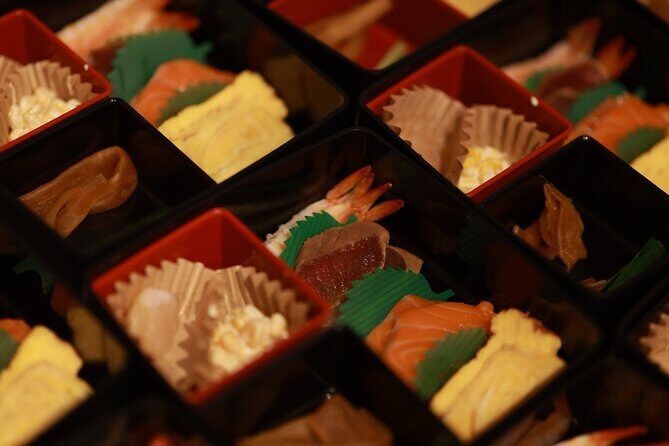
The best sushi classes don’t just teach recipes. They teach judgment—how to notice quality and how to assemble in a way that respects the ingredients.
In this workshop, the team includes people like Rin and Chef Riku. From the way the class is described, their teaching focuses on precision and passion. Chef Riku, in particular, gets attention for showing careful technique and precision while keeping things enjoyable.
You’ll also notice the group stays upbeat. One thing I always look for in a class is whether the instructors can make the room feel comfortable. Here, you’re guided with warmth, and the experience includes laughter and fun without sacrificing standards.
And since the workshop is designed for beginners as well as curious food lovers, you don’t have to already know how sushi should look. You’re there to learn the method—and then you leave with a clearer mental map of how sushi comes together.
Meeting Point in Nishiazabu: Getting There Without Stress
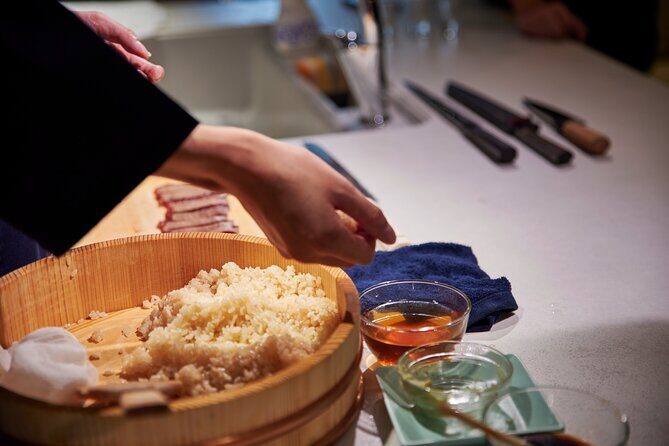
You meet at A-PULSE AZABU STUDIO in Nishiazabu, Minato City (address provided: 3-chōme-8-18 Nishiazabu, Tokyo 106-0031). The good news is it’s near public transportation, so you can plan around train lines and walk a few minutes rather than relying on a complicated route.
The activity ends back at the meeting point, which makes your evening planning easier. No long detours or “now go find your own way” confusion.
What I’d do if you’re trying to be calm: aim to arrive early enough to settle in before the start time. Sushi class timing can be strict, and the kitchen rhythm depends on everyone showing up ready.
Allergy-Friendly Sushi That Still Keeps Standards
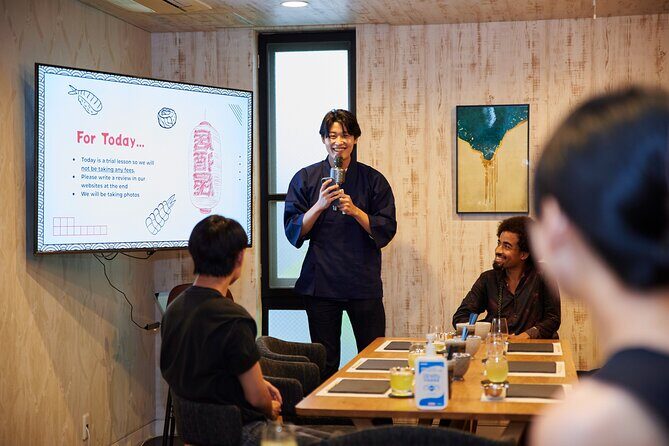
If you have dietary restrictions, this is one of the better options in Tokyo food workshops because the experience notes that dietary needs can be accommodated. That includes allergy-friendly adjustments and options such as vegetarian, vegan, gluten-free, and other restrictions.
This matters because sushi is ingredient-dependent. Seaweed, fish, rice seasoning, and sauces can all affect whether a dish can be made safely and comfortably. When a class explicitly supports adjustments, you don’t need to gamble on improvising dinner once you’re already in the restaurant.
Still, I recommend you plan ahead: share your restrictions during booking so the sushi master can select ingredients that match your needs while keeping the workshop focused and fun.
Price and Value: Why $130.81 Can Make Sense
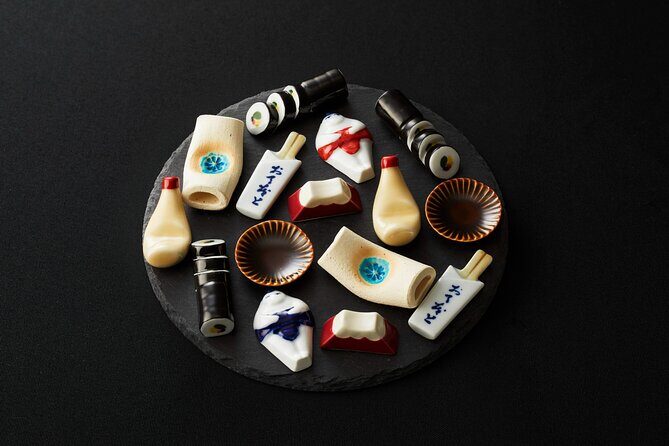
The price is $130.81 per person, and the value isn’t just that you get to eat sushi. You’re getting a private lesson in a Michelin-starred restaurant environment, with three distinct sushi styles, instruction from a sushi master, and the ingredients handled to pristine condition.
Think about what’s included:
- Instruction for nigiri, maki, and gunkan
- A quiz and short sushi history intro
- Demonstration plus hands-on practice
- A meal at the end made from what you create
- Time for photos with your sushi
In Tokyo, paying for a high-quality meal is already a cost. Paying for a private, skill-based workshop in a top restaurant adds real education. You’re not just buying food—you’re buying technique, confidence, and a chance to understand why sushi tastes the way it does.
So the price feels more reasonable if you want something you can actually use later, not only a one-time dining moment. If you’re the type who likes cooking, food science, or even just wanting to order sushi smarter after learning what you made, this tends to land well.
Who This Workshop Fits Best
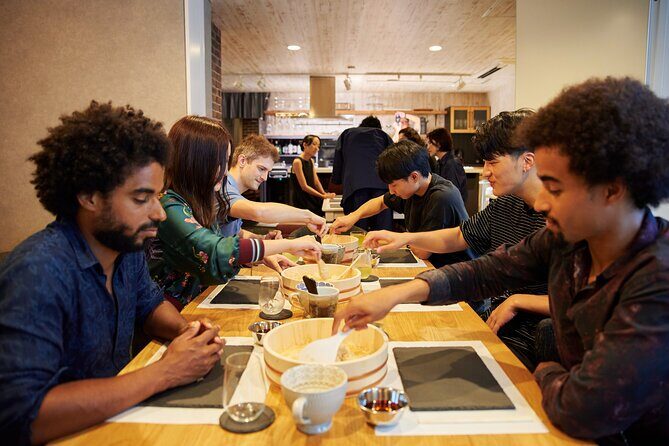
This sushi-making class fits best if you fall into one of these buckets:
- You want a hands-on Tokyo activity that doesn’t feel touristy or rushed.
- You like private, step-by-step attention instead of competing in a group setting.
- You want to learn multiple sushi styles in one sitting.
- You’re traveling solo or as a pair and still want a tailored experience.
- You need dietary accommodations and want them handled as part of the program.
It may be less ideal if you’re extremely short on time, or if you know you’ll struggle with punctuality. The kitchen starts at the scheduled time, and the experience has a no-show rule if there’s no contact after a short window.
Should You Book This Sushi Workshop?
If you want Tokyo food that’s interactive and skill-focused, I’d book it. The combination of a Michelin-starred setting, private sushi master coaching, and learning three different styles gives you more than a meal. It gives you an experience you can repeat at home with better results because you’ve practiced the actual technique.
I’d only hesitate if you’re likely to arrive late and can’t confidently message the team right away. Also, if you’re strictly looking for a longer sightseeing day, remember this is concentrated and ends right after the meal and photos. It’s best as a dedicated food highlight.
If you’re debating between eating great sushi and learning how it’s made: do the workshop. You’ll still get sushi enjoyment, but you’ll also leave with something lasting.
FAQ
How long is the private sushi making workshop?
It runs for about 1 hour 45 minutes.
What kinds of sushi will I learn to make?
You’ll make three types: nigiri, maki, and gunkan (battleship-style).
Is this a private experience?
Yes. It’s private, meaning only your group participates.
Can dietary restrictions be accommodated?
Yes. The experience states it is allergy-friendly and can accommodate dietary restrictions such as vegetarian, vegan, and gluten-free.
Where do I meet for the workshop?
You start at A-PULSE AZABU STUDIO in Nishiazabu, Minato City, Tokyo, and the activity ends back at the meeting point.
What happens if I’m late?
If you don’t contact them within 5 minutes after the scheduled start time, your reservation can be treated as a no-show and no refund will be provided.
How does cancellation work?
You can cancel for free up to 24 hours in advance for a full refund. If you cancel less than 24 hours before the start time, the amount paid will not be refunded.
Just Your Group: Private Options



More Tour Reviews in Tokyo



Fresh reviews from around Tokyo






Sushi Making Classes, compared.
 ★ 5.0Sushi Making Tokyo Roll and Authentic Japanese Sushi ClassFrom $593,971 reviews
 ★ 5.0Tokyo Sushi Making Class in Tsukiji with Professional ChefFrom $491,177 reviews
 ★ 5.0Tsukiji Fish Market Guided Tour and Sushi Making with Pro ChefFrom $104775 reviews
 ★ 4.9Tsukiji Fish Market Sushi Making Class with Pro ChefFrom $63506 reviews
 ★ 5.0Tokyo Tsukiji Fish Market Tour and Sushi Making LessonFrom $99390 reviews
 ★ 5.0Popular Sushi Making Class near Tokyo TowerFrom $87229 reviews
 ★ 5.03-Hour Small-Group Sushi Making Class in TokyoFrom $72166 reviews
 ★ 5.0Tokyo Sushi Making Experience & Japanese Cooking ClassFrom $59150 reviews
Browse the lists this tour appears in