
Reviewed · ASAKUSA TOURS
Asakusa: Kitchen knife store visits after history tour
Knives and temples can fit into one good afternoon. This is a compact Asakusa walk that uses a guide to connect the neighborhood’s past to the shopping street where cooks buy their tools. You start with iconic sights and history, then shift into Kappabashi Street where Japanese kitchen knives take center stage.
I like that the day is paced like a plan, not a scavenger hunt. You get an organized route through Asakusa’s landmarks, and you’re also not left alone with hard-selling store clerks—your guide helps you sort what matters before you buy.
One heads-up: the tour runs rain or shine, and the knife shopping time is a focused block, so come ready with at least a rough idea of what you want.
In This Review
- Key points before you go
- Where You Meet: Easy to Find, No Hotel Pickup Needed
- Orientation First: Asakusa Pier Stops and a Quick History Map
- Kaminarimon to Nakamise: Classic Asakusa, With Context and Timing
- Hōzōmon Gate and Sensō-ji: Why the Temple Visit Matters Before You Shop
- Kappabashi Street Knife Shopping: How to Buy With Real Guidance
- How long is the shopping block?
- The sweet snacks stop you’ll appreciate
- Headsets and Small Groups: You Hear the Guide, Not the Crowd
- Price and Value: What You’re Actually Paying For
- Rain Plan and Weather Reality
- Who Should Book This Tour (and Who Might Not)
- Should You Book This Asakusa Knife Store + History Walk?
- FAQ
- How long is the tour?
- Where does the tour meet?
- What’s included in the tour?
- Are there any stops besides the knife shops?
- Is this tour rain or shine?
- What is the group size?
- Is the tour offered in English?
- Do I need hotel pickup?
- What if my group is three or more people?
- Is there a cancellation policy?
Key points before you go

- Small group (up to 8) means you can actually ask questions at the stores.
- English-speaking certified guide keeps the history and shopping practical, not lecture-y.
- Headset system for groups of 3+ helps you hear instructions clearly from a distance.
- Senso-ji Temple plus Asakusa history gives you context for what you’re seeing.
- Kappabashi Street knife shops are concentrated, so you can compare options efficiently.
- Japanese sweet snacks included help break up the walking time.
More mornings around Senso-ji and the old town
- Tokyo: Japanese Dance Cabaret Theater Asakusa-Kaguwa Ticket★ 4.8 · 2,270 reviews
- Tokyo: Asakusa Walking Tour with Sensoji Temple Visit★ 4.8 · 1,583 reviews
- Tokyo Asakusa Rickshaw Tour★ 5.0 · 1,375 reviews
Where You Meet: Easy to Find, No Hotel Pickup Needed
This tour starts at a Burger King in Asakusa—right in front of the restaurant next to Asakusa Subway Station Exit 4 (Ginza Line). It’s an advantage if you don’t want to wait around for pickup. You show up, the group gathers, and you’re moving.
Because there’s no hotel pickup or dropoff, plan on arriving a little early and taking a quick look at the street level before the group departs. If you’re navigating Tokyo subway exits, this meeting point is straightforward: you just need to hit Exit 4 and look for the Burger King.
Orientation First: Asakusa Pier Stops and a Quick History Map
The route begins with a short guided sightseeing walk around the Tokyo Cruise Asakusa Pier area. Don’t expect this to be about boats. Instead, it’s a smart “get your bearings” stop. You’re placed right where Asakusa’s riverside life and city layout connect, which makes the rest of the walk feel less random.
Next comes the Asakusa Culture Tourist Information Center. This is one of those stops that seems small on paper, but it matters in real life. A good guide uses it to set the stage—so later, when you’re standing at gates and temples, you understand what you’re looking at and why it matters to Asakusa’s identity.
Two practical reasons this early orientation helps:
- You’ll know where you are in the neighborhood, so you move faster during busier lanes.
- You can ask better questions later, especially when the shopping part starts.
Kaminarimon to Nakamise: Classic Asakusa, With Context and Timing
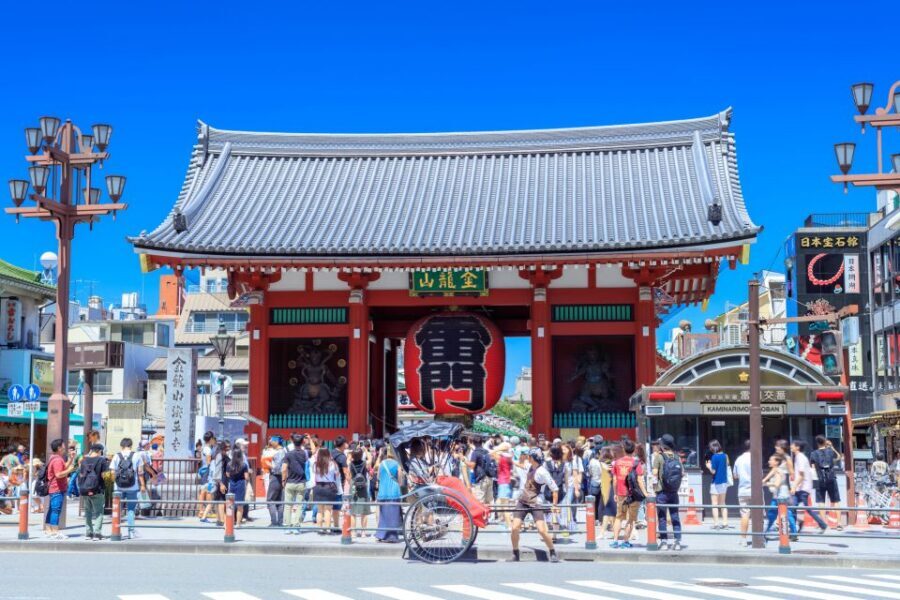
The tour then heads to Kaminarimon, the famous Thunder Gate. This is a big-name stop, yes—but the value here is how the guide frames it. With an organized route, you’re not just snapping photos. You’re getting the neighborhood story while you’re standing in the exact spot where that story shows on the street.
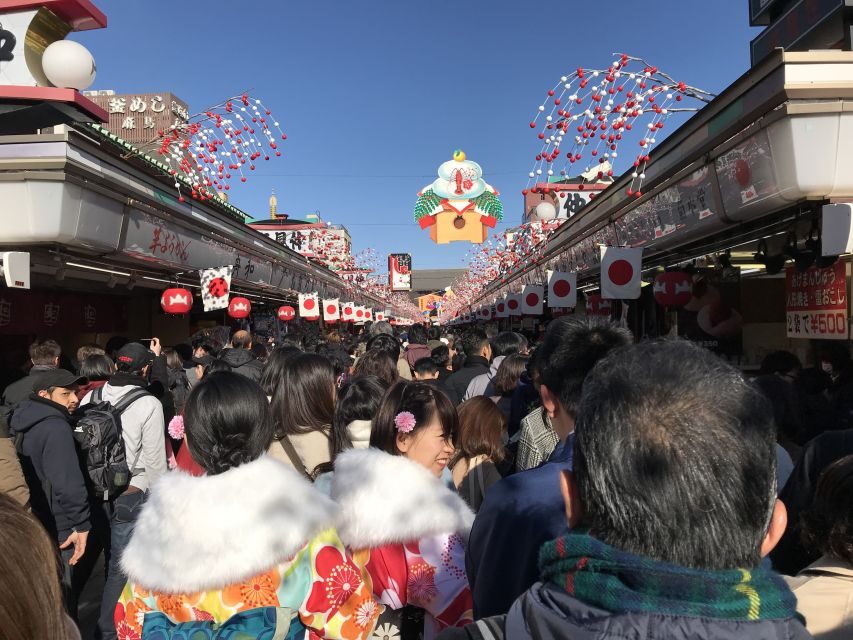
Then you walk through Nakamise Shopping Street for about 30 minutes. This is where Asakusa’s shopping energy shows up immediately. Stalls and food smells make it tempting to wander, but the tour keeps you on track. That’s a good thing if your goal is knives afterward, because time disappears quickly when you start browsing everything at once.
A balanced way to handle Nakamise:
- Treat it as a “see what this area sells” stop.
- If you want to buy snacks or souvenirs, do it quickly, then rejoin the group.
- Save your serious spending for the knife street, where your guide can help you compare options.
Hōzōmon Gate and Sensō-ji: Why the Temple Visit Matters Before You Shop
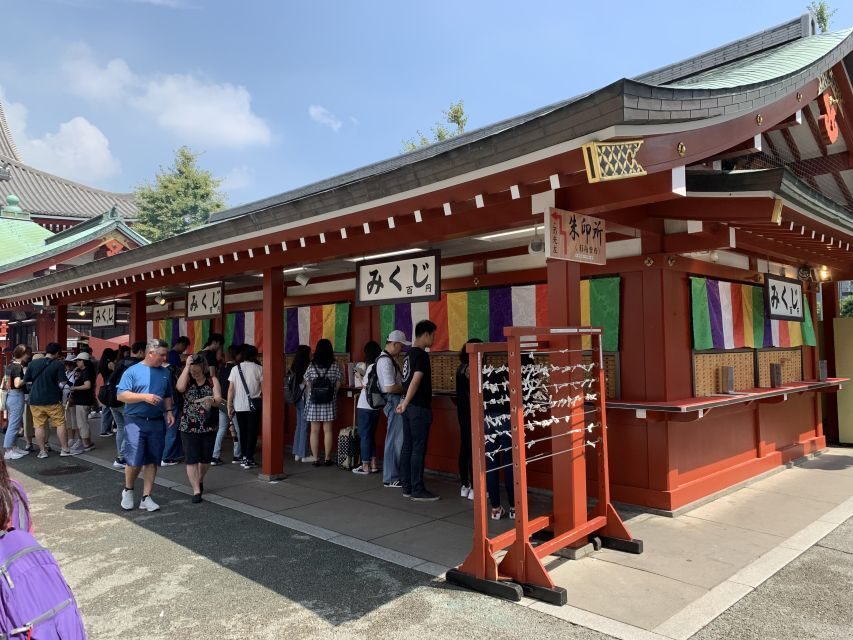
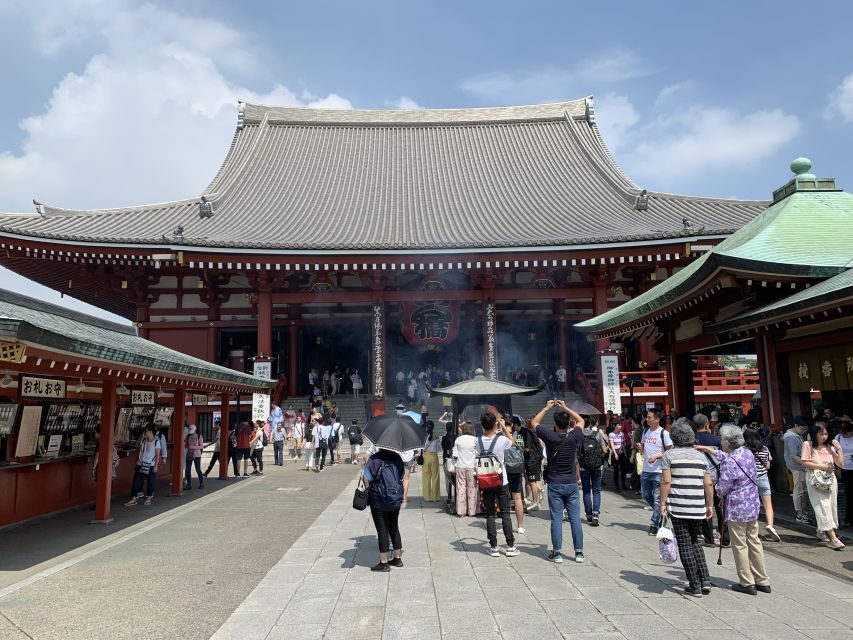
The walk continues to the Hōzōmon Gate, then to Sensō-ji Temple. Sensō-ji is noted as the oldest temple in Tokyo, and that fact alone raises the stakes—this isn’t just another stop on a list.
What I like about putting the temple visit before the shopping is the mental reset. Knife shopping can turn into a numbers game fast: price, steel, brands, stories from sales staff. Standing at Sensō-ji with the guide’s history perspective helps you appreciate the cultural side of what you’re buying: Japanese kitchen tools aren’t just merchandise. They’re tied to craft traditions and daily life.
You also get enough guided time to understand what you’re seeing without feeling rushed. And since the tour is rain or shine, the guide’s pacing helps keep the experience moving even if weather slows down foot traffic.
More paths into old Tokyo

Kappabashi Street Knife Shopping: How to Buy With Real Guidance
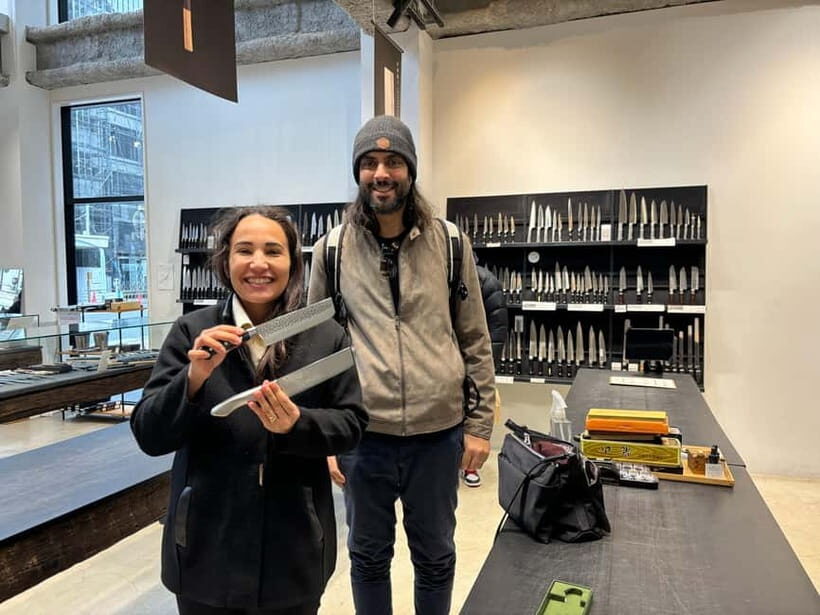
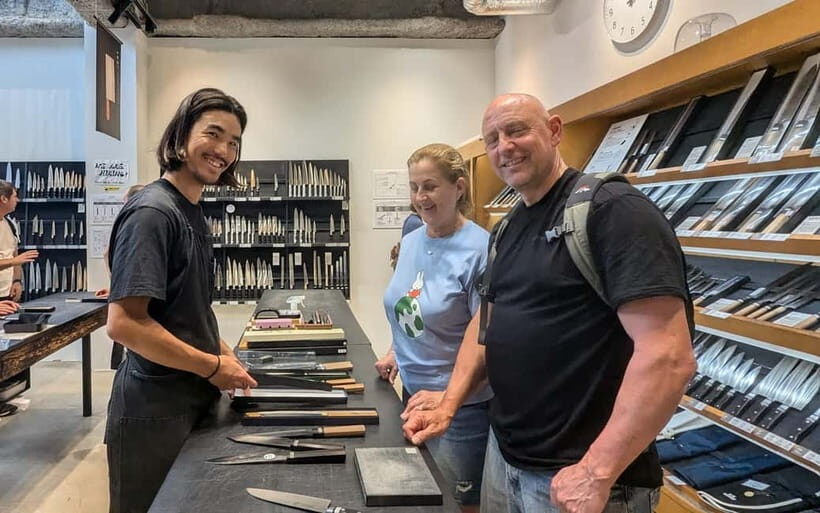
After the history portion, you head to Kappabashi Street, a shopping lane packed with stores that supply restaurant operators. This is where the tour earns its name. The street has dozens of shops, and several focus specifically on kitchen knives. Since the product types are concentrated, you’re in a better position to compare than if you wandered on your own.
Here’s the key advantage: you’re not stuck translating every pitch from a store clerk. The guide provides candid, neutral feedback while you listen to sales talk. That matters because knife stores can be convincing. You need help sorting what’s genuinely relevant to your needs versus what’s mainly a sales story.
Your guide also helps with direction—meaning you’re more likely to end up in the right shops rather than walking in circles. In a place like Kappabashi, that’s real value. You’ll spend less time guessing and more time comparing.
How long is the shopping block?
You get about one hour on Kappabashi Street. That’s enough for many people to:
- see multiple knife-focused stores,
- ask questions,
- and make a decision you can carry home with confidence.
If you’re a serious knife collector, one hour might feel short. But if you want a great first purchase, or you’re buying one high-quality knife to use at home, this time window is a practical sweet spot.
The sweet snacks stop you’ll appreciate
Japanese sweet snacks are included. They’re not there to turn the tour into a food crawl. They help you keep energy up during the walking, especially if you’re pairing this with other Tokyo stops later.
Headsets and Small Groups: You Hear the Guide, Not the Crowd
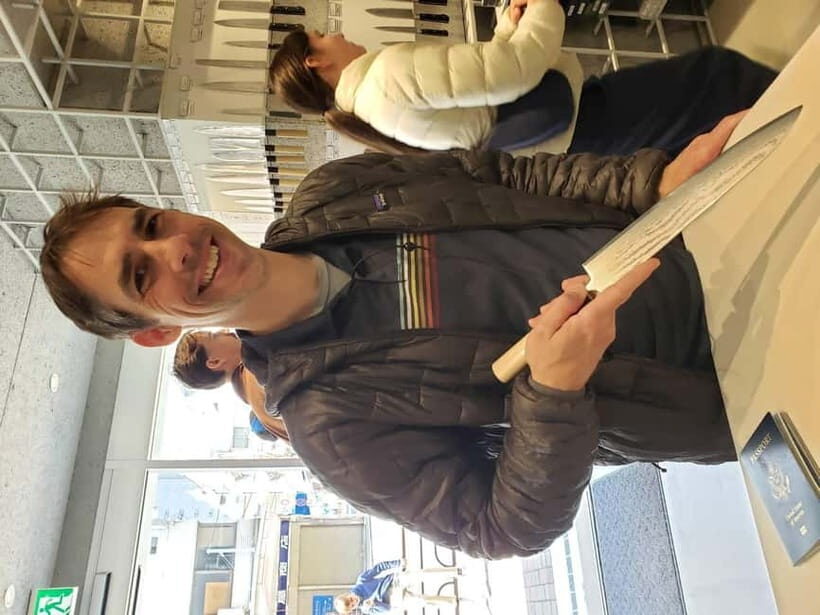
The tour caps at 8 participants, which changes the whole vibe. In larger groups, the guide’s explanations can blur into “background noise.” Here, you’re close enough to ask follow-ups, and you’re also more able to stick together without losing time.
For groups of three or more, you use an earphone guide system. That’s a big deal on busy streets. Even if the shop doorway blocks sound or the group spreads slightly, you can still catch instructions clearly from a distance. It’s a quiet quality-of-life upgrade that makes the tour feel smoother.
Price and Value: What You’re Actually Paying For
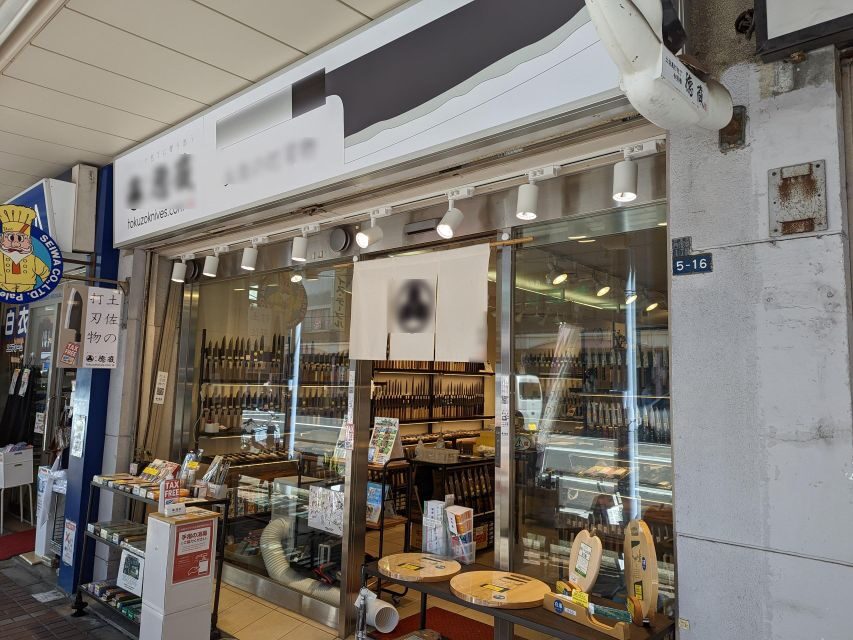
At $77 per person for about 210 minutes (a bit over three hours), you’re paying for more than entry-level sightseeing. You’re buying four things:
- a structured Asakusa history walk that sets context,
- an English-speaking certified guide who keeps the route efficient,
- access to multiple knife-focused stores without random wandering,
- and included Japanese sweet snacks.
The “value math” is strongest if you care about buying well. The guide’s neutral input can prevent costly missteps, like spending money on something that doesn’t match how you cook (or what feels right in-hand). Also, the time saved by going “right to the right stores” is not trivial. Kappabashi is packed. Efficient navigation is part of the product.
If you’re not planning to buy a knife, the tour can still be fun for the temple/history portion—but the knife-shopping component is the reason this experience costs more than a basic walking tour.
Rain Plan and Weather Reality
Because the tour runs rain or shine, you should treat it as a walking tour first. Bring a small umbrella or a light rain layer. Wet pavement can make surfaces slick near crowded lanes, so comfortable shoes matter.
The good news: the guide’s route is fixed, and the headset system helps you stay together even when the pace slows. The day is designed to keep moving.
Who Should Book This Tour (and Who Might Not)
You’ll likely love this experience if:
- you want a guided Asakusa history route instead of wandering solo,
- you’re curious about Japanese kitchen knives and want expert shop guidance,
- you want a small group size and clear English audio,
- you plan to buy at least one item (or seriously consider it) rather than just look.
You might want to consider a different option if:
- you’re shopping with no intention to buy and prefer purely sightseeing,
- you need a longer dedicated time block for shopping,
- or you’re not comfortable buying while someone else is actively guiding store comparisons.
Should You Book This Asakusa Knife Store + History Walk?
I think it’s a strong booking if your priorities are context + practical shopping. You get Senso-ji and Asakusa’s story first, then you shift into the knife street with guidance that helps you evaluate what you’re hearing. The small group and headset system make it feel controlled and easy to follow, even when sidewalks get busy.
If you’re after value, the big win is simple: you’re not left alone at a knife counter trying to decode sales talk. And you’re not spending your limited time wandering randomly through Kappabashi.
If that sounds like your kind of afternoon, book it and show up with at least a rough idea of what you want to buy.
FAQ
How long is the tour?
The duration is 210 minutes.
Where does the tour meet?
Meet in front of Burger King Asakusa Azumabashi next to Exit 4 of Asakusa subway station (Ginza line, G19).
What’s included in the tour?
You get an English-speaking certified guide, an audio/guide headset system for groups of 3 or more, and Japanese sweet snacks.
Are there any stops besides the knife shops?
Yes. The tour includes an Asakusa history walk with stops such as Kaminarimon, Nakamise Shopping Street, Hōzōmon Gate, and Sensō-ji Temple before heading to Kappabashi Street.
Is this tour rain or shine?
Yes, it runs rain or shine.
What is the group size?
It’s limited to a small group of up to 8 participants.
Is the tour offered in English?
Yes, the language is English, with an English-speaking guide.
Do I need hotel pickup?
No. Hotel pickup or dropoff is not included, so you’ll need to get to the meeting point yourself.
What if my group is three or more people?
For groups of three or more, you use an earphone guide system so you can hear the guide clearly from a distance.
Is there a cancellation policy?
Free cancellation is available up to 24 hours in advance for a full refund.
More Tours in Tokyo





More Tour Reviews in Tokyo




Around Senso-ji: More Asakusa Picks

Fresh reviews from around Tokyo






Asakusa Tours, compared.
 ★ 4.8Japanese Dance Cabaret Theater Asakusa-Kaguwa TicketFrom $492,270 reviews
 ★ 4.7Meiji Shrine, Asakusa, Skytree Bus Tour and CruiseFrom $1221,986 reviews
 ★ 4.8Asakusa Walking Tour with Sensoji Temple VisitFrom $221,583 reviews
 ★ 5.0Tokyo Asakusa Rickshaw TourFrom $421,375 reviews
 ★ 4.5Tokyo Panoramic 1 Day: Meiji Shrine, Asakusa, Odaiba and SKYTREE®From $851,222 reviews
 ★ 4.8Samurai Ninja Museum Asakusa: Samurai Sword Lesson & TourFrom $63306 reviews
Asakusa Sightseeing Tour by RickshawFrom $35195 reviews
Asakusa Kimono Dressing and Matcha ExperienceFrom $56173 reviews
★ 4.8Samurai Ninja Museum Asakusa: Samurai Sword Lesson & TourFrom $63306 reviews
Asakusa Sightseeing Tour by RickshawFrom $35195 reviews
Asakusa Kimono Dressing and Matcha ExperienceFrom $56173 reviews
Browse the lists this tour appears in