
Reviewed · ASAKUSA TOURS
Asakusa: Japanese kitchen knife store visits after history tour
Asakusa feels like it runs on stories. This tour ties a guided walk through classic temple-area sights to hands-on shopping for Japanese kitchen knives in the same neighborhood where chefs stock up. It’s built for a small group, so the guide can keep you on track while you bounce from landmark to landmark.
What I like most is the mix of senses: first you get the meaning behind places like Senso-ji, then you put that knowledge into action by shopping at Kappabashi Street. I also really appreciated how the guide support is human-scale—on different departures I saw guides such as Akiko, Kay, Sue, and Amy lead with clear explanations and help with knife choices that actually fit what you cook.
One watch-out: if your only goal is buying knives, the history walk may feel like extra time at first. The good news is that the guide can often tailor the emphasis toward shopping, but you should still expect some temple-area wandering before you reach the knife shops.
In This Review
- Key things to know before you go
- A Morning in Asakusa That Ends at Kappabashi Knife Street
- Why the small-group format makes the history part easier
- Sumida Park to Kaminarimon: learning the neighborhood fast
- Nakamise Shopping Street and Hozomon: where worship meets commerce
- Senso-ji and Asakusa Shrine: two religions side by side
- Denboin Garden and the Rokku area: a calmer step back
- Kappabashi Street Kitchen Town: how the knife shopping part actually helps
- Price and time: is $78.18 good value?
- Who this tour fits best (and who may want a different plan)
- Tips to make the most of your knife shopping stop
- Should you book the Asakusa history-and-knife tour?
- FAQ
- Where does the tour start and end?
- How long is the experience?
- What time does it start?
- Is this a small group tour, and do I get help hearing the guide?
- Which places are included in the walking portion?
- Are admission tickets included?
- Do they pick you up at your hotel?
- Can most people join, and what’s the cancellation policy?
Key things to know before you go
- Small group (max 8) means you’re not lost in a crowd when questions pop up
- Headsets for groups of 3+ help you keep up even when the street gets busy
- Temple-area route first gives context for what you’re seeing, then you shift to practical shopping
- Kappabashi Street knife shopping focuses on the tools restaurant operators look for
- Most stops are free, but Sumida Park lists an admission ticket not included
More mornings around Senso-ji and the old town
- Tokyo: Japanese Dance Cabaret Theater Asakusa-Kaguwa Ticket★ 4.8 · 2,270 reviews
- Tokyo: Asakusa Walking Tour with Sensoji Temple Visit★ 4.8 · 1,583 reviews
- Tokyo Asakusa Rickshaw Tour★ 5.0 · 1,375 reviews
A Morning in Asakusa That Ends at Kappabashi Knife Street
This is the kind of Tokyo half-day outing that makes you feel like you’re doing two things at once, without wasting time. You start in Asakusa’s temple zone—walking past the big-name sights—and then, when your feet are warmed up and your brain is in the right gear, you finish at Kappabashi Street, where kitchen tools are the main event.
The timing matters. The tour runs about 3 hours 30 minutes, starting at 9:30 am. That’s long enough to get a meaningful history route and still leave you with energy to explore on your own afterward.
Why the small-group format makes the history part easier
You don’t just get a generic guided loop here. The group size is capped at 8 travelers, which changes the whole feel. In a big group you spend more time watching for where to stand than listening. In a small one, you can actually follow the guide’s rhythm and ask practical questions—especially once you get near the knife shops.
If your group is 3 or more, you’ll also have headsets to hear the guide clearly even from farther away. That’s a small feature, but it’s huge in Japan’s busy shopping streets where conversations get swallowed quickly.
The guide also gets room to adjust the pace. One departure involved a couple who cared mainly about knives, and the guide shortened the history and area walking to match that focus. That kind of flexibility is a real value: you’re not stuck in a rigid script if your priorities differ.
Sumida Park to Kaminarimon: learning the neighborhood fast
The tour kicks off at Sumida Park, where you start connecting the physical setting to the stories people tell about Senso-ji. The bridge area here is tied to the Sumida River’s long role in Tokyo life, including the idea that Senso-ji’s story traces back about 1,400 years to the river’s importance. It’s not the kind of detail you’ll easily pick up just by looking at photos.
Next comes the Asakusa Culture Tourist Information Center, where you spend time at the top-floor observation deck. The point isn’t a fancy viewpoint for its own sake—it’s to help you get your bearings. Once you see the area layout from above, the street turns and sightlines at ground level make more sense.
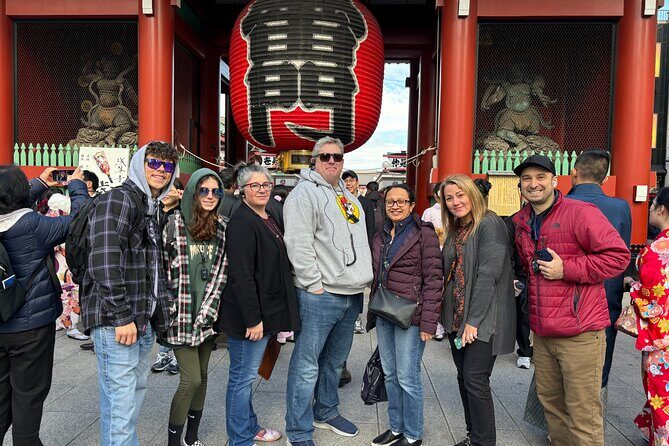
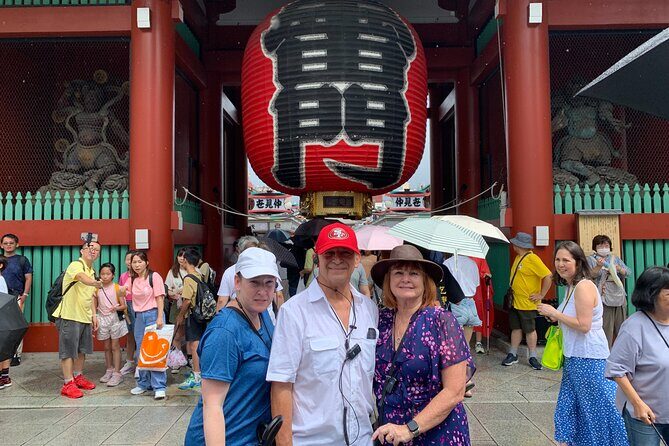
After that, the route moves to Kaminarimon (Thunder Gate), the entrance tied to Senso-ji. You’ll pass the famous giant red lantern hanging under the gate. Even if you’ve seen it in pictures, it lands differently in person because it marks the shift from ordinary street life into sacred space.
Nakamise Shopping Street and Hozomon: where worship meets commerce
From Kaminarimon you walk along Nakamise Shopping Street, the classic approach toward Senso-ji. What I’d watch for here is the tone of the street. It can feel surprising if you expect a purely solemn temple corridor. Nakamise mixes shopping and snacks right alongside the religious setting, which is exactly what makes Asakusa work as a place you can actually spend time.
Then the tour guides you through Hozomon (Treasure-House Gate), the inner gate on the way deeper into the complex. Hozomon’s role as a gateway helps you understand the temple layout as more than one big courtyard. You’re moving through layers.
One practical consideration: this is the kind of area where you’ll see people stopping often—photos, storefront browsing, casual chatting. If you like to keep momentum, use the guide’s timing as your cue and don’t try to “beat the line” on your own. The group move is the path.
More paths into old Tokyo
Senso-ji and Asakusa Shrine: two religions side by side
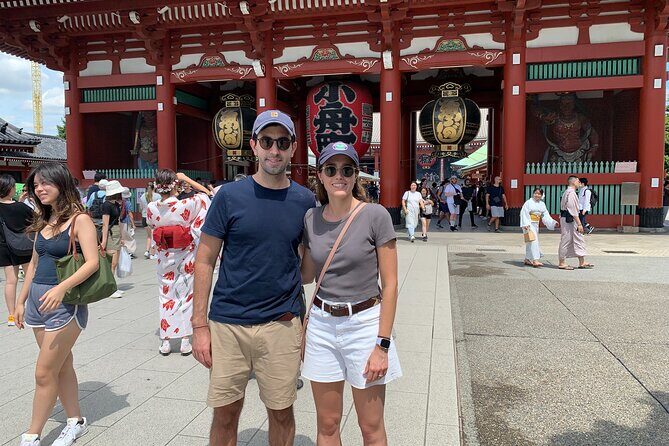
Next up is Senso-ji Temple, described as Tokyo’s oldest temple and one of its most significant. Even without a long lecture, the guide’s job is to point out what you’re looking at and why it matters. You also get context about the nearby five-story pagoda, including that it holds Buddha’s ashes provided through goodwill ties involving Sri Lanka’s government and Buddhist society.
Right next to the temple complex you’ll also visit Asakusa Shrine. This part is interesting because it highlights coexistence: you’re seeing a Shinto shrine placed right beside a major Buddhist temple site. The guide focuses on the mystery and the practical reality of two religious traditions sharing space in the same compound.
If you’re the kind of traveler who likes meaning over just selfies, this section is a strong reason to choose a guided walk. You can wander here on your own, sure. But the guide helps you notice the details that turn a landmark into a story you’ll remember.
Denboin Garden and the Rokku area: a calmer step back
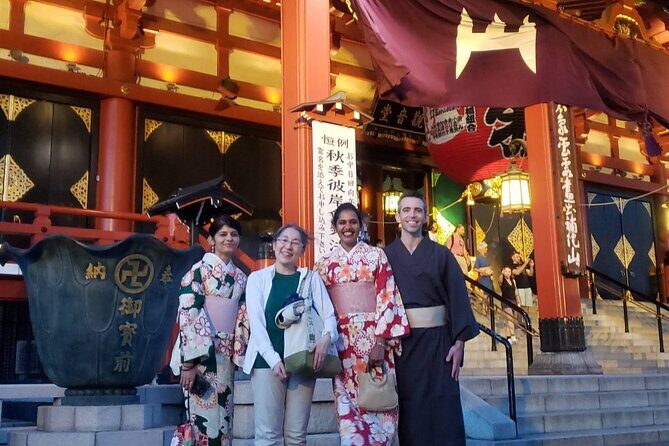
After Senso-ji’s scale, the tour shifts gears to Sensō-ji Denboin Garden. The timing here is smart. Instead of continuing to push through more crowds right away, you escape into a quieter pocket of the area.
This stop also includes movement through the Rokku area, an Asakusa entertainment district area that stays active while you’re there. The guide’s storytelling connects the past and present by walking you through what the area was like from the Meiji period to today.
One small advice: if you tend to rush gardens because you think you’ve “seen one,” slow down here. Denboin Garden is part of what makes this tour feel less like a checklist. It gives you a breath and a different kind of Asakusa atmosphere before you jump into kitchen-tool shopping.
Kappabashi Street Kitchen Town: how the knife shopping part actually helps
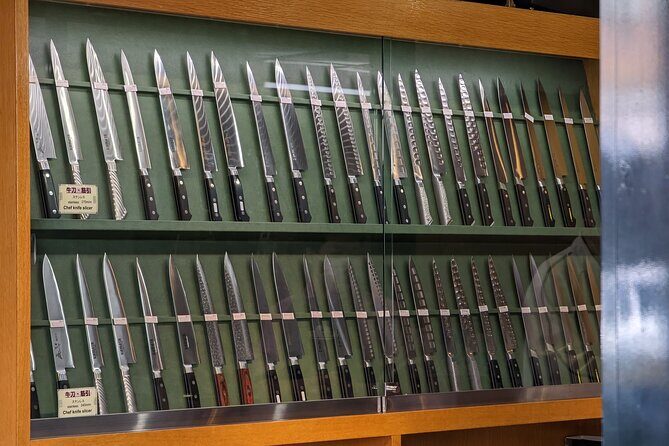
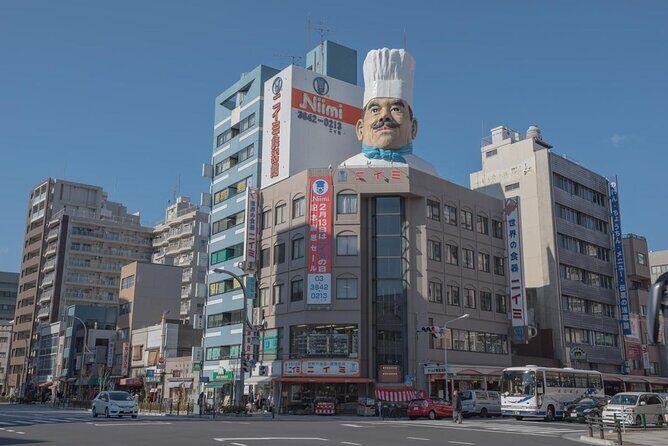
Now comes the main payoff for food lovers: Kappabashi Street (Kitchen Town). This is the part where the tour becomes more than sightseeing. The street is lined with stores selling the tools restaurant operators depend on, including Japanese kitchen knives.
Here’s why I think this shopping stop is worth paying for. Without a guide, you can still browse. But choosing a knife isn’t just about grabbing something sharp-looking. It’s about matching the tool to your habits: what you cook, how often you use it, and what you want the knife to do for you.
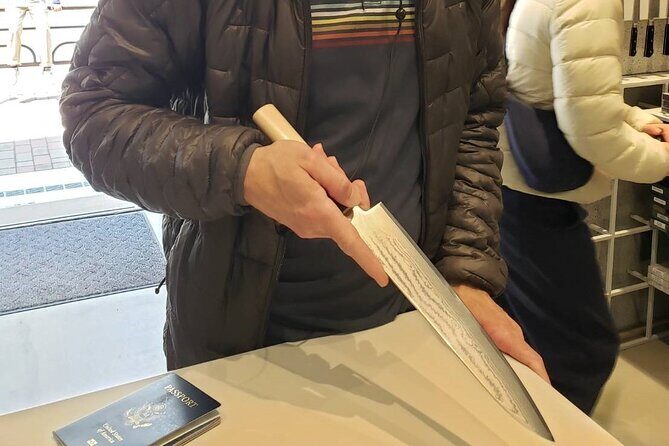
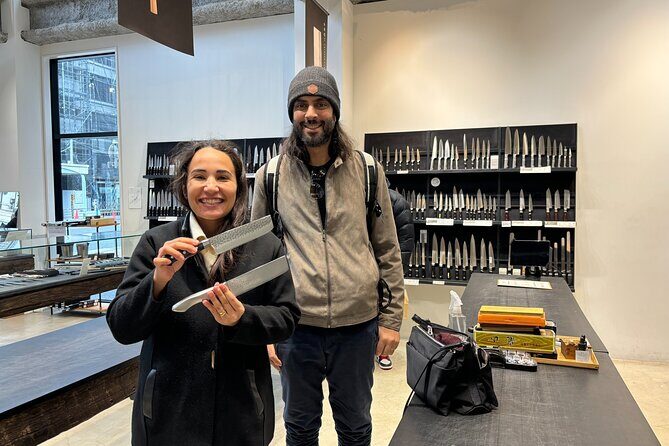
In the knife shop part of the experience, the guide helps you sort through options and make practical choices. On one departure, the guide Kay was helpful during selection, and the experience turned into buying several knives as gifts for chef friends.
Also, there’s a simple mental shift that happens. After you’ve walked through temple history and local neighborhood context, the knife street feels like the present-day continuation of Asakusa’s culture—work tools, craft, and daily life.
A practical note: the tour price covers the experience, not the knives themselves. Plan for that additional spending. If you’re bringing knives home, think about packaging and how you’ll transport them. If you’re buying gifts, budget time for picking and wrapping.
Price and time: is $78.18 good value?
At $78.18 per person for about 3.5 hours, the value depends on what you want from the day.
If you’re the type who enjoys a guided history walk, you’re getting a compact route through major Asakusa sights plus a shopping stop that focuses on Japanese kitchen knives. Most of the temple-related stops list free admission, so you’re not paying multiple venue fees along the way. Sumida Park is the one that lists an admission ticket not included, so keep a little cash or card flexibility just in case.
If your goal is primarily knives, you might wonder why the cost isn’t lower. The answer is the guidance. The benefit isn’t just being led to shops—it’s having someone help you choose tools confidently, in a neighborhood where the normal shopping behavior expects you to know what you’re doing. A guide reduces the trial-and-error risk.
And remember the group size: max 8, with headsets if there are 3+ people. That’s overhead that supports the experience and keeps it workable on busy streets.
Who this tour fits best (and who may want a different plan)
This tour is a great fit if you:
- love food culture and want to connect it to real local shopping
- enjoy temple neighborhoods but don’t want a huge, long walking day
- want knife shopping to feel guided, not overwhelming
- like small groups and clear communication with headsets
It may feel less ideal if you:
- only care about buying knives and already know exactly what you want
- prefer long, unstructured browsing without any schedule
- dislike walking through crowded sightseeing streets at all
If you’re unsure, set expectations going in: you’ll do both history and shopping. If you end up caring more about knives, you can communicate that early and ask the guide to adjust the balance.
Tips to make the most of your knife shopping stop
Before you reach Kappabashi Street, get your shopping mindset right.
- Have a basic idea of what you cook most (even just in broad terms). That helps narrow options fast.
- Think about gifts: who you’re buying for, and whether they’ll use the knife style you’re considering.
- Be ready for the shopping to take slightly longer than you expect, because the guide’s job is to help you choose confidently.
- Wear comfortable shoes. The whole format is walking-heavy, starting with temple area streets and ending at a dense shopping corridor.
If you like to plan ahead, also bring a little extra money for packaging and any additional items you might not have planned on.
Should you book the Asakusa history-and-knife tour?
Book it if you want an Asakusa morning that blends story with practical shopping. The small-group size, the headsets, and the fact that the day ends at the knife street where chefs shop make it feel like a real experience, not just a “see the sights and shop if you have time” add-on.
Skip it or consider a different approach if your only priority is knives and you already know what you want to buy. In that case, you may feel like the history walk is time you could spend shopping longer. The good news is that guides can often adjust the emphasis, but the tour is still built around a temple-area start.
FAQ
Where does the tour start and end?
It starts at 2-chōme-20-6 Kaminarimon, Taito City, Tokyo 111-0034, Japan and ends at Kappabashi Dougugai Kitchen Town 3-chōme-18-2 Matsugaya, Taito City, Tokyo 110-0036, Japan.
How long is the experience?
The tour lasts about 3 hours 30 minutes.
What time does it start?
The start time is 9:30 am.
Is this a small group tour, and do I get help hearing the guide?
Yes. The maximum group size is 8 travelers. For groups of 3 or more, headsets are included so you can hear the guide clearly from a distance.
Which places are included in the walking portion?
The walking stops include Sumida Park, Asakusa Culture Tourist Information Center, Kaminarimon, Nakamise Shopping Street, Hozomon, Senso-ji Temple, Asakusa Shrine, Sensō-ji Denboin Garden, and then Kappabashi Street (Kappabashi Dogugai / Kitchen Town) for shopping.
Are admission tickets included?
Many stops list admission as free. Sumida Park specifically lists admission ticket not included, while other listed stops show admission ticket free.
Do they pick you up at your hotel?
Hotel pickup and dropoff are not included.
Can most people join, and what’s the cancellation policy?
Most travelers can participate. You can cancel up to 24 hours in advance for a full refund. If you cancel less than 24 hours before the experience start time, the amount paid will not be refunded.
More Tours in Tokyo





More Tour Reviews in Tokyo




Around Senso-ji: More Asakusa Picks

Fresh reviews from around Tokyo






Asakusa Tours, compared.
 ★ 4.8Japanese Dance Cabaret Theater Asakusa-Kaguwa TicketFrom $492,270 reviews
 ★ 4.7Meiji Shrine, Asakusa, Skytree Bus Tour and CruiseFrom $1221,986 reviews
 ★ 4.8Asakusa Walking Tour with Sensoji Temple VisitFrom $221,583 reviews
 ★ 5.0Tokyo Asakusa Rickshaw TourFrom $421,375 reviews
 ★ 4.5Tokyo Panoramic 1 Day: Meiji Shrine, Asakusa, Odaiba and SKYTREE®From $851,222 reviews
 ★ 4.8Samurai Ninja Museum Asakusa: Samurai Sword Lesson & TourFrom $63306 reviews
Asakusa Sightseeing Tour by RickshawFrom $35195 reviews
Asakusa Kimono Dressing and Matcha ExperienceFrom $56173 reviews
★ 4.8Samurai Ninja Museum Asakusa: Samurai Sword Lesson & TourFrom $63306 reviews
Asakusa Sightseeing Tour by RickshawFrom $35195 reviews
Asakusa Kimono Dressing and Matcha ExperienceFrom $56173 reviews
Browse the lists this tour appears in