
Reviewed · ASAKUSA TOURS
Asakusa: Culture exploring bar visits after history tour
Asakusa at night hits different. I love the small-group flow (up to 8 people), and I love that it turns into three included izakaya stops instead of just a sightseeing walk. One possible drawback: this experience is built around eating and drinking, so if that part isn’t your thing, the temples won’t feel as central.
What makes this tour work is the mix. You get hands-on context for places like Sensoji Temple and Kaminarimon, then you switch gears to the local bar scene with stops that feel old-school and specific to Asakusa, not generic “tourist food.”
Timing is also a big part of the value. It runs about 4 hours starting at 3:00 pm, with free entry at the main sights, and it ends back at the start near Kaminarimon (so you’re not left figuring out your own route in the dark).
In This Review
- Key highlights worth planning for
- From Sumida Park to Senso-ji: seeing the story of Asakusa
- Stop 1: Sumida Park and the river connection
- Stop 2: Asakusa Culture Tourist Information Center (and a quick view)
- Stop 3: Kaminarimon and the Thunder Gate entrance
- Stop 4: Nakamise Shopping Street (the temple approach, minus the stern vibe)
- Stop 5: Hozomon and the inner gate experience
- Stop 6: Sensoji Temple, Tokyo’s oldest temple
- Stop 7: Asakusa Shrine next door (two religions in one space)
- Stop 8: Asakusa Denboin-dori and the entertainment street feel
- The izakaya hop: Hoppy Street, Kamiya Bar, and a sake finish
- Stop 9: Hoppy Street and the lantern-lined lane
- Stop 10: Kamiya Bar, an 1880 Western-style landmark
- Stop 11: A sake specialist with guided taste context
- How the pacing works (and what to wear)
- What you actually get for the price ($156.07) and why it’s fair
- Meeting at Burger King Asakusa Azumabashi: easy start, easy end
- Who this tour is best for
- Should you book this Asakusa culture-and-izakaya walk?
- FAQ
- How long is the Asakusa culture and izakaya tour?
- What time does the tour start?
- Where do I meet the guide?
- Is the tour limited to a small group?
- What food and drinks are included?
- Are admission tickets included for the sights?
- Do I need to arrange hotel pickup or drop-off?
- What happens if the weather is bad?
Key highlights worth planning for
- Small group size (max 8): more back-and-forth with your guide instead of a big, noisy pack.
- Real Asakusa landmarks first: Sumida Park, Kaminarimon, Hozomon, Sensoji, and more, all in one smooth loop.
- Three izakaya stops with snacks and drinks included: you’ll eat enough to count as a full dinner-style meal.
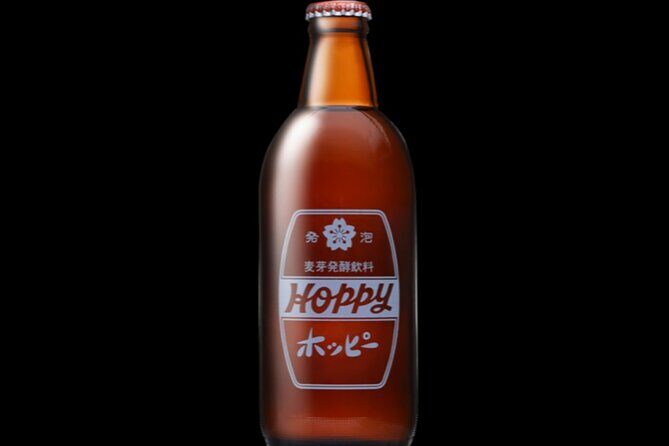
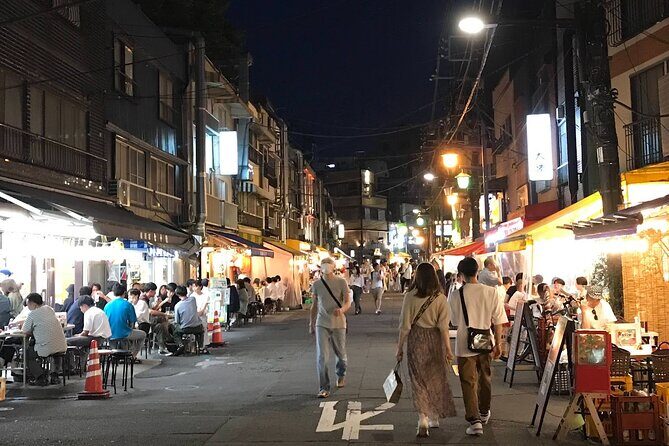
- Hoppy Street atmosphere: a short lane packed with lanterns and street-side seating that gets lively as evening hits.
- Kamiya Bar history: a long-running Western-style bar dating to 1880.
- A sake-focused finale: your guide helps you understand what drives sake in Japan and what ingredients matter.
More mornings around Senso-ji and the old town
- Tokyo: Japanese Dance Cabaret Theater Asakusa-Kaguwa Ticket★ 4.8 · 2,270 reviews
- Tokyo: Asakusa Walking Tour with Sensoji Temple Visit★ 4.8 · 1,583 reviews
- Tokyo Asakusa Rickshaw Tour★ 5.0 · 1,375 reviews
From Sumida Park to Senso-ji: seeing the story of Asakusa
This is the kind of tour where you start by getting your bearings fast, then the district starts making sense. The walk is structured so you’re not just ticking off landmarks. You’ll hear how the area’s past connects to what you see on the street today.
Stop 1: Sumida Park and the river connection
You begin at Sumida Park, where you’ll look over the river that has mattered to Tokyo for centuries. The guide ties it to Sensoji’s origin story, pointing out that the temple’s story links back to the river about 1,400 years ago. Even if you’ve seen photos of Sensoji a hundred times, starting here helps you understand why Asakusa grew around this waterway in the first place.
Tip for this part: take a moment to look around before you keep walking. The park viewpoint is one of those spots where you can mentally map the area before it gets busy.
Stop 2: Asakusa Culture Tourist Information Center (and a quick view)
Next you head to the Asakusa Culture Tourist Information Center, where you get a preview of where you’ll go next. You’ll also see Asakusa from up high in a building designed by a well-known Japanese architect, which is a nice reset after the river stop.
This kind of orientation stop is small, but it helps a lot. By the time you return to street level, the route feels less random.
Stop 3: Kaminarimon and the Thunder Gate entrance
At Kaminarimon, you’ll see the famous giant red lantern hanging under the gate. The guide explains how this gateway acts like a threshold between the street world and the temple-and-shrine world. If you’ve ever felt overwhelmed walking into major temple complexes, this framing helps you slow down and notice what’s actually in front of you.
More paths into old Tokyo
Stop 4: Nakamise Shopping Street (the temple approach, minus the stern vibe)
Then comes Nakamise Shopping Street, which runs toward Sensoji. One of the most useful things your guide does here is manage expectations. If you pictured a solemn, empty religious approach, Nakamise surprises you: it feels friendly and busy, with shops right along the route.
Practical move: if something catches your eye, you might want to wait and see how the tour flows. You’ll be eating later at izakayas, and it’s easy to overdo snacks early.
Stop 5: Hozomon and the inner gate experience
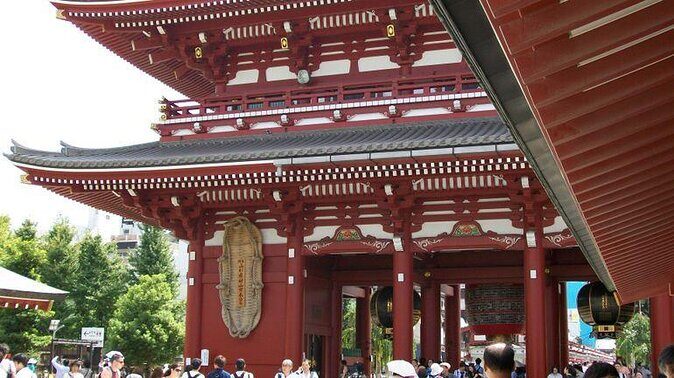
Next is Hozomon, the inner of the two large entry gates. You’ll notice the two-story design and get context for why it’s placed where it is—another “this is how the space is meant to guide you inward” moment.
This stop is short, but it’s one of those places where people walk through fast without really looking. Here, the guide encourages you to notice the structure instead of treating it like scenery.
Stop 6: Sensoji Temple, Tokyo’s oldest temple
When you reach Sensoji Temple, the main learning part begins. You’ll start at Kaminarimon and work into the temple area with your guide, who explains what makes Sensoji essential for understanding Asakusa.
Sensoji can feel like a photo magnet—crowds, incense, bright details. The value of the tour is that you’re not just photographing. You’re learning the meaning behind what you’re seeing.
Stop 7: Asakusa Shrine next door (two religions in one space)
Right by Sensoji is Asakusa Shrine, a Shinto shrine. The tour calls attention to the unusual coexistence of distinct religions on the same grounds. The guide also shares the mystery behind this arrangement, which helps you understand why the area doesn’t feel strictly one-note.
This is also a good moment to slow down and look around beyond the main temple buildings. The shrine setting can be easier to miss if you’re only focused on Sensoji’s biggest features.
Stop 8: Asakusa Denboin-dori and the entertainment street feel
After Sensoji, you shift away from the temple core to Asakusa Demboin-dori, described as Asakusa’s traditional entertainment district. The guide connects past and present, walking through areas that feel shaped by older eras while still operating in today’s rhythm.
Expect this section to feel more street-level and less ceremonial. It’s a nice bridge into the evening part of the day.
The izakaya hop: Hoppy Street, Kamiya Bar, and a sake finish
After all that temple context, it’d be easy for a food stop to feel random. Instead, the bars feel like a continuation of the Asakusa identity—local, practical, and social.
Your tour includes stops at three authentic izakayas, with snacks and drinks at each place. The dinner amount is typically 3–4 drinks and 3–4 dishes, which is enough that you won’t be hungry afterward.
Stop 9: Hoppy Street and the lantern-lined lane
The first izakaya stop is at Hoppy Street, an 80-meter stretch lined with izakayas. You’ll see lanterns and outdoor street-side seating. They’re open day and night, but they get especially lively as the evening energy kicks in.
What I like about starting here is how easy it is to settle in. You’re walking in from sightseeing, and the Hoppy Street vibe tells you what Asakusa evening life feels like—casual, social, and built for hanging out.
Stop 10: Kamiya Bar, an 1880 Western-style landmark
Next is Kamiya Bar, described as established in 1880 and often referred to as the oldest Western-style bar in Japan. The tour makes a point that it’s Western-style, but it also sounds very much rooted in local history.
This is a great stop if you like drinking history—places that have outlasted trends. The guide helps you take in what you’re seeing instead of just ordering something and moving on.
Stop 11: A sake specialist with guided taste context
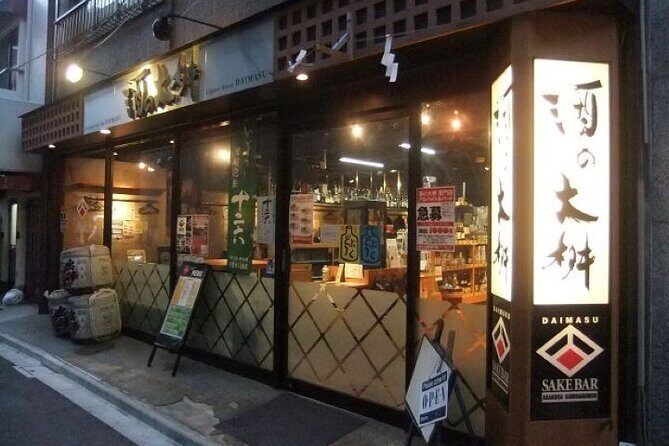
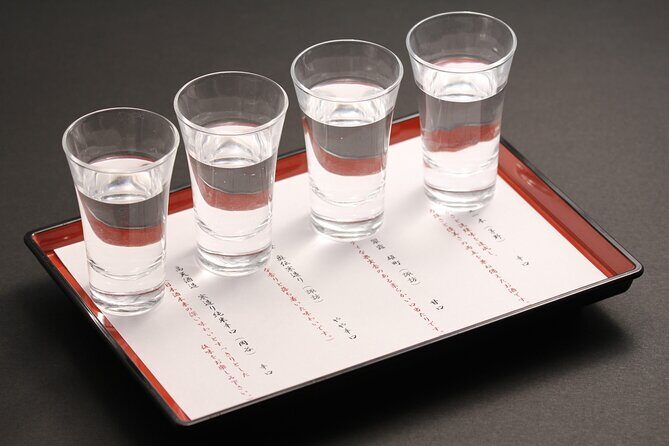
The final izakaya stop focuses on sake, with a place that carries incredible varieties. The guide helps you understand key factors behind sake, including why sake developed in Japan and which ingredients play key roles.
Even if you’ve had sake before, this kind of explanation changes how you think about it. It turns the tasting into learning, not just sampling.
Practical note: since the tour is already giving you a full dinner-style amount of food, you might want to pace yourself. This is a four-hour walk that includes drinking—so drink slowly, ask questions, and take your time between courses.
How the pacing works (and what to wear)
A big reason this tour has strong appeal is pacing. It runs about 4 hours, starting at 3:00 pm and staying in Asakusa the whole time. That means you’re not constantly crisscrossing the city to hit a bunch of unrelated stops.
The group size is capped at 8 travelers, which is small enough for your guide to keep the tone conversational. In practice, it means you’re more likely to get useful answers instead of only listening to general commentary.
Two practical considerations:
- Footwear matters. You’ll be walking through temples, gates, and street areas. Comfortable shoes beat fashionable shoes.
- Good weather helps. The experience requires decent weather, and if it’s canceled for poor conditions you’ll be offered another date or a full refund.
If you’re the type who gets stressed by navigating dense areas, you’ll probably feel calmer here. You’re not responsible for reading routes while managing crowds and signage.
What you actually get for the price ($156.07) and why it’s fair
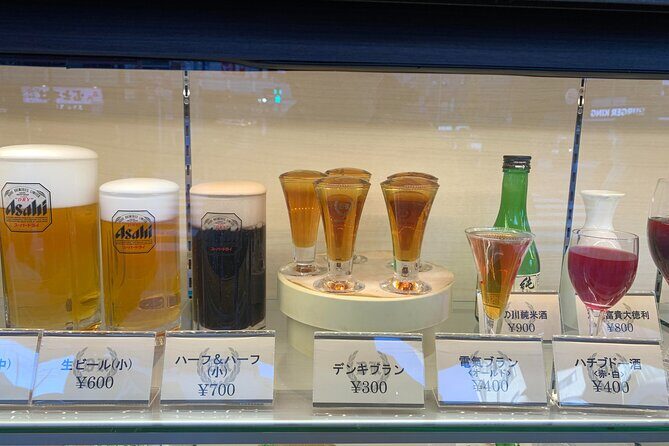
At $156.07 per person, the price can look steep at first glance—until you break down what’s included.
You’re paying for:
- A local guide for roughly 4 hours
- Multiple major Asakusa sights with free admission at the stops listed
- Three izakaya meals-with-drinks stops
- Enough snacks and drinks to total a full dinner-style meal
Also, the tour includes food and drinks that can be expensive in Tokyo if you’re buying one-by-one without a plan. The group discount structure is there to keep costs down versus piecing everything together on your own.
One catch: there’s no hotel pickup or drop-off. You’ll need to get yourself to the meeting point near Kaminarimon.
Meeting at Burger King Asakusa Azumabashi: easy start, easy end
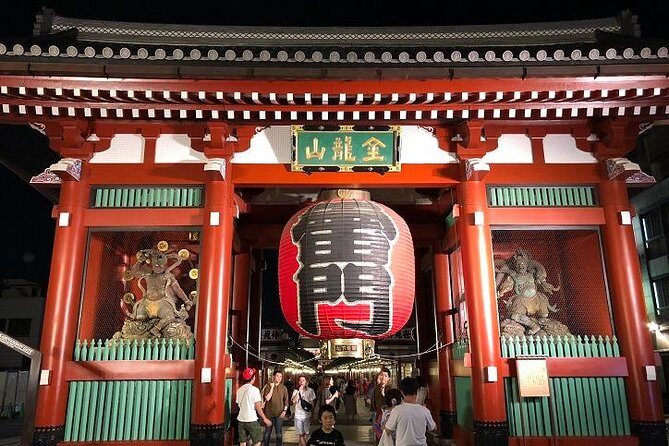
You meet at Burger King Asakusa Azumabashi in the Kaminarimon area, then the tour ends back at the meeting point. That makes a difference. You’re not hunting for a finish location after you’ve been walking and eating.
The area is also described as near public transportation, which matters because arriving by train and then walking the last bit is usually the simplest move in Tokyo.
Who this tour is best for
This fits well if you want both halves of Tokyo culture:
- Temple and shrine context without needing to research everything first
- A guided path into izakaya culture, with real bar stops instead of random snack stands
It’s especially good for first-time Asakusa visitors who don’t want to overthink logistics. And it works well for people who enjoy talking to the guide in a relaxed way while walking and eating.
If you’re not interested in alcohol or you prefer a strictly daytime sightseeing pace, this might feel like the balance is tipped toward the drinking portion. The schedule is clearly designed for that evening atmosphere.
Should you book this Asakusa culture-and-izakaya walk?
I’d book it if you like tours that stitch together culture and food in a way that feels logical. The strong points here are the small-group attention, the smooth temple-to-bar progression, and the chance to end with a sake-focused lesson instead of just a bar visit.
I’d skip it if you want a mostly quiet, temple-only experience or if drinking isn’t part of your vacation style.
If the idea of walking through Kaminarimon and Sensoji, then stepping into places like Hoppy Street and Kamiya Bar with snacks and drinks sounds like your kind of evening, this is a solid plan.
FAQ
How long is the Asakusa culture and izakaya tour?
It runs for about 4 hours.
What time does the tour start?
It starts at 3:00 pm.
Where do I meet the guide?
The meeting point is Burger King Asakusa Azumabashi, in the Kaminarimon area.
Is the tour limited to a small group?
Yes. It has a maximum group size of 8 people.
What food and drinks are included?
Dinner-style snacks and drinks are included across three izakaya stops, with an average of 3–4 drinks and 3–4 dishes total.
Are admission tickets included for the sights?
The listed stops have free admission.
Do I need to arrange hotel pickup or drop-off?
No. Hotel pickup or drop-off is not included, and you’ll meet at the start location.
What happens if the weather is bad?
The experience requires good weather. If it’s canceled due to poor weather, you’ll be offered a different date or a full refund.
More Tours in Tokyo






More Tour Reviews in Tokyo




Around Senso-ji: More Asakusa Picks
Fresh reviews from around Tokyo






Asakusa Tours, compared.
 ★ 4.8Japanese Dance Cabaret Theater Asakusa-Kaguwa TicketFrom $492,270 reviews
 ★ 4.7Meiji Shrine, Asakusa, Skytree Bus Tour and CruiseFrom $1221,986 reviews
 ★ 4.8Asakusa Walking Tour with Sensoji Temple VisitFrom $221,583 reviews
 ★ 5.0Tokyo Asakusa Rickshaw TourFrom $421,375 reviews
 ★ 4.5Tokyo Panoramic 1 Day: Meiji Shrine, Asakusa, Odaiba and SKYTREE®From $851,222 reviews
 ★ 4.8Samurai Ninja Museum Asakusa: Samurai Sword Lesson & TourFrom $63306 reviews
Asakusa Sightseeing Tour by RickshawFrom $35195 reviews
Asakusa Kimono Dressing and Matcha ExperienceFrom $56173 reviews
★ 4.8Samurai Ninja Museum Asakusa: Samurai Sword Lesson & TourFrom $63306 reviews
Asakusa Sightseeing Tour by RickshawFrom $35195 reviews
Asakusa Kimono Dressing and Matcha ExperienceFrom $56173 reviews
Browse the lists this tour appears in